

P0172 on 2014-2018 Cadillac CTS-V: System Too Rich Causes and Fixes
On a 2014-2018 CTS-V, P0172 is often caused by a manufacturing defect in the air filter housing near the MAF sensor, as noted in GM TSB PIP5446A. Other likely causes include fuel-contaminated oil from short trips (TSB 18-NA-246) or a leaking fuel injector. Start by inspecting the air intake tube for obstructions and checking the oil for a fuel smell.
- Before replacing any parts for a P0172 code, physically inspect the air intake tube for plastic flashing near the MAF sensor, as this is a known GM defect.
- If the vehicle is driven mostly for short trips, the engine oil may be contaminated with fuel. Check the oil for a gas smell and perform an oil change as a first step.
- The problem spans two generations with different engines (LSA vs. LT4). Be aware of which engine you have, as causes like a leaking high-pressure fuel pump only apply to the newer LT4.
- Do not automatically assume the O2 sensor or MAF sensor is bad. The TSBs point to mechanical or maintenance-related issues that are often overlooked.
What's Unique About the 2014-2018 Cadillac CTS-V
The 2014-2018 CTS-V uses two distinct supercharged V8 engines: the port-injected LSA (2014-2015) and the direct-injected LT4 (2016-2018). While both can suffer from this code, the diagnostic paths can differ. Uniquely, a well-documented GM Technical Service Bulletin (TSB PIP5446A) points to a manufacturing flaw—excess plastic flashing in the air filter housing—as a primary cause across multiple model years and platforms (including Camaro and Corvette), which can disrupt airflow, trick the MAF sensor, and lead to a rich condition.
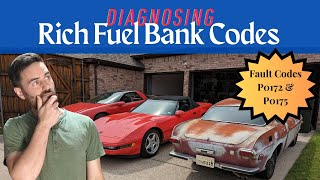
🎬 Watch: Diagnosing rich fuel codes and the GM plastic flashing TSB.Diagnostic Flowchart
Tap your situation to follow the diagnostic path that matches what you're seeing on this vehicle.
Generation note: This range covers two CTS-V generations. The 2014-2015 models are part of the second generation (V2) with the 6.2L LSA V8 engine, which uses port fuel injection. The 2016-2018 models are the third generation (V3) with the 6.2L LT4 V8, which uses direct injection. Direct-injected engines (LT4) can be more prone to issues with leaking high-pressure fuel pumps or injectors causing fuel to enter the crankcase.
Symptoms You May Notice
- Check Engine Light is on
- Rough or unstable idle
- Sputtering or hesitation when accelerating from a stop.
- Harsh shifting between gears.
- Reduced fuel economy
- Black smoke from the exhaust
- Strong smell of gasoline from the exhaust or in the engine oil
- Replacing the MAF sensor without first inspecting the air filter housing for the flashing defect noted in TSB PIP5446A.
- Replacing fuel injectors or the HPFP before confirming fuel contamination in the oil is not simply due to short-trip driving habits as described in TSB 18-NA-246.
Most Likely Causes
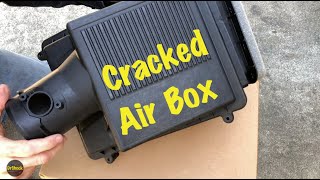
- Air Filter Housing Obstruction 🔴 High Probability A specific GM Technical Service Bulletin (PIP5446A) identifies 'excessive casting flash' (stray plastic) in the air filter housing near the MAF sensor as a known cause for this code on these vehicles and their platform mates.
How to confirm: Visually inspect the inside of the air filter housing and the air tube leading from it, specifically around where the MAF sensor is mounted. Look for any plastic burrs or obstructions that could disrupt airflow. The TSB shows images of this flashing directly adjacent to the MAF sensor port.
Typical fix: If flashing is found, carefully remove it with a file or blade. The official TSB correction is to replace the air filter housing lid and inspect the new part for the same defect before installation.
Est. part cost: $50-$150 - Fuel-Contaminated Engine Oil 🟡 Medium Probability TSB 18-NA-246 notes that frequent short-trip driving can prevent the engine from reaching full operating temperature, allowing fuel to accumulate in the crankcase. This fuel-rich vapor is then drawn into the intake via the PCV system, causing a rich condition that the ECM tries to correct. This issue is common enough across GM vehicles that multiple bulletins address it.
How to confirm: Remove the oil dipstick and smell the oil. If it has a strong gasoline odor, it is likely diluted with fuel. This may be accompanied by oil pressure codes like P0521 or P06DE.
Typical fix: Perform an engine oil and filter change to remove the contaminated oil. The TSB also suggests a possible PCV valve replacement and an ECM software update performed by a dealer to adjust for driving habits.
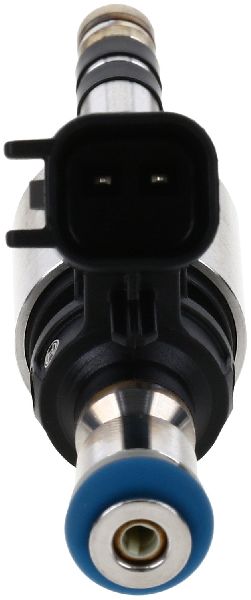
Est. part cost: $50-$100 for oil and filter - Leaking Fuel Injector(s) 🟡 Medium Probability A fuel injector stuck partially open will continuously drip fuel into a cylinder, causing a rich condition on that bank. This is a common failure on many vehicles, including the direct-injected LT4 engine.
How to confirm: A professional can perform a fuel injector balance test. A DIY method involves monitoring fuel trims while disabling one cylinder at a time with a scan tool or carefully checking spark plugs on Bank 1 for signs of being wet with fuel or heavy carbon fouling. A fuel pressure gauge that holds pressure after the engine is off can also indicate a leakdown.
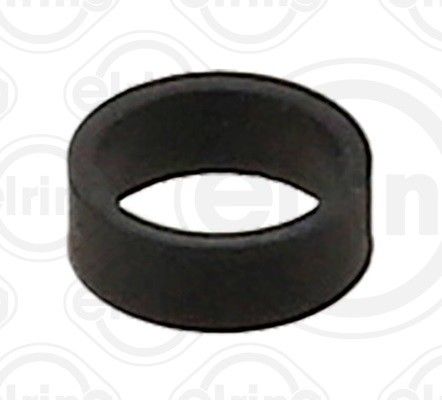
Typical fix: Replace the faulty fuel injector(s) and their seals. It is often recommended to replace all injectors on that bank at the same time.
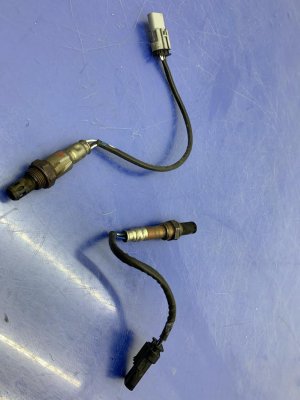
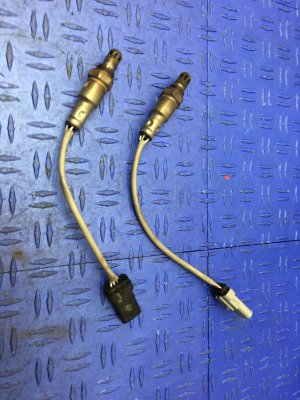
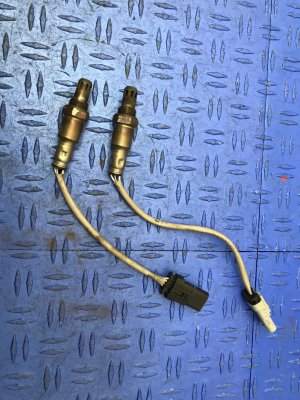
Est. part cost: $70-$200 per injector - Faulty Upstream Oxygen (O2) Sensor 🟡 Medium Probability The upstream O2 sensor (Bank 1, Sensor 1) is the primary sensor for measuring the air/fuel ratio. If it becomes lazy or fails by sending a false 'lean' signal (low voltage), the ECM will command more fuel, creating a genuinely rich condition.
How to confirm: Use a scan tool to graph the voltage of the Bank 1 Sensor 1. It should fluctuate rapidly between approximately 0.1V and 0.9V. If it is stuck at a low voltage or responds slowly, it is likely faulty.
Typical fix: Replace the Bank 1, Sensor 1 (upstream) oxygen sensor.
Est. part cost: $50-$150
Rare But Worth Checking
- Leaking High-Pressure Fuel Pump (HPFP): This applies to the 2016-2018 LT4 engine only. The HPFP can leak fuel internally into the crankcase, contaminating the oil and causing a rich condition via the PCV system, similar to the short-trip driving issue. A diagnostic tip is to disconnect and plug the 'dirty' side of the PCV system; if fuel trims return to normal, the HPFP is likely the culprit.
- Stuck Open EVAP Purge Valve: If the evaporative emissions purge valve sticks open, it can allow un-metered fuel vapor from the charcoal canister to be drawn into the engine at the wrong time, causing a rich mixture, especially at idle.
- Aftermarket Cold Air Intake (No Tune): Some aftermarket cold air intakes, especially those with larger diameter tubing, alter the airflow characteristics across the MAF sensor. If the vehicle's ECM is not recalibrated (tuned) for this new intake, it can lead to inaccurate MAF readings and a P0172/P0175 code.
Diagnosis Steps
- Check for other DTCs. Codes like P0175, P0101, or oil pressure codes (P0521, P06DE) provide important clues to the root cause.
- Inspect the Air Intake System. Following TSB PIP5446A, carefully inspect the air filter housing and intake tube for any plastic 'flashing' or other obstructions that could disrupt airflow over the MAF sensor.
- Check Engine Oil. Smell the engine oil on the dipstick for a strong gasoline odor. If present, an oil change is necessary before further diagnosis. This is a key step outlined in TSB 18-NA-246.
- Analyze Fuel Trims. Use a scan tool to monitor Short-Term and Long-Term Fuel Trims for Bank 1. A P0172 is set when Long-Term Fuel Trim is excessively negative (e.g., -20% or more). Note how trims react to RPM changes; if they improve off-idle, it might point to a vacuum leak or EVAP issue.
- Test the Oxygen Sensor. Graph the Bank 1 Sensor 1 voltage. A healthy sensor will show rapid switching. A lazy or stuck sensor needs replacement.
- Check Fuel Pressure. Verify that fuel pressure is within OEM specifications. For LT4 engines, monitor both low-side and high-side (rail) pressure. High pressure can indicate a faulty regulator.
- Test for Leaking Injectors. If other causes are ruled out, perform a fuel injector balance test or a leakdown test by monitoring fuel rail pressure after the engine is shut off.
Parts You'll Likely Need
- Air Cleaner Housing Lid
(OEM #23383011 (For LT4, verify by VIN))— The fix for the manufacturing defect (casting flash) identified in TSB PIP5446A is often to replace the lid if the flash cannot be easily removed.
Trusted brands: ACDelco
OEM price range: $75-$150
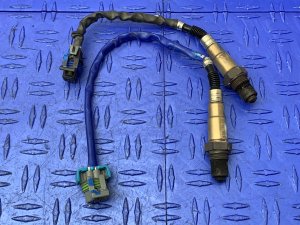
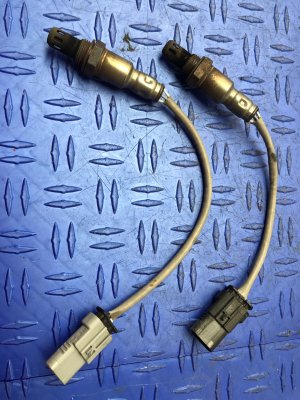
Aftermarket price range: $50-$100 - Upstream Oxygen Sensor (Bank 1 Sensor 1)
(OEM #12639277 or 12659516 (Varies by engine/year, verify by VIN))— This sensor is a common failure item and is critical for correct air/fuel mixture control. A faulty sensor can directly cause a P0172 code.
Trusted brands: ACDelco, Denso, Bosch
OEM price range: $80-$160
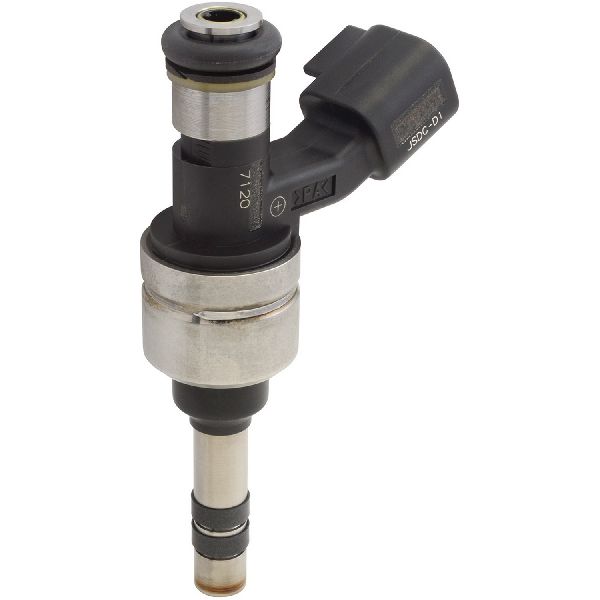
Aftermarket price range: $50-$100 - Fuel Injector
(OEM #LSA: 12678992 (ACDelco 217-3350) | LT4: 12659516 (Verify by VIN))— A leaking fuel injector is a direct cause of a rich condition on a specific bank. Direct injection (LT4) injectors operate under very high pressure and can be a failure point.
Trusted brands: ACDelco
Related Codes That Often Appear With This One
- P0175 — System Too Rich on Bank 2. If both P0172 and P0175 are present, it points to a cause affecting both engine banks, such as the MAF sensor, fuel pressure, fuel-contaminated oil, or a stuck EVAP purge valve.
- P0101 — Mass Air Flow (MAF) Circuit Range/Performance. This code often appears with P0172 when the cause is related to the MAF sensor or an obstruction in the intake tract, as described in TSB PIP5446A.
- P0521 — Engine Oil Pressure Sensor/Switch Range/Performance. This can appear alongside P0172 if the engine oil is significantly diluted with fuel, affecting its viscosity and pressure, as mentioned in TSB 18-NA-246.
- P06DE — Engine Oil Pressure Control Solenoid Valve Stuck On. Similar to P0521, this code can be triggered by fuel-contaminated oil, as noted in TSB 18-NA-246.
Technical Service Bulletins (TSBs) & Recalls
- PIP5446A: Addresses rough idle, sputtering, and codes P0171, P0172, P0174, P0175 caused by casting flash near the MAF sensor.
- 18-NA-246: Addresses MIL with DTC P0172 (and sometimes P06DE/P0521) caused by fuel-enriched engine oil from short driving intervals.
Platform-Specific Known Issues
- TSB PIP5446A: Excessive casting flash (plastic) in the air filter housing near the MAF sensor can disrupt airflow and cause rich/lean codes, rough idle, and harsh shifting.
- TSB 18-NA-246: Frequent short-distance driving can cause fuel to contaminate the engine oil, leading to fuel-rich crankcase vapors being ingested by the PCV system and triggering a P0172 code.
Mechanic-Grade Diagnostic Values
- Low-Side Fuel Pressure (Key On, Engine Off) — expected: 55-60 PSI. Failure: Pressure below this range indicates a weak in-tank fuel pump; pressure that bleeds off quickly after priming can indicate a leak.
- Mass Air Flow (MAF) Sensor Reading at Idle (Warmed Up) — expected: Approximately 4-7 g/s for a large V8 engine.. Failure: Significantly higher readings can trick the ECM into adding too much fuel. Significantly lower readings may indicate a vacuum leak downstream of the sensor.
- Mass Air Flow (MAF) Sensor Reading at 2500 RPM (Steady) — expected: Approximately 15-25 g/s, showing a linear increase with RPM.. Failure: A non-linear or slow response can indicate a contaminated or failing MAF sensor.
- Long Term Fuel Trim (LTFT) for Bank 1 — expected: Between -10% and +10%.. Failure: A P0172 is typically set when LTFT exceeds -20% to -25%, indicating the ECM is consistently removing a large amount of fuel.
Scan Tool Commands That Help
- GDS2 (GM Global Diagnostic System 2): Output Control > Fuel Pump Relay — To manually command the fuel pump on to verify its operation and to perform fuel pressure tests without running the engine. Note: The ignition must be in the correct power mode for this command to work.
- GDS2 (GM Global Diagnostic System 2): Diagnostic Data Display > Engine > Fuel — To monitor live data streams for Short and Long Term Fuel Trims, O2 sensor voltage, MAF sensor g/s, and fuel rail pressure. This is the primary screen for diagnosing fuel mixture issues.
- GDS2 (GM Global Diagnostic System 2): Configure and Reset Functions — After replacing components like the ECM or performing certain software updates, reset functions may be required to clear learned values and adaptations.
Wiring & Ground Locations
- G101 / G108 — On the left front radiator support.. This is a primary underhood ground point. A poor connection here can affect various engine sensors and controls.
- G102 / G103 — On the right front of the engine compartment.. This ground serves the Engine Control Module (ECM). A corroded or loose ground at this location can cause erratic ECM behavior and incorrect sensor readings, including those that lead to a P0172.
- G131 / G136 — At the rear of the left cylinder bank/head.. This is a dedicated engine block ground. A faulty connection can affect sensors mounted directly to the engine, including the Bank 1 oxygen sensor.
Real Owner Repair Stories
- CadillacForums user (2016 Cadillac CTS-V (LT4)) — Check Engine Light with P0172 and P0175 (both banks rich).
❌ Tried (didn't work) Cleaned MAF sensor, Replaced air filter, Checked for intake leaks
✅ What actually fixed it The user reported that replacing both upstream oxygen sensors resolved the dual rich codes. Even though the sensors were switching, they were suspected of being lazy or biased, causing the ECM to incorrectly enrich the fuel mixture.
Model Year Variations Within This Range
- 2016-2018 (LT4 Engine): TSB 18-NA-246 mentions a revised PCV valve and an ECM software update specifically for 2016-2018 models to address fuel accumulation in the crankcase from short-trip driving. This suggests the PCV system design or ECM calibration was different from the LSA and was later updated to mitigate this issue.
- 2014-2015 (LSA) vs 2016-2018 (LT4): The LSA engine uses a traditional port fuel injection system, while the LT4 uses a high-pressure direct injection system. This means the LT4 has a high-pressure fuel pump (HPFP) driven by the camshaft, which can be a unique point of failure (leaking into the crankcase) not present on the LSA.
Helpful Videos
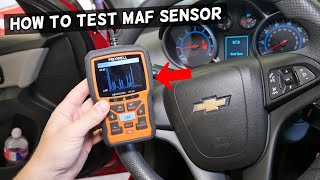
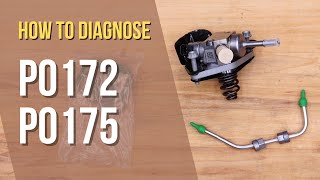
Used OEM Parts in Stock
New Aftermarket Parts Available



The information in this article is provided for general reference and educational purposes only. Vehicle specifications, procedures, and part compatibility can vary by production date, trim level, and region. Always consult your vehicle's factory service manual and verify part numbers before purchasing or performing repairs. Safety-critical components such as airbags, seat belts, and braking systems should be installed by a qualified professional.
- Cadillac CTS-V:
- 🎬 Helpful Videos
- 🛍️ Shop This Part
- What's Unique About the 2014-2018 Cadillac CTS-V
- Diagnostic Flowchart
- Symptoms You May Notice
- Most Likely Causes
- Rare But Worth Checking
- Diagnosis Steps
- Parts You'll Likely Need
- Related Codes That Often Appear With This One
- Technical Service Bulletins (TSBs) & Recalls
- Platform-Specific Known Issues
- Mechanic-Grade Diagnostic Values
- Scan Tool Commands That Help
- Wiring & Ground Locations
- Real Owner Repair Stories
- Model Year Variations Within This Range
- 🎟️ Get 5% Off