

P0172 on 2013-2018 Cadillac ATS: Rich Fuel Causes and Fixes
On a 2013-2018 Cadillac ATS, code P0172 often indicates fuel has contaminated the engine oil, usually due to frequent short-trip driving as noted in TSB 18-NA-246. The primary fix is an oil and filter change. Other common causes include a faulty mass airflow (MAF) sensor or, particularly on 2.0L Turbo models, a failing high-pressure fuel pump (HPFP) leaking fuel into the crankcase.
- For a 2013-2018 Cadillac ATS, P0172 is very often caused by fuel contaminating the engine oil due to frequent short drives.
- Before replacing any parts, check the engine oil for a strong smell of gasoline. An oil and filter change is the most likely and cheapest first step.
- If P0172 appears with oil pressure codes P06DE or P0521, it strongly points to the fuel-in-oil issue described in TSB 18-NA-246.
- Other common causes include a dirty MAF sensor, a leaking high-pressure fuel pump (especially on 2.0T models), or a faulty upstream O2 sensor.
- Do not immediately assume expensive components like fuel injectors are bad; the issue is often simpler or related to driving habits.
What's Unique About the 2013-2018 Cadillac ATS

A unique issue with the Cadillac ATS and other GM vehicles, especially those with the 2.0L Turbo (LTG) engine, is detailed in Technical Service Bulletin (TSB) 18-NA-246. This bulletin explains that frequent short trips can prevent the engine from reaching full operating temperature, leading to fuel accumulating in the crankcase. This fuel-saturated oil releases vapors that are pulled into the intake via the PCV system, creating a rich condition that triggers P0172. This issue is so specific that the TSB often links P0172 with oil pressure codes like P06DE and P0521. The TSB explicitly warns that replacing components like the HPFP or injectors will not fix this specific issue unless they are proven to be the cause.
Diagnostic Flowchart
Tap your situation to follow the diagnostic path that matches what you're seeing on this vehicle.
Symptoms You May Notice
- Check Engine Light is on
- Poor fuel economy
- Strong smell of gasoline from the exhaust
- Black smoke from the exhaust pipe
- Rough idle
- Engine hesitation or stalling
- Fuel smell in the engine oil
- Oil level appearing overfull on the dipstick
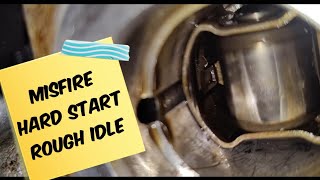
- Replacing the oxygen sensor immediately. While it can be the cause, it's often correctly reporting a rich condition caused by another component. Always diagnose first. 🎬 Watch: A breakdown of common P0172 causes and fixes.
- Replacing fuel injectors or the high-pressure fuel pump without confirming fuel dilution in the oil is not from short-trip driving habits, as noted in TSB 18-NA-246.
Most Likely Causes

- Fuel-Contaminated Engine Oil 🔴 High Probability As documented in GM TSB 18-NA-246, direct-injection engines on these vehicles are prone to fuel collecting in the crankcase during frequent short drives where the engine doesn't fully warm up. This is a well-documented issue across multiple GM platforms using the 2.0L LTG engine.
How to confirm: Check the engine oil dipstick. If the oil level is overfull and smells strongly of gasoline, it is likely diluted with fuel. This is the primary diagnostic step for this cause.
Typical fix: Perform an engine oil and filter change. For some models and years, a revised PCV valve and an ECM software update may also be required per the TSB to fully resolve the issue. Owners are advised to ensure the vehicle is driven long enough for the engine to fully warm up regularly or to shorten oil change intervals.
Est. part cost: $50-$100 - Leaking High-Pressure Fuel Pump (HPFP) 🟡 Medium Probability This applies mainly to the 2.0L Turbo (LTG) and other direct-injection GM engines. The camshaft-driven HPFP can develop internal seal leaks, allowing raw fuel to enter the crankcase and mix with the engine oil, causing rapid and severe dilution.
How to confirm: This is a more advanced diagnosis. If the oil is severely diluted with fuel shortly after an oil change, and short-trip driving is ruled out, the HPFP is a strong suspect. A technician may also monitor fuel rail pressure with the engine off; a rapid drop in pressure can indicate a leak in the high-pressure system.
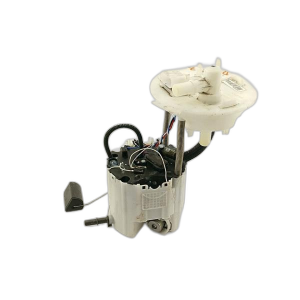
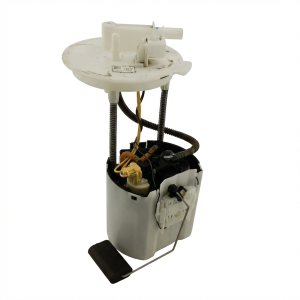
Typical fix: Replacement of the high-pressure fuel pump. The ACDelco OEM part number for early 2.0L/2.5L models is 12658486 (interchangeable with 12651175).
Est. part cost: $250-$500 - Faulty Mass Airflow (MAF) Sensor 🟡 Medium Probability
How to confirm: A dirty MAF sensor can under-report airflow, causing the ECM to command too much fuel. The sensor can be inspected for debris and cleaned with a dedicated MAF sensor cleaner. If cleaning doesn't help, monitoring the sensor's readings with a scan tool can confirm if it's faulty.
Typical fix: Clean the MAF sensor with a specialized cleaner. If the problem persists, replace the sensor. An ACDelco replacement part number is 23262343. 🎬 See this walkthrough for replacing your MAF sensor.
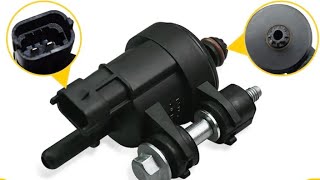
Est. part cost: $10-$20 (cleaner), $70-$150 (sensor) - Stuck Open EVAP Purge Valve ⚪ Low Probability This is a common failure on many GM vehicles of this era. A stuck-open purge valve can cause multiple codes, including rich codes (P0172/P0175) and EVAP codes (P0496, P0442).
How to confirm: A stuck open valve allows unmetered fuel vapor from the charcoal canister to enter the intake manifold. This can sometimes be diagnosed by applying vacuum to the valve with it disconnected to see if it holds. A common symptom is difficulty starting after refueling. 🎬 Watch: How to replace a faulty EVAP purge solenoid.
Typical fix: Replacement of the EVAP purge valve/solenoid. OEM part numbers include 12610560 and 55593172.
Est. part cost: $25-$60 - Faulty Upstream Oxygen (O2) Sensor ⚪ Low Probability
How to confirm: A failing O2 sensor can send incorrect (false lean) signals to the ECM, causing it to enrich the fuel mixture. A scan tool can be used to observe the O2 sensor's voltage readings to see if they are sluggish or stuck.
Typical fix: Replace the Bank 1, Sensor 1 (upstream) oxygen sensor.
Est. part cost: $50-$120 - Leaking Fuel Injector(s) ⚪ Low Probability
How to confirm: Leaking injectors can drip excess fuel into the cylinders. This can sometimes be diagnosed by checking fuel rail pressure after the engine is off to see if it drops quickly or by inspecting spark plugs for signs of being fuel-fouled (wet and black).
Typical fix: Identify and replace the faulty fuel injector(s).
Est. part cost: $80-$200 per injector
Rare But Worth Checking
- Faulty Fuel Pressure Regulator: A failing fuel pressure regulator can cause excessive pressure in the fuel rail, forcing too much fuel through the injectors. This is less common on GDI engines where pressure is primarily managed by the HPFP.
- Cracked PCV Hose: While typically causing a lean code (P0171) due to being a vacuum leak, complex cracks or breaks in the PCV system on the 2.0L LTG engine can sometimes disrupt airflow metering and contribute to rich conditions under certain loads.
Diagnosis Steps

- Check for other DTCs. Codes like P06DE, P0521, P0175, or P0496 provide important clues to the root cause.
- Inspect the engine oil. Pull the dipstick to check the oil level and smell for a strong gasoline odor. If the oil is overfull and smells like fuel, this is a primary indicator of either short-trip driving or a leaking HPFP.
- If fuel contamination is found, perform an engine oil and filter change. Clear the codes and drive the vehicle to see if the code returns. Advise the owner about the effects of frequent short trips as described in TSB 18-NA-246.
- Inspect the air intake system. Check for a dirty or clogged engine air filter and ensure the intake tract is free of obstructions or cracks, especially PCV hoses on the 2.0T engine.
- Inspect and clean the Mass Airflow (MAF) sensor. Carefully remove the sensor and spray it with a dedicated MAF sensor cleaner. Allow it to dry completely before reinstalling.
- Check fuel trims with a scan tool. Observe the short-term (STFT) and long-term (LTFT) fuel trim values. Consistently high negative numbers (e.g., -15% or more) confirm the ECM is trying to correct a rich condition.
- Test the upstream O2 sensor. Use a scan tool to graph the sensor's voltage. It should fluctuate rapidly between approximately 0.1V and 0.9V. If it's slow, stuck, or biased high, it may be faulty.
- Test the EVAP Purge Valve. With the engine off, disconnect the valve and attempt to blow through it. If air passes through, the valve is stuck open and must be replaced.
- If the above steps don't resolve the issue, proceed to more advanced diagnostics like testing fuel pressure (checking for pressure drop after shutdown) and checking for leaking fuel injectors.
Parts You'll Likely Need

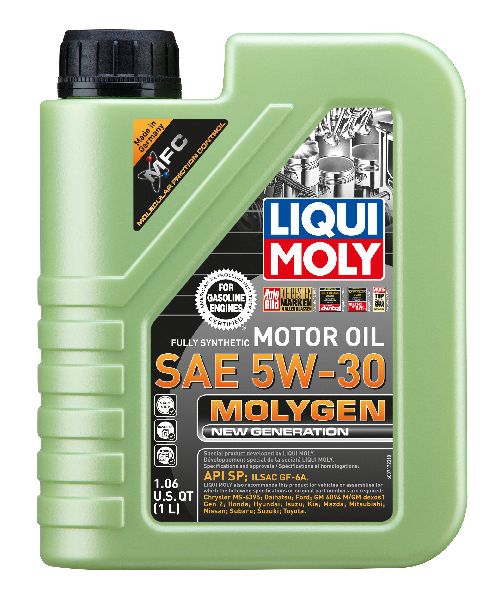
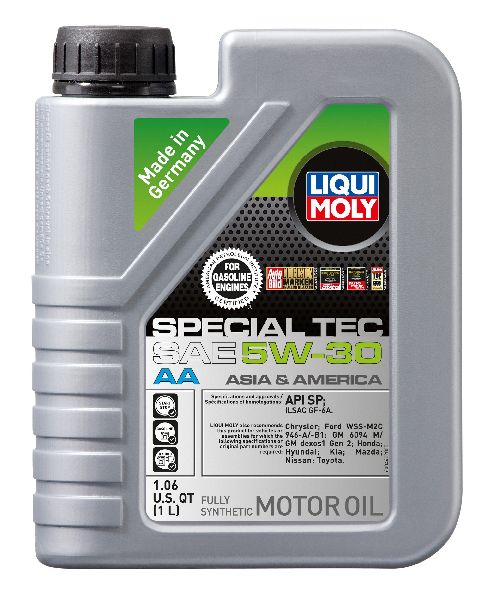
- Engine Oil and Filter — This is the primary fix recommended by GM's TSB 18-NA-246 for P0172 caused by fuel dilution from short-trip driving.
Trusted brands: ACDelco, Mobil 1, Pennzoil
OEM price range: $50-$80
Aftermarket price range: $40-$70 - High-Pressure Fuel Pump
(OEM #12658486, 12651175 (for 2013-2015 2.0L/2.5L))— A known failure point on the 2.0L Turbo engine that can leak fuel directly into the crankcase, causing severe oil dilution and a rich condition.
Trusted brands: ACDelco, Bosch, Delphi
OEM price range: $450-$550
Aftermarket price range: $250-$500
Related Codes That Often Appear With This One
- P06DE — Stands for 'Engine Oil Pressure Control Solenoid Valve Stuck On'. TSB 18-NA-246 explicitly links this code with P0172, indicating the root cause is likely fuel-contaminated engine oil affecting the oil system.
- P0521 — Stands for 'Engine Oil Pressure Sensor/Switch Range/Performance'. This code also appears with P0172 according to TSB 18-NA-246, pointing towards an issue with oil quality/pressure, very often due to fuel dilution.
- P0175 — Stands for 'System Too Rich (Bank 2)'. On V6 engines, if the cause is systemic (like a bad MAF sensor or fuel pressure issue), both banks may run rich, triggering both codes.
- P0496 — Stands for 'EVAP Flow During a Non-Purge Condition'. This code often points to a stuck-open EVAP purge valve, which is a known cause for a P0172 code as it allows unmetered fuel vapors into the intake.
Technical Service Bulletins (TSBs) & Recalls
- 18-NA-246: Details the primary cause of P0172 on these vehicles being fuel contamination in the engine oil due to short-trip driving. It provides diagnostic guidance and outlines the fix, which includes an oil change and potentially a revised PCV valve or ECM update.
Platform-Specific Known Issues
- This engine is the primary subject of TSB 18-NA-246 regarding fuel dilution from short trips. It is also the engine where failure of the high-pressure fuel pump (HPFP) is a more common cause for P0172. Cracked PCV hoses are also a known issue on this specific engine.
- While still susceptible to fuel dilution from short trips, the V6 engines are less commonly associated with HPFP failures causing this code compared to the 2.0T. On the V6, causes like a faulty MAF, O2 sensor, or EVAP purge valve should be given strong consideration. Since it has two banks, seeing P0172 without P0175 (Bank 2 Rich) might point towards a localized issue like a single leaking injector on Bank 1.
Mechanic-Grade Diagnostic Values
- Long-Term Fuel Trim (LTFT) — expected: Close to 0%.. Failure: A large negative number, typically exceeding -10% to -12%, confirms the ECM is compensating for a rich condition. Readings as low as -29% have been observed in vehicles with this code.
- Upstream Oxygen Sensor (Bank 1, Sensor 1) Voltage — expected: Rapidly fluctuating between approximately 0.1V and 0.9V on a warm engine in closed loop.. Failure: Voltage is stuck high (above 0.8V), slow to respond, or has a very narrow range. This can indicate a faulty sensor that is incorrectly telling the ECM the mixture is lean, causing it to add fuel.
- High-Pressure Fuel Rail Pressure (Direct Injection models) — expected: Varies with engine load, but can range from 300 to over 2,000 PSI.. Failure: A rapid drop in pressure after the engine is shut off can indicate a leak in the high-pressure system, potentially from the HPFP or a fuel injector.
Scan Tool Commands That Help
- GM GDS2 (Global Diagnostic System 2): Module Diagnostics > Body Control Module > Control Functions — To perform bidirectional tests on components like the fuel pump relay, EVAP purge and vent solenoids, and other actuators to verify their function without having to remove them. This is used after checking sensor data to confirm if a commanded component is actually working.
- GM GDS2 (Global Diagnostic System 2): Clear DTCs / Reset Fuel Trims — This should be performed after a repair (like an oil change for fuel dilution or replacing a sensor) to reset the long-term fuel trim values to zero. This forces the ECM to relearn the fuel strategy immediately, confirming if the fix was successful.
- GM GDS2 (Global Diagnostic System 2): Injector Balance Test — If a leaking fuel injector is suspected, this test can help identify which cylinder is receiving excess fuel by measuring pressure drops during a controlled test sequence.
Wiring & Ground Locations
- G104 — On the front of the right cylinder head (3.6L) or the lower rear of the cylinder head (2.0L/2.5L).. This ground is used for the ignition coils. A poor ground here can affect spark quality, leading to incomplete combustion and a rich condition.
- G101 — Located above the left headlight assembly.. This ground point serves the Engine Control Module (ECM), Transmission Control Module (TCM), and Mass Air Flow (MAF) sensor. A compromised ground here can cause erratic sensor readings and incorrect ECM calculations, directly leading to fuel mixture problems.
- G108 — Located on the left radiator support.. Provides a ground path for various front-end components. While not directly tied to the fuel system in diagrams, ensuring all engine bay grounds are clean and tight is a crucial step in diagnosing electrical gremlins that can cause rich codes.
Real Owner Repair Stories
- Reddit user post (Cadillac ATS (year not specified, but within range)) — P0172 and P0175 (both banks rich).
❌ Tried (didn't work) Visual inspection of spark plugs (they were in great condition)., Checking O2 sensor readings (they were reported as correct)., Hose inspection.
✅ What actually fixed it The mechanic concluded the Mass Airflow (MAF) sensor was the most likely cause since both banks were affected, and replacing it resolved the issue. - Reddit user post (2011 Cadillac CTS 3.0L V6 (similar GM engine family and systems)) — P0172 appeared after replacing the cooling fan.
✅ What actually fixed it The owner found a vacuum hose that had been disconnected during the prior repair. Reconnecting the hose fixed the P0172 code. (Note: The light later returned with P0175, suggesting the hose may have been loose or another leak was present).
"I Checked Everything" — The Actual Cause
- The most common scenario for this vehicle where standard tests fail is described in TSB 18-NA-246. A smoke test is used to find unmetered air (vacuum leaks) which cause lean codes. However, this TSB describes a condition where fuel-saturated engine oil releases hydrocarbon vapors into the intake through the PCV system. This introduces extra fuel, not extra air, causing a rich code that a smoke test would never find. The diagnosis is confirmed by smelling fuel on the oil dipstick, not with a smoke machine.
When the Usual Fixes Don't Work
- While TSB 18-NA-246 and the associated fuel-in-oil issue are extremely common causes for P0172 on this platform, it is not the only cause. Repair forums contain numerous confirmed fixes that involve more traditional failures. These include faulty Mass Airflow (MAF) sensors causing a system-wide rich condition on both banks, and simple disconnected or cracked vacuum hoses creating an issue the ECM misinterprets. A technician should not assume the TSB is the cause without first performing basic diagnostic checks on the air intake system, sensors, and vacuum lines, as these fundamental components can and do still fail.
OEM Part Supersession History
12651175→12658486— This is a common supersession for the High-Pressure Fuel Pump (HPFP) on 2013-2015 2.0L and 2.5L engines. The new part number is the current replacement.
Heads up: The parts are generally interchangeable for the specified model years, but always verify with VIN as running changes can occur.
Model Year Variations Within This Range
- 2016-2018: For the 3.6L V6, the LFX engine was replaced by the LGX engine, which added Active Fuel Management and stop/start technology. The standard automatic transmission was also upgraded from a 6-speed to an 8-speed (8L45).
- 2017-2018: The base 2.5L LCV engine was discontinued for the 2017 model year, making the 2.0L LTG turbo the standard engine.
- 2016-2018 (2.0L LTG): TSB 18-NA-246 specifies that for these model years, a fix for P0172 caused by fuel-in-oil may require replacing the PCV valve with an updated part and reprogramming the ECM, in addition to an oil change. Earlier models may only require the oil change.
Helpful Videos


Used OEM Parts in Stock



New Aftermarket Parts Available



The information in this article is provided for general reference and educational purposes only. Vehicle specifications, procedures, and part compatibility can vary by production date, trim level, and region. Always consult your vehicle's factory service manual and verify part numbers before purchasing or performing repairs. Safety-critical components such as airbags, seat belts, and braking systems should be installed by a qualified professional.
- Cadillac ATS:
- 🎬 Helpful Videos
- 🛍️ Shop This Part
- What's Unique About the 2013-2018 Cadillac ATS
- Diagnostic Flowchart
- Symptoms You May Notice
- Most Likely Causes
- Rare But Worth Checking
- Diagnosis Steps
- Parts You'll Likely Need
- Related Codes That Often Appear With This One
- Technical Service Bulletins (TSBs) & Recalls
- Platform-Specific Known Issues
- Mechanic-Grade Diagnostic Values
- Scan Tool Commands That Help
- Wiring & Ground Locations
- Real Owner Repair Stories
- "I Checked Everything" — The Actual Cause
- When the Usual Fixes Don't Work
- OEM Part Supersession History
- Model Year Variations Within This Range
- 🎟️ Get 5% Off