

P0171 on 2017-2020 Toyota Sequoia: System Too Lean Causes and Fixes
On a 2017-2020 Toyota Sequoia, P0171 is most often caused by a dirty Mass Airflow (MAF) sensor, a vacuum leak from failed intake manifold gaskets, or a failing fuel pump, especially on Flex Fuel models. Start by cleaning the MAF sensor; if that fails, perform a smoke test to check for vacuum leaks, and if none are found, a fuel system diagnosis is likely needed.
- P0171 means your Sequoia's engine is getting too much air or not enough fuel on the passenger-side bank.
- The most common and easiest thing to check first is the Mass Airflow (MAF) sensor. Cleaning it with a dedicated spray costs little and may fix the problem.
- If cleaning the MAF doesn't work, the next most likely causes are a vacuum leak (especially from the intake manifold gaskets) or a failing fuel pump.
- If you have a Flex Fuel (3UR-FBE) model and also experience hard starting, a known issue documented by Toyota may require a new fuel pump and a software update from a dealer.
- If both P0171 and P0174 (for the driver's side bank) are present, focus on issues that affect the whole engine, like the MAF sensor, a major vacuum leak, or low fuel pressure.
What's Unique About the 2017-2020 Toyota SEQUOIA
For the 2017-2020 Sequoia, especially models with the 5.7L Flex Fuel (3UR-FBE) engine, this code is frequently linked to specific issues documented in Toyota Technical Service Bulletins (TSBs). While common causes like MAF sensors and vacuum leaks are still relevant, TSBs T-SB-0166-19_Rev and TSB000923 point to a higher-than-normal likelihood of fuel delivery problems and incorrect ECM fuel alcohol calculations. The intake manifold gaskets are also a well-documented weak point on the 5.7L V8, making a smoke test a critical diagnostic step. The Flex Fuel issue can cause the ECM to have an elevated 'alcohol density estimate' even when using regular gasoline, leading it to command the wrong fuel mixture and trigger lean codes.
Diagnostic Flowchart
Tap your situation to follow the diagnostic path that matches what you're seeing on this vehicle.
Symptoms You May Notice
- Check Engine Light is on (often accompanied by flashing 'TRAC OFF' and '4LO' lights on the dashboard)
- Rough or unstable idle
- Hesitation or lack of power during acceleration
- Hard starting, may require extended cranking
- Reduced fuel economy
- Engine misfires or a knocking/pinging sound when accelerating
- Replacing the Air/Fuel Ratio (O2) sensor without first checking for vacuum leaks or MAF sensor issues. The sensor is often just accurately reporting a problem that exists elsewhere.
- Assuming a gas cap issue. A loose gas cap typically causes an EVAP system code, not P0171.
Most Likely Causes
- Dirty or Faulty Mass Airflow (MAF) Sensor 🔴 High Probability The MAF sensor is a common failure point on many vehicles and is sensitive to dirt and oil contamination, which can cause it to under-report the amount of air entering the engine. This is often the first and easiest diagnostic step. 🎬 Watch: A pro mechanic's guide to diagnosing P0171 lean codes.
How to confirm: Remove and inspect the sensor. If the small wires inside appear dirty or coated, cleaning is warranted. Monitoring MAF readings with an OBD-II scanner can also show if the sensor is reporting plausible values. A DIY cleaning takes about 10 minutes. After cleaning, the idle may be high for a few starts as the computer re-learns.
Typical fix: Clean the sensor using a dedicated MAF sensor cleaner spray (such as CRC brand). Do not touch the sensor wires with anything but the spray. If cleaning does not resolve the issue, replace the sensor, preferably with a Denso-branded part.
Est. part cost: $10-$20 for cleaner, $70-$180 for a new Denso sensor. - Vacuum Leak (Intake Manifold Gaskets) 🔴 High Probability The intake manifold gaskets on Toyota's 5.7L UR-series V8 engines are a known failure point. Over time, heat cycles cause them to become brittle and crack, allowing unmetered air to enter the intake manifold after the MAF sensor, which is a very common cause of P0171 and P0174 codes.
How to confirm: A smoke test is the most effective method. This involves injecting smoke into the intake system and watching for leaks, particularly around the intake manifold 🎬 See how to use a smoke machine to find vacuum leaks. where it meets the cylinder heads. Listening for a hissing sound at idle can also sometimes pinpoint a leak.
Typical fix: Replace the intake manifold gaskets. This is a more involved repair that requires removing the intake manifold. The labor cost is typically higher than the parts cost.
Est. part cost: $40-$80 for a gasket set (e.g., Fel-Pro MS 97044). - Failing Fuel Pump or Clogged Fuel Filter 🟡 Medium Probability As noted in TSB #TSB000923 and TSB #T-SB-0166-19_Rev, fuel delivery issues are a documented cause for P0171 on these vehicles, sometimes accompanied by a P0087 (low fuel pressure) code. A weak pump cannot supply enough fuel to meet the engine's demand, causing a lean condition. A major safety recall (NHTSA 20V012000) for failing fuel pumps was issued for the related 2018-2020 Tundra, highlighting the risk for this platform.
How to confirm: Perform a fuel pressure test. On the related Tundra platform, the specification is 281-287 kPa (40.8-41.7 PSI) at idle. A reading significantly below this (e.g., 24 PSI as seen in one diagnosis) strongly indicates a failing fuel pump.
Typical fix: Replace the in-tank fuel pump assembly, which often includes the fuel filter. TSB #T-SB-0166-19_Rev also specifies replacing the fuel pump assembly as part of its repair procedure for certain conditions.
Est. part cost: $250-$500 for the pump assembly. Dealer replacement can be over $1,500. - Faulty Air/Fuel Ratio Sensor (O2 Sensor) ⚪ Low Probability While the sensor triggers the code, it's less often the root cause. However, an old or slow-responding sensor can send incorrect lean readings to the ECM. Denso is the OEM supplier for Toyota, and using their parts is highly recommended to avoid compatibility issues.
How to confirm: Monitor the sensor's voltage output with a scanner. A healthy sensor will show rapidly fluctuating voltage. A slow or flat-lined signal suggests it's failing. Swapping the Bank 1 and Bank 2 sensors (if they are identical and accessible) to see if the code changes to P0174 can also confirm a bad sensor.
Typical fix: Replace the Bank 1, Sensor 1 Air/Fuel Ratio sensor. It is highly recommended to use an OEM or Denso part (e.g., Denso 234-9041).
Est. part cost: $100-$200
Rare But Worth Checking
- Leaking PCV Hose or Faulty PCV Valve: The Positive Crankcase Ventilation (PCV) hose can crack or become disconnected, creating a vacuum leak. The PCV valve itself can also get stuck open. A new valve should rattle when shaken. It's a simple and inexpensive part to check and replace. The OEM valve part number is often 12204-38030.
- Exhaust Leak Before the A/F Sensor: A crack in the exhaust manifold or a leaking gasket before the primary A/F sensor can allow outside air to be drawn into the exhaust stream, fooling the sensor into thinking the engine is running lean.
Diagnosis Steps
- Read the trouble codes with an OBD-II scanner and check for any other pending or stored codes, especially P0174, P0087, or P1604.
- Inspect the engine bay for obvious signs of vacuum leaks, such as cracked, disconnected, or brittle hoses, especially the PCV hose and air intake boot.
- Remove and clean the Mass Airflow (MAF) sensor using dedicated MAF sensor cleaner. Inspect the sensor for any damage. Allow it to dry completely before reinstalling.
- If codes P0171 and P0174 are both present, a vacuum leak or MAF issue is highly probable. 🎬 Watch this walkthrough for fixing P0171 and P0174 codes on Toyotas. Perform a smoke test to definitively check for vacuum leaks, paying close attention to the intake manifold gaskets.
- If no vacuum leaks are found, test the fuel pressure at the fuel rail. Verify that the pressure is within OEM specifications (281-287 kPa or 40.8-41.7 PSI at idle for the related Tundra).
- If fuel pressure is low, the fuel pump is the likely culprit.
- If fuel pressure is normal and no vacuum leaks are found, inspect the Air/Fuel Ratio sensor (Bank 1, Sensor 1) data on a scanner. If it appears lazy or unresponsive, consider replacement with a Denso part.
- For Flex Fuel (3UR-FBE) models exhibiting hard starts, use a scan tool like Techstream to check the 'Alcohol Density Estimate' value. If it is 15% or higher while using regular gasoline, consult a dealer regarding TSB #T-SB-0166-19_Rev. The fix may require an ECM reprogram, resetting the 'Fuel Density Learning Value', and/or fuel pump replacement.
Parts You'll Likely Need
- Mass Airflow Sensor Cleaner — This is the cheapest and easiest first step, and it often resolves the issue if the sensor is simply dirty.
Trusted brands: CRC, Liqui Moly
Aftermarket price range: $10-$20 - Mass Airflow (MAF) Sensor
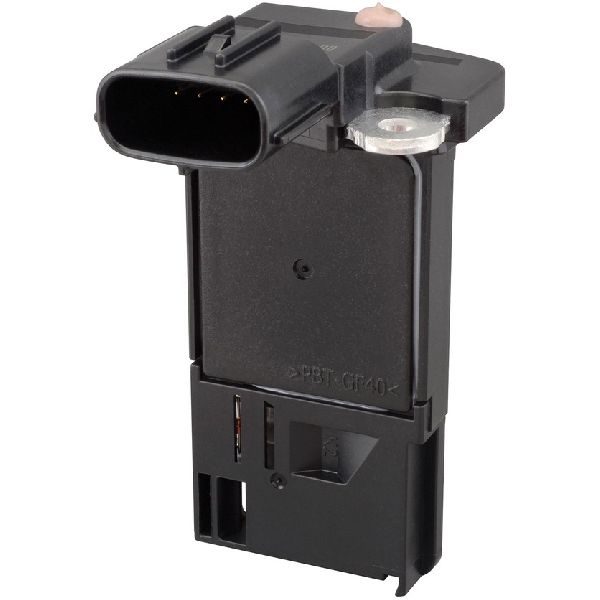
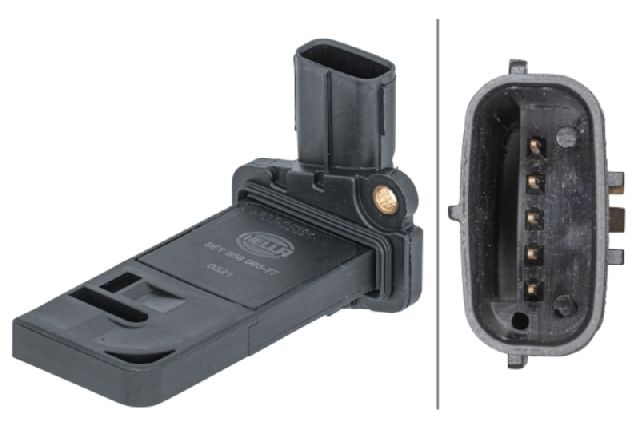
(OEM #22204-0S010)— If cleaning doesn't work, the sensor itself may have failed. It is a very common cause of lean codes.
Trusted brands: Denso
OEM price range: $150-$200
Aftermarket price range: $70-$120 - Intake Manifold Gasket Set
(OEM #17176-0P021)— These gaskets are a known failure point on the 5.7L engine and a common source of vacuum leaks that cause P0171 and P0174. A smoke test can confirm the leak.
Trusted brands: Fel-Pro (MS 97044), Mahle, Toyota OE
OEM price range: $60-$90
Aftermarket price range: $40-$80
Related Codes That Often Appear With This One
- P0174 — System Too Lean (Bank 2). When both P0171 and P0174 appear together, it strongly indicates a problem affecting both engine banks, such as a faulty MAF sensor, a large vacuum leak (like intake gaskets), or low fuel pressure.
- P0087 — Fuel Rail / System Pressure – Too Low. As cited in TSB #TSB000923, this code can appear with P0171, directly pointing to a fuel delivery problem like a weak fuel pump.
- P1604 — Startability Malfunction. TSB #T-SB-0166-19_Rev links this code with P0171 on Flex Fuel models, indicating a hard start condition often related to the ECM's incorrect alcohol density calculation or other fuel system issues.
Technical Service Bulletins (TSBs) & Recalls
- TSB #TSB000923
- TSB #T-SB-0166-19_Rev
Platform-Specific Known Issues
- Flex Fuel (3UR-FBE) Alcohol Density Calculation: Per TSB T-SB-0166-19_Rev, the ECM can incorrectly estimate a high alcohol content in the fuel, even when running on standard gasoline. This causes it to adjust fuel trims improperly, leading to hard starts and lean (P0171/P0174) or rich (P0172/P0175) codes. The fix often involves an ECM reprogram and resetting the fuel alcohol learning value.
Mechanic-Grade Diagnostic Values
- Fuel Pressure (Low-Side) — expected: 281-287 kPa (40.8-41.7 PSI) at idle.. Failure: Pressure significantly below 40 PSI indicates a weak or failing fuel pump.
- Long-Term Fuel Trim (LTFT) — expected: Within +/- 10% at idle and 2500 RPM.. Failure: Sustained values greater than +12.5% will trigger the code; values approaching +20% or higher strongly indicate a lean condition.
- Mass Airflow (MAF) Sensor Reading — expected: Approximately 5.0-6.0 g/s at warm idle (no accessories on). Should increase smoothly with RPM.. Failure: A reading of 0 g/s while running, or readings that are erratic or don't increase with RPM. A common rule of thumb is the g/s value should approximate the engine displacement in liters at idle.
- Alcohol Density Estimate (Flex Fuel models only) — expected: < 15% when fueled with standard E0-E10 gasoline.. Failure: A value of 15% or greater when the vehicle has not been fueled with high-ethanol fuel. This indicates the ECM has incorrectly learned a high alcohol content, causing it to lean out the mixture.
Hidden / Shadow Codes Worth Checking
- Alcohol Density Estimate (Live Data Parameter): This is not a DTC, but a critical live data parameter on 3UR-FBE Flex Fuel engines. An erroneously high value (>=15% on regular gas) causes the ECM to command a lean fuel mixture, triggering P0171/P0174 even with no physical vacuum leaks or fuel pressure issues. (see via Toyota Techstream software or a professional bidirectional scan tool (Autel, Launch, etc.) under Engine Live Data.)
Scan Tool Commands That Help
- Toyota Techstream: Utility -> Fuel Density Learning Value Reset — This is a required step for 3UR-FBE Flex Fuel models when P0171/P0174 is present with a hard start (P1604) and the 'Alcohol Density Estimate' is found to be incorrectly elevated. It resets the ECM's learned value for fuel composition.
- Toyota Techstream: Active Test -> Control the Injection Volume for A/F Sensor — To verify if the Bank 1 A/F sensor is responding correctly. The command forces the fuel mixture richer (+12.5% or +25%) or leaner (-12.5%). A healthy sensor's output voltage should change immediately in response, confirming it is not 'lazy' or failed.
Wiring & Ground Locations
- MAF Sensor Connector — On the air intake tube, immediately after the air filter housing.. This 5-pin connector (part # 6189-1046) provides power, ground, and signal for the MAF sensor. A corroded pin or damaged wire here will cause incorrect MAF readings, leading directly to lean codes. Pin 1 is typically 12V power, Pin 2 is ground, and Pin 3 is the signal wire (~1.0V at idle).
- Main Engine Grounds — At the rear of the cylinder heads, one on each side, near where the engine mates to the transmission. Additional grounds are found on the valve covers.. A poor engine ground can cause erratic voltage signals from critical sensors like the A/F ratio sensors and MAF sensor, leading to incorrect readings and false lean codes. Ensuring these grounds are clean and tight is a crucial electrical diagnostic step.
Real Owner Repair Stories
- Toyota Tundra Forum user diagnosis (YouTube documented) (Toyota Tundra with 5.7L engine (same platform/powertrain) and 191,000 miles) — P0171 and P0174 codes present.
❌ Tried (didn't work) Initial diagnosis focused on MAF sensor and vacuum leaks.
✅ What actually fixed it A fuel pressure test was performed, revealing only 24 PSI against a specification of 40.8-41.7 PSI. The low pressure directly indicated a weak fuel pump. Replacing the in-tank fuel pump assembly resolved the lean codes. - Tundras.com forum user (2018 Toyota Tundra 5.7L) — P0171 and P0174 codes.
❌ Tried (didn't work) Cleaning MAF sensor.
✅ What actually fixed it After cleaning the MAF sensor did not work, the owner performed a smoke test which revealed a significant leak from the intake manifold gaskets. Replacing the gaskets provided a permanent fix for the codes.
"I Checked Everything" — The Actual Cause
- On 3UR-FBE Flex Fuel models, it is common for a smoke test to show no vacuum leaks, yet P0171/P0174 persist. The root cause is often the ECM's 'Alcohol Density Estimate' being incorrectly high. The computer thinks it's running on high-ethanol fuel and leans out the mixture to compensate, but since it's actually running on regular gasoline, this induces a true lean condition. The fix is not mechanical but electronic: a 'Fuel Density Learning Value Reset' using a scan tool like Techstream.
When the Usual Fixes Don't Work
- In many documented cases for the 2017-2020 Sequoia and Tundra, the most common DIY first step of cleaning the MAF sensor does not resolve the P0171 code. While it remains a valid first step, the true cause is frequently a more significant issue. Multiple owner and technician reports confirm that the final fix was either replacing failed intake manifold gaskets (confirmed with a smoke test) or replacing a weak fuel pump (confirmed with a fuel pressure test showing less than the required ~41 PSI).
OEM Part Supersession History
Varies by year/VIN→77020-0C120 (Example for 26-gal Flex Fuel)— TSB T-SB-0166-19_Rev specifies replacing the fuel pump assembly to address hard start and lean code issues on Flex Fuel models.
Heads up: The fuel pump assembly is specific to the fuel tank size (26 or 38 gallons) and Flex Fuel (3UR-FBE) vs. non-Flex Fuel engine. Using the wrong part number can lead to fitment or fuel delivery issues. For example, 77020-0C120 is for a 26-gallon Flex Fuel tank, while 77020-0C160 is for a 38-gallon non-Flex Fuel tank.
Model Year Variations Within This Range
- 2018-2020: While the engine and transmission were unchanged from 2017, models from 2018-2020 fall within the range of a major fuel pump safety recall affecting the related Tundra platform (NHTSA 20V012000). This suggests a higher statistical likelihood of fuel pump failure as the root cause for P0171 in these specific years compared to the 2017 model.
- 2017-2020 (Flex Fuel models): The presence of the 3UR-FBE 'Flex Fuel' engine introduces a unique and common cause for P0171 not present on non-FFV models: the incorrect 'Alcohol Density' learning value. This is a software/ECM issue addressed by TSB T-SB-0166-19_Rev and requires a specific scan tool reset procedure.
Helpful Videos
Used OEM Parts in Stock
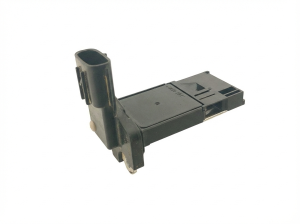
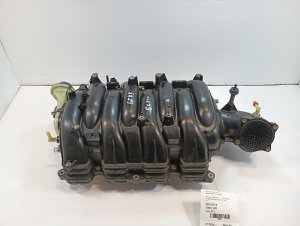
New Aftermarket Parts Available
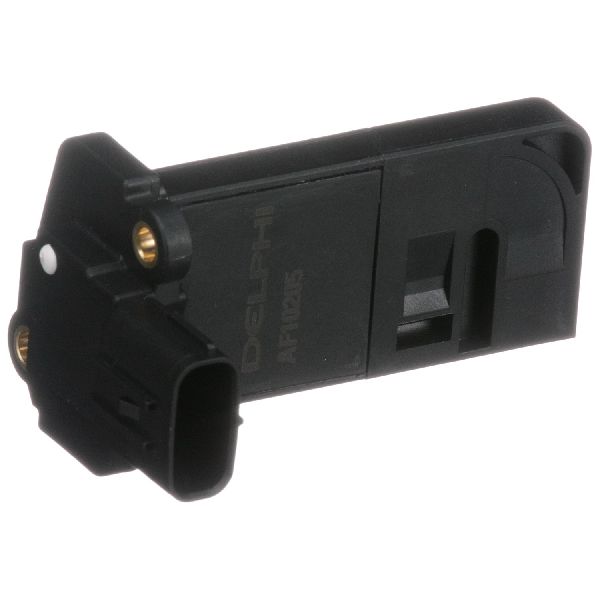
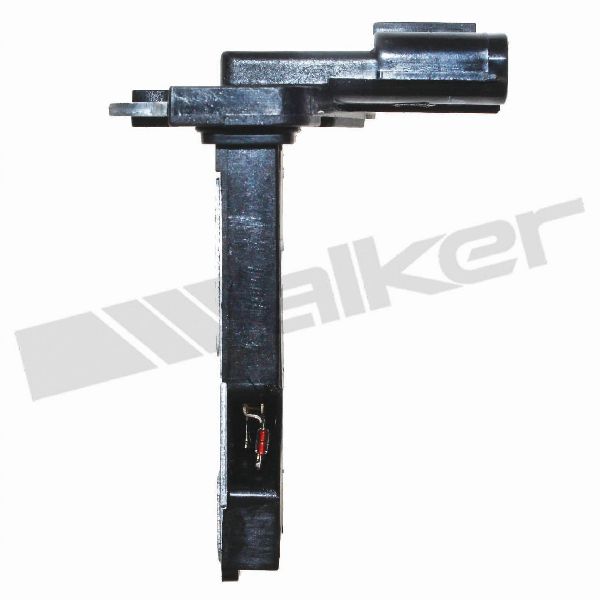



The information in this article is provided for general reference and educational purposes only. Vehicle specifications, procedures, and part compatibility can vary by production date, trim level, and region. Always consult your vehicle's factory service manual and verify part numbers before purchasing or performing repairs. Safety-critical components such as airbags, seat belts, and braking systems should be installed by a qualified professional.
- Toyota SEQUOIA:
- 🎬 Helpful Videos
- 🛍️ Shop This Part
- What's Unique About the 2017-2020 Toyota SEQUOIA
- Diagnostic Flowchart
- Symptoms You May Notice
- Most Likely Causes
- Rare But Worth Checking
- Diagnosis Steps
- Parts You'll Likely Need
- Related Codes That Often Appear With This One
- Technical Service Bulletins (TSBs) & Recalls
- Platform-Specific Known Issues
- Mechanic-Grade Diagnostic Values
- Hidden / Shadow Codes Worth Checking
- Scan Tool Commands That Help
- Wiring & Ground Locations
- Real Owner Repair Stories
- "I Checked Everything" — The Actual Cause
- When the Usual Fixes Don't Work
- OEM Part Supersession History
- Model Year Variations Within This Range
- 🎟️ Get 5% Off