

P0171 on 2008-2013 Toyota Highlander 3.5L V6: System Too Lean Causes and Fixes
On a 2008-2013 Highlander, code P0171 is most often caused by a dirty Mass Airflow (MAF) sensor or a vacuum leak from a cracked intake hose or failed intake manifold gaskets. Start by cleaning the MAF sensor, which costs under $15 and often solves the problem. Also, inspect all vacuum hoses for cracks, especially small ones connected to the air intake assembly.
- Start with the easiest and cheapest fix: clean the Mass Airflow (MAF) sensor using a dedicated cleaner.
- Thoroughly inspect for vacuum leaks, especially the large rubber air intake hose and around the intake manifold gaskets. A smoke test is the most reliable method.
- Code P0171 refers to Bank 1, which is the cylinder bank closer to the firewall on your Highlander's V6 engine.
- If you also have a P0174 code, the problem affects the whole engine. Focus on the MAF sensor or a major vacuum leak before the throttle body.
- Only consider replacing the more expensive Air/Fuel Ratio sensor after ruling out vacuum leaks and a dirty MAF sensor.
What's Unique About the 2008-2013 Toyota Highlander
For the second-generation Highlander with the 2GR-FE V6, the P0171 code is a very common issue that typically points to a few specific culprits rather than major engine trouble. The diagnostic path almost always begins with the simplest and most frequent failures: a dirty Mass Airflow (MAF) sensor or unmetered air entering the engine. Unmetered air leaks are often from predictable places like hardened intake manifold gaskets or cracked rubber air intake hoses, which are known to degrade over time. A stuck-open PCV valve is also a frequent cause, acting as a significant vacuum leak.
Symptoms You May Notice
- Check Engine Light is on
- TRAC OFF light may also illuminate
- Rough or unstable idle
- Hesitation or stumbling during acceleration
- Reduced engine power
- Decreased fuel economy
- In some cases, a hissing sound from the engine bay indicating a vacuum leak.
- Violent shaking or near-stalling at low RPMs, which may improve at highway speeds.
- A "Low brake power" message on the dashboard has been reported by some owners in conjunction with this code (NHTSA ODI #11526896).
- Immediately replacing the Air/Fuel (O2) sensor without checking for vacuum leaks or cleaning the MAF sensor first. The sensor is often correctly reporting a lean condition caused by something else.
Most Likely Causes
- Dirty Mass Airflow (MAF) Sensor 🔴 High Probability The MAF sensor is located in the intake tract and can become contaminated with dirt and oil vapor over time, causing it to under-report the amount of air entering the engine. This is one of the most common causes for P0171 on Toyotas.
How to confirm: Inspect the sensor's wires inside the housing for any grime or debris. A more definitive test is to monitor MAF readings with a scan tool; however, cleaning is so simple and cheap it's often done as the first step regardless. Use only dedicated MAF sensor cleaner, as other chemicals can damage the sensitive wires.
Typical fix: Remove the sensor (usually two small screws) and clean the sensitive wires carefully with a dedicated MAF sensor cleaner spray. Do not touch the wires. Allow it to dry completely before reinstalling.
Est. part cost: $10-$20 for cleaner spray - Vacuum Leak (Intake Manifold Gaskets, Hoses) 🔴 High Probability The rubber intake manifold gaskets and various vacuum hoses (like the PCV hose and air intake boot) can become brittle, crack, and fail over time, allowing unmetered air to enter the engine after the MAF sensor.
How to confirm: With the engine running, listen for hissing sounds. You can also carefully spray short bursts of brake cleaner or a propane torch (unlit) around the intake manifold gaskets and vacuum lines. If the engine RPM changes, you've found the leak. A smoke test is the most reliable professional method to pinpoint the exact location of a leak.
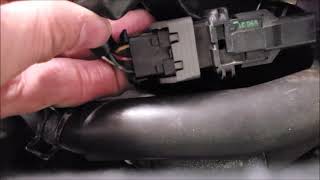
Typical fix: Replace the specific leaking hose or the set of intake manifold gaskets. The upper intake gaskets (plenum gaskets) are a common failure point and should be replaced anytime the intake manifold is removed for other service, like spark plug 🎬 Watch this helpful tip for removing the intake manifold replacement.
Est. part cost: $10-$30 for a hose, $25-$50 for intake gaskets - Faulty Air/Fuel Ratio Sensor (Bank 1, Sensor 1) 🟡 Medium Probability This sensor, also known as the upstream oxygen sensor, is located in the exhaust manifold and measures the air-fuel ratio. It can degrade over time and send inaccurate (false lean) signals to the ECM, causing it to enrich the mixture unnecessarily. While it can fail, it often correctly reports a lean condition caused by another issue, leading to misdiagnosis.
How to confirm: Use a scan tool to observe the sensor's voltage or current readings. A healthy sensor will fluctuate rapidly. A lazy or stuck sensor is a sign of failure. Swapping the Bank 1 and Bank 2 sensors (if they are identical) and seeing if the code moves to P0174 (Bank 2 Lean) is another diagnostic trick.
Typical fix: Replace the Bank 1, Sensor 1 Air/Fuel Ratio sensor. It is highly recommended to use the OEM Denso part to avoid compatibility issues. Bank 1 is on the rear of the engine, against the firewall.
Est. part cost: $100-$180
Rare But Worth Checking
- Low Fuel Pressure: While less common, a weak fuel pump or clogged fuel filter can cause a lean condition. This would typically affect both engine banks, setting a P0174 code as well. A manufacturer service bulletin, TSB000923, notes that P0171 and P0174 may occur alongside DTC P0087 (Fuel Rail Pressure Too Low) and exhibit a hard start condition.
- Clogged or Dirty Fuel Injector(s) on Bank 1: If one or more injectors on Bank 1 are restricted, they won't deliver enough fuel, leading to a lean condition isolated to that bank. This is more likely on very high-mileage vehicles.
- Stuck Open EVAP Purge Valve: The evaporative emissions (EVAP) purge valve can sometimes stick open, creating a vacuum leak that allows unmetered fuel vapor and air into the intake manifold. This can trigger 🎬 See how a faulty purge valve causes lean codes lean codes.
- Corroded ECM Connector: Manufacturer bulletin T-TT-0462-17 describes instances where corrosion and water in the A43 ECM connector caused low fuel pressure and various DTCs, including P0171 and P0300.
Diagnosis Steps
- Read the codes with an OBD-II scanner and check the freeze frame data to see the engine conditions when the code was set. Note the Long-Term Fuel Trim (LTFT) and Short-Term Fuel Trim (STFT) values.
- Visually inspect the engine bay. Look for obvious issues like a disconnected vacuum hose or a large crack in the air intake boot between the air filter box and the throttle body.
- Clean the Mass Airflow (MAF) sensor. Remove the sensor and spray it with dedicated MAF sensor cleaner. Do not use brake or carb cleaner. Let it dry completely before reinstalling. Clear the codes and drive to see if the code returns.
- Check for vacuum leaks. With the engine idling, listen for hissing noises. Carefully spray short, controlled bursts of carb cleaner or unlit propane around the intake manifold gasket area and vacuum hoses. If the engine idle surges or smooths out, you have found a leak. A professional smoke test is the most effective way to find elusive leaks.
- Analyze fuel trims with a scan tool. High positive numbers (e.g., LTFT + STFT > 35%) confirm the engine is compensating for a lean condition. If trims are high at idle but improve (move closer to 0) at higher RPMs, a vacuum leak is the most likely cause.
- Test the Air/Fuel Ratio Sensor (Bank 1, Sensor 1). Monitor its output with a scan tool. A failing sensor may be slow to respond or have a fixed reading. A healthy sensor's voltage should fluctuate rapidly.
- Check fuel pressure. If vacuum leaks and sensor issues are ruled out, connect a fuel pressure gauge to test if the fuel pump is providing adequate pressure according to factory specifications. Manufacturer bulletin T-SB-0072-19 highlights that low or no fuel pressure can trigger P0171 alongside other drivability concerns.
Parts You'll Likely Need
- Mass Airflow (MAF) Sensor Cleaner — This is the cheapest and easiest first step, and a dirty MAF sensor is a very common cause of P0171.
Trusted brands: CRC, WD-40 Specialist
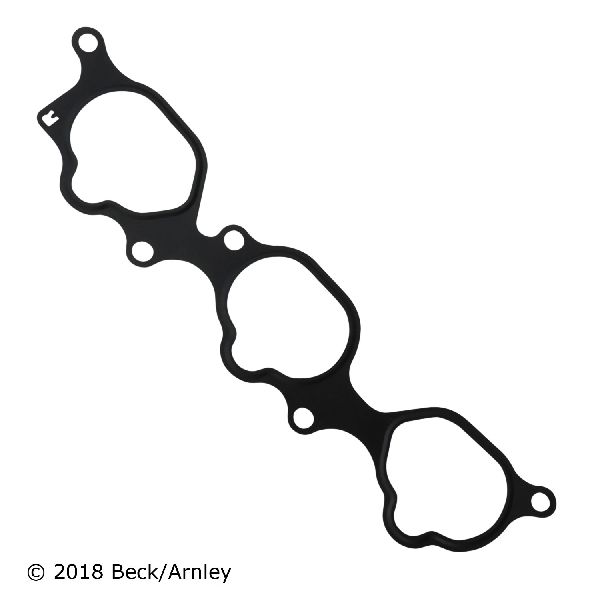
Aftermarket price range: $10-$20 - Intake Manifold Gasket Set (Upper)
(OEM #17171-0P011)— These gaskets are a common source of vacuum leaks as they age and become brittle. A leak here will cause a lean condition.
Trusted brands: Toyota (Genuine), Fel-Pro, Mahle
OEM price range: $25-$40
Aftermarket price range: $15-$30 - Air/Fuel Ratio Sensor (Bank 1, Sensor 1)
(OEM #89467-48120)— If the sensor itself fails, it can send incorrect lean readings to the computer. Bank 1 is the rear bank on the 2GR-FE engine. Using the OEM Denso part is strongly recommended. This part number is superseded by 89467-0E090.
Trusted brands: Denso (OEM)
OEM price range: $150-$200
Aftermarket price range: $100-$160 - PCV Valve
(OEM #12204-31040)— A stuck-open PCV valve acts as a vacuum leak. It's an inexpensive and easy part to replace during diagnosis and is a known failure point.
Trusted brands: Toyota (Genuine), Aisan
OEM price range: $10-$20
Aftermarket price range: $5-$15
Related Codes That Often Appear With This One
- P0174 — This is the 'System Too Lean' code for Bank 2. If both P0171 and P0174 are present, it strongly points 🎬 Watch: Diagnosing both P0171 and P0174 codes together to a cause that affects the entire engine, like a dirty MAF sensor, a large vacuum leak at the intake plenum, or a fuel delivery problem.
- P0300, P0301, P0303, P0305 — These are misfire codes (P0300 for random, P0301/3/5 for Bank 1 cylinders). A severe lean condition can prevent proper combustion, leading to misfires on the affected bank.
- P0101 — This code indicates a MAF Sensor Circuit Range/Performance problem. It often appears with P0171/P0174 when the sensor is extremely dirty or failing, as the lean condition is a direct result of the MAF's incorrect readings.
Technical Service Bulletins (TSBs) & Recalls
- EG037-04 - This TSB from 2004 provides identification for Bank 1 and Bank 2 A/F and O2 sensors, which is useful for ensuring the correct sensor is being diagnosed or replaced.
- TSB-0103-09 / TSB-0103-20 - These TSBs relate to diagnosing water pump leaks and are not directly related to P0171, though they are relevant to the 2GR-FE engine. The pass 1 citation was likely a misinterpretation.
- TSB000923 - This bulletin addresses hard start or MIL ON conditions with P0171 and P0174, suggesting that Techstream data list analysis may reveal positive fuel trim values.
- T-SB-0072-19 - This bulletin notes that various drivability concerns and low fuel pressure can lead to DTCs including P0171 and P0300.
- T-TT-0462-17 - This manufacturer tech tip discusses how corrosion and water in the ECM connector can cause low fuel pressure and P0171.
Platform-Specific Known Issues
- Cracked Air Intake Hose: The large rubber hose connecting the air filter box to the throttle body can develop cracks, especially in the accordion-like sections, creating a significant unmetered air leak. This is a very common point of failure.
- Incorrectly Installed Intake Gasket: A Reddit user reported a persistent P0171/P0174 issue that was ultimately traced to a backyard mechanic installing an intake manifold block-off plate gasket inside-out, preventing a proper seal. This highlights the importance of correct reassembly after any intake-related work.
Mechanic-Grade Diagnostic Values
- Fuel Pressure at Idle — expected: 304 to 343 kPa (44 to 50 psi). Failure: Pressure below 304 kPa indicates a potential weak fuel pump or clogged filter. Pressure above 343 kPa could indicate a faulty fuel pressure regulator.
- Mass Airflow (MAF) Sensor Reading at Idle — expected: 1.0 to 3.0 g/sec (A/C OFF, in Neutral). Failure: Readings significantly outside this range, especially on the low side, suggest a dirty or failing MAF sensor.
- Mass Airflow (MAF) Sensor Reading at 2,500 RPM — expected: 2.0 to 6.0 g/sec (A/C OFF, in Neutral). Failure: Readings that don't increase appropriately with RPM suggest a faulty sensor.
- Air/Fuel (A/F) Ratio Sensor Heater Resistance — expected: 1.8 to 3.4 Ω at 20°C (68°F). Failure: Resistance outside this range indicates a failed heater element within the sensor, requiring replacement.
- Long-Term Fuel Trim (LTFT) Malfunction Threshold — expected: Average fuel trim (LTFT + STFT) should be below +35%. Failure: When the ECM has to add more than 35% fuel over the long term to maintain stoichiometry, it will set the P0171 code.
Hidden / Shadow Codes Worth Checking
- Mode 6, Test ID $81: This is not a shadow code, but a diagnostic monitor within the standard OBD-II system that tracks A/F sensor response rate. Failing values in Mode 6 can indicate a lazy sensor before it completely fails and sets a specific sensor code. (see via An advanced OBD-II scan tool capable of displaying Mode 6 data. This data is less user-friendly than DTCs and requires interpretation against manufacturer specifications.)
Scan Tool Commands That Help
- Toyota Techstream: Active Test: A/F CONTROL — This test allows the technician to manually command the fuel injection volume to increase by 25% or decrease by 12.5%. By observing the live data from the A/F sensor (B1S1) and O2 sensor (B1S2) during this test, a technician can confirm if the sensors are responding correctly to the change. No response or slow response indicates a faulty sensor.
- Toyota Techstream: Active Test: Activate the VSV for Evap Control — This command manually opens and closes the EVAP purge valve. It can be used to confirm if the valve is stuck open (a common cause of lean codes) by checking for vacuum flow when the valve is commanded 'OFF'.
- Toyota Techstream: Active Test: FUEL PUMP / SPD — This allows you to turn on the fuel pump without starting the engine. It is useful for checking fuel pump operation audibly and for performing fuel pressure tests safely.
Wiring & Ground Locations
- Engine Ground Straps (Valve Covers) — The 2GR-FE has two main grounding wires that connect from the top of each valve cover to the chassis frame, near the strut towers.. A poor ground connection here can cause incorrect readings from engine sensors, including the A/F ratio sensor and MAF sensor, leading to false lean codes.
- Starter / Transmission Ground — A large ground cable runs from a bolt on the top of the transmission bell housing to a grounding point on the chassis near the engine mount.. While primarily for the starter, this is a major engine ground point. Corrosion or looseness can introduce electrical noise and resistance, affecting the entire engine management system.
- Ground Point D4 — Located behind the driver's side kick panel.. This is an interior ground point for various components. While less likely to be the primary cause, it's part of the overall ground distribution system that the ECM relies on.
Real Owner Repair Stories
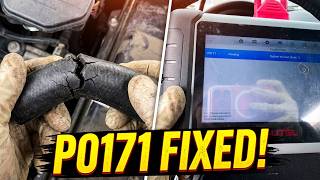
- YouTube channel 'Fixing cars and stuff' (2008 Toyota Highlander Hybrid) — Check Engine Light with code P0171 pending.
❌ Tried (didn't work) The video immediately identified the likely cause upon visual inspection.
✅ What actually fixed it A small vacuum pipe connected to an intake resonator box was found to have a completely broken and rotted rubber end, causing a significant vacuum leak. Replacing the hose resolved the issue. - YouTube channel 'Toyota Maintenance' (2013 Toyota Highlander LTD 3.5L V6) — Check Engine Light and TRAC OFF light on, with codes P0171 and P0174.
❌ Tried (didn't work) The owner had already replaced the gas cap., A smoke test was performed but did not reveal any leaks.
✅ What actually fixed it The technician removed and inspected the MAF sensor, finding it extremely dirty. Cleaning the MAF sensor with dedicated cleaner and reinstalling it fixed the problem, with fuel trims returning to normal. - Reddit user 'GotMyOrangeCrush' on r/MechanicAdvice (2006 Lexus RX (same platform and engine family)) — P0171 and P0174 lean codes.
❌ Tried (didn't work) Cleaning the MAF sensor did not resolve the code.
✅ What actually fixed it The user advised to carefully inspect the rubber intake 'bellows' (the flexible part of the intake hose). A split or tear in this specific component is a very common cause for lean codes on this platform. - NHTSA ODI #11722818 — An owner reported that the vehicle hesitates and sputters upon acceleration, experiences a loss of power, and stalls during operation with P0171 and P0174 generated in combination.
- NHTSA ODI #11526896 — An owner described a situation where the engine would not start after filling with gas and displayed a "Low brake power" message, with codes P0171 and P0174 indicating a lean mixture.
"I Checked Everything" — The Actual Cause
- A stuck-open EVAP purge valve can cause a P0171 (and often P0174). This can be missed during a standard smoke test if the valve isn't commanded closed via a scan tool during the test. The valve essentially acts as a calibrated vacuum leak, allowing unmetered air and fuel vapor into the intake manifold. A quick diagnostic is to disconnect the hose from the purge valve that leads to the intake manifold, plug the port on the manifold with your finger, and watch the short-term fuel trims on a scan tool. If the trims immediately start dropping towards zero, the purge valve is the source of the leak.
OEM Part Supersession History
89467-48120→89467-0E090— Standard part number update and consolidation by Toyota.
Heads up: Both part numbers are for the Bank 1 Sensor 1 (rear, firewall side) A/F sensor. The newer part number is the correct replacement. Always verify fitment with VIN.
Model Year Variations Within This Range
- 2011-2013: A significant mid-cycle refresh occurred for the 2011 model year, featuring new front fascia, headlights, and taillights. While the 3.5L 2GR-FE engine in the non-hybrid models remained unchanged, the Hybrid model was upgraded from a 3.3L to a 3.5L V6. For the purpose of diagnosing P0171 on the 2GR-FE, the causes and procedures are consistent across the entire 2008-2013 range.
Diagnostic Flowchart
Other Known Issues on This Vehicle
Issues unrelated to this code that are worth knowing about as an owner of this generation:
- VVT-i Oil Line Rupture 🔴 High — Common on 2008 and some early 2009 models. A rubber section of the VVT-i oil line for Bank 1 can degrade and burst, causing rapid and catastrophic oil loss, leading to engine seizure. (Ref: Limited Service Campaign (LSC) issued by Toyota to replace the rubber/metal line with an all-metal line (Part No. 15772-31030).)
- Premature Water Pump Failure 🟠 Medium — Commonly fails between 60,000 and 100,000 miles. Symptoms include a grinding/whining noise from the passenger side of the engine or visible pink coolant residue/leaks. (Ref: T-SB-0103-20 provides diagnostic tips to distinguish between normal weeping and an active leak requiring replacement.)
- Melting / Sticky Dashboard 🟡 Low — Very common in Highlanders used in hot, sunny climates. The dashboard material degrades, becoming sticky, shiny, and easily damaged. (Ref: Toyota initiated a Warranty Enhancement Program (ZE6) to replace affected dashboards, but this program has since expired.)
- Intermediate Steering Shaft Noise 🟡 Low — A common issue where a clunking or popping noise is heard and felt through the steering wheel, especially at low speeds. It is caused by wear in the intermediate steering shaft U-joints. (Ref: T-SB-0034-13 (and previous versions) was issued for this problem, outlining a replacement procedure.)
- Power Back Door Malfunction 🟡 Low — The power struts for the rear hatch are known to fail, causing the door to not open or close properly, or to make grinding noises. The control module can also fail.
Used vs. New Parts: Buying Guide for This Vehicle
When a used part is the smart pick: For this repair, used parts are generally only recommended for major mechanical components that rarely fail, such as the intake manifold plenum itself or the throttle body assembly. If a plastic intake component was physically broken, a used part is a viable option.
Donor-vehicle mileage cap: roughly under 80000 miles for the part to have meaningful remaining life.
What to inspect on the donor part:
- For a used throttle body, check for smooth butterfly valve operation and no excessive carbon buildup.
- For a used intake manifold, ensure all threaded inserts are intact and there are no visible cracks, especially around mounting points.
- Avoid parts from vehicles with signs of a major engine fire or heavy front-end collision.
OEM-only on this vehicle (don't cheap out):
- Air/Fuel Ratio Sensor: Aftermarket sensors are notoriously problematic on Toyotas. To avoid compatibility issues, incorrect readings, and premature failure, it is critical to use an OEM Denso sensor.
- Mass Airflow (MAF) Sensor: Similar to the A/F sensor, the MAF sensor is a sensitive electronic component. Using a genuine Denso/Toyota part is strongly advised to ensure accurate airflow readings.
Aftermarket brands forum-validated for this vehicle:
- Denso (for A/F and MAF sensors - this is the Original Equipment Manufacturer)
- Fel-Pro (for intake manifold gaskets)
- Aisan (for PCV Valve - often the OEM supplier)
Brands owners have reported issues with on this vehicle:
- Unbranded, 'white-box' electronic sensors (A/F, MAF) from online marketplaces. These frequently fail out of the box or provide inaccurate data, making diagnosis more difficult.
Real Owner Stories
Aggregated from forums and TSBs cited above. Mileages and costs reflect what owners reported in those sources.
2008 Toyota Highlander Hybrid
Symptoms: P0171 and P0174 codes appearing together, along with P0101.
What fixed it: The owner investigated the MAF sensor and potential vacuum leaks, which are common failure points for these lean codes on the 2GR-FE platform.
Source hint: Reddit r/MechanicAdvice thread titled '2008 highlander hybrid codes p0171 p0174 p0101'
2008-2013 Toyota Highlander 3.5L V6
Symptoms: Persistent P0171 and P0174 issues after performing intake-related work.
What fixed it: The issue was traced to an intake manifold block-off plate gasket that had been installed inside-out, preventing a proper seal.
Source hint: Reddit user report cited in vehicle_specific_issues
2007-2012 Lexus ES350 (3.5L 2GR-FE)
Symptoms: Violent shaking or near-stalling at low RPMs, which improved at highway speeds.
What fixed it: Diagnosis of the MAF sensor and vacuum leaks, which are identical issues shared with the Highlander platform mate.
Source hint: ClubLexus forum thread
Related OBD-II Codes
Frequently Asked Questions
Where is the Bank 1, Sensor 1 Air/Fuel Ratio sensor located on my 3.5L V6 Highlander?
Does TSB EG037-04 apply to my Highlander's P0171 diagnosis?
Can I use standard brake cleaner to clean my MAF sensor to save money?
Why did my TRAC OFF light come on at the same time as the P0171 Check Engine Light?
Is there a specific part brand recommended for replacing the Air/Fuel Ratio sensor?
My Highlander is a 2008 model; is there a more serious issue I should check while fixing P0171?
Helpful Videos
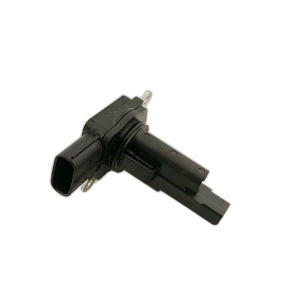
Used OEM Parts in Stock



New Aftermarket Parts Available



The information in this article is provided for general reference and educational purposes only. Vehicle specifications, procedures, and part compatibility can vary by production date, trim level, and region. Always consult your vehicle's factory service manual and verify part numbers before purchasing or performing repairs. Safety-critical components such as airbags, seat belts, and braking systems should be installed by a qualified professional.
- Toyota Highlander:
- 🎬 Helpful Videos
- 🛍️ Shop This Part
- What's Unique About the 2008-2013 Toyota Highlander
- Symptoms You May Notice
- Most Likely Causes
- Rare But Worth Checking
- Diagnosis Steps
- Parts You'll Likely Need
- Related Codes That Often Appear With This One
- Technical Service Bulletins (TSBs) & Recalls
- Platform-Specific Known Issues
- Mechanic-Grade Diagnostic Values
- Hidden / Shadow Codes Worth Checking
- Scan Tool Commands That Help
- Wiring & Ground Locations
- Real Owner Repair Stories
- "I Checked Everything" — The Actual Cause
- OEM Part Supersession History
- Model Year Variations Within This Range
- Diagnostic Flowchart
- Other Known Issues on This Vehicle
- Used vs. New Parts: Buying Guide for This Vehicle
- Real Owner Stories
- 2008 Toyota Highlander Hybrid
- 2008-2013 Toyota Highlander 3.5L V6
- 2007-2012 Lexus ES350 (3.5L 2GR-FE)
- Related OBD-II Codes
- Frequently Asked Questions
- 🎟️ Get 5% Off