

P0171 on 2018-2020 Toyota Camry: Lean Code Causes and Fixes
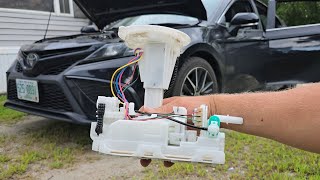
On a 2018-2020 Camry, P0171 is frequently caused by a failing high-pressure fuel pump, a known issue addressed by Toyota Technical Service Bulletin T-SB-0009-23. This is not a typical DIY fix and often requires professional diagnosis and repair, as it is a primary suspect over more common causes like vacuum leaks.
- For the 2018-2020 Toyota Camry, P0171 is strongly linked to a failing high-pressure fuel pump, a known issue covered by TSB-0009-23.
- Do not automatically replace the oxygen (A/F) sensor; it is likely just reporting the lean condition correctly.
- Diagnosis should start by checking fuel pressure with a professional scan tool. This is not a typical DIY-friendly diagnosis.
- Look for accompanying codes like P0087 (Low Fuel Pressure), which further confirms the fuel pump issue, or P0174 on V6 models.
- While less likely on this specific model, a dirty MAF sensor or a vacuum leak are still possible secondary causes.
What's Unique About the 2018-2020 Toyota CAMRY

While P0171 on many vehicles points to a vacuum leak or a dirty MAF sensor, the 2018-2020 Toyota Camry (XV70 generation) has a well-documented issue with low fuel pressure. Both the 2.5L A25A-FKS and 3.5L 2GR-FKS engines use a D-4S dual-injection system with a high-pressure fuel circuit. A Technical Service Bulletin (T-SB-0009-23) directly links P0171 to low pressure from a failing high-pressure fuel pump, making this a primary suspect over more common causes. 🎬 Watch: How the high-pressure pump causes lean codes and hard starts. This issue is shared with other Toyota models using these engines, such as the RAV4 and Highlander.
Diagnostic Flowchart
Tap your situation to follow the diagnostic path that matches what you're seeing on this vehicle.
Symptoms You May Notice
- Check Engine Light is on
- Hard starting (takes longer to crank or multiple attempts)
- Rough or unstable idle
- Engine hesitation or lack of power during acceleration
- Engine stalling, especially after coming to a stop
- Reduced fuel economy
- Sputtering or sluggish performance
- Replacing the Air/Fuel Ratio (O2) sensor without proper diagnosis. The sensor is often correctly reporting the lean condition, which is caused by a separate issue like low fuel pressure or a vacuum leak.
- Replacing the in-tank low-pressure fuel pump when the issue is with the engine-mounted high-pressure fuel pump. The D-4S system has two pumps, and TSB T-SB-0009-23 specifically points to the high-pressure side.
Most Likely Causes

- Failing High-Pressure Fuel Pump (HPFP) 🔴 High Probability This is a known issue acknowledged by Toyota in TSB T-SB-0009-23, which specifically covers the 2018-2020 Camry for DTC P0171 and P0087 (Fuel Rail / System Pressure – Too Low). An owner complaint (NHTSA ODI #11659736) for a 2019 Camry with P0171 was diagnosed with a leaking high-pressure fuel rail. A Reddit user with a 2019 Camry V6 experiencing P0171 and P0174 was also advised by the community that the fuel pump was the likely culprit, referencing the TSB.
How to confirm: A technician will use a professional scan tool (like Toyota's Techstream) to monitor fuel rail pressure and fuel trims. The TSB specifies verifying low pressure with a manual gauge. A significant pressure drop, especially under load, points to a fuel delivery problem.
Typical fix: Replacement of the high-pressure fuel pump. Per TSB T-SB-0008-23, which addresses a fuel odor from the same pump, the intake manifold does not need to be fully removed on the 2GR-FKS V6, only the surge tank assembly.
Est. part cost: $400-$1000 - Dirty or Faulty Mass Airflow (MAF) Sensor 🟡 Medium Probability This is a common cause for lean codes on most modern vehicles. Dust, dirt, or oil can contaminate the sensor's delicate wire, causing it to misread the amount of air entering the engine.
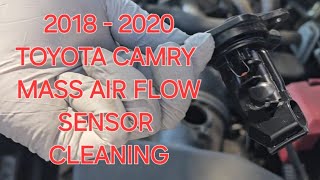
How to confirm: The sensor, located in the intake tube after the air filter, can be inspected for debris. A scan tool can monitor its readings in grams/second. The first diagnostic step is always to clean the sensor with a dedicated MAF sensor cleaner; never use harsh chemicals like brake or carb cleaner which can damage it. 🎬 See how to safely clean your Camry's MAF sensor. If cleaning doesn't resolve high fuel trims, and the sensor wire isn't physically broken, replacement may be needed.
Typical fix: Cleaning the MAF sensor. If cleaning does not resolve the issue, replace the sensor, preferably with an OEM Denso unit to avoid issues with aftermarket parts.
Est. part cost: $75-$200 - Vacuum Leak ⚪ Low Probability While less common than the HPFP issue on this platform, any unmetered air entering the engine after the MAF sensor will cause a lean code.
How to confirm: A technician will perform a smoke test, which involves feeding pressurized smoke into the intake system to visually identify leaks from cracked hoses (like PCV hoses), intake manifold gaskets, or other seals. Watching fuel trims while spraying a combustible fluid around suspected areas can also pinpoint a leak, but this is less precise and carries risks.
Typical fix: Replacing the leaking hose or gasket.
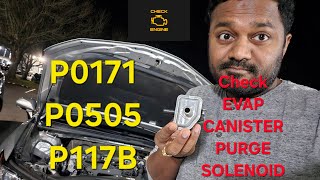
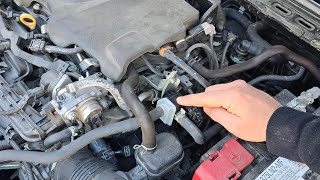
Est. part cost: $10-$100 - Faulty EVAP Purge Valve ⚪ Low Probability An owner complaint (NHTSA ODI #11331260) on a 2018 model listed P0171 alongside EVAP codes P0441 and P0455. A stuck-open purge valve can create a vacuum leak, causing a lean condition. A real-world repair story confirmed this as the fix on a 2018 Camry after other codes appeared. 🎬 Watch: Diagnosing P0171 when it's caused by the EVAP purge valve.
How to confirm: A scan tool can command the valve to open and close to check for proper function. It can also be removed and tested manually for leakage. Symptoms may worsen after refueling.
Typical fix: Replacement of the EVAP purge valve.
Est. part cost: $50-$120
Rare But Worth Checking
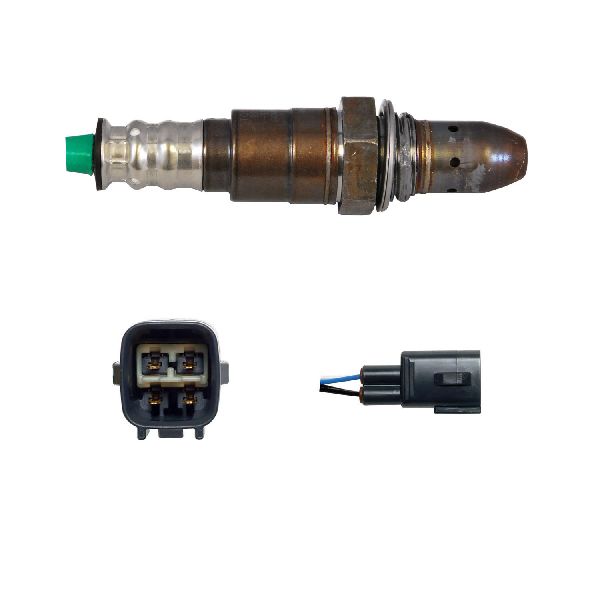
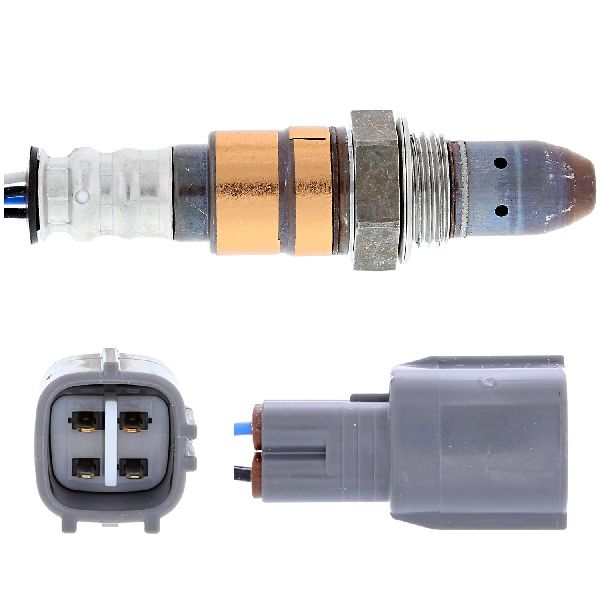
- Failing Air/Fuel Ratio Sensor (Upstream O2 Sensor): While a failing sensor can cause this code, it's often replaced unnecessarily. On this vehicle, it should only be replaced after fuel delivery and vacuum leaks have been ruled out. The sensor is often correctly reporting the lean condition caused by another component.
- Clogged Fuel Injectors: Less common on newer vehicles with direct injection, but can cause a lean condition if one or more injectors are not delivering enough fuel. This was suggested as a likely cause for a 2018 Camry with P0171 and P117B based on freeze frame data.
Diagnosis Steps
- Verify the code with an OBD-II scanner. Check for any other codes, paying close attention to P0087 or P0174.
- Check for applicable Technical Service Bulletins (TSBs). TSB T-SB-0009-23 is highly relevant for this code on this vehicle.
- Using a scan tool with live data, monitor short-term (STFT) and long-term (LTFT) fuel trims at idle and at 2500 RPM. High positive numbers (Total fuel trim LTFT + STFT > 25%) confirm a lean condition.
- Crucially, monitor fuel rail pressure with the scan tool. Compare the readings to manufacturer specifications. Per TSB T-SB-0009-23, a manual fuel pressure gauge should be used to confirm the scan tool data. Any significant drop, especially under load, points to a fuel delivery problem.
- If fuel pressure is low, diagnose the high-pressure fuel pump per TSB T-SB-0009-23. This is a job for a professional.
- If fuel pressure is stable and within spec, proceed with standard lean code diagnostics: inspect the air intake for leaks between the MAF sensor and the engine.
- Inspect and clean the MAF sensor with dedicated MAF sensor cleaner. Do not touch the internal wires.
- If no issues are found, perform a smoke test to check for vacuum leaks from hoses, the intake manifold, or the EVAP purge valve.
- As a final step, test the function of the upstream Air/Fuel Ratio sensor by observing its voltage response on the scan tool. It should switch rapidly between below 0.4V and above 0.5V.
Parts You'll Likely Need

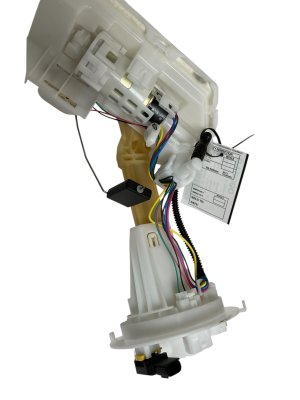
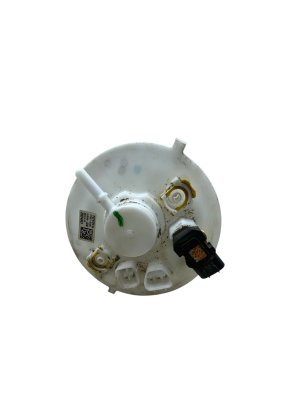
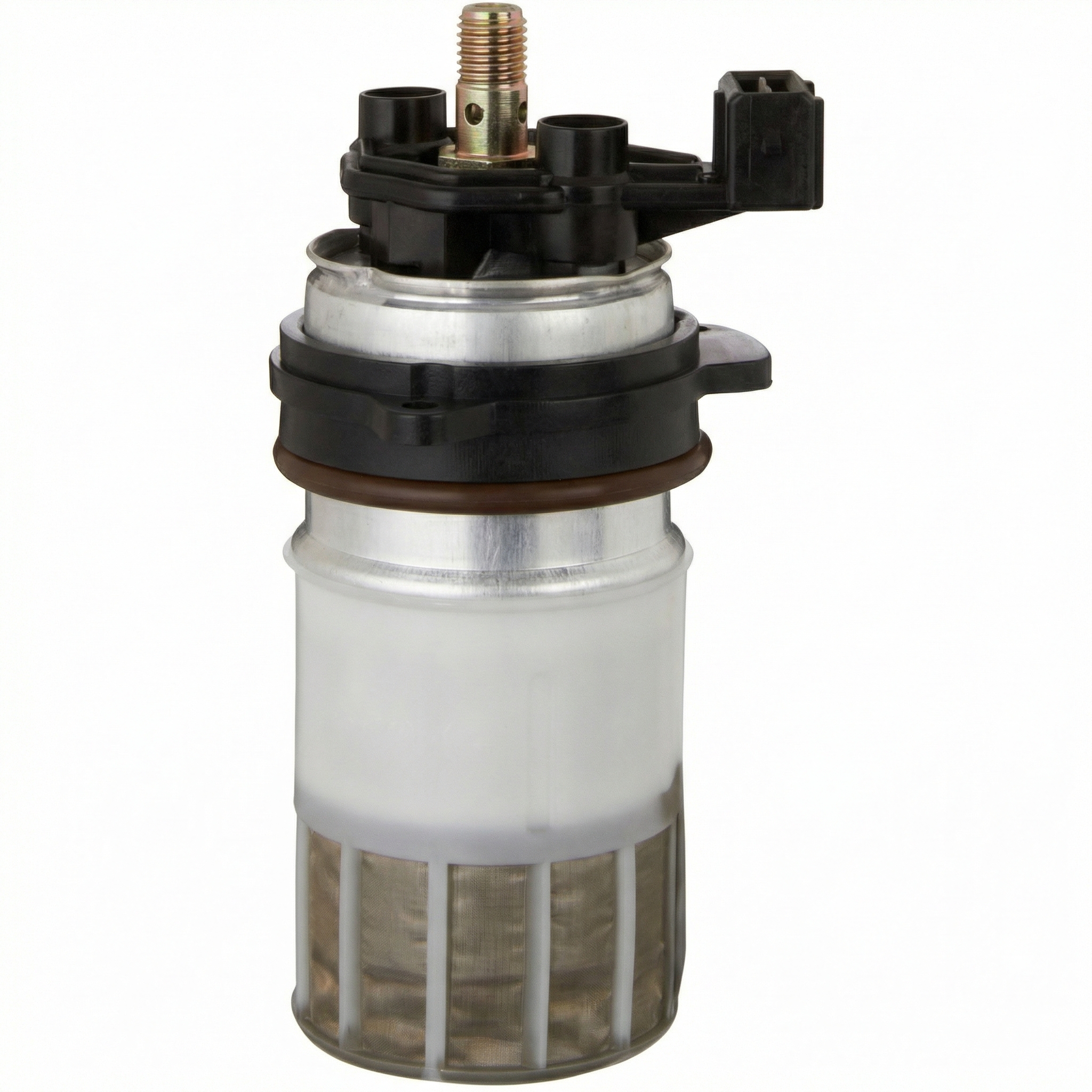
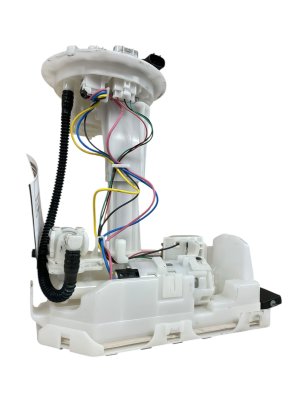
- High-Pressure Fuel Pump
(OEM #23101-0P010 (for 3.5L 2GR-FKS), 23101-F0010 (for 2.5L A25A-FKS))— This is the most likely cause of P0171 on the 2018-2020 Camry, as identified in Toyota's own service bulletin (TSB T-SB-0009-23).
Trusted brands: Toyota OE, Denso
OEM price range: $500-$1011
Aftermarket price range: $400-$600 - Mass Air Flow (MAF) Sensor
(OEM #22204-75040 or 22204-24010)— A common cause for lean codes on many vehicles. It should be inspected and cleaned before being replaced.
Trusted brands: Denso, Toyota OE
OEM price range: $150-$250
Aftermarket price range: $75-$150 - EVAP Canister Purge Valve — Can get stuck open, creating a vacuum leak that leads to a lean code. This was noted in one NHTSA complaint and confirmed as the fix in a detailed owner story for the 2018 Camry.
Trusted brands: Denso, Toyota OE
OEM price range: $80-$150
Aftermarket price range: $50-$100
Related Codes That Often Appear With This One
- P0087 — This code means "Fuel Rail / System Pressure – Too Low." It frequently appears with P0171 on this vehicle and strongly indicates the high-pressure fuel pump is the root cause, as noted in TSB T-SB-0009-23.
- P0174 — This is "System Too Lean (Bank 2)." It will appear alongside P0171 on V6 (2GR-FKS) models if the issue (like low fuel pressure or a faulty MAF sensor) affects both cylinder banks.
- P0441, P0455 — These are EVAP system codes. A large leak in the EVAP system or a stuck-open purge valve can sometimes be the source of the unmetered air causing the P0171 code, as seen in NHTSA complaint #11331260 and a confirmed owner repair.
Technical Service Bulletins (TSBs) & Recalls
- T-SB-0009-23: Addresses hard start and/or MIL ON with DTCs P0171, P0174, and/or P0087 due to low fuel pressure in the high-pressure fuel system.
- T-SB-0008-23: While for a fuel odor issue, this TSB provides helpful procedural details for replacing the high-pressure fuel pump on the 2GR-FKS engine, noting the surge tank can be removed without removing the entire intake manifold.
Platform-Specific Known Issues
- NHTSA TSB #T-SB-0009-23: Toyota issued this bulletin for 2018-2020 Camrys (among many other models) that exhibit a hard start and/or MIL ON with codes P0171, P0174, and/or P0087. It points to a low fuel pressure condition from the high-pressure fuel system and provides a specific diagnostic procedure using Techstream.
- NHTSA ODI #11659736: A 2019 Camry owner reported a P0171 code, and the vehicle was diagnosed with "low or leaking high-pressure reading for the high-pressure fuel rail."
- NHTSA ODI #11331260: A 2018 Camry owner reported multiple codes including P0171, P0505, P0441, and P0455, pointing to a potential EVAP system issue causing the lean condition.
Mechanic-Grade Diagnostic Values
- Total Fuel Trim (LTFT + STFT) — expected: Close to 0%, within +/- 20%. Failure: Sustained positive values greater than +25% to +35% will trigger the P0171 code.
- High-Pressure Fuel System Pressure (D-4S) — expected: Approximately 50-60 PSI under load.. Failure: Pressure dropping below specification, especially under acceleration, or failing to meet the 'Target Fuel Pressure' PID in scan data. This is the primary check outlined in TSB T-SB-0009-23.
- Upstream Air/Fuel Ratio Sensor (Bank 1 Sensor 1) Voltage — expected: Rapidly alternates between less than 0.4V and more than 0.55V during closed-loop operation.. Failure: A lazy or biased sensor that stays fixed at a certain voltage or does not switch quickly. Note: A steady low voltage may be accurately reporting a lean condition, not a sensor failure.
Hidden / Shadow Codes Worth Checking
- Freeze Frame Data: Not a hidden code, but a critical snapshot of engine parameters (RPM, vehicle speed, coolant temp, fuel trims) at the exact moment the P0171 code was set. This data is crucial for determining the conditions (e.g., idle, acceleration) that caused the fault. (see via Professional scan tools like Toyota Techstream or advanced consumer OBD-II scanners.)
Scan Tool Commands That Help

- Toyota Techstream: Active Test: A/F Control — After confirming high fuel trims. This function allows the technician to manually command a richer (+25%) or leaner (-12.5%) fuel mixture and observe the A/F sensor's response. It helps determine if the sensor is responding correctly or if the fuel system is unable to deliver the commanded fuel.
- Toyota Techstream: Active Test: Control the Injection Mode — On D-4S engines (both A25A-FKS and 2GR-FKS), this test forces the system to switch between port injection, direct injection, or both. It is used to isolate whether a fuel delivery issue is specific to the high-pressure direct injection circuit.
Wiring & Ground Locations
- Main Body Ground — Commonly located behind the driver's side kick panel, near the interior fuse box, where several ring terminals are bolted to the chassis.. A poor or corroded ground for the ECM or Fuel Pump Control Module can cause erratic voltage and intermittent fuel pressure problems, leading to a lean condition.
- Engine Control Wiring Harness — Runs from the ECM to various sensors on the engine, including the MAF sensor, A/F sensor, and fuel pressure sensor.. Chafing or damage to this harness can cause short circuits or open circuits for critical sensors, leading to incorrect data and a P0171 code.
Real Owner Repair Stories
- YouTube channel 'Engine light ON' (2018 Toyota Camry) — Initial codes P0505, P0171, P117B. Later, codes P0455, P0441, and P0171 appeared. Rough idle and poor performance.
❌ Tried (didn't work) Mechanics and online resources suggested replacing the Mass Airflow (MAF) sensor., Owner cleaned the MAF sensor, but the problem persisted and new codes appeared.
✅ What actually fixed it The owner replaced the EVAP purge valve (costing ~$108). This resolved all codes, the car ran smoothly, and fuel economy improved.
"I Checked Everything" — The Actual Cause
- In a documented case on a 2018 Camry, the root cause of P0171 was not a traditional vacuum leak in the intake tract (which a smoke test would find), but a faulty EVAP purge valve. When stuck open, the purge valve allows unmetered air from the charcoal canister into the intake manifold, creating a vacuum leak that is often missed during standard diagnosis.
OEM Part Supersession History
23101-25040→23101-F0010— Updated part for the high-pressure fuel pump on the 2.5L A25A-FKS engine.
Helpful Videos
Used OEM Parts in Stock


New Aftermarket Parts Available



The information in this article is provided for general reference and educational purposes only. Vehicle specifications, procedures, and part compatibility can vary by production date, trim level, and region. Always consult your vehicle's factory service manual and verify part numbers before purchasing or performing repairs. Safety-critical components such as airbags, seat belts, and braking systems should be installed by a qualified professional.
- Toyota CAMRY:
- 🎬 Helpful Videos
- 🛍️ Shop This Part
- What's Unique About the 2018-2020 Toyota CAMRY
- Diagnostic Flowchart
- Symptoms You May Notice
- Most Likely Causes
- Rare But Worth Checking
- Diagnosis Steps
- Parts You'll Likely Need
- Related Codes That Often Appear With This One
- Technical Service Bulletins (TSBs) & Recalls
- Platform-Specific Known Issues
- Mechanic-Grade Diagnostic Values
- Hidden / Shadow Codes Worth Checking
- Scan Tool Commands That Help
- Wiring & Ground Locations
- Real Owner Repair Stories
- "I Checked Everything" — The Actual Cause
- OEM Part Supersession History
- 🎟️ Get 5% Off