

P0171 on 2014-2019 Toyota 4Runner: Lean Code Causes and Fixes
On a 2014-2019 Toyota 4Runner, code P0171 is most often caused by a dirty Mass Airflow (MAF) sensor or a vacuum leak. Cleaning the MAF sensor is a simple, inexpensive first step. If that doesn't work, suspect a vacuum leak (especially a cracked intake air boot) or a weakening fuel pump, an issue noted in a Toyota Technical Service Bulletin for this platform.
- Start with the simplest fix: Clean the Mass Airflow (MAF) sensor with dedicated cleaner.
- If P0171 is paired with P0174, the cause is almost certainly something that affects the whole engine, like the MAF sensor, a fuel pump, or a large vacuum leak.
- If P0171 appears with P0087, prioritize checking fuel pressure, as this points to a weak fuel pump.
- Don't replace the Air/Fuel (O2) sensor unless you have diagnosed it as faulty; it's usually just doing its job of reporting the lean condition.
- A smoke test is the most effective way to find hard-to-see vacuum leaks in hoses and gaskets.
What's Unique About the 2014-2019 Toyota 4RUNNER

The 5th generation 4Runner's 4.0L V6 (1GR-FE) is a very reliable engine, and P0171 is a common code across many vehicles. However, a specific Toyota Technical Service Bulletin (TSB-0092-23, also cited as TSB000923) for this era of vehicles links P0171 with a potential low-pressure fuel system issue, sometimes accompanied by code P0087 (Fuel Rail / System Pressure – Too Low). [⭐ MANUFACTURER TSB — highest authority] Bulletin #TSB000923. This suggests that while common culprits like a dirty MAF sensor should be checked first, a failing fuel pump is a more significant possibility on these trucks than on some other vehicles. Forum discussions among owners confirm that MAF sensors and fuel pumps are frequent fixes for this code.
Diagnostic Flowchart
Tap your situation to follow the diagnostic path that matches what you're seeing on this vehicle.
Symptoms You May Notice
- Check Engine Light is on
- Rough or unstable idle
- Hesitation or lack of power during acceleration
- Reduced fuel economy
- Hard starting condition, especially when the engine is warm [⭐ MANUFACTURER TSB — highest authority] Bulletin #TSB000923
- Engine stalling, particularly after reaching operating temperature 🎬 Watch: How to fix hard starts and lean codes (TSB000923)
- Backfiring or knocking noises from the engine
- Immediately replacing the Air/Fuel (O2) sensor without diagnosis. The sensor is often just reporting the problem correctly, not the cause of it.
- Replacing the MAF sensor with a cheap aftermarket part. Many forum threads report that only OEM/Denso MAF sensors work correctly on these vehicles to resolve the P0171 code.
Most Likely Causes

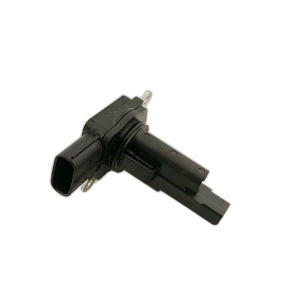
- Dirty Mass Airflow (MAF) Sensor 🔴 High Probability The MAF sensor is located in the intake tract and can become contaminated with dirt, oil, and debris over time, especially if an aftermarket oiled air filter is used. This is the most frequently cited cause in owner forums.
How to confirm: A visual inspection may not be enough. The easiest first step is to remove the sensor and clean it with a dedicated MAF sensor cleaner spray. A scan tool can also monitor MAF readings in grams/second to see if they are out of the expected range (a common spec is 3.3-4.7 g/s at idle). An owner on a 4Runner forum reported that even a new aftermarket MAF sensor read poorly and only an OEM Denso part solved the issue.
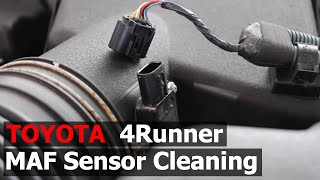
Typical fix: Clean the sensor with MAF sensor cleaner (e.g., CRC Mass Air Flow Sensor Cleaner). 🎬 See this step-by-step guide on cleaning your Toyota MAF sensor Allow it to dry completely before reinstalling. If cleaning doesn't resolve the issue, replace the sensor, with a strong preference for the OEM Denso part.
Est. part cost: $10-$15 for cleaner, $80-$180 for a new Denso sensor. - Vacuum Leak 🟡 Medium Probability With age and exposure to engine heat, rubber vacuum hoses, the PCV hose, and the main intake air boot can become brittle and crack, allowing unmetered air to enter the engine after the MAF sensor. A cracked air intake tube is a common failure point.
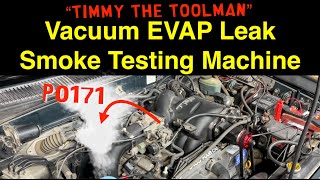
How to confirm: Listen for a hissing sound at idle. Visually inspect all vacuum lines and the main intake air boot for cracks. The most definitive method is to perform a smoke test, which will force smoke into the intake system and reveal the exact location of any leaks. 🎬 Watch: How to use a smoke machine to find vacuum leaks A DIY method involves carefully spraying short bursts of brake cleaner around suspected areas; a change in engine idle indicates a leak.
Typical fix: Replace the cracked hose, intake boot, or gasket. The PCV valve itself can also stick open or the hose can crack, causing a leak.
Est. part cost: $15-$100 depending on the specific hose or gasket. - Failing Fuel Pump 🟡 Medium Probability A Toyota TSB (TSB-0092-23) specifically mentions that a lean condition (P0171) can be related to low fuel system pressure (P0087), pointing towards a weak fuel pump or clogged fuel filter/sock. [⭐ MANUFACTURER TSB — highest authority] Bulletin #TSB000923. Owners on various platforms have confirmed this fix after replacing many other parts without success.
How to confirm: Use a fuel pressure gauge to test the fuel pressure at the fuel rail. It should meet the manufacturer's specification (one spec for the 1GR-FE is 46.5 to 47.4 psi, while another is 40.8 to 41.7 psi). A simple pressure test may not be enough; a technician may need to perform an amp ramp test to check fuel pump volume under load. This is a more involved test and may require a professional.
Typical fix: Replace the fuel pump assembly, which is located inside the fuel tank. It is critical to also clean any debris from inside the fuel tank during this process to prevent clogging the new pump's filter.
Est. part cost: $200-$450 - Faulty Upstream Air/Fuel Ratio Sensor (O2 Sensor) ⚪ Low Probability The A/F sensor (Bank 1, Sensor 1) is what detects the lean condition. Over time, it can become slow to respond or fail, sending incorrect data to the ECU. However, it is more often correctly reporting a problem than being the problem itself.
How to confirm: Use a scan tool to monitor the sensor's voltage readings. A healthy sensor will fluctuate rapidly. A lazy or stuck sensor needs replacement. Many owners replace this sensor unnecessarily when the root cause is a vacuum leak or MAF issue.
Typical fix: Replace the Bank 1 Sensor 1 Air/Fuel Ratio sensor. Using an OEM or Denso brand part is highly recommended for Toyotas, as aftermarket sensors are known to cause issues.
Est. part cost: $100-$200
Rare But Worth Checking
- Leaking Intake Manifold Gasket: While not extremely common on the 1GR-FE engine, a failed intake manifold gasket can cause a significant vacuum leak, triggering P0171 and often P0174 as well. This is more likely on higher-mileage vehicles and can be diagnosed with a smoke test.
- Clogged Fuel Injectors: If one or more injectors on Bank 1 are partially clogged, they won't deliver enough fuel, leading to a lean condition on that bank. This is less common than a MAF or vacuum leak issue but can be a cause.
- Exhaust Leak Before the A/F Sensor: A crack in the exhaust manifold or a leaking gasket before the first O2 sensor can pull in outside air, making the sensor report a false lean condition. This can be identified by looking for soot marks around the manifold.
Diagnosis Steps
- Read the trouble codes with an OBD-II scanner and check for any other pending or stored codes, especially P0174 or P0087. Note the freeze frame data for Long-Term and Short-Term Fuel Trims (LTFT/STFT). High positive numbers confirm the lean condition.
- Visually inspect the engine bay. Look for obvious issues like a disconnected vacuum hose or a large crack in the plastic/rubber intake tube between the air filter box and the throttle body.
- Remove and clean the Mass Airflow (MAF) sensor using a dedicated MAF sensor cleaner. Allow it to dry completely before reinstalling. Clear the codes and drive the vehicle to see if the light returns. This is the most common and cheapest first step.
- If the code returns, check for vacuum leaks. With the engine running, you can carefully spray short bursts of brake cleaner or a water mist around vacuum lines and gasket sealing surfaces. A change in engine idle indicates you've found the leak. For a more precise diagnosis, perform a smoke test.
- If no vacuum leaks are found, test the fuel pressure. Connect a fuel pressure gauge to the fuel rail and verify it meets spec (can range from 41 to 47 psi). This will help confirm or rule out a weak fuel pump or clogged fuel filter.
- If fuel pressure is normal, use a scan tool to observe the live data from the Bank 1 Air/Fuel Ratio sensor. If it appears lazy or provides a fixed reading, it may have failed.
- Inspect the exhaust manifold for cracks or signs of a leaking gasket before the A/F sensor. Look for black soot trails.
Parts You'll Likely Need

- Mass Airflow (MAF) Sensor
(OEM #22204-31020)— This sensor gets dirty and misreads airflow, which is the most frequent cause of P0171. Cleaning often works, but replacement is the next step. Owner experiences strongly suggest using only the OEM Denso part.
Trusted brands: Denso (OEM)
OEM price range: $120-$180
Aftermarket price range: $60-$120 - Air/Fuel Ratio Sensor (Bank 1, Sensor 1)
(OEM #89467-35110)— If the sensor itself fails, it will send incorrect lean signals to the ECU. It's the primary sensor for fuel trim adjustments, but should be tested before replacement.
Trusted brands: Denso (OEM)
Related Codes That Often Appear With This One
- P0174 — System Too Lean (Bank 2). If both P0171 and P0174 are present, it strongly suggests a problem that affects both engine banks, such as a dirty MAF sensor, a major vacuum leak at the intake manifold, or low fuel pressure.
- P0087 — Fuel Rail / System Pressure – Too Low. This code, when seen with P0171, is a very strong indicator of a failing fuel pump or clogged fuel filter, as highlighted by Toyota's TSB-0092-23. [⭐ MANUFACTURER TSB — highest authority] Bulletin #TSB000923
Technical Service Bulletins (TSBs) & Recalls

- T-SB-0092-23 (also referenced as NHTSA ID 10235216 or TSB000923): Addresses hard start and/or MIL ON with DTCs P0171, P0174, and/or P0087, pointing to a potential low-pressure fuel system issue.
Platform-Specific Known Issues
- Aftermarket MAF Sensor Incompatibility: A recurring theme in owner forums is the failure of aftermarket Mass Airflow sensors to resolve the P0171 code. Multiple owners report that after cleaning the original sensor and even trying a new, non-OEM sensor, the code only disappeared after installing a genuine Denso-branded MAF sensor.
- Fuel Pump Failure vs. MAF Sensor: While cleaning the MAF sensor is the easiest first step, owners who have chased the P0171 code for a long time often find the ultimate culprit to be a weakening fuel pump, as suggested by TSB-0092-23. A user on TacomaWorld with the same engine spent significant money on other parts before a fuel pressure test revealed the bad pump.
Mechanic-Grade Diagnostic Values
- Mass Airflow (MAF) Sensor Reading at Idle — expected: 3.3 - 4.7 g/s. Failure: Readings lower than this range suggest the sensor is under-reporting airflow, causing a lean condition.
- Mass Airflow (MAF) Sensor Reading at 2500 RPM (No Load) — expected: 12.9 - 18.3 g/s. Failure: Readings lower than this range under acceleration point to a faulty MAF sensor.
- Fuel Pressure at Idle — expected: 40.8 to 47.4 psi (multiple sources show slight variations in spec, e.g., 40.8-41.7 psi or 46.5-47.4 psi). Failure: Pressure below this range indicates a weak fuel pump or clogged filter.
- Fuel Injector Resistance — expected: 11.6 to 12.4 Ω at 20°C (68°F). Failure: Resistance outside this range indicates a faulty injector coil.
- Air/Fuel Ratio Sensor (Bank 1, Sensor 1) Voltage — expected: 2.8 - 3.8 V. Failure: A voltage that is stuck or does not fluctuate correctly can indicate a faulty sensor.
Scan Tool Commands That Help
- Toyota Techstream: Active Test: A/F CONTROL — This function allows a technician to manually command the fuel injection volume to +25% or -12.5% while monitoring the A/F and O2 sensor responses. It helps determine if the sensors are responding correctly to commanded changes in the air-fuel mixture, which is useful for isolating a faulty sensor from a true lean condition.
Wiring & Ground Locations
- EFI Relay — Located in the under-hood fuse/relay block.. The EFI (Electronic Fuel Injection) relay supplies power to the fuel pump and other critical engine control components. A faulty relay could cause intermittent low fuel pressure, leading to a P0171 code.
- PCV Valve & Hose — The PCV valve is threaded into the driver's side (left hand) valve cover, with a rubber hose connecting it to the intake manifold.. The PCV hose is a very common source of vacuum leaks on the 1GR-FE engine. Over time, the rubber becomes brittle and cracks, allowing unmetered air to enter the intake manifold, which is a direct cause of P0171.
- MAF Sensor Connector — A 5-pin connector that plugs directly into the MAF sensor, located on the air intake tube after the air filter box.. Poor connection or corrosion at the MAF sensor connector can cause incorrect airflow readings. The pins include power (+B), ground (E2G), sensor signal (VG), and the intake air temperature sensor (THA).
Real Owner Repair Stories
- YouTube user 'Easy Credit Motors' (1998 Toyota 4Runner 3.4L V6) — Ran great when cold, but after reaching operating temperature it would sputter, stall, backfire, and lack power. Eventually threw code P0171.
❌ Tried (didn't work) Replaced MAF sensor (used), Performed a smoke test (no leaks found), Replaced fuel filter, Replaced air filter, Cleaned throttle body, Replaced Throttle Position Sensor (TPS)
✅ What actually fixed it The root cause was a severely clogged fuel pump filter sock. The owner had previously replaced the fuel pump but failed to clean the debris from inside the gas tank. This debris quickly clogged the new pump's filter, starving the engine of fuel and causing the lean code. The final fix was dropping the tank again, cleaning it thoroughly, and installing a new filter sock on the pump. - YotaTech Forums user (2000 Toyota 4Runner Limited) — Intermittent Check Engine Light with code P0171.
❌ Tried (didn't work) Cleaned MAF sensor
✅ What actually fixed it The user discovered their PCV valve was brittle and had broken, creating a vacuum leak. Replacing the broken PCV valve and its grommet resolved the lean code.
"I Checked Everything" — The Actual Cause
- In one documented case, a smoke test showed no vacuum leaks, but the P0171 code persisted. The actual cause was a clogged fuel pump filter sock inside the gas tank, which was restricting fuel flow under load. This is a failure a smoke test cannot detect.
- A hissing sound when pressing the brake pedal, accompanied by P0171 and P0174, can point to a leak in the brake booster diaphragm. This is a large vacuum leak that may not be easily found with a smoke test if the leak is internal to the booster itself.
When the Usual Fixes Don't Work
- While cleaning the MAF sensor is the most common first step, there are many documented cases where this does not solve the problem. One owner replaced the MAF, O2 sensors, and fuel filter before discovering the true cause was a clogged fuel pump sock inside the tank, which was restricting fuel volume despite having adequate pressure at idle. This highlights the importance of checking fuel delivery volume under load, not just static pressure, if the initial, more common fixes fail.
Helpful Videos

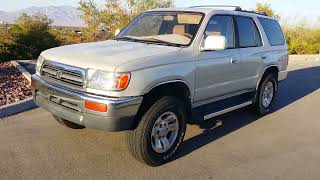
Used OEM Parts in Stock
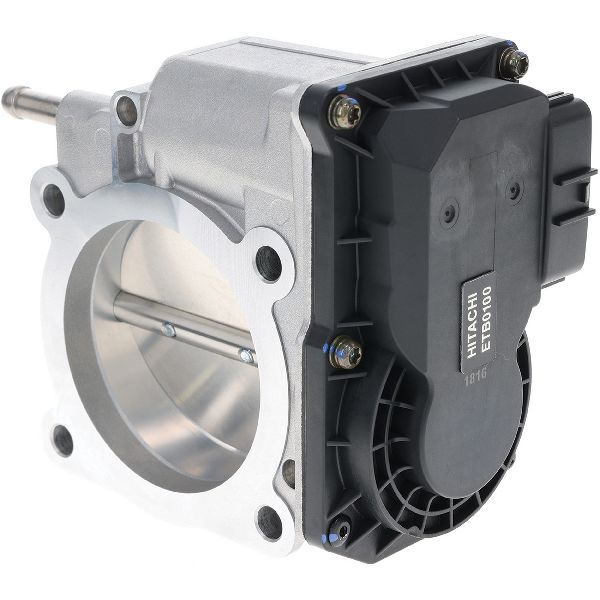
New Aftermarket Parts Available


The information in this article is provided for general reference and educational purposes only. Vehicle specifications, procedures, and part compatibility can vary by production date, trim level, and region. Always consult your vehicle's factory service manual and verify part numbers before purchasing or performing repairs. Safety-critical components such as airbags, seat belts, and braking systems should be installed by a qualified professional.
- Toyota 4RUNNER:
- 🎬 Helpful Videos
- 🛍️ Shop This Part
- What's Unique About the 2014-2019 Toyota 4RUNNER
- Diagnostic Flowchart
- Symptoms You May Notice
- Most Likely Causes
- Rare But Worth Checking
- Diagnosis Steps
- Parts You'll Likely Need
- Related Codes That Often Appear With This One
- Technical Service Bulletins (TSBs) & Recalls
- Platform-Specific Known Issues
- Mechanic-Grade Diagnostic Values
- Scan Tool Commands That Help
- Wiring & Ground Locations
- Real Owner Repair Stories
- "I Checked Everything" — The Actual Cause
- When the Usual Fixes Don't Work
- 🎟️ Get 5% Off