

P0171 on 1999-2004 Porsche 911: Causes and Fixes for Lean Condition (Bank 1)
For a 996-generation Porsche 911 with a P0171 code, the most likely causes are a faulty Mass Air Flow (MAF) sensor or a vacuum leak, commonly from a failed Air-Oil Separator (AOS). Expect to pay $250-$500 for a new OEM MAF sensor or $150-$250 for an AOS part, with DIY difficulty being moderate.
- P0171 on a 1999-2004 Porsche 911 is almost always caused by unmetered air entering the engine or a faulty sensor measuring that air.
- Your first two suspects should be the Mass Air Flow (MAF) sensor and the Air-Oil Separator (AOS).
- Do not replace the oxygen sensor first. It is very likely just reporting the problem correctly.
- A simple test for the AOS is to check for heavy vacuum at the oil filler cap at idle. A simple test for the MAF is to unplug it and see if the engine runs better.
- If you also have a P0174 code (Bank 2 lean), it makes a MAF or AOS failure even more likely.
What's Unique About the 1999-2004 Porsche 911
The M96 engine in the 996-generation 911 is notoriously sensitive to specific failure points that cause lean codes. Unlike many other vehicles, the primary suspects are not usually the oxygen sensors themselves but rather a faulty Mass Air Flow (MAF) sensor or, most characteristically, a failed Air-Oil Separator (AOS). The AOS is a crankcase ventilation component that is prone to diaphragm failure, creating a massive vacuum leak that is a well-documented issue for this specific engine platform. If both P0171 and P0174 (Bank 2) are present, it almost certainly points to a global leak affecting both banks, like the MAF or AOS.
Generation note: The 1999-2004 Porsche 911 is known as the 996 generation. This guide focuses on the 2002-2004 models equipped with the 3.6L M96 engine, as specified. While the 1999-2001 models used a 3.4L M96 engine and share many of the same potential causes (like the AOS), there are differences in specific parts like the MAF sensor and its part number. The issues described are also highly relevant to the 1997-2004 Porsche Boxster (986), which uses a similar M96 engine.
Symptoms You May Notice
- Check Engine Light is on
- Rough or unstable idle, sometimes described as 'hunting'
- Engine hesitation or stumbling on acceleration
- Reduced power
- Poor fuel economy
- A godawful screech or high-pitched whistling noise from the engine bay (indicative of a vacuum being pulled on the crankcase by a failed AOS)
- Excessive blue-white smoke from the exhaust, especially on startup
- Difficulty removing the oil filler cap with the engine running due to strong vacuum
- Replacing the oxygen (O2) sensor. The O2 sensor is typically reporting the lean condition correctly; it is rarely the cause of a P0171 code. The fault lies with what is causing the lean mixture in the first place.
Most Likely Causes
- Faulty Mass Air Flow (MAF) Sensor 🔴 High Probability The M96 engine is highly sensitive to MAF sensor readings, and the sensors are known to fail or become contaminated by oil vapor, especially if the AOS is also failing. Using non-OEM sensors is a common cause of repeat issues.
How to confirm: With the engine running, unplug the MAF sensor. If the idle quality improves, the MAF is likely faulty. Alternatively, use a scan tool to monitor airflow readings at idle and under load to see if they are within spec. Cleaning the sensor with a dedicated MAF cleaner is a good first step, but often does not resolve the issue if the sensor has failed electronically.
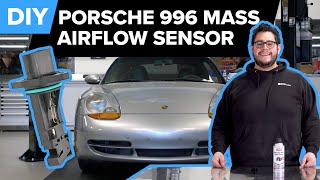
Typical fix: Replace the MAF sensor with a new OEM Bosch unit. 🎬 See this DIY walkthrough for replacing the MAF sensor For the 3.6L engine (2002-2004), the correct part is Bosch 0280218055 (Porsche P/N 996-606-125-01).
Est. part cost: $250-$500 - Failed Air-Oil Separator (AOS) 🔴 High Probability The AOS is a notoriously common failure point on the M96 engine. Its internal diaphragm tears, creating a large, unmetered vacuum leak directly into the intake, pulling unmetered air and oil vapor.
How to confirm: With the engine idling, try to remove the oil filler cap. If there is a very strong vacuum making it difficult to remove, the AOS has likely failed. A more definitive test is to connect a slack tube manometer to the oil filler tube (with the cap removed and sealed) to measure crankcase vacuum; a reading significantly higher than 4-6 inches of water indicates a failed AOS. Other symptoms include a large puff of blue-white smoke on startup and a whistling or squealing noise.
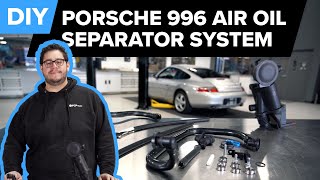
Typical fix: Replace the Air-Oil Separator and its associated hoses. This is a labor-intensive job but can be done by a skilled DIYer. 🎬 Watch: Step-by-step guide to replacing your Air-Oil Separator Many owners consider this preventative maintenance.
Est. part cost: $150-$250 - Vacuum Leak (Other than AOS) 🟡 Medium Probability The engine bay heat makes plastic and rubber components like the oil filler tube, intake boots, and various vacuum lines brittle, causing them to crack and leak. A loose or faulty oil cap is a very common and simple-to-fix vacuum leak.
How to confirm: Perform a smoke test. This involves feeding low-pressure smoke into the intake system and watching for where it escapes. Pay close attention to the accordion section of the oil filler tube, the intake manifold gaskets, and the brake booster vacuum line elbow.
Typical fix: Replace the specific cracked hose, gasket, or component that is leaking. The oil filler tube is a frequent culprit.
Est. part cost: $20-$200 - Low Fuel Pressure ⚪ Low Probability
How to confirm: Connect a fuel pressure gauge to the fuel rail and check that the pressure is within the manufacturer's specifications (typically around 3.8 bar or 55 psi at idle for this model). Check for a failing fuel pump, clogged filter, or bad pressure regulator.
Typical fix: Replace the failing component, which could be the fuel pump, fuel pressure regulator, or a clogged fuel filter.
Est. part cost: $50-$600
Rare But Worth Checking
- Exhaust Leak (before O2 sensor): A crack in the exhaust manifold or a bad gasket before the primary oxygen sensor can pull in fresh air, tricking the sensor into reporting a lean condition.
- Clogged or Dirty Fuel Injectors: If injectors on Bank 1 are partially clogged, they may not deliver enough fuel, leading to a lean condition isolated to that bank.
- Intake Manifold Resonance Flap Leak: The pivot point for the resonance flap (or 'flapper') inside the intake manifold can wear and become a source of a vacuum leak. This is difficult to detect without a smoke test.
Diagnosis Steps
- Check for any other stored fault codes. The presence of P0174 (Bank 2 Lean) is a significant clue that the leak affects the whole engine.
- Perform a quick test for AOS failure: with the engine idling, check for strong vacuum at the oil filler cap. If it's hard to remove, or if you hear a loud screeching/whistling, the AOS is a prime suspect.
- Visually inspect the engine bay for obvious issues like a loose oil cap, disconnected hoses, or cracks in the plastic oil filler tube.
- Test the MAF sensor. A quick diagnostic is to unplug it with the engine running. If the idle stabilizes or improves, the MAF is likely bad. For a more accurate test, monitor g/s airflow with a scan tool.
- If no obvious faults are found, perform a smoke test on the intake system to definitively locate any hidden vacuum leaks. This is the most effective way to find cracked hoses or leaking gaskets.
- If no vacuum leaks are found and the MAF is good, check fuel pressure using a fuel pressure gauge to rule out a weak fuel pump or faulty regulator.
- As a last resort, inspect the exhaust system for leaks before the O2 sensors and consider having the fuel injectors professionally cleaned and tested.
Parts You'll Likely Need
- Mass Air Flow (MAF) Sensor
(OEM #996-606-125-01 (Bosch 0280218055))— This is a very common failure item that directly causes incorrect air/fuel mixture calculations, leading to lean codes.
Trusted brands: Bosch
OEM price range: $450-$650
Aftermarket price range: $250-$400 - Air-Oil Separator (AOS)
(OEM #996-107-026-04)— The AOS is a notorious failure point on the M96 engine, and its failure creates a massive vacuum leak, which is a primary cause of P0171.
Trusted brands: Porsche (Genuine), ÜRO Parts
OEM price range: $200-$250
Aftermarket price range: $100-$150 - Oil Filler Tube
(OEM #996-107-640-56)— The plastic becomes brittle with age and heat, frequently cracking and causing a significant vacuum leak.
Trusted brands: Porsche (Genuine)
OEM price range: $70-$100
Aftermarket price range: $40-$60
Related Codes That Often Appear With This One
- P0174 — System Too Lean (Bank 2). If both P0171 and P0174 are present, it strongly indicates a problem affecting the entire engine, such as the MAF sensor or a major vacuum leak from the AOS or oil filler tube.
- P0507 — Idle Control System RPM Higher Than Expected. This code is often caused by the same large vacuum leaks (like a failed AOS or cracked oil filler tube) that trigger P0171.
Platform-Specific Known Issues
- The Air-Oil Separator (AOS) is a maintenance item on the M96 engine. Its failure is not a matter of 'if' but 'when'. Ignoring a failing AOS can lead to oil being sucked into the intake, which can cause white/blue smoke and, in a worst-case scenario, hydrolock the engine, especially during high-G cornering.
- The M96 engine is very particular about its MAF sensor. Using cheap, non-OEM brands often leads to persistent problems or out-of-the-box failures. It is highly recommended to use the OEM Bosch part.
Mechanic-Grade Diagnostic Values
- Crankcase Vacuum at Hot Idle — expected: 4-6 inches of water (H2O).. Failure: A reading of 7 inches of water is high, and 9-15+ inches of water indicates a failed Air-Oil Separator (AOS).
- MAF Sensor Signal Voltage (Key On, Engine Off) — expected: ~1.0V - 1.1V.. Failure: A voltage reading significantly outside this range, or one that is stuck, points to a faulty sensor.
- MAF Sensor Signal Voltage (Engine at Hot Idle) — expected: ~1.3V - 1.4V.. Failure: A static or unresponsive voltage indicates a failed MAF sensor.
- MAF Sensor Airflow (Hot Idle, 3.6L NA) — expected: ~14-17 kg/hr.. Failure: Significantly lower or higher readings suggest a faulty MAF or a large vacuum leak.
- Fuel Pressure at Idle — expected: 3.8 bar +/- 0.2 bar (approx. 55 psi +/- 3 psi).. Failure: Pressure significantly below 52 psi can indicate a weak fuel pump, clogged filter, or faulty regulator, causing a lean condition.
- Long Term Fuel Trim (FRA) & Short Term Fuel Trim (RKAT) — expected: FRA should be close to 1.0. RKAT should be close to 0.. Failure: Positive values (e.g., RKAT > 4.5%) indicate the DME is adding fuel to compensate for a lean condition (vacuum leak). This will eventually trigger a P0171 fault.
Scan Tool Commands That Help
- Durametric / PIWIS: Actual Values -> Mass Air Flow (HFM) — Use this to monitor the MAF sensor's live airflow reading in kg/hr and its output voltage. This is essential for confirming if the sensor is reading correctly compared to expected values at idle and under load.
- Durametric / PIWIS: Actual Values -> RKAT / FRA (Fuel Trims) — Monitoring short-term (RKAT) and long-term (FRA) fuel trims is the primary way to see how the DME is compensating. High positive values confirm the system is running lean and are a direct indicator of the problem's severity.
- Durametric / PIWIS: Clear Fault Codes / Reset Adaptations — After replacing a component like the MAF sensor or fixing a vacuum leak, you must clear the fault codes. Resetting adaptations (fuel trims) forces the DME to relearn the new baseline, which is critical for verifying the repair was successful. This can also be achieved by disconnecting the battery for 15-30 minutes.
Wiring & Ground Locations
- MAF Sensor Connector (Pin 3) — The 5-pin electrical connector on the MAF sensor itself.. Pin 3 is the ground for the MAF sensor. A poor ground here will cause incorrect voltage readings, leading directly to MAF-related codes and lean conditions. It should have good continuity to chassis ground.
- MAF Sensor Connector (Pin 5) — The 5-pin electrical connector on the MAF sensor.. Pin 5 is the signal wire that sends the airflow reading (as a voltage) to the DME. This is the pin to probe for voltage tests to confirm sensor operation.
- Engine Harness Ground (Bank 2) — On the passenger side (Bank 2) cylinder head, near the camshaft timing tool access point.. This is a primary ground point for the engine wiring harness. Corrosion or a loose connection here can affect multiple sensors, including the MAF, causing erratic readings and lean codes.
- Main Engine Ground Strap — Connects the transmission case to the chassis, typically on the left (driver's) side, just above the transmission support.. A corroded or loose main ground strap can cause a host of electrical issues, including unstable sensor readings that could contribute to a lean code. This is especially important for cars in humid or salt-belt climates.
Real Owner Repair Stories
- Rennlist Forum User (2002 996 C4) — P0171 and P0174 codes, rough idle.
❌ Tried (didn't work) Replacing MAF sensor, Replacing O2 sensors, Replacing AOS
✅ What actually fixed it The oil filler tube was found to have a crack in the corrugated section, creating a vacuum leak. Replacing the oil filler tube (P/N 996-107-640-56) resolved the lean codes. - 6SpeedOnline Forum User (Porsche 996) — Rough idle, stumbling, P0171 code.
❌ Tried (didn't work) Replacing spark plugs and coils, Cleaning MAF sensor, Checking AOS
✅ What actually fixed it After a smoke test was inconclusive, the user found a tiny, 1mm pinhole in the accordion section of the oil filler tube caused by rubbing from a previous aftermarket air intake. Replacing the tube fixed the issue. - RennTech.org Forum User (2001 996 Turbo) — P0171 and P0174 codes after a hard drive and subsequent idling.
❌ Tried (didn't work) Clearing codes (they returned)
✅ What actually fixed it The community identified the most likely causes as a vacuum leak (e.g., loose oil cap, cracked hose) or a failing MAF sensor, which are common triggers for these codes specifically at idle after the system has been heat-soaked.
"I Checked Everything" — The Actual Cause
- A common scenario is a smoke test that appears clean because the engine is warm. As plastic and metal components expand with heat, they can temporarily seal small cracks that are present when the engine is cold. It is critical to perform a smoke test on a completely cold engine to have the best chance of finding intermittent vacuum leaks.
- A tiny pinhole leak in the accordion section of the oil filler tube may not produce an obvious plume of smoke but can still be large enough to cause a lean code. Careful, close inspection of this specific component is warranted even if a smoke test seems negative.
OEM Part Supersession History
996-606-124-00→N/A - This is the correct part for the 3.4L engine.— Model Year Change
Heads up: This MAF sensor is for the 1999-2001 3.4L M96 engine. It is not compatible with the 2002-2004 3.6L engine, which uses a different sensor (Bosch 0280218055 / Porsche 996-606-125-01).996-107-023-55→N/A - This is the correct part for the 3.4L engine.— Model Year Change
Heads up: This Air-Oil Separator is for the 1999-2001 3.4L M96 engine. The 3.6L engine uses a different part, such as 996-107-026-04 or later revisions.996-107-026-04→996-107-026-51, 996-107-026-52— Part revision and improvement by Porsche.
Heads up: The later revisions are generally considered improvements and are backward compatible with the 3.6L M96 engine. Always confirm fitment with the supplier.
Model Year Variations Within This Range
- 1999-2001: These models use the 3.4L M96 engine. While they suffer from the same P0171 causes (AOS, MAF, vacuum leaks), the specific part numbers for the MAF sensor (99660612400) and AOS (99610702355) are different from the later 3.6L models.
- 2002-2004: These models use the updated 3.6L M96 engine with VarioCam Plus. The MAF sensor is Bosch 0280218055 (Porsche P/N 996-606-125-01) and the AOS is P/N 996-107-026-04 (or later revisions). The diagnostic principles are identical to the 3.4L, but the parts are not interchangeable.
Diagnostic Flowchart
Other Known Issues on This Vehicle
Issues unrelated to this code that are worth knowing about as an owner of this generation:
- Intermediate Shaft (IMS) Bearing Failure 🔴 High — Affects all 1999-2005 M96 engines. The single-row bearing used from 2000-2005 is the most failure-prone, with an estimated 8% failure rate. Failure can be catastrophic and often occurs without warning.
- Cylinder Bore Scoring 🔴 High — More common on the 3.6L variants. Symptoms include a rhythmic ticking noise, increased oil consumption, and soot on one exhaust tip. A borescope inspection is the definitive diagnostic method.
- Cracked Coolant Expansion Tank 🟠 Medium — Very common failure. The plastic tank becomes yellow and brittle with age, developing hairline cracks that leak coolant, especially when hot. Often mistaken for a bad cap, but the tank itself is usually the culprit.
- Rear Main Seal (RMS) Leak 🟡 Low — A very common oil leak, often considered more of a cosmetic 'weep' than a critical failure. It was more prevalent on early M96 engines. Replacement is labor-intensive as the transmission must be removed.
Used vs. New Parts: Buying Guide for This Vehicle
When a used part is the smart pick: Used parts are generally not recommended for the key failure items that cause P0171 on this vehicle. Items like the MAF sensor, Air-Oil Separator, and rubber/plastic hoses have a finite lifespan and are prone to failure from age and heat cycles. A used part may have limited remaining life or could be faulty already. Used parts may be considered for purely structural or cosmetic components if damaged during the repair.
Donor-vehicle mileage cap: roughly under 40000 miles for the part to have meaningful remaining life.
What to inspect on the donor part:
- For a MAF sensor, there are no reliable visual cues. It's a high-risk used part.
- For an AOS, check for cracks in the plastic housing, but the internal diaphragm failure is not visible.
- For hoses like the oil filler tube, check for any discoloration, stiffness, or visible cracking in the accordion section. Flexibility is a key sign of a healthy part.
OEM-only on this vehicle (don't cheap out):
- Mass Air Flow (MAF) Sensor: The M96 engine is extremely sensitive to MAF readings. Forum consensus overwhelmingly states to use only the genuine Bosch OEM part. Aftermarket MAF sensors are a very common source of persistent, hard-to-diagnose lean or rich codes.
- Air-Oil Separator (AOS): While some aftermarket versions exist (e.g., ÜRO), the OEM Porsche part is the most trusted replacement. Given the high labor cost to replace it and the potential for engine damage from a failed unit, saving a small amount on an aftermarket AOS is considered a poor risk-reward trade-off by many owners.
Brands owners have reported issues with on this vehicle:
- Any non-Bosch Mass Air Flow (MAF) sensor.
- Unbranded or generic Air-Oil Separators (AOS) from online marketplaces.
Real Owner Stories
Aggregated from forums and TSBs cited above. Mileages and costs reflect what owners reported in those sources.
2002 Porsche 911 Carrera (996 C2)
Symptoms: Check engine light with codes P0171 & P0174 appeared two weeks after an incident of heavy white smoke from the exhaust during a hard downshift. The MAF had been recently replaced in 2019.
What fixed it: The forum community identified the Air-Oil Separator (AOS) as the cause following the heavy smoke incident.
Source hint: owner_reports
1999-2004 Porsche 911 (996)
Symptoms: P0171 and P0174 codes appeared immediately after the owner performed major service including replacing the IMS and AOS.
What fixed it: A vacuum leak introduced during the re-assembly of the engine components.
Source hint: Rennlist: Both banks lean codes 171 & 174
Related OBD-II Codes
Frequently Asked Questions
Why is it recommended to only use a Bosch MAF sensor for my 2002-2004 911 3.6L?
I hear a high-pitched whistling noise from the engine bay along with the P0171 code. What is that?
How can I tell if my P0171 code is caused by the AOS or just a dirty MAF?
Can a loose oil cap really cause a P0171 lean code on a Porsche 996?
Is the Air-Oil Separator (AOS) failure dangerous for my engine?
What is the estimated part cost for replacing the AOS on my 911?
Helpful Videos
Used OEM Parts in Stock

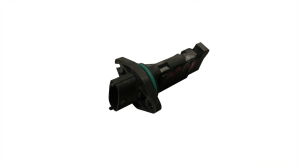
New Aftermarket Parts Available


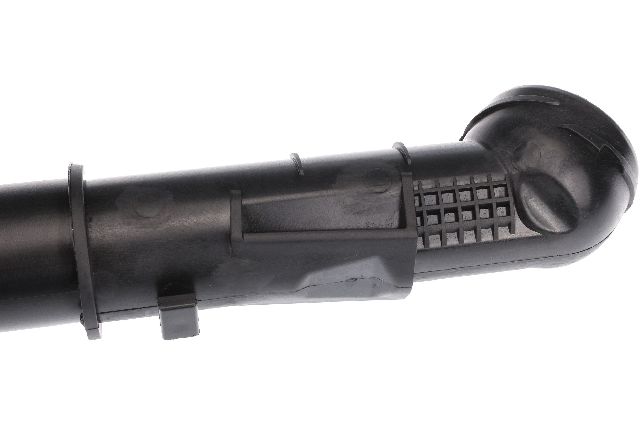

The information in this article is provided for general reference and educational purposes only. Vehicle specifications, procedures, and part compatibility can vary by production date, trim level, and region. Always consult your vehicle's factory service manual and verify part numbers before purchasing or performing repairs. Safety-critical components such as airbags, seat belts, and braking systems should be installed by a qualified professional.
- Porsche 911:
- 🎬 Helpful Videos
- 🛍️ Shop This Part
- What's Unique About the 1999-2004 Porsche 911
- Symptoms You May Notice
- Most Likely Causes
- Rare But Worth Checking
- Diagnosis Steps
- Parts You'll Likely Need
- Related Codes That Often Appear With This One
- Platform-Specific Known Issues
- Mechanic-Grade Diagnostic Values
- Scan Tool Commands That Help
- Wiring & Ground Locations
- Real Owner Repair Stories
- "I Checked Everything" — The Actual Cause
- OEM Part Supersession History
- Model Year Variations Within This Range
- Diagnostic Flowchart
- Other Known Issues on This Vehicle
- Used vs. New Parts: Buying Guide for This Vehicle
- Real Owner Stories
- 2002 Porsche 911 Carrera (996 C2)
- 1999-2004 Porsche 911 (996)
- Related OBD-II Codes
- Frequently Asked Questions
- 🎟️ Get 5% Off