

P0171 on 2016-2019 Nissan Murano: System Too Lean Causes and Fixes
On a 2016-2019 Nissan Murano, the P0171 code is most often caused by a cracked air intake hose or a vacuum leak from failed intake manifold gaskets. Inspect the large rubber intake hose first (Part No. 16576-5AA1A), then perform a smoke test to find gasket or other hidden leaks before replacing any sensors.
- Before buying any parts for a P0171 code, thoroughly inspect the rubber air intake hose for cracks.
- The second most likely cause is a vacuum leak from the intake manifold gaskets; a smoke test is the best way to confirm this.
- Do not replace the oxygen (A/F) sensor unless you have ruled out all possible vacuum leaks and fuel delivery issues first.
- Cleaning the MAF sensor with a dedicated spray is a cheap and easy diagnostic step.
- If both P0171 and P0174 codes are present, the problem is almost certainly a vacuum leak or a faulty MAF sensor.
What's Unique About the 2016-2019 Nissan MURANO

The VQ35DE engine used in the Murano is well-known and generally reliable, but it is prone to specific vacuum leaks that trigger a P0171 code. The most common culprits are not sensors, but physical parts like the flexible air intake hose cracking with age and heat, or the intake manifold gaskets becoming brittle. Owners often mistakenly replace oxygen sensors first, when the root cause is unmetered air entering the engine through these leaks. This issue is also common on its platform-mates, the Nissan Pathfinder and Infiniti QX60.
Diagnostic Flowchart
Tap your situation to follow the diagnostic path that matches what you're seeing on this vehicle.
Symptoms You May Notice
- Check Engine Light is on
- Rough or unstable idle.
- Hesitation or stumbling during acceleration.
- Reduced fuel economy
- Hissing sound from the engine bay
- Engine may feel like it lacks power
- In some cases, the engine may stall intermittently, especially when coming to a stop.
- Replacing the Air/Fuel Ratio (oxygen) sensor without first checking for vacuum leaks from the intake hose or gaskets.
Most Likely Causes

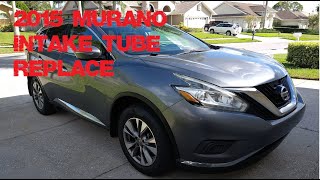
- Cracked Air Intake Hose 🔴 High Probability The rubber hose between the air filter box and the throttle body is exposed to significant engine heat, causing it to become brittle and crack over time, especially in the ribbed, flexible sections. This creates a large vacuum leak that is a primary cause of P0171 and P0174.
How to confirm: Visually inspect the entire length of the large, flexible rubber air intake hose (OEM Part No. 16576-5AA1A or similar), squeezing the accordion sections to reveal hidden tears or cracks.
Typical fix: Replace the cracked air intake hose.
Est. part cost: $40-$150 - Leaking Intake Manifold Gaskets 🔴 High Probability Similar to the intake hose, the gaskets that seal the intake manifold to the cylinder heads can become hard and brittle from heat cycles, leading to vacuum leaks. This is a well-documented issue on the VQ35DE engine family.
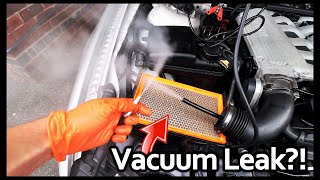
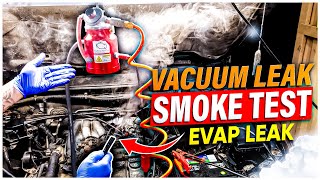
How to confirm: The best method is to perform a smoke test, which involves feeding pressurized smoke into the intake system and watching for where it escapes around the manifold. 🎬 See how to find hidden leaks using a smoke tester. A less precise method is to carefully spray short bursts of brake cleaner around the gasket sealing areas with the engine idling; a change in idle RPM suggests a leak.
Typical fix: Replace the upper and lower intake manifold gaskets. This is a more labor-intensive job.
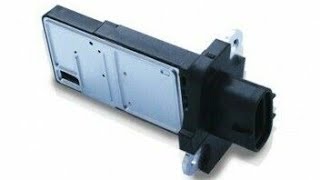
Est. part cost: $50-$120 - Dirty or Faulty Mass Airflow (MAF) Sensor 🟡 Medium Probability The MAF sensor measures the air entering the engine. If it's dirty from oil vapors or debris (sometimes from an ill-fitting aftermarket air filter), it can under-report the amount of air, causing the ECM to inject too little fuel.
How to confirm: Remove the sensor and inspect the delicate wires for contamination. Use a scan tool to monitor the MAF reading at idle in g/s (grams per second); a healthy 3.5L engine should read approximately 3.5-4.5 g/s at a stable, warm idle. Readings significantly lower than this suggest a faulty sensor.
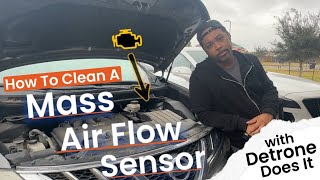
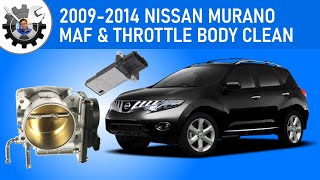
Typical fix: First, try cleaning the sensor with a dedicated MAF sensor cleaner spray. Do not touch the sensor wires. 🎬 Watch: How to safely clean your Mass Air Flow sensor. If cleaning doesn't work, the sensor must be replaced.
Est. part cost: $15 (cleaner) - $150 (new sensor) - Faulty Air/Fuel Ratio Sensor (Upstream O2 Sensor) ⚪ Low Probability While sensors can fail, they are often replaced unnecessarily for this code. A failing sensor can send incorrect lean readings to the ECM. Nissan issued a TSB (NTB19-022) with a revised diagnostic procedure to confirm if the A/F sensor is truly the cause before replacing it, as vacuum leaks are far more common.
How to confirm: Use a scan tool to monitor the sensor's voltage readings. A healthy sensor will fluctuate rapidly. A lazy or stuck sensor is faulty. Follow the diagnostic steps in TSB NTB19-022, which helps differentiate a bad sensor from a legitimate lean condition.
Typical fix: Replace the Bank 1, Sensor 1 Air/Fuel Ratio sensor. This sensor is on the rear bank (near the firewall) and can be difficult to access.
Est. part cost: $80-$200
Rare But Worth Checking
- Leaking PCV Valve or Hose: The Positive Crankcase Ventilation (PCV) system can be a source of a vacuum leak. On the VQ35DE, the valve (Part No. 11810-EA200) and associated hoses are located in a tight spot on the rear valve cover, making them difficult to inspect but a common source of hidden leaks.
- Weak Fuel Pump or Clogged Fuel Filter: If the engine isn't receiving enough fuel due to low pressure, it can cause a lean condition. This would typically affect both engine banks, also triggering a P0174 code.
- Exhaust Leak Before the A/F Sensor: A crack in the exhaust manifold or a failed gasket before the primary A/F sensor can pull in outside air, making the sensor think the engine is running lean.
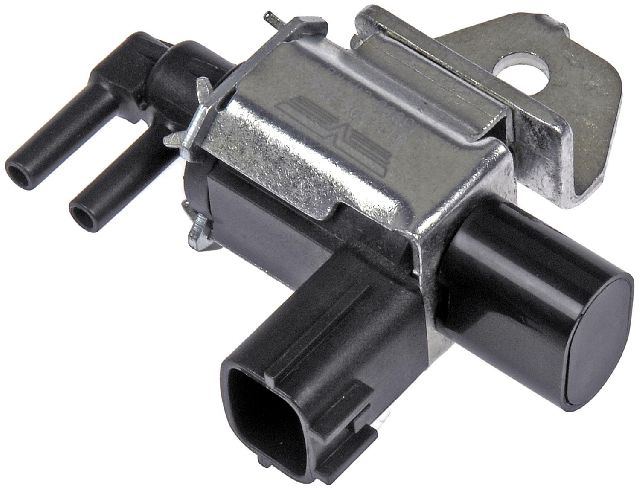
- Stuck Open EVAP Purge Valve: The EVAP purge valve can sometimes stick open, creating a vacuum leak that may not be found with a standard intake smoke test unless the EVAP system is specifically tested.
Diagnosis Steps

- Scan for any other trouble codes. If P0174 is also present, focus on causes common to both banks.
- Visually inspect the entire air intake system, paying close attention to the flexible rubber intake hose for cracks or loose connections, especially in the accordion ribs.
- With the engine running, listen for any obvious hissing sounds that would indicate a vacuum leak.
- Using a scan tool, observe the Long-Term Fuel Trim (LTFT) and Short-Term Fuel Trim (STFT) for Bank 1. High positive values (e.g., >15%) confirm the lean condition.
- With the scan tool, monitor the MAF sensor reading at warm idle. It should be stable and around 3.5-4.5 g/s. If it's much lower, the sensor may be faulty.
- Perform a smoke test to definitively identify any vacuum leaks, especially around the intake manifold gaskets, PCV hoses, and brake booster hose.
- If no vacuum leaks are found, remove and clean the Mass Airflow (MAF) sensor using a dedicated cleaner. Reinstall and check if fuel trims improve.
- Check fuel pressure to rule out a weak fuel pump or clogged filter. The VQ35DE uses a returnless system with a nominal pressure of about 51 psi (350 kPa).
- If all else fails, test the Bank 1 Air/Fuel Ratio sensor's response using a scan tool and the procedure outlined in TSB NTB19-022 to ensure it is not lazy or failed.
Parts You'll Likely Need

- Air Intake Hose
(OEM #16576-5AA1A (verify by VIN))— This is a very common failure point on the Murano, leading to a large, unmetered air leak that directly causes code P0171.
Trusted brands: Nissan OE, Dorman, Spectre
OEM price range: $90-$130
Aftermarket price range: $40-$90 - Intake Manifold Gasket Set
(OEM #Upper: 14032-JN01A, Lower: 14035-JN01A (verify by VIN))— These gaskets degrade over time, causing vacuum leaks that are a primary cause of lean codes on the VQ35DE engine. Replacement is labor-intensive.
Trusted brands: Fel-Pro, Victor Reinz, Nissan OE
OEM price range: $80-$150
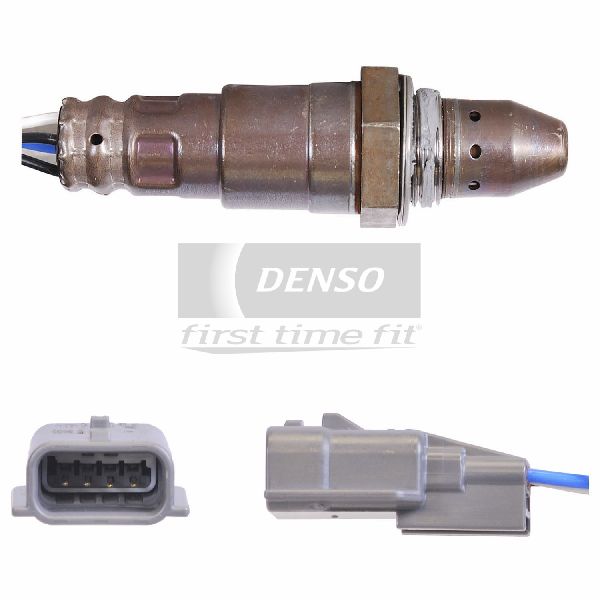
Aftermarket price range: $50-$120 - Air/Fuel Ratio Sensor (Bank 1, Sensor 1)
(OEM #22693-CD700 (Denso 234-5060, verify by VIN))— This sensor is replaced if it is confirmed to be faulty after all vacuum and fuel delivery issues have been ruled out, per TSB NTB19-022.
Trusted brands: Denso, NGK/NTK, Bosch
OEM price range: $150-$220
Aftermarket price range: $80-$160
Related Codes That Often Appear With This One
- P0174 — This is the 'System Too Lean' code for Bank 2 (the front bank). When both P0171 and P0174 are present, it strongly suggests a problem that affects the entire engine, such as a bad MAF sensor, a large vacuum leak at the intake boot, or low fuel pressure.
Technical Service Bulletins (TSBs) & Recalls
- NTB19-022: NISSAN; P0171 AND P0174 SERVICE INFORMATION. This TSB revises the diagnostic steps for lean codes on 2017-2019 Muranos (and other models), instructing technicians to perform a specific confirmation procedure to verify A/F sensor failure before replacement.
- NTB19-030: 2016-2018 NISSAN; MIL ON WITH DTC P0171, P0174, P2097, AND/OR P2099. This TSB applies to 2016-2018 Altima and Maxima models with the VQ35DE engine and suggests an ECM reprogram may be needed in some cases. It does not apply to the Murano.
Platform-Specific Known Issues
- Nissan Technical Service Bulletin NTB19-022 provides a revised diagnostic procedure for P0171 and P0174, advising technicians to confirm other potential issues before replacing the A/F sensor.
- Technical Service Bulletin NTB19-030 mentions an available ECM reprogram for some 2016-2018 Altima and Maxima models with the same VQ35DE engine that can experience P0171/P0174, though diagnosis of the root cause is still required first. This TSB does not officially list the Murano.
Mechanic-Grade Diagnostic Values
- Long-Term Fuel Trim (LTFT) — expected: Close to 0%, typically within -5% to +5%.. Failure: Sustained positive values greater than +12.5% will trigger the check engine light. Values over +15% strongly indicate a lean condition requiring correction.
- Fuel Pressure (at fuel rail) — expected: Approximately 51 psi (350 kPa) at idle. The VQ35DE uses a returnless fuel system.. Failure: Significantly lower pressure indicates a weak fuel pump, clogged filter, or faulty pressure regulator.
- Mass Airflow (MAF) Sensor Connector Voltage — expected: With key on, engine off: PIN 2 should have ~12V (battery voltage), PIN 3 is ground, PIN 5 should have a 5V reference signal, and PIN 6 is a ground signal from the ECU.. Failure: Missing voltage or ground on these pins points to a wiring or ECU issue, not a faulty MAF sensor.
Scan Tool Commands That Help
- Nissan CONSULT or advanced aftermarket (e.g., Autel MaxiSys): Idle Air Volume Learning — This procedure is required after cleaning or replacing the throttle body, or disconnecting the battery. It resets the ECM's memory for the correct idle settings. Failure to perform this can result in a high idle and potentially trigger lean codes.
- Nissan CONSULT or advanced aftermarket: A/F FT O2 SEN B1/B2 — This is a work support function to view the live fuel trim data for both banks. It's essential for observing Short-Term and Long-Term Fuel Trims (STFT/LTFT) to confirm the lean condition and see if it improves with RPM changes, which helps differentiate a vacuum leak from a fuel delivery issue.
Wiring & Ground Locations
- MAF Sensor Harness — The wiring harness leading to the Mass Airflow sensor, located on the air intake tube between the air filter box and the throttle body.. The bend in the harness near the MAF sensor connector is a known stress point. Wiggling this harness while monitoring MAF voltage or g/s on a scan tool can reveal an intermittent connection or broken wire, which can mimic a faulty MAF sensor.
Real Owner Repair Stories
- YouTube channel 'Advanced Level Automotive' (2010 Nissan Murano 3.5L V6 (demonstrates a common VQ35DE issue)) — Intermittent rough running, misfires, stalling, and P0171/P0174 codes.
❌ Tried (didn't work) Initial diagnosis pointed towards a faulty MAF sensor because fuel trims would go to +25% and the engine would run rough when put in gear.
✅ What actually fixed it A broken wire in the MAF sensor harness. The technician found that wiggling the harness caused the MAF signal to drop out completely. The fix was to cut out the bad section of wire and solder in a new piece, resolving the lean codes and rough running. - Reddit user in r/MechanicAdvice (2016 Nissan Murano) — Jumpy, wanting to stall, Check Engine Light with P0171 and P0174.
❌ Tried (didn't work) Replaced spark plugs., Cleaned MAF sensor., Replaced air filter.
✅ What actually fixed it The primary cause was a large tear in the air intake hose. After replacing the hose, the car drove great and passed emissions, but the codes would still intermittently return, indicating a likely secondary, smaller vacuum leak that would require a smoke test to find.
OEM Part Supersession History
11810-8J102→11810-EA200— Part consolidation and potential design update across multiple Nissan platforms using the VQ35DE and VQ40DE engines.
Model Year Variations Within This Range
- 2019: The 2019 model year received a mid-cycle refresh which included a revised V-motion grille, new LED headlights and taillights, and different wheel designs. While the 3.5L V6 engine and transmission remained unchanged, these cosmetic differences are important for sourcing correct exterior parts. No significant changes affecting the P0171 diagnosis were made.
Helpful Videos

Used OEM Parts in Stock

New Aftermarket Parts Available


The information in this article is provided for general reference and educational purposes only. Vehicle specifications, procedures, and part compatibility can vary by production date, trim level, and region. Always consult your vehicle's factory service manual and verify part numbers before purchasing or performing repairs. Safety-critical components such as airbags, seat belts, and braking systems should be installed by a qualified professional.
- Nissan MURANO:
- 🎬 Helpful Videos
- 🛍️ Shop This Part
- What's Unique About the 2016-2019 Nissan MURANO
- Diagnostic Flowchart
- Symptoms You May Notice
- Most Likely Causes
- Rare But Worth Checking
- Diagnosis Steps
- Parts You'll Likely Need
- Related Codes That Often Appear With This One
- Technical Service Bulletins (TSBs) & Recalls
- Platform-Specific Known Issues
- Mechanic-Grade Diagnostic Values
- Scan Tool Commands That Help
- Wiring & Ground Locations
- Real Owner Repair Stories
- OEM Part Supersession History
- Model Year Variations Within This Range
- 🎟️ Get 5% Off