

P0171 on 2017-2019 Nissan Armada: Causes and Fixes for Lean Fuel System
On a 2017-2019 Nissan Armada, code P0171 is most often caused by a dirty Mass Airflow (MAF) sensor or a vacuum leak from a failed intake manifold gasket. Cleaning the MAF sensor is an easy first step (~$15 for cleaner), while replacing the intake gaskets is a professional job costing $750-$850. A capable scanner to read fuel trims is highly recommended for diagnosis.
- P0171 on your Armada means the passenger side of the engine is running with too much air or not enough fuel.
- The most likely causes are a dirty MAF sensor (easy DIY check) or a vacuum leak from the intake manifold gaskets (more complex repair).
- Do not immediately replace the oxygen (A/F) sensor. Nissan has a specific diagnostic procedure (TSB NTB19-022) to test it, as it's often replaced by mistake.
- If you also have a P0174 code, the problem is almost certainly something that affects the whole engine, like the MAF sensor.
- Cleaning the MAF sensor with a dedicated spray cleaner is a cheap and effective first diagnostic step.
What's Unique About the 2017-2019 Nissan ARMADA
For this specific generation of Armada, Nissan issued a Technical Service Bulletin (TSB) NTB19-022 that revises the diagnostic process for P0171. Technicians found that the Air/Fuel ratio sensor (a type of oxygen sensor) was often being replaced unnecessarily. The TSB provides a specific, multi-step driving and idling procedure to perform with a Nissan CONSULT scan tool to confirm if the sensor is truly faulty before it gets replaced, saving owners from a common misdiagnosis. This procedure is designed to trigger other specific codes (like P2096/P2097) if the A/F sensor is the root cause.
Diagnostic Flowchart
Tap your situation to follow the diagnostic path that matches what you're seeing on this vehicle.
Symptoms You May Notice
- Check Engine Light is on
- Rough idle, sometimes getting worse after the CEL appears
- Hesitation or surging during acceleration
- Reduced engine power
- Engine stalling, especially when coming to a stop
- Hissing noise from the engine bay, indicating a vacuum leak
- Engine knocking or pinging under load
- Replacing the Air/Fuel Ratio (Oxygen) Sensor without first cleaning the MAF sensor, thoroughly checking for vacuum leaks with a smoke machine, or following the specific diagnostic procedure outlined in Nissan TSB NTB19-022.
Most Likely Causes
- Dirty or Faulty Mass Airflow (MAF) Sensor 🔴 High Probability The MAF sensor is sensitive and can become contaminated with dirt, oil from the PCV system, or oil from an aftermarket air filter, causing it to under-report airflow to the ECM. This is a very common failure point for lean codes on many Nissan and Infiniti vehicles. Using a non-OEM aftermarket MAF sensor is also a known cause of these codes.
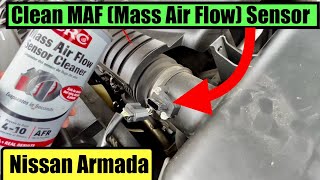
How to confirm: Unplug the sensor and remove it from the air intake tube. Visually inspect the delicate wires for contamination. Cleaning with a dedicated MAF sensor cleaner is a good first step. 🎬 Watch: How to safely clean your Nissan's MAF sensor. If the problem persists, a good diagnostic step is to swap the Bank 1 and Bank 2 MAF sensors (if the vehicle has two) and see if the code changes to P0174 (Lean Bank 2). If it does, the sensor is bad.
Typical fix: Clean the sensor with a specialized cleaner. If cleaning doesn't resolve the issue, replace the sensor element with a genuine OEM or high-quality OEM-supplier part (e.g., Hitachi).
Est. part cost: $15-$25 (cleaner), $240-$280 (OEM sensor) - Vacuum Leak (Intake Manifold Gaskets) 🔴 High Probability The large plastic intake manifold on the VK56VD engine uses multiple gaskets to seal against the cylinder heads. Over time, these gaskets can become hard and brittle, allowing unmetered air to leak into the engine, which is a primary cause of lean codes. This is a known issue on the platform.
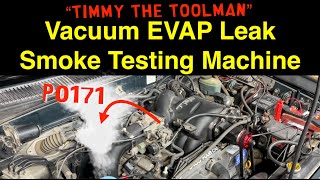
How to confirm: A professional mechanic will use a smoke machine to feed pressurized smoke into the intake system. Leaks will be visible as smoke escapes from the faulty gasket area. 🎬 See how a smoke machine identifies hidden vacuum leaks. Another method is to monitor short-term fuel trims at idle; if they are high (e.g., >15%) but decrease significantly when RPMs are raised to ~2500, a vacuum leak is likely.
Typical fix: Replace all intake manifold gaskets. This is a labor-intensive job as the fuel rail and other components must be removed. 🎬 Watch this walkthrough for replacing the intake manifold gaskets.
Est. part cost: $70-$100 (gaskets), $750-$950 (total shop cost) - Failing Air/Fuel Ratio Sensor (Bank 1, Sensor 1) 🟡 Medium Probability The A/F sensor is the primary sensor that measures the air-fuel mixture. It can degrade over time and send false lean signals. However, Nissan TSB NTB19-022 specifically warns that this part is often misdiagnosed and replaced unnecessarily.
How to confirm: Follow the specific diagnostic procedure in TSB NTB19-022, which involves a prescribed driving cycle to see if other codes (P2096/P2098) appear, which would confirm a bad sensor. Without following the TSB, this part should only be suspected after MAF and vacuum leak causes have been completely ruled out.
Typical fix: Replace the Bank 1, Sensor 1 Air/Fuel Ratio Sensor.
Est. part cost: $120-$275 - Exhaust Leak ⚪ Low Probability While the earlier VK56DE engine was notorious for cracked exhaust manifolds, the VK56VD can still develop leaks at the manifold-to-head gasket. An exhaust leak before the upstream A/F sensor allows outside oxygen to be drawn into the exhaust stream, making the sensor report a false lean condition.
How to confirm: Visually inspect the exhaust manifold and piping before the first O2 sensor for cracks or black soot trails indicating a gasket leak. A common symptom is a ticking noise from the engine, especially when cold, that may quiet down as the engine warms up and the metal expands.
Typical fix: Replace the leaking gasket or repair/replace the cracked exhaust component.
Est. part cost: $20-$500+
Rare But Worth Checking
- Low Fuel Pressure: The VK56VD engine uses both a low-pressure in-tank fuel pump and a high-pressure, engine-driven pump. A weak low-pressure pump or a clogged fuel filter can restrict fuel flow, causing a lean condition across both banks. This should be investigated if air-side causes are ruled out.
- Stuck Open PCV Valve or Damaged PCV Hose: The Positive Crankcase Ventilation (PCV) valve can fail or stick open, creating a significant vacuum leak. The hoses connected to it can also become brittle and crack. This is a simple and inexpensive item to check.
Diagnosis Steps
- Read the codes with an OBD-II scanner that can view live data. Note all codes present, especially P0174.
- Observe Long-Term Fuel Trim (LTFT) and Short-Term Fuel Trim (STFT) for Bank 1 and Bank 2 at idle and at 2,500 RPM. High positive numbers (>10-15%) confirm the lean condition.
- Visually inspect the air intake boot and all vacuum and PCV hoses for obvious cracks, disconnections, or brittleness.
- Remove and clean the Mass Airflow (MAF) sensor using a dedicated MAF sensor cleaner. Do not touch the sensor wires. Clear the codes and drive to see if they return.
- If codes return, perform a smoke test to check for vacuum leaks. Pay close attention to the intake manifold gaskets, PCV system, and intake air ducting.
- If no vacuum leaks are found, follow the procedure in TSB NTB19-022 to determine if the Air/Fuel Ratio sensor is faulty. This requires a capable scan tool.
- Inspect the exhaust manifolds for cracks or gasket leaks (soot trails, ticking noises when cold).
- If all else fails, test the fuel pressure to ensure the fuel pump and filter are functioning correctly.
Parts You'll Likely Need
- Mass Air Flow (MAF) Sensor
(OEM #22680-1MG0A)— This sensor often gets dirty and sends incorrect airflow readings, a primary cause of lean codes. Using non-OEM brands can cause persistent issues.
Trusted brands: Hitachi (OEM supplier), Nissan OE
OEM price range: $240-$280
Aftermarket price range: $100-$180 - Intake Manifold Gasket
(OEM #14035-1LA0A)— These gaskets are a common source of vacuum leaks on the 5.6L V8 engine, leading to a P0171 code. Eight are required for the job.
Trusted brands: Nissan OE, Fel-Pro
OEM price range: $9-$12 each
Aftermarket price range: $40-$60 (set) - Air/Fuel Ratio Sensor (Bank 1, Sensor 1)
(OEM #22693-1PM0A)— If confirmed faulty via the proper diagnostic procedure (TSB NTB19-022), this sensor is the cause. It directly measures the air-fuel ratio. It is also called an upstream O2 sensor.
Trusted brands: Denso (OEM supplier), NGK/NTK, Bosch
OEM price range: $220-$275
Aftermarket price range: $120-$200
Related Codes That Often Appear With This One
- P0174 — P0174 is the same 'System Too Lean' code but for Bank 2 (driver's side). When both P0171 and P0174 are present, it strongly suggests a problem that affects the entire engine, such as the MAF sensor, a large vacuum leak after the throttle body, or a fuel delivery issue.
- P0300 — This is a 'Random/Multiple Cylinder Misfire' code. A severe lean condition can prevent proper combustion, leading to misfires across multiple cylinders.
Technical Service Bulletins (TSBs) & Recalls
- NTB19-022: P0171 AND P0174 SERVICE INFORMATION. This TSB revises the diagnostic procedure to correctly identify a faulty A/F sensor versus other causes. It requires a specific multi-step test involving idling and holding RPMs for set times to try and trigger a P2096/P2097/P2098/P2099 code, which would condemn the sensor.
Platform-Specific Known Issues
- Nissan issued Technical Service Bulletin NTB19-022 due to the frequency of misdiagnosis related to P0171 and P0174. It provides a revised diagnostic flow chart to prevent the unnecessary replacement of Air/Fuel sensors.
- The VK56VD engine is direct-injected, which can lead to carbon buildup on the intake valves over time. While not a direct cause of P0171, if the intake manifold is removed to replace gaskets, it is a good opportunity to inspect and clean the valves.
- Some 2017-2019 models with the VK56VD engine were subject to an engine knock
Mechanic-Grade Diagnostic Values
- Long Term Fuel Trim (LTFT) at idle — expected: -5% to +5%. Failure: Sustained positive values above +15% to +20% will trigger the P0171 code.
- Mass Airflow (MAF) Sensor Reading at idle (warmed up) — expected: Approximately 5.0 to 7.0 g/s for the 5.6L V8 engine.. Failure: Significantly lower readings (e.g., 2-4 g/s) suggest the sensor is dirty or failing, causing the ECM to under-fuel the engine.
- Upstream Air/Fuel (A/F) Ratio Sensor Voltage (at stoichiometric) — expected: Approximately 2.2 Volts (this is a wideband sensor, not a 0.1-0.9V switching sensor).. Failure: Voltage that is significantly different or fixed when it should be active may indicate a sensor fault, but only after vacuum/exhaust leaks are ruled out.
- EVAP Purge Control Solenoid Valve Duty Cycle at idle — expected: 0%. Failure: Any reading above 0% at idle (e.g., 15%) indicates the valve is stuck open, creating an un-metered vacuum leak.
Scan Tool Commands That Help
- Nissan CONSULT or capable aftermarket scanner: Idle Air Volume Learn — This procedure is critical after cleaning the throttle body, replacing it, or fixing a major vacuum leak. It resets the base idle airflow in the ECM. Failure to perform this can cause a persistent high or rough idle even after the P0171 cause is fixed.
- Nissan CONSULT or capable aftermarket scanner: Self-Learn Cont. (Clear Fuel Trim / Adaptive Memory) — After a repair is completed, this function resets the long-term fuel trim values to zero. This allows for immediate confirmation that the repair was successful by watching if the fuel trims remain near zero during a test drive.
Wiring & Ground Locations
- Engine Harness Grounds — Typically bolted to the cylinder heads, engine block, and chassis.. A loose or corroded ground for the ECM or engine sensors (like the MAF or A/F sensors) can cause incorrect voltage readings, leading to false lean signals. While not a common cause, it should be checked if sensor readings are erratic or implausible.
Real Owner Repair Stories
- Multiple online forums and technical articles (2017-2019 Nissan Armada and Infiniti QX80 (same platform)) — Hissing noise from engine bay, rough idle, P0171 and P0174 codes.
❌ Tried (didn't work) Cleaning MAF sensor, Replacing A/F sensors
✅ What actually fixed it The large plastic/rubber air intake duct assembly, located between the air filter box and the throttle body, had developed a crack. This allowed a large amount of unmetered air into the engine. Replacing the entire duct assembly resolved the codes. - ScannerDanner Forum user 'primov8' (2014 Infiniti QX80 (VK56VD engine)) — Sporadic P0171 code, high positive fuel trims that would sometimes return to normal.
❌ Tried (didn't work) Replacing air filters, Cleaning MAF sensor, Initial smoke test showed no leaks
✅ What actually fixed it Two issues were found: 1) The EVAP purge control valve was sticking open at idle, reading 15% when it should have been 0%. 2) The low-pressure fuel pump was showing sporadic pressure drops under load. Replacing both the purge valve and the low-pressure fuel pump finally resolved the issue.
"I Checked Everything" — The Actual Cause
- A common scenario is passing a smoke test but still having a lean code. This often points to a cause that isn't a simple vacuum leak. One documented case on the same platform (Infiniti QX80) was a faulty EVAP Purge Valve that was intermittently stuck open. This is a type of vacuum leak, but it may not be detected by a standard intake smoke test unless the EVAP system is specifically isolated and tested.
- If a smoke test is clean, the issue is likely on the fuel side. A weak low-pressure fuel pump, a failing high-pressure fuel pump, or clogged fuel injectors can cause a lean condition without any air leaks.
Helpful Videos
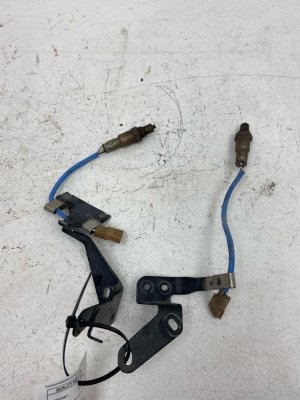
Used OEM Parts in Stock

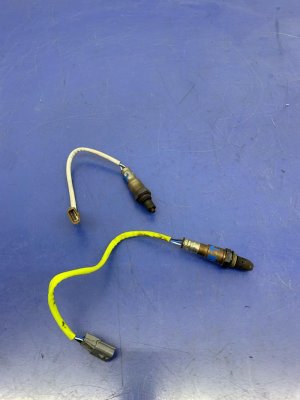
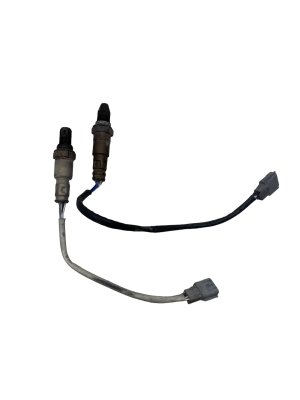
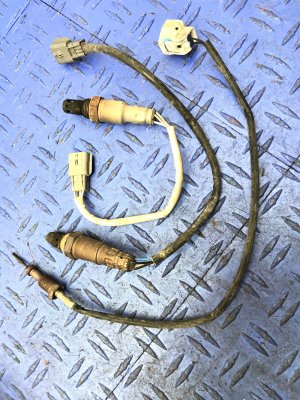
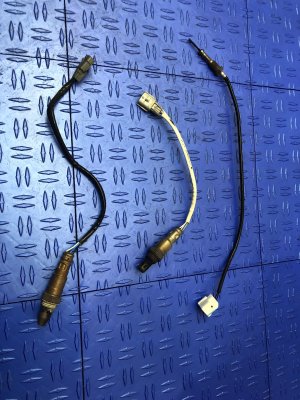
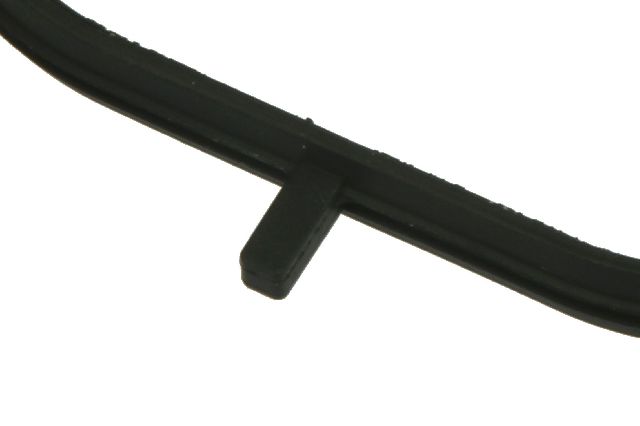
New Aftermarket Parts Available

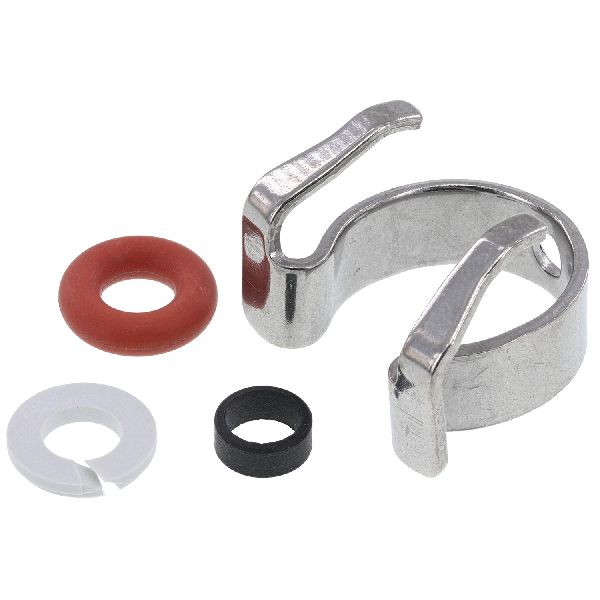

The information in this article is provided for general reference and educational purposes only. Vehicle specifications, procedures, and part compatibility can vary by production date, trim level, and region. Always consult your vehicle's factory service manual and verify part numbers before purchasing or performing repairs. Safety-critical components such as airbags, seat belts, and braking systems should be installed by a qualified professional.
- Nissan ARMADA:
- 🎬 Helpful Videos
- 🛍️ Shop This Part
- What's Unique About the 2017-2019 Nissan ARMADA
- Diagnostic Flowchart
- Symptoms You May Notice
- Most Likely Causes
- Rare But Worth Checking
- Diagnosis Steps
- Parts You'll Likely Need
- Related Codes That Often Appear With This One
- Technical Service Bulletins (TSBs) & Recalls
- Platform-Specific Known Issues
- Mechanic-Grade Diagnostic Values
- Scan Tool Commands That Help
- Wiring & Ground Locations
- Real Owner Repair Stories
- "I Checked Everything" — The Actual Cause
- 🎟️ Get 5% Off