

P0171 on 2015-2018 Nissan Altima 2.5L: Causes and Fixes for 'System Too Lean'
On a 2015-2018 Nissan Altima 2.5L, the P0171 code is most often caused by a vacuum leak from a cracked air intake hose or a failed intake manifold gasket. Cleaning the Mass Airflow (MAF) sensor is a common and inexpensive first step. A replacement intake hose costs around $40-$80. After repairs like gasket replacement, an 'Idle Air Volume Learning' procedure may be required.
- Always start by thoroughly inspecting the rubber air intake hose for cracks; this is a very common and relatively cheap fix.
- If the intake hose is intact, the next most likely cause is a leaking intake manifold gasket, which is best confirmed with a smoke test.
- Before replacing the expensive Air/Fuel Ratio (O2) sensor, try cleaning the MAF sensor and rule out all possible vacuum leaks.
- Check for any applicable TSBs, as your vehicle might need a specific diagnostic procedure or an ECM software update in addition to a part replacement.
What's Unique About the 2015-2018 Nissan Altima

For this generation of Altima, the P0171 code is frequently linked to specific, well-documented component failures. The flexible rubber air intake hose is known to crack in its accordion-like ribs, and the intake manifold gasket is a common weak point that fails and creates a vacuum leak. Nissan has also issued technical service bulletins (TSBs) that revise the diagnostic procedures for this code, sometimes pointing toward a faulty Air/Fuel ratio sensor or the need for an ECM software update, particularly on 2015 models.
Symptoms You May Notice
- Check Engine Light is on
- Rough or unstable idle, sometimes bouncing up and down
- Hesitation or stumbling during acceleration
- Reduced power
- Significantly decreased fuel economy; some owners report a 50% drop
- Hard starting, especially when the engine is cold
- A distinct hissing or sucking noise from the engine bay at idle
- Replacing the oxygen (A/F) sensor without proper diagnosis. Vacuum leaks and MAF sensor issues are far more common and should be ruled out first with a smoke test and fuel trim analysis.
- Replacing the MAF sensor with a cheap, aftermarket part. Many owners report that non-OEM sensors do not work correctly and cause the P0171 code to return immediately.
Most Likely Causes

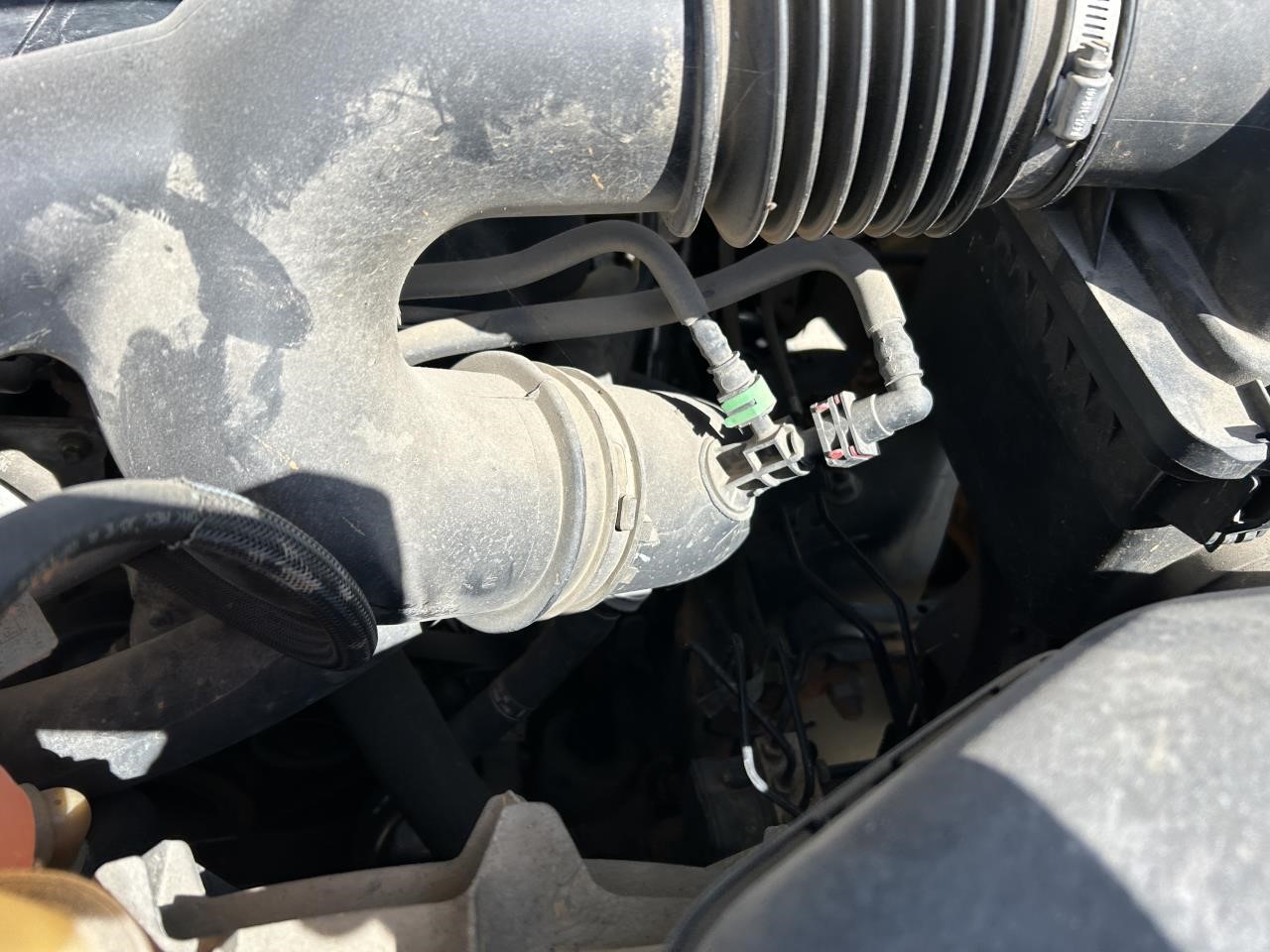
- Cracked Air Intake Hose 🔴 High Probability The flexible rubber hose between the air filter box and the throttle body becomes brittle over time from engine heat and vibration, leading to cracks, especially in the ribbed, flexible sections. This allows unmetered air to enter the engine past the MAF sensor.
How to confirm: Visually inspect the entire length of the intake hose, bending and squeezing it to reveal hidden cracks. A smoke test will definitively show a leak if it's not visible. The leak is often large enough to be heard as a hissing sound.
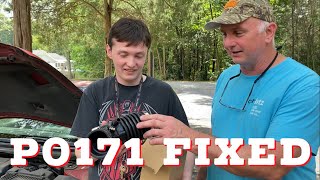
Typical fix: Replace the entire air intake hose assembly. This is a straightforward DIY job. 🎬 Watch: A quick walkthrough of this common intake hose fix.
Est. part cost: $40-$80 - Leaking Intake Manifold Gasket 🔴 High Probability The intake manifold gasket on the QR25DE engine is a known failure point, causing unmetered air to enter the engine directly at the cylinder head.
How to confirm: A professional smoke test is the most reliable method. Alternatively, spraying brake cleaner or a flammable liquid near the gasket with the engine running will cause the idle to change noticeably, indicating a leak. This should be done with caution.
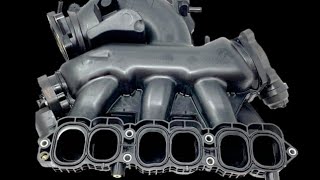
Typical fix: Replace the intake manifold gasket. This is more involved than the intake hose. After replacement, an 'Idle Air Volume Learning' (IAVL) procedure is often necessary to reset the idle correctly. 🎬 Watch: Step-by-step guide to replacing the intake manifold gasket.
Est. part cost: $20-$50 - Dirty or Faulty Mass Airflow (MAF) Sensor 🟡 Medium Probability The MAF sensor can become contaminated with dirt and oil, causing it to under-report airflow to the ECM. Using aftermarket (non-OEM/Hitachi) MAF sensors is a very common cause for this code to persist after a replacement.
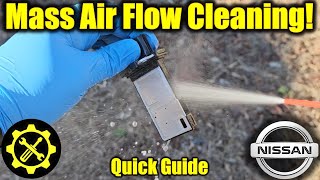
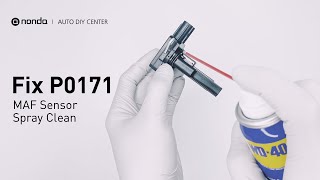
How to confirm: First, try cleaning the sensor with a dedicated MAF sensor cleaner spray. If the problem persists, monitor the sensor's readings with a scan tool. Do not replace with a cheap aftermarket sensor, as they are often calibrated incorrectly and cause more issues. 🎬 See how to properly clean your MAF sensor.
Typical fix: Clean the MAF sensor. If cleaning doesn't work, replace the sensor with an OEM (Hitachi) or a reputable OEM-equivalent part like Denso or Bosch.
Est. part cost: $10 for cleaner, $100-$250 for a new sensor - Faulty Air/Fuel Ratio Sensor (Front O2 Sensor) 🟡 Medium Probability
How to confirm: Test the sensor's response using a scan tool. Nissan issued TSB NTB19-022 with a specific diagnostic procedure to confirm if the A/F sensor is the root cause before replacement. The procedure involves clearing self-learning values and performing a specific drive cycle to see if codes P2096/P2097 appear, which would rule out a bad A/F sensor.
Typical fix: Replace the upstream Air/Fuel Ratio sensor (Bank 1, Sensor 1). For 2015 models, a related TSB suggests an ECM reprogram must be performed *before* replacing the sensor.
Est. part cost: $80-$180
Rare But Worth Checking
- Weak Fuel Pump or Clogged Fuel Filter: If the engine is starved for fuel, it can cause a lean condition. Check fuel pressure at the rail to confirm if it's below specification. The spec is approximately 51 PSI. This is less common than vacuum leaks.
- Leaking or Stuck PCV Valve or Hose: A PCV valve stuck open or a cracked hose connected to it can create a significant vacuum leak. The valve is typically located on the valve cover and can be tested by shaking it to see if it rattles (a rattle is good). A cracked PCV hose is a common failure point.
- Clogged Fuel Injectors: Less common on newer vehicles, but dirty or failing injectors can restrict fuel flow to one or more cylinders, causing a lean mixture.
Diagnosis Steps

- Read the code with an OBD-II scanner and check for any other stored codes. Note the freeze frame data, which shows engine conditions when the code was set.
- Using a scan tool, monitor the long-term and short-term fuel trims (LTFT and STFT). Normal range is between -10% and +10%. Consistently high positive numbers (e.g., LTFT > 15-20%) confirm the lean condition.
- Visually inspect the air intake hose between the air filter box and the engine for any cracks, tears, or loose connections. Pay close attention to the flexible, ribbed sections.
- Inspect all other vacuum lines, including the PCV hose, for cracks or disconnections.
- If fuel trims are high at idle but improve (move closer to zero) at higher RPMs (e.g., 2500 RPM), this strongly suggests a vacuum leak. If trims remain high across all RPMs, suspect a MAF or fuel delivery issue.
- Perform a smoke test to find hard-to-see vacuum leaks, especially around the intake manifold gasket and PCV system. This is the most definitive test for leaks.
- Remove and clean the Mass Airflow (MAF) sensor using a dedicated MAF sensor cleaner. Do not touch the delicate sensor wires. Allow it to dry completely before reinstalling.
- Test the fuel pressure to rule out a weak fuel pump or clogged filter. Specification is approximately 51 PSI.
- If all leaks and fuel/air sensor issues are ruled out, follow the procedure in TSB NTB19-022 to test the front Air/Fuel ratio sensor.
Parts You'll Likely Need

- Air Intake Hose / Duct
(OEM #16576-3TA0C (supersedes 16576-3TA0A, 16576-3TA0B))— This flexible rubber part is a very common failure point, cracking from age and heat and causing a significant vacuum leak.
Trusted brands: Nissan (OEM), Dorman, TRQ
OEM price range: $60-$90
Aftermarket price range: $40-$70 - Intake Manifold Gasket
(OEM #14035-3TA0A)— A known weak point on the QR25DE engine that frequently fails, causing a vacuum leak and a P0171 code. Aftermarket versions from brands like Fel-Pro are often considered more durable.
Trusted brands: Nissan (OEM), Fel-Pro, Mahle, Victor Reinz
OEM price range: $30-$50
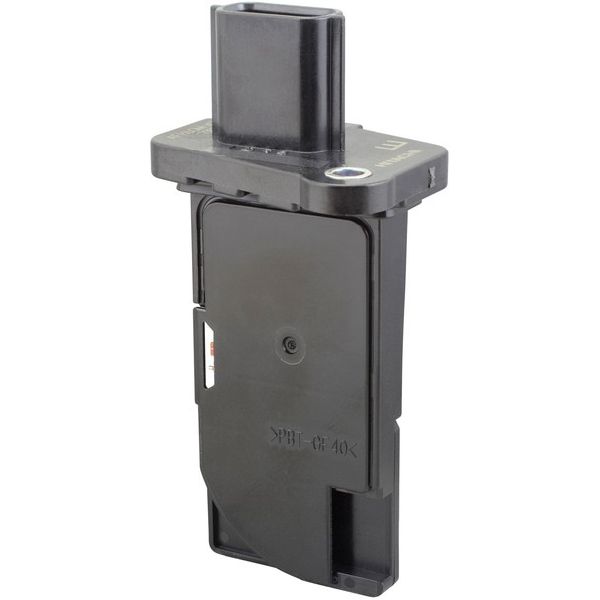
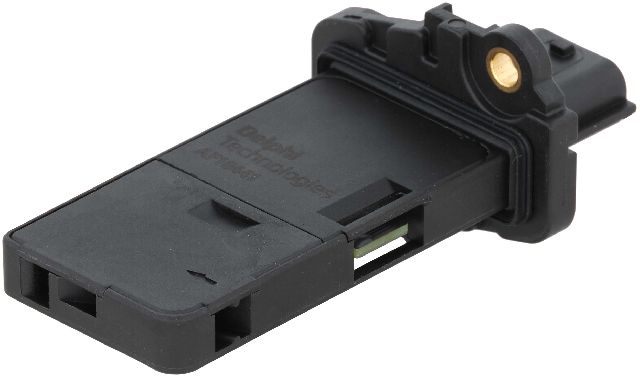
Aftermarket price range: $15-$30 - Mass Airflow (MAF) Sensor
(OEM #22680-3VA0A)— Often becomes dirty, causing incorrect readings. While cleaning is often successful, replacement is sometimes necessary. Using non-OEM sensors can sometimes cause persistent issues.
Trusted brands: Hitachi (OEM), Denso, Bosch
OEM price range: $200-$250
Aftermarket price range: $80-$150
Related Codes That Often Appear With This One
- P0101 — This code relates to Mass Airflow (MAF) sensor performance. A dirty or failing MAF sensor is a common cause for both P0101 and P0171. Nissan has issued TSBs for P0101 that involve an ECM reprogram.
- P0300 — A lean air-fuel mixture can fail to ignite properly, leading to random misfires across multiple cylinders, especially under load.
- P0174 — This code is for 'System Too Lean (Bank 2)'. On a V6 Altima, seeing P0171 and P0174 together strongly points to a vacuum leak or MAF issue affecting both banks, rather than a single sensor or injector. It is not applicable to the 4-cylinder QR25DE.
Technical Service Bulletins (TSBs) & Recalls
- NTB19-022: Service information for diagnosing DTC P0171 on 2017-2018 models.
- NTB15-115: ECM reprogram and A/F sensor replacement for P0171 on 2015 models.
- NTB19-030: Addresses P0171/P0174 on V6 models, may require ECM reprogram.
- TSB Bulletin #NTB15115: Notes that if the MIL is on with P0171 or P0172 and there are no driveability issues, the Air/Fuel sensor or post-cat fuel trim system may be involved.
- TSB Bulletin #NTB19-022: Provides revised diagnosis for DTCs P0171 (Fuel Sys Lean B1) and P0174 (Fuel Sys Lean B2).
- TSB Bulletin #NTB19-030: Specifically applies to Altima vehicles equipped with the VQ35 engine when the MIL is on with P0171, P0174, P2097, and/or P2099.
Platform-Specific Known Issues
- Nissan issued TSB NTB19-022 for 2017-2018 Altimas, which provides a revised diagnostic procedure for P0171. It advises technicians to perform a specific test drive cycle after clearing self-learning data to see if P2096/P2097 appear. If they do not, the A/F sensor should be replaced. If they do, the A/F sensor is not the cause.
- For 2015 models specifically, a separate TSB (NTB15-115) indicates that if P0171 is present without driveability issues, the fix is to first reprogram the ECM and then replace the front A/F sensor.
- After replacing the intake manifold gasket or cleaning the throttle body, an 'Idle Air Volume Learning' (IAVL) procedure must be performed with a capable scan tool or via a manual pedal-dance procedure to prevent an erratic or high idle.
Mechanic-Grade Diagnostic Values

- Long-Term and Short-Term Fuel Trims (LTFT/STFT) — expected: Between -10% and +10% at idle and steady cruise.. Failure: Consistently high positive values, such as +15% to +30%, indicate the ECM is adding significant fuel to compensate for a lean condition.
- Upstream Air/Fuel (O2) Sensor Voltage (B1S1) — expected: On a traditional zirconia sensor, voltage should rapidly fluctuate between approximately 0.1V (lean) and 0.9V (rich).. Failure: A lazy sensor that responds slowly, or a sensor that is biased and stuck low (e.g., < 0.35V), may be faulty or indicating a persistent lean condition.
- Mass Airflow (MAF) Sensor Reading — expected: Approximately 2.0-4.0 g/s at a stable, warm idle (around 650-750 RPM). This value should increase smoothly and proportionally with engine RPM.. Failure: A reading that is abnormally low for the given RPM suggests the sensor is dirty or failing, causing the ECM to calculate less fuel than required.
- Fuel Pressure — expected: Approximately 51 psi at the fuel rail.. Failure: Pressure significantly below specification indicates a weak fuel pump, clogged filter, or faulty pressure regulator.
Scan Tool Commands That Help
- Nissan CONSULT or capable aftermarket scanner (e.g., Autel, OTC): Idle Air Volume Learning (IAVL) — This must be performed after replacing the intake manifold gasket, cleaning the throttle body, or replacing the ECM. Failure to do so will likely result in an unstable or high idle.
- Nissan CONSULT or capable aftermarket scanner: Self-Learning Control Reset — This function clears the long-term fuel trim adaptations. It should be used after a repair (like fixing a vacuum leak) to force the ECM to relearn the fuel strategy immediately, rather than slowly adapting over time. It is a required step in some TSB diagnostic procedures.
Real Owner Repair Stories
- YouTube channel 'MintHillBilly' (2009 Nissan Altima 2.5L (similar QR25DE engine and common issues)) — P0171 Check Engine Light.
❌ Tried (didn't work) Initial diagnosis pointed towards a lean code.
✅ What actually fixed it The air intake hose had a large, visible crack in the flexible ribbed section. Replacing the hose resolved the code. - YouTube channel 'Boulay's Garage' (2013 Nissan Juke (different vehicle, but demonstrates a common P0171 cause)) — P0171 Check Engine Light, high fuel trims.
❌ Tried (didn't work) Inspected air intake tube, checked MAF sensor.
✅ What actually fixed it A cracked PCV hose was found upon closer inspection near the valve cover, creating a vacuum leak. Temporarily repairing and then replacing the hose fixed the lean condition. - Reddit user in /r/Nissan (2011 Nissan Altima) — Severe jerking at idle and while driving, hard starting.
❌ Tried (didn't work) Replaced battery, MAF sensor, and PCV valve based on a suggestion about a faulty orange-colored valve design.
✅ What actually fixed it The issue persisted after trying common fixes. The final root cause was a dry-rotted ignition coil pack, which was likely causing a misfire that the owner perceived as jerking. This highlights that driveability issues can sometimes be misattributed to a lean code when another problem is present.
"I Checked Everything" — The Actual Cause
- In some cases, a P0171 code can be triggered even if a smoke test of the intake system shows no leaks. One potential cause is a crack or gasket leak in the exhaust manifold *before* the primary Air/Fuel (O2) sensor. This allows outside oxygen to enter the exhaust stream, fooling the sensor into reporting a lean mixture to the ECM, which then incorrectly adds fuel. This is missed by standard vacuum leak tests.
- Another possibility is a MAF sensor that is not completely failed but is reading inaccurately low under specific load conditions, even after cleaning. It may appear to function correctly at idle but under-reports airflow as RPMs increase, causing the ECM to command insufficient fuel.
When the Usual Fixes Don't Work
- While vacuum leaks and MAF sensor issues are the most common culprits for P0171, they are not the only cause. One owner experienced severe jerking and a P0171 code, and after replacing the MAF and PCV valve with no success, the actual cause was found to be a faulty ignition coil. This demonstrates that while a lean code may be present, it might be a symptom of, or concurrent with, a separate ignition or mechanical problem causing the primary driveability complaint.
OEM Part Supersession History
16576-3TA0A, 16576-3TA0B→16576-3TA0C— Revisions to improve durability and prevent cracking of the flexible rubber.
Model Year Variations Within This Range
- 2015 only: Per TSB NTB15-115, a P0171 code on this year may require an ECM software update to be performed by a dealer *before* replacing the front A/F sensor to achieve a permanent fix.
- 2017-2018: Per TSB NTB19-022, a specific diagnostic procedure involving a drive cycle is recommended to confirm if the A/F sensor is truly the cause before replacement.
Diagnostic Flowchart
Other Known Issues on This Vehicle
Issues unrelated to this code that are worth knowing about as an owner of this generation:
- Continuously Variable Transmission (CVT) Failure 🔴 High — Very common, with symptoms like shuddering, hesitation, and complete failure often occurring well before 100,000 miles. The 2015 model year is particularly problematic. (Ref: Multiple class-action lawsuits have resulted in extended warranties for certain model years.)
- Secondary Hood Latch Failure 🔴 High — Widespread enough to trigger multiple recalls and a class-action lawsuit for 2013-2018 models. The latch can fail, allowing the hood to fly open while driving. (Ref: NHTSA Campaign Number 20V003000 (and others))
- Automatic Emergency Braking (AEB) Malfunction 🟠 Medium — Owners report the system engaging unexpectedly ('phantom braking') when no obstacle is present, creating a rear-end collision risk.
- Premature Suspension Component Wear 🟠 Medium — Reports indicate premature failure of components like lower control arms, sometimes as early as 20,000 miles, leading to noises and alignment issues.
- Intermittent Electrical Gremlins 🟡 Low — Persistent, non-catastrophic issues like flickering backup cameras, freezing infotainment screens, and unreliable Bluetooth connectivity are commonly reported.
Used vs. New Parts: Buying Guide for This Vehicle
When a used part is the smart pick: For this repair, obtaining used parts from a salvage yard is generally only recommended for non-electronic, structural components. This includes the plastic engine cover, the air filter box assembly, or potentially the intake manifold itself if it was cracked (a rare failure).
Donor-vehicle mileage cap: roughly under 80000 miles for the part to have meaningful remaining life.
What to inspect on the donor part:
- For an intake hose, inspect it meticulously off the donor car. Squeeze and bend the ribbed sections, looking for any signs of dry rot or hairline cracks that will soon become major leaks.
- Check the vehicle history of the donor car if possible to avoid parts from flood or front-end collision vehicles.
OEM-only on this vehicle (don't cheap out):
- Mass Airflow (MAF) Sensor
- Air/Fuel Ratio (O2) Sensor
Aftermarket brands forum-validated for this vehicle:
- Hitachi (OEM for MAF sensor)
- Denso (OEM-equivalent for A/F sensor)
- NTK (OEM-equivalent for O2 sensors)
- Fel-Pro (For intake manifold gasket)
Brands owners have reported issues with on this vehicle:
- Unbranded, low-cost electronic sensors (MAF, A/F) from online marketplaces are frequently reported on forums to be calibrated incorrectly, leading to the P0171 code returning immediately after installation.
Real Owner Stories
Aggregated from forums and TSBs cited above. Mileages and costs reflect what owners reported in those sources.
2015 Nissan Altima 2.5L
Symptoms: Rough cold starts and flat O2 sensor readings.
What fixed it: Suspected vacuum leak; diagnostic advice suggested checking for leaks before sensor replacement.
Source hint: NissanClub.com - 'p0171 code (lean bank 1)'
2015 Nissan Altima 2.5L
Symptoms: Triggered the code immediately after cleaning the MAF and throttle body.
What fixed it: The owner likely cracked the intake boot during the cleaning process, creating a vacuum leak; required an Idle Air Volume Learn (IAVL) after the repair.
Source hint: NissanForums.com - 'P0171'
2012 Nissan Altima 2.5L
Symptoms: High fuel trims around 30% despite having smoke tested the car and checked fuel pressure.
What fixed it: The source illustrates a complex diagnostic case where standard leak tests and fuel pressure checks did not immediately resolve the high trims.
Source hint: Reddit (r/MechanicAdvice) - '2012 Nissan Altima lean code P0171 What Should I Do?'
Related OBD-II Codes
Frequently Asked Questions
I have a 2015 Altima with code P0171 but no driveability issues. What is the recommended fix?
Does Nissan have a specific diagnostic procedure for P0171 on 2017-2018 Altimas?
I just replaced my intake manifold gasket; why is my idle still erratic?
Can I use a cheaper aftermarket MAF sensor to fix this code?
Is there a common physical part that fails on the 2.5L Altima causing this lean condition?
My fuel economy dropped by nearly 50% and I hear a hissing noise. Are these related to P0171?
Helpful Videos
Used OEM Parts in Stock



New Aftermarket Parts Available



The information in this article is provided for general reference and educational purposes only. Vehicle specifications, procedures, and part compatibility can vary by production date, trim level, and region. Always consult your vehicle's factory service manual and verify part numbers before purchasing or performing repairs. Safety-critical components such as airbags, seat belts, and braking systems should be installed by a qualified professional.
- Nissan Altima:
- 🎬 Helpful Videos
- 🛍️ Shop This Part
- What's Unique About the 2015-2018 Nissan Altima
- Symptoms You May Notice
- Most Likely Causes
- Rare But Worth Checking
- Diagnosis Steps
- Parts You'll Likely Need
- Related Codes That Often Appear With This One
- Technical Service Bulletins (TSBs) & Recalls
- Platform-Specific Known Issues
- Mechanic-Grade Diagnostic Values
- Scan Tool Commands That Help
- Real Owner Repair Stories
- "I Checked Everything" — The Actual Cause
- When the Usual Fixes Don't Work
- OEM Part Supersession History
- Model Year Variations Within This Range
- Diagnostic Flowchart
- Other Known Issues on This Vehicle
- Used vs. New Parts: Buying Guide for This Vehicle
- Real Owner Stories
- 2015 Nissan Altima 2.5L
- 2015 Nissan Altima 2.5L
- 2012 Nissan Altima 2.5L
- Related OBD-II Codes
- Frequently Asked Questions
- 🎟️ Get 5% Off