

P0171 on 2015-2018 Nissan Altima: System Too Lean Causes and Fixes
On a 2015-2018 Nissan Altima, the P0171 code is most often caused by a vacuum leak from a failed intake manifold gasket or a cracked air intake hose. Cleaning or replacing the Mass Airflow (MAF) sensor is another common and inexpensive first step. On 2015 models, a faulty A/F sensor requiring an ECM reprogram is also a known issue per a Nissan TSB.
- P0171 means your engine is getting too much air or not enough fuel.
- The most likely cause on a 2015-2018 Altima is a vacuum leak, specifically from the intake manifold gasket or a cracked air intake hose.
- Before replacing any parts, perform a visual inspection of the intake hose and consider cleaning the MAF sensor, as these are low-cost diagnostic steps.
- A smoke test is the most effective way to confirm a vacuum leak.
- Check for applicable TSBs, as your vehicle may require a specific diagnostic procedure or a software update in addition to a part replacement.
What's Unique About the 2015-2018 Nissan ALTIMA

For this generation of Altima, the P0171 code is frequently linked to specific, well-documented component failures rather than just generic issues. The intake manifold gasket is a known weak point that commonly fails and creates a vacuum leak. Additionally, the flexible air intake hose is prone to cracking. Nissan has issued Technical Service Bulletins (TSBs) that revise the diagnostic procedures for this code, and specifically for 2015 models, point to a faulty Air/Fuel sensor that also requires an ECM reprogram to fix. For V6 models, another TSB addresses P0171/P0174 and may also require an ECM reprogram.
Diagnostic Flowchart

Tap your situation to follow the diagnostic path that matches what you're seeing on this vehicle.
Symptoms You May Notice
- Check Engine Light is on
- Rough or unstable idle, sometimes shaking or stumbling at a stop
- Hesitation or loss of power during acceleration
- Significantly reduced fuel economy, with some owners reporting a 50% decrease
- Hissing or sucking noise from the engine bay, indicating a vacuum leak
- Engine stalling, especially when coming to a stop or on an incline
- Hard starting, where the engine cranks but fails to turn over, especially when not on level ground
- Replacing the oxygen sensor without checking for vacuum leaks first. A vacuum leak is a more common cause, and a new oxygen sensor will correctly detect the same lean condition if the leak isn't fixed.
- Replacing the MAF sensor when it only needs cleaning. A $10 can of MAF cleaner can often solve the problem without the cost of a new sensor.
Most Likely Causes

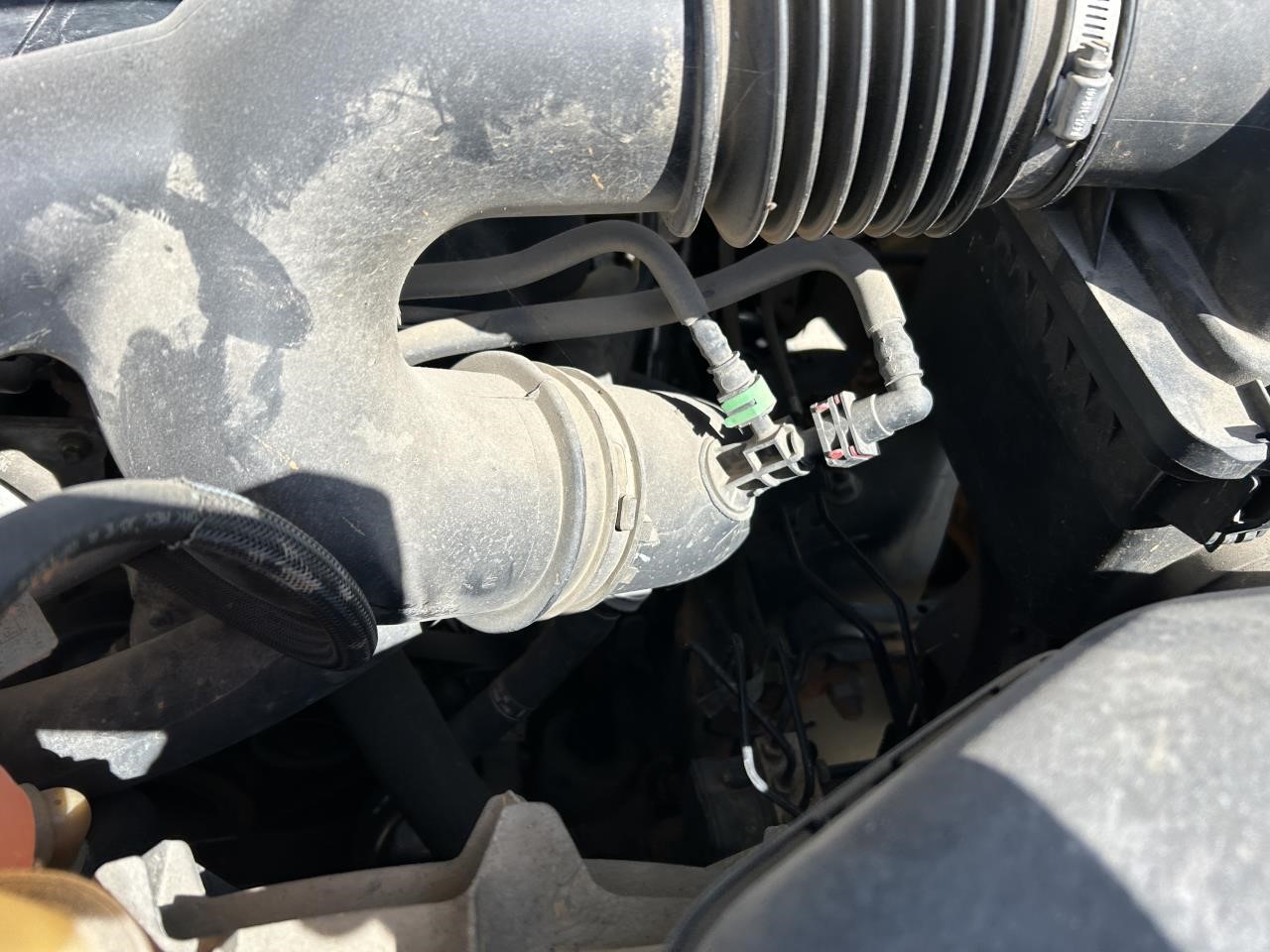
- Vacuum Leak (Intake Manifold Gasket / Air Intake Hose) 🔴 High Probability The intake manifold gasket is a very common failure point on this platform, leading to unmetered air entering the engine. The flexible rubber air intake hose (also called an air duct) can also crack with age and heat, creating a leak between the MAF sensor and the throttle body.
How to confirm: Perform a smoke test to see vapor escaping from the gasket area or any vacuum hoses. A visual inspection may reveal obvious cracks in the air intake hose. You can also spray a flammable fluid like brake cleaner near suspected leak areas with the engine running; a change in idle RPM indicates the leak's location.
Typical fix: Replace the faulty intake manifold gasket or the cracked air intake hose. After replacing the gasket, an 🎬 Watch: Step-by-step guide to replacing the intake manifold gasket. 'Idle Air Volume Learning' procedure may be necessary to reset the idle.
Est. part cost: $20-$80 - Dirty or Faulty Mass Airflow (MAF) Sensor 🟡 Medium Probability The MAF sensor measures airflow into the engine. If it's contaminated with dirt or oil, it will under-report the amount of air, causing the ECM to inject too little fuel. Sometimes cleaning the throttle body can dislodge grime that then contaminates the MAF sensor, triggering the code.
How to confirm: Remove the sensor and inspect the delicate wires for contamination. Cleaning it with a dedicated MAF sensor cleaner is a common first diagnostic step. A scan tool can also show abnormal MAF readings (gm/s). If cleaning doesn't resolve the issue, the sensor may have failed.
Typical fix: Clean the MAF sensor with a specialized cleaner. If cleaning doesn't resolve the issue, the sensor must be replaced. Some owners report that aftermarket sensors can be unreliable and that an OEM sensor or an ECM software update is needed to solve the problem permanently.
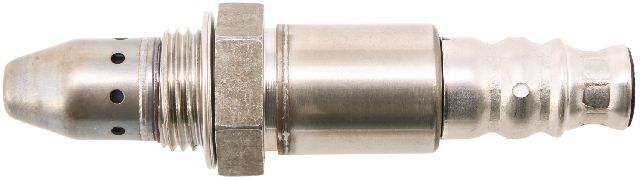
Est. part cost: $10 (cleaner) - $200 (sensor) - Faulty Front Air/Fuel Ratio Sensor (Oxygen Sensor) 🟡 Medium Probability The A/F sensor (upstream O2 sensor) can become slow or biased with age, sending incorrect 'lean' signals to the ECM. TSB NTB15-115 specifically addresses P0171 on 2015 4-cylinder models, requiring an ECM reprogram *before* replacing the A/F sensor to resolve the issue. A Reddit user with a 2016 Altima fixed their P0171 code by replacing the upstream O2 sensor. 🎬 Watch: A quick walkthrough of common P0171 fixes for Altima.
How to confirm: Use a scan tool to monitor the sensor's voltage activity. A healthy sensor will show rapidly fluctuating voltage, while a failing one may be slow or stuck. For applicable vehicles, follow the diagnostic procedure in TSB NTB19-022, which helps determine if the A/F sensor is truly at fault.
Typical fix: Replace the Bank 1, Sensor 1 Air/Fuel Ratio sensor. On 2015 2.5L models, an ECM reprogram by a dealer is also necessary per TSB NTB15-115. On 2016-2018 V6 models, an ECM reprogram may be needed per TSB NTB19-030.
Est. part cost: $80-$180 - Low Fuel Pressure ⚪ Low Probability A weak fuel pump or a clogged fuel filter can fail to deliver enough fuel to the engine, directly causing a lean condition. An owner on Reddit with a 2015 Altima described symptoms classic of a failing fuel pump, such as stalling on inclines and when low on fuel, along with the P0171 code. Another owner of a high-mileage 2014 model suspected a bad fuel pump when the car would stall and not restart.
How to confirm: Connect a fuel pressure gauge to the fuel rail and check if the pressure is within the manufacturer's specified range (typically around 51 psi for this platform). Cycling the key several times before cranking can sometimes build enough pressure to start the car, pointing towards a weak pump.
Typical fix: Replace the weak fuel pump or clogged fuel filter. The fuel filter is generally considered a non-serviceable part integrated with the fuel pump assembly.
Est. part cost: $150-$400
Rare But Worth Checking
- Faulty PCV Valve: A PCV valve that is stuck open can create a small, unmetered vacuum leak, contributing to a lean condition. An owner on Reddit replaced their PCV valve, but it did not solve their P0171 issue.
- Clogged Fuel Injectors: If one or more fuel injectors on Bank 1 are clogged, they won't deliver the proper amount of fuel, leading to a lean mixture in those cylinders.
- Exhaust Leak: A leak in the exhaust manifold or pipe before the front A/F sensor can allow outside oxygen to be drawn in, making the sensor incorrectly report a lean condition.
Diagnosis Steps

- Read all fault codes with an OBD-II scanner. Note if P0174 is also present (on V6 models), as this points to a shared issue like the MAF or a large vacuum leak.
- Visually inspect the air intake hose (duct) between the air filter box and the throttle body for any cracks, tears, or loose connections. Pay close attention to the ribbed, flexible sections.
- Clean the Mass Airflow (MAF) sensor using a dedicated MAF sensor cleaner. Do not touch the sensor wires. 🎬 See how to safely clean your MAF sensor. Allow it to dry completely before reinstalling.
- With the engine running, listen for hissing sounds that would indicate a vacuum leak. Pay close attention to the intake manifold area.
- Perform a smoke test. This involves feeding smoke into the intake system to visually identify the source of any unmetered air leaks, especially around the intake manifold gasket and vacuum hoses. This is the most definitive way to find vacuum leaks.
- Use a scan tool to monitor live data for Long-Term Fuel Trim (LTFT). High positive values (e.g., >15%) confirm the lean condition.
- Test the fuel pressure using a gauge connected to the fuel rail to ensure the fuel pump is delivering adequate pressure (spec is ~51 psi).
- If no vacuum or fuel pressure issues are found, test the responsiveness of the front Air/Fuel Ratio (O2) sensor. Check for relevant TSBs (like NTB15-115 for 2015 2.5L models) that may indicate a known sensor/ECM issue.
Parts You'll Likely Need

- Intake Manifold Gasket
(OEM #14035-3TA0A (2.5L); 14035-8J100 (3.5L, 2 required))— This is a very common failure point on 2015-2018 Altimas that causes a vacuum leak and triggers the P0171 code.
Trusted brands: Fel-Pro, Victor Reinz, Mahle
OEM price range: $40-$60
Aftermarket price range: $15-$30 - Air Intake Hose / Duct
(OEM #16576-3TA0C (replaces 16576-3TA0A, 16576-3TA0B for 2.5L); 16576-3JA0A (3.5L))— The flexible rubber hose between the air filter box and throttle body is known to crack from age and heat, creating a significant vacuum leak.
Trusted brands: Dorman, Spectre, Genuine Nissan
OEM price range: $90-$120
Aftermarket price range: $40-$70 - Mass Airflow (MAF) Sensor Cleaner — Often, the MAF sensor is just dirty and does not need replacement. A specific cleaner is required to avoid damaging the sensitive components.
Trusted brands: CRC, WD-40 Specialist, Liqui Moly
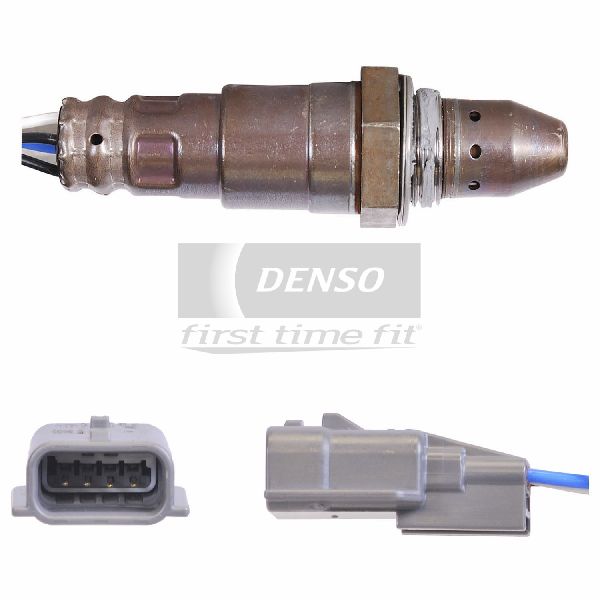
Aftermarket price range: $10-$15 - Air/Fuel Ratio Sensor (Bank 1, Sensor 1)
(OEM #22693-3TA0A (2.5L); 22693-1JA0A (3.5L))— If vacuum leaks and MAF issues are ruled out, a slow or failing upstream A/F sensor is a likely cause. TSB NTB15-115 specifically calls out this sensor for 2015 2.5L models, which also requires an ECM reprogram.
Trusted brands: Denso, Bosch, NTK
OEM price range: $150-$200
Aftermarket price range: $80-$150
Related Codes That Often Appear With This One
- P0174 — On V6 models, P0174 (System Too Lean, Bank 2) often appears with P0171. When both codes are present, it strongly suggests a problem common to both banks, like a faulty MAF sensor or a major vacuum leak at the intake manifold. TSB NTB19-030 specifically addresses this combination on V6 models.
- P0300 — A lean mixture can fail to ignite properly, leading to random misfires across the cylinders.
- P2097 — This code for 'Post Catalyst Fuel Trim System Too Rich' can appear alongside P0171, as noted in TSB NTB19-030 for 2016-2018 V6 models, indicating complex fuel trim issues that may require an ECM reprogram.
Technical Service Bulletins (TSBs) & Recalls
- Applies to 2015 Altima 2.5L models only. For a P0171 code with no drivability issues, the fix is to reprogram the ECM and then replace the front A/F sensor. The bulletin explicitly states the reprogram must happen before sensor replacement.
- Applies to 2016-2018 Altima models with the VQ35 (V6) engine only. Addresses MIL ON with codes P0171, P0174, P2097, and/or P2099. The procedure involves standard diagnostics and then checking if the ECM part number is on a specific list, which would then require an ECM reprogram.
- Provides revised service information for diagnosing P0171 and P0174 on various 2017-2018 Nissan models, including the Altima. It provides a flowchart to determine if the A/F sensor is faulty or if diagnosis should continue elsewhere.
Platform-Specific Known Issues
- Highly prone to vacuum leaks from the intake manifold gasket (Part #14035-3TA0A) and the air intake hose (Part #16576-3TA0C). 2015 models are subject to TSB NTB15-115 for a faulty A/F sensor and required ECM reprogram.
- Also prone to intake manifold gasket leaks (requires two gaskets, Part #14035-8J100). When P0171 appears, it is often accompanied by P0174 (Bank 2 Lean), pointing to a shared issue. 2016-2018 models are subject to TSB NTB19-030 which may require an ECM reprogram.
Mechanic-Grade Diagnostic Values
- Fuel Pressure (Key On, Engine Off) — expected: ~51 psi (350 kPa). Failure: Significantly lower pressure (e.g., 30-32 psi) indicates a weak fuel pump or clogged filter. Pressure should not drop below 30 psi within 30 minutes of turning the engine off.
- Long Term Fuel Trim (LTFT) at Idle — expected: Close to 0%, ideally within +/- 10%. Failure: Sustained positive values greater than +15% to +20% confirm a lean condition that the ECM is trying to correct.
- Short Term Fuel Trim (STFT) Behavior — expected: Fluctuates around 0%. Failure: If STFT is high at idle but drops at higher RPM, a vacuum leak is likely. If STFT is normal at idle but rises at higher RPM, a fuel delivery or MAF sensor issue is more probable.
- A/F Ratio Sensor (Upstream O2) Voltage — expected: On Nissan vehicles, the stoichiometric (ideal) voltage is around 2.2V. A healthy sensor should fluctuate rapidly.. Failure: A sensor that is stuck, slow to respond, or provides a flat reading (e.g., 0.00V) is likely faulty.
- Mass Airflow (MAF) Sensor Reading at Idle (2.5L QR25DE) — expected: Approximately 1.8 - 2.0 g/s at idle.. Failure: Readings significantly outside this range, especially if they don't increase smoothly with RPM, suggest a faulty sensor.
Scan Tool Commands That Help
- Nissan CONSULT or compatible advanced scan tool: Idle Air Volume Learning — This function is required after replacing the electronic throttle control actuator, ECM, or after cleaning the throttle body. It learns the idle air volume required to keep the engine at its target idle speed. Failure to perform this can result in an unstable or incorrect idle speed after repairs.
- Manual Procedure (no scan tool): Idle Air Volume Learning (Manual Reset) — If a scan tool is not available, a specific sequence of ignition key cycles and accelerator pedal presses can be performed to reset the idle air volume. This includes 'Accelerator Pedal Released Position Learning' and 'Throttle Valve Closed Position Learning' as prerequisites. The procedure generally involves warming the engine, turning the ignition on, pressing the accelerator pedal 5 times in 5 seconds, waiting 7 seconds, then holding the pedal down for about 20 seconds until the Check Engine Light stops blinking and stays on.
Wiring & Ground Locations
- MAF Sensor Connector — On the air intake duct, between the air filter housing and the throttle body.. The connector itself can become brittle, causing poor contact for the MAF sensor signal, ground, or power wires, leading to incorrect readings and a P0171 code. The connector for the 2.5L engine has 6 pins, though some pigtails are sold with 4. A common failure is the locking tab breaking off.
- Chassis Ground — Multiple points on the vehicle's chassis and engine block. For accessory installation, owners often need to create a new ground point by drilling a hole to bare metal in the trunk or under a seat.. A poor engine or sensor ground can cause erratic sensor readings, including from the MAF or A/F sensors, leading to incorrect fuel calculations and lean codes. Verifying main engine-to-chassis ground straps are clean and tight is a valid diagnostic step.
Real Owner Repair Stories
- YouTube user Bryan Skinner (2015 Nissan Altima) — Poor gas mileage, intermittent starting issues, P0171 code.
❌ Tried (didn't work) Cleaning the MAF sensor (code returned), Replacing both upstream and downstream O2 sensors
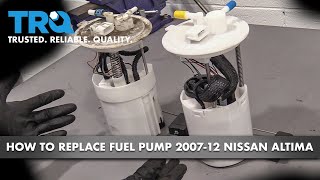
✅ What actually fixed it Replacing the entire fuel pump assembly. The user noted that the fuel pump primer was the suspected point of failure, but the whole assembly was replaced. - Reddit user in r/Nissan (2016 Nissan Altima) — P0171 code, extremely poor fuel economy (22 Liters / 100KM).
❌ Tried (didn't work) Replacing the PCV valve, Having a technician confirm no hose pipe leakages
✅ What actually fixed it Replacing the upstream oxygen (A/F) sensor. - YouTube user 'Técnico Hernandez' (2010 Nissan Sentra (similar QR25DE engine principles)) — P0171, engine stalling, hesitation.
❌ Tried (didn't work) Initial visual inspection of the main air intake duct showed no cracks.
✅ What actually fixed it A disconnected PCV hose on the valve cover was found. Reconnecting the hose and its clamp resolved the issue. - YouTube user 'KY Home Garage' (Nissan Altima (year not specified, but 5th gen)) — P0171 code.
✅ What actually fixed it A large crack was found in the air intake hose/duct between the MAF sensor and the throttle body. Replacing the hose fixed the problem.
"I Checked Everything" — The Actual Cause
- In some cases, a smoke test may not reveal a leak if the leak is intermittent or only occurs under specific engine temperatures or vibrations. An owner on Reddit reported symptoms classic of a failing fuel pump (stalling on inclines, issues when low on fuel) which would not be found with a smoke test. Another user fixed the code by replacing the upstream O2 sensor after confirming there were no vacuum leaks.
When the Usual Fixes Don't Work
- While vacuum leaks and dirty MAF sensors are the most common culprits, multiple owner-confirmed repairs show that these are not always the cause. One owner replaced both O2 sensors and cleaned the MAF sensor to no avail, with the ultimate fix being a new fuel pump assembly. Another owner had already replaced the PCV valve and had a technician confirm no vacuum leaks before finding success by replacing the upstream A/F sensor. These cases highlight the importance of performing a fuel pressure test and considering sensor failure even when no other sensor-specific codes are present.
OEM Part Supersession History
16576-3TA0A, 16576-3TA0B→16576-3TA0C— Standard part revision to improve durability and prevent cracking.
Model Year Variations Within This Range
- 2015 vs 2016-2018: The 2015 2.5L model is specifically called out in TSB NTB15-115 for an A/F sensor and ECM reprogram issue. The 2016 model year received a facelift, but the 2.5L QR25DE and 3.5L VQ35DE engines remained largely the same in terms of power output (182 hp for 2.5L). For 2017, horsepower for the 2.5L was listed as 179 hp. A mid-year update in 2017 ('2017.5' models) made forward collision warning and automatic emergency braking standard on SV and SL trims.
Helpful Videos
Used OEM Parts in Stock



New Aftermarket Parts Available

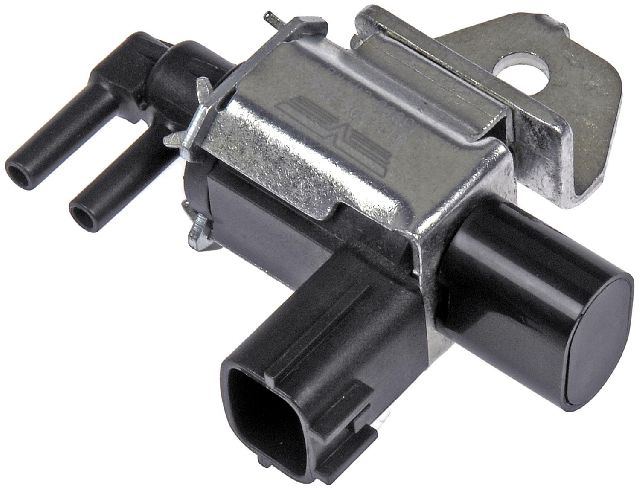


The information in this article is provided for general reference and educational purposes only. Vehicle specifications, procedures, and part compatibility can vary by production date, trim level, and region. Always consult your vehicle's factory service manual and verify part numbers before purchasing or performing repairs. Safety-critical components such as airbags, seat belts, and braking systems should be installed by a qualified professional.
- Nissan ALTIMA:
- 🎬 Helpful Videos
- 🛍️ Shop This Part
- What's Unique About the 2015-2018 Nissan ALTIMA
- Diagnostic Flowchart
- Symptoms You May Notice
- Most Likely Causes
- Rare But Worth Checking
- Diagnosis Steps
- Parts You'll Likely Need
- Related Codes That Often Appear With This One
- Technical Service Bulletins (TSBs) & Recalls
- Platform-Specific Known Issues
- Mechanic-Grade Diagnostic Values
- Scan Tool Commands That Help
- Wiring & Ground Locations
- Real Owner Repair Stories
- "I Checked Everything" — The Actual Cause
- When the Usual Fixes Don't Work
- OEM Part Supersession History
- Model Year Variations Within This Range
- 🎟️ Get 5% Off