

P0171 on 2016-2020 Mazda MX-5: Causes for System Too Lean Code and Fixes
On a 2016-2020 Mazda MX-5, a P0171 code is most often caused by a dirty Mass Airflow (MAF) sensor or a vacuum leak from a cracked hose or bad intake gasket. Cleaning the MAF sensor is a common first step and often resolves the issue. If the issue persists, a faulty upstream oxygen sensor or, more rarely, failing fuel injectors as noted in a Mazda TSB, could be the cause.
- P0171 means your MX-5's engine is getting too much air or not enough fuel.
- The most common and easiest things to check first are a dirty Mass Airflow (MAF) sensor and vacuum leaks.
- Always use a dedicated MAF sensor cleaner; other chemicals can damage the sensor.
- A scan tool that can read live data (especially fuel trims) is extremely helpful for diagnosing this code.
- If the code is accompanied by misfire codes (P030x), it indicates a more severe lean condition that should be addressed promptly.
What's Unique About the 2016-2020 Mazda MX-5
The 2016-2020 MX-5 (ND generation) uses the highly efficient Skyactiv-G direct-injection engine. While the causes for P0171 are common across many vehicles, the sensitivity of the Skyactiv-G's fuel and air metering systems makes it particularly susceptible to issues from a dirty MAF sensor or minor vacuum leaks. Mazda has also issued a broad Technical Service Bulletin (MT-021/17) applicable to the MX-5 that points to replacing the fuel injectors as a final repair step if checks of the intake, MAF, and A/F sensor do not resolve a persistent P0171 code, indicating this is a known, albeit less common, failure path on Skyactiv engines. The 2019-2020 models feature a revised, higher-revving 181hp engine (up from 155hp), which may have different diagnostic baselines, though the fundamental causes for P0171 remain the same.
Diagnostic Flowchart
Tap your situation to follow the diagnostic path that matches what you're seeing on this vehicle.
Symptoms You May Notice
- Check Engine Light is on
- Rough or unstable idle, sometimes shaking the cabin
- Hesitation or stumbling during acceleration
- Reduced engine power
- Poor fuel economy
- Engine may stall when stopped
- Engine running hotter than usual
- Replacing the oxygen sensor before checking for vacuum leaks or cleaning the MAF sensor. The O2 sensor is often doing its job correctly by reporting the lean condition caused by something else.
- Assuming a P0171 code after servicing the air filter is a faulty MAF sensor, when it is more likely an improperly seated intake boot creating a vacuum leak.
Most Likely Causes
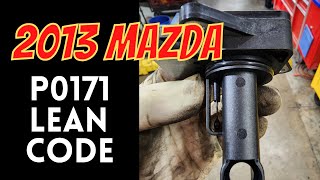
- Dirty or Faulty Mass Airflow (MAF) Sensor 🔴 High Probability The MAF sensor measures the amount of air entering the engine. If it's dirty with oil or grime, it can under-report the airflow, causing the PCM to inject too little fuel. This is a very common and easy first diagnostic step for this code, with many owners reporting a fix after cleaning.
How to confirm: Inspect the sensor for contamination. With a scan tool, monitor MAF readings at idle (should be around 1.6-2.2 g/s for the 2.0L engine) and at 2500 RPM (should rise to 15-25 g/s). Erratic or out-of-spec readings point to a faulty sensor. A classic sign of a vacuum leak (not a bad MAF) is if fuel trims are high at idle but normalize at higher RPMs.
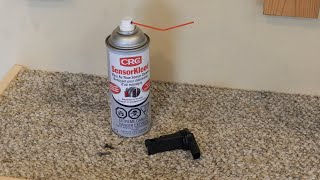
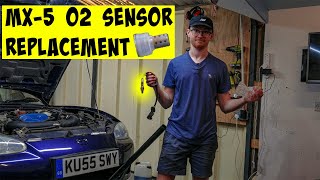
Typical fix: Clean the sensor using a dedicated MAF sensor cleaner. Do not touch the sensor wires. Let it air dry completely before reinstalling. If cleaning does not resolve the issue, the sensor must be replaced. The OEM part is Mazda PE01-13-215. 🎬 Watch: How to clean or replace your ND Miata MAF sensor.
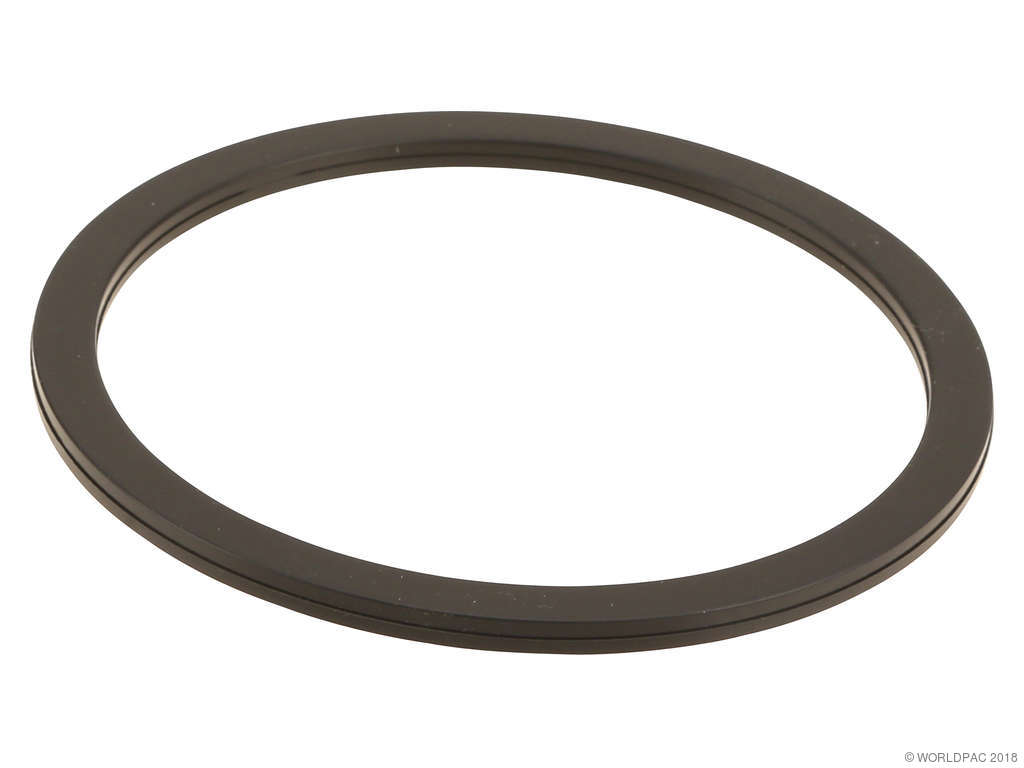
Est. part cost: $10-$15 for cleaner, $180-$250 for a new OEM sensor. - Vacuum Leak 🔴 High Probability Unmetered air entering the engine after the MAF sensor is a primary cause of lean codes. On the Skyactiv-G, common leak points include a cracked or improperly seated air intake boot (especially after air filter service), deteriorated intake manifold gaskets, a faulty PCV valve/hose, or the O-ring on the MAF sensor itself.
How to confirm: Visually inspect all vacuum lines and the air intake boot for cracks or loose connections. A common diagnostic method is to spray short bursts of brake cleaner or use an unlit propane torch around suspected leak areas while the engine is idling; a change in idle indicates a leak. A smoke test is the most definitive way to find leaks. 🎬 See a mechanic diagnose a Mazda lean code using a smoke test.
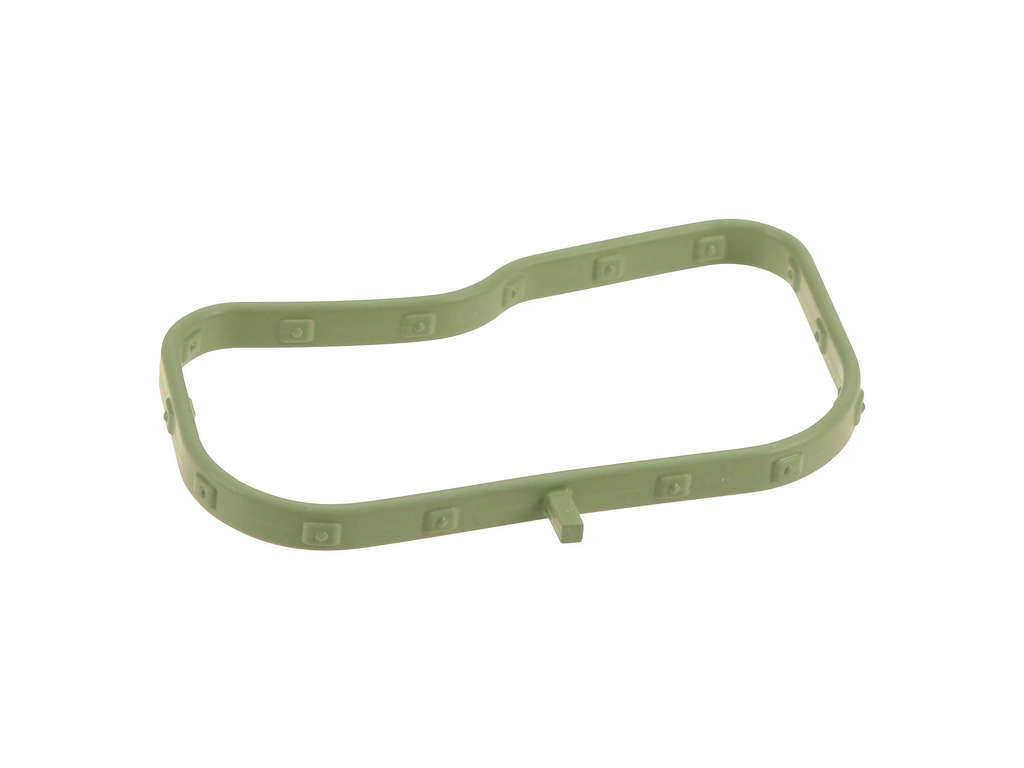
Typical fix: Replace the cracked hose, faulty valve, or leaking gasket. Ensure the intake boot is seated correctly on the throttle body. The intake manifold gasket set for the 2.0L Skyactiv is part number PE01-13-111.
Est. part cost: $20-$100 - Failing Front Oxygen (A/F) Sensor 🟡 Medium Probability The front Air/Fuel (A/F) ratio sensor is what the PCM uses to detect the lean condition. If the sensor becomes old and slow, or fails, it can send incorrect lean signals to the PCM, even if the mixture is correct. This is a common culprit after air leaks and MAF issues are ruled out.
How to confirm: Use a scan tool to monitor the A/F sensor voltage (or current/lambda). A healthy wideband sensor will fluctuate rapidly around a lambda value of 1.0. A sensor that is stuck low (lean) or responds slowly is likely faulty.
Typical fix: Replace the front A/F sensor (also called upstream O2 sensor or Bank 1 Sensor 1). The OEM part number is often PE07-18-8G1 🎬 Watch this troubleshooting guide for Mazda P0171 lean conditions. or a similar variant.
Est. part cost: $80-$200 - Low Fuel Pressure ⚪ Low Probability A weak low-pressure fuel pump or a clogged fuel filter can prevent enough fuel from reaching the high-pressure fuel pump, leading to a lean condition. This is less common than air-side issues but should be considered if other checks fail.
How to confirm: Connect a fuel pressure gauge to the low-pressure fuel system. With the engine off, pressure should hold at or above 230 kPa (33.4 psi). With the pump running, pressure should be between 475-555 kPa (69-80 psi).
Typical fix: Replace the weak fuel pump or clogged fuel filter.
Est. part cost: $50-$300
Rare But Worth Checking
- Exhaust Leak: An exhaust leak before the front oxygen sensor can draw outside air into the exhaust stream, making the sensor falsely detect a lean condition. This can happen at a cracked exhaust manifold or a bad gasket.
- Clogged Fuel Injectors: Mazda TSB MT-021/17 specifically lists 'Replace the fuel injectors' as the final step for a persistent P0171 code after intake, MAF, and A/F sensor checks are completed. This indicates it's a known failure mode for Skyactiv engines, though less common than intake-side issues. The OEM part number for a related engine is PE01-13-250D.
- Sticking EVAP Purge Solenoid Valve: A purge valve that is stuck open can create a constant vacuum leak, drawing unmetered fuel vapors into the intake manifold at the wrong time. This is a known issue on other Mazda models with Skyactiv engines, like the CX-5.
Diagnosis Steps
- Verify the P0171 code with an OBD-II scanner. Check for any other codes, especially misfire codes (P030x).
- With the scanner, check the short-term (STFT) and long-term (LTFT) fuel trim values. High positive values (e.g., LTFT > +15% and total trim > +25%) confirm the lean condition.
- Visually inspect the engine bay for obvious issues like a disconnected vacuum hose or a cracked air intake tube between the MAF sensor and throttle body.
- Remove and clean the Mass Airflow (MAF) sensor with a dedicated cleaner. The sensor is located on the air intake tube and held by two screws. Reinstall, clear the codes, and drive to see if the code returns.
- If the code returns, perform a test for vacuum leaks. A smoke test is the most effective method. Pay close attention to the intake manifold gaskets, PCV hose, and the brake booster line.
- If no vacuum leaks are found, use a scan tool to observe the front oxygen (A/F) sensor's performance. A lazy or non-responsive sensor is a likely culprit.
- If all else fails, check fuel pressure to rule out a weak fuel pump or clogged filter. Low-pressure side should hold over 33 psi.
Parts You'll Likely Need
- Mass Airflow (MAF) Sensor Cleaner — This is the cheapest and easiest first step. A dirty MAF sensor is a very common cause of P0171 on many modern vehicles, including the MX-5.
Trusted brands: CRC, Liqui Moly
Aftermarket price range: $10-$15 - Mass Airflow (MAF) Sensor
(OEM #PE01-13-215)— If cleaning the sensor doesn't work, the sensor itself may have failed and needs to be replaced. Using an OEM part is recommended for reliability.
Trusted brands: Mazda (OEM), Denso
OEM price range: $200-$250
Aftermarket price range: $80-$180 - Upstream Oxygen Sensor (Air/Fuel Ratio Sensor)
(OEM #PE07-18-8G1)— A failing sensor can send false lean readings to the computer. It's a common failure point after vacuum leaks and MAF issues are ruled out.
Trusted brands: Mazda (OEM), Denso, NGK
OEM price range: $180-$250
Aftermarket price range: $80-$150 - Intake Manifold Gasket Set
(OEM #PE01-13-111)— These rubber gaskets can harden and crack over time, creating a vacuum leak. This is a known issue on Skyactiv engines.
Trusted brands: Mazda (OEM), Fel-Pro
OEM price range: $20-$50
Aftermarket price range: $15-$40
Related Codes That Often Appear With This One
- P0300, P0301, P0302, P0303, P0304 — A severe lean condition can cause cylinder misfires. The provided TSB MT-004-22 and MT-021/17 specifically note that P0171 may appear with P030X misfire codes.
- P0192 — This code indicates low fuel rail pressure. If seen with P0171, it strongly points towards a failing high-pressure fuel pump (HPFP), which is a known, though rare, issue on Skyactiv-G engines.
Technical Service Bulletins (TSBs) & Recalls
- MT-004-22: Notes that some vehicles may experience the Check Engine Light with DTC P0171 (Fuel Trim too Lean) and possibly P030X (Misfire), and directs technicians to a specific inspection/repair procedure.
- MT-021/17: A broader TSB for many Skyactiv models including the 2016-2023 MX-5. For a persistent P0171, after checking the airbox, MAF, and A/F sensor, the final step is to 'Replace the fuel injectors'.
Platform-Specific Known Issues
- Improperly Seated Intake Boot After Service: A very common owner-induced issue is not seating the large rubber intake boot correctly onto the throttle body after changing the air filter or cleaning the MAF. The lower lip can fold under, creating a significant vacuum leak that immediately triggers P0171 at idle.
Mechanic-Grade Diagnostic Values
- High-Pressure Fuel System Pressure at Idle — expected: ~435 psi (~3.0 MPa). Failure: Significantly lower pressure indicates a failing High-Pressure Fuel Pump (HPFP).
- High-Pressure Fuel System Pressure under load — expected: ~2100 psi (~14.5 MPa) above 60% engine load and 3000 RPM. Failure: Inability to reach or maintain high pressure under load points to a failing HPFP.
- Fuel Injector Resistance — expected: 1.6—2.52 ohms (at 0—80 °C / 32—176 °F). Failure: A reading outside this range, especially an open circuit (infinite resistance), indicates a failed injector.
- MAF Sensor Voltage at Idle (after warm-up) — expected: Approx. 1.15 V. Failure: Voltage that is significantly different or does not increase smoothly with RPM can indicate a faulty sensor.
Scan Tool Commands That Help
- Mazda IDS or equivalent (e.g., FORScan): EVAP Purge Solenoid On/Off Test — To test if the EVAP purge solenoid is sticking open. With the engine idling, command the valve closed and watch short-term fuel trims. If trims drop significantly, the valve was stuck open, causing a vacuum leak.
- Mazda IDS or equivalent (e.g., FORScan): Fuel Pump Duty Cycle Command — To test the health of the low-pressure fuel pump. Command the pump to various duty cycles and verify that fuel pressure responds accordingly. A lack of response indicates a weak pump or wiring issue.
Wiring & Ground Locations
- Left Front Strut Tower Ground — In the engine bay, on top of the driver's side strut tower.. This is a primary engine bay ground point. Corrosion or looseness here can affect sensor readings, including the MAF and O2 sensors, potentially causing incorrect data and triggering a P0171.
- PCM Ground — The PCM's ground circuit is crucial. While a specific ground point isn't listed as a common failure, tracing the ground wires from the PCM connector (e.g., Pin 4A on a similar model) is a valid step in advanced diagnosis.. A poor ground for the Powertrain Control Module (PCM) can cause a host of erratic sensor readings and calculation errors, leading to fuel trim problems.
- ENG IG1 Fuse — 7.5A fuse located in the engine compartment fuse box.. This fuse supplies power to the Engine Control System. While a blown fuse would cause a no-start, a poor connection at this fuse could cause intermittent power loss to the PCM or related sensors.
Real Owner Repair Stories
- Hearth.com forum user (Toyota Camry (similar P0171 diagnosis principles)) — P0171 code, hesitation, brakes seemed less effective.
❌ Tried (didn't work) Replaced Mass Airflow (MAF) sensor, Replaced Air/Fuel (O2) sensor, Replaced ECU
✅ What actually fixed it The main vacuum hose from the brake booster to the engine was loose at the engine connection, creating a large vacuum leak. - ClubLexus forum user (1999 Lexus GS400, 95k miles (similar P0171 diagnosis principles)) — Recurring P0171 code.
❌ Tried (didn't work) MAF cleaning (worked for a year, then code returned), Mechanic suspected MAF or O2 sensor but diagnostic data was inconclusive
✅ What actually fixed it A split in the PCV valve hose was found by listening for a hissing sound. Temporarily fixing it with tape and a clamp made the check engine light turn off immediately.
"I Checked Everything" — The Actual Cause
- A faulty brake booster or its check valve can cause a significant vacuum leak that may not be easily found with a smoke test, as the leak is internal to the booster. The symptom, besides P0171, can be a hard brake pedal.
OEM Part Supersession History
PE01-13-215→PE01-13-215 remains the current OEM part number for the 2016-2020 model years.— N/A
Heads up: Aftermarket sensors, while cheaper, are not recommended by many enthusiasts due to a higher rate of inaccurate readings compared to the genuine Mazda/Denso part.
Model Year Variations Within This Range
- 2019-2020: For the 2019 model year, Mazda updated the 2.0L Skyactiv-G engine, increasing horsepower from 155 to 181 and raising the redline. This was achieved with lighter pistons/rods, revised intake ports, a new exhaust, and different fuel injectors. While the root causes of P0171 are the same, baseline values for MAF readings and injector pulse widths may differ from the 2016-2018 models.
Helpful Videos

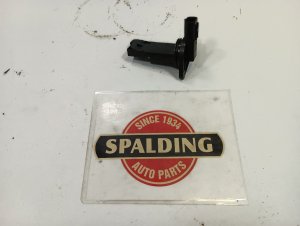
Used OEM Parts in Stock

New Aftermarket Parts Available



The information in this article is provided for general reference and educational purposes only. Vehicle specifications, procedures, and part compatibility can vary by production date, trim level, and region. Always consult your vehicle's factory service manual and verify part numbers before purchasing or performing repairs. Safety-critical components such as airbags, seat belts, and braking systems should be installed by a qualified professional.
- Mazda MX-5:
- 🎬 Helpful Videos
- 🛍️ Shop This Part
- What's Unique About the 2016-2020 Mazda MX-5
- Diagnostic Flowchart
- Symptoms You May Notice
- Most Likely Causes
- Rare But Worth Checking
- Diagnosis Steps
- Parts You'll Likely Need
- Related Codes That Often Appear With This One
- Technical Service Bulletins (TSBs) & Recalls
- Platform-Specific Known Issues
- Mechanic-Grade Diagnostic Values
- Scan Tool Commands That Help
- Wiring & Ground Locations
- Real Owner Repair Stories
- "I Checked Everything" — The Actual Cause
- OEM Part Supersession History
- Model Year Variations Within This Range
- 🎟️ Get 5% Off