

P0171 on 2017-2020 Lexus RX350: System Too Lean Causes and Fixes
On a 2017-2020 Lexus RX350, code P0171 is often caused by a failing low-pressure fuel pump, as noted in Lexus TSB #L-SB-0005-23. The OEM fuel pump assembly part number is often cited as 77020-0E130. Other common causes include a dirty Mass Airflow (MAF) sensor or vacuum leaks, particularly from the main intake boot. A fuel pressure test is a key diagnostic step before replacing parts.
- For the 2017-2020 RX350, P0171 is strongly linked to a failing fuel pump per a Lexus TSB.
- Always check for accompanying codes; P0174 points to a systemic issue, and P0087 points directly to a fuel pressure problem.
- Before replacing expensive parts like O2 sensors, perform simple and cheap diagnostics first: clean the MAF sensor and inspect for vacuum leaks.
- A fuel pressure test is not just a generic step; for this specific vehicle and code, it is a critical diagnostic procedure.
What's Unique About the 2017-2020 Lexus RX350
While many vehicles with a P0171 code suffer from vacuum leaks or dirty MAF sensors, the 2017-2020 Lexus RX350 has a documented history of fuel delivery issues. A Technical Service Bulletin (TSB L-SB-0005-23) issued by Lexus directly links the P0171 and P0174 codes with low fuel pressure (P0087), pointing towards the low-pressure fuel pump as a more probable cause than on other vehicles. [TSB #LSB000523] This makes a fuel pressure test a critical early diagnostic step for this specific model, preventing unnecessary replacement of other components like oxygen sensors.
Diagnostic Flowchart
Tap your situation to follow the diagnostic path that matches what you're seeing on this vehicle.
Symptoms You May Notice
- Check Engine Light is on
- Rough or unstable idle
- Hesitation or lack of power during acceleration
- Reduced fuel economy
- Hard starting (especially when seen with code P0087) [TSB #LSB000523]
- Engine stalling
- A feeling that the transmission is slipping, when it's actually a lack of engine power
- Replacing the oxygen (A/F) sensor first. The O2 sensor is usually doing its job by correctly reporting the lean condition, not causing it. Always diagnose other causes like fuel pressure and vacuum leaks before replacing the sensor.
Most Likely Causes
- Failing Low-Pressure Fuel Pump 🔴 High Probability Lexus issued TSB #L-SB-0005-23 for a range of models including the RX350, specifically linking P0171 with P0087 (Fuel Rail / System Pressure – Too Low) and hard start conditions, pointing to a weak fuel pump. [TSB #LSB000523]
How to confirm: Perform a fuel pressure test on the low-pressure side. A scan tool can also monitor fuel pressure data. If pressure is below specification, the pump is likely at fault. The presence of code P0087 is a strong confirmation.
Typical fix: Replace the in-tank low-pressure fuel pump module assembly. 🎬 Watch: Step-by-step guide to replacing the fuel pump assembly. The OEM part number for the assembly is widely cited as 77020-0E130 for models built up to August 2019.
Est. part cost: $250-$450 - Dirty Mass Airflow (MAF) Sensor 🟡 Medium Probability The MAF sensor measures the air entering the engine. Oil and dirt from the air filter can contaminate the sensor's delicate wire, causing it to under-report airflow. This leads the ECU to inject too little fuel, creating a lean condition.
How to confirm: Remove the sensor and visually inspect the internal wires for contamination. Cleaning is a simple first step. If cleaning doesn't resolve the issue, the sensor may need replacement.
Typical fix: Clean the MAF sensor with a dedicated MAF sensor cleaner spray. 🎬 See how to safely clean your Lexus MAF sensor. Do not touch the wires. Allow it to dry completely before reinstalling. CAUTION: Some older Lexus vehicles used Karman-Vortex air flow sensors that cannot be cleaned this way; confirm your sensor type before cleaning.
Est. part cost: $10-$20 (cleaner), $150-$250 (sensor) - Vacuum Leak 🟡 Medium Probability Vacuum leaks from cracked hoses or faulty intake gaskets allow unmetered air to enter the engine after the MAF sensor, disrupting the air-fuel ratio. A very common source is the large rubber intake air boot between the air filter box and the throttle body, which can crack with age.
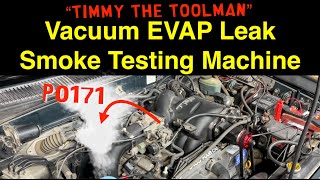
How to confirm: Listen for a hissing sound at idle. Visually inspect all vacuum lines and the intake boot for cracks. A smoke test is the most effective way to pinpoint the exact location of a leak. 🎬 Watch: How to find vacuum leaks using a smoke machine.
Typical fix: Replace the cracked hose, leaking gasket, or faulty component. Ensure the intake boot is seated correctly after any service.
Est. part cost: $20-$300 (depending on the part)
Rare But Worth Checking
- Faulty Purge Solenoid: A purge solenoid (part of the EVAP system) that is stuck open can create a constant vacuum leak, leading to P0171 and P0174. One owner of a 2016 RX350 traced these codes to a faulty purge solenoid (OEM part 25860-0P090) and resolved the issue by replacing it.
- Leaking or Clogged Fuel Injector: While less common than a pump failure, an injector that is clogged or not delivering enough fuel can cause a lean condition in its specific cylinder bank.
- Exhaust Leak (before O2 Sensor): A crack in the exhaust manifold or a bad gasket before the upstream O2 sensor can draw in outside air, making the sensor falsely report a lean condition.
- Failing Upstream Oxygen (Air/Fuel Ratio) Sensor: It's more common for the sensor to correctly report a problem than to be the problem itself. However, a lazy or failing sensor can send incorrect data, leading to a false P0171 code.
Diagnosis Steps
- Scan for Codes: Use an OBD-II scanner to confirm P0171 and check for other codes like P0174 or P0087.
- Check Fuel Trims: Observe Long-Term Fuel Trim (LTFT) and Short-Term Fuel Trim (STFT) data. High positive numbers, especially LTFT consistently above +15%, confirm the lean condition the ECU is trying to correct.
- Inspect for Vacuum Leaks: Visually inspect the intake air boot, PCV system, and all vacuum hoses for cracks or loose connections. Listen for hissing noises at idle.
- Clean the MAF Sensor: Remove the MAF sensor and clean it with a dedicated MAF sensor cleaner. Allow it to dry completely before reinstalling. Be aware of warnings for non-cleanable sensor types on some Lexus models.
- Perform a Fuel Pressure Test: Following the guidance of TSB L-SB-0005-23, this is a critical step. Connect a fuel pressure gauge to test the low-pressure fuel system. Low pressure strongly indicates a fuel pump failure. [TSB #LSB000523]
- Conduct a Smoke Test: If a vacuum leak is suspected but not visible, a smoke test will force smoke into the intake system and reveal the exact location of any leaks.
- Inspect Purge Solenoid: If EVAP codes are also present, or if a vacuum leak is suspected but not found, check the purge solenoid to see if it is stuck open.
- Inspect Oxygen Sensors: If all else fails, use a scanner to graph the voltage of the upstream oxygen (A/F) sensors. A slow or unresponsive sensor may be the culprit, but this is less common than other causes.
Parts You'll Likely Need
- Low-Pressure Fuel Pump Assembly
(OEM #77020-0E130)— This is a known issue for this vehicle, as documented by Lexus TSB #L-SB-0005-23, which links P0171 to low fuel pressure. [TSB #LSB000523, 8, 12]
Trusted brands: Lexus (OEM), Denso
OEM price range: $350-$500
Aftermarket price range: $150-$300 - Mass Airflow (MAF) Sensor Cleaner — A dirty MAF sensor is a very common cause of lean codes and cleaning it is an inexpensive and easy first diagnostic step.
Trusted brands: CRC, Gumout
OEM price range: $10-$20
Aftermarket price range: $10-$20 - Intake Manifold Gasket — If a vacuum leak is traced to the intake manifold, the gaskets will need to be replaced. This is a more common issue on the related Toyota Highlander.
Trusted brands: Lexus (OEM), Fel-Pro
OEM price range: $40-$60
Aftermarket price range: $20-$40
Related Codes That Often Appear With This One
- P0174 — System Too Lean (Bank 2). This code is the counterpart for the other engine bank. When both P0171 and P0174 are present, it strongly suggests a problem affecting the entire engine, such as the fuel pump, MAF sensor, or a major vacuum leak.
- P0087 — Fuel Rail / System Pressure – Too Low. This code is a major clue. As per TSB L-SB-0005-23, seeing P0087 with P0171 on this vehicle points directly to a fuel delivery problem, most likely a failing low-pressure fuel pump. [TSB #LSB000523]
Technical Service Bulletins (TSBs) & Recalls
- L-SB-0005-23: Some 2013–2020 model year Lexus vehicles may exhibit a hard start and/or MIL ON condition with DTC P0171 and/or P0174 (System Too Lean Bank 1/Bank 2) and/or P0087 (Fuel Rail / System Pressure – Too Low). The bulletin guides technicians to test fuel pressure and replace the fuel pump if it is out of specification. [TSB #LSB000523]
Platform-Specific Known Issues
- A known issue documented in Lexus Technical Service Bulletin #L-SB-0005-23 (revised Feb 9, 2023) describes that a wide range of 2013-2020 Lexus models, including the RX350, may exhibit a MIL ON condition with DTC P0171/P0174 and/or P0087 due to low fuel system pressure, often requiring a fuel pump replacement. [TSB #LSB000523]
Mechanic-Grade Diagnostic Values
- Low-Pressure Fuel System — expected: 196 to 833 kPa (28 to 121 psi). Failure: Pressure below 196 kPa (28 psi) indicates a weak low-pressure fuel pump, as suggested by TSB L-SB-0005-23.
- High-Pressure Fuel System (at 3000 rpm, warmed up) — expected: 2,400 to 19,500 kPa (348 to 2,828 psi). Failure: Pressure outside this range can indicate issues with the high-pressure fuel pump or its control system.
- Mass Air Flow (MAF) Sensor Reading (Live Data) — expected: 2 to 7 g/s at idle; 15 to 25 g/s at 2500 rpm.. Failure: Readings significantly lower than expected suggest a dirty sensor or a vacuum leak downstream. Readings that do not increase smoothly with RPM indicate a faulty sensor.
- Total Fuel Trim (Short Term + Long Term) — expected: Between -30% and +33%. Failure: A sustained value greater than +33% will trigger the P0171 code, confirming the ECU is compensating for a significant lean condition.
- MAF Sensor Connector Voltage (Key-On, Engine-Off) — expected: Pin 4: ~12V (Battery Voltage), Pin 5: ~5V (Reference Voltage), Pin 2: ~0V (Ground). Failure: Missing voltage on Pin 4 or 5, or voltage present on the ground pin, indicates a wiring issue, blown fuse (EFI No. 2), or ECM fault.
Hidden / Shadow Codes Worth Checking
- Freeze Frame Data: When a DTC like P0171 is set, the ECM stores a 'Freeze Frame'—a snapshot of all critical sensor values (engine speed, coolant temp, fuel trims, vehicle speed, etc.) at the exact moment the fault occurred. This is not a separate code but is invaluable for diagnosing the conditions that led to the fault. (see via Accessible using a professional scan tool like Toyota's Techstream or any advanced OBD-II scanner with Freeze Frame data capability.)
Scan Tool Commands That Help
- Techstream: Active Test: A/F CONTROL — This function allows a technician to command the ECM to increase fuel injection volume by 25% or decrease it by 12.5%. By observing the live data response of the upstream A/F sensor, you can confirm if the sensor is reacting correctly and if the fuel system is capable of making adjustments, helping to isolate the fault.
Wiring & Ground Locations
- Engine Harness Ground (Bank 1) — On the side of the cylinder head, located directly underneath the throttle body assembly.. A poor ground at this location can cause incorrect readings from sensors on Bank 1, including the A/F sensor, potentially leading to false lean codes.
- Main Engine Ground — A heavy gauge wire running from the lower firewall area to the back of the engine block.. A compromised main engine ground can cause a host of electrical issues and erratic sensor behavior across the entire engine management system.
- Battery to Chassis Ground — Runs from the negative battery terminal to the right (passenger side) inner fender.. This is the primary ground for the entire vehicle's electrical system. Corrosion or a loose connection here can cause widespread, hard-to-diagnose electrical problems.
Real Owner Repair Stories
- ClubLexus Forum User (1999 RX300 (Illustrates a common cross-generational issue)) — P0171 code appeared along with a hard brake pedal and loss of power brake assist. A hissing sound was heard from the driver's footwell area when the brake pedal was pressed.
❌ Tried (didn't work) Clearing the code (it returned immediately with brake use).
✅ What actually fixed it The diagnosis confirmed the brake booster itself was leaking vacuum internally, causing both the lean code and the hard pedal. The fix is to replace the brake booster and its gasket.
"I Checked Everything" — The Actual Cause
- A common scenario for P0171 is a leak in the brake booster diaphragm. A standard smoke test of the intake manifold and vacuum lines may show no leaks, because the booster leak is internal and often only occurs when the brake pedal is physically pressed. Technicians can miss this if they don't specifically test the booster by pressing the pedal and listening for a change in engine idle or hissing.
OEM Part Supersession History
77020-0E130→Unknown, but a change occurred.— Model year refresh/update.
Heads up: Part number 77020-0E130 for the low-pressure fuel pump assembly is specified for models built up to August 2019. 2020 models built from September 2019 onward likely use a different part number. Verifying the vehicle's production date is critical before ordering.
Model Year Variations Within This Range
- 2020: The 2020 model year was a mid-cycle refresh. While the 3.5L V6 2GR-FKS engine remained the same, there were cosmetic updates, suspension changes, and significant interior tech upgrades like a touchscreen with Apple CarPlay/Android Auto.
- 2017-2019 vs 2020: The low-pressure fuel pump assembly part number changed. Part 77020-0E130 is listed for vehicles produced up to August 2019. Vehicles produced after this date for the 2020 model year use a different part.
Helpful Videos
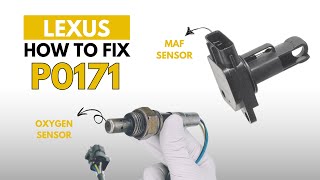
![How to Fix LEXUS P0171 Engine Code in 3 Minutes [2 DIY Methods / Only $8.37]](https://img.youtube.com/vi/aSScm5FzfMo/mqdefault.jpg)
Used OEM Parts in Stock
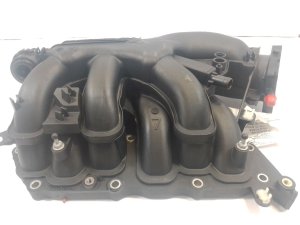


New Aftermarket Parts Available

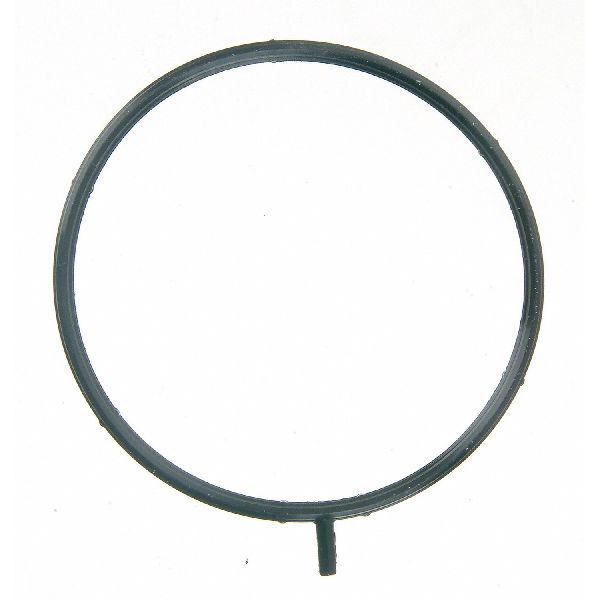
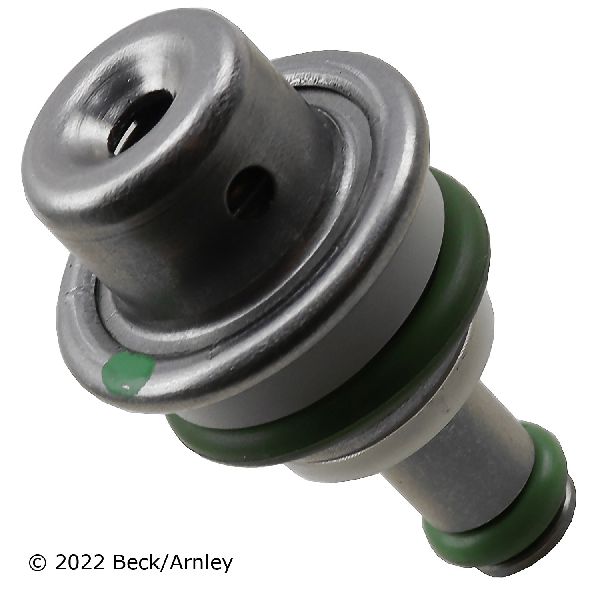

The information in this article is provided for general reference and educational purposes only. Vehicle specifications, procedures, and part compatibility can vary by production date, trim level, and region. Always consult your vehicle's factory service manual and verify part numbers before purchasing or performing repairs. Safety-critical components such as airbags, seat belts, and braking systems should be installed by a qualified professional.
- Lexus RX350:
- 🎬 Helpful Videos
- 🛍️ Shop This Part
- What's Unique About the 2017-2020 Lexus RX350
- Diagnostic Flowchart
- Symptoms You May Notice
- Most Likely Causes
- Rare But Worth Checking
- Diagnosis Steps
- Parts You'll Likely Need
- Related Codes That Often Appear With This One
- Technical Service Bulletins (TSBs) & Recalls
- Platform-Specific Known Issues
- Mechanic-Grade Diagnostic Values
- Hidden / Shadow Codes Worth Checking
- Scan Tool Commands That Help
- Wiring & Ground Locations
- Real Owner Repair Stories
- "I Checked Everything" — The Actual Cause
- OEM Part Supersession History
- Model Year Variations Within This Range
- 🎟️ Get 5% Off