

P0171 on 2013-2015 Lexus LS460: Lean Code Causes and Fixes
On a 2013-2015 Lexus LS460, code P0171 is most often caused by a failing low-pressure in-tank fuel pump, a dirty Mass Air Flow (MAF) sensor, or a vacuum leak. The fuel pump is a known issue covered by a major safety recall (NHTSA Campaign 20V012000) and a Technical Service Bulletin (TSB).
- For a 2013-2015 LS460, P0171 is very likely related to a failing in-tank fuel pump, which was subject to a major safety recall.
- Before buying any parts, check if your vehicle's VIN is covered by the fuel pump recall. A Lexus dealer will fix this for free.
- If the recall does not apply or has been done, the next most likely causes are a simple vacuum leak (cracked intake hose) or dirty MAF sensors.
- Cleaning the two MAF sensors with dedicated cleaner is an inexpensive and effective first step.
- The code is often paired with P0174 (Bank 2 Lean) and P0087 (Low Fuel Pressure), which strongly points to a fuel system fault rather than an issue isolated to one bank.
What's Unique About the 2013-2015 Lexus LS460

For the 2013-2015 LS460, this common lean code is frequently linked to a specific, well-documented problem: failure of the low-pressure in-tank fuel pump. This issue was so prevalent that it prompted a major safety recall (NHTSA Campaign ID: 20V012000) and a Technical Service Bulletin (TSB #L-SB-0005-23). The recall, designated by Lexus as 20LB01 and 20LA01, addresses a faulty Denso fuel pump impeller that can deform and cause the pump to fail. While vacuum leaks and dirty MAF sensors are always possibilities, the fuel pump should be a primary suspect on this particular vehicle, especially if accompanied by hard starting or a P0087 (Low Fuel Pressure) code.
Diagnostic Flowchart
Tap your situation to follow the diagnostic path that matches what you're seeing on this vehicle.
Symptoms You May Notice
- Check Engine Light is on
- Engine hesitation or sputtering, especially during acceleration.
- Rough idle.
- Hard starting or long crank times.
- Reduced power and poor acceleration.
- Whining or humming noise from the rear seat area (indicating a failing fuel pump).
- VSC and/or other warning lights may illuminate along with the Check Engine Light.
- Replacing the oxygen sensor first. The O2 sensor is often just doing its job by reporting the lean condition. Always investigate fuel delivery (especially the recalled pump) and unmetered air (vacuum leaks) first.
Most Likely Causes

- Failing Low-Pressure In-Tank Fuel Pump 🔴 High Probability A defective Denso fuel pump impeller was the subject of a major safety recall (NHTSA Campaign: 20V012000) and TSB L-SB-0005-23 for 2013-2015 models. The impeller material can absorb fuel, causing it to deform, which can lead to the pump seizing and starving the engine of fuel.
How to confirm: Check if the vehicle's VIN was part of the recall on the NHTSA or Lexus website. A technician can perform a fuel pressure test to confirm low pressure from the in-tank pump. Listen for a whine from the fuel tank area under the rear seat. The presence of code P0087 strongly points to this cause.
Typical fix: Replace the in-tank fuel pump motor. If the vehicle is part of the recall, a Lexus dealer will perform this for free.
Est. part cost: $60-$150 - Dirty or Faulty Mass Air Flow (MAF) Sensor 🟡 Medium Probability The LS460's V8 engine uses two MAF sensors, one for each bank. Oil from aftermarket air filters or general contamination can cause them to give incorrect readings of air volume, leading the ECM to calculate an incorrect fuel mixture.
How to confirm: Inspect the sensor wires for dirt or debris. A diagnostic scan tool can show MAF readings; compare them to specifications. A common diagnostic step is to swap the Bank 1 and Bank 2 MAF sensors and see if the code changes to P0174 (lean Bank 2). If it does, the sensor is faulty.
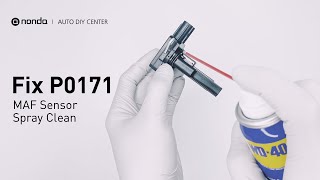
Typical fix: Clean the MAF sensor with dedicated MAF sensor cleaner spray. Do not use other cleaners like brake cleaner, which can damage the sensor. If cleaning doesn't work, replace the sensor.
Est. part cost: $10-$15 (cleaner), $70-$200 (replacement sensor) - Vacuum Leak 🟡 Medium Probability Rubber hoses and intake gaskets become brittle with age and heat cycles. A very common source is a cracked air intake hose (the large rubber tube) between the MAF sensor and the throttle body, allowing unmetered air to enter the engine.
How to confirm: Visually inspect all vacuum lines and the large air intake tubes for cracks, especially in the ribbed, flexible sections. A smoke test is the most effective way to find small, hidden leaks. Spraying brake cleaner near suspected leaks and listening for a change in engine idle can also pinpoint the source.
Typical fix: Replace the cracked hose or leaking gasket. The Bank 1 air intake hose is a common failure point.
Est. part cost: $20-$150 - Faulty Upstream Oxygen (O2) Sensor ⚪ Low Probability O2 sensors (or Air/Fuel Ratio sensors on this vehicle) are wear items and can fail over time, sending incorrect lean signals to the ECM. However, they are more often correctly reporting a lean condition caused by something else. Oil leaking from a valve cover gasket can also drip onto and contaminate the sensor, causing it to fail.
How to confirm: Use a scan tool to monitor the O2 sensor voltage. A sensor that is stuck lean (high voltage on these wideband sensors, typically >3.4V) or slow to respond may be faulty. Visually inspect the sensor and its wiring for oil contamination from the valve cover above it.
Typical fix: Replace the Bank 1, Sensor 1 (upstream) Air/Fuel Ratio sensor. If it's contaminated with oil, the valve cover gasket leak must also be repaired.
Est. part cost: $80-$250
Rare But Worth Checking
- Clogged Fuel Injectors: If only one or a few injectors on Bank 1 are restricted, it can cause a lean condition isolated to that bank. This is less common than a system-wide fuel pressure issue.
- Exhaust Leak: A leak in the exhaust manifold or pipe before the upstream O2 sensor can draw in outside air, tricking the sensor into reading lean.
- Oil Contamination of O2 Sensor: As noted in ClubLexus forums, a leaking valve cover gasket can drip oil directly onto the Bank 1 or Bank 2 upstream O2 sensor. This contamination can ruin the sensor and cause it to send a false lean signal, triggering a P0171 or P0174 code. The valve cover gasket must be replaced along with the sensor to fix the root cause.
Diagnosis Steps

- Check for other codes. If P0174 and/or P0087 are present, suspect a systemic issue like the fuel pump.
- Check for Recalls and TSBs. Enter your vehicle's VIN on the Lexus or NHTSA website to see if the fuel pump recall (NHTSA 20V012000) applies to your car.
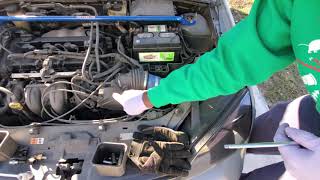
- Inspect for Vacuum Leaks. Visually check the large rubber air intake hoses for cracks, especially in the accordion sections between the air filter boxes and the throttle body. Listen for hissing sounds at idle. For best results, perform a smoke test.
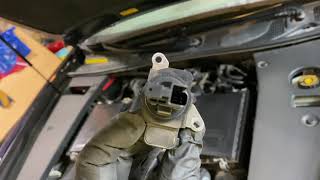
- Clean the Mass Air Flow (MAF) Sensors. The LS460 has two. Carefully remove them and spray the delicate wires with dedicated MAF cleaner. Let them dry completely before reinstalling.
- Check Fuel Trims. Use an OBD-II scanner to monitor Short-Term (STFT) and Long-Term (LTFT) fuel trims. High positive numbers (e.g., >15-20%) confirm the lean condition. If trims are high at idle but normalize at higher RPM, a vacuum leak is likely. If trims are high across the RPM range, a fuel delivery or MAF issue is more probable.
- Inspect Oxygen Sensor for Contamination. Visually check the Bank 1 upstream O2 sensor for signs of oil dripping from the valve cover gasket above it. Oil contamination is a known cause of sensor failure on these engines.
- Test Fuel Pressure. If other steps don't resolve the issue, test the low-pressure fuel system to confirm the in-tank pump is supplying adequate pressure to the high-pressure pumps. This is a critical step if a fuel pump failure is suspected and the recall status is unknown.
- Test the Oxygen Sensor. If all else fails, use a scan tool to graph the Bank 1 upstream A/F sensor's voltage to ensure it is switching correctly and not stuck in a lean reading (typically above 3.4V).
Parts You'll Likely Need
- Low-Pressure In-Tank Fuel Pump Motor
(OEM #23220-38030 (supersedes 23220-38021, 23220-38020))— This is the component that fails according to the major safety recall (NHTSA 20V012000) and TSB L-SB-0005-23, making it a highly probable cause on these specific model years.
Trusted brands: Denso (OEM)
OEM price range: $250-$400
Aftermarket price range: $60-$150 - Mass Air Flow (MAF) Sensor Cleaner — Cleaning the MAF sensors is a cheap and easy first diagnostic step that often resolves the issue if it's caused by contamination.
Trusted brands: CRC, Liqui Moly
Aftermarket price range: $10-$15 - Air Intake Hose (Bank 1)
(OEM #17882-38030 (Bank 1 / Right Side))— These rubber/plastic hoses can crack with age, creating a significant vacuum leak that is a common cause for lean codes. Bank 1 is the passenger side on US models.
Trusted brands: Genuine Lexus
OEM price range: $80-$150
Aftermarket price range: $40-$90
Related Codes That Often Appear With This One
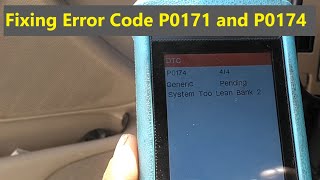
- P0174 — System Too Lean, Bank 2. This code often appears with P0171 because issues like a weak fuel pump, a major vacuum leak before the throttle body, or dirty MAF sensors affect both engine banks.
- P0087 — Fuel Rail / System Pressure – Too Low. This code directly points to a fuel delivery problem and is specifically mentioned in TSB L-SB-0005-23 alongside P0171, strongly suggesting a failing fuel pump.
Technical Service Bulletins (TSBs) & Recalls

- L-SB-0005-23: Addresses hard start and/or MIL ON with DTCs P0171, P0174, and P0087, pointing to a fuel system pressure issue.
Platform-Specific Known Issues
- A major safety recall (NHTSA Campaign: 20V012000; Lexus codes: 20LB01, 20LA01) was issued for 2013-2015 Lexus LS460 models due to a faulty low-pressure in-tank fuel pump
Mechanic-Grade Diagnostic Values
- High-Pressure Fuel System Pressure (Direct Injection) — expected: 4 to 13 MPa (580 to 1885 psi) when viewing live data on a scan tool like Techstream.. Failure: Pressure that is consistently low, high, or does not fluctuate with engine load may indicate an issue with the high-pressure pumps or the sensor itself.
- Mass Air Flow (MAF) Sensor Reading at Idle — expected: Approximately 2.3 g/s per sensor at warm idle, for a combined total of around 4.6 g/s.. Failure: A significantly lower reading can indicate a dirty or faulty sensor. Readings that are unequal between banks can also point to a problem with one sensor.
- Air/Fuel Ratio (A/F) Sensor Voltage (Bank 1, Sensor 1) — expected: Voltage should fluctuate around a central point, typically 3.1V - 3.4V.. Failure: A voltage that is consistently above 3.4V indicates a lean condition is being detected. A voltage that is stuck or slow to respond when the fuel mixture is changed via a scan tool active test points to a faulty sensor.
- Long Term Fuel Trim (LTFT) — expected: Ideally close to 1-2%.. Failure: When the LTFT value exceeds a threshold, often +25% to +35%, the ECM will set a P0171 code.
Scan Tool Commands That Help
- Lexus Techstream: Active Test: Control the Injection Volume for A/F Sensor — This function allows a technician to manually increase or decrease fuel injection volume by 12.5% or 25% while monitoring the A/F and O2 sensor voltages. It is used to confirm if the sensors are responding correctly to mixture changes, helping to isolate a faulty sensor from an actual lean condition.
- Lexus Techstream: Utility: All Readiness — After clearing DTCs, this function can be used to check the status of the onboard diagnostic monitors to confirm if a repair was successful without having to perform a full drive cycle.
- Lexus Techstream or other advanced scan tools: Reset Memory / Clear DTCs — Used after a repair to clear the P0171 code and reset the long-term fuel trims. Disconnecting the vehicle's battery for 15-30 minutes can also accomplish this, but will reset other vehicle memory like radio presets.
Wiring & Ground Locations
- H1 — Top center of the engine.. This is a junction connector related to multiple engine sensors. A poor connection here could potentially affect sensor readings contributing to a lean code.
- R/b 5 — Right front of the engine compartment.. This location contains the VVT (Variable Valve Timing) relay. While not a direct cause, erratic VVT operation due to a faulty relay or connection could potentially affect the air/fuel mixture.
Real Owner Repair Stories
- ClubLexus Forum user 'norviewguy' (Lexus LS460 (year not specified, but within XF40 generation)) — Consistent P0174 code (Bank 2 lean), Check Engine Light, and VSC light were on.
❌ Tried (didn't work) Replacing the battery, Replacing the gas cap
✅ What actually fixed it The user identified an oil leak from the valve cover gasket (specifically around the high-pressure fuel pump area) that was dripping directly onto the Bank 2 upstream O2 (A/F) sensor. Replacing both the leaking gasket and the oil-contaminated sensor resolved the code. This implies the same fix would apply to P0171 on the opposite bank. - YouTube channel 'Bennie Aust' (Lexus LS460 (year not specified)) — P0171, P0305, P0307 codes, disabling cruise control and illuminating multiple dash lights.
❌ Tried (didn't work) Initial diagnosis pointed towards common vacuum leaks or MAF issues, but the problem was isolated to one bank.
✅ What actually fixed it After pulling the spark plugs and confirming Bank 1 was visibly leaner (whiter plugs), the owner replaced both upstream oxygen (A/F) sensors. This resolved the P0171 code and associated issues. The owner used Denso OEM sensors. - ClubLexus Forum user 'BridgePrt' (2008 Lexus LS 460L with 130k miles) — P0171 and P2195 (A/F Sensor Signal Stuck Lean Bank 1 Sensor 1). Long term fuel trim on Bank 1 was normal at idle but became very excessive at 3000 RPM.
❌ Tried (didn't work) Cleaning the MAF sensors.
✅ What actually fixed it After monitoring live data, the user noticed the Bank 1 Sensor 1 voltage was not matching the Bank 2 Sensor 1 voltage as expected. Replacing the Bank 1 Air/Fuel ratio sensor fixed the problem.
"I Checked Everything" — The Actual Cause
- In some cases, a faulty Positive Crankcase Ventilation (PCV) valve can cause a lean condition. On the LS460, the PCV valve is located under the intake manifold, making it difficult to access and a location that might be missed during a standard smoke test. A failing PCV valve can stick open, creating an unmetered air leak into the intake manifold.
OEM Part Supersession History
23220-38020, 23220-38021→23220-38030— Part revision and improvement by the manufacturer, likely related to the issues that caused the safety recall.
Helpful Videos

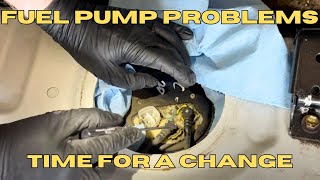
![How to Fix LEXUS P0171 Engine Code in 3 Minutes [2 DIY Methods / Only $8.37]](https://img.youtube.com/vi/aSScm5FzfMo/mqdefault.jpg)

Used OEM Parts in Stock

New Aftermarket Parts Available



The information in this article is provided for general reference and educational purposes only. Vehicle specifications, procedures, and part compatibility can vary by production date, trim level, and region. Always consult your vehicle's factory service manual and verify part numbers before purchasing or performing repairs. Safety-critical components such as airbags, seat belts, and braking systems should be installed by a qualified professional.
- Lexus LS460:
- 🎬 Helpful Videos
- 🛍️ Shop This Part
- What's Unique About the 2013-2015 Lexus LS460
- Diagnostic Flowchart
- Symptoms You May Notice
- Most Likely Causes
- Rare But Worth Checking
- Diagnosis Steps
- Parts You'll Likely Need
- Related Codes That Often Appear With This One
- Technical Service Bulletins (TSBs) & Recalls
- Platform-Specific Known Issues
- Mechanic-Grade Diagnostic Values
- Scan Tool Commands That Help
- Wiring & Ground Locations
- Real Owner Repair Stories
- "I Checked Everything" — The Actual Cause
- OEM Part Supersession History
- 🎟️ Get 5% Off