

P0171 on 2018-2020 Lexus LC500: System Too Lean Causes and Fixes
On a 2018-2020 Lexus LC500, code P0171 is frequently caused by a failing high-pressure fuel pump, an issue noted in Lexus TSB L-SB-0052-23. This often appears with code P0087 (Fuel Rail Pressure Too Low). Diagnosis should start with checking fuel pressure via a scan tool before suspecting vacuum leaks or replacing other parts like O2 sensors.
- For the 2018-2020 Lexus LC500, P0171 is strongly linked to a failing high-pressure fuel pump per TSB LSB000523.
- Always check for code P0087 (Fuel Rail Pressure Too Low) alongside P0171, as this combination is a key indicator of the fuel pump issue.
- Before replacing any parts, use a scan tool to check live fuel pressure data. This is the most critical diagnostic step for this specific problem.
- While less likely to be the primary cause on this model, do not rule out common issues like vacuum leaks or a dirty MAF sensor if fuel pressure is normal.
- Due to the complexity and safety risks of working with the high-pressure fuel system, replacing the fuel pump is a job best left to a professional.
What's Unique About the 2018-2020 Lexus LC500
The Lexus LC500 uses the 2UR-GSE engine, which features a sophisticated D-4S fuel system with both direct and port injection. For this specific vehicle and year range, a known issue with the high-pressure fuel pump can lead to low fuel pressure, directly causing the P0171 lean code. This is documented in manufacturer Technical Service Bulletin L-SB-0052-23, which explicitly guides technicians to check fuel pressure when P0171 is present with P0087, making it a primary and platform-specific concern to investigate.
Diagnostic Flowchart
Tap your situation to follow the diagnostic path that matches what you're seeing on this vehicle.
Symptoms You May Notice
- Check Engine Light is on
- Hard starting, especially when the engine is warm
- Hesitation or stumbling during acceleration
- Rough idle
- Reduced engine power or 'limp mode'
- Potential for engine misfires
- Engine stalling, particularly under load
- Replacing the air-fuel ratio (O2) sensor without first checking for vacuum leaks or verifying fuel pressure. Given the TSB for this vehicle, fuel pressure should be one of the first checks, especially if P0087 is also present.
Most Likely Causes
- Failing High-Pressure Fuel Pump (HPFP) 🔴 High Probability A known issue for this model range, as documented in Lexus TSB #L-SB-0052-23. The bulletin explicitly links lean codes P0171/P0174 with the low fuel pressure code P0087. Forum discussions among owners of vehicles with the same 2UR-GSE engine confirm this failure pattern.
How to confirm: Use a diagnostic scan tool to monitor fuel rail pressure. Compare the live data reading to the target pressure; a significant deviation (e.g., reading 200 kPa when the target is 4.0-13 MPa) confirms a pressure loss. The presence of code P0087 alongside P0171 is a very strong indicator.
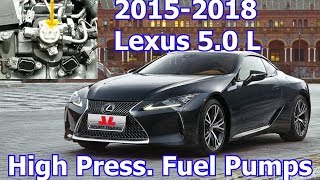
Typical fix: Replace the high-pressure fuel pump. 🎬 Watch: Step-by-step guide to replacing the high pressure fuel pumps. Per the TSB, if fuel pressure is low, the pump should be replaced.
Est. part cost: $1100-$1550 - Vacuum Leak 🟡 Medium Probability Vacuum hoses, PCV lines, and intake gaskets can crack or degrade over time, allowing unmetered air to enter the engine. This is a common cause for lean codes on any vehicle.
How to confirm: Perform a smoke test on the intake system. This involves feeding low-pressure smoke into the intake tract and watching for it to escape from any cracked hoses, gaskets, or seals. One can also listen for hissing sounds or carefully spray brake cleaner around suspected areas and listen for a change in engine idle.
Typical fix: Replace the leaking vacuum hose, PCV valve, or intake manifold gasket.
Est. part cost: $20-$200 - Dirty or Faulty Mass Airflow (MAF) Sensor 🟡 Medium Probability
How to confirm: Inspect the MAF sensor's sensing wire for dirt or contamination. You can attempt to clean it with a dedicated MAF sensor cleaner. If cleaning doesn't resolve the issue, monitor its readings with a scan tool to see if they are erratic or out of range compared to specified values at idle and under load. A typical reading at idle for a 5.0L engine should be around 5-5.4 g/sec.
Typical fix: Clean the MAF sensor with a specialized cleaner. If the problem persists, replace the sensor.
Est. part cost: $150-$300 - Failing Air-Fuel Ratio Sensor (Upstream O2 Sensor) ⚪ Low Probability
How to confirm: A faulty sensor may respond slowly to changes in the air-fuel mixture. Monitor the sensor's voltage output on a scan tool; it should fluctuate rapidly. A lazy or stuck reading indicates a problem. This should be diagnosed after fuel pressure and vacuum leaks have been ruled out.
Typical fix: Replace the Bank 1, Sensor 1 Air-Fuel Ratio sensor.
Est. part cost: $220-$260
Rare But Worth Checking
- Clogged Fuel Injectors: While less common on newer vehicles, a clogged injector on Bank 1 could restrict fuel flow to one or more cylinders, contributing to a lean condition.
- Exhaust Leak: A leak in the exhaust manifold or pipe before the first oxygen sensor can draw in outside air, causing the sensor to incorrectly report a lean condition.
- Failing Low-Pressure Fuel Pump (In-tank): While the TSB points to the HPFP, a failing in-tank low-pressure pump can also starve the HPFP of fuel, leading to similar symptoms. Some owners on forums have resolved P0087 by replacing the in-tank pump.
- Leaking Brake Booster: A pinhole leak in the brake booster diaphragm can create a persistent, hard-to-find vacuum leak, causing a P0171 code. One owner found this after all other standard checks passed.
Diagnosis Steps
- Connect an OBD-II scanner and confirm P0171 is present. Check for other codes, paying close attention to P0087 and P0174.
- Using the scanner's live data function, monitor long-term and short-term fuel trims for Bank 1. High positive numbers (e.g., >15%) confirm the ECM is adding fuel to correct a lean condition. 🎬 Watch: How to diagnose and fix P0171 lean codes.
- Monitor the Fuel Rail Pressure data. Compare the readings at idle and under load to the manufacturer's specifications. The high-pressure side should be between 4-13 MPa (580-1885 psi). A significant drop or failure to meet target pressure points to a fuel delivery problem, likely the HPFP per TSB L-SB-0052-23.
- If fuel pressure is within spec, perform a smoke test on the entire intake system to check for vacuum leaks from hoses, the PCV system, or intake gaskets.
- Inspect the MAF sensor, located on the intake tube after the air filter box. Check for any dirt or debris on the sensor wires. Clean it with a dedicated MAF sensor cleaner if it appears dirty.
- If other tests are inconclusive, analyze the live data from the Bank 1 Air-Fuel Ratio sensor (Sensor 1). A slow or non-responsive sensor may need replacement.
Parts You'll Likely Need
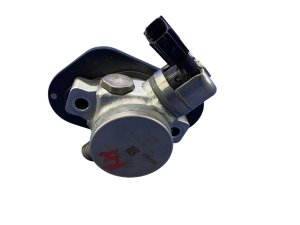
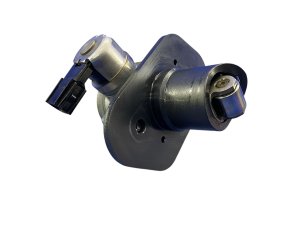
- High-Pressure Fuel Pump
(OEM #23101-31110)— This is the most likely culprit according to Lexus TSB #L-SB-0052-23 for the 2018-2020 LC500 when P0171 is present with P0087.
Trusted brands: Lexus (OEM)
OEM price range: $1115-$1545
Aftermarket price range: N/A - Mass Airflow (MAF) Sensor
(OEM #22204-75030 (Cross-references to Denso 197-7020))— A dirty or failing MAF sensor is a common cause of lean codes on many vehicles by providing incorrect airflow measurements to the ECM.
Trusted brands: Denso, Genuine Lexus
OEM price range: $215-$240
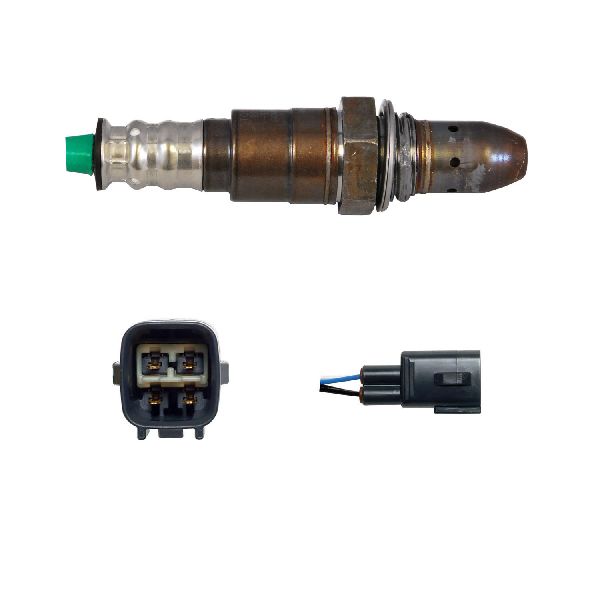
Aftermarket price range: $140-$235 - Air-Fuel Ratio Sensor (Bank 1, Sensor 1)
(OEM #89467-24010)— A failed upstream A/F sensor can send incorrect data, causing the ECM to miscalculate the fuel mixture. This is a less likely cause than a fuel pump or vacuum leak.
Trusted brands: Denso, Lexus (OEM)
OEM price range: $250-$350
Aftermarket price range: N/A
Related Codes That Often Appear With This One
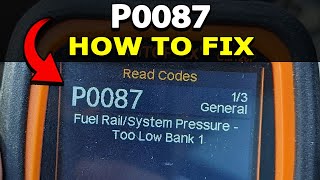
- P0087 — As stated in TSB #L-SB-0052-23, this code for 'Fuel Rail / System Pressure – Too Low' often accompanies P0171 and points directly to a failing high-pressure 🎬 See this breakdown of common causes for the P0087 code. fuel pump as the root cause.
- P0174 — This is the 'System Too Lean' code for Bank 2. If the cause is a component that affects the entire engine, such as the fuel pump or MAF sensor, both banks will often register a lean condition simultaneously.
Technical Service Bulletins (TSBs) & Recalls
- L-SB-0052-23: Addresses a potential hard start and MIL ON condition with lean codes (P0171/P0174) and low fuel pressure code (P0087), indicating a high-pressure fuel pump issue.
Platform-Specific Known Issues
- A Technical Service Bulletin (TSB #L-SB-0052-23) was issued by Lexus for some model year vehicles, including the LC500, that may exhibit a hard start and/or have the Check Engine Light on with DTC P0171, P0174, and/or P0087. The bulletin points towards a potential issue with low fuel system pressure and instructs technicians to check fuel pressure and replace the high-pressure fuel pump if it's out of specification.
Mechanic-Grade Diagnostic Values
- High-Pressure Fuel System Pressure (at idle) — expected: 4.0 to 13 MPa (580 to 1885 psi). Failure: Pressure is significantly below 4.0 MPa or does not vary with engine load.
- Low-Pressure Fuel System Pressure (via Techstream Active Test) — expected: 196 to 588 kPa (28 to 85 psi). Failure: Pressure is below 196 kPa (28 psi).
- Mass Airflow (MAF) Sensor Reading (at idle) — expected: Approximately 5.0 to 5.4 g/s for the 2UR-GSE engine.. Failure: Readings are significantly lower (suggesting a vacuum leak) or higher, or do not increase smoothly with RPM.
- Mass Airflow (MAF) Sensor Reading (at 2500 RPM) — expected: 15 to 25 g/s. Failure: Reading does not rise into this range from idle.
- Total Fuel Trim (Long Term + Short Term) — expected: Close to 0%, ideally within +/- 10%.. Failure: Sustained positive values exceeding +25% will trigger the P0171 code.
Scan Tool Commands That Help
- Techstream: Control the Fuel Pump / Speed — This Active Test allows the technician to directly command the in-tank low-pressure fuel pump to run, verifying its operation and allowing for a pressure test without starting the engine.
- Techstream: Control the Injection Volume for A/F Sensor — This Active Test systematically increases (+25%) or decreases (-12.5%) the fuel injection volume to check the response of the A/F and O2 sensors. It helps determine if the sensors are reading correctly or if there is a persistent lean/rich condition that the ECU cannot overcome.
Wiring & Ground Locations
- Fuel Pump Control ECU — Varies by model, but wiring diagrams show it receives signals (FPC) from the main Engine Control Module (ECM) and sends control signals (FPU, FPV, FPW) to the fuel pump assembly.. A failure in the Fuel Pump Control ECU or its wiring/connectors could mimic a fuel pump failure, leading to low pressure and a P0171 code. Checking for power, ground, and signal at this ECU is an advanced diagnostic step if the pump itself tests good.
- Engine Ground Points — On the related 2GR-FE engine, a primary engine harness ground is located on the front cylinder head, and another important ground runs from the top of the transmission to the chassis.. A poor ground connection for the engine harness can cause erratic sensor readings and incorrect operation of components like injectors or the fuel pump control module, potentially leading to lean codes.
Real Owner Repair Stories
- ClubLexus user 'fasted1953' (Lexus GS (model not specified, but common P0171/P0174 issue)) — Check Engine Light with P0171 and P0174 codes.
❌ Tried (didn't work) The owner was advised against suspecting MAF or O2 sensors before a thorough vacuum leak check.
✅ What actually fixed it A cracked PCV hose. The fix cost next to nothing and resolved the codes permanently after mechanics suggested more expensive repairs. - ClubLexus user 'R.Holmes' (Lexus ES300) — Persistent P0171 code.
❌ Tried (didn't work) Cleaned MAF sensor, Replaced MAF sensor, Replaced IAT sensor, Replaced ignition coils, Checked all vacuum hoses, Replaced fuel pump and filter
✅ What actually fixed it A pinhole leak in the brake booster diaphragm. The user diagnosed it by hearing a faint hiss and confirming the code disappeared when the booster vacuum line was plugged. Replacing the brake booster resolved the issue.
"I Checked Everything" — The Actual Cause
- In one documented case on a Lexus, after extensive troubleshooting including checking vacuum hoses and replacing sensors, the actual cause of a P0171 was a pinhole leak in the brake booster diaphragm. This type of leak may not always be obvious during a standard smoke test but creates a significant unmetered air source.
Helpful Videos

![How to Fix P0171 Engine Code in 5 Minutes [7 DIY Methods]](https://img.youtube.com/vi/g_qItasY91I/mqdefault.jpg)
Used OEM Parts in Stock


New Aftermarket Parts Available


The information in this article is provided for general reference and educational purposes only. Vehicle specifications, procedures, and part compatibility can vary by production date, trim level, and region. Always consult your vehicle's factory service manual and verify part numbers before purchasing or performing repairs. Safety-critical components such as airbags, seat belts, and braking systems should be installed by a qualified professional.
- Lexus LC500:
- 🎬 Helpful Videos
- 🛍️ Shop This Part
- What's Unique About the 2018-2020 Lexus LC500
- Diagnostic Flowchart
- Symptoms You May Notice
- Most Likely Causes
- Rare But Worth Checking
- Diagnosis Steps
- Parts You'll Likely Need
- Related Codes That Often Appear With This One
- Technical Service Bulletins (TSBs) & Recalls
- Platform-Specific Known Issues
- Mechanic-Grade Diagnostic Values
- Scan Tool Commands That Help
- Wiring & Ground Locations
- Real Owner Repair Stories
- "I Checked Everything" — The Actual Cause
- 🎟️ Get 5% Off