

P0171 on 2018-2020 Lexus LC HYBRID: System Too Lean Causes and Fixes
Code P0171 on a 2018-2020 Lexus LC Hybrid means the engine is running too lean on Bank 1. The most likely causes are a dirty Mass Airflow (MAF) sensor, a vacuum leak, or a fuel delivery issue as noted in a manufacturer TSB and a related fuel pump recall. Cleaning the MAF is an easy first step, but fuel pressure testing is critical on this platform.
- P0171 means your Lexus LC Hybrid's engine has too much air or not enough fuel on Bank 1.
- Start your diagnosis by cleaning the Mass Airflow (MAF) sensor, a common and inexpensive fix.
- A manufacturer TSB specifically links this code to low fuel pressure, so checking the fuel pump and pressure is a critical step if cleaning the MAF doesn't work. [⭐ MANUFACTURER TSB — highest authority]
- Undetected vacuum leaks from old hoses or gaskets are another frequent cause.
- Driving for too long with this code can cause expensive damage to your engine or catalytic converter.
What's Unique About the 2018-2020 Lexus LC HYBRID
The Lexus LC Hybrid uses a sophisticated 3.5L V6 Atkinson-cycle engine (8GR-FXS) combined with electric motors. While the causes for P0171 are common across many vehicles, this specific engine family has known fuel delivery vulnerabilities. A Lexus Technical Service Bulletin (TSB) directly links lean codes P0171/P0174 with a low fuel pressure code (P0087). Furthermore, models with this engine have been subject to a recall for a failing low-pressure fuel pump, making fuel delivery a primary area of suspicion. This suggests that a weak fuel pump is a more probable cause on this platform compared to others.
Diagnostic Flowchart
Tap your situation to follow the diagnostic path that matches what you're seeing on this vehicle.
Symptoms You May Notice
- Check Engine Light (MIL) is on
- Hard starting [⭐ MANUFACTURER TSB — highest authority]
- Rough idle
- Hesitation or surging during acceleration
- Reduced engine power or sluggish performance
- Potential for engine misfires
- Decreased fuel economy
- Replacing the oxygen (A/F) sensor first. The sensor is often just doing its job by reporting the lean condition. The actual problem is usually a vacuum leak, dirty MAF, or fuel delivery issue, with the latter being especially suspect on this platform.
Most Likely Causes
- Low Fuel Pressure / Failing Fuel Pump 🔴 High Probability A Lexus TSB (#LSB000523) explicitly connects P0171 with P0087 (Fuel Rail / System Pressure – Too Low) on this powertrain family. Critically, models with the 8GR-FXS engine were also subject to a recall (Lexus #20LA01) for the low-pressure fuel pump, indicating a known hardware weakness in the fuel delivery system. A weak pump fails to supply enough fuel, causing the lean mixture.
How to confirm: Connect a fuel pressure gauge to the fuel rail and check if the pressure is within the manufacturer's specified range. A scan tool can also monitor fuel pressure data and fuel trims. Checking fuel pressure is considered a crucial step before pump replacement.
Typical fix: Replacement of the high-pressure or in-tank low-pressure fuel pump. Given the recall, the low-pressure pump is a strong candidate. Denso is a known OEM supplier for Toyota/Lexus fuel pumps.
Est. part cost: $200-$600 - Dirty or Faulty Mass Airflow (MAF) Sensor 🔴 High Probability The MAF sensor's hot wire can become contaminated with dirt and oil, causing it to act as an insulator and under-report the true amount of air entering the engine. The ECM then injects too little fuel, creating a lean condition. This is one of the most common causes for P0171 across all Toyota and Lexus models.
How to confirm: Inspect the sensor for contamination. A very common and effective first step is to clean the sensor's delicate wires with a dedicated MAF sensor cleaner. If cleaning does not resolve high fuel trims, the sensor may be faulty.
Typical fix: Clean the MAF sensor with a specialized cleaner. If the problem persists, replace the MAF sensor with an OEM unit, typically made by Denso.
Est. part cost: $10-$20 for cleaner, $150-$300 for a new Denso sensor. - Vacuum Leak 🟡 Medium Probability Any unmetered air that enters the engine after the MAF sensor will cause a lean mixture. Common sources include cracked or disconnected vacuum hoses, a faulty PCV (Positive Crankcase Ventilation) valve or hose, or failed intake manifold gaskets.
How to confirm: Visually inspect all vacuum hoses and the air intake tube for cracks or loose connections. A professional smoke test is the most effective method to precisely locate hard-to-see leaks in the intake system.
Typical fix: Replace the specific leaking hose, gasket, or PCV valve. The intake manifold gasket is a known failure point on some Lexus V6 engines.
Est. part cost: $10-$150 depending on the source of the leak. - Failing Air/Fuel Ratio Sensor (Oxygen Sensor) ⚪ Low Probability The primary A/F sensor (Bank 1, Sensor 1) provides the data the ECM uses to determine the air-fuel ratio. A lazy or failing sensor can send incorrect, lean-biased signals. However, it's far more common for the sensor to be correctly reporting a problem caused by something else, making this a part to replace only after other causes are ruled out.
How to confirm: Use a scan tool to graph the sensor's voltage output. A healthy sensor will show rapid fluctuations. A slow, stuck, or biased reading indicates a problem. This is typically the last major component to be diagnosed.
Typical fix: Replace the Bank 1, Sensor 1 Air/Fuel Ratio sensor. Denso is the OEM supplier.
Est. part cost: $100-$250
Rare But Worth Checking
- Clogged Fuel Injectors: If one or more injectors on Bank 1 are partially clogged, they won't deliver enough fuel, leading to a localized lean condition. This is less common than the other causes but possible.
- Exhaust Leak: A leak in the exhaust manifold or pipe before the first oxygen sensor can draw in outside air, causing the sensor to incorrectly report a lean condition to the ECM.
Diagnosis Steps
- Read the codes with an OBD-II scanner and check for any other pending or active codes, especially P0174 or P0087.
- Using the scanner's live data function, monitor short-term and long-term fuel trims at idle and at 2500 RPM. High positive numbers (e.g., >15%) confirm the lean condition.
- Inspect the entire air intake system between the MAF sensor and the throttle body for any loose clamps or cracked, brittle hoses.
- Carefully remove and inspect the MAF sensor. If it appears dirty, clean it with a dedicated MAF sensor cleaner and allow it to dry completely. Do not touch the delicate wires. Reinstall and see if fuel trims improve.
- Perform a smoke test to check for vacuum leaks. Pay close attention to the intake manifold gaskets, PCV valve, and all associated vacuum lines.
- If no vacuum leaks are found, test the fuel pressure. This is a critical step given the TSB and recall history. Connect a fuel pressure gauge to the service port on the fuel rail and compare the reading to the manufacturer's specification under various conditions (key on, idle).
- If fuel pressure and the MAF are good and no vacuum leaks are present, inspect the Bank 1 Air/Fuel Ratio sensor's operation via a scan tool. A slow or biased sensor may be the culprit, but this is the least likely of the common causes.
Parts You'll Likely Need
- Mass Airflow (MAF) Sensor Cleaner — This is the cheapest and easiest first step. A dirty MAF is a very frequent cause of P0171 on Lexus vehicles, and cleaning often resolves the issue without replacing parts.
Trusted brands: CRC, Liqui Moly
Aftermarket price range: $10-$20 - Low-Pressure Fuel Pump — A Lexus TSB and a wider recall campaign point to fuel delivery as a direct cause for this code on this powertrain, making the fuel pump a high-probability culprit if other checks fail.
Trusted brands: Denso, Aisin
OEM price range: $400-$600
Aftermarket price range: $200-$400 - PCV Valve — A stuck or leaking PCV valve is a common and inexpensive source of unmetered air (a vacuum leak) that can cause a P0171 code.
Trusted brands: Lexus OE, Standard Motor Products
OEM price range: $20-$40
Aftermarket price range: $10-$25 - Air/Fuel Ratio Sensor (Bank 1, Sensor 1)
(OEM #Example for modern Lexus: 89467-48210, 89467-48290 (Verify with VIN))— If the sensor itself fails, it can send false lean readings to the computer. It's typically replaced after other, more common causes are ruled out. Denso is the OEM manufacturer.
Trusted brands: Denso
OEM price range: $200-$300
Aftermarket price range: $100-$180
Related Codes That Often Appear With This One
- P0174 — This is the identical 'System Too Lean' code but for Bank 2. If both codes are present, it strongly suggests a problem common to both banks, like the MAF sensor, a major vacuum leak, or a fuel pump issue, which is highly probable on this engine.
- P0087 — As cited in TSB #LSB000523, this code for 'Fuel Rail / System Pressure – Too Low' directly points to a fuel delivery problem as the root cause for the P0171 code. [⭐ MANUFACTURER TSB — highest authority]
Technical Service Bulletins (TSBs) & Recalls
- Lexus TSB #LSB000523: Specifically mentions 2018 model year Lexus vehicles exhibiting a hard start and/or MIL ON with DTCs P0171/P0174 and P0087, pointing to fuel delivery issues.
- Related Toyota TSB #TSB000923: A similar bulleti
Platform-Specific Known Issues
- Lexus issued Technical Service Bulletin #LSB000523 which notes that 2018 model year Lexus vehicles may exhibit a hard start and MIL ON with DTCs P0171/P0174 along with P0087 (Fuel Rail / System Pressure – Too Low). This strongly indicates a fuel delivery problem. This issue is further corroborated by a wider recall campaign (20LA01) for failing low-pressure fuel pumps on the 8GR-FXS engine family.
Mechanic-Grade Diagnostic Values
- Long Term Fuel Trim (LTFT) — expected: Close to 1-2%. Failure: A code is set when compensation is between +15% and +35%. Some service literature states the threshold is when the average fuel trim learning value is more than +35%.
- Total Fuel Trim (Short Term + Long Term) — expected: Within +/- 20%. Failure: Exceeding +20% to +25% confirms a significant lean condition that needs correction.
- Low-Side Fuel Pressure — expected: 304 to 343 kPa (44 to 50 psi). Failure: Pressure below the specified range indicates a weak low-pressure fuel pump or a clogged filter, a primary suspect for this vehicle.
Scan Tool Commands That Help
- Techstream: Active Test: Control the Injection Volume for A/F Sensor — This function allows a technician to manually increase or decrease fuel injection volume by 12.5% or 25% and observe the reaction of the A/F and O2 sensors. It helps determine if the sensors are responding correctly or if there is an underlying fuel delivery or air measurement issue.
Wiring & Ground Locations
- Engine Ground Points — Wiring diagrams for the 2018 LC500h show primary engine compartment ground points on the left and right front sides of the engine compartment, and at the left rear of the engine.. A poor ground for the ECM or critical sensors (like the MAF or A/F sensors) can cause erratic readings, potentially leading to incorrect fuel calculations and a P0171 code. Verifying these grounds are clean and tight is a valid, though less common, diagnostic step.
Real Owner Repair Stories
- ClubLexus Forum (Lexus GS430 (V8, different engine but same diagnostic principle)) — Persistent P0171 and P0174 codes.
❌ Tried (didn't work) Smoke test showed no vacuum leaks., ECU reset.
✅ What actually fixed it The user took it to a dealership which also performed a smoke test and found no leaks. The ultimate fix for another user in a similar situation (after replacing O2 sensors and checking for leaks) was applying RTV sealant to the intake runners and gaskets, suggesting a very subtle, hard-to-detect intake leak was the true cause. - Reddit r/LS430 (Lexus LS430) — P0171 and P0174 codes appeared with no obvious drivability issues.
❌ Tried (didn't work) Replacing all O2 sensors (twice)., Fixing wiring and fuse box issues.
✅ What actually fixed it For one user, the final fix was cleaning the Mass Air Flow sensor and a vacuum hose.
"I Checked Everything" — The Actual Cause
- In a documented case on a Lexus V8, a persistent P0171/P0174 issue that was not resolved by replacing sensors continued even after a smoke test showed no leaks. The final solution was to remove the intake manifold and apply RTV sealant to the intake gaskets and runners, which finally sealed a subtle, otherwise undetectable vacuum leak.
OEM Part Supersession History
Various→Improved Part— The original low-pressure fuel pump impeller could deform, causing the pump to stop operating.
Heads up: As part of Safety Recall 20LA01, Lexus dealers replace the original faulty low-pressure fuel pump with an improved version free of charge. It is critical to ensure the recall work has been performed on any affected vehicle.
Helpful Videos
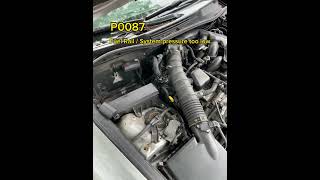

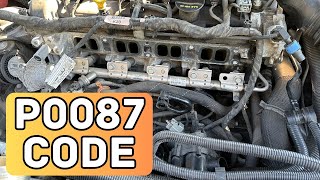
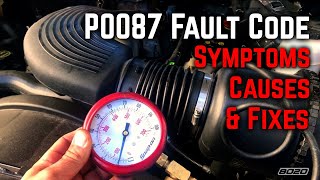
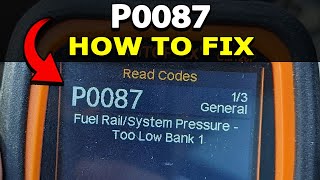
Used OEM Parts in Stock


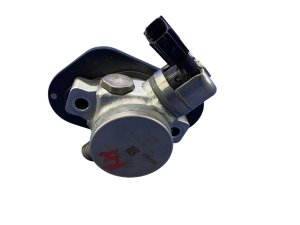
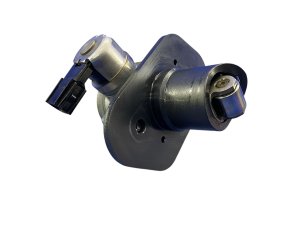
New Aftermarket Parts Available

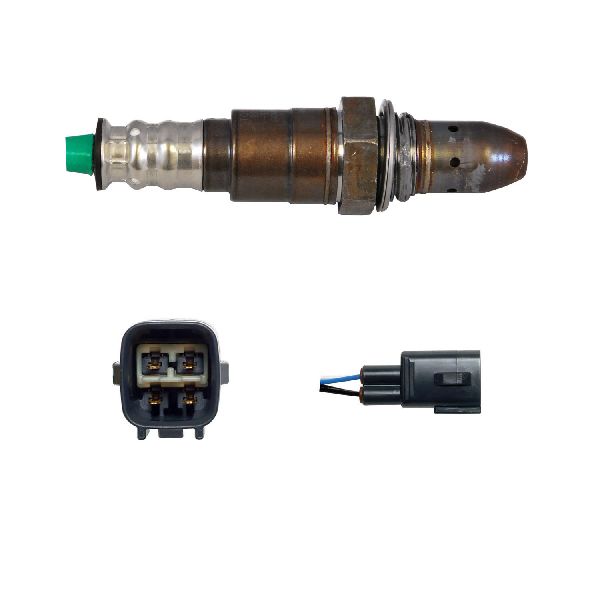

The information in this article is provided for general reference and educational purposes only. Vehicle specifications, procedures, and part compatibility can vary by production date, trim level, and region. Always consult your vehicle's factory service manual and verify part numbers before purchasing or performing repairs. Safety-critical components such as airbags, seat belts, and braking systems should be installed by a qualified professional.
- Lexus LC HYBRID:
- 🎬 Helpful Videos
- 🛍️ Shop This Part
- What's Unique About the 2018-2020 Lexus LC HYBRID
- Diagnostic Flowchart
- Symptoms You May Notice
- Most Likely Causes
- Rare But Worth Checking
- Diagnosis Steps
- Parts You'll Likely Need
- Related Codes That Often Appear With This One
- Technical Service Bulletins (TSBs) & Recalls
- Platform-Specific Known Issues
- Mechanic-Grade Diagnostic Values
- Scan Tool Commands That Help
- Wiring & Ground Locations
- Real Owner Repair Stories
- "I Checked Everything" — The Actual Cause
- OEM Part Supersession History
- 🎟️ Get 5% Off