

P0171 on 2014-2019 Lexus GX460: System Too Lean Causes and Fixes
On a 2014-2019 Lexus GX460, code P0171 is most often caused by a dirty Mass Airflow (MAF) sensor or a vacuum leak, such as a failed intake manifold gasket. Cleaning the MAF sensor is a simple first step, but a weak fuel pump is also a known issue for these vehicles, often accompanied by code P0174 and hard starting.
- Start with the simplest fix: clean the Mass Airflow (MAF) sensor with dedicated cleaner.
- If P0171 is paired with P0174 (for Bank 2), the cause is likely something that affects the whole engine, such as the MAF sensor, a fuel pump, or a major vacuum leak.
- A smoke test is the most reliable way to find hard-to-see vacuum leaks from old hoses or gaskets.
- Given the TSB for this vehicle, don't rule out a weak fuel pump, especially if you also experience hard starting or have already cleaned the MAF and checked for vacuum leaks.
What's Unique About the 2014-2019 Lexus GX460
The 4.6L V8 (1UR-FE) engine in the GX460 is generally very reliable, known for its durability. However, it is not immune to the common causes of lean codes. A key vehicle-specific issue, documented in Technical Service Bulletin L-SB-0005-23, directly links P0171 with P0174 (the code for Bank 2) and P0087 (Fuel Rail/System Pressure – Too Low), particularly with hard starting conditions. This suggests that unlike some vehicles where vacuum leaks are the overwhelming cause, GX460 owners should also strongly consider fuel delivery issues like a weakening fuel pump as a primary culprit, a scenario confirmed in owner forums.
Diagnostic Flowchart
Tap your situation to follow the diagnostic path that matches what you're seeing on this vehicle.
Symptoms You May Notice
- Check Engine Light is on
- Rough idle
- Hesitation or lack of power during acceleration
- Reduced fuel economy, sometimes dramatically
- Engine misfires or stumbling
- Hard starting, especially when accompanied by code P0087 [⭐ TSB L-SB-0005-23]
- Engine noise (detonation or spark knock)
- Replacing the oxygen (A/F) sensor without first checking for vacuum leaks, cleaning the MAF sensor, or verifying fuel pressure. The sensor is often just doing its job of reporting the lean condition.
Most Likely Causes
- Dirty or Faulty Mass Airflow (MAF) Sensor 🔴 High Probability The MAF sensor measures the air entering the engine. If it's dirty, it under-reports airflow, causing the ECM to deliver less fuel than needed, creating a lean mixture. Oiled air filters can sometimes contribute to contamination. This is one of the most common and easiest-to-fix causes.
How to confirm: Inspect the sensor for dirt. The easiest first step is to remove and clean the sensor with dedicated MAF sensor cleaner. Do not touch the delicate sensor wires. 🎬 Watch: Simple steps to clean your Lexus hotwire MAF sensor. If cleaning doesn't resolve the issue, the sensor may need replacement.
Typical fix: Clean the MAF sensor. If the problem persists, replace the sensor.
Est. part cost: $10-$15 for cleaner, $60-$150 for a new sensor. - Vacuum Leak 🔴 High Probability Unmetered air entering the engine after the MAF sensor will cause a lean condition. Common sources include cracked or disconnected vacuum hoses, a faulty PCV valve, or failed intake manifold gaskets which can become brittle with age. A torn air intake hose between the MAF and throttle body is another frequent culprit.
How to confirm: Visually inspect all vacuum hoses for cracks or damage. A smoke test is the most effective way to find hidden leaks. 🎬 See how to quickly smoke test for vacuum leaks. While the engine is running, you can sometimes hear a hissing sound near the leak or spray brake cleaner near suspected areas and listen for a change in engine idle.
Typical fix: Replace the leaking hose, gasket, or valve. Intake manifold gaskets are a known, though more involved, repair.
Est. part cost: $10-$50 for hoses/PCV valve, $50-$150 for intake gaskets. - Weak or Failing Fuel Pump 🟡 Medium Probability As highlighted by TSB L-SB-0005-23, low fuel pressure can cause lean conditions on both banks (P0171 and P0174). Forum discussions among GX owners confirm that a failing fuel pump can be the root cause, especially when accompanied by a dramatic drop in fuel economy and stumbling on acceleration.
How to confirm: Perform a fuel pressure test to see if the pressure is within the manufacturer's specifications. A scan tool showing long-term fuel trims that are very high (e.g., over 25-35%) under load can also point to a fuel delivery issue.
Typical fix: Replace the fuel pump assembly. This is a more involved repair as it requires dropping the fuel tank.
Est. part cost: $200-$500+ - Clogged or Dirty Fuel Injectors ⚪ Low Probability
How to confirm: If the lean condition is isolated to one cylinder (which would likely set a misfire code), that injector could be the cause. A professional fuel injector cleaning service or flow test can confirm this. This is less likely to be the cause if both P0171 and P0174 are present.
Typical fix: Professionally clean or replace the faulty fuel injector(s).
Est. part cost: $50-$200 per injector.
Rare But Worth Checking
- Exhaust Leak: An exhaust leak before the upstream oxygen (A/F) sensor can allow outside air to enter the exhaust stream, making the sensor incorrectly report a lean condition.
- Faulty Air/Fuel Ratio (Oxygen) Sensor: While the sensor itself can fail, it's more common for it to be correctly reporting a problem caused by something else. It's often misdiagnosed as the primary failure and should only be replaced after other causes are ruled out.
- Faulty PCV Valve: A PCV valve that is stuck open can create a significant vacuum leak. It's an inexpensive part to replace (OEM Part #12204-38010) and should be considered when diagnosing vacuum leaks.
Diagnosis Steps
- Check for other stored trouble codes. The presence of P0174 or P0087 is highly significant and points towards a systemic issue.
- Using a scan tool, observe the short-term (STFT) and long-term (LTFT) fuel trims at idle and at 2500 RPM. High positive numbers (e.g., LTFT >15-20%) confirm the lean conditi 🎬 Watch this guide on fixing lean codes P0171 and P0174.on. Some owners report trims as high as 35-44% with a failing fuel pump.
- Visually inspect the engine bay for obvious vacuum leaks, such as disconnected hoses or a cracked air intake tube.
- Remove and clean the Mass Airflow (MAF) sensor using a dedicated MAF sensor cleaner. Do not touch the sensor wires or use other chemicals like brake cleaner.
- After cleaning the MAF, clear the codes, and drive the vehicle to see if the code returns. You may need to disconnect the battery or pull the EFI fuse to reset the fuel trims faster.
- If the code returns, perform a smoke test to definitively identify any vacuum leaks. Pay close attention to the intake manifold gaskets, PCV hose, and the air intake assembly.
- If no vacuum leaks are found, test the fuel pressure to rule out a weak fuel pump or faulty pressure regulator. This is a critical step before replacing the pump, as recommended by owners who have solved the problem this way.
- Inspect the PCV valve (Part #12204-38010) to ensure it is not stuck open, as this is a cheap and easy potential fix for a vacuum leak.
- As a last resort, inspect the A/F (oxygen) sensors for proper operation, but they are less likely to be the root cause if they haven't set their own specific codes.
Parts You'll Likely Need
- Mass Airflow Sensor Cleaner — This is the cheapest and easiest first step in diagnosing and potentially fixing a P0171 code.
Trusted brands: CRC, WD-40 Specialist
Aftermarket price range: $10-$15 - Mass Airflow (MAF) Sensor
(OEM #22204-38020)— If cleaning the sensor doesn't work, the sensor itself may have failed. It is a very common cause for this code. Denso is the OEM supplier.
Trusted brands: Denso, Hitachi
OEM price range: $120-$180
Aftermarket price range: $60-$120 - Intake Manifold Gasket Set
(OEM #17176-38020)— These gaskets can become brittle over time, causing a vacuum leak that allows unmetered air into the engine. This is a common failure on higher-mileage 1UR-FE engines.
Trusted brands: Lexus (OEM), Fel-Pro
OEM price range: $50-$80
Aftermarket price range: $30-$60 - Fuel Pump Assembly
(OEM #77020-60440)— A weak fuel pump fails to deliver adequate fuel pressure, causing a lean condition. This is a known issue on the GX460, often appearing with codes P0171 and P0174, and confirmed by TSB L-SB-0005-23.
Trusted brands: Denso, Aisin
OEM price range: $400-$600
Aftermarket price range: $200-$350 - PCV Valve
(OEM #12204-38010)— A stuck-open PCV valve acts as a vacuum leak. It's an inexpensive and easy part to replace during diagnosis.
Trusted brands: Lexus (OEM), Beck/Arnley
OEM price range: $8-$12
Aftermarket price range: $5-$10
Related Codes That Often Appear With This One
- P0174 — System Too Lean (Bank 2). This is the companion code for the other bank of the V8 engine. When both P0171 and P0174 are present, it strongly suggests a problem that affects the entire engine, like a MAF sensor, a major vacuum leak on the intake, or a fuel delivery issue.
- P0087 — Fuel Rail / System Pressure – Too Low. A Lexus TSB (L-SB-0005-23) specifically links this code with P0171/P0174, indicating a weak fuel pump or other fuel delivery problem is a likely cause.
Technical Service Bulletins (TSBs) & Recalls
- L-SB-0005-23: For 2014-2019 GX460s, this bulletin addresses a hard start and/or MIL ON with DTC P0171/P0174 and P0087 (Fuel Rail / System Pressure – Too Low), indicating a potential fuel pump or fuel pressure issue.
Platform-Specific Known Issues
- A Technical Service Bulletin (TSB L-SB-0005-23) was issued for 2014-2019 GX460s (among other models) for a hard start and/or MIL ON with DTCs P0171, P0174, and/or P0087, pointing towards potential fuel pressure issues requiring diagnosis. This TSB is associated with a Customer Support Program (23LE01).
Mechanic-Grade Diagnostic Values
- Fuel Pressure — expected: 196 to 588 kPa (28 to 85 psi).. Failure: Pressure below the specified range, especially under load, indicates a weak fuel pump or clogged filter. A healthy system should hold pressure for at least 5 minutes after the engine is stopped (147 kPa / 21 psi or more).
- Long-Term Fuel Trim (LTFT) — expected: Ideally close to 0%, but within +/- 10%.. Failure: Sustained positive values above +25% strongly indicate a lean condition. Owners with failing fuel pumps have reported values as high as +35% to +44%.
- Mass Air Flow (MAF) Sensor Voltage — expected: Approximately 0.98V - 1.02V with engine off, key on. At idle, typically 0.5V - 1.5V. Should increase with RPM.. Failure: Voltage less than 0.2V or more than 4.9V for more than 3 seconds will trigger a specific MAF sensor DTC. Incorrect voltage relative to engine load can cause lean codes without setting a MAF-specific code.
Scan Tool Commands That Help
- Toyota Techstream: A/F CONTROL (Active Test) — This test allows a technician to manually increase (+25%) or decrease (-12.5%) the fuel injection volume to see if the A/F and O2 sensors respond accordingly. It helps determine if the sensors are reading correctly or if the fuel system is capable of adjusting.
- Toyota Techstream: FUEL PUMP / SPD (Active Test) — This allows for turning the fuel pump on with the engine off to check for pump operation and to make it easier and safer to perform a fuel pressure test without the engine running.
- Toyota Techstream: Activate the VSV for Evap Control (Active Test) — While primarily for the EVAP system, a stuck-open purge valve (VSV) can be a source of a vacuum leak. This test commands the valve to open; if the engine idles rough or stalls, the valve is likely functioning, but it can help isolate a valve that is stuck mechanically.
Wiring & Ground Locations
- Engine Room R/B Assembly and J/B Assembly — Located on the left side of the engine compartment.. These junction boxes contain critical relays and fuses, including the A/F Relay and EFI (Electronic Fuel Injection) fuses, which power the fuel system and engine sensors. A poor connection or corrosion here can cause intermittent power loss to these components.
- Various Engine Ground Points — Key grounds for the 1UR-FE are located on the top of the engine, connecting to the cylinder heads and block. Chassis grounds are found in locations like the left side of the dash and the base of the 'B' and 'C' pillars.. The ECM and all engine sensors (MAF, A/F, O2) rely on clean ground connections to provide accurate readings. A corroded or loose engine or chassis ground can introduce voltage offsets, leading the ECM to misinterpret sensor data and cause lean or rich codes.
Real Owner Repair Stories
- Reddit user u/clickyspinny on r/GXOR (Lexus GX460 (year not specified)) — P0171 and P0174 codes, terrible fuel economy (10-11 MPG), engine stumbling at certain RPMs under acceleration.
❌ Tried (didn't work) Clearing codes (they would return on the next drive cycle), Replacing various unspecified parts before focusing on fuel delivery.
✅ What actually fixed it Replacement of the OEM fuel pump. The user noted their Long Term Fuel Trims were over 35% on both banks before the fix and returned to normal afterward. They strongly recommended getting a fuel pressure test to confirm before replacing the pump. - ClubLexus user on a 2013 GX460 (2013 Lexus GX460) — P0171 and P0174 codes. Long Term Fuel Trim at 44% and Short Term at 20% under load.
❌ Tried (didn't work) Replaced MAF sensor, Replaced fuel pump.
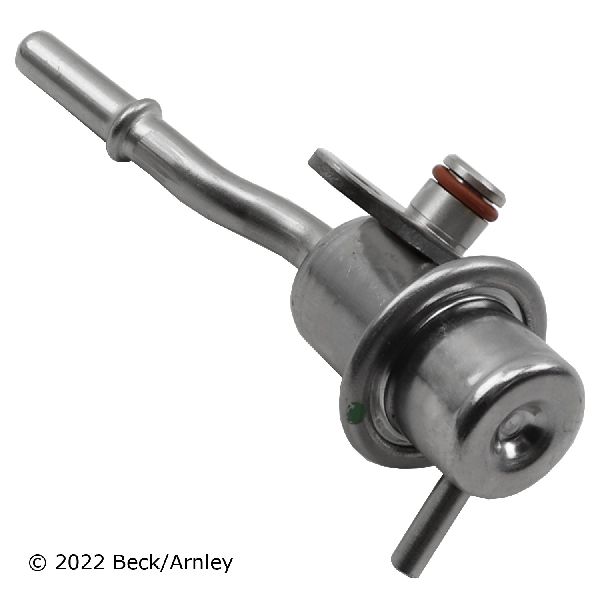
✅ What actually fixed it The user's thread was a request for help after common fixes failed. Other users suggested a smoke test for hidden vacuum leaks, checking the fuel pressure regulator (PN: 23280-38061) for failure, and inspecting for clogged fuel injectors, as these are the next logical steps when a new pump and MAF do not solve extremely high fuel trims.
"I Checked Everything" — The Actual Cause
- In cases where P0171 and P0174 are present and a smoke test reveals no vacuum leaks, the cause is very frequently a fuel delivery problem. As confirmed by TSB L-SB-0005-23 and numerous owner accounts, a weak fuel pump is a primary suspect. High positive long-term fuel trims (+25% or more) that get worse under load (higher RPMs) are a classic symptom of the engine demanding more fuel than the pump can supply, whereas fuel trims caused by a vacuum leak tend to be highest at idle and improve with higher RPMs.
OEM Part Supersession History
Not specified→12204-38010— This is the current part number for the PCV valve (Ventilation Valve Sub-Assembly) for the 2010-2023 GX460.
Model Year Variations Within This Range
- 2014-2019: There were no significant powertrain changes to the 4.6L V8 (1UR-FE) engine or its fuel system during this period that would affect the diagnosis of P0171. The primary changes were cosmetic and related to infotainment or safety features. Diagnostic procedures and common causes remain consistent across this year range.
Helpful Videos
Used OEM Parts in Stock


New Aftermarket Parts Available


The information in this article is provided for general reference and educational purposes only. Vehicle specifications, procedures, and part compatibility can vary by production date, trim level, and region. Always consult your vehicle's factory service manual and verify part numbers before purchasing or performing repairs. Safety-critical components such as airbags, seat belts, and braking systems should be installed by a qualified professional.
- Lexus GX460:
- 🎬 Helpful Videos
- 🛍️ Shop This Part
- What's Unique About the 2014-2019 Lexus GX460
- Diagnostic Flowchart
- Symptoms You May Notice
- Most Likely Causes
- Rare But Worth Checking
- Diagnosis Steps
- Parts You'll Likely Need
- Related Codes That Often Appear With This One
- Technical Service Bulletins (TSBs) & Recalls
- Platform-Specific Known Issues
- Mechanic-Grade Diagnostic Values
- Scan Tool Commands That Help
- Wiring & Ground Locations
- Real Owner Repair Stories
- "I Checked Everything" — The Actual Cause
- OEM Part Supersession History
- Model Year Variations Within This Range
- 🎟️ Get 5% Off