

P0171 on 2016-2018 Lexus GS HYBRID: System Too Lean Causes and Fixes
On a 2016-2018 Lexus GS Hybrid, code P0171 is most often caused by a dirty Mass Airflow (MAF) sensor or a vacuum leak. However, a manufacturer TSB specifically links this code to low fuel pressure, so checking the fuel system is a critical diagnostic step if simple fixes don't work. Real-world owner experiences frequently point to cracked PCV hoses or leaking intake manifold gaskets as the specific sources of vacuum leaks.
- P0171 means your Lexus GS Hybrid's engine is running with too much air or not enough fuel on Bank 1.
- Start your diagnosis with the easiest and most common fixes: check for cracked vacuum hoses and clean the MAF sensor with dedicated cleaner.
- Due to a specific TSB, if simple fixes don't work or if you also have a P0087 code, a fuel pressure test should be your next priority.
- Do not replace the Air/Fuel (O2) sensor unless you have ruled out vacuum leaks, MAF issues, and fuel pressure problems first.
- Ignoring this code can lead to more expensive repairs, including damage to the catalytic converter.
What's Unique About the 2016-2018 Lexus GS HYBRID
While most vehicles with a P0171 code point towards vacuum leaks or a dirty MAF sensor, Lexus has issued a Technical Service Bulletin (TSB) for this platform that changes the diagnostic priority. The TSB specifically connects P0171 with hard starting and another code, P0087 (Fuel Rail / System Pressure – Too Low). This indicates these models may have a known weakness in the fuel delivery system, making a fuel pressure test more important than on a typical vehicle with this code. The 2GR-FXE engine in this hybrid model uses the Atkinson cycle for efficiency, which can have different operating characteristics than the more common Otto cycle engines.
Diagnostic Flowchart
Tap your situation to follow the diagnostic path that matches what you're seeing on this vehicle.
Symptoms You May Notice
- Check Engine Light is on
- Rough idle or stalling, especially when stopped.
- Hesitation or lack of power during acceleration.
- Reduced fuel economy.
- Hard starting condition, as noted in a manufacturer TSB.
- Hissing or whistling noises from the engine bay, indicating a vacuum leak.
- Replacing the Air/Fuel Ratio (oxygen) sensor as the first step. The sensor is often correctly reporting a lean condition caused by another issue, such as a vacuum leak or dirty MAF sensor. Always diagnose other potential causes first to avoid replacing expensive parts unnecessarily.
Most Likely Causes
- Dirty Mass Airflow (MAF) Sensor 🔴 High Probability The MAF sensor's delicate hot wire can become contaminated with dirt, oil, and debris over time, causing it to under-report the amount of air entering the engine. This is a very common cause across most modern vehicles and a frequent first-step fix discussed by owners.
How to confirm: Inspect the sensor wire for grime. A scan tool may show lower-than-expected airflow (g/s) readings at idle and under load. If long-term fuel trims are high at higher RPMs but closer to normal at idle, it often points to a faulty MAF sensor. Cleaning the sensor is a simple and effective diagnostic step.
Typical fix: Carefully remove the MAF sensor and clean it with a dedicated MAF sensor cleaner spray. 🎬 Watch: A detailed guide on how to clean your MAF sensor. Do not touch the wire or use other cleaners like brake cleaner. If cleaning doesn't resolve the issue, the sensor may need to be replaced. The OEM part is made by Denso.
Est. part cost: $10-$15 for cleaner, $150-$215 for a new OEM Denso sensor. - Vacuum Leak 🔴 High Probability Rubber and plastic components in the engine bay degrade over time from heat cycles and age, leading to cracks and leaks. Forum discussions for Lexus vehicles with the 2GR engine family frequently cite cracked PCV hoses and leaking intake manifold gaskets as the specific culprits for P0171.
How to confirm: Visually inspect all vacuum hoses, the PCV hose, and the intake air tube for cracks or loose connections. A smoke test is the most effective method to find small, 🎬 See this easy trick to find and fix vacuum leaks. hard-to-see leaks. You can also listen for a hissing sound with the engine running. A scan tool showing high positive fuel trims at idle that decrease as RPMs increase is a strong indicator of a vacuum leak.
Typical fix: Replace the cracked hose, fitting, or gasket that is causing the leak. The intake manifold gasket is a more involved repair than a simple hose.
Est. part cost: $15-$150 depending on the specific hose or gasket. - Low Fuel Pressure 🟡 Medium Probability A specific TSB (LSB-0005-23, formerly LSB000523) for this model family links P0171 to DTC P0087 (Fuel Rail / System Pressure – Too Low). This suggests a higher-than-normal likelihood of a fuel delivery problem, potentially from a weak fuel pump or clogged filter.
How to confirm: Connect a fuel pressure gauge to the fuel rail to test the pressure at idle and under load. Compare the readings to the manufacturer's specifications. A scan tool can also monitor fuel pressure data and is the method preferred by the TSB. 🎬 Watch: Expert advice on diagnosing the P0087 fuel pressure code.
Typical fix: The fix depends on the cause of the low pressure. It could be a weak high-pressure fuel pump, a clogged fuel filter, or a faulty fuel pressure regulator.
Est. part cost: $50-$400+ depending on the component, with the fuel pump being the most expensive. - Faulty Air/Fuel Ratio Sensor (Front O2 Sensor) 🟡 Medium Probability The A/F sensor is a normal wear item that can become slow or biased over time, sending inaccurate lean readings to the computer. However, it is often replaced unnecessarily when the actual problem is a vacuum leak or MAF issue.
How to confirm: Use a scan tool to monitor the sensor's voltage. A healthy sensor will fluctuate rapidly. A sensor that is slow to respond or stuck on a low voltage may be faulty. This should only be diagnosed after confirming no vacuum leaks or fuel pressure issues exist, as the sensor is often correctly reporting a lean condition caused by something else.
Typical fix: Replace the Bank 1, Sensor 1 Air/Fuel Ratio sensor. Using an OEM brand like Denso is highly recommended for compatibility and longevity.
Est. part cost: $180-$250 for an OEM Denso sensor.
Rare But Worth Checking
- Exhaust Leak: A crack or leak in the exhaust manifold or pipe before the first A/F sensor can pull in fresh air, tricking the sensor into reading a lean condition. This is less common but should be checked if other causes are ruled out.
- Clogged or Dirty Fuel Injectors: If one or more injectors on Bank 1 are partially clogged, they won't deliver enough fuel, leading to a lean mixture on that bank. This is less likely to be the primary cause unless the vehicle has very high mileage or has been sitting for a long time.
Diagnosis Steps
- Check for other DTCs. If P0174 or P0087 are present, it provides important clues to a global issue (affecting both banks) or a fuel system fault.
- Visually inspect the engine bay. Look for obvious cracks in the intake boot, disconnected vacuum lines, or broken plastic fittings on the airbox.
- Clean the Mass Airflow (MAF) sensor. This is a low-cost, high-impact first step. Use only dedicated MAF sensor cleaner and allow it to dry completely before reinstalling.
- Check fuel trims with a scan tool. High positive long-term fuel trim (LTFT) values (e.g., >15%) confirm the computer is compensating for a lean condition. Note if the trims are higher at idle (suggesting a vacuum leak) or at higher RPMs (suggesting a MAF or fuel delivery issue).
- Perform a smoke test. This is the most reliable way to find hidden vacuum leaks in the intake system, especially around the intake manifold gaskets and PCV hoses.
- Test fuel pressure. Given the TSB for this vehicle, this is a critical step. Connect a fuel pressure gauge and verify that pressure is within OEM specifications (44-50 psi for the low-pressure side).
- Inspect for exhaust leaks. Check the exhaust manifold and downpipe for any signs of cracks or leaking gaskets before the first A/F sensor.
- Test the Air/Fuel Ratio sensor. If all other possibilities have been eliminated, use the Techstream "Control the Injection Volume" Active Test to verify the sensor is responding correctly to commanded fuel changes.
Parts You'll Likely Need
- Mass Airflow (MAF) Sensor Cleaner — Often, the sensor is just dirty and cleaning it can resolve the code without needing replacement. This is the cheapest and easiest first step.
Trusted brands: CRC, Liqui Moly
Aftermarket price range: $10-$15 - Mass Airflow (MAF) Sensor
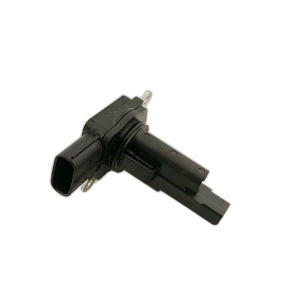
(OEM #22204-0V020 (supersedes 22204-0T040))— If cleaning the sensor does not work, the sensor itself may have failed. The OEM part is Denso.
Trusted brands: Denso (OEM), Hitachi, Delphi
OEM price range: $155-$215
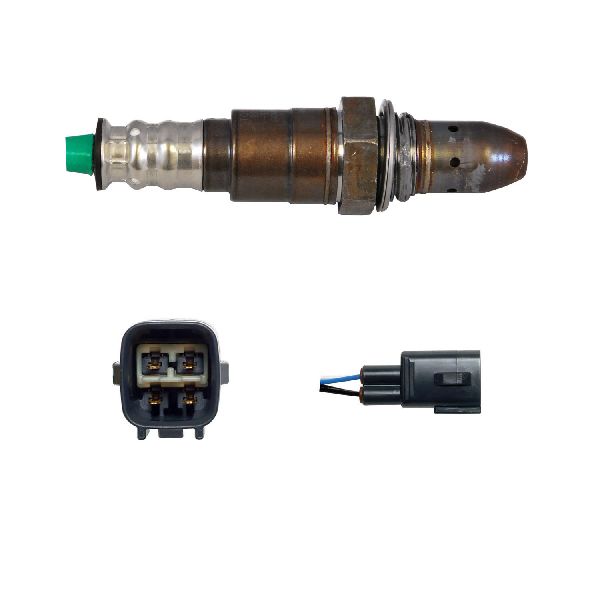
Aftermarket price range: $75-$150 - Air/Fuel Ratio Sensor (Bank 1, Sensor 1)
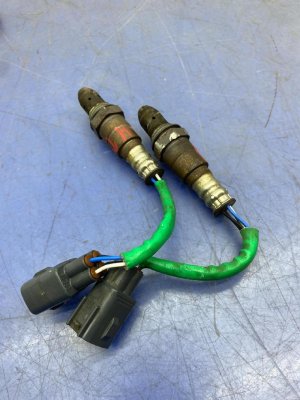
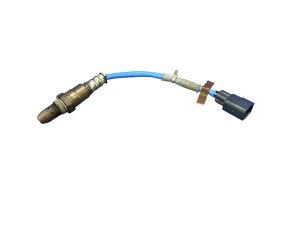
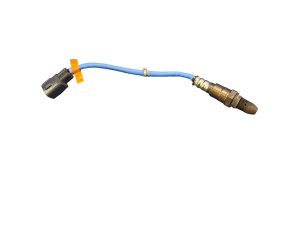
(OEM #89467-48240 (Bank 1 Sensor 1 - Right/Rear Bank))— If the sensor itself has failed after all other causes are ruled out, it will need to be replaced. It is a common wear item on higher mileage vehicles.
Trusted brands: Denso (OEM), NTK
OEM price range: $180-$250
Aftermarket price range: $100-$180
Related Codes That Often Appear With This One
- P0174 — This is the code for "System Too Lean (Bank 2)". If the cause (like a dirty MAF sensor, low fuel pressure, or a large vacuum leak in the main intake boot) affects both engine banks, you will often see both codes together.
- P0087 — This code means "Fuel Rail / System Pressure – Too Low". A Lexus TSB specifically mentions that P0171 may appear with P0087, strongly indicating a fuel delivery problem is the root cause.
- P0300-P0306 — These are misfire codes. A lean condition can lead to incomplete combustion, causing the engine to misfire on one or more cylinders.
Technical Service Bulletins (TSBs) & Recalls
- LSB-0005-23 (Formerly LSB000523): Addresses a potential hard start and MIL ON condition with DTCs P0171, P0174, and/or P0087, pointing towards a fuel pressure diagnosis.
Platform-Specific Known Issues
- Technical Service Bulletin LSB-0005-23 notes that some Lexus vehicles may exhibit a hard start and/or have the Check Engine Light on with DTCs P0171, P0174, and/or P0087. The bulletin guides technicians to check fuel pressure using a scan tool (Techstream) as a primary diagnostic step, reinforcing the possibility of a fuel delivery issue over a simple vacuum leak.
- Owners on forums like ClubLexus frequently report that P0171/P0174 codes on 2GR-family engines are ultimately traced back to either a dirty MAF sensor or a vacuum leak from a degraded hose, most commonly the PCV hose or a crack in the main intake air boot.
Mechanic-Grade Diagnostic Values
- Long-Term Fuel Trim (LTFT) and Short-Term Fuel Trim (STFT) — expected: The sum of short-term and long-term fuel trims should be between -30% and +33% when the engine is warmed up (coolant temp > 75°C / 167°F). Ideally, Long Term Fuel Trim should be close to 1-2%.. Failure: A P0171 is typically set when the average or total fuel trim value exceeds +25% to +35%. High positive trims at idle that decrease with RPM suggest a vacuum leak; high trims at higher RPM suggest a MAF or fuel delivery issue.
- Mass Airflow (MAF) Sensor Reading at Idle — expected: For a 3.5L engine, a typical reading at idle is approximately 3.0-5.0 g/s. A general rule of thumb is engine displacement multiplied by 0.8 to 1.2.. Failure: A reading significantly lower than expected can indicate a dirty or failing sensor. A reading of less than 0.55 g/s with the key on, engine off, after waiting 30 seconds, is considered normal.
- Low-Side Fuel Pressure — expected: 304 to 343 kPa (44 to 50 psi) for the 2GR-FE engine.. Failure: Pressure below the specified range indicates a problem with the fuel pump, filter, or regulator.
- Air/Fuel Ratio Sensor Voltage (Techstream) — expected: During an 'Injection Volume' active test, the A/F sensor voltage (AFS Voltage B1S1) should react accordingly. When decreasing injection volume by 12.5%, the voltage should consistently be more than 3.4 V.. Failure: A sensor that does not respond to commanded changes in fuel volume, or is stuck at a certain voltage, is likely faulty.
Scan Tool Commands That Help
- Techstream: Active Test: Control the Injection Volume for A/F Sensor — This test allows a technician to manually increase or decrease the fuel injection volume by up to 25% and observe the A/F sensor's reaction. It is a critical step to confirm if the A/F sensor is responding correctly to mixture changes, helping to isolate a faulty sensor from an actual lean condition.
- Techstream: Active Test: Fuel Pump / SPD — This command allows you to directly activate the fuel pump. It is used to verify the fuel pump is operational and to check for fuel pressure and flow without starting the engine, helping to diagnose fuel delivery issues noted in the TSB.
- Techstream: Data List: MAF, Long FT#1, Short FT#1 — Monitoring these live data parameters is the primary way to diagnose a P0171. Observing how fuel trims react to different engine speeds (idle vs. 2500 RPM) helps differentiate between a vacuum leak and a MAF/fuel delivery problem.
Wiring & Ground Locations
- Engine Ground — There is a primary ground line from the lower firewall to the back of the engine block, with ground points often attached to the back of both cylinder heads.. A poor engine ground can cause erratic behavior from sensors mounted on the engine, including the A/F ratio sensor, potentially leading to incorrect readings and fault codes. Verifying this ground is secure is a valid step in advanced diagnosis.
Real Owner Repair Stories
- ClubLexus user (2007 Lexus GS450h (similar 2GR engine family)) — P0171 & P0174 codes, poor acceleration, slight hesitation. CEL would appear when driving on the highway.
❌ Tried (didn't work) Replaced air filter, Cleaned MAF sensor and replaced its O-ring, Replaced leaking PCV valve hose, Cleaned fuel injectors, throttle body, Replaced fuel filter, Replaced gas cap, Replaced purge valve, Performed a smoke test which found no leaks
✅ What actually fixed it The user's story did not have a final resolution posted, but highlights a common scenario where numerous parts are replaced without fixing the root cause, emphasizing the need for systematic diagnosis.
"I Checked Everything" — The Actual Cause
- A leaking brake booster diaphragm. A smoke test will typically not reveal this leak because the check valve on the booster's vacuum line prevents smoke from entering the booster itself. If fuel trims improve dramatically when the vacuum line to the booster is disconnected and plugged, the booster is the likely culprit.
OEM Part Supersession History
22204-0T040→22204-0V020— Standard part revision/update.
Heads up: The part number 22204-0V010 is also superseded by 22204-0V020.89467-48240 (Bank 1 Sensor 1)→89467-0E120— Standard part revision/update.
Heads up: Ensure the correct sensor is ordered. Bank 1 Sensor 1 is on the rear bank for this transverse engine. Using an incorrect sensor (e.g., a downstream O2 sensor instead of an upstream A/F sensor) will not resolve the issue.
Helpful Videos

![How to Fix P0171 Engine Code in 5 Minutes [7 DIY Methods]](https://img.youtube.com/vi/g_qItasY91I/mqdefault.jpg)
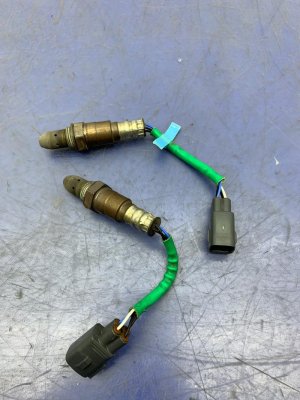
Used OEM Parts in Stock

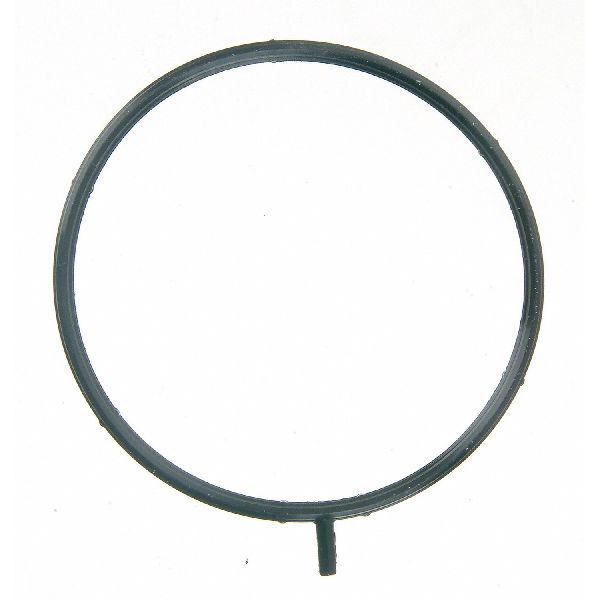
New Aftermarket Parts Available


The information in this article is provided for general reference and educational purposes only. Vehicle specifications, procedures, and part compatibility can vary by production date, trim level, and region. Always consult your vehicle's factory service manual and verify part numbers before purchasing or performing repairs. Safety-critical components such as airbags, seat belts, and braking systems should be installed by a qualified professional.
- Lexus GS HYBRID:
- 🎬 Helpful Videos
- 🛍️ Shop This Part
- What's Unique About the 2016-2018 Lexus GS HYBRID
- Diagnostic Flowchart
- Symptoms You May Notice
- Most Likely Causes
- Rare But Worth Checking
- Diagnosis Steps
- Parts You'll Likely Need
- Related Codes That Often Appear With This One
- Technical Service Bulletins (TSBs) & Recalls
- Platform-Specific Known Issues
- Mechanic-Grade Diagnostic Values
- Scan Tool Commands That Help
- Wiring & Ground Locations
- Real Owner Repair Stories
- "I Checked Everything" — The Actual Cause
- OEM Part Supersession History
- 🎟️ Get 5% Off