

P0171 on 2002-2005 Land Rover Freelander: Lean Condition Causes and Fixes
On a 2002-2005 Freelander, code P0171 is most often caused by a vacuum leak from aged PCV components or a dirty/faulty Mass Airflow (MAF) sensor. Start by inspecting for cracked hoses, especially the PCV breather diaphragms inside the valve covers, and cleaning the MAF sensor before moving to more complex diagnostics.
- P0171 on a Freelander almost always points to unmetered air entering the engine.
- The most likely culprits are vacuum leaks from the PCV system (especially breather diaphragms) or a faulty MAF sensor.
- A smoke test is the most effective diagnostic tool for locating hard-to-find vacuum leaks on this engine.
- Always check for P0174 (Bank 2) as well; if both are present, it confirms the problem is engine-wide.
- Cleaning the MAF sensor is a cheap and easy first step, but replacement is often necessary to permanently fix the issue.
What's Unique About the 2002-2005 Land Rover FREELANDER
The Land Rover Freelander from this era uses the 2.5L Rover KV6 engine, which has a known sensitivity to vacuum leaks due to its complex plastic intake and breather system. Unlike many vehicles where a MAF sensor is the primary culprit, on the Freelander, brittle PCV hoses and, specifically, torn PCV breather diaphragms located in the valve covers are a very common and often overlooked cause of lean codes like P0171 and P0174. These diaphragms can tear, creating an internal vacuum leak that is not externally visible without a smoke test.
Diagnostic Flowchart
Tap your situation to follow the diagnostic path that matches what you're seeing on this vehicle.
Symptoms You May Notice
- Check Engine Light is on
- Engine hesitation or stumbling during acceleration. [TSB #SWA09013]
- Lack of engine power
- Rough or unstable idle
- Possible engine stalling
- Reduced fuel economy
- Hissing noise from the engine bay, indicating a vacuum leak.
- Replacing the oxygen sensors first. While a faulty O2 sensor can cause this code, the root cause is much more likely to be unmetered air from a vacuum leak or an incorrect reading from the MAF sensor.
- Using a cheap aftermarket MAF sensor. Forum members repeatedly warn that non-OEM sensors often do not work correctly on these vehicles and can lead to a repeat of the P0171 code.
Most Likely Causes
- Vacuum Leak (PCV System, Hoses, Gaskets) 🔴 High Probability The KV6 engine uses numerous plastic and rubber components in its PCV and vacuum system that become brittle and crack over time. Torn PCV diaphragms in the valve covers are a frequent, specific failure point on this engine, creating a significant unmetered air leak. Other common leak points include the brake servo vacuum connector (LZN100220L) and various O-rings on breather tubes.
How to confirm: Perform a smoke test to introduce smoke into the intake system with the engine off. Leaks will be visible as smoke escapes from cracked hoses, 🎬 Watch: How to find vacuum leaks using a smoke machine. gaskets, or the PCV system itself. Visually inspect all accessible hoses for cracks. A forum user on landroverforums.com detailed finding a completely destroyed PCV diaphragm using a DIY smoke checker after chasing the code for two years.
Typical fix: Replace the specific leaking hose, gasket, or PCV diaphragm. PCV diaphragm repair kits are available from aftermarket suppliers. Replace failed vacuum connectors or O-rings.
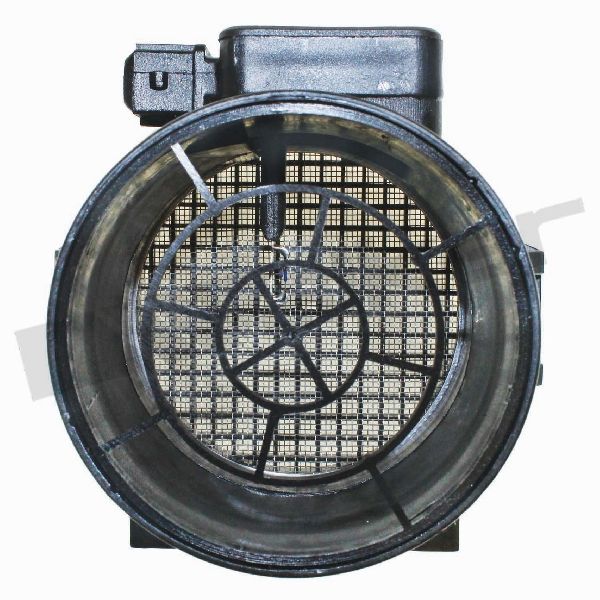
Est. part cost: $20-$100 - Dirty or Faulty Mass Airflow (MAF) Sensor 🔴 High Probability The MAF sensor measures the air entering the engine. If it's dirty, it can under-report airflow, causing the ECU to command too little fuel. This is a common failure item, but owners report that this engine is very sensitive to the brand of MAF sensor used; only OEM Bosch or genuine Land Rover parts are recommended, as aftermarket units can be faulty out of the box.
How to confirm: First, try cleaning the sensor using a dedicated MAF sensor cleaner spray. 🎬 See how to clean your MAF sensor in seconds. If the code returns, monitor fuel trims with a scan tool or test the sensor's output voltage. Replacement is the next step if cleaning fails. A user on landroverforums.com fixed their P0171/P0174 codes with a new MAF sensor after finding vacuum leaks was not the sole cause.
Typical fix: Clean the sensor with a specialized cleaner. If that doesn't work, replace the MAF sensor assembly with a high-quality OEM part.
Est. part cost: $70-$200 - Clogged Fuel Filter or Weak Fuel Pump ⚪ Low Probability The in-tank fuel filter (WFL000010) can become restricted over time, limiting fuel flow. While less common than vacuum leaks, it can cause lean conditions across both banks, especially under load.
How to confirm: Connect a fuel pressure gauge to the fuel rail and check if the pressure is within the manufacturer's specified range. Pressure should be stable under load. This is often done after ruling out vacuum leaks and MAF issues.
Typical fix: Replace the in-tank fuel filter or the failing fuel pump module.
Est. part cost: $50-$120 for a filter, $200-$400 for a pump
Rare But Worth Checking
- Leaking Intake Manifold Gaskets: The KV6 engine has a plastic intake manifold system with multiple gaskets that can fail, causing a significant vacuum leak. This is usually found with a smoke test and can sometimes be accompanied by other symptoms like engine overheating if coolant passages are also affected.
- Faulty Upstream Oxygen Sensor: An O2 sensor that is failing may incorrectly report high levels of oxygen, tricking the computer into thinking there is a lean condition. This is less common than a vacuum leak or MAF issue, and should generally be considered only after other causes are ruled out.
Diagnosis Steps
- Read the fault codes with an OBD-II scanner and note any other codes present, especially P0174.
- With a scan tool, observe Long Term Fuel Trim (LTFT) and Short Term Fuel Trim (STFT) at idle and at 2,500 RPM. High positive trims at idle that decrease at higher RPM strongly 🎬 Watch this guide on fixing lean codes P0171 and P0174. suggest a vacuum leak.
- Visually inspect the air intake hose between the air filter box and the throttle body for any cracks or loose connections.
- Inspect all accessible vacuum lines and PCV hoses for obvious signs of cracking, brittleness, or disconnection. Pay close attention to the brake booster vacuum connector (a red-capped fitting on the intake).
- With the engine running, listen for hissing sounds that could indicate a vacuum leak.
- Clean the Mass Airflow (MAF) sensor using a dedicated MAF sensor cleaner. Allow it to dry completely before reinstalling. Clear the codes and drive to see if the light returns.
- If the code persists, perform a smoke test on the intake system. This is the most reliable way to find hard-to-see leaks from intake gaskets, PCV diaphragms, or hidden vacuum lines.
- If no vacuum leaks are found, test the fuel pressure to ensure the fuel pump and filter are functioning correctly.
- As a final step, you can test the upstream oxygen sensor's operation with a scan tool, but it is rarely the primary cause.
Parts You'll Likely Need
- PCV Breather Diaphragm Repair Kit — The rubber diaphragms inside the valve cover breathers are a known, high-failure point on the KV6 engine, causing a significant vacuum leak. Repair kits are a cost-effective alternative to replacing the entire valve cover.
Trusted brands: Atlantic British, RKX
OEM price range: $100+ (for full valve cover)
Aftermarket price range: $25-$50 per kit - Mass Airflow (MAF) Sensor
(OEM #MHK100800)— A dirty or failed MAF sensor is a very common cause of lean codes, as it provides incorrect airflow data to the engine computer. Use of OEM (Bosch) or Genuine parts is highly recommended.
Trusted brands: Bosch (OEM), Land Rover (Genuine)
OEM price range: $150-$250
Aftermarket price range: $70-$150 (Use with caution) - Fuel Filter
(OEM #WFL000010)— A clogged in-tank fuel filter can restrict fuel flow, leading to a lean condition. It's a maintenance item that is often overlooked.
Trusted brands: Mahle (OEM), Britpart, Land Rover (Genuine)
OEM price range: $80-$120
Aftermarket price range: $40-$70 - Intake Manifold Brake Servo Vacuum Connector
(OEM #LZN100220L)— This plastic connector with a red cap/ring is a known weak point that cracks or develops a poor seal, creating a vacuum leak directly at the intake manifold.
Trusted brands: Land Rover (Genuine)
OEM price range: $50-$60
Aftermarket price range: $25-$40
Related Codes That Often Appear With This One
- P0174 — This is the 'System Too Lean' code for Bank 2. When both P0171 and P0174 are present, it strongly indicates a problem that affects the whole engine, such as a major vacuum leak (e.g., PCV diaphragm, intake boot) or a faulty MAF sensor.
- P0300, P0301-P0306 — These are random and specific cylinder misfire codes. A severe lean condition can prevent proper combustion, leading to misfires. The NHTSA TSB SWA09013 directly links these codes together. [TSB #SWA09013]
Technical Service Bulletins (TSBs) & Recalls
- SWA09013: Mentions potential for engine stumble/hesitation or stall with DTCs P0171, P0174, and various misfire codes being stored.
Platform-Specific Known Issues
- A Technical Service Bulletin (TSB #SWA09013) issued by Land Rover acknowledges that P0171 and P0174 can occur in conjunction with engine stumbling, hesitation, and multiple misfire codes (P0301-P0306). [TSB #SWA09013]
Mechanic-Grade Diagnostic Values
- Fuel Pressure at Idle — expected: 3.4 bar (approx. 49.3 psi). Failure: Significantly lower pressure indicates a potential issue with the fuel filter, regulator, or pump.
- Upstream Oxygen Sensor Voltage (at operating temp) — expected: Rapidly fluctuating between approx. 0.1V (lean) and 0.9V (rich). Failure: A slow or non-responsive sensor that is stuck at a low voltage may be faulty, but this reading is also what a true lean condition looks like. A sensor stuck high would indicate a rich condition.
- Downstream Oxygen Sensor Voltage (at operating temp, steady RPM) — expected: Relatively stable reading around 0.45V - 0.6V. Failure: A fluctuating reading that mimics the upstream sensor suggests the catalytic converter is not working efficiently. It does not directly cause a P0171 code.
- Mass Airflow Sensor Reading (at idle) — expected: A specific g/sec value is not available, but a Land Rover DTC guide indicates a fault (P0102) is triggered if the reading is < 1.1 g/sec, suggesting a failure threshold.. Failure: An abnormally low reading that causes the ECU to under-fuel the engine.
Scan Tool Commands That Help
- Land Rover specific (T4, IIDTool) or advanced generic scanner: Reset Powertrain Adaptations / Reset Adaptive Values — This is a critical step after replacing a major component like a MAF sensor or fixing a significant vacuum leak. The Engine Control Module (ECM) learns and stores fuel trim adjustments over time. Failing to reset these adaptations can cause the old, incorrect values to be used, potentially leading to the code returning even after the physical repair is complete.
Wiring & Ground Locations
- Engine Control Module (ECM) — The ECM (D131) is located inside the 'e-box' in the engine compartment.. Poor ground connections or damaged wiring to the ECM or its sensors (MAF, O2 sensors) can cause erratic signals and incorrect readings, leading to lean codes. The official circuit diagrams reference Header Joint K109 in the ECM ground distribution circuit.
Real Owner Repair Stories
- landroverforums.com user 'Tapps33' (Land Rover Freelander with 2.5L KV6) — P0171 and P0174 codes, rough idle.
❌ Tried (didn't work) Finding and fixing a broken breather tube.
✅ What actually fixed it Using a DIY smoke tester, the user discovered a large vacuum leak from the PCV diaphragms. Both PCV systems for Bank 1 and Bank 2 are co-located in the Bank 1 (right side) valve cover. Replacing the diaphragms using a $90 kit from Atlantic British resolved the codes and rough idle that had been present for two years.
"I Checked Everything" — The Actual Cause
- While no stories explicitly stated a clean smoke test followed by a fix, one forum user noted that small leaks from the O-rings inside the plastic PCV tube connectors are subject to heat and oil and may not be caught by a smoke test.
- Another user suggested that leaking fuel injector O-rings can be a cause of lean codes, which would not be revealed by a standard intake smoke test.
OEM Part Supersession History
MHK100800→N/A— Part number ambiguity
Heads up: The MAF sensor part number MHK100800 is listed for the 2002-2005 Freelander in the Pass 2 data. However, searches show this part is primarily associated with the Bosch V8 engines in the Discovery II and P38 Range Rover. Other sources list part number MHK100620 for the Freelander 2.5L KV6. This ambiguity can lead to incorrect parts being ordered. Owners must verify the correct part number for their specific vehicle, as these sensors are often not interchangeable.
Helpful Videos

Used OEM Parts in Stock


New Aftermarket Parts Available



The information in this article is provided for general reference and educational purposes only. Vehicle specifications, procedures, and part compatibility can vary by production date, trim level, and region. Always consult your vehicle's factory service manual and verify part numbers before purchasing or performing repairs. Safety-critical components such as airbags, seat belts, and braking systems should be installed by a qualified professional.
- Land Rover FREELANDER:
- 🎬 Helpful Videos
- 🛍️ Shop This Part
- What's Unique About the 2002-2005 Land Rover FREELANDER
- Diagnostic Flowchart
- Symptoms You May Notice
- Most Likely Causes
- Rare But Worth Checking
- Diagnosis Steps
- Parts You'll Likely Need
- Related Codes That Often Appear With This One
- Technical Service Bulletins (TSBs) & Recalls
- Platform-Specific Known Issues
- Mechanic-Grade Diagnostic Values
- Scan Tool Commands That Help
- Wiring & Ground Locations
- Real Owner Repair Stories
- "I Checked Everything" — The Actual Cause
- OEM Part Supersession History
- 🎟️ Get 5% Off