

P0171 on 2011-2015 Kia Optima: "System Too Lean" Causes and Fixes
For a 2011-2015 Kia Optima, code P0171 most often points to a vacuum leak from a cracked or disconnected PCV hose, a dirty MAF sensor, or a needed ECU software update per TSB-ENG160R1. Start by inspecting vacuum lines, especially the PCV system, and cleaning the MAF sensor before considering more expensive repairs.
- Always check for vacuum leaks first, especially the PCV hose, as this is the most common and cheapest fix for a P0171 on a 2011-2015 Optima.
- Be aware of TSB-ENG160R1. If you also have a P0420 code, an ECU update from a Kia dealer might be the required fix.
- Cleaning the MAF sensor is a simple, low-cost diagnostic step that should be done before replacing any parts.
- Do not immediately replace the oxygen sensor. It is usually correctly reporting a lean condition caused by another component.
What's Unique About the 2011-2015 Kia OPTIMA

For the 2012-2015 Optima, Kia issued a Technical Service Bulletin (TSB-ENG160R1) for an ECU software upgrade to resolve P0171 that may appear with a P0420 code. This is a crucial, vehicle-specific first check. Additionally, owners frequently report issues with cracked PCV hoses and stuck PCV valves on the GDI engines, making vacuum leaks a very common cause for this specific platform and its Hyundai Sonata counterpart.
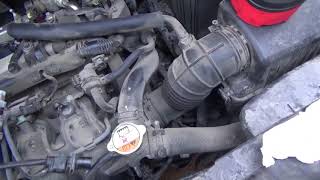
🎬 Watch: A quick overview of the most common Optima P0171 causes.Diagnostic Flowchart
Tap your situation to follow the diagnostic path that matches what you're seeing on this vehicle.
Symptoms You May Notice
- Check Engine Light is on
- Rough or unstable idle
- Hesitation or lack of power during acceleration
- Engine stalling, especially when coming to a stop
- Reduced fuel economy
- Possible hissing sound from the engine bay indicating a vacuum leak
- Engine knock or detonation (pinging) under load.
- Replacing the oxygen sensor first. The O2 sensor is often just the messenger reporting the lean condition. The root cause is usually a vacuum leak or fuel delivery issue, so diagnosing those first can save money.
Most Likely Causes

- Vacuum Leak (especially PCV hose) 🔴 High Probability The PCV (Positive Crankcase Ventilation) valve and its associated hoses are common failure points that can crack or become disconnected, introducing unmetered air into the intake. The plastic and rubber components become brittle from heat and age. A stuck-open PCV valve will also create a vacuum leak.
How to confirm: Visually inspect all vacuum hoses, especially the PCV hose running from the valve cover to the intake manifold, for cracks, brittleness, or loose connections. A smoke test is the most effective method to pinpoint less obvious leaks.
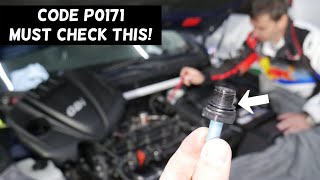
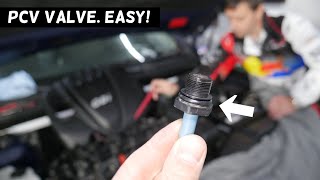
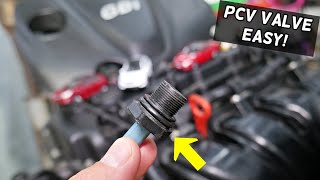
Typical fix: Replace the cracked or broken hose. The PCV valve itself is also a low-cost maintenance item 🎬 See this walkthrough on locating and replacing the PCV valve. that is often replaced at the same time.
Est. part cost: $10-$40 - ECU Software Update Required 🔴 High Probability Kia released TSB-ENG160R1 specifically for 2012-2015 Optimas, indicating that the original ECU logic could incorrectly trigger P0171, often alongside P0420. The update is designed to prevent an increase in catalyst temperature.
How to confirm: A Kia dealership or a qualified shop with access to Kia's diagnostic system (KDS) can check the vehicle's current ROM ID against the TSB to see if the update is needed.
Typical fix: The ECU must be reprogrammed with the updated software provided by Kia.
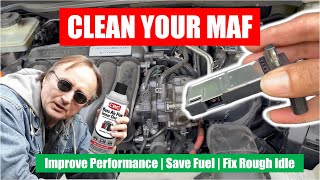
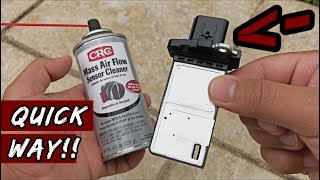
Est. part cost: $0 (if covered), or shop labor cost for reprogramming ($100-$200) - Dirty or Faulty Mass Air Flow (MAF) Sensor 🟡 Medium Probability The MAF sensor measures the amount of air entering the engine. If it's dirty from oil vapors or dust, it can provide inaccurate (low) readings to the ECU, causing the computer to command less fuel than necessary, leading to a lean mixture.
How to confirm: Remove the sensor and inspect it for dirt or contamination. It can often be cleaned using a dedicated MAF sensor cleaner. A scan tool can also be used to monitor MAF readings; with the engine off (key on), the reading should be zero. If it shows any airflow, it's faulty.
Typical fix: Clean the sensor with MAF sensor cleaner. Do not touch the delicate wires. If cleaning doesn't resolve the issue, the sensor must be replaced.
Est. part cost: $10 (cleaner) - $150 (new sensor) - Weak Fuel Pump or Clogged Fuel Filter ⚪ Low Probability A failing fuel pump or a clogged filter can't supply enough fuel to meet the engine's demand, causing a lean condition. While not a unique issue to this platform, it's a fundamental cause for P0171.
How to confirm: Perform a fuel pressure test using a fuel pressure gauge connected to the fuel rail to see if the pressure is within the manufacturer's specifications. This is a more involved diagnostic step.
Typical fix: Replace the weak fuel pump or clogged fuel filter assembly.
Est. part cost: $150-$400 - Faulty Front Oxygen (O2) Sensor ⚪ Low Probability The front O2 sensor (also called an air/fuel ratio sensor) is what detects the lean condition. While it can fail and get 'lazy' or stuck, it's more often correctly reporting a problem caused by something else like a vacuum leak.
How to confirm: Use a scan tool to monitor the O2 sensor's voltage readings. A healthy upstream sensor should fluctuate rapidly. A lazy or non-responsive sensor is a sign of failure. This should be one of the last checks after ruling out other causes.
Typical fix: Replace the Bank 1, Sensor 1 (upstream) oxygen sensor.
Est. part cost: $80-$200
Rare But Worth Checking
- Clogged Fuel Injectors: GDI (Gasoline Direct Injection) injectors can be susceptible to carbon buildup, which can restrict fuel flow and cause a lean condition on one or more cylinders.
- Exhaust Leak: An exhaust leak before the front oxygen sensor can draw in outside air, causing the sensor to incorrectly read a lean condition.
- Cracked Intake Manifold: While less common on this specific generation than older models, a crack in the plastic intake manifold can cause a significant vacuum leak and trigger a P0171 code.
Diagnosis Steps

- Check for Technical Service Bulletins (TSBs). Specifically, see if TSB-ENG160R1 applies to your vehicle's year and if the ECU update has been performed.
- Visually inspect the engine bay for any obvious vacuum leaks. Pay close attention to the PCV hose running from the valve cover to the intake manifold for cracks or disconnections.
- If no obvious leaks are found, perform a smoke test to identify hard-to-see vacuum leaks from gaskets or hidden hoses. 🎬 Watch: How to use a smoke machine to find hidden leaks.
- Remove and clean the Mass Air Flow (MAF) sensor using a dedicated MAF sensor cleaner. Do not touch the delicate sensor wires.
- Use a scan tool to check long-term fuel trim (LTFT) values. High positive values (e.g., +20% or more) confirm the ECU is adding a lot of fuel to compensate for a lean condition.
- If other steps don't identify the issue, perform a fuel pressure test to check for a weak fuel pump or clogged filter.
- As a final step, test the front (upstream) oxygen sensor using a scan tool to ensure it is functioning correctly and not stuck in a lean reading.
Parts You'll Likely Need

- PCV Valve Hose
(OEM #26720-2G751 (for 2.4L & 2.0L))— This is one of the most common sources of vacuum leaks on this platform, leading directly to a P0171 code. It often cracks at the bends.
Trusted brands: Genuine Kia/Hyundai
OEM price range: $15-$30
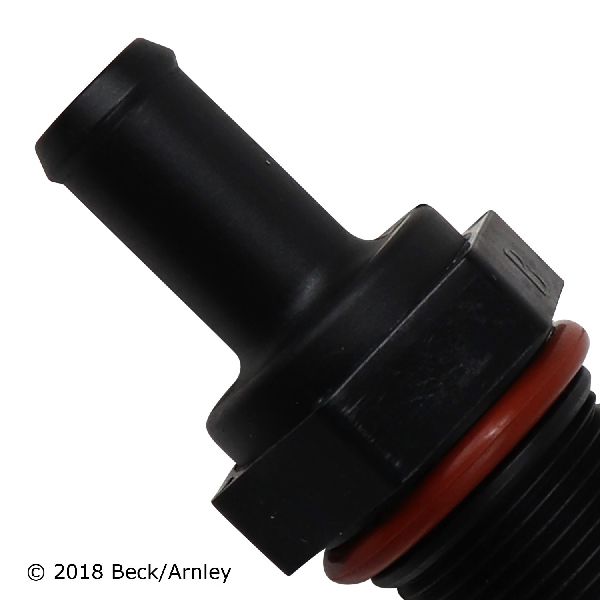
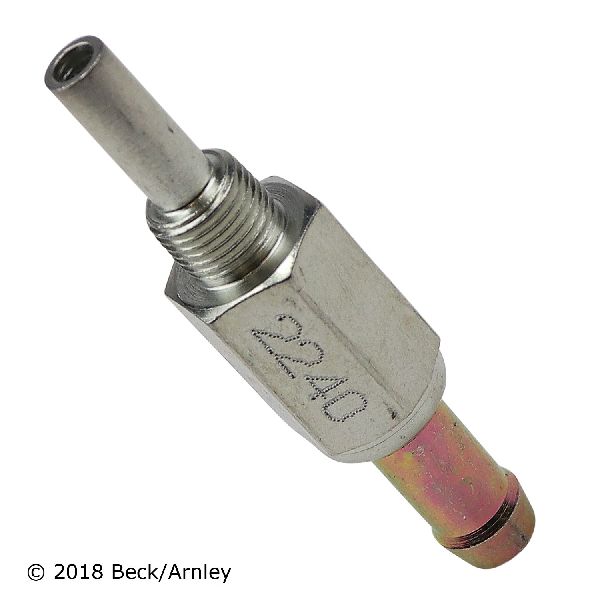
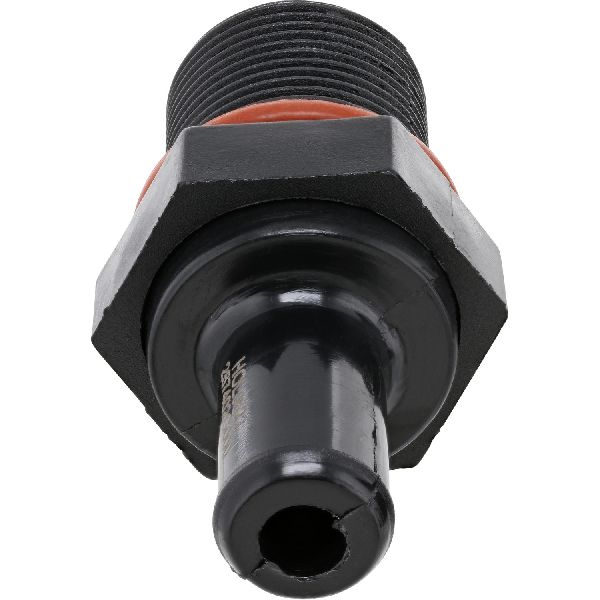
Aftermarket price range: $10-$20 - PCV Valve
(OEM #267402G000)— Often replaced with the hose as a preventative measure. A stuck-open PCV valve acts as a vacuum leak and is a known issue.
Trusted brands: Genuine Kia/Hyundai
OEM price range: $10-$25
Aftermarket price range: $5-$15 - Mass Air Flow (MAF) Sensor — If cleaning does not resolve incorrect readings, the sensor itself may have failed.
Trusted brands: Bosch, Delphi, Genuine Kia
OEM price range: $120-$200
Aftermarket price range: $60-$150
Related Codes That Often Appear With This One
- P0420 — As noted in TSB-ENG160R1, an ECU logic issue can cause both P0171 and P0420 (Catalyst System Efficiency Below Threshold) to appear together on these vehicles. A persistent lean condition can also overheat and damage the catalytic converter, legitimately triggering a P0420 code.
Technical Service Bulletins (TSBs) & Recalls
- TSB-ENG160R1: ECU UPGRADE – MIL ON WITH DTC(s) P0420/P0171
Platform-Specific Known Issues
- TSB-ENG160R1: An available ECU software update for 2012-2015 models addresses logic that can cause P0171 and P0420 codes. A dealer visit is required for this update.
- Safety Recall SC172: Affects some 2011-2014 Optimas that had engine replacements. A high-pressure fuel pipe may have been improperly installed, leading to a fuel leak. While this would typically cause a rich condition or other codes, a fuel supply issue is relevant.
- Safety Recall SC187: Affects some 2013-2014 Optimas. The low-pressure fuel tube can crack due to engine heat, causing a fuel leak. This directly impacts fuel delivery and could contribute to a lean code.
Mechanic-Grade Diagnostic Values
- Long-Term Fuel Trim (LTFT) — expected: -5% to +5% at idle and steady RPM.. Failure: Sustained positive values of +12.5% or higher will trigger the check engine light and indicate the ECU is compensating for a lean condition.
- Mass Air Flow (MAF) Sensor Reading — expected: Approximately 4 g/s at idle, 8 g/s at 1500 RPM, and 13 g/s at 2500 RPM.. Failure: A reading other than zero with the key on and engine off indicates a faulty sensor. Readings that do not increase smoothly with RPM suggest a problem.
- High-Pressure Fuel Pump (GDI) Pressure — expected: Approximately 0.5 MPa (72.5 PSI) with a flow rate of 50-80 L/h.. Failure: Pressure that is significantly below specification, especially under load, can cause a lean condition. This requires a specialized gauge to test the high-pressure side.
Wiring & Ground Locations
- 91860-2T011 — Engine ground cable for the 2.4L engine.. A poor engine ground can cause erratic sensor readings, including from the MAF and O2 sensors, which could lead the ECU to miscalculate fuel trims and set a P0171. This specific part is listed for 2012-2013 Korea-built models.
- Interior Fuse Box — Behind a removable cover on the dashboard, to the left of the steering wheel.. This panel contains fuses for critical components like the ECU and various sensors. A poor connection or blown fuse (e.g., for the O2 sensor heater) could contribute to a P0171 code.
"I Checked Everything" — The Actual Cause
- In some cases, a smoke test for vacuum leaks may come back clean, but the P0171 code persists. A potential cause is a faulty EVAP canister purge solenoid valve that is stuck closed or fails to open when commanded by the ECU. A standard smoke test checks for unmetered air leaks (valve stuck open) but does not test the valve's actuation. If the ECU commands the valve to open to draw in fuel vapors and it fails to do so, the expected change in mixture doesn't occur, which can contribute to the lean code calculation.
When the Usual Fixes Don't Work
- Owner reports on forums and Reddit indicate that P0171 on this platform can be unusually difficult to diagnose. In multiple documented cases, owners have had common causes like the purge valve, O2 sensors, and even the high-pressure fuel pump replaced without resolving the issue. These instances, where even a smoke test comes back clean, suggest that the root cause can sometimes be a more elusive problem like an intermittent wiring fault, a hairline crack in a manifold that only opens under specific thermal conditions, or a complex ECU issue not resolved by the known TSB.
Model Year Variations Within This Range
- 2014-2015: A facelift was introduced for the 2014 model year, featuring revised front and rear styling, new wheel designs, and a revised interior center stack. For the 2.4L GDI engine, power was standardized to 192 hp, whereas earlier models had both 192 hp and 200 hp variants. The 2.0L Turbo engine's power remained the same.
Helpful Videos
We Have This Part in Stock



The information in this article is provided for general reference and educational purposes only. Vehicle specifications, procedures, and part compatibility can vary by production date, trim level, and region. Always consult your vehicle's factory service manual and verify part numbers before purchasing or performing repairs. Safety-critical components such as airbags, seat belts, and braking systems should be installed by a qualified professional.
- Kia OPTIMA:
- 🎬 Helpful Videos
- 🛍️ Shop This Part
- What's Unique About the 2011-2015 Kia OPTIMA
- Diagnostic Flowchart
- Symptoms You May Notice
- Most Likely Causes
- Rare But Worth Checking
- Diagnosis Steps
- Parts You'll Likely Need
- Related Codes That Often Appear With This One
- Technical Service Bulletins (TSBs) & Recalls
- Platform-Specific Known Issues
- Mechanic-Grade Diagnostic Values
- Wiring & Ground Locations
- "I Checked Everything" — The Actual Cause
- When the Usual Fixes Don't Work
- Model Year Variations Within This Range
- 🎟️ Get 5% Off