

P0171 on 2016-2019 Infiniti QX60: System Lean Causes and Fixes
Code P0171 on a 2016-2019 QX60 is most often caused by a cracked PCV breather hose on the rear of the engine, a cheap and easy DIY fix. Other common causes are a dirty Mass Airflow (MAF) sensor or a cracked lower intake manifold on 2017 and newer models.
- Before buying any parts, physically inspect the rubber PCV hose at the back of the engine; it is the most likely culprit and is inexpensive to fix.
- As a second step, clean the Mass Airflow (MAF) sensor with dedicated cleaner. Do not use other chemicals.
- If you have a 2017 or newer model and the simple fixes don't work, suspect a cracked lower intake manifold and have a smoke test performed.
- Avoid replacing the expensive Air/Fuel Ratio (O2) sensors unless all potential vacuum leaks have been definitively ruled out.
What's Unique About the 2016-2019 Infiniti QX60

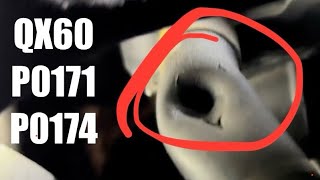
The 2016-2019 QX60 spans two versions of the 3.5L V6: the VQ35DE (2016) and the direct-injected VQ35DD (2017-2019). While many lean code causes are universal, this platform has specific, well-documented failure points. A small, inexpensive rubber PCV hose at the back of the engine is notoriously prone to cracking, creating a vacuum leak that is a top cause for P0171. 🎬 Watch this quick guide to fixing the common PCV hose leak. Additionally, the 2017 and newer models with the VQ35DD engine can suffer from cracked lower intake manifolds, a more involved but known issue leading to these codes, sometimes accompanied by a specific Nissan TSB for cold start misfires.
Diagnostic Flowchart

Tap your situation to follow the diagnostic path that matches what you're seeing on this vehicle.
Symptoms You May Notice
- Check Engine Light is on
- Rough or unstable idle
- Hesitation or stumbling during acceleration
- Reduced engine power
- Poor fuel economy
- Hissing noise from the engine bay due to a vacuum leak
- Replacing the Bank 1 Air/Fuel Ratio (O2) sensor without first thoroughly checking for vacuum leaks. Vacuum leaks, especially from the PCV hose, are far more common on this vehicle and produce the exact same code. Infiniti TSB ITB19-007 was created to address this specific misdiagnosis.
Most Likely Causes


- Cracked Rear PCV Breather Hose 🔴 High Probability This specific rubber hose is located in a high-heat area at the back of the engine, connecting to the rear (Bank 1) valve cover. It becomes brittle and cracks over time, creating a significant vacuum leak that affects one or both banks. This is a widely reported failure on this platform and its Nissan Pathfinder sibling.
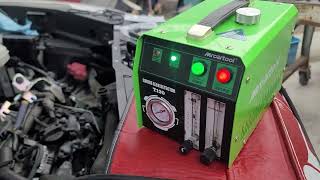
How to confirm: The hose is on the rear valve cover, often hidden. You can feel for the crack or hole with your hand, as it's often a large tear. A smoke test will definitively show a large volume of smoke billowing from the rear of the engine if this hose has failed. Some owners find the leak by hand after watching videos of the common failure.
Typical fix: Replace the hose. It is held on by two spring clamps and can typically be replaced without removing other components, though access is tight. Some owners use a 3/8" or 3/16" fuel line hose as a temporary or permanent substitute.
Est. part cost: $15-$30 - Dirty Mass Airflow (MAF) Sensor 🔴 High Probability The MAF sensor measures the air entering the engine. Oil from aftermarket air filters, or fine dust from an ill-fitting or low-quality air filter, can coat the sensor's delicate wire, causing it to under-report airflow. The ECM then injects too little fuel, creating a lean condition.
How to confirm: This is often diagnosed by cleaning the sensor as a first step. If symptoms improve or the code disappears after cleaning, the dirty sensor was the cause. A faulty MAF can also be diagnosed by monitoring its g/s reading at idle; it should be approximately equal to the engine's displacement in liters (e.g., ~3.5 g/s for a 3.5L engine at warm idle).
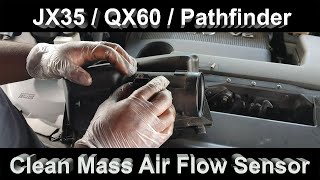
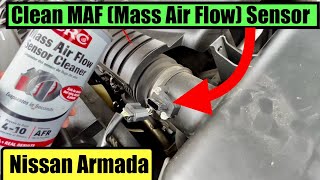
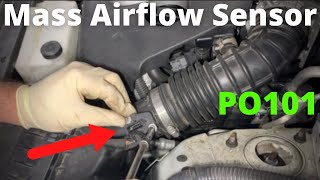
Typical fix: Clean the MAF sensor using only dedicated MAF sensor cleaner. 🎬 See how to safely clean or replace your MAF sensor. Do not touch the internal wires. If cleaning doesn't work, the sensor may need to be replaced. An OEM Hitachi sensor is recommended as some aftermarket sensors can cause issues.
Est. part cost: $10-$15 for cleaner, $140-$220 for a new sensor - Cracked Lower Intake Manifold 🟡 Medium Probability On 2017+ models with the VQ35DD engine, the plastic lower intake manifold has been known to develop hairline cracks, causing unmetered air to enter the cylinders. Nissan issued a TSB (NTB22-001) for the related Pathfinder with the same engine that links cold start misfires (P0300) to a faulty intake manifold requiring replacement. This is a known weak point.
How to confirm: A smoke test is the most effective way to confirm a leak from the intake manifold body or its gaskets. The leak may be hard to see otherwise. Sometimes a hissing or whistling noise is audible.
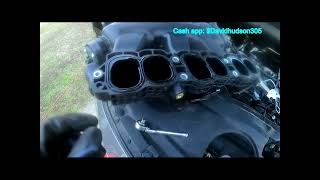
Typical fix: The lower intake manifold must be replaced. This is a more labor-intensive job that involves removing the upper intake plenum. 🎬 Watch a walkthrough of the intake manifold and gasket replacement. The OEM part number is 14003-6KA0A.
Est. part cost: $100-$175 (used), $260-$450 (new OEM) - Leaking Intake Manifold Gaskets ⚪ Low Probability The gaskets sealing the intake manifold to the cylinder heads can fail over time, causing a vacuum leak. This is less common than the cracked PCV hose but still a possibility, especially on higher mileage vehicles.
How to confirm: A smoke test will show smoke leaking from the gasket area. Another method is to carefully spray brake cleaner or unlit propane near the gasket mating surfaces with the engine running; a change in idle RPM indicates a leak.
Typical fix: Replace the upper and lower intake manifold gaskets.
Est. part cost: $40-$80
Rare But Worth Checking
- Faulty Air/Fuel Ratio Sensor (Upstream O2 Sensor): A failing sensor can send a false 'lean' signal. However, Infiniti issued TSB ITB19-007 with a revised diagnostic procedure specifically to prevent unnecessary replacement of this part. The procedure involves clearing self-learning values and running the engine at specific RPMs to test the A/F sensors. Always rule out vacuum leaks and MAF issues first.
- Weak Fuel Pump or Clogged Fuel Injectors: A lack of fuel pressure or clogged injectors can prevent enough fuel from reaching the engine. This is less common than air leaks but should be considered if all else fails. Diagnosis requires a fuel pressure test. One owner on a forum found a failing low-pressure fuel pump was the ultimate cause of their persistent lean codes.
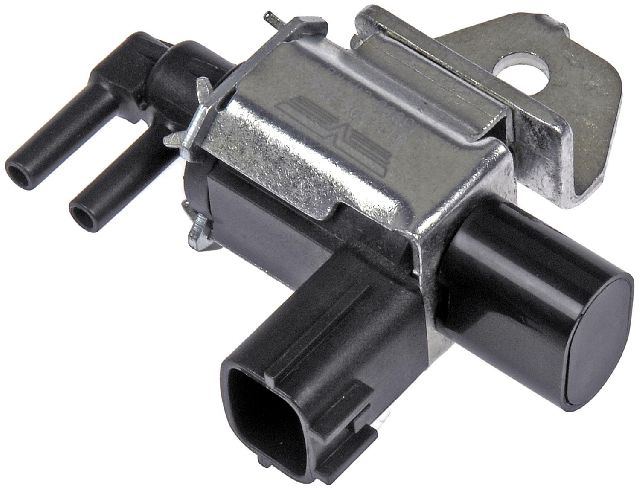
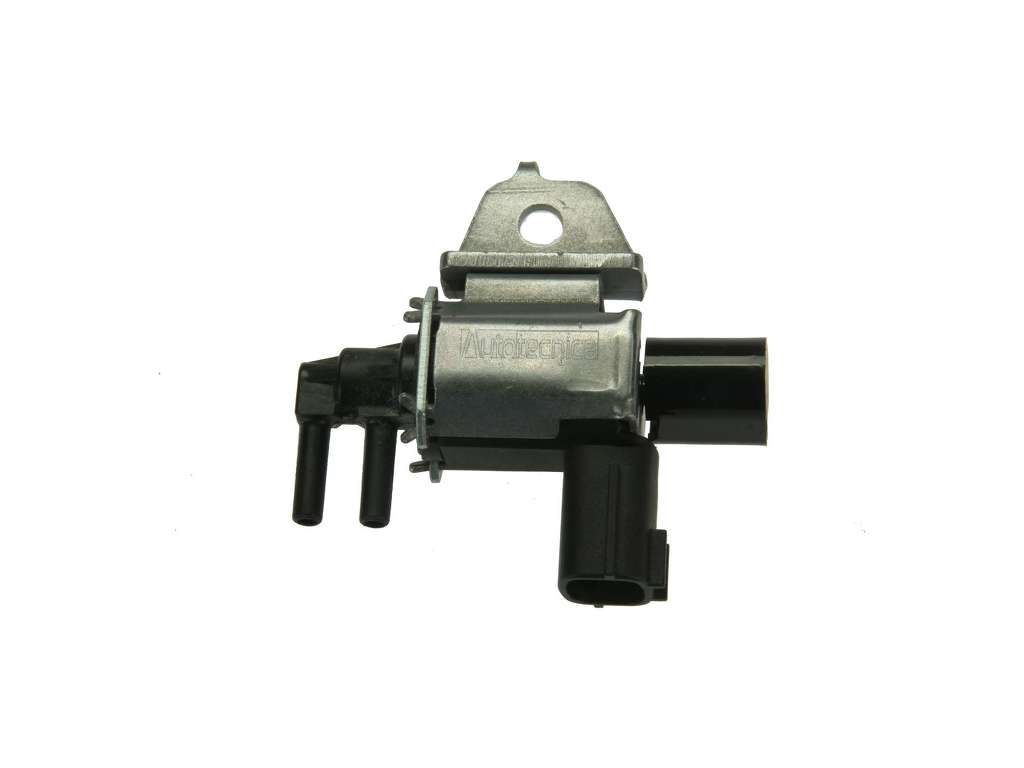
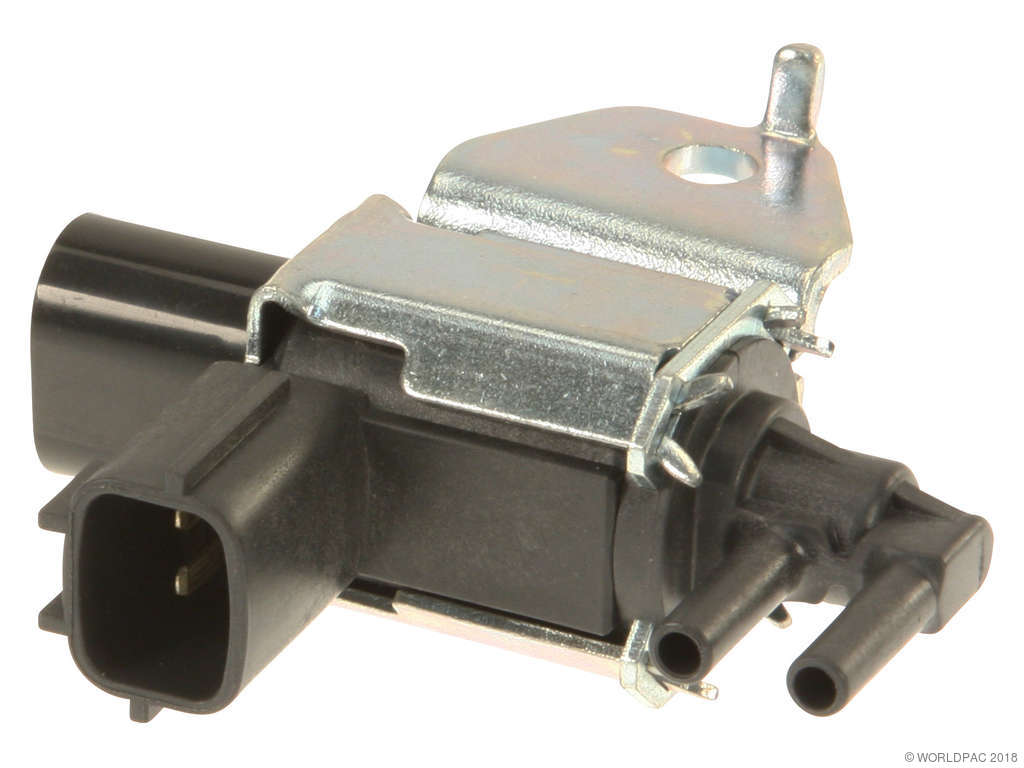
- Leaking EVAP Purge Valve: A purge valve that is stuck open can create a vacuum leak, introducing unmetered fuel vapors into the intake manifold at the wrong time. One owner on a Reddit forum replaced this as part of their troubleshooting for P0171/P0174.
Diagnosis Steps
- Read the code with an OBD-II scanner and check for any other accompanying codes like P0174 or P0300. Note the freeze frame data, paying attention to long-term fuel trims (LTFT). Values over +15% indicate a significant lean condition.
- Visually and physically inspect the PCV breather hose on the rear valve cover. It is often hidden but can be reached. Feel for cracks, splits, or soft, oily spots. This is the most common culprit.
- Remove and clean the Mass Airflow (MAF) sensor using only dedicated MAF sensor cleaner. Let it dry completely before reinstalling. Inspect the air filter and filter housing for proper fitment to prevent dirty air from bypassing the filter.
- If the code persists, perform a smoke test to check for vacuum leaks. Introduce smoke into the intake system and look for leaks from the intake manifold, gaskets, and other vacuum lines.
- For 2017-2019 models, pay close attention to the lower intake manifold during the smoke test, as it is a known failure point.
- If no vacuum leaks are found, follow the diagnostic procedure in TSB ITB19-007, which involves clearing self-learning values and running the engine at specific RPMs to properly test the A/F sensors before considering replacement.
- Check fuel pressure at the fuel rail to rule out a weak fuel pump or clogged filter. For the 2016 VQ35DE, pressure should be approximately 51 PSI at idle.
- As a final step, test the functionality of the Bank 1 Air/Fuel Ratio sensor per the TSB and service manual procedures.
Parts You'll Likely Need
- PCV Breather Hose (Rear)
(OEM #11826-JA10B)— This is the most common failure point for a P0171 code on this specific vehicle due to heat degradation. It is a shared part across many Nissan/Infiniti V6 models.
Trusted brands: Infiniti (OEM)
OEM price range: $15-$30
Aftermarket price range: $10-$20 - Mass Air Flow Sensor Cleaner — Often, the MAF sensor is just dirty, not broken. Cleaning it is a cheap and effective first diagnostic step.
Trusted brands: CRC, Liqui Moly
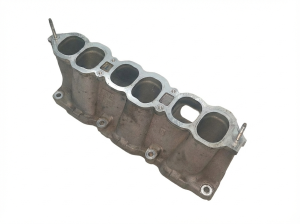
Aftermarket price range: $10-$15 - Lower Intake Manifold
(OEM #14003-6KA0A)— A known failure point on 2017+ models with the VQ35DD engine that causes persistent lean codes and misfires.
Trusted brands: Nissan (OEM)
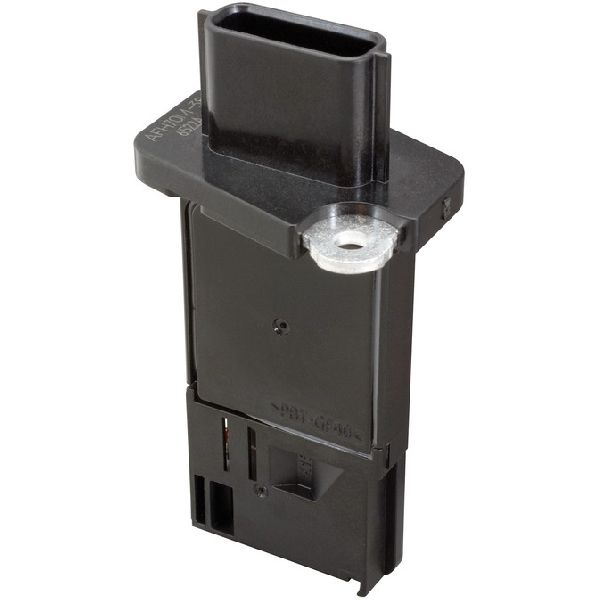
OEM price range: $260-$450 - Mass Air Flow Sensor
(OEM #22680-5RB0A)— If cleaning the sensor does not resolve the issue, it may need replacement. This part number is for 2017+ VQ35DD models and supersedes 22680-bv80b. The 2016 VQ35DE uses a different sensor.
Trusted brands: Hitachi (OEM), Denso
OEM price range: $140-$220
Aftermarket price range: $70-$150
Related Codes That Often Appear With This One
- P0174 — This is the 'System Too Lean' code for Bank 2 (the front bank). A large vacuum leak, such as from the intake manifold or the common rear PCV breather hose, will affect both sides of the engine and set both codes together.
- P0300 — This code means 'Random/Multiple Cylinder Misfire'. A severe lean condition can prevent proper combustion, leading to misfires across one or more cylinders. This is often seen in conjunction with a bad intake manifold on VQ35DD engines.
Technical Service Bulletins (TSBs) & Recalls
- ITB19-007: Titled 'INFINITI; P0171 AND P0174 SERVICE INFORMATION', this TSB provides a revised diagnostic flowchart for 2017-2019 models. It aims to prevent the unnecessary replacement of Air/Fuel sensors by having technicians first perform a specific engine run procedure to confirm if the sensor is truly faulty.
- ITB19-010: Applies to 2016-2018 QX60 with the VQ35DE engine for codes P2097, P2099, P0171, and/or P0174. This bulletin was also mentioned in the initial NHTSA data.
- NTB22-001 (Nissan TSB): While for the Nissan Pathfinder, this TSB is highly relevant as it addresses cold start misfires (P0300-P0306) on the shared VQ35DD engine by replacing the lower intake manifold, a known cause for lean codes P0171/P0174 as well.
Platform-Specific Known Issues
- A cracked rear PCV breather hose (11826-JA10B) is a very frequent cause of P0171 and/or P0174. A YouTube video shows a mechanic finding this exact issue with a smoke machine.
- The lower intake manifold on 2017-2019 models with the VQ35DD engine is prone to cracking, causing lean codes and cold start misfires (P0300), as documented in Nissan TSB NTB22-001 for the Pathfinder.
- Unnecessary replacement of A/F sensors is common enough that Infiniti released TSB ITB19-007 to guide technicians through a more robust diagnostic process to confirm a vacuum leak or MAF issue first.
Mechanic-Grade Diagnostic Values
- Low-Pressure Fuel System Pressure (VQ35DE) — expected: Approximately 51 PSI (350 kPa) at idle.. Failure: Pressure significantly below 51 PSI indicates a weak fuel pump or clogged filter. Pressure should not drop below 30 PSI for 30 minutes after engine off.
- Air/Fuel Ratio Sensor Voltage (Upstream O2) — expected: Signal fluctuates around a center point of ~1.5V - 2.2V. Key-on-engine-off reference voltage may be ~2.2V.. Failure: Unlike traditional O2 sensors, a voltage significantly HIGHER than the center point indicates a LEAN condition. A lower voltage indicates a RICH condition. A sensor with a fixed or slow-to-respond voltage is likely faulty.
- Long-Term Fuel Trim (LTFT) + Short-Term Fuel Trim (STFT) — expected: Should be within +/- 10% combined.. Failure: Sustained positive values above +15% to +25% confirm the ECM is compensating for a significant lean condition.
- Mass Air Flow (MAF) Sensor Reading at Idle — expected: Approximately 3.0 g/s to 6.5 g/s for a 3.5L engine at warm idle with no load.. Failure: A reading significantly lower than expected can indicate a vacuum leak (air entering after the MAF). A reading that is unstable or doesn't increase smoothly with RPM can indicate a faulty sensor.
- Nissan CONSULT 'A/F Alpha' PID — expected: Should be at or near 100% at idle on a healthy, warmed-up engine.. Failure: Values consistently above 100% (e.g., 115%, 125%) indicate the ECM is adding fuel to correct a lean condition. This is Nissan's equivalent of positive fuel trims.
Scan Tool Commands That Help
- Infiniti CONSULT-III plus: Clear Mixture Ratio Self-Learning Value — This is the first step in the diagnostic procedure outlined in TSB ITB19-007. It must be performed before testing the A/F sensors to ensure the test results are not skewed by old learned values.
- Infiniti CONSULT-III plus: A/F Sensor Test (DTC Confirmation Procedure) — After clearing self-learning, this specific test cycle (holding RPMs at 3500-4000, then 2500-3000) is used to definitively confirm if an A/F sensor is faulty. If the test completes without setting a post-catalyst fuel trim code (like P2096/P2097), the A/F sensor is considered good, and the lean issue is elsewhere. This prevents unnecessary sensor replacement.
- Scan Tool (Generic or CONSULT): Idle Air Volume Learn — This procedure is often required after replacing or cleaning the throttle body, or after clearing the ECM's self-learning memory. If not performed, the vehicle may have an unstable or incorrect idle speed.
Wiring & Ground Locations
- E15 & E9 — Located at the left rear of the engine compartment.. These are primary ground points for the Engine Control Module (ECM) and the shields for the Air/Fuel Ratio sensors. A poor ground here can cause erratic sensor readings and incorrect ECM calculations, potentially leading to false lean codes.
- Negative Battery Cable — Connects the negative battery terminal to the vehicle chassis and/or engine block.. This is the master ground for the entire electrical system. Corrosion or a loose connection here can create system-wide low voltage and erratic behavior from sensors and the ECM, leading to a variety of hard-to-diagnose codes, including P0171.
- MAF Sensor Connector — On the air intake duct, between the air filter box and the throttle body.. This 6-pin connector provides power, ground, and signal lines for the MAF sensor. Damage to these wires or corrosion in the connector can cause an incorrect MAF signal, which is a direct cause of lean or rich conditions.
Real Owner Repair Stories
- YouTube user 'Alex Autos' (2015 Infiniti QX60 3.5L (VQ35DE)) — P0171 and P0174 codes with fuel trims near +30%.
❌ Tried (didn't work) Revving the engine did not significantly improve the fuel trims, which can sometimes rule out a simple vacuum leak.
✅ What actually fixed it The common cracked PCV breather hose at the rear of the engine was the cause. The owner replaced it with a 3/16" fuel line hose, which resolved the codes. - Reddit user 'Specific-Tower8990' (2017 Infiniti QX60) — P0171, P0174, and P0300 (misfire) codes appeared after replacing spark plugs and coils.
❌ Tried (didn't work) A professional smoke test was negative (no leaks found). Cleaning the MAF sensor did not help. Replacing the MAF sensor also did not help.
✅ What actually fixed it It was a combination of issues. The final resolution involved replacing a leaking EVAP Purge Valve and discovering that dirt in the spark plug holes had prevented the new plugs from seating properly, creating a leak. Even after these fixes, the owner was still chasing a remaining issue suspected to be the brake booster hose. - YouTube user 'Garage Topics' (Nissan Frontier with related VQ-series engine) — P0171 and P0174 codes.
❌ Tried (didn't work) Initial checks of the main intake boot and MAF sensor did not reveal the problem.
✅ What actually fixed it The vehicle had an aftermarket oil catch can installed. A hose connected to this can, as part of the PCV system, had cracked and was causing a large vacuum leak. Replacing the cracked hose fixed the lean codes.
"I Checked Everything" — The Actual Cause
- In one documented case, a 2017 QX60 passed a professional smoke test, but the P0171/P0174 codes persisted. The owner eventually found the cause to be a faulty EVAP Purge Valve that was stuck partially open. This is a type of vacuum leak, but it may not be detected by a standard intake smoke test if the EVAP system is not specifically isolated and tested.
- Another cause that will not be found by a smoke test is a fuel delivery problem. Clogged fuel injectors or a weak low-pressure fuel pump will create a lean condition without any air leaks. If a smoke test is clean, testing fuel pressure is a critical next step.
OEM Part Supersession History
22680-BV80B→22680-5RB0A— Standard part revision/update by the manufacturer.
Heads up: This MAF sensor is for the 2017-2019 QX60 with the VQ35DD engine. It is not compatible with the 2016 model's VQ35DE engine.Unknown→22675-JA10B— Standard part revision for the fuel pressure damper/regulator.
Heads up: This part is for the low-pressure fuel rail on the VQ35DE engine.
Model Year Variations Within This Range
- 2016 only: Uses the port-injected VQ35DE engine. The fuel system is a single, low-pressure design operating around 51 PSI. It uses a different MAF sensor and intake manifold design than the 2017+ models.
- 2017-2019: Uses the direct-injected VQ35DD engine. This system has both a low-pressure in-tank fuel pump and a high-pressure, engine-driven fuel pump (HPFP). These models are known to be susceptible to cracked lower intake manifolds and have a specific TSB (ITB20-011) related to the MAF sensor that may require an ECM reprogram.
Helpful Videos
Used OEM Parts in Stock


New Aftermarket Parts Available


The information in this article is provided for general reference and educational purposes only. Vehicle specifications, procedures, and part compatibility can vary by production date, trim level, and region. Always consult your vehicle's factory service manual and verify part numbers before purchasing or performing repairs. Safety-critical components such as airbags, seat belts, and braking systems should be installed by a qualified professional.
- Infiniti QX60:
- 🎬 Helpful Videos
- 🛍️ Shop This Part
- What's Unique About the 2016-2019 Infiniti QX60
- Diagnostic Flowchart
- Symptoms You May Notice
- Most Likely Causes
- Rare But Worth Checking
- Diagnosis Steps
- Parts You'll Likely Need
- Related Codes That Often Appear With This One
- Technical Service Bulletins (TSBs) & Recalls
- Platform-Specific Known Issues
- Mechanic-Grade Diagnostic Values
- Scan Tool Commands That Help
- Wiring & Ground Locations
- Real Owner Repair Stories
- "I Checked Everything" — The Actual Cause
- OEM Part Supersession History
- Model Year Variations Within This Range
- 🎟️ Get 5% Off