

Infiniti Q50 P0171 Code (2016-2019): System Too Lean Causes and Fixes
For a 2016-2019 Infiniti Q50, code P0171 is most often caused by a dirty Mass Airflow (MAF) sensor or a cracked/leaking air intake boot. Start by cleaning the MAF sensor(s) and thoroughly inspecting the intake tubing for cracks, especially in the flexible sections, before replacing any parts. If both P0171 and P0174 are present, the issue is common to both banks.
- Start your diagnosis by cleaning the MAF sensor(s) and inspecting the air intake boots for cracks. These are the most common and cheapest fixes.
- If you have a V6 engine, check if code P0174 (Bank 2) is also present. If so, focus on issues that affect both banks, like a vacuum leak post-throttle bodies or a fuel delivery problem.
- Do not immediately replace the Air/Fuel (O2) sensor. It is often correctly reporting a problem elsewhere. Follow the diagnostic steps outlined in TSB ITB19-007 if possible.
- A hissing noise from the engine bay is a strong clue that you have a vacuum leak.
What's Unique About the 2016-2019 Infiniti Q50

The 2016-2019 Q50 primarily uses a 3.0L twin-turbo V6 (VR30DDTT) engine which features a dual-intake design with two Mass Airflow (MAF) sensors and two throttle bodies—one for each engine bank. This makes it crucial to determine if the lean code is on one bank (P0171) or both (P0171 & P0174), as a single-bank code points to an issue specific to that side, like a torn intake boot or a dirty MAF sensor for that bank. If both codes are present, the cause is likely a component shared by both banks, like a vacuum leak post-throttle bodies or a fuel delivery problem. Infiniti has also issued a specific service bulletin (ITB19-007) that revises the diagnostic procedure for this exact code, emphasizing testing the Air/Fuel sensor's function before replacing it to avoid misdiagnosis.
Diagnostic Flowchart

Tap your situation to follow the diagnostic path that matches what you're seeing on this vehicle.
Symptoms You May Notice
- Check Engine Light is on
- Rough idle or stalling
- Hesitation or stumbling during acceleration
- Reduced engine power or sluggish feeling
- Poor fuel economy
- A hissing sound from the engine bay, indicating a vacuum leak
- Engine RPMs fluctuating at idle
- Replacing the Air/Fuel (O2) sensor without first checking for vacuum leaks or cleaning the MAF sensors. The O2 sensor is often just doing its job by reporting the lean condition. The Infiniti TSB ITB19-007 specifically provides a test to run before condemning the sensor.
Most Likely Causes


- Vacuum Leak (Cracked Intake Boot or Hoses) 🔴 High Probability The rubber or plastic intake boots that connect the air filters and MAF sensors to the throttle bodies can become brittle and crack over time, allowing unmetered air to enter the engine. This is a very common failure point discussed frequently by owners.
How to confirm: Visually inspect all intake ducting for cracks, especially in the flexible, ribbed sections. Check that all clamps are tight. A smoke test is the most effective way to find hidden leaks 🎬 See how to perform a smoke test for vacuum leaks. in the intake or vacuum lines. Owners often find cracks on the underside of the boot, making a thorough physical inspection necessary.
Typical fix: Replace the cracked or torn intake boot or vacuum hose. Ensure all connections are secure. The OEM part numbers for the intake ducts are often specific to the left or right bank.
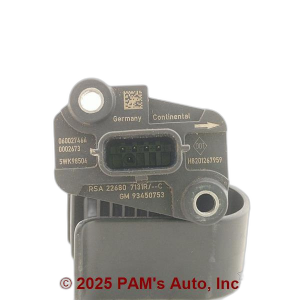
Est. part cost: $50-$150 per intake boot. - Dirty Mass Airflow (MAF) Sensor(s) 🔴 High Probability The MAF sensors measure the air entering the engine. Oil from aftermarket air filters or general contamination can cause inaccurate readings, leading the ECM to miscalculate the fuel mixture. The dual-intake on the V6 means there are two to check. Swapping the sensors between Bank 1 and Bank 2 can help diagnose if one is faulty; if the code switches to P0174, the sensor is bad.
How to confirm: Remove the sensor(s) located on the intake tract after the air filter boxes. Visually inspect for dirt or debris on the sensor wires. Cleaning them is a common first step.
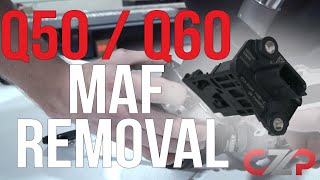
Typical fix: Clean the MAF sensor(s) with a dedicated MAF sensor cleaner spray. 🎬 Watch: A quick guide to cleaning your Q50's MAF sensors. Do not touch the delicate sensor wires. If cleaning doesn't work, the sensor may need to be replaced.
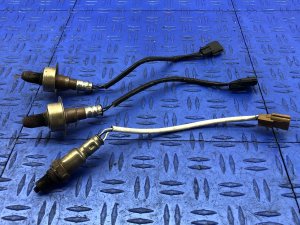
Est. part cost: $10-$15 for cleaner, $150-$300 per sensor if replacement is needed. - Faulty Air/Fuel Ratio (Oxygen) Sensor 🟡 Medium Probability While the A/F sensor (the upstream O2 sensor) can fail, it often correctly reports the lean condition caused by another issue. Misdiagnosing and replacing the sensor is common, which is why Infiniti issued a TSB to prevent this.
How to confirm: Follow the diagnostic procedure in Infiniti TSB ITB19-007. This involves clearing self-learning values, running the engine at 3,500-4,000 RPM for one minute, idling for one minute, and then holding 2,500-3,000 RPM for 20 minutes. If a code like P2096 appears, the sensor is faulty. If no code appears, the sensor is likely good and reporting a different issue.
Typical fix: If the sensor is confirmed to be faulty after checking for leaks and MAF issues, replace the Bank 1 Air/Fuel Ratio Sensor. The OEM part number is 22693-5CA0A.
Est. part cost: $100-$250 - Low Fuel Pressure ⚪ Low Probability A weak fuel pump or a clogged fuel filter can starve the engine of fuel, causing a lean condition across both banks (P0171 and P0174).
How to confirm: Connect a fuel pressure gauge to the fuel system and verify the pressure is within the manufacturer's specifications. The VR30DDTT has both a low-pressure feed line and a high-pressure direct injection system; both may need to be checked. This issue typically affects both banks simultaneously.
Typical fix: Replace the failing fuel pump or clogged fuel filter.
Est. part cost: $20-$50 for a filter, $300-$700+ for a fuel pump assembly.
Rare But Worth Checking
- Exhaust Leak: A leak in the exhaust manifold or pipe before the Bank 1 A/F sensor can draw in outside air, making the sensor incorrectly report a lean condition.
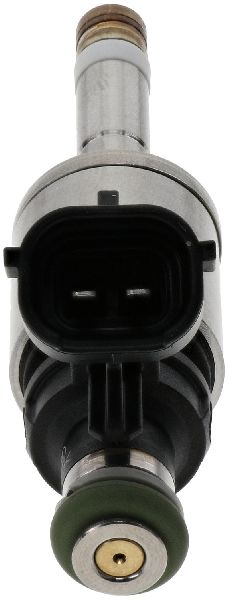
- Clogged Fuel Injector(s): If a fuel injector on Bank 1 is clogged, it will deliver less fuel to its cylinder, contributing to a lean mixture on that bank. This is less common but possible, especially on higher mileage vehicles.
- Improperly Installed Aftermarket Air Intakes: Installing aftermarket cold air intakes can sometimes trigger P0171/P0174 if not installed perfectly sealed, or if the design alters airflow characteristics so much that a tune is required to compensate.
Diagnosis Steps
- Read the trouble codes with an OBD-II scanner and check for any other codes, especially P0174. Note if the codes appeared after a recent modification like installing an aftermarket air intake.
- Visually inspect the entire air intake system, from the air filters to the throttle bodies. Pay close attention to the flexible rubber boots for cracks or loose clamps, checking the underside carefully.
- Inspect all accessible vacuum hoses and the PCV hose connections for cracks or disconnection.
- Remove and clean both MAF sensors using a dedicated MAF sensor cleaner. Allow them to dry completely before reinstalling. Consider swapping the MAF sensors between banks to see if the code follows the sensor (changes to P0174).
- With a scan tool, monitor long-term and short-term fuel trims. High positive values (e.g., >15-20%) confirm a lean condition. If trims are high at idle but decrease as RPMs increase, a vacuum leak is the most likely cause.
- If a vacuum leak is suspected, perform a smoke test to pinpoint the source.
- If no vacuum leaks are found and MAF cleaning did not help, follow the diagnostic procedure in TSB ITB19-007 to verify the functionality of the Bank 1 A/F sensor. This involves a specific run cycle to see if a secondary code (like P2096) is triggered.
- If other steps fail to identify the issue, test the fuel pressure to check for a weak fuel pump or clogged filter. The VR30DDTT engine has both low and high pressure fuel systems to consider.
Parts You'll Likely Need
- Mass Airflow (MAF) Sensor Cleaner — This is the cheapest and easiest first step. Often, a dirty MAF sensor is the sole cause of the P0171 code.
Trusted brands: CRC, Liqui Moly
Aftermarket price range: $10-$15 - Intake Air Duct / Boot
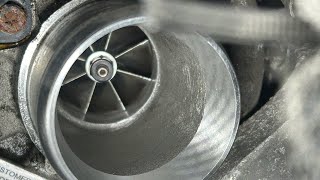
(OEM #e.g., 16576-5CA0A (Bank 2/Left), 16576-5CA1A (Bank 1/Right) - verify with VIN)🎬 Watch this walkthrough on removing the intake and turbo inlets. — The rubber boots are known to crack with age and heat, creating vacuum leaks that are a primary cause of lean codes.
Trusted brands: Infiniti OE, Z1 Motorsports
OEM price range: $70-$150
Aftermarket price range: $40-$100 - Air/Fuel Ratio Sensor (Bank 1, Sensor 1)
(OEM #22693-5CA0A)— If confirmed faulty via proper diagnostics (per TSB ITB19-007), this sensor is the next most likely part to be replaced.
Trusted brands: Denso, Bosch, NTK
OEM price range: $120-$170
Aftermarket price range: $100-$180
Related Codes That Often Appear With This One
- P0174 — System Too Lean (Bank 2). If both P0171 and P0174 are present, it strongly indicates a problem common to both engine banks, such as a major vacuum leak on the intake manifold, low fuel pressure, or an issue with the PCV system.
- P0101 — Mass Air Flow (MAF) Circuit Range/Performance. This code directly points to a problem with the MAF sensor, which is a primary cause of P0171.
Technical Service Bulletins (TSBs) & Recalls
- ITB19-007: Revises the service diagnosis for DTCs P0171 (FUEL SYS LEAN B1) and P0174 (FUEL SYS LEAN B2). It instructs technicians to perform
Platform-Specific Known Issues
- Infiniti released Technical Service Bulletin ITB19-007, which provides a revised diagnostic procedure for P0171 and P0174 codes on 2017-2019 models. It advises testing the A/F sensor's function before replacing it to prevent unnecessary repairs.
- The dual-intake boots for the VR30DDTT engine are a very common failure point, frequently cracking and causing lean codes. Owners on forums often report this as the first place to look.
Mechanic-Grade Diagnostic Values
- Long Term and Short Term Fuel Trims (LTFT/STFT) — expected: Close to 0% at idle and under steady load.. Failure: Sustained positive values greater than +15% to +20% confirm the ECM is adding significant fuel to compensate for a lean condition.
- MAF Sensor Live Data (g/s) — expected: At idle, a 3.0L engine should read approximately 3.0-5.0 g/s. The reading should increase smoothly with RPM.. Failure: Readings that are erratically low, high, or don't correspond to engine RPM. Comparing the g/s readings between Bank 1 and Bank 2 MAF sensors can reveal a discrepancy if one is faulty.
- High-Pressure Fuel System (Direct Injection) — expected: The VR30DDTT high-pressure fuel system can operate at pressures up to 200 bar (approx. 2900 PSI) under load.. Failure: Pressure that is significantly below target values requested by the ECM, which can indicate a failing High-Pressure Fuel Pump (HPFP). The OEM high-pressure fuel sensor is a known failure point.
Scan Tool Commands That Help
- Infiniti CONSULT or advanced bidirectional scanner: A/F TC and A/F Learning — Used to view the short-term (A/F TC) and long-term (A/F Learning) fuel trim values. This is the primary data for confirming a lean condition.
- Infiniti CONSULT or advanced bidirectional scanner: Self-Learning Control Reset — This function should be performed after replacing a component like a MAF sensor, A/F sensor, or fixing a vacuum leak. It clears the learned fuel trim adjustments, forcing the ECM to relearn the fuel strategy with the new/repaired parts.
- Infiniti CONSULT or advanced bidirectional scanner: EVAP Purge Volume Control Valve Test — This allows the technician to command the EVAP purge solenoid open and closed to test its function. A solenoid stuck open can cause a lean code that is difficult to find with a smoke test.
Wiring & Ground Locations
- Engine Ground Straps — Key ground points connect the engine block to the vehicle chassis. On the VQ/VR engines, these are typically found on both sides of the engine, bolting to the frame rails or shock towers.. A corroded or loose engine ground strap can cause erratic voltage signals for critical sensors like the MAF and A/F sensors, leading to incorrect readings and lean codes.
- E135, E137 — Located at the left rear of the engine compartment.. These are ground points for the ECM and the shield for the Bank 1 and Bank 2 Air/Fuel ratio sensors. A poor connection here could introduce electrical noise and cause faulty sensor readings.
Real Owner Repair Stories
- Reddit user in r/q50 (2018 Infiniti Q50 Luxe with Stillen cold air intakes) — P0171 code, jerking motion
❌ Tried (didn't work) Mechanic tested O2 sensors, Confirmed fuel pump is fine, Cleaned throttle bodies, Confirmed MAF sensors are good, Cleaned air intakes, Performed a leak test which found no leaks
✅ What actually fixed it The consensus from other owners was that aftermarket intakes on this platform often require an ECU tune to adjust for the change in airflow. The final resolution suggested was to either reinstall the stock intakes until a tune could be performed or get the car tuned for the new intakes.
"I Checked Everything" — The Actual Cause
- A common cause for a lean code when a smoke test shows no leaks is a faulty EVAP (Evaporative Emission) purge control solenoid/valve. If the valve sticks open, it creates a vacuum leak by constantly allowing fuel vapors from the charcoal canister to enter the intake manifold. This is unmetered air that the ECM doesn't see, causing fuel trims to rise and triggering P0171/P0174. This leak is often not detected by a standard smoke test of the intake tract.
OEM Part Supersession History
14930-JK20B / 14930-JK20C→14930-4GD0B— Updated design for the EVAP Canister Purge Valve.
Model Year Variations Within This Range
- 2018-2019: The 2018 model year marked a refresh for the Q50. For the 3.0t engine, sources indicate the turbochargers were revised with improved seals compared to the 2016-2017 models. While this doesn't directly cause a P0171 code, it's a notable mechanical change within the generation. The engine block and core components remained interchangeable.
Helpful Videos
Used OEM Parts in Stock

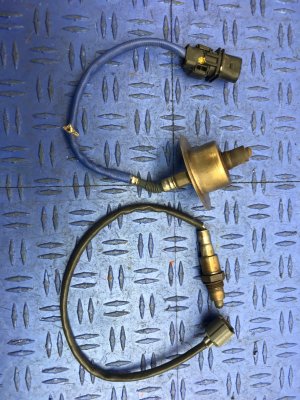
New Aftermarket Parts Available


The information in this article is provided for general reference and educational purposes only. Vehicle specifications, procedures, and part compatibility can vary by production date, trim level, and region. Always consult your vehicle's factory service manual and verify part numbers before purchasing or performing repairs. Safety-critical components such as airbags, seat belts, and braking systems should be installed by a qualified professional.
- Infiniti Q50:
- 🎬 Helpful Videos
- 🛍️ Shop This Part
- What's Unique About the 2016-2019 Infiniti Q50
- Diagnostic Flowchart
- Symptoms You May Notice
- Most Likely Causes
- Rare But Worth Checking
- Diagnosis Steps
- Parts You'll Likely Need
- Related Codes That Often Appear With This One
- Technical Service Bulletins (TSBs) & Recalls
- Platform-Specific Known Issues
- Mechanic-Grade Diagnostic Values
- Scan Tool Commands That Help
- Wiring & Ground Locations
- Real Owner Repair Stories
- "I Checked Everything" — The Actual Cause
- OEM Part Supersession History
- Model Year Variations Within This Range
- 🎟️ Get 5% Off