

P0171 on 2006-2010 Hummer H3: Causes for System Too Lean (Bank 1)
P0171 on a Hummer H3 usually means there's a vacuum leak from a cracked PCV hose or bad intake manifold gasket. Other common causes are a dirty Mass Air Flow (MAF) sensor, a cracked exhaust manifold on I5 engines, or a weak fuel pump. A DIY fix like cleaning the MAF sensor costs under $20, while a shop repair for a fuel pump could be over $700.
- Start with the simplest and cheapest fixes: inspect all vacuum and intake hoses for cracks, and clean the MAF sensor with dedicated cleaner.
- A smoke test is the most reliable way to find a hidden vacuum leak, which is a very common cause of P0171 on the H3.
- Before replacing expensive parts like O2 sensors or fuel pumps, verify they are the problem. Check fuel pressure to confirm a weak pump and use a scan tool to analyze O2 sensor data.
- Be aware of H3-specific issues, like broken MAP sensor wiring (per TSB PIP4409F) and broken exhaust manifold bolts, as potential root causes.
What's Unique About the 2006-2010 Hummer H3

While many vehicles can get a P0171 code, the Hummer H3 and its platform mates (Chevy Colorado/GMC Canyon) have specific weak points. The Atlas-family inline-5 engines are known for vacuum leaks around the intake manifold and PCV system, particularly the hose connecting to the bottom of the intake resonator box which can be forgotten after service. More uniquely, GM issued Technical Service Bulletin #PIP4409F pointing to broken wires in the Manifold Absolute Pressure (MAP) sensor harness, which can cause a lean condition. The I5 engines are also prone to breaking the rearmost exhaust manifold bolts, causing a crack or leak that draws in air and tricks the O2 sensor. On the V8 models, both P0171 and P0174 (Bank 2 Lean) often appear together, pointing to a central issue like a weak fuel pump or a large vacuum leak affecting both sides of the engine.
Diagnostic Flowchart

Tap your situation to follow the diagnostic path that matches what you're seeing on this vehicle.
Symptoms You May Notice
- Check Engine Light is on
- Rough idle or stalling
- Hesitation or loss of power during acceleration
- Reduced fuel economy
- Hard starting, may require a second attempt
- "Traction Failed" message may appear on the dash, as the engine issue can cause the traction control system to default
- Audible hissing or whistling sound from the engine bay at idle
- Replacing the oxygen sensor first. While a bad O2 sensor can cause P0171, the code is more often triggered by unmetered air from a vacuum leak or an issue with fuel delivery. The O2 sensor is usually just reporting the problem correctly.
Most Likely Causes


- Vacuum Leak 🔴 High Probability Aging plastic and rubber components in the engine bay are prone to cracking. Common culprits include the PCV hose that connects to the bottom of the intake resonator, the intake air duct, and the intake manifold gasket itself. The intake manifold itself can also crack, as one owner discovered after hearing a whistling noise at idle.
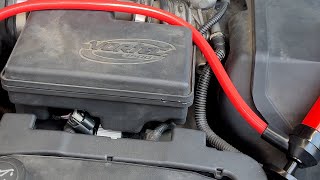
How to confirm: Visually inspect all vacuum lines and the air intake hose for cracks or loose connections. A common forgotten connection is the PCV hose under the resonator box after other service. For hard-to-find leaks, a smoke test is the most effective method. You can also listen for a hissing sound at idle or carefully spray brake cleaner around suspected areas and listen for a change in engine RPM.
Typical fix: Replace the cracked hose or faulty gasket. In one forum thread, an owner found a leak in the resonator box itself and temporarily sealed it with gasket maker.
Est. part cost: $10-$150 - Dirty or Faulty Mass Air Flow (MAF) Sensor 🔴 High Probability Oiled air filters can contaminate the sensor, and general dirt accumulation over time can cause it to under-report airflow, causing the ECM to inject too little fuel. This is a very common first step for owners to try.
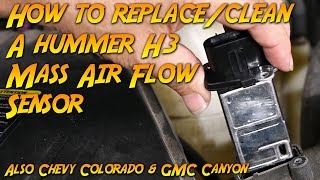
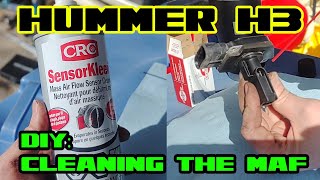
How to confirm: The best first step is to remove and clean the sensor with a dedicated MAF sensor cleaner. Do not touch the delicate internal wires. If cleaning doesn't resolve the issue, the sensor may need replacement. Unplugging the MAF sensor while the engine is running is a common diagnostic trick; if the idle smooths out, the sensor is likely faulty.
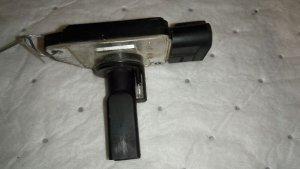
Typical fix: Clean the MAF sensor with a specialized spray cleaner. If cleaning doesn't work, replace the sensor. The OEM part is ACDelco 213-4222 (also listed under GM part number 15865791).
Est. part cost: $15 (cleaner) - $150 (new sensor) - Weak Fuel Pump or Clogged Fuel Filter 🟡 Medium Probability The fuel filter is an integrated, non-serviceable part of the in-tank fuel pump module. The entire module can weaken with age and high mileage, failing to provide adequate fuel pressure.
How to confirm: Connect a fuel pressure gauge to the fuel rail's Schrader valve. At idle, pressure should be around 55-62 PSI. Some owners on forums for the platform-mate Colorado note that anything below 62 PSI can potentially cause a lean condition, even if it seems close to spec. If pressure is low, the fuel pump is the likely cause.
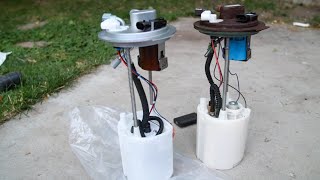
Typical fix: Replace the entire fuel pump module assembly, which is located inside the fuel tank and requires dropping the tank for access. A common OEM replacement part number is 19133588 (superseded by newer numbers like MU1473).
Est. part cost: $200-$500 - Broken MAP Sensor Circuit Wiring ⚪ Low Probability As identified in TSB #PIP4409F, which applies to the H3, Colorado, and Canyon, wires can break inside the insulation within a few inches of the MAP sensor connector, causing intermittent signals and multiple codes including P0171.
How to confirm: Inspect the wiring harness within a few inches of the MAP sensor connector. Gently pull on each wire to see if it stretches or feels disconnected. A multimeter can be used to check for continuity from the connector pin to a point further down the harness.
Typical fix: Repair the broken wire(s) using proper wire repair procedures, such as soldering and heat-shrinking.
Est. part cost: $5-$20 - Faulty Front Oxygen (O2) Sensor ⚪ Low Probability O2 sensors are a common wear item, but they are more often wrongly replaced for P0171. A lazy or failing sensor can send incorrect lean readings to the ECM. Owners often replace this as part of a larger parts-cannon approach, but it's rarely the root cause.
How to confirm: Use a scan tool to monitor the O2 sensor's voltage (Bank 1, Sensor 1). It should fluctuate rapidly between approximately 0.1V and 0.9V. If it's stuck at a low voltage or responds slowly, it may be faulty. This should be diagnosed only after ruling out vacuum leaks and fuel delivery issues.
Typical fix: Replace the Bank 1, Sensor 1 (upstream) O2 sensor.
Est. part cost: $40-$100
Rare But Worth Checking
- Clogged Fuel Injectors: GM issued a TSB (#03-06-04-030G) for several models, including the H3, regarding restricted injectors causing lean codes and misfires. This can happen from poor fuel quality. One owner on Hummer4x4Offroad reported a completely clogged injector on cylinder #5 that occurred shortly before the P0171 code appeared.
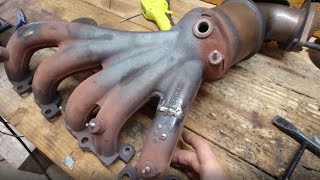
- Cracked Exhaust Manifold: A well-documented issue on the I5 engines. The rear-most exhaust manifold bolts are prone to breaking, causing the manifold to warp and crack. This allows outside air to be sucked into the exhaust stream before the O2 sensor, tricking it into thinking the engine is running lean. One owner on Hummer4x4Offroad found a crack on cylinder #5's runner after removing the heat shield to investigate a rattling noise.
Diagnosis Steps
- Read the code and any other accompanying codes with an OBD-II scanner. Note the freeze frame data to see the engine conditions when the code was set.
- Perform a thorough visual inspection of the engine bay. Look for cracked, disconnected, or brittle vacuum hoses, especially the PCV hose under the resonator and the main intake air duct.
- With the engine running, listen for any hissing sounds that would indicate a vacuum leak.
- Inspect and clean the Mass Air Flow (MAF) sensor using a dedicated MAF cleaner. Do not touch the delicate sensor wires.
- Use a scan tool to monitor long-term fuel trims (LTFT). High positive numbers (e.g., >15%) confirm the engine is running lean.
- Perform a smoke test to definitively identify any hard-to-see vacuum leaks, particularly around the intake manifold gasket and PCV system.
- Test the fuel pressure at the fuel rail. It should be within the 55-62 PSI range. Low pressure points to a failing fuel pump.
- Inspect the wiring harness near the MAP sensor connector for internal breaks, as described in TSB PIP4409F.
- Inspect the exhaust manifold on I5 engines for broken rear bolts or cracks, which is a known failure point causing a pre-O2 sensor exhaust leak.
- As a final step, test the upstream O2 sensor's functionality with a scan tool to ensure it is responding correctly and not stuck in a lean reading.
Parts You'll Likely Need
- Mass Air Flow (MAF) Sensor Cleaner — This is the cheapest and easiest first step. A dirty MAF sensor is a very co
Related Codes That Often Appear With This One
- P0174 — On 5.3L V8 models, P0174 (System Too Lean, Bank 2) often appears with P0171. This strongly indicates a problem common to both banks, such as a vacuum leak at the intake manifold, a MAF sensor issue, or low fuel pressure.
- P0300 — A severe lean condition can prevent proper combustion, leading to a P0300 (Random/Multiple Cylinder Misfire Detected) code. This is a common pairing seen by owners.
- P0106, P0107 — These MAP sensor codes can appear with P0171 if the cause is related to the MAP sensor or its wiring, as noted in TSB PIP4409F.
Technical Service Bulletins (TSBs) & Recalls
- PIP4409F: SES Light With DTCs P0106 P0107 P0171 P0300 P0502 P1107 P2431 - Points to broken wires inside the insulation near the MAP sensor connector.
- 03-06-04-030G: Due to Clogged Fuel Injectors, MIL/SES DTCs P0171, P0172, P0174, P0300, P1174, P1175 - Notes that restricted fuel injectors can cause lean conditions.
Platform-Specific Known Issues
- Cracked Exhaust Manifold / Broken Bolts (I5 Engine): A very common issue on the 3.5L and 3.7L I5 engines. The rearmost bolts are prone to snapping due to thermal stress, which allows the manifold to warp and eventually crack. This creates an exhaust leak before the primary O2 sensor, letting unmetered air into the exhaust stream and causing a false lean reading (P0171). Owners often notice a 'tick' noise when the engine is cold that goes away as it warms up and the metal expands.
- Overlooked PCV Hose: A small but frequently cited cause of P0171 is the PCV vacuum hose that connects from the valve cover to the bottom of the large black intake resonator box. Mechanics or owners often forget to reconnect this hose after servicing the throttle body or intake, creating a significant vacuum leak.
- Cracked Intake Resonator/Air Box: Less common than hose leaks, but the plastic components of the intake system can develop cracks over time. One owner on a forum used a smoke machine to find a leak coming from the seam of the box just before the throttle body, which was causing his P0171 code.
Mechanic-Grade Diagnostic Values
- Fuel Pressure (at fuel rail Schrader valve) — expected: 55-62 PSI at idle. Note: Models with an electronic returnless system may see pressure drop to ~43 PSI at idle, which can be normal if commanded by the FPCM.. Failure: Consistently below 55 PSI, or pressure that does not increase when the throttle is snapped open.
- Mass Air Flow (MAF) Sensor Reading (Scan Tool) — expected: 2-6 g/s at a stable, warm idle for the I5 engines.. Failure: Readings significantly outside the 2-6 g/s range at idle, or readings that do not rise smoothly with RPM.
- Manifold Absolute Pressure (MAP) Sensor Reading (Scan Tool) — expected: 19-42 kPa at a stable, warm idle.. Failure: Readings outside this range at idle may indicate a sensor fault or a large vacuum/exhaust leak.
- Long Term Fuel Trim (LTFT) (Scan Tool) — expected: Between -10% and +10% at idle and steady cruise.. Failure: Sustained positive values greater than +15%, with values approaching or exceeding +25% typically setting the P0171 code.
Scan Tool Commands That Help
- Tech 2 / GDS2 (or equivalent professional scanner): Fuel Trim Reset — After performing repairs for a lean condition, such as replacing a fuel pump, injectors, or fixing a vacuum leak, this function should be used to clear the old learned long-term fuel trim values from the ECM's memory.
- Tech 2 / GDS2 (or equivalent professional scanner): Fuel Pump Relay ON — During fuel pressure testing, this command allows the technician to manually turn on the fuel pump without the engine running to check for system pressure and leak-down.
Wiring & Ground Locations
- ECM (Engine Control Module) — Located in the engine compartment at the left front (driver's) side, inboard from the battery, under a black plastic protective cover.. This is the computer that receives all sensor inputs and determines the fuel mixture. All related sensor wiring terminates here.
- G100 / G105 — Main chassis grounds located in the engine compartment on the left inner fender, behind the battery.. A poor ground connection here can cause erratic behavior from the ECM and various sensors, potentially leading to incorrect readings and lean codes.
- G102 / G103 — Engine block grounds located on the lower left (driver's) side of the engine block.. These provide the primary ground path for the engine block and the sensors mounted to it. A loose or corroded connection can affect sensor readings.
- MAP Sensor Harness — The wiring harness within a few inches of the MAP sensor connector.. TSB #PIP4409F specifically calls out that wires in this area can break internally, causing an intermittent signal that leads to a P0171 code.
Real Owner Repair Stories
- Hummer Forums user (2006 Hummer H3, 175,000 miles) — P0171 code, reluctant to start (often needs second attempt), slight drop in acceleration.
❌ Tried (didn't work) Replaced cracked air cleaner intake duct, Cleaned MAF sensor, Used fuel system cleaner, Replaced both upstream and downstream O2 sensors
✅ What actually fixed it Replacing the entire fuel pump module assembly resolved the P0171 code and the hard starting issue. - YouTube user (2006 Hummer H3, 3.5L I5) — P0171 code, running rough.
✅ What actually fixed it A smoke test revealed a vacuum leak from the seam of the plastic intake resonator box. The owner sealed the seam with gasket maker as a temporary fix, which stopped the smoke leak. - Hummer4x4Offroad user (2006 Hummer H3) — P0171 code, rattling noise from engine bay.
❌ Tried (didn't work) Replaced K&N Cold Air Intake with factory setup
✅ What actually fixed it Upon removing the rattling exhaust manifold heat shield, the owner discovered a large crack in the exhaust manifold on the #5 cylinder runner. This pre-O2 sensor exhaust leak was the root cause of the lean code. - Reddit user r/AskMechanics (2008 Chevy Colorado, 3.7L I5 (platform mate)) — P0171, P0300, high idle (1100 RPM), vehicle creeps up to 20-25 mph on its own.
❌ Tried (didn't work) Carb cleaner spray test for vacuum leaks, Replaced upstream and downstream O2 sensors, Cleaned MAF sensor
✅ What actually fixed it The P0171 was resolved after replacing a cheap aftermarket cold air intake with the stock airbox. This led to new codes (P0420, P0469) which pointed to a bad EVAP purge valve solenoid. Replacing the purge valve solenoid fixed the remaining high idle and running issues.
"I Checked Everything" — The Actual Cause
- A cracked exhaust manifold on the I5 engine will not show up on a smoke test, as it sucks in unmetered air; it does not leak pressure out. This is a very common cause of P0171 on the H3 and is often found by inspecting the manifold after rear bolts have broken.
- A weak fuel pump delivering low pressure will cause a lean condition that a smoke test will not identify. Fuel pressure must be tested mechanically at the fuel rail.
- A leaking brake booster diaphragm can cause a significant vacuum leak. This may not be found with a smoke test if the leak is internal. A common diagnostic step is to pinch off the vacuum hose to the booster with the engine running and watch for a change in fuel trims.
When the Usual Fixes Don't Work
- While cleaning the MAF sensor and checking for vacuum leaks are the most common first steps, many owners have found these do not solve the problem. In a significant number of documented cases, the final repair was a part that is harder to diagnose: a weak fuel pump that still provided some pressure but not enough, or a cracked exhaust manifold that was only visible after removing its heat shield. Technicians should not stop diagnosis after a clean MAF and a passed smoke test, but should proceed to check fuel pressure and perform a close physical inspection of the exhaust manifold.
OEM Part Supersession History
19133588→MU1473 (ACDelco/GM Genuine Parts)— Standard part number update and consolidation by the manufacturer.
Heads up: MU1473 is the correct and current service replacement for the original fuel pump module.
Model Year Variations Within This Range
- 2006 vs 2007-2010: The 2006 model uses the 3.5L I5 engine, while 2007-2010 models use the 3.7L I5. The valve covers are not interchangeable due to different spark plug well shapes and PCV configurations. This can be relevant if diagnosing a vacuum leak related to the valve cover gasket.
- 2008-2010: Models from 2008 onward use a separate Powertrain Control Module (PCM) and Transmission Control Module (TCM), whereas earlier models had these functions integrated. This is primarily relevant for major electrical diagnostics or engine swaps.
- All: Some H3s are equipped with an electronic returnless fuel system controlled by a Fuel Pump Control Module (FPCM). On these systems, it is normal for fuel pressure to be actively varied by the computer, potentially dropping from a startup high of ~58 PSI to an idle pressure of ~43 PSI. This is not necessarily a sign of a weak pump, unlike on a traditional system where pressure should remain constant.
Helpful Videos

We Have This Part in Stock


The information in this article is provided for general reference and educational purposes only. Vehicle specifications, procedures, and part compatibility can vary by production date, trim level, and region. Always consult your vehicle's factory service manual and verify part numbers before purchasing or performing repairs. Safety-critical components such as airbags, seat belts, and braking systems should be installed by a qualified professional.
- Hummer H3:
- 🎬 Helpful Videos
- 🛍️ Shop This Part
- What's Unique About the 2006-2010 Hummer H3
- Diagnostic Flowchart
- Symptoms You May Notice
- Most Likely Causes
- Rare But Worth Checking
- Diagnosis Steps
- Parts You'll Likely Need
- Related Codes That Often Appear With This One
- Technical Service Bulletins (TSBs) & Recalls
- Platform-Specific Known Issues
- Mechanic-Grade Diagnostic Values
- Scan Tool Commands That Help
- Wiring & Ground Locations
- Real Owner Repair Stories
- "I Checked Everything" — The Actual Cause
- When the Usual Fixes Don't Work
- OEM Part Supersession History
- Model Year Variations Within This Range
- 🎟️ Get 5% Off