

P0171 on 2015-2017 GMC Yukon XL: System Too Lean Causes and Fixes
Code P0171 on a 2015-2017 GMC Yukon XL means the engine is running too lean. This is often caused by a dirty Mass Airflow (MAF) sensor, a vacuum leak from failing intake manifold gaskets or cracked PCV hoses, or incorrect fuel ethanol content. Cleaning the MAF sensor and inspecting the intake system for leaks are the best first steps.
- P0171 on a 2015-2017 GMC Yukon XL indicates a lean condition on engine Bank 1.
- The most common causes are a dirty MAF sensor, leaking intake manifold gaskets, or a cracked PCV hose.
- Manufacturer TSBs point to specific issues: 'cast flashing' near the MAF sensor (TSB #PIP5446) and incorrect fuel ethanol content (TSB #PIP5227).
- Diagnosis should start with checking fuel trims and performing a visual inspection, followed by a smoke test for vacuum leaks.
- Do not replace the oxygen sensor unless it has been proven to be faulty; it is usually just reporting the lean condition.
What's Unique About the 2015-2017 Gmc YUKON XL
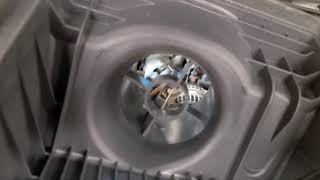
For this generation of GMC Yukon XL (K2UG) and its platform mates, the P0171 code is specifically addressed by two manufacturer Technical Service Bulletins (TSBs). TSB #PIP5446 points to a potential manufacturing defect, 'cast flashing' near the Mass Air Flow (MAF) sensor, which can disrupt airflow readings and cause a lean condition. The fix involves replacing the entire air filter housing lid. Another TSB, #PIP5227, highlights issues with fuel that has an ethanol content over 10%, which can also trigger this code in flex-fuel models. These specific, documented issues, combined with a known tendency for intake manifold gaskets and PCV hoses to leak, make diagnosis more direct than on other vehicles.
Diagnostic Flowchart
Tap your situation to follow the diagnostic path that matches what you're seeing on this vehicle.
Symptoms You May Notice
- Check Engine Light is on
- Rough idle, sometimes worse on a cold start
- Hesitation, sputtering, or lack of power during acceleration, sometimes specifically between 0-30% throttle
- Reduced fuel economy
- Engine misfires (may be accompanied by a P0300 code)
- A hissing or whistling sound from the engine bay at idle, indicating a vacuum leak
- Replacing the oxygen sensor first. The O2 sensor is often just reporting the problem, not causing it. A lean code is most frequently caused by unmetered air (vacuum leak) or incorrect air measurement (MAF sensor), not a bad sensor.
Most Likely Causes
- Dirty or Faulty Mass Air Flow (MAF) Sensor 🔴 High Probability TSB #PIP5446 specifically mentions issues with 'cast flashing' (excess plastic molding) in the air filter housing near the MAF sensor, a manufacturing flaw that can disrupt airflow and cause lean codes. Additionally, debris from a damaged air filter (sometimes due to rodents) can contaminate the sensor, causing it to under-report airflow. Simply having a loose air intake boot clamp can also cause this issue.
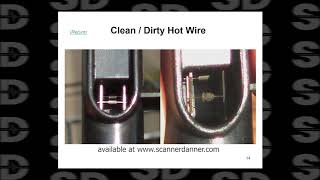
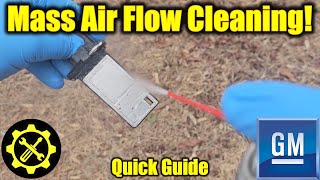
How to confirm: Visually inspect the MAF sensor wires for contamination and its housing for the flashing mentioned in the TSB. A common first step is to clean the sensor with a dedicated MAF sensor cleaner. A common diagnostic value for a 5.3L engine at idle is 4-6 g/s; a reading significantly lower than this suggests a faulty sensor or a vacuum leak after the sensor. Monitoring fuel trims with a scanner can also help; if long-term fuel trims are high across the RPM range and don't decrease significantly when RPMs are raised, it points towards a MAF issue.
Typical fix: Clean the MAF sensor with a specialized cleaner. If cleaning doesn't resolve the issue, the sensor is faulty, or the housing has the TSB-related flashing, replacement is necessary. The MAF sensor itself or the entire air cleaner outlet duct may need to be replaced.
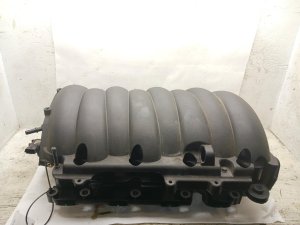
Est. part cost: $10-$20 for cleaner, $80-$200 for a new sensor - Vacuum Leak (Intake Manifold Gaskets) 🔴 High Probability The intake manifold gaskets on GM's L83 and L86 V8 engines are a well-documented failure point. With age and heat cycles, the original plastic/rubber gaskets can degrade and become brittle, allowing unmetered air to enter the engine, which is a primary cause of lean codes P0171 and P0174, especially in cold weather.
How to confirm: A smoke test is the most effective method to pinpoint a leak at the intake manifold. A less precise method involves carefully spraying brake cleaner or unlit propane around the gasket sealing area with the engine idling; a noticeable change in engine RPM indicates a leak. On a scan tool, a vacuum leak typically shows very high positive fuel trims at idle that decrease significantly as engine RPMs are increased to ~2500 RPM.
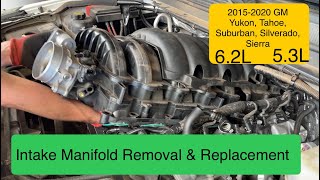
Typical fix: Replace the intake manifold gaskets. This is a moderately involved job that requires removing the intake manifold. Many owners opt for upgraded gaskets like the Fel-Pro PermaDryPlus (MS 97224) which use a more durable steel carrier instead of the OEM plastic.
Est. part cost: $40-$150 for intake manifold gaskets, $10-$50 for hoses - Vacuum Leak (PCV System) 🟡 Medium Probability The PCV system includes several plastic hoses and fittings that become brittle and crack over time. A common failure point is the hose running from the valve cover to the intake manifold. The plastic connectors at the ends of these tubes often break, creating a significant vacuum leak.
How to confirm: Visually inspect all PCV hoses and their connections at the valve covers and intake manifold. Listen for a hissing sound. A smoke test will quickly reveal leaks in this system. One specific failure point is the nipple on the main air intake tube where the 'clean side' PCV hose connects; a crack here creates a post-MAF, pre-throttle body leak.
Typical fix: Replace the cracked or broken PCV hose assembly. These are typically sold as a complete pre-formed unit.
Est. part cost: $30-$75 for a PCV hose assembly - Incorrect Fuel Ethanol Content 🟡 Medium Probability TSB #PIP5227 specifically notes that on flex-fuel (RPO FHO) models, using fuel with an alcohol content over 10% (that is not E85) can cause P0171 and P0174 codes. The system can also incorrectly learn a high alcohol percentage, causing it to inject too little fuel for the actual gasoline in the tank, leading to lean codes.
How to confirm: The fuel's ethanol content needs to be tested with a specialized tool (J44175 as per the TSB). A high-end scan tool can also display the current 'Alcohol Fuel Percentage' value stored in the PCM. If this value is high (e.g., >30%) but you are using regular gasoline, it needs to be reset.
Typical fix: If high ethanol content is confirmed, the fuel may need to be drained. If the learned alcohol percentage is incorrect, it must be reset using a capable OBD-II scan tool with a specific service function, followed by a drive cycle to allow the system to relearn.
Est. part cost: $50-$100+ for fuel drain, or cost of a shop visit for scan tool reset - Weak Fuel Pump or Clogged Fuel Filter ⚪ Low Probability While not as common as MAF or vacuum issues, a failing fuel pump or clogged filter can restrict fuel flow, preventing the engine from getting the fuel it needs, especially under load. The fuel filter is integrated with the fuel pump module inside the tank and is not a separate serviceable item.
How to confirm: Perform a fuel pressure test using a fuel pressure gauge connected to the fuel rail's Schrader valve. The pressure should meet the manufacturer's specifications (typically 55-62 PSI for the 5.3L engine's low-pressure system). If pressure is low, the fuel pump module is the likely cause.
Typical fix: Replace the in-tank fuel pump module. This is a labor-intensive job as it requires dropping the fuel tank.
Est. part cost: $200-$500+ for a fuel pump module
Rare But Worth Checking
- Faulty Upstream Oxygen Sensor: The O2 sensor itself can fail and send incorrect lean readings to the computer. However, this should be considered only after ruling out more common causes like vacuum leaks and MAF sensor issues, as replacing a sensor that is correctly reporting a problem will not fix the underlying issue. A diagnostic step is to swap the Bank 1 and Bank 2 upstream sensors and see if the code moves to P0174.
- Exhaust Leak: A crack or leak in the exhaust manifold or the manifold-to-engine-pipe gasket before the upstream O2 sensor can allow outside air to be drawn into the exhaust stream. This makes the sensor falsely report a lean condition.
Diagnosis Steps
- Check for any other stored trouble codes. If P0174 is also present, suspect a cause that affects both engine banks (MAF, intake gaskets, PCV, fuel delivery).
- Visually inspect the entire air intake system from the air filter to the throttle body for cracks, loose connections, or disconnected hoses. A common find is a loose clamp on the intake boot.
- Inspect the MAF sensor and housing for debris or the 'cast flashing' mentioned in TSB #PIP5446. Clean the sensor with dedicated MAF sensor cleaner and allow it to dry completely before reinstalling.
- Use an OBD-II scanner to monitor short-term (STFT) and long-term (LTFT) fuel trims. High positive numbers (e.g., LTFT > +15%) confirm the lean condition. If fuel trims are very high at idle but drop toward normal (near 0) at 2,500 RPM, a vacuum leak is the most likely cause. If trims remain high across the RPM range, a MAF or fuel delivery issue is more probable.
- Perform a smoke test to definitively locate any vacuum leaks. Pay close attention to the intake manifold gaskets, PCV hoses and their connections, and the brake booster hose.
- Test the fuel pressure at the fuel rail to ensure the fuel pump is operating correctly (should be 55-62 PSI).
- If the vehicle is flex-fuel capable, check the learned alcohol percentage with a scan tool. If it's inaccurate, reset it.
- Inspect the exhaust manifolds and pipes for any leaks before the upstream O2 sensors.
- If all other possibilities have been exhausted, consider swapping the upstream O2 sensors between Bank 1 and Bank 2 to see if the fault code follows the sensor.
Parts You'll Likely Need
- Mass Air Flow (MAF) Sensor
(OEM #ACDelco 12671624)— A dirty or faulty MAF sensor is a primary cause of P0171, especially given the specific TSB for this vehicle. It may under-report airflow, causing the PCM to inject too little fuel.
Trusted brands: ACDelco, Delphi, Bosch
OEM price range: $120-$200
Aftermarket price range: $80-$150 - Intake Manifold Gasket Set
(OEM #ACDelco 12633904)— These gaskets are a common failure point on GM V8s, causing vacuum leaks that lead to lean codes. Upgraded aftermarket versions are popular for their durability.
Trusted brands: Fel-Pro (MS 96918 is a popular choice), ACDelco, Mahle
OEM price range: $80-$150
Aftermarket price range: $40-$90 - PCV Hose Assembly — The plastic fittings on the PCV hoses that connect to the valve covers and intake manifold are prone to cracking, causing significant vacuum leaks.
Trusted brands: ACDelco, Dorman
OEM price range: $50-$75
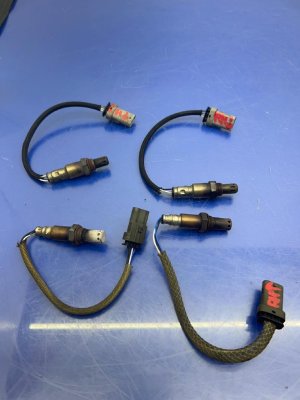
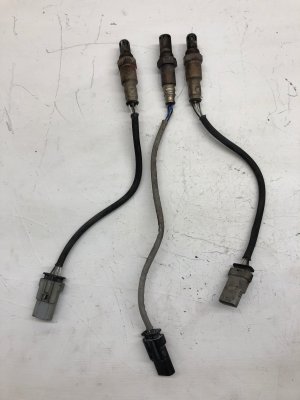
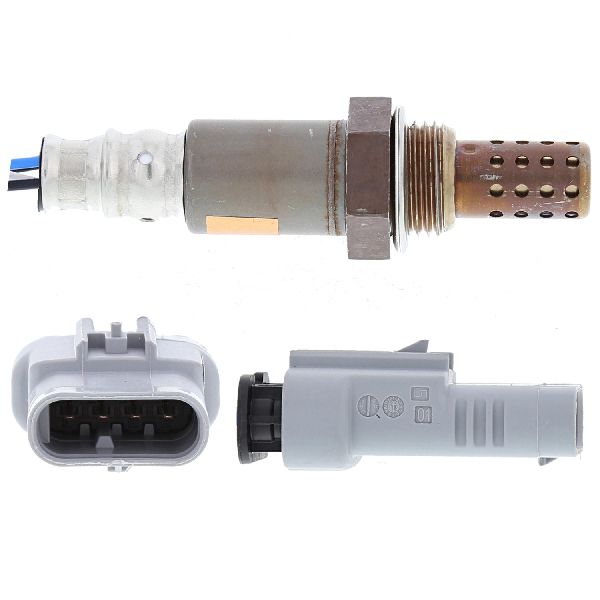
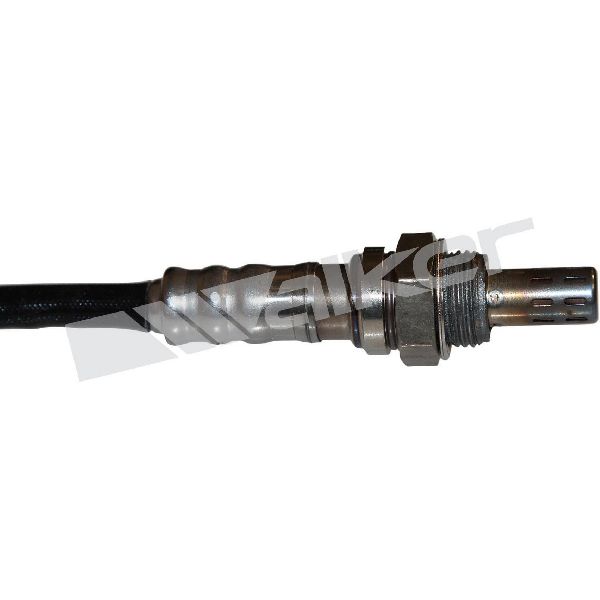
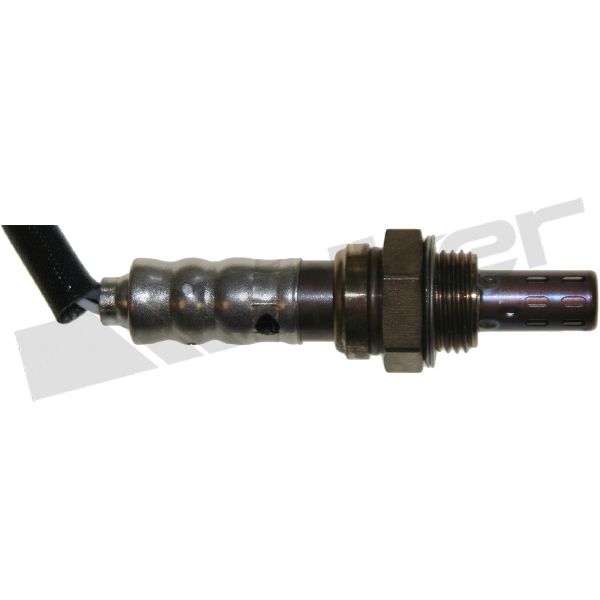
Aftermarket price range: $30-$60 - Upstream Oxygen Sensor (Bank 1 Sensor 1)
(OEM #ACDelco 12663317 (for 5.3L L83))— If the sensor itself is faulty, it can send incorrect lean signals. This is less common than other causes but is a potential fix after other diagnostics fail.
Trusted brands: ACDelco, Denso, Bosch
OEM price range: $70-$120
Aftermarket price range: $40-$80
Related Codes That Often Appear With This One
- P0174 — P0174 is 'System Too Lean (Bank 2)'. When both codes appear together, it strongly indicates a problem affecting the entire engine, such as a dirty MAF sensor, a large vacuum leak at the intake manifold, a cracked PCV hose, or a fuel delivery issue.
- P0101 — P0101 is 'Mass Air Flow (MAF) Circuit Range/Performance'. This code can appear with P0171 as noted in TSB #PIP5446, pointing directly to a problem with the MAF sensor or the 'cast flashing' in the air intake housing.
Technical Service Bulletins (TSBs) & Recalls
- PIP5446: Addresses rough idle, sputter, and codes including P0171/P0174 due to 'cast flashing' in the air filter housing near the MAF sensor. The fix is to replace the air filter housing lid.
- PIP5227: Pertains to P0171/P0174 codes caused by fuel with ethanol content over 10% in flex-fuel (RPO FHO) vehicles.
Platform-Specific Known Issues
- A known issue documented in TSB #PIP5446 involves cast flashing near the Mass Air Flow sensor, which can disrupt airflow and trigger codes P0171, P0174, and P0101.
- TSB #PIP5227 warns that fuel with an ethanol content greater than 10% can cause P0171 and P0174 codes to set.
Mechanic-Grade Diagnostic Values
- Long-Term Fuel Trim (LTFT) at Idle — expected: Between -10% and +10%.. Failure: Sustained reading greater than +15%, with the code typically setting around +25%.
- Mass Airflow (MAF) Sensor Reading at Idle — expected: Approximately 4-6 grams/second (g/s) for a fully warm 5.3L V8.. Failure: A significantly lower reading (e.g., 2-3 g/s) suggests unmetered air is entering the engine after the sensor (vacuum leak) or the sensor is faulty.
- Upstream Oxygen Sensor (O2) Voltage — expected: Fluctuating rapidly between approximately 0.1V (lean) and 0.9V (rich) in closed loop.. Failure: Stuck low (e.g., < 0.3V) or very slow to respond, indicating a persistent lean condition or a failed sensor.
- Low-Side Fuel Pressure — expected: 55-62 PSI at the fuel rail test port.. Failure: Pressure below 55 PSI indicates a potential weak fuel pump or clogged filter.
Scan Tool Commands That Help
- GDS2 / Tech2 or equivalent high-end scanner: Fuel Composition Reset — Use this function when the 'Alcohol Fuel Percentage' PID is showing a high value (e.g., >15-20%) but the tank contains standard gasoline. An incorrect learned value will cause the PCM to calculate fuel delivery incorrectly, leading to lean codes. This reset defaults the value, allowing for a proper relearn.
Wiring & Ground Locations
- G103 / G104 — G103 is often located on the cowl, above the brake booster. G104 is typically on the rear of the left (driver's side) cylinder head.. These are critical engine and control module ground points. A loose or corroded ground at these locations can cause erratic voltage and incorrect readings from sensors like the MAF and O2 sensors, potentially leading to false lean codes.
- MAF Sensor Connector — On the air intake tube, immediately following the air filter box.. The 5-pin connector provides power, ground, and signal return for the MAF and IAT sensors. A visual inspection for corrosion or backed-out pins is crucial. A typical pinout includes a 12V power wire, a ground wire, a 5V MAF signal wire, and IAT sensor wires. Checking for proper voltage and ground continuity here is a key diagnostic step.
Real Owner Repair Stories
- Tahoe Yukon Forum (2015-era GMC Yukon/Tahoe) — P0171 and P0174 codes appeared, especially after a drop in ambient temperature.
❌ Tried (didn't work) Initial diagnosis pointed towards a vacuum leak due to both banks being lean.
✅ What actually fixed it Replacing the intake manifold gaskets. The user noted that after replacement, the lean codes were resolved. This aligns with the common knowledge that the original plastic gaskets become brittle and fail, particularly when temperatures change. - Tahoe Yukon Forum (Flex-fuel GM SUV) — P0171 & P0174 codes appeared after running the tank very low on E85 and adding a small amount of regular gasoline.
❌ Tried (didn't work) Cleaning the MAF sensor., Checking for vacuum leaks., Verifying fuel pressure was good (59 PSI).
✅ What actually fixed it The issue was an incorrect fuel composition value stored in the ECU. The solution was to use a scan tool to perform a 'Fuel Composition Reset'. After the reset and filling the tank with regular gasoline, the fuel trims returned to normal and the codes were resolved.
"I Checked Everything" — The Actual Cause
- In some cases, a smoke test may not reveal a leak if the leak only occurs under specific conditions (e.g., when the engine is cold and gaskets have contracted). A user on a forum noted their P0171/P0174 codes only appeared in cold weather, and the fix was intake gaskets, even though a leak wasn't obvious when warm.
- A faulty EVAP purge solenoid stuck open can introduce unmetered fuel vapors, confusing the PCM and sometimes causing a lean code. This is not a vacuum leak and won't be found with a smoke test unless the valve is commanded open during the test.
OEM Part Supersession History
GM 12623972 (or similar plastic carrier design)→Fel-Pro MS 97224 (Aftermarket Upgrade)— The original equipment intake manifold gaskets use a plastic carrier that becomes brittle and cracks from heat cycles, leading to vacuum leaks. The Fel-Pro PermaDryPlus gasket uses a more durable steel carrier that resists this failure mode.
Helpful Videos


Used OEM Parts in Stock


New Aftermarket Parts Available


The information in this article is provided for general reference and educational purposes only. Vehicle specifications, procedures, and part compatibility can vary by production date, trim level, and region. Always consult your vehicle's factory service manual and verify part numbers before purchasing or performing repairs. Safety-critical components such as airbags, seat belts, and braking systems should be installed by a qualified professional.
- Gmc YUKON XL:
- 🎬 Helpful Videos
- 🛍️ Shop This Part
- What's Unique About the 2015-2017 Gmc YUKON XL
- Diagnostic Flowchart
- Symptoms You May Notice
- Most Likely Causes
- Rare But Worth Checking
- Diagnosis Steps
- Parts You'll Likely Need
- Related Codes That Often Appear With This One
- Technical Service Bulletins (TSBs) & Recalls
- Platform-Specific Known Issues
- Mechanic-Grade Diagnostic Values
- Scan Tool Commands That Help
- Wiring & Ground Locations
- Real Owner Repair Stories
- "I Checked Everything" — The Actual Cause
- OEM Part Supersession History
- 🎟️ Get 5% Off