

P0171 on 2012-2016 GMC Yukon Denali: Lean Code Causes & Fixes
On a 2012-2016 GMC Yukon Denali, code P0171 is most often caused by a vacuum leak from a cracked PCV tube or a dirty Mass Airflow (MAF) sensor. Start by inspecting the PCV tube on the driver's side valve cover and cleaning the MAF sensor before suspecting other issues like failed intake manifold gaskets, which are also a common cause.
- P0171 on a Yukon Denali means the driver's side of the engine is running lean (too much air, not enough fuel).
- The most likely causes are vacuum leaks. Start by inspecting the PCV tube on the driver's side valve cover for cracks, as this is a known issue (TSB #PIP5341).
- The second most likely cause is a dirty or faulty Mass Air Flow (MAF) sensor. Cleaning it with a dedicated cleaner is an easy and inexpensive first step.
- If both P0171 and P0174 (Bank 2) are present, focus on issues that affect the whole engine, like the MAF sensor or a leak at the intake manifold.
- Do not replace the oxygen sensor unless you have ruled out all other possibilities.
What's Unique About the 2012-2016 Gmc YUKON DENALI

On this specific platform, which spans two Yukon generations, the V8 engines are highly susceptible to specific vacuum leaks. Manufacturer bulletins point directly to a crack-prone PCV tube on the driver's side valve cover as a primary cause (TSB #PIP5341). Another bulletin for this platform highlights a unique manufacturing defect where casting flash near the MAF sensor can disrupt airflow and trigger this code (TSB #PIP5446A). Additionally, the intake manifold gaskets are a known weak point, especially on earlier models, often failing in cold weather. These known issues make vacuum leaks and MAF sensor problems the most probable culprits, more so than on other vehicles.
Diagnostic Flowchart
Tap your situation to follow the diagnostic path that matches what you're seeing on this vehicle.
Generation note: This range covers two generations: the end of the third generation (GMT900 platform, 2012-2014) and the beginning of the fourth generation (K2XX platform, 2015-2016). Both generations primarily use a 6.2L V8 in the Denali trim. The cited TSBs and common causes, like PCV and MAF issues, are relevant to both generations, though intake gasket failures are more frequently reported on the GMT900 models. A critical difference is the 2015+ K2XX models use the L86 engine with direct injection, which adds a high-pressure fuel system as a potential point of failure not present on the earlier port-injected engines.
Symptoms You May Notice
- Check Engine Light is on
- Rough or unstable idle, sometimes worse on cold starts
- Hesitation or sputtering on acceleration, especially between 0-30% throttle
- Reduced engine power and poor fuel economy
- Harsh shifting (1-2 and 2-3 shifts)
- Engine misfires (may trigger a P0300 code)
- Hissing noise from the engine bay due to a vacuum leak
- Stalling when coming to a stop
- Replacing the Bank 1 oxygen sensor without first checking for vacuum leaks or MAF sensor issues. The O2 sensor is usually doing its job correctly by reporting the lean condition, not causing it. 🎬 Watch: A helpful explanation of how lean codes work
Most Likely Causes

- Cracked or disconnected PCV tube 🔴 High Probability A known issue documented in GM Preliminary Information Bulletin #PIP5341. The tube, located on the driver's side (Bank 1) valve cover, becomes brittle from heat and cracks, creating a significant vacuum leak. The engine cover can also rub a hole in it.
How to confirm: Visually inspect the PCV tube that connects the valve cover to the intake manifold. Look for obvious cracks, especially at the rubber elbows. A smoke test will definitively show a leak here. You may hear a hissing sound near the driver's side valve cover at idle.
Typical fix: Replace the PCV tube assembly. This is an inexpensive and simple repair.
Est. part cost: $25-$60 - Dirty or Faulty Mass Air Flow (MAF) Sensor 🔴 High Probability Oil from aftermarket air filters or general grime can contaminate the sensor, causing it to under-report airflow. TSB #PIP5446A also notes that excess casting flash (a manufacturing defect) in the air filter housing near the sensor can disrupt readings and cause lean codes.
How to confirm: Remove the sensor and inspect the delicate wires for contamination. Cleaning it with dedicated MAF sensor cleaner is a good first step. Check fuel trim data with a scan tool; if trims are high at idle but normalize at higher RPM, a vacuum leak is more likely. If trims are high across the RPM range, the MAF is a stronger suspect. Inspect the air intake tube for casting flash per the TSB.
Typical fix: First, attempt to clean the sensor with a dedicated MAF sensor cleaner. 🎬 See this walkthrough on cleaning or replacing your MAF sensor If cleaning doesn't resolve the issue, replace the sensor. If casting flash is found, it should be carefully removed with a file or sandpaper.
Est. part cost: $80-$150 - Leaking Intake Manifold Gaskets 🟡 Medium Probability The intake manifold gaskets on GM V8s are a common failure point, especially on the earlier GMT900 models. The original plastic-carrier design becomes brittle with age and heat cycles, causing unmetered air to enter the engine, often noticed first during cold weather. 🎬 Watch: Common causes of lean codes on GM V8 engines
How to confirm: With the engine running, spray brake cleaner or a similar combustible fluid in short bursts around the area where the intake manifold meets the cylinder heads. If the engine RPM changes, a leak is present. A smoke test is a more precise and safer method. Long term fuel trims will be high (>10%) at idle and decrease as RPMs increase.
Typical fix: Replace the intake manifold gaskets. It's recommended to use an updated design with a metal carrier for better longevity, such as Fel-Pro part number MS96945.
Est. part cost: $60-$150 - Weak Fuel Pump or Low Fuel Pressure ⚪ Low Probability While not unique to this platform, fuel pump failure can cause lean codes if it cannot supply adequate volume under load. The fuel pump driver module (FPDM) and its connector, located on the frame rail, are also susceptible to corrosion.
How to confirm: Connect a fuel pressure gauge to the fuel rail's service port. Check that the pressure is within the manufacturer's specification (typically 51-65 PSI for the K2XX platform, check service manual for your specific year). Pressure should hold steady after the key is turned off; a rapid drop can indicate a bad check valve in the pump.
Typical fix: Replace the in-tank fuel pump module or the fuel pump driver module.
Est. part cost: $250-$500
Rare But Worth Checking
- Faulty Upstream Oxygen (O2) Sensor: The O2 sensor is what reports the lean condition, so it's usually not the cause. However, a failing or 'lazy' sensor can send incorrect lean signals to the computer. This should only be considered after all potential vacuum leaks and fuel delivery issues have been ruled out. Swapping the Bank 1 and Bank 2 sensors to see if the code follows (to P0174) is a valid diagnostic step.
- Clogged Fuel Injector(s) on Bank 1: If one or more injectors on the driver's side are restricted, they won't deliver enough fuel, causing a lean condition isolated to that bank. This is less common than vacuum leaks or MAF issues but can be diagnosed with a fuel injector balance test.
- Loose or Cracked Air Intake Tube: A very simple but sometimes overlooked cause is the main air intake tube between the MAF sensor and the throttle body being loose, disconnected, or cracked. This allows a large amount of unmetered air to enter the engine, causing lean codes.
Diagnosis Steps

- Check for additional trouble codes. Codes like P0174 or P0101 provide important clues to narrow down the cause.
- Perform a thorough visual inspection of the engine bay. Look for any disconnected or cracked vacuum hoses, especially the PCV tube on the driver's side valve cover, and check that the air intake tube is secure and not cracked.
- With the engine running, listen for a hissing sound, which would indicate a vacuum leak. Pay close attention to the PCV system and intake manifold area.
- If a leak isn't obvious, perform a smoke test to pinpoint the source of any unmetered air. This is the most effective way to find leaks from the intake manifold gaskets or small cracks in hoses.
- If no vacuum leaks are found, remove and clean the Mass Air Flow (MAF) sensor using a dedicated MAF sensor cleaner. Do not touch the sensor wires. Inspect the air filter housing for any casting flash as described in TSB #PIP5446A.
- Analyze fuel trims with a scan tool. High positive fuel trims at idle that decrease with RPM typically indicate a vacuum leak. High trims that persist or worsen with RPM point towards a MAF or fuel delivery issue.
- Check fuel pressure using a fuel pressure gauge to rule out a weak fuel pump or clogged filter. Compare readings to manufacturer specifications.
- If all other possibilities are exhausted, investigate the Bank 1 upstream O2 sensor for slow response or failure. Consider swapping it with the Bank 2 sensor to see if the code changes to P0174.
Parts You'll Likely Need

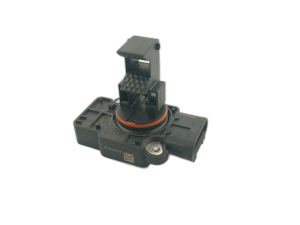
- Mass Air Flow (MAF) Sensor
(OEM #23256991)— A dirty or failed MAF sensor is a primary cause of lean codes on this platform. The part number from Pass 1 (12671624) appears to be for smaller GM engines, not the 6.2L V8.
Trusted brands: ACDelco, Bosch, Delphi
OEM price range: $130-$215
Aftermarket price range: $80-$150 - PCV Tube / Hose (Bank 1, Driver Side)
(OEM #12673352)— This specific hose is cited in TSB #PIP5341 as a common failure point that causes a vacuum leak and triggers lean codes. It becomes brittle and cracks over time.
Trusted brands: ACDelco, Dorman
OEM price range: $40-$70
Aftermarket price range: $25-$50 - Intake Manifold Gasket Set
(OEM #12627092)— The original plastic-carrier gaskets are a known failure point. Replacing them is a common repair for P0171/P0174, especially on higher-mileage GMT900 (2012-2014) models.
Trusted brands: ACDelco, Fel-Pro (MS96945 - updated metal design)
OEM price range: $80-$120
Aftermarket price range: $60-$90
Related Codes That Often Appear With This One
- P0174 — This is the 'System Too Lean' code for Bank 2 (passenger side). When both P0171 and P0174 are present, it strongly indicates a problem affecting the entire engine, such as a faulty MAF sensor, a large vacuum leak at the intake manifold, or low fuel pressure.
- P0101 — This code for 'Mass Air Flow (MAF) Circuit Range/Performance' often appears with P0171 if the MAF sensor is dirty, faulty, or obstructed, as noted in TSB #PIP5446A.
- P0300 — This indicates a 'Random/Multiple Cylinder Misfire'. A severe lean condition starves the cylinders of fuel, which can lead to misfires. This is often seen when intake manifold gaskets fail.
Technical Service Bulletins (TSBs) & Recalls
- PIP5341
- PIP5446A
Platform-Specific Known Issues
- TSB #PIP5341: Cracked Driver-Side PCV Tube: Points to a rough idle with code P0171 and/or P0174 caused by a vacuum leak from a cracked positive crankcase ventilation (PCV) tube on the left (driver's) side of the engine. The bulletin instructs technicians to inspect and replace the tube if cracks are found.
- TSB #PIP5446A: MAF Sensor Casting Flash: Addresses an issue where harsh shifting, sputtering, and multiple lean/rich codes (including P0171) can be caused by excessive plastic casting flash in the air filter housing near the MAF sensor. This disrupts airflow and causes incorrect sensor readings. The fix is to inspect for and remove the flash or replace the air filter housing lid.
- Owner Experience: Loose Air Intake Hose: A user on TahoeYukonForum.com reported chasing a P0171 code and eventually discovered the cause was a simple air intake hose that had popped loose after the MAF sensor, creating a massive unmetered air leak. Re-securing the clamp resolved the issue instantly.
- Owner Experience: Intake Gasket Failure in Cold Weather: Multiple owners on TahoeYukonForum.com have shared experiences where P0171 and P0174 codes appeared for the first time during a cold snap. This is a classic symptom of the original plastic intake manifold gaskets shrinking and failing to seal when cold.
Mechanic-Grade Diagnostic Values

- Long Term Fuel Trim (LTFT) — expected: -10% to +10% at idle and steady RPM.. Failure: Sustained positive values over +10% indicate a lean condition. The code often sets when LTFT exceeds +25%.
- Mass Air Flow (MAF) Sensor Reading — expected: 4-8 g/s at warm idle for the 6.2L V8. Should rise smoothly with RPM.. Failure: Readings significantly lower than expected, or readings that are stuck or do not increase with engine speed.
- Fuel Pressure (2012-2014 GMT900, Port Injection) — expected: 55-62 PSI with key on, engine off. May drop to ~45 PSI at idle.. Failure: Pressure below 55 PSI (KOEO) or a rapid bleed-down after the pump primes indicates a weak pump or leak.
- Fuel Pressure (2015-2016 K2XX, Direct Injection) — expected: Low side: 51-65 PSI. High side (at fuel rail): Can exceed 2000 PSI when running, may show 300-400 PSI during cranking.. Failure: Low-side pressure below spec, or high-side pressure that fails to build during cranking or running.
- Upstream O2 Sensor (Bank 1, Sensor 1) Voltage — expected: Rapidly fluctuating between 0.1V (lean) and 0.9V (rich) on a warm engine in closed loop.. Failure: A 'lazy' sensor that switches slowly, or a sensor that is stuck at a low voltage (e.g., < 0.2V) may be faulty, but this is usually a symptom of a lean condition, not the cause.
Scan Tool Commands That Help
- GDS2 / Tech2 or equivalent professional scanner: Fuel Trim Reset — After a repair (like replacing a MAF sensor or fixing a vacuum leak), resetting fuel trims forces the ECM to relearn the base fuel map immediately, which helps verify the fix. Without a reset, it can take many drive cycles for the LTFT to return to normal.
- GDS2 / Tech2 or equivalent professional scanner: Fuel Injector Balance Test — If a lean condition is isolated to one bank (P0171 only) and vacuum leaks are ruled out, this test can identify a clogged or failing injector on Bank 1 by measuring pressure drops for each injector.
- GDS2 / Tech2 or equivalent professional scanner: EVAP Purge/Seal — To diagnose a stuck-open canister purge valve. The command seals the EVAP system, allowing a smoke test to confirm if the valve is leaking vacuum into the intake when it should be closed.
Wiring & Ground Locations
- ECM (Engine Control Module) — In the engine compartment on the passenger side, mounted to a bracket near the firewall for both 2012-2014 (GMT900) and 2015-2016 (K2XX) models.. This is the location for checking ECM connectors for corrosion or damage. All sensor data related to P0171 is processed here.
- G108 (Engine to Frame Ground) — A braided ground strap typically located on the rear of the engine block or transmission, connecting to the vehicle's frame or firewall.. A corroded or broken main engine ground can cause erratic sensor readings and unpredictable electrical behavior, potentially leading to incorrect data from the MAF or O2 sensors.
- Frame Grounds (near wheels) — Behind both front wheels on the frame.. These grounds are in a terrible location prone to corrosion from road spray. A bad ground here can affect various systems, including the Fuel Pump Driver Module (FPDM) which is often grounded nearby.
Real Owner Repair Stories
- Tahoe Yukon Forum user (2007 Yukon Denali 6.2L (L92 engine, similar to 2012-2014 models)) — P0171 and P0174 codes, especially under moderate-to-heavy acceleration. Long Term Fuel Trims maxing out at +24%.
❌ Tried (didn't work) Initial visual inspection showed nothing obvious.
✅ What actually fixed it Cleaning the Mass Air Flow (MAF) sensor. After cleaning, the Long Term Fuel Trims were cut in half (down to 12-13%) and the codes did not return. - YouTube video by 'Freddy's Auto' (2008 GMC Yukon) — P0171 code.
✅ What actually fixed it The air filter was found to be extremely dirty. The fix was replacing the dirty air filter and cleaning the MAF sensor and throttle body. - Tahoe Yukon Forum user (2009 GMC Yukon Denali 6.2L) — P0171 and P0174 codes with rough idling.
❌ Tried (didn't work) The user was diagnosing, not just replacing parts.
✅ What actually fixed it The final fix was not posted, but the user's diagnosis found the fuel pressure was only 44 PSI at idle, which is on the low side and points towards a failing fuel pump as the likely cause.
"I Checked Everything" — The Actual Cause
- An exhaust leak located between the cylinder head and the upstream O2 sensor can pull unmetered oxygen into the exhaust pipe. The O2 sensor will detect this extra oxygen and incorrectly report a lean condition to the ECM, triggering P0171. This will not be found by a standard intake smoke test.
- A failing Fuel Pump Driver Module (FPDM) or a corroded connector for the FPDM can cause low fuel pressure that leads to a lean code. This is a fuel delivery issue, not a vacuum leak, so a smoke test would come back clean.
OEM Part Supersession History
e.g., GM 12591290 (older plastic intake gasket)→Fel-Pro MS96945 (metal carrier design)— The original plastic-carrier intake manifold gaskets become brittle from heat cycles and crack, causing vacuum leaks. The updated design uses a metal carrier for improved durability and longevity.
Model Year Variations Within This Range
- 2015-2016 (K2XX Platform): These models use the L86 6.2L V8 with Direct Injection. This adds a high-pressure, engine-driven fuel pump and a more complex fuel system. A P0171 code on these years could be caused by a failing high-pressure fuel pump or sensor, a diagnostic path that does not exist on the 2012-2014 port-injected models.
- 2012-2014 (GMT900 Platform): These models use a traditional port fuel injection system (L94 engine). Fuel pressure diagnosis is simpler, focusing only on the low-pressure in-tank pump, which should produce 55-62 PSI at the rail (key on, engine off).
Helpful Videos
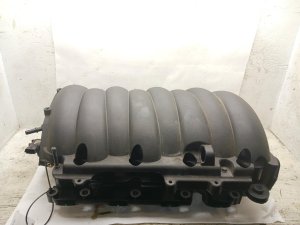
We Have This Part in Stock




The information in this article is provided for general reference and educational purposes only. Vehicle specifications, procedures, and part compatibility can vary by production date, trim level, and region. Always consult your vehicle's factory service manual and verify part numbers before purchasing or performing repairs. Safety-critical components such as airbags, seat belts, and braking systems should be installed by a qualified professional.
- Gmc YUKON DENALI:
- 🎬 Helpful Videos
- 🛍️ Shop This Part
- What's Unique About the 2012-2016 Gmc YUKON DENALI
- Diagnostic Flowchart
- Symptoms You May Notice
- Most Likely Causes
- Rare But Worth Checking
- Diagnosis Steps
- Parts You'll Likely Need
- Related Codes That Often Appear With This One
- Technical Service Bulletins (TSBs) & Recalls
- Platform-Specific Known Issues
- Mechanic-Grade Diagnostic Values
- Scan Tool Commands That Help
- Wiring & Ground Locations
- Real Owner Repair Stories
- "I Checked Everything" — The Actual Cause
- OEM Part Supersession History
- Model Year Variations Within This Range
- 🎟️ Get 5% Off