

P0171 on 2007-2011 GMC Yukon Denali: Lean Code Causes and Fixes
On a 2007-2011 GMC Yukon Denali, code P0171 is almost always caused by a vacuum leak. The most common culprits are a cracked PCV tube on the driver's side valve cover or failed intake manifold gaskets. A PCV tube is about $25-$50, while intake gaskets can cost $60-$150 in parts.
- For a P0171 code on a 2007-2011 Yukon Denali, start by inspecting for vacuum leaks.
- The two most likely culprits are a cracked PCV tube on the driver's side valve cover (per GM TSB PIP5341) and failed intake manifold gaskets.
- A smoke test is the most reliable way to confirm the location of a vacuum leak.
- Cleaning the Mass Air Flow (MAF) sensor with a dedicated cleaner is an easy and inexpensive diagnostic step.
- Do not replace the oxygen sensor first; it is usually reporting the problem correctly.
What's Unique About the 2007-2011 Gmc YUKON DENALI
On this generation of GMC Yukon Denali (GMT900 platform) with the 6.2L V8, the P0171 code is very frequently caused by specific, well-documented vacuum leaks. The original plastic-carrier intake manifold gaskets are a known failure point, often cracking with age and heat cycles, which allows unmetered air into the engine, especially in cold weather. Furthermore, a specific GM Technical Service Bulletin (TSB PIP5341) points directly to a crack-prone PCV tube on the driver's side as a common cause for this exact code, sometimes due to the engine cover rubbing a hole in it.
Diagnostic Flowchart
Tap your situation to follow the diagnostic path that matches what you're seeing on this vehicle.
Symptoms You May Notice
- Check Engine Light is on
- Rough idle, especially when cold or at a stop.
- Hesitation or surging during acceleration.
- Reduced engine power.
- A hissing or 'sucking' noise from the engine bay, indicating a vacuum leak.
- Poor fuel economy.
- Stalling in severe cases.
- Replacing the oxygen (O2) sensor. The O2 sensor is usually doing its job correctly by reporting the lean condition. The P0171 code means the sensor is working; replacing it is unlikely to fix the root cause unless it's accompanied by a specific O2 sensor fault code.
Most Likely Causes
- Cracked PCV Tube/Hose 🔴 High Probability A specific GM Technical Service Bulletin (PIP5341) identifies a crack in the PCV tube on the driver's side of the engine as a direct cause for P0171. The plastic and rubber become brittle from engine heat, and the engine cover can rub a hole in the tube where it connects to the intake manifold.
How to confirm: Visually inspect the PCV tube that connects the driver's side valve cover to the intake manifold. Look for cracks, especially at the elbow fittings. A smoke test will definitively show a leak here. In some cases, the crack is on the underside and difficult to see.
Typical fix: Replace the entire PCV tube assembly. Some owners recommend covering the new tube with a protective conduit to prevent future rubbing damage.
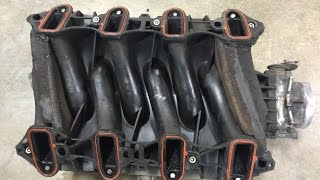
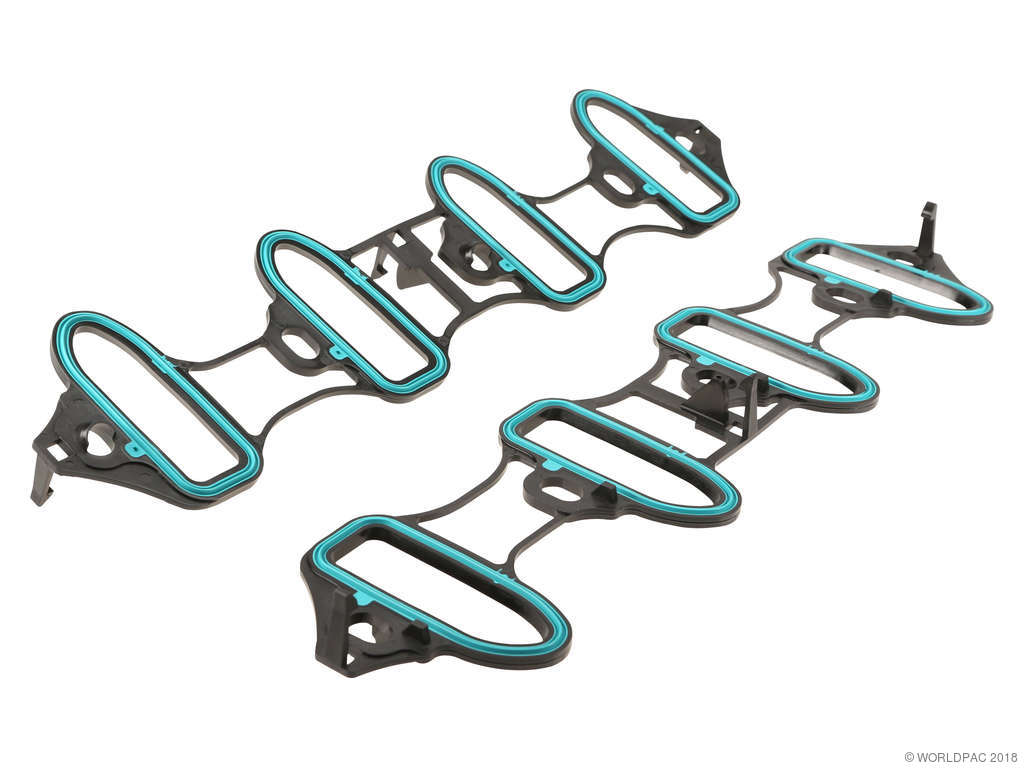
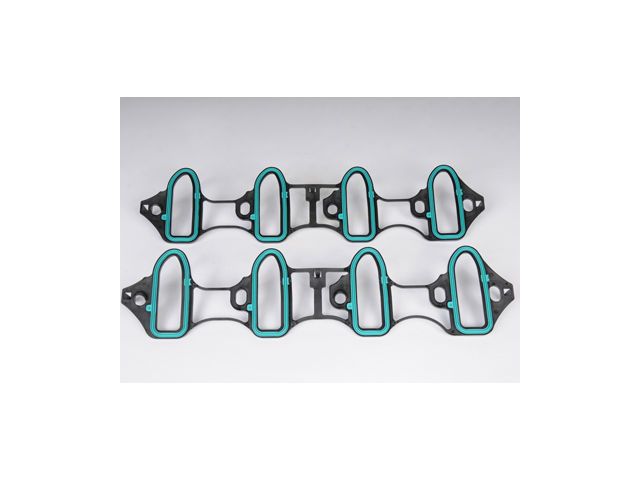
Est. part cost: $25-$50 - Leaking Intake Manifold Gaskets 🔴 High Probability The original intake manifold gaskets used a plastic carrier that is prone to cracking and deforming from heat cycles, especially noticeable during cold weather when the materials contract and the leak worsens.
How to confirm: A smoke test is the most effective method. You can also (carefully) spray brake cleaner or a flammable fluid around the intake manifold mating surface while the engine is idling; a change in engine RPM or fuel trims indicates a leak. This method is classic but a smoke test is safer and more precise.
Typical fix: Replace the intake manifold gaskets with an updated set that uses a metal carrier design (e.g., Fel-Pro MS98016T). 🎬 Watch: Step-by-step guide to replacing your intake manifold gaskets. Many owners also replace the knock sensors and harness located under the intake manifold at the same time.
Est. part cost: $60-$150 - Dirty or Faulty Mass Air Flow (MAF) Sensor 🟡 Medium Probability Oiled air filters or debris from a damaged filter can contaminate the MAF sensor, causing it to under-report the amount of air entering the engine. The computer then injects too little fuel, creating a lean condition.
How to confirm: Remove the sensor and inspect the small wires for dirt or oil residue. Cleaning it is a good first step. If the problem persists, monitoring MAF readings with a scan tool can confirm if it's faulty. A classic sign of a bad MAF is fuel trims that do not improve at higher RPMs, whereas a vacuum leak's effect will diminish.
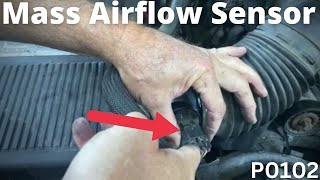
Typical fix: Clean the sensor with a dedicated MAF sensor cleaner. Do not use brake or carb cleaner. 🎬 See how to properly clean or replace your MAF sensor. If cleaning doesn't work, replace the sensor.
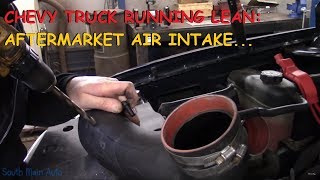
Est. part cost: $10 (cleaner) or $70-$150 (new sensor) - Loose or Cracked Air Intake Boot ⚪ Low Probability The large flexible boot between the MAF sensor and the throttle body can become loose or develop cracks, allowing unmetered air to enter the engine. This is a simple but sometimes overlooked cause.
How to confirm: Visually inspect the entire air intake duct for cracks or loose clamps. Ensure it is seated properly on the MAF sensor and the throttle body. A user on Tahoe Yukon Forum found their P0171 was caused simply by this hose having popped loose.
Typical fix: Tighten the clamps or replace the cracked intake boot.
Est. part cost: $40-$80
Rare But Worth Checking
- Weak Fuel Pump or Clogged Fuel Filter: If the engine is not receiving enough fuel pressure (spec is 55-62 PSI for non-Flex Fuel), it can cause a lean condition. This is less common than vacuum leaks but should be checked if leaks are not found. Symptoms might include a long crank time or the lean condition worsening under load.
- Stuck Open EVAP Purge Solenoid: A purge valve that is stuck open will create a constant vacuum leak into the intake manifold, which can be hard to detect with a standard smoke test. This can be tested by unplugging and capping the line to see if fuel trims return to normal.
- Exhaust Leak Before the Oxygen Sensor: A crack in the exhaust manifold or a leaking gasket before the upstream O2 sensor can allow outside air to be pulled into the exhaust stream. The sensor will read this extra oxygen and incorrectly report a lean condition.
- Leaking Brake Booster: A ruptured internal diaphragm in the brake booster creates a significant vacuum leak that a smoke test may not find. This is because the check valve on the booster's vacuum line can prevent smoke from entering. Symptoms include a hissing sound when applying the brakes and a stiff pedal.
Diagnosis Steps
- Scan for Codes: Use an OBD-II scanner to confirm P0171 and check for other codes, especially P0174 or P0300.
- Check Fuel Trims: Observe Short-Term (STFT) and Long-Term (LTFT) fuel trims. High positive numbers (e.g., LTFT > +15-25%) confirm the computer is adding fuel to correct a lean condition. With a vacuum leak, trims will be very high at idle and drop closer to normal when RPMs are increased to ~2500 RPM.
- Visual Inspection: Thoroughly inspect the engine bay. Look for the cracked PCV tube on the driver's side valve cover as mentioned in TSB PIP5341, paying close attention to where the engine cover might rub. 🎬 Watch: How to find and repair common vacuum air leaks. Check the air intake boot for cracks or loose clamps.
- Perform a Smoke Test: This is the most effective way to find vacuum leaks. Introduce smoke into the intake system (a common point is the brake booster line) and look for smoke escaping from the intake manifold gaskets, PCV hoses, or other vacuum lines.
- Clean the MAF Sensor: If no vacuum leaks are found, remove and clean the MAF sensor using a dedicated MAF sensor cleaner. Let it dry completely before reinstalling.
- Test Fuel Pressure: If the above steps don't resolve the issue, connect a fuel pressure gauge to the fuel rail. Check that the pressure is within GM's specifications (typically 55-62 PSI at key-on, engine-off for non-Flex Fuel models). A weak fuel pump or clogged filter could be the cause.
- Inspect for Exhaust Leaks: Check the exhaust manifolds and gaskets for any signs of leaks (soot trails, audible ticking) upstream of the first oxygen sensor.
Parts You'll Likely Need
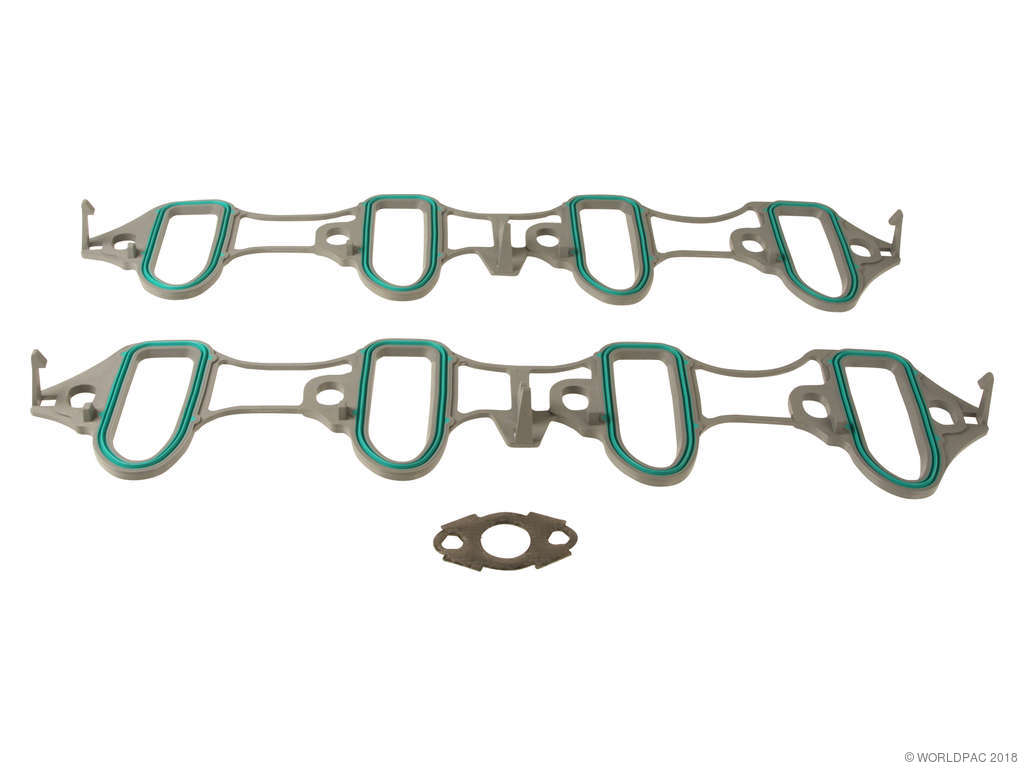
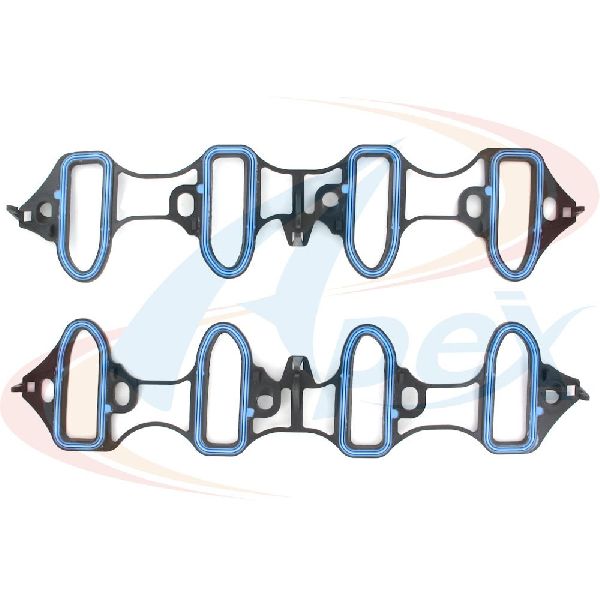
- Intake Manifold Gasket Set — This is a very common failure point on the 6.2L engine, causing vacuum leaks and lean codes. The updated metal-carrier design is recommended for a permanent fix.
Trusted brands: Fel-Pro (MS98016T is a popular updated design), ACDelco
OEM price range: $100-$180
Aftermarket price range: $60-$150 - PCV Foul Air Tube Assembly
(OEM #12613099 (also listed as 12597774 for some applications))— Cited in a GM TSB (PIP5341) as a primary cause for P0171. The plastic becomes brittle and cracks, creating a significant vacuum leak.
Trusted brands: ACDelco, Dorman
OEM price range: $40-$60
Aftermarket price range: $25-$45 - Mass Air Flow (MAF) Sensor
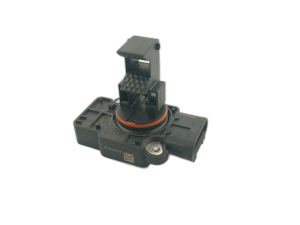
(OEM #ACDelco 213-3828 (Verify by VIN))— Often gets contaminated and misreads airflow. Cleaning is the first step, but replacement is necessary if cleaning doesn't solve the problem.
Trusted brands: ACDelco, Delphi, Denso
OEM price range: $120-$200
Aftermarket price range: $70-$150
Related Codes That Often Appear With This One
- P0174 — P0174 is 'System Too Lean (Bank 2)'. When both P0171 and P0174 appear together, it strongly suggests a problem affecting the entire engine, like intake manifold gaskets, a faulty MAF sensor, or low fuel pressure.
- P0300 — P0300 is 'Random/Multiple Cylinder Misfire'. A severe lean condition can prevent stable combustion, causing misfires across various cylinders. This is often seen when intake gaskets have failed significantly.
Technical Service Bulletins (TSBs) & Recalls
- SES Lamp P0171 P0174: Preliminary information for a rough running engine with P0171 and/or P0174. Instructs technicians to inspect the PCV dirty air tube on the left side of the engine for a vacuum leak, which can be caused by the engine cover rubbing through it. Affects a wide range of 2007-2016 GM trucks and SUVs with V8 engines.
Platform-Specific Known Issues
- TSB #PIP5341 directly points to a cracked PCV tube on the driver's side as a known cause for P0171/P0174 with a rough idle.
- The original plastic-carrier intake manifold gaskets are a well-known failure item, especially in cold weather, leading to lean codes. Upgrading to metal-carrier gaskets like the Fel-Pro MS98016T is the standard long-term repair.
Mechanic-Grade Diagnostic Values
- Fuel Pressure (Key On, Engine Off) — expected: 55-62 PSI (Non-Flex Fuel) or 48-54 PSI (Flex Fuel). Some sources state 55-65 PSI.. Failure: Pressure below the specified range, or pressure that bleeds off rapidly after the pump primes.
- Fuel Pressure at Idle — expected: Around 42-45 PSI (for Flex Fuel models with a Fuel System Control Module).. Failure: Pressure significantly lower than spec, which may not be sufficient under load.
- Mass Air Flow (MAF) Sensor Reading at Idle — expected: Approximately 6-8 g/s for a warm 6.2L engine. General specs for V8s are 4.5-8.5 g/s.. Failure: A reading significantly lower than expected (e.g., under 4 g/s) or a reading that does not increase smoothly with RPM.
- Long Term Fuel Trim (LTFT) at Idle — expected: -10% to +10%.. Failure: Sustained readings above +20% will typically trigger the P0171 code. Values will be highest at idle and decrease with higher RPM if a vacuum leak is present.
Scan Tool Commands That Help
- Tech2 / GDS2 / High-End Scan Tool: Fuel Trim Reset — After performing a repair for a lean condition (e.g., replacing intake gaskets, MAF sensor), resetting the fuel trims forces the PCM to immediately relearn the fuel strategy. This provides a quick way to verify if the repair was successful by observing if the new fuel trims stay close to 0%.
- Tech2 / GDS2: Camshaft Position Actuator Solenoid Valve Test — While not a direct cause of P0171, a stuck cam phaser can cause various performance issues. If other symptoms are present, this bidirectional control can help rule out VVT system problems.
Wiring & Ground Locations
- G102 — Lower left front of the engine block (driver's side).. This is a primary engine ground. A poor connection here can cause erratic behavior from multiple sensors, including the MAF sensor, leading to incorrect data and triggering lean codes.
- G103 — Front of the right cylinder head (passenger's side).. Provides a ground path for components on Bank 2. While P0171 is for Bank 1, a faulty ground here could cause issues if P0174 is also present.
- G104 — Front of the left cylinder head (driver's side).. Provides a ground path for the Engine Control Module (ECM) and other critical Bank 1 components. Corrosion or a loose connection can cause sensor issues and lean codes.
Real Owner Repair Stories
- Tahoe Yukon Forum User (2007 Yukon Denali 6.2L w/192k miles) — Check engine light with code P0171, but no noticeable running issues.
❌ Tried (didn't work) Initial diagnosis focused on O2 sensors and fuel trims.
✅ What actually fixed it The air intake hose after the MAF sensor had popped loose, creating a large unmetered air leak. Reconnecting the hose and clearing the codes resolved the issue completely. - Tahoe Yukon Forum User 'goldata81' (2007 Yukon Denali with 113k miles) — P0171 and P0174 codes, especially under moderate-to-heavy acceleration. Long term fuel trims would max out over 24%.
❌ Tried (didn't work) Initial checks of fuel pressure (60 psi at idle) and other sensors seemed normal.
✅ What actually fixed it Cleaning the Mass Air Flow (MAF) sensor. After cleaning, long term fuel trims were cut in half and the codes did not return. The user noted the MAF reading at idle was the same before and after cleaning (6-8 g/s), but the reading at WOT was higher after cleaning, indicating it was under-reporting airflow previously.
"I Checked Everything" — The Actual Cause
- A leaking brake booster diaphragm. A smoke test may not reveal this leak because the check valve on the booster's vacuum line can prevent smoke from entering the booster. The definitive symptom is a hissing noise from the pedal area when the brakes are applied, often accompanied by a hard pedal feel. This internal leak can be large enough to cause P0171 and P0174 codes.
- A stuck-open EVAP purge solenoid. This creates a vacuum leak that is part of the system's normal design, so it can be missed. If suspected, the line from the solenoid to the intake can be temporarily disconnected and plugged to see if fuel trims return to normal.
OEM Part Supersession History
12597774→12613099 (and others, verify by VIN)— The PCV foul air tube assembly is a known failure point. Part numbers are frequently updated for material or design improvements.
Model Year Variations Within This Range
- 2007-2008: The 6.2L V8 (L92) in the 2007 and 2008 Yukon Denali did NOT have Active Fuel Management (AFM/DOD). This makes them less susceptible to the lifter-related issues that can cause misfires and oil consumption on later models, though it does not change the primary causes for P0171.
- 2009-2011: The 6.2L V8 (L9H/L94) in these years included Active Fuel Management (AFM). While not a direct cause of P0171, AFM system failures can lead to other engine problems like oil consumption or misfires (P0300), which can complicate diagnosis.
Helpful Videos

Used OEM Parts in Stock


New Aftermarket Parts Available


The information in this article is provided for general reference and educational purposes only. Vehicle specifications, procedures, and part compatibility can vary by production date, trim level, and region. Always consult your vehicle's factory service manual and verify part numbers before purchasing or performing repairs. Safety-critical components such as airbags, seat belts, and braking systems should be installed by a qualified professional.
- Gmc YUKON DENALI:
- 🎬 Helpful Videos
- 🛍️ Shop This Part
- What's Unique About the 2007-2011 Gmc YUKON DENALI
- Diagnostic Flowchart
- Symptoms You May Notice
- Most Likely Causes
- Rare But Worth Checking
- Diagnosis Steps
- Parts You'll Likely Need
- Related Codes That Often Appear With This One
- Technical Service Bulletins (TSBs) & Recalls
- Platform-Specific Known Issues
- Mechanic-Grade Diagnostic Values
- Scan Tool Commands That Help
- Wiring & Ground Locations
- Real Owner Repair Stories
- "I Checked Everything" — The Actual Cause
- OEM Part Supersession History
- Model Year Variations Within This Range
- 🎟️ Get 5% Off