

GMC Yukon P0171 Guide (2015-2017): System Too Lean Causes and Fixes
Code P0171 on a 2015-2017 GMC Yukon means the engine is running too lean on Bank 1. The most common causes are a dirty or faulty Mass Airflow (MAF) sensor, vacuum leaks from hoses or intake gaskets, or low fuel pressure. A well-known issue is excess plastic flashing in the air filter housing disrupting the MAF sensor, covered by TSB PIP5446. Start by cleaning the MAF sensor and inspecting the air intake system for leaks.
- P0171 on a 2015-2017 Yukon means Bank 1 is too lean (too much air or not enough fuel).
- Before buying parts, inspect the air intake tube for loose connections and the MAF sensor for dirt or debris. Also check the air filter housing for plastic flashing per TSB #PIP5446.
- If P0171 is paired with P0174, the problem affects the whole engine. Focus on the MAF sensor, major vacuum leaks, and fuel pressure.
- For 2015 models, ensure you are using the correct fuel, as non-Flex Fuel versions can throw this code if high-ethanol fuel is used.
- A smoke test is the most effective method for locating hard-to-find vacuum leaks.
What's Unique About the 2015-2017 Gmc YUKON
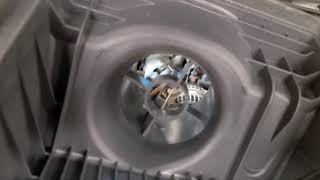
For the 2015-2017 GMC Yukon, equipped with EcoTec3 engines (5.3L L83 or 6.2L L86), this code is frequently linked to specific manufacturing and design issues. A notable problem is excess plastic flashing in the air filter housing near the MAF sensor, which disrupts airflow readings and causes lean conditions, as documented in GM TSB PIP5446. 🎬 Watch this diagnostic breakdown of lean codes on the 5.3L engine. This TSB also covers harsh shifting and sputtering, which are common companion symptoms. Additionally, some of these non-Flex Fuel vehicles can trigger P0171 if fuel with high ethanol content is used, as the system is not calibrated for it.
Diagnostic Flowchart
Tap your situation to follow the diagnostic path that matches what you're seeing on this vehicle.
Symptoms You May Notice
- Check Engine Light is on
- Rough idle.
- Sputtering or hesitation when applying the throttle.
- Reduced engine power and performance.
- Poor fuel economy.
- Harsh shifting between gears.
- Engine stalling at idle.
- Hissing sound from the engine bay, indicating a vacuum leak.
- Replacing the oxygen sensor first. O2 sensors report the problem; they are not always the cause. A lean code is more often caused by unmetered air or a fuel delivery issue. Always diagnose vacuum leaks and MAF sensor issues before suspecting the O2 sensor.
Most Likely Causes
- Dirty or Faulty Mass Airflow (MAF) Sensor 🔴 High Probability A specific GM Technical Service Bulletin (PIP5446A) points to excess casting flash in the air filter housing that can disrupt airflow and cause incorrect MAF sensor readings. This turbulence leads to an inaccurate measurement of incoming air, causing the ECM to calculate the wrong fuel mixture. Debris, like paper from a damaged air filter, can also contaminate the sensor.
How to confirm: Inspect the MAF sensor wires for dirt or debris. Check the air filter housing for any plastic flashing near the sensor mount, as shown in TSB PIP5446A. Monitor MAF readings with a scan tool; they should increase smoothly with engine RPM. With the engine running, a faulty MAF may not respond correctly to throttle changes.
Typical fix: Clean the sensor with dedicated MAF sensor cleaner. If flashing is found in the housing, the air filter housing lid (also called the air cleaner outlet duct) should be replaced. If cleaning doesn't work, replace the MAF sensor. The ACDelco Genuine GM part is a common replacement.
Est. part cost: $20 (cleaner) - $150 (sensor) - Vacuum Leak 🔴 High Probability Intake manifold gaskets on the 5.3L and 6.2L engines are a known failure point; the original plastic/rubber gaskets can become brittle from heat cycles and crack, creating a source of unmetered air. PCV hoses and the brake booster hose can also crack or become disconnected, causing significant vacuum leaks.
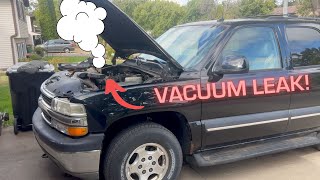
How to confirm: Listen for a hissing sound at idle. With the engine running, spray brake cleaner or a water mist around vacuum lines and the intake manifold gasket; a change in engine idle indicates a leak. A smoke test is the most definitive way to find hard-to-see leaks 🎬 See how to use a smoke machine to find vacuum leaks. in gaskets or intake boots.
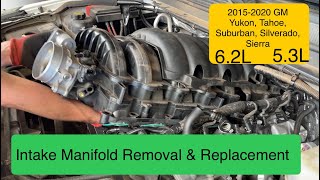
Typical fix: Replace the cracked hose or faulty gasket. For intake manifold gaskets, using an updated design like those from Fel-Pro with a steel carrier can prevent repeat failures. 🎬 Follow this step-by-step guide to replacing your intake manifold gaskets. PCV hoses are also common and relatively inexpensive to replace.
Est. part cost: $20 (hose) - $250 (intake gaskets) - Low Fuel Pressure 🟡 Medium Probability These direct-injection engines have two fuel pumps: a low-pressure in-tank pump and a high-pressure mechanical pump on the engine. A weak in-tank pump or a clogged fuel filter (which is part of the pump module) can fail to supply the high-pressure pump with enough fuel, leading to a lean condition.
How to confirm: Connect a fuel pressure gauge to the low-pressure fuel system. Use a scan tool to command the fuel pump on; pressure should be between 46–84 PSI (320–580 kPa). If pressure is low or drops off, the in-tank fuel pump is likely weak. Diagnosing the high-pressure pump requires monitoring fuel rail pressure with a scan tool, which should be significantly higher.
Typical fix: Replace the in-tank fuel pump module. The fuel filter is typically part of the fuel pump assembly on these models and is not serviced separately.
Est. part cost: $250-$500 - Incorrect Fuel ⚪ Low Probability A GM TSB (PIP5227) notes that 2015 Yukons with the 5.3L engine (RPO FHO) are not E85 compatible. Using fuel with over 10% ethanol can cause P0171 and P0174 because the system isn't calibrated for the different oxygen content of the fuel.
How to confirm: Check the fuel cap color; black indicates a standard gasoline vehicle, while yellow indicates Flex-Fuel (E85 compatible). If you have a black cap and recently filled up, the fuel may have high ethanol content. A fuel composition test can confirm.
Typical fix: Drain the incorrect fuel and refill with the proper grade of gasoline (E10 or less). Resetting the fuel trim values with a scan tool may be necessary.
Est. part cost: $0 (if caught early) - $200 (for fuel drain)
Rare But Worth Checking
- Faulty Oxygen Sensor: While possible, the upstream O2 sensor (Bank 1, Sensor 1) can fail and send incorrect lean signals. However, this is less common than vacuum leaks or MAF issues. An O2 sensor that is old or 'lazy' may not react quickly enough, leading to incorrect fuel trim adjustments. Diagnose other causes first before replacing the sensor.
- Exhaust Leak: A crack in the exhaust manifold or a leaking gasket before the upstream O2 sensor can allow outside air into the exhaust stream. This extra oxygen tricks the sensor into thinking the engine is running lean, causing the ECM to add unnecessary fuel.
- Clogged Fuel Injectors: If one or more fuel injectors on Bank 1 are clogged or dirty, they won't deliver the commanded amount of fuel, leading to a lean condition on that bank. This is less common than a system-wide fuel pressure issue.
Diagnosis Steps
- Check for other stored trouble codes. The presence of P0174 is a key clue for a system-wide issue.
- Using a scan tool, observe Long-Term Fuel Trim (LTFT) and Short-Term Fuel Trim (STFT) for Bank 1 at idle and at 2500 RPM. High positive numbers (e.g., LTFT > +15%) confirm the lean condition.
- Visually inspect the entire air intake system from the air filter to the throttle body for loose clamps, cracked hoses (especially the PCV line), or disconnected lines.
- Remove and inspect the Mass Airflow (MAF) sensor. Look for contamination on the sensor wires and check the air filter housing for plastic "casting flash" as described in TSB #PIP5446A. Clean the sensor with dedicated MAF cleaner.
- Perform a vacuum leak test. Listen for hissing noises. Carefully spray flammable brake cleaner or a water mist around the intake manifold gaskets, vacuum hoses, and PCV lines while monitoring STFT on a scan tool. If the fuel trim numbers drop sharply, you've found the leak.
- If no leak is found visually, perform a smoke test. This is the most effective method for finding small, hidden leaks in gaskets, seals, or the intake boot.
- Test low-side fuel pressure. Use a scan tool to command the fuel pump on and check if the pressure is within the 46-84 PSI specification. A pressure that drops quickly after the pump is turned off can indicate a bad check valve in the pump assembly.
- If all else fails, test the Bank 1 Sensor 1 oxygen sensor to ensure it is responding correctly and not stuck in a lean reading. A properly functioning O2 sensor should have a fluctuating voltage on a scan tool.
Parts You'll Likely Need
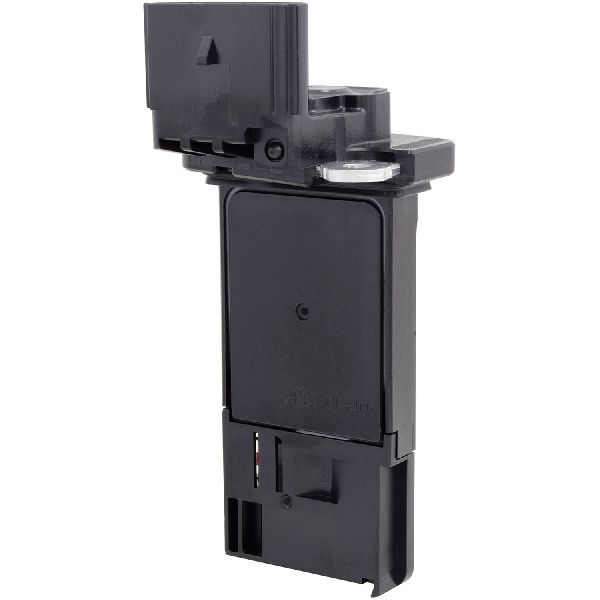
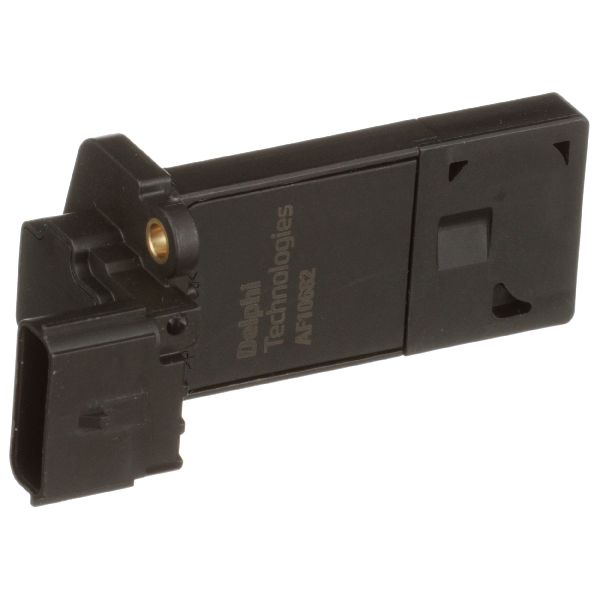
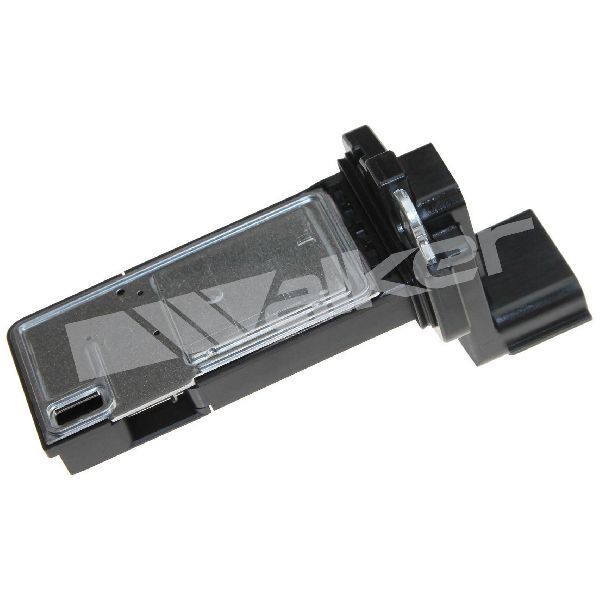
- Mass Airflow (MAF) Sensor
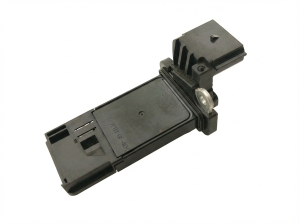
(OEM #23262343)— Often gets dirty or fails, providing incorrect airflow data to the ECM. A very common cause for lean codes on GM trucks, sometimes due to contamination or electronic failure.
Trusted brands: ACDelco, Delphi, Hitachi
OEM price range: $95-$160
Aftermarket price range: $50-$120 - Air Cleaner Outlet Duct / Housing Lid
(OEM #23192713 (Air Cleaner Assembly which includes the lid))— A known issue (TSB PIP5446A) involves excess plastic flashing inside the housing which disrupts airflow and causes incorrect MAF sensor readings. The entire air cleaner assembly often needs to be replaced to resolve this.
Trusted brands: ACDelco (Genuine GM)
OEM price range: $230-$360
Aftermarket price range: $150-$250
Related Codes That Often Appear With This One
- P0174 — System Too Lean (Bank 2). This code is very common with P0171. When both appear, it strongly suggests a problem affecting the entire engine, such as a MAF sensor issue, a major vacuum leak from the intake manifold, or low fuel pressure from the in-tank pump.
- P0101 — Mass Air Flow (MAF) Circuit Range/Performance. This code can appear with P0171 if the MAF sensor's readings are erratic or out of the expected range. TSB #PIP5446 links these codes directly to the casting flash issue in the air filter housing.
Technical Service Bulletins (TSBs) & Recalls
- PIP5446A: Addresses harsh shifting, sputtering, and lean/rich codes (P0171, P0174, etc.) caused by excess casting flash in the air filter housing near the MAF sensor.
- PIP5227: Notes that non-Flex Fuel 2015 models with the 5.3L engine can set P0171/P0174 if fuel with more than 10% ethanol is used.
Platform-Specific Known Issues
- TSB #PIP5446: Excessive casting flash in the air filter housing near the MAF sensor can cause rough idle, hesitation, and set codes P0171/P0174. The fix is to replace the air filter housing lid.
- TSB #PIP5227: On non-Flex Fuel 2015 models (RPO FHO), using fuel with more than 10% ethanol can trigger lean codes P0171 and P0174. These vehicles are not equipped with a flex-fuel sensor to adjust for the alcohol content.
Mechanic-Grade Diagnostic Values
- Low-Side Fuel Pressure (Key On) — expected: 46–84 PSI (320–580 kPa). Failure: Pressure below 46 PSI suggests a weak in-tank fuel pump or clogged filter.
- Low-Side Fuel Pressure Drop (Key Off) — expected: Pressure should hold steady and not drop quickly.. Failure: A rapid drop in pressure after turning the key off indicates a bad check valve within the fuel pump module, allowing fuel to drain back into the tank.
- Long-Term Fuel Trim (LTFT) at Idle vs. 2500 RPM — expected: If a vacuum leak is the cause, high positive fuel trims at idle (e.g., +20%) will decrease significantly towards 0% when RPMs are raised to ~2500.. Failure: If high positive fuel trims stay high or get worse at higher RPMs, the issue is more likely related to fuel delivery (weak pump) or a faulty MAF sensor.
Scan Tool Commands That Help
- GDS2 / Professional Scan Tool: Active Test / Fuel Pump Enable — This command allows a technician to turn the in-tank fuel pump on and off without the engine running. It is used to verify the pump is operational (audible noise) and to check the low-side fuel pressure against specifications.
- GDS2 / Professional Scan Tool: Reset Fuel Trim Values — After a repair is completed (e.g., fixing a vacuum leak or replacing a MAF sensor), resetting the learned fuel trim values will force the ECM to relearn the air/fuel mixture immediately, confirming the fix faster than waiting for the long-term trims to adjust on their own.
Wiring & Ground Locations
- G103 / G104 — On the front and rear of the passenger side (Bank 2) cylinder head. G104 is on the rear of the driver's side (Bank 1) cylinder head.. These are primary engine ground points. A loose or corroded connection at G104 can affect the sensors on Bank 1, potentially causing erratic readings that could contribute to a P0171 code.
- G101 — Located on the engine block near the starter.. This ground is critical for the Engine Control Module (ECM) and Transmission Control Module (TCM). A poor connection here can cause a wide range of seemingly unrelated electrical issues and driveability problems, including lean codes.
- MAF Sensor Connector — On the MAF sensor itself, located in the air intake tube between the air filter box and the throttle body.. A loose, corroded, or damaged connector or pin can cause incorrect MAF readings, directly leading to P0171. Technicians will check this connector for a stable 5V reference, ground, and a signal wire that varies with airflow.
Real Owner Repair Stories
- Reddit user in r/cruze (describing a common GM engine issue) (GM vehicle with P0171 (similar PCV design)) — P0171 code, rough idle, whistling noise from engine bay.
❌ Tried (didn't work) Replacing PCV hose, Replacing intake manifold
✅ What actually fixed it The integrated PCV diaphragm in the valve cover had ruptured, creating a vacuum leak. Replacing the entire valve cover assembly resolved the issue. The failure was confirmed by placing a finger over the vent hole on the valve cover with the engine running; a strong suction was felt, and the idle smoothed out. - YouTube channel "Flat Rate Mechanic" (GMC Yukon with P0171 and P0174) — Check engine light with lean codes on both banks.
❌ Tried (didn't work) Smoke test (no leaks found), Blocking off brake booster hose (no change in fuel trims), Fuel pressure test (pressure was slightly low but within acceptable range and held steady)
✅ What actually fixed it After cleaning the MAF sensor element with dedicated cleaner and correcting a crumpled intake boot did not solve the issue, the Mass Airflow (MAF) sensor was replaced. The new sensor brought the short-term and long-term fuel trims back towards zero, confirming it was a faulty sensor providing incorrect data despite not having any major vacuum leaks or fuel pressure problems.
"I Checked Everything" — The Actual Cause
- In some cases, a smoke test will show no vacuum leaks, and fuel pressure will test within spec, yet P0171 (and often P0174) will persist. A common hidden cause on these GM V8 engines is a faulty Mass Airflow (MAF) sensor that is sending inaccurate data to the ECM, but not so far out of range as to set a specific MAF code like P0101. Replacing the MAF sensor can resolve the lean codes in this scenario.
- Another cause that can evade a smoke test is a ruptured PCV diaphragm inside the driver-side valve cover. This creates a vacuum leak that is internal to the crankcase system. A tell-tale sign is a whistling or sucking noise from the valve cover, or finding that the idle smooths out when you place your finger over the small vent hole on the cover assembly.
OEM Part Supersession History
20787043, 23118170→23262343— Standard part evolution for improved performance or manufacturing.22870281→23192713— Updated design for the air cleaner assembly.
Heads up: This is for the entire air cleaner assembly, which includes the housing lid where flashing issues can occur.
Model Year Variations Within This Range
- 2015 vs 2017: The 2015 5.3L V8 was available as a Gas/Ethanol (Flex-Fuel) engine, while the 2017 5.3L V8 is listed primarily as Gas only in some spec sheets. This reinforces the importance of TSB PIP5227, which warns against using high-ethanol fuel in non-Flex Fuel versions, as it can cause lean codes.
Helpful Videos
Used OEM Parts in Stock
New Aftermarket Parts Available



The information in this article is provided for general reference and educational purposes only. Vehicle specifications, procedures, and part compatibility can vary by production date, trim level, and region. Always consult your vehicle's factory service manual and verify part numbers before purchasing or performing repairs. Safety-critical components such as airbags, seat belts, and braking systems should be installed by a qualified professional.
- Gmc YUKON:
- 🎬 Helpful Videos
- 🛍️ Shop This Part
- What's Unique About the 2015-2017 Gmc YUKON
- Diagnostic Flowchart
- Symptoms You May Notice
- Most Likely Causes
- Rare But Worth Checking
- Diagnosis Steps
- Parts You'll Likely Need
- Related Codes That Often Appear With This One
- Technical Service Bulletins (TSBs) & Recalls
- Platform-Specific Known Issues
- Mechanic-Grade Diagnostic Values
- Scan Tool Commands That Help
- Wiring & Ground Locations
- Real Owner Repair Stories
- "I Checked Everything" — The Actual Cause
- OEM Part Supersession History
- Model Year Variations Within This Range
- 🎟️ Get 5% Off