

P0171 on 2018 GMC Terrain: "System Too Lean" Causes and Fixes
On a 2018 GMC Terrain, a P0171 code is most often caused by a vacuum leak from a cracked PCV hose, a poorly seated air filter housing, or a dirty Mass Airflow (MAF) sensor. A clogged PCV orifice in the camshaft cover is also a known issue on the 1.5L engine. Cleaning the MAF sensor and performing a smoke test to check the intake system for leaks are the best first steps.
- P0171 on a 2018 Terrain means too much air or not enough fuel.
- The most likely cause is a vacuum leak. Thoroughly check the air intake tube, all PCV hoses, and ensure the air filter box is sealed correctly, especially after a service.
- Cleaning the Mass Airflow (MAF) sensor with a dedicated cleaner is a simple, inexpensive, and highly effective diagnostic step.
- Be aware of the known issue with the PCV system inside the intake manifold on the 1.5L engine, which can cause this code.
- Don't immediately replace the O2 sensor; it's usually reporting the problem, not causing it.
What's Unique About the 2018-2018 Gmc TERRAIN

The 2018 GMC Terrain, particularly with the 1.5L (LYX) turbo engine, is susceptible to issues within the Positive Crankcase Ventilation (PCV) system. A key failure point is a small, non-serviceable PCV orifice located in the camshaft cover (not the intake manifold) which can clog. This clog leads to excessive crankcase pressure, which can cause oil leaks and trigger codes P1101 and P0171. GM issued Technical Service Bulletin 20-NA-047 to address this, outlining a procedure to inspect and replace the orifice. Additionally, TSB #PIE0433A was issued early on to gather data on P0171 codes, indicating it was a known issue.
Diagnostic Flowchart
Tap your situation to follow the diagnostic path that matches what you're seeing on this vehicle.
Symptoms You May Notice
- Check Engine Light is on
- Rough or unstable idle
- Hesitation or stumbling during acceleration
- Reduced engine power
- Poor fuel economy
- Hissing or whistling noises from the engine bay
- Engine may take longer than usual to start (long crank)
- Replacing the oxygen sensor first. While a faulty O2 sensor can cause P0171, the root cause is far more likely to be a vacuum leak or a dirty MAF sensor. Always diagnose for unmetered air before replacing sensors.
- Replacing the valve cover/camshaft cover for a ruptured PCV diaphragm without addressing the root cause. On some GM turbo engines, a failed non-return valve in the intake manifold can cause boost pressure to rupture the PCV diaphragm; simply replacing the cover will lead to a repeat failure.
Most Likely Causes

- Vacuum Leak (PCV Hoses, Intake Air Duct) 🔴 High Probability The plastic and rubber components of the PCV system and air intake can become brittle and crack, allowing unmetered air to enter the engine past the MAF sensor. The air intake duct (hose) is a common failure point. The NHTSA complaint (ODI #11644047) about the code appearing after an air filter change suggests an improperly sealed airbox is a frequent source of leaks.
How to confirm: Visually inspect all hoses connected to the intake manifold, throttle body, and valve cover for cracks or disconnections. With the engine running, listen for hissing sounds. You can also carefully spray brake cleaner or use a smoke machine around suspected leak areas; a change in engine idle or the sight of smoke indicates you've found the leak.
Typical fix: Replace the cracked hose or intake boot. The OEM part number for the Air Cleaner Outlet Duct for the 1.5L engine is 84228127, which has been superseded by 87833816. Ensure the air filter housing is properly seated and clamped.
Est. part cost: $25-$150 - Dirty or Faulty Mass Airflow (MAF) Sensor 🔴 High Probability
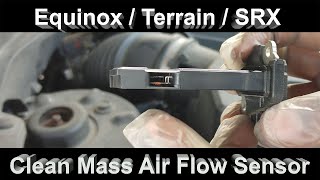
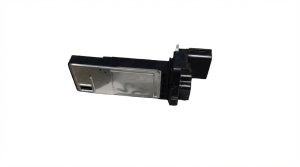
How to confirm: A dirty MAF sensor under-reports the amount of air entering the engine, causing the computer to inject too little fuel. The sensor can be easily removed and inspected. If the small wires inside appear dirty or oily, it needs cleaning.
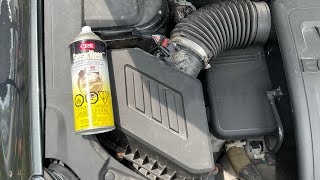
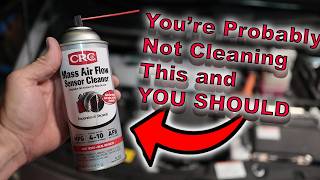
Typical fix: Clean the sensor using only dedicated MAF sensor cleaner spray. 🎬 See this quick guide on cleaning your MAF sensor safely. Do not touch the sensor wires. If cleaning doesn't resolve the issue, the sensor may need to be replaced. Using a non-OEM sensor can sometimes cause persistent issues.
Est. part cost: $10-$20 (cleaner), $80-$150 (new sensor) - Clogged PCV Orifice in Camshaft Cover 🟡 Medium Probability The 1.5L LYX engine has a PCV orifice integrated into the camshaft cover that can become clogged with sludge. This obstruction causes excessive positive crankcase pressure, which can manifest as oil being pushed out of seals and can trigger a P1101 code alongside P0171.
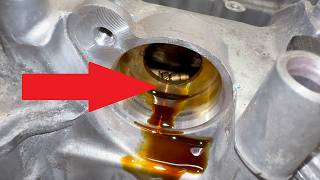
How to confirm: A symptom is excessive pressure at the oil fill cap when the engine is running (it should have slight vacuum). A manometer can be used to confirm; normal readings are between -1 and -5 inches of water at hot idle. 🎬 Watch: How to test for extreme crankcase vacuum issues. TSB 20-NA-047 details this specific issue.
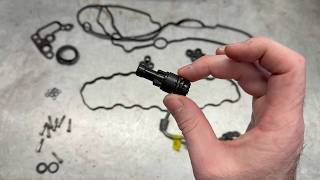
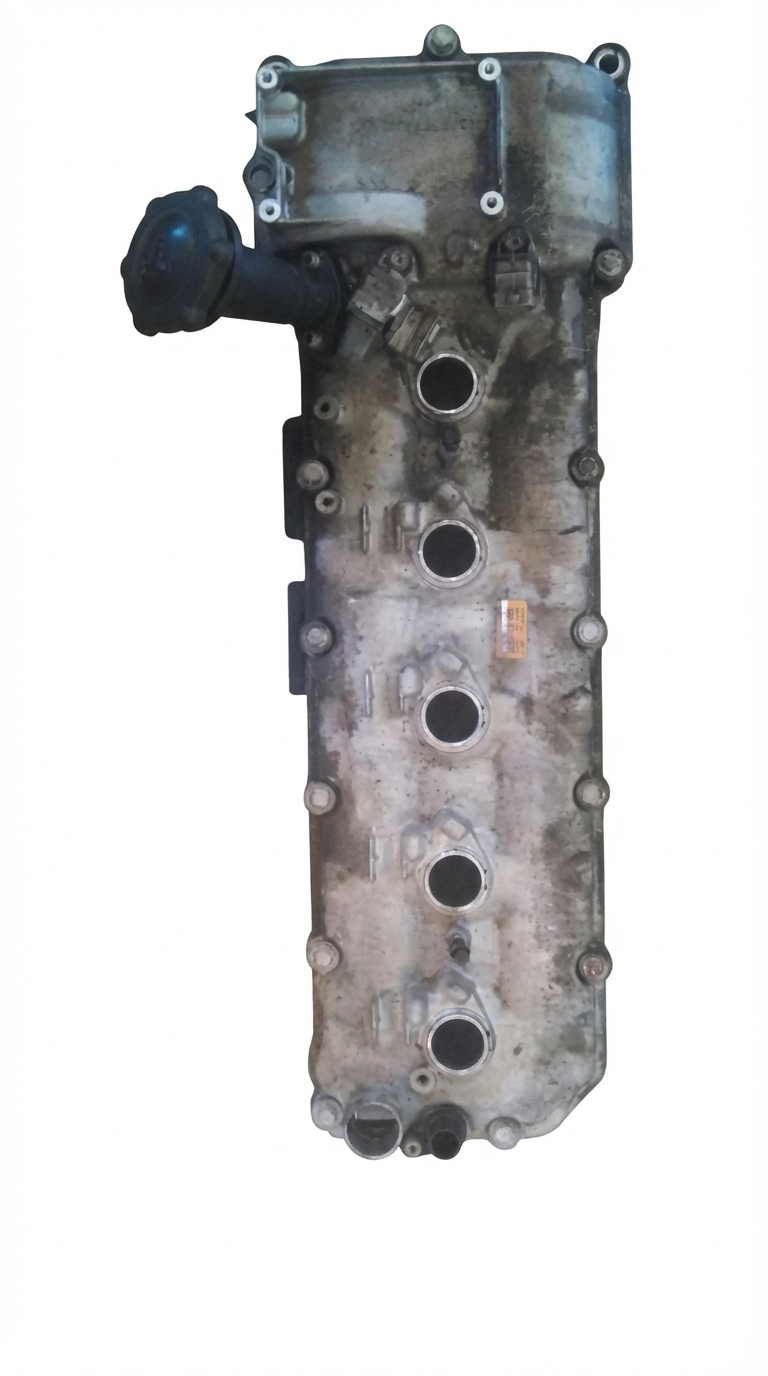
Typical fix: The official GM procedure requires removing the camshaft cover to access and replace the small PCV orifice 🎬 Watch: Step-by-step guide to replacing the PCV orifice. (Part No. 12641875). While there, the passages in the cover should be inspected for blockage and gaskets replaced. Some mechanics opt to replace the entire valve cover assembly.
Est. part cost: $15 (orifice only) - $400 (full valve cover assembly) - Low Fuel Pressure (Weak High-Pressure Fuel Pump) ⚪ Low Probability
How to confirm: These direct-injection engines have a high-pressure fuel pump (HPFP) driven by the camshaft. While less common, a failing HPFP can fail to provide adequate pressure, leading to a lean condition, especially under load. This would typically be accompanied by other codes like P0087 (Fuel Rail Pressure Too Low). A scan tool can monitor fuel rail pressure to see if it meets specifications. The HPFP on the 1.5L and 2.0L engines can deliver pressure ranging from 2,000 to 2,800 PSI.
Typical fix: Replace the failing high-pressure fuel pump. This is a more involved and costly repair.
Est. part cost: $300-$700
Rare But Worth Checking
- Failing Upstream Oxygen (O2) Sensor: An old or 'lazy' O2 sensor can send slow or incorrect signals, falsely reporting a lean condition. This should be considered after all potential air leaks and fuel delivery issues have been ruled out. In one documented case for a platform mate (Chevy Equinox), a faulty upstream O2 sensor was the root cause after P0171, P0300, and P0133 codes were present.
- Leaking Fuel Injectors: While less common, a dirty or partially clogged fuel injector can fail to deliver enough fuel to its cylinder, contributing to a lean condition.
- Exhaust Leak (before O2 Sensor): A crack in the exhaust manifold or a bad gasket before the first oxygen sensor can allow outside air to be pulled into the exhaust stream, tricking the sensor into reading a false lean condition. This will not be found with a smoke test of the intake system.
Diagnosis Steps

- Read the code with an OBD-II scanner and check for any other stored codes, especially P1101, P0101, or P0299.
- Check long-term fuel trim (LTFT) values with a scan tool. A value consistently above +10% to +15% confirms the computer is compensating for a lean condition. Values approaching +25% or higher indicate a significant leak or fault.
- Perform a thorough visual inspection of the entire air intake system from the air filter box to the throttle body. Look for cracked hoses (especially the PCV lines and the main intake air duct), loose clamps, or an improperly seated air filter box.
- With the engine running, listen for hissing sounds. Conduct a smoke test to precisely locate any vacuum leaks. This is the most effective method.
- Remove and inspect the Mass Airflow (MAF) sensor. If it appears dirty, clean it with dedicated MAF sensor cleaner only. Let it dry completely before reinstalling.
- Check crankcase pressure. With the engine running, remove the oil fill cap. A strong suction or positive pressure indicates a problem in the PCV system, likely a clogged orifice in the camshaft cover per TSB 20-NA-047.
- If no vacuum leaks are found and the MAF is clean, test the fuel pressure. Use a scan tool to monitor the high-pressure fuel rail and ensure it meets specifications under various loads.
- As a final step, use a scan tool to monitor the upstream oxygen sensor's voltage. It should fluctuate rapidly between approximately 0.1 and 0.9 volts. A slow or stuck reading may indicate a faulty sensor.
Parts You'll Likely Need

- Mass Airflow (MAF) Sensor Cleaner — This is the cheapest and easiest first step. A dirty MAF sensor is a very common cause of P0171.
Trusted brands: CRC, WD-40 Specialist
Aftermarket price range: $10-$20 - Intake Air Duct
(OEM #ACDelco 87833816 (replaces 84228127))— This large rubber hose between the airbox and turbo inlet is prone to cracking, creating a significant vacuum leak that is a primary cause of P0171.
Trusted brands: ACDelco (OEM), Dorman, Gates
OEM price range: $75-$120
Aftermarket price range: $25-$75 - PCV Orifice
(OEM #ACDelco 12641875)— For the 1.5L engine, this small orifice in the camshaft cover can clog, causing high crankcase pressure and triggering P0171. This is addressed in TSB 20-NA-047.
Trusted brands: ACDelco (OEM)
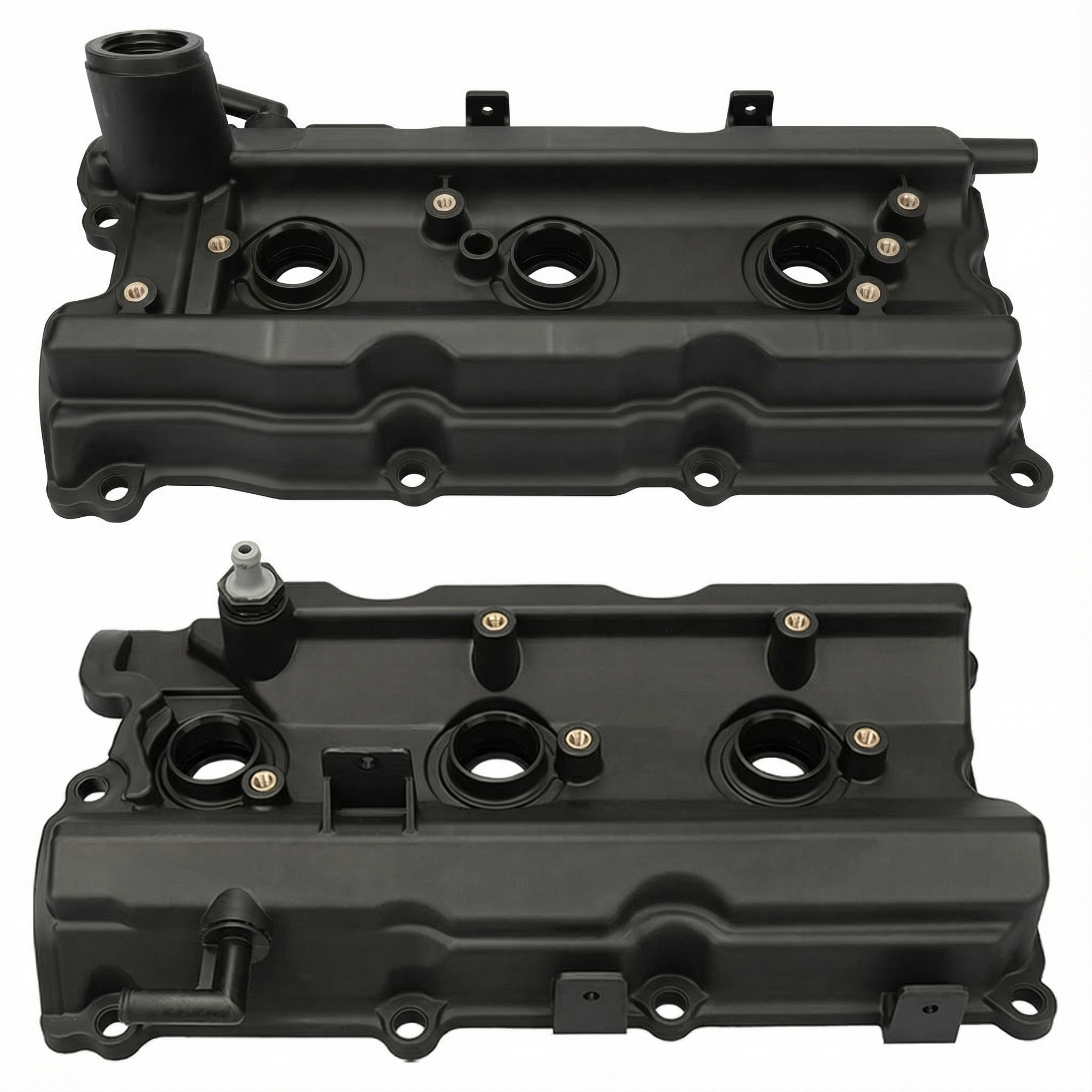
OEM price range: $15-$25 - Camshaft Cover / Valve Cover
(OEM #ACDelco 12719395)— Often replaced as an assembly if the PCV orifice is clogged or the internal diaphragm has failed. Includes new gaskets.
Trusted brands: ACDelco (OEM), Dorman
OEM price range: $250-$400
Aftermarket price range: $150-$250
Related Codes That Often Appear With This One
- P1101 — This GM-specific code for MAF Sensor Performance is very commonly seen with P0171. It is often triggered by high crankcase pressure from a clogged PCV system or by a significant vacuum leak, directly relating to the primary causes of P0171 on these engines.
- P0101 — This code indicates a MAF Circuit Range/Performance problem. If the MAF sensor is dirty, failing, or there's a large vacuum leak after it, this code may be triggered along with P0171.
- P0299 — This code indicates a Turbocharger Underboost condition. GM TSB 18-NA-020 notes that in cold weather, moisture (including from the PCV system) can freeze in the charge air cooler, causing a restriction that can trigger P0299. This is related to the PCV system, a common source of P0171 issues.
Technical Service Bulletins (TSBs) & Recalls

- TSB #PIE0433A: An early engineering inquiry from GM requesting field data on vehicles with P0171/P0174 codes, showing it was a known point of interest.
- TSB #20-NA-047: Addresses DTC P1101 and oil leaks caused by excessive positive crankcase pressure on the 1.5L LYX engine. It points to a clogged PCV orifice in the camshaft cover and provides a replacement procedure.
- TSB #18-NA-020: Relates to moisture buildup in the charge air cooler, which can freeze in cold climates and cause restrictions, leading to codes like P0299 (Turbo Underboost) and P0300 (Random Misfire). This is relevant as PCV moisture contributes to the issue.
Platform-Specific Known Issues
- GM issued Technical Service Bulletin #PIE0433A specifically to investigate the cause of P0171/P0174 codes on 2018 models, showing it was a recognized problem.
- A clogged PCV orifice inside the intake manifold is a known failure point on the 1.5L Turbo engine, which can cause P0171 and/or P1101 codes. This is documented in TSB 20-NA-047 for similar vehicles with this engine.
- An owner complaint to the NHTSA (ODI #11644047) notes the P0171 code appearing intermittently after air filter replacements, strongly suggesting that an improperly sealed air filter housing is a common and easily overlooked cause for a vacuum leak on this vehicle.
Mechanic-Grade Diagnostic Values
- Mass Airflow (MAF) Sensor Reading at Idle — expected: 2 to 7 grams/second (g/s) on a scan tool. The reading should be stable.. Failure: A reading that is stuck, erratic, or does not increase smoothly with RPM. A reading that is too low suggests unmetered air is entering after the sensor.
- Mass Airflow (MAF) Sensor Reading at 2500 RPM — expected: 15 to 25 grams/second (g/s) on a scan tool.. Failure: A reading that rises too slowly can indicate a dirty sensor or an air leak downstream.
- Mass Airflow (MAF) Sensor Frequency at Idle — expected: Approximately 3.2 KiloHertz (KHz) at ~700 RPM on a multimeter or scope.. Failure: A signal that is absent or does not increase with RPM.
- High-Pressure Fuel Pump (HPFP) Rail Pressure — expected: 2,000 to 2,800 PSI, monitored via scan tool.. Failure: Actual pressure that consistently fails to meet desired pressure, especially under load. This would likely set a P0087 code as well.
- Upstream Oxygen (O2) Sensor Voltage — expected: Rapidly fluctuating between 0.1 and 0.9 Volts on a scan tool.. Failure: A sensor that is slow to respond or is stuck at a low voltage (e.g., < 0.2V) may be faulty or confirming a true lean condition.
- MAF Sensor Power Supply Voltage — expected: 10 to 12 Volts DC at the Pink/Black wire on the sensor connector with key on, engine off.. Failure: Low or no voltage indicates a wiring or fuse issue before the sensor.
Scan Tool Commands That Help
- GDS2 / Tech2: Fuel Trim Reset — After replacing a component that affects the air/fuel mixture (like a MAF sensor, fuel pump, or injectors), this command should be used to clear the old learned long-term fuel trim values. This forces the ECM to relearn the fuel strategy immediately, which can confirm if the repair was successful.
- GDS2 / Tech2: Fuel Pump Test — This function allows the technician to command the fuel pump on to verify its operation and check for adequate pressure without the engine running. It helps isolate a faulty pump from other system issues.
Wiring & Ground Locations
- G103 — Located at the left rear of the engine compartment on the cowl, above the brake booster.. This is a major ground point for the Body Control Module (BCM) and the Data Link Connector (DLC). A poor connection here can cause a wide range of communication and sensor issues, although it's not a primary ground for the ECM itself.
- G105 — Located at the left front of the engine compartment, behind the cooling fan relays.. This ground is shared by the Mass Air Flow (MAF) Sensor, Intake Air Temperature (IAT) Sensor, Engine Control Module (ECM), and Transmission Control Module (TCM). A loose or corroded G105 is a critical point of failure that could directly cause P0171 and other MAF-related codes.
- MAF Sensor Connector — On the air intake tube, just after the air filter housing.. Provides power, ground, and signal lines for the MAF sensor. Probing here can confirm sensor integrity. Pin C (Black/White wire) is the sensor ground, and the Pink/Black wire should have 10-12V power with the key on.
Real Owner Repair Stories
- BobIsTheOilGuy forum (GM vehicle with 2.4L Ecotec engine (platform relative)) — Check engine light with P0171, rough idle, Long Term Fuel Trim at +29%.
❌ Tried (didn't work) Initially suspected a faulty MAF sensor.
✅ What actually fixed it A visual inspection revealed a large crack in the exhaust manifold. This allowed unmetered air into the exhaust stream before the O2 sensor, causing a false lean reading. The fix was to replace the exhaust manifold.
"I Checked Everything" — The Actual Cause
- A cracked exhaust manifold before the upstream O2 sensor. This allows oxygen to be pulled into the exhaust stream, tricking the O2 sensor into reporting a lean condition. This is an exhaust-side leak and will not be found with a standard intake smoke test.
OEM Part Supersession History
12649461, 12673450→12682079 (Standard Motor Products GDP114 is an aftermarket equivalent)— Standard part evolution and revision by the manufacturer for the high-pressure fuel pump.
Helpful Videos

Used OEM Parts in Stock
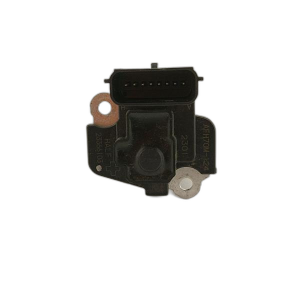
New Aftermarket Parts Available


The information in this article is provided for general reference and educational purposes only. Vehicle specifications, procedures, and part compatibility can vary by production date, trim level, and region. Always consult your vehicle's factory service manual and verify part numbers before purchasing or performing repairs. Safety-critical components such as airbags, seat belts, and braking systems should be installed by a qualified professional.
- Gmc TERRAIN:
- 🎬 Helpful Videos
- 🛍️ Shop This Part
- What's Unique About the 2018-2018 Gmc TERRAIN
- Diagnostic Flowchart
- Symptoms You May Notice
- Most Likely Causes
- Rare But Worth Checking
- Diagnosis Steps
- Parts You'll Likely Need
- Related Codes That Often Appear With This One
- Technical Service Bulletins (TSBs) & Recalls
- Platform-Specific Known Issues
- Mechanic-Grade Diagnostic Values
- Scan Tool Commands That Help
- Wiring & Ground Locations
- Real Owner Repair Stories
- "I Checked Everything" — The Actual Cause
- OEM Part Supersession History
- 🎟️ Get 5% Off