

P0171 on 2010-2017 GMC Terrain: Lean Code Causes & Fixes
On a 2010-2017 GMC Terrain with the 2.4L engine, code P0171 is most often caused by a clogged PCV orifice inside the intake manifold. This design flaw leads to high crankcase pressure, which can blow out the rear main seal, creating a massive vacuum leak. The definitive fix is replacing the intake manifold (often with an improved aftermarket design) and the failed rear main seal. A characteristic whistling noise at idle is a key symptom.
- For the 2.4L engine, the primary suspect for P0171 is the PCV system integrated into the intake manifold. A clog here often leads to a failed rear main seal.
- Always perform a smoke test to check for vacuum leaks before replacing expensive parts like oxygen sensors or fuel pumps.
- Cleaning the MAF sensor is a simple, low-cost diagnostic step that should be performed early in the process.
- If the vehicle is a 2010-2011 model, verify with a dealer if an ECM update related to TSB #PIP5028D is available.
What's Unique About the 2010-2017 Gmc TERRAIN

The 2.4L Ecotec engine, common in this generation of Terrain, has a very specific design flaw that frequently causes a P0171 code. The Positive Crankcase Ventilation (PCV) system's orifice is integrated directly into the plastic intake manifold and is not separately serviceable. This small passage is prone to clogging with carbon, ice, and sludge, especially in colder climates. This blockage increases engine crankcase pressure, which can lead to oil leaks and, most notably, the failure of the rear main engine seal. This seal failure creates a significant unmetered air leak (vacuum leak) into the engine, which is a primary cause of the lean code. GM acknowledged this issue with Special Coverage 14882.
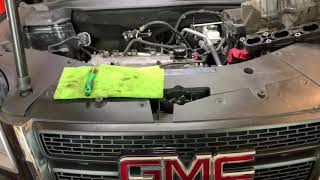
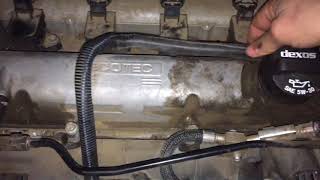
🎬 Watch: See how a blocked PCV orifice causes engine failure.Diagnostic Flowchart

Tap your situation to follow the diagnostic path that matches what you're seeing on this vehicle.
Symptoms You May Notice

- Check Engine Light is on
- Rough or unstable idle
- Engine hesitation or stumbling during acceleration
- Reduced engine power
- Poor fuel economy
- Engine stalling, especially at stops
- Whistling or sucking noise from the engine bay, especially near the rear of the engine (crankshaft seal area)
- Oil dipstick popping out of its tube
- Replacing the oxygen (O2) sensor without first thoroughly checking for vacuum leaks. Vacuum leaks are a much more common cause for P0171 on this vehicle, especially the 2.4L model.
- On the 2.4L, replacing just the rear main seal without also replacing the clogged intake manifold. The high crankcase pressure from the bad manifold will simply blow out the new seal in short order.
Most Likely Causes

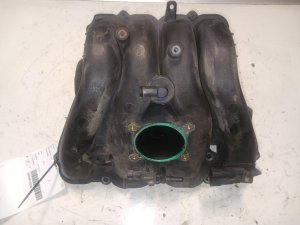
- Clogged PCV Orifice in Intake Manifold (2.4L Engine) 🔴 High Probability The 2.4L Ecotec engine has a non-serviceable PCV orifice integrated into the intake manifold that is known to clog with carbon and sludge. This causes high crankcase pressure, leading to a blown rear main seal, which creates a large vacuum leak and triggers P0171.
How to confirm: Check for high pressure or suction at the oil fill cap or dipstick tube when the engine is running. A simple test is to remove the oil cap; if the idle smooths out or a strong vacuum is felt, the PCV system is compromised. A definitive diagnosis is made by performing a smoke test on the crankcase and seeing smoke exit from the bell housing area, indicating a failed rear main seal. A whistling noise is also a strong indicator.
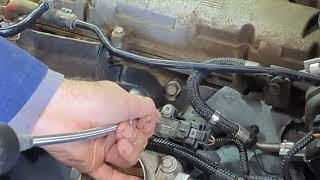
Typical fix: The most common and effective repair is to replace the entire intake manifold with a new one. Aftermarket versions like the Dorman 615-380 are redesigned to prevent the issue. If the rear main seal has failed, it must also be replaced (e.g., Fel-Pro BS 40644). Some owners have attempted to drill out the clogged orifice as a temporary fix. 🎬 Watch: How to clean the PCV orifice without removing the manifold.
Est. part cost: $80-$200 for an intake manifold, $25-$40 for a rear main seal kit. - Vacuum Leak (from other sources) 🟡 Medium Probability Beyond the PCV-induced rear main seal leak, vacuum hoses can become brittle and crack. On V6 models, a failed EVAP purge solenoid or cracked air intake boot are common causes of P0171 and P0174. A broken vacuum line to the MAP sensor has also been noted on the 2.4L.
How to confirm: Perform a smoke test by injecting smoke into the intake system and watching for leaks from hoses, gaskets, or seals. Spraying brake cleaner around suspected areas while monitoring short-term fuel trims can also pinpoint leaks.
Typical fix: Replace the cracked hose, faulty gasket, or leaking component.
Est. part cost: $10-$150 depending on the source of the leak. - Dirty or Faulty Mass Air Flow (MAF) Sensor 🟡 Medium Probability
How to confirm: A dirty MAF sensor can under-report the amount of air entering the engine, causing the ECM to command less fuel than needed. Inspect the sensor for dirt or debris. Try cleaning it with a dedicated MAF sensor cleaner before considering replacement. A faulty aftermarket MAF sensor has also been reported to cause issues.
Typical fix: Clean the MAF sensor with a specialized cleaner. If cleaning doesn't resolve the issue, replace the sensor, preferably with an OEM part.
Est. part cost: $70-$150 for a new sensor. - Failing High-Pressure Fuel Pump ⚪ Low Probability These direct-injection engines use a high-pressure fuel pump. If the pump weakens, it may not supply enough fuel to the injectors, leading to a lean condition, especially under load.
How to confirm: Use a scan tool to monitor the fuel rail pressure. Compare the desired pressure with the actual pressure. A significant discrepancy, especially under load, points to a weak pump.
Typical fix: Replace the high-pressure fuel pump.
Est. part cost: $200-$400 for the pump. - Faulty Upstream Oxygen (O2) Sensor ⚪ Low Probability
How to confirm: An O2 sensor that is old or contaminated can become slow to respond or biased, incorrectly reporting a lean condition. Monitor the O2 sensor voltage with a scan tool; it should fluctuate rapidly between approximately 0.1V and 0.9V. A sensor that is stuck low or responds slowly may be faulty.
Typical fix: Replace the Bank 1, Sensor 1 (upstream) oxygen sensor.
Est. part cost: $50-$120.
Rare But Worth Checking
- Incorrect Intake Camshaft or Camshaft Actuator: According to TSB #PIP5203C, if engine work was recently performed, the installation of an incorrect intake camshaft or actuator can cause P0171 along with other codes.
- Incorrect Fuel Injectors: TSB #PIP5203C also states that installing the wrong fuel injectors can lead to a P0171 code. One forum user noted a significant fuel trim difference between injectors from a 2010 and 2012 model.
- Engine Control Module (ECM) Update Required: TSB #PIP5028D indicates that some 2010-2011 models may set a false P0171 that can be resolved with an ECM software update.
- Exhaust Leak Before the O2 Sensor: A crack in the exhaust manifold or a leaking gasket can allow outside air to be pulled into the exhaust stream, causing the O2 sensor to read a false lean condition.
Diagnosis Steps
- Read all fault codes with an OBD-II scanner. Note any other codes that are present and review freeze frame data.
- Visually inspect the engine bay for obvious issues like disconnected vacuum hoses or cracked intake tubing.
- For the 2.4L engine, perform a crankcase pressure check. With the engine running, remove the oil fill cap. Listen for a change in engine idle and feel for strong vacuum. A significant 'sucking' sound indicates high crankcase vacuum due to a clogged PCV orifice.
- Listen for a distinct whistling or sucking noise near the rear of the engine (bell housing area), which indicates a blown rear main seal.
- Perform a smoke test to find vacuum leaks. On 2.4L models, inject smoke into the crankcase (e.g., through the dipstick tube) to confirm a rear main seal leak. For all engines, test the intake system for other leaks.
- Inspect and clean the Mass Air Flow (MAF) sensor using a dedicated cleaner.
- Use a scan tool to monitor long-term and short-term fuel trims (LTFT and STFT). High positive numbers (e.g., >15%) confirm a lean condition.
- Check fuel pressure. For these direct injection engines, you must monitor the high-pressure fuel rail sensor data via a scan tool.
- Test the upstream oxygen sensor's response using a scan tool to ensure it is functioning correctly.
- Check with a dealership for any available ECM updates or Special Coverage actions, referencing TSB #PIP5028D for 2010-2011 models and Special Coverage 14882 for the PCV issue.
Parts You'll Likely Need

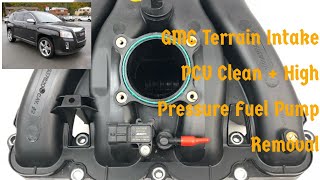
- Intake Manifold
(OEM #12637620)— On the 2.4L engine, the integrated PCV orifice clogs, making manifold replacement the most reliable fix.
Trusted brands: ACDelco, Dorman (Part #615-380, an OE FIX redesigned part) 🎬 Watch: Step-by-step guide to removing the intake manifold and fuel pump.
OEM price range: $150-$250
Aftermarket price range: $80-$180 - Rear Main Crankshaft Seal — This seal frequently fails as a direct result of the high crankcase pressure from the clogged PCV orifice on the 2.4L engine. It must be replaced if it is leaking.
Trusted brands: Fel-Pro, ACDelco
OEM price range: $30-$50
Aftermarket price range: $20-$40
Related Codes That Often Appear With This One
- P0174 — This code indicates 'System Too Lean on Bank 2.' It often appears with P0171 on V6 engines when the cause is a component that affects both engine banks, such as a faulty MAF sensor, a vacuum leak at the intake plenum, or low fuel pressure.
- P1101 — This code often relates to MAF sensor performance or, on newer GM models, can be triggered by the same high crankcase pressure condition from a clogged PCV system that also causes P0171.
Technical Service Bulletins (TSBs) & Recalls
- GM Special Coverage #14882 (NHTSA SB-10057977-8108): Explicitly covers the plugged PCV orifice in the intake manifold for 2010-2013 Terrains with the 2.4L engine. It details the condition of high crankcase pressure leading to a rear crankshaft seal oil leak and extends warranty coverage for this specific repair to 10 years/120,000 miles.
- TSB #PIP5203C: Warns that incorrect intake camshafts, actuators, or fuel injectors (if recently replaced) can cause a P0171 code.
- TSB #PIP5028D: Notes that some 2010-2011 models might set a false P0171 code that can be fixed with an ECM software update.
Platform-Specific Known Issues
- The 2.4L Ecotec engine is widely known for a clogged PCV orifice within the intake manifold, which can cause high crankcase pressure and subsequent failure of the rear main seal, leading to a large vacuum leak and a P0171 code.
- GM issued Technical Service Bulletin #PIP5028D for 2010-2011 models, noting that a P0171 code could sometimes be fixed with an ECM update.
- Technical Service Bulletin #PIP5203C warns that if major engine work was done, incorrect camshafts, actuators, or fuel injectors could have been installed, causing a P0171 code.
Mechanic-Grade Diagnostic Values
- Long Term Fuel Trim (LTFT) at Idle — expected: Close to 0%, ideally within +/- 10%. Failure: Sustained positive values above +15% are suspicious; values approaching or exceeding +25% will trigger the code.
- Mass Air Flow (MAF) Sensor Reading (2.4L Engine at Idle) — expected: 2.8 to 6.0 grams/second (g/s). Failure: Significantly lower readings (e.g., <2.5 g/s) can indicate a dirty or faulty sensor causing an under-reporting of airflow.
- High-Pressure Fuel Rail Pressure at Idle — expected: Approximately 450-550 PSI (3.1-3.8 MPa). Failure: Pressure that does not match the 'Desired Fuel Rail Pressure' PID on a scan tool, or pressure that drops significantly under load, indicates a weak high-pressure fuel pump.
- Low-Pressure Fuel System Pressure — expected: 50-85 PSI. Failure: Pressure below this range indicates a weak in-tank fuel pump or clogged filter.
Scan Tool Commands That Help
- GDS2 / Tech2 or equivalent professional scanner: Fuel Rail Pressure Desired vs. Actual Comparison — This is essential for diagnosing a failing high-pressure fuel pump. The actual pressure should closely track the desired pressure during idle, revving, and load.
- Professional Bidirectional Scanner: EVAP Purge/Vent Solenoid Command — To rule out the EVAP system as a source of a vacuum leak, command the purge solenoid closed and observe fuel trims. If trims improve, the solenoid is leaking.
- Professional Bidirectional Scanner: Fuel Trim Reset — After performing a repair (like replacing an intake manifold or MAF sensor), resetting the learned fuel trim values allows for immediate confirmation if the fix was successful, as STFT and LTFT will reset to 0.
Wiring & Ground Locations
- G112 — On the 2.4L engine, this ground is located on the lower left front of the engine.. This is a critical ground point for the Engine Control Module (ECM). A poor connection here can cause erratic sensor readings and incorrect calculations, potentially leading to false lean codes.
- G105 — Located on the rear of the engine for the 2.4L, and the left rear for the 3.0L V6.. This is a primary engine-to-chassis ground. A loose or corroded connection can affect the entire engine management system, including sensors that are vital for fuel control.
- ECM (Engine Control Module) — Located on the left side of the engine compartment.. Knowing the physical location is necessary for inspecting its connectors and ground wires (like the one to G112) for corrosion or damage.
Real Owner Repair Stories
- BobIsTheOilGuy forum user 'The Critic' (GM vehicle with 2.4L Ecotec engine) — Check engine light with P0171, rough idle. Long Term Fuel Trim was +29%, Short Term was +24%.
❌ Tried (didn't work) Initial thought was a faulty MAF sensor due to slightly high IAT readings.
✅ What actually fixed it A visual inspection revealed a large crack in the exhaust manifold. This allowed unmetered air into the exhaust stream before the O2 sensor, causing a false lean reading. The fix was to replace the exhaust manifold. - ScannerDanner forum user 'jake21' (2010 GMC Terrain 2.4L) — P0171 with fuel trims at +29-31% at idle.
❌ Tried (didn't work) Replaced an obviously bad MAF sensor (which was reading 15gm/sec at idle)., Smoke checked the intake manifold twice with no leaks found., Blocked off the purge valve and brake booster lines.
✅ What actually fixed it The thread concluded with an expert suggesting the cause was likely a low-quality aftermarket replacement MAF sensor that was still not reading correctly (even though it was better than the original failed one) or incorrect fuel injectors from a previous repair. This highlights that even if a smoke test is clean, component quality and correctness is critical.
"I Checked Everything" — The Actual Cause
- A cracked exhaust manifold before the upstream O2 sensor. This allows oxygen to be pulled into the exhaust stream, making the O2 sensor report a lean condition to the ECM. This is an exhaust-side leak and will not be found with a standard intake smoke test.
- A weak high-pressure fuel pump. The system isn't getting enough fuel to meet the engine's demands, causing a true lean condition. This is a fuel delivery problem, not a vacuum leak, and must be diagnosed by monitoring desired vs. actual fuel rail pressure with a scan tool.
- A dirty or failing Mass Air Flow (MAF) sensor. If the sensor under-reports the amount of air entering the engine, the ECM will command an insufficient amount of fuel, creating a lean mixture. This is a sensor error, not a physical air leak.
OEM Part Supersession History
12632227, 12637193, 12651992→12637620— Revisions by GM to address issues, likely related to the PCV system and material durability.OEM Intake Manifold (e.g., 12637620)→Dorman 615-380 (Aftermarket OE FIX)— The Dorman part is an aftermarket redesign specifically to address the failure of the integrated PCV system. It adds a retaining pin to the internal PCV valve to prevent it from dislodging, which is a common failure point in the original design.
Heads up: This is considered an upgrade over the original OEM design for preventing repeat failures.
Model Year Variations Within This Range
- 2010-2012: The optional V6 engine was the 3.0L LFW, producing 264 hp.
- 2013-2017: The optional V6 engine was upgraded to the 3.6L LFX, producing 301 hp. The luxurious Denali trim also became available in 2013.
- 2010-2011: These early models may have a software issue that can cause a false P0171 code. TSB #PIP5028D recommends an ECM update to resolve the issue if no physical faults are found.
- 2012-2017 (2.4L) & 2011-2014 (V6): These models were offered with Flex Fuel (E85) capability. This is significant as heavy E85 use has been linked to high-pressure fuel pump issues.
Helpful Videos
Used OEM Parts in Stock


New Aftermarket Parts Available


The information in this article is provided for general reference and educational purposes only. Vehicle specifications, procedures, and part compatibility can vary by production date, trim level, and region. Always consult your vehicle's factory service manual and verify part numbers before purchasing or performing repairs. Safety-critical components such as airbags, seat belts, and braking systems should be installed by a qualified professional.
- Gmc TERRAIN:
- 🎬 Helpful Videos
- 🛍️ Shop This Part
- What's Unique About the 2010-2017 Gmc TERRAIN
- Diagnostic Flowchart
- Symptoms You May Notice
- Most Likely Causes
- Rare But Worth Checking
- Diagnosis Steps
- Parts You'll Likely Need
- Related Codes That Often Appear With This One
- Technical Service Bulletins (TSBs) & Recalls
- Platform-Specific Known Issues
- Mechanic-Grade Diagnostic Values
- Scan Tool Commands That Help
- Wiring & Ground Locations
- Real Owner Repair Stories
- "I Checked Everything" — The Actual Cause
- OEM Part Supersession History
- Model Year Variations Within This Range
- 🎟️ Get 5% Off