

P0171 on 2017-2022 GMC Canyon 3.6L V6: Lean Code Causes and Fixes
On a 2017-2022 GMC Canyon with the 3.6L V6, code P0171 is most often caused by a cracked rubber air intake duct between the air filter and the engine. Inspecting this part for cracks is the first step. A software update or a failed PCV system are also common causes.
- For a 2017-2022 GMC Canyon 3.6L with P0171, immediately inspect the rubber air intake boot for cracks, as this is the most common cause per TSB 22-NA-171.
- If you own a 2020-2021 model, be aware that a dealer software update (TSB 21-NA-105) might be the required fix, not a faulty part.
- Check for a whistling noise or strong vacuum at the oil cap, which points to a failed PCV system integrated into the passenger-side valve cover.
- Do not replace the oxygen sensor first; it is almost always just reporting the lean condition correctly.
- Cleaning the MAF sensor is a low-cost, easy diagnostic step, but on this truck, physical inspection of the intake boot and PCV system should be prioritized.
What's Unique About the 2017-2022 GMC Canyon
For this specific generation of GMC Canyon with the 3.6L LGZ engine, the P0171 code is very frequently linked to specific, well-documented issues rather than random component failure. The most common culprit is a cracked air intake duct, a failure so common that GM issued a Technical Service Bulletin (TSB 22-NA-171) to address it. This bulletin explicitly states the condition may be caused by a 'cracked/failed rubber intake boot'. Additionally, software glitches on 2020-2021 models can falsely trigger the code on low-mileage vehicles, requiring a dealer-installed update per TSB 21-NA-105. These platform-specific issues mean diagnosis should always start with these known failure points before suspecting other components.
Symptoms You May Notice
- Check Engine Light is on
- Rough or unstable idle
- Hesitation or stumbling during acceleration
- Reduced fuel economy
- Hissing or whistling sound from the engine bay, indicating a vacuum leak
- Engine may feel sluggish or down on power
- Replacing the upstream oxygen (O2) sensor. The O2 sensor is almost always doing its job correctly by reporting the lean condition. The P0171 code means the sensor is working; the problem lies in what it's detecting.
Most Likely Causes
- Cracked Air Intake Duct/Boot 🔴 High Probability The rubber bellows section of the intake duct is a known high-failure point, specifically cited in GM TSB 22-NA-171. The material can become brittle and crack from engine heat and vibration, especially on the underside, allowing unmetered air to enter the engine after the MAF sensor.
How to confirm: Visually inspect the entire rubber intake hose between the air filter housing and the throttle body. Flex the bellows section to reveal hidden cracks, which are often not visible otherwise. A smoke test is the most definitive way to confirm a leak, and TSB 22-NA-171 advises performing it without removing the engine cover.
Typical fix: Replace the air cleaner outlet duct assembly. The OEM part is an integrated engine cover and duct. This is a common DIY repair.
Est. part cost: $80-$220 - Engine Control Module (ECM) Software Anomaly 🟡 Medium Probability GM issued TSB 21-NA-105 for 2020-2021 models, noting that P0171 and P0174 can be triggered on very low-mileage vehicles (under 1,800 miles) due to 'software anomalies'. The bulletin instructs dealers to reprogram the ECM after a basic visual inspection for vacuum leaks.
How to confirm: This can only be confirmed by a GM dealership, who can check the vehicle's VIN against the TSB and see if the software update has been applied. This should be a primary check for any 2020-2021 model with this code.
Typical fix: A GM dealer reprograms the ECM with the updated calibration. The TSB requires this even if no physical faults are found.
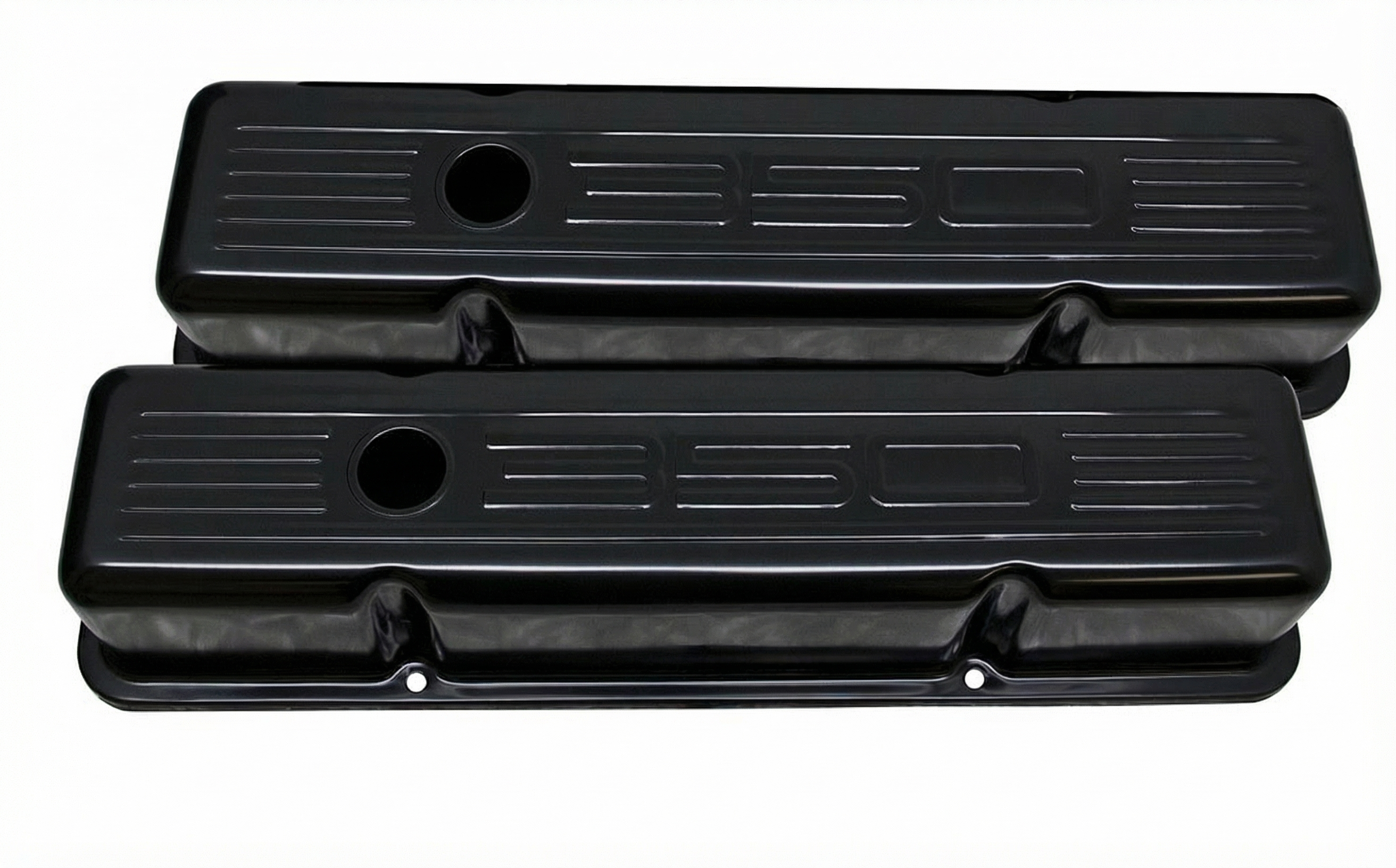
Est. part cost: $0-$200 (dealer labor) - Failed PCV System / Valve Cover 🟡 Medium Probability On the 3.6L LGZ V6, the PCV orifice is integrated into the passenger-side (Bank 1) valve cover. If this internal system fails or clogs, it can create a significant, unmetered vacuum leak from the crankcase. Since it's an internal leak, it will not be found with a typical smoke test of the intake manifold.
How to confirm: Listen for a distinct whistling or hissing noise at idle. A key diagnostic step is to run the engine and try to remove the oil fill cap; if there is strong suction holding the cap on, it is a very strong indicator of a failed PCV system within the valve cover.
Typical fix: The entire passenger-side valve cover must be replaced as the PCV system is not serviced separately. This is a more involved repair but manageable for an experienced DIYer.
Est. part cost: $75-$200 - Dirty or Faulty Mass Air Flow (MAF) Sensor ⚪ Low Probability While less common than intake boot failure on this platform, a MAF sensor contaminated with dirt, oil, or debris can under-report airflow, causing the ECM to command less fuel and create a lean condition.
How to confirm: Remove the sensor and inspect the delicate wires for contamination. Use a scan tool to monitor MAF readings (g/s) at idle and compare to specified values (typically around 3.6-4.0 g/s for the 3.6L V6 at operating temperature). An erratic reading can also indicate a failure.
Typical fix: Clean the sensor with a dedicated MAF sensor cleaner spray. 🎬 See this step-by-step guide on cleaning your MAF sensor. Do not touch the wires or use other chemicals like brake cleaner. Allow it to dry completely before reinstalling. If cleaning does not resolve the issue, replace the sensor.
Est. part cost: $10-$160
Rare But Worth Checking
- Leaking Intake Manifold Gaskets: While not as common as the intake boot, the gaskets between the intake manifold and cylinder heads can fail, creating a vacuum leak. A smoke test is the best way to identify this.
- Weak Fuel Pump or Clogged Filter: If the fuel system cannot deliver the volume or pressure of fuel commanded by the ECM, it can cause a lean condition. This would typically affect both banks and set P0171 and P0174. 🎬 Watch: Diagnostic walkthrough for P0171 and P0174 codes on this engine. Checking fuel pressure against GM specification (not just a generic 'good' reading) is the diagnostic step.
- Loose Oil Filler Cap or Dipstick: TSB 21-NA-105 specifically mentions to check that the oil filler cap is tight and the dipstick is fully seated before reprogramming the ECM, as a poor seal can create a small vacuum leak through the PCV system.
- Complex Sensor Interactions: Manufacturer Bulletin #PIP5529B notes that P0171 can appear in combination with codes like P0101, P0106, or P0131, requiring a broader diagnostic approach to resolve the MIL illumination.
Diagnosis Steps
- Read all stored trouble codes with an OBD-II scanner. Note if P0174 is also present, as this points to a leak affecting both banks.
- Perform a thorough visual inspection of the air intake duct (GM Part #84535596) between the air filter box and the engine. Flex the rubber bellows and check for cracks, especially on the underside, as specified in TSB 22-NA-171.
- Check for simple errors: ensure the oil filler cap is tight and the engine oil dipstick is fully seated.
- With the engine running, listen for hissing or whistling noises. Carefully try to remove the oil fill cap to check for excessive vacuum suction, which would indicate a failed PCV valve cover.
- If you have a 2020-2021 model, contact a GM dealer with your VIN to check if TSB 21-NA-105 (ECM software update) applies to your vehicle and has not yet been performed.
- Review Bulletin #PIP5529A if you find P0171 alongside codes like P0068 or P0506, as this bulletin provides specific diagnostic assistance for multiple-code scenarios.
- Remove and clean the Mass Air Flow (MAF) sensor using a dedicated MAF sensor cleaner. Allow it to dry completely before reinstalling.
- If no obvious leak is found, perform a smoke test on the intake system to definitively identify any hidden cracks in hoses or gaskets.
- Use a scan tool to monitor Short Term (STFT) and Long Term (LTFT) fuel trims. Consistently high positive numbers (e.g., LTFT > 20%) confirm the lean condition the PCM is trying to correct.
- As a final step if no vacuum leaks are found, check fuel pressure to rule out a weak fuel pump or clogged filter. Ensure the pressure meets the specific PSI requirements for the LGZ engine.
Parts You'll Likely Need
- Air Cleaner Outlet Duct
(OEM #84535596 (replaces 84165133, 84548065))— This is the most common failure point on the 2017-2022 3.6L V6, as documented in GM TSB 22-NA-171. The rubber boot cracks and causes a large vacuum leak.
Trusted brands: ACDelco, GM Genuine Parts, Dorman
OEM price range: $150-$220
Aftermarket price range: $50-$150 - Valve Cover (Right/Passenger Side)
(OEM #12673880 (may be superseded by 12684289))— The PCV system is integrated into this cover and is a known failure point on the 3.6L V6, causing a significant internal vacuum leak that is hard to detect with a smoke test.
Trusted brands: ACDelco, GM Genuine Parts
OEM price range: $90-$150
Aftermarket price range: $75-$120 - Mass Air Flow (MAF) Sensor Cleaner — Cleaning the MAF sensor is a cheap and easy first diagnostic step that can often resolve incorrect air metering and fix the lean code if the sensor is merely dirty. 🎬 Watch: How to properly clean the Mass Air Flow sensor.
Trusted brands: CRC, WD-40 Specialist
Aftermarket price range: $10-$15
Related Codes That Often Appear With This One
- P0174 — P0174 is the same 'System Too Lean' code but for Bank 2 (driver's side). When both P0171 and P0174 are present, it strongly points to a cause that affects the entire engine, such as a cracked intake boot, faulty MAF sensor, failed PCV system, or low fuel pressure.
- P0300 — P0300 indicates a random or multiple cylinder misfire. A lean air-fuel mixture can be difficult to ignite, leading to misfires that can be felt as a rough idle or hesitation, especially under load.
Technical Service Bulletins (TSBs) & Recalls
- 22-NA-171: Cracked or failed rubber air intake boot as a probable cause for P0171/P0174.
- 21-NA-105: ECM software update for 2020-2021 models to correct false P0171/P0174 codes.
- Bulletin #PIE0413A: An informational bulletin regarding field data for vehicles exhibiting the Malfunction Indicator Lamp with DTC P0171 and/or P0174.
- Bulletin #PIP5529B: Provides diagnostic and repair assistance for P0171 when it occurs in combination with other codes like P0101, P0106, or P0137.
Platform-Specific Known Issues
- TSB 22-NA-171: Specifically identifies a cracked or failed rubber air intake boot as a probable cause for P0171 and P0174 on 2017-2022 models with the 3.6L V6.
- TSB 21-NA-105: Addresses P0171/P0174 on 2020-2021 models, particularly on low-mileage vehicles, stating the cause may be 'software anomalies' requiring an ECM reprogram.
- A disconnected PCV hose that attaches to the bottom of the large plastic resonator box on top of the engine is a common source of a vacuum leak, often occurring after other engine service.
Mechanic-Grade Diagnostic Values
- Mass Air Flow (MAF) Sensor Reading at Idle — expected: ~3.6 g/s (grams/second) at normal operating temperature with no accessories on. The value should be close to the engine's displacement in liters.. Failure: A reading significantly lower than 3.6 g/s suggests the sensor is under-reporting air, causing a lean condition. A significantly higher reading could indicate a vacuum leak after the sensor.
- Low-Side Fuel Pressure (Key On, Engine Off) — expected: 55-60 psi.. Failure: Pressure significantly below 55 psi points to a weak in-tank fuel pump or a faulty fuel pressure regulator.
- High-Pressure Fuel System (Direct Injection) at Idle — expected: Approximately 500-600 PSI.. Failure: While low pressure here usually sets other codes (like P0087), erratic readings or values that don't respond to RPM changes can indicate a failing high-pressure fuel pump or sensor.
- Injector Pulse Width at Idle — expected: Typically 2-4 milliseconds (ms) on a warm engine.. Failure: This value is a command, not a result. High fuel trims (the symptom of P0171) will cause the PCM to command a longer pulse width to compensate. It's a confirmation of the lean condition, not a cause.
- Long Term Fuel Trim (LTFT) — expected: Within +/- 10%. Ideally close to 0%.. Failure: A sustained value of +25% or higher on Bank 1 is what triggers the P0171 code.
Scan Tool Commands That Help
- GM GDS2 / High-End Scan Tool: Fuel Composition Reset — On flex-fuel capable models, an incorrect alcohol content reading can cause the PCM to calculate fuel delivery incorrectly, leading to lean or rich codes. If the vehicle was recently filled with a different type of gasoline (e.g., E85 vs regular), or if all physical causes are ruled out, resetting this value forces the system to re-learn the fuel composition.
- GM GDS2 / High-End Scan Tool: Fuel Trim Reset — After a repair is made (like fixing a vacuum leak), the Long Term Fuel Trim (LTFT) will still hold its high learned value. Using this function resets the learned trims to zero, allowing for immediate confirmation that the repair was successful by observing if the new fuel trims remain near zero. Without a reset, it can take many drive cycles for the LTFT to return to normal on its own.
- GM GDS2 / High-End Scan Tool: EVAP Purge/Seal — This command allows you to manually open and close the EVAP purge solenoid. With the engine running, you can command it open and closed to see if the engine RPM changes, confirming its operation. During a smoke test, you can command it open to test the entire EVAP system for leaks, which can be a source of a P0171 code.
Wiring & Ground Locations
- MAF Sensor Connector — On the air intake duct, between the air filter housing and the throttle body.. A poor connection or damaged wire at the MAF sensor can cause incorrect airflow readings, leading directly to P0171. The pinout is critical for testing. While specific wire colors can vary slightly, the function is consistent: one pin is for the IAT sensor, one is a 12V power supply, one is a ground, and one is the MAF signal wire to the ECM.
- G101 (or similar engine block ground) — Typically located on the lower front of the engine block on the driver's side.. A loose or corroded main engine ground can cause a floating ground reference for multiple sensors, including the MAF and O2 sensors. This can lead to erratic sensor readings and phantom lean or rich codes that are difficult to diagnose.
- Bank 1 Camshaft Position Sensor Connector — On the passenger side (Bank 1) of the engine, at the rear of the cylinder head.. While not a direct cause of P0171, knowing the pinout (Pin 1: 5V Power, Pin 2: Signal, Pin 3: Ground) is a useful reference for how GM typically wires its 3-pin engine sensors, which is helpful when diagnosing sensor circuits.
Real Owner Repair Stories
- YouTube video by 'Homie Hektor' (2016 Chevrolet Colorado 3.6L V6) — Check Engine Light with codes P0171 and P0174.
❌ Tried (didn't work) Initial visual inspection did not immediately reveal the cause.
✅ What actually fixed it The vehicle had recently had a fuel injection service. The technician found that the PCV hose connecting to the back of the intake cover/duct assembly was left disconnected. Reconnecting the hose and clearing the codes resolved the issue, with fuel trims returning to near zero. - YouTube video by 'Car PREACHERS' (2017 Chevrolet Colorado 3.6L V6) — Check Engine Light with codes P0171 and P0174.
❌ Tried (didn't work) The video focuses on the commonality of the issue rather than failed attempts.
✅ What actually fixed it The technician points out a very common failure where the PCV hose disconnects from the airbox/intake duct assembly, causing a massive unmetered air leak. The video identifies this as the cause on the vehicle shown.
"I Checked Everything" — The Actual Cause
- A common scenario for the 3.6L LGZ engine is a smoke test that shows no leaks in the intake duct, manifold, or vacuum lines, yet the P0171 (and often P0174) code persists. The actual cause is frequently a failed internal PCV orifice within the passenger-side (Bank 1) valve cover. This creates a vacuum leak by pulling unmetered air from the crankcase, but since the leak is internal to the engine's closed PCV loop, a smoke test applied to the intake system will not detect it. The definitive symptom is a strong vacuum at the oil fill cap when the engine is running.
OEM Part Supersession History
84165133→84548065, then 84535596— Standard part revisions by GM, likely to improve the durability of the rubber bellows section that is prone to cracking.12673880→12684289— Standard part revision for the passenger side valve cover, potentially to address the PCV system failure.
Model Year Variations Within This Range
- 2021-2022: A minor facelift was introduced for the 2021 model year, which updated the front-end appearance. However, this did not change the LGZ V6 engine or the common causes for P0171.
- 2020-2021: These specific model years are subject to TSB 21-NA-105, which calls for an ECM software update to fix false P0171/P0174 codes on low-mileage trucks. This is a software issue, not a physical part difference.
Diagnostic Flowchart
Other Known Issues on This Vehicle
Issues unrelated to this code that are worth knowing about as an owner of this generation:
- 8-Speed (8L45) Transmission Shudder/Vibration 🔴 High — Very common on 2017-2019 models. Feels like driving over rumble strips during light acceleration between 25-80 mph. (Ref: TSB 18-NA-355 recommends a transmission fluid exchange with a specific, updated fluid (Mobil 1 Synthetic LV ATF HP) to resolve the torque converter clutch shudder.)
- Engine Stalling or Hesitation 🟠 Medium — Some owners report the engine hesitating or stalling when accelerating or decelerating. This can sometimes be related to the transmission issues or other powertrain control module calibrations.
- Infotainment Screen 'Ghost Touch' 🟡 Low — Reported by some owners where the central touchscreen registers phantom inputs, randomly changing settings, language, or radio stations, causing a significant driver distraction.
- Power Steering Assist Failure 🟠 Medium — A number of complaints exist for the power steering assist turning off intermittently while driving, making the vehicle difficult to steer.
Used vs. New Parts: Buying Guide for This Vehicle
When a used part is the smart pick: For this specific repair, buying used parts is generally not recommended. The primary failure items—the air intake duct and the PCV valve cover—fail due to age, heat, and material degradation. A used part from a donor vehicle is likely to have similar wear and could fail soon after installation, offering poor value.
Donor-vehicle mileage cap: roughly under 20000 miles for the part to have meaningful remaining life.
What to inspect on the donor part:
- For Air Intake Duct: Must be from a very low-mileage, late-model year (2021-2022) vehicle. Flex the rubber bellows aggressively; any sign of dry rot, micro-cracking, or stiffness means it should be avoided.
- For Valve Cover: There is no reliable way to inspect the internal PCV orifice. Buying used is a significant gamble and not advised.
OEM-only on this vehicle (don't cheap out):
- Valve Cover (Right/Passenger Side): Given the integrated and non-serviceable nature of the PCV system, using a genuine GM or ACDelco part is critical to ensure the orifice is correctly calibrated. Aftermarket versions may have incorrect flow rates, failing to solve the problem or causing new ones.
- Air Cleaner Outlet Duct: While aftermarket options from brands like Dorman exist, the OEM part has undergone revisions to improve durability. For peace of mind, the latest GM Genuine part (84535596) is the safest bet.
Brands owners have reported issues with on this vehicle:
- Unbranded/No-name eBay or Amazon valve covers and intake ducts. These often use inferior quality rubber and plastic that can fail even faster than the original part.
Real Owner Stories
Aggregated from forums and TSBs cited above. Mileages and costs reflect what owners reported in those sources.
2020-2021 GMC Canyon 3.6L V6 — ~1500 miles
Symptoms: P0171 and P0174 codes triggered on a very low-mileage vehicle.
What fixed it: A GM dealer reprogrammed the ECM with an updated calibration as per TSB 21-NA-105.
Cost: $0-$200
Source hint: TSB 21-NA-105
2018 GMC Canyon 3.6L V6
Symptoms: Check engine light with P0171 and P0174 codes; identified the intake boot or PCV valve cover as likely culprits.
What fixed it: Replacement of the air intake duct or the PCV valve cover.
Source hint: Reddit thread r/gmc 'p0171_p0174_codes_on_2018_gmc_canyon_36l_v6'
2017-2022 GMC Canyon 3.6L V6
Symptoms: Lean codes P0171 and P0174 caused by unmetered air entering after the MAF sensor due to a brittle, cracked intake duct.
What fixed it: Replace the air cleaner outlet duct assembly (integrated engine cover and duct).
Cost: $80-$220
Source hint: TSB 22-NA-171
2017-2022 GMC Canyon 3.6L V6
Symptoms: Confirmed the cracked intake boot was the source of the lean condition.
What fixed it: Replacing the cracked intake boot.
Source hint: coloradofans.com thread 'p0171-and-p0174-solved'
Related OBD-II Codes
Frequently Asked Questions
I have a 2021 GMC Canyon with very low mileage and a P0171 code. Is there a known software issue?
My 3.6L LGZ engine is making a whistling sound and the oil cap is hard to pull off. What is wrong?
Is there a specific TSB for the rubber intake boot on the 2017-2022 Canyon?
Can I just clean the MAF sensor on my Canyon to fix a lean code?
What part number should I look for if my intake duct is cracked?
Does the Chevrolet Colorado suffer from these same P0171 issues?
Helpful Videos
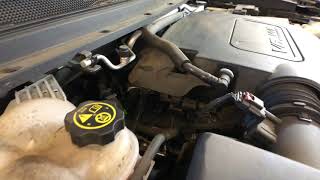
![[HOW TO] Clean Mass Air Flow Sensor (MAF) on 2015+ Colorado/Canyon](https://img.youtube.com/vi/uRQ3NkssDOc/mqdefault.jpg)
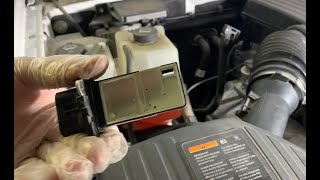
Used OEM Parts in Stock
New Aftermarket Parts Available


The information in this article is provided for general reference and educational purposes only. Vehicle specifications, procedures, and part compatibility can vary by production date, trim level, and region. Always consult your vehicle's factory service manual and verify part numbers before purchasing or performing repairs. Safety-critical components such as airbags, seat belts, and braking systems should be installed by a qualified professional.
- GMC Canyon:
- 🎬 Helpful Videos
- 🛍️ Shop This Part
- What's Unique About the 2017-2022 GMC Canyon
- Symptoms You May Notice
- Most Likely Causes
- Rare But Worth Checking
- Diagnosis Steps
- Parts You'll Likely Need
- Related Codes That Often Appear With This One
- Technical Service Bulletins (TSBs) & Recalls
- Platform-Specific Known Issues
- Mechanic-Grade Diagnostic Values
- Scan Tool Commands That Help
- Wiring & Ground Locations
- Real Owner Repair Stories
- "I Checked Everything" — The Actual Cause
- OEM Part Supersession History
- Model Year Variations Within This Range
- Diagnostic Flowchart
- Other Known Issues on This Vehicle
- Used vs. New Parts: Buying Guide for This Vehicle
- Real Owner Stories
- 2020-2021 GMC Canyon 3.6L V6 — ~1500 miles
- 2018 GMC Canyon 3.6L V6
- 2017-2022 GMC Canyon 3.6L V6
- 2017-2022 GMC Canyon 3.6L V6
- Related OBD-II Codes
- Frequently Asked Questions
- 🎟️ Get 5% Off