

P0171 on 2014-2018 GMC Acadia: System Too Lean Causes and Fixes
P0171 on a GMC Acadia most often means there is a vacuum leak from a cracked or disconnected hose, especially related to the PCV system. Cleaning the Mass Airflow (MAF) sensor is another common, easy fix. In some cases, loose intake manifold bolts can be the culprit. Expect to spend very little on cleaning supplies or up to $200 for a new sensor or hose.
- P0171 on your Acadia means Bank 1 is running lean, most likely due to unmetered air entering the engine.
- Always check for code P0174 (Bank 2 lean) as well. If both are present, the cause is something that affects the whole engine, like the MAF sensor or a major vacuum leak.
- The easiest and most common fixes are to inspect all intake and vacuum hoses for cracks and to clean the MAF sensor with dedicated cleaner.
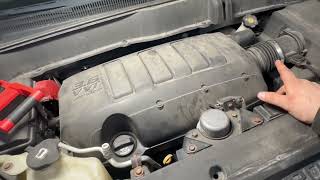
- For 2014-2016 models with the 3.6L V6, pay special attention to the PCV tube that connects to the intake manifold, as this is a known failure point documented by GM.
- Do not replace the oxygen sensor as a first step; it is usually just reporting the problem correctly.
What's Unique About the 2014-2018 Gmc ACADIA

This year range covers two distinct Acadia generations. The first generation (2014-2016) with the 3.6L V6 (LLT/LFX) is particularly susceptible to vacuum leaks from the Positive Crankcase Ventilation (PCV) system, as noted in GM technical bulletins. The rubber hoses and diaphragms degrade from heat and oil vapor. The second generation (2017-2018), with its different 2.5L I4 and 3.6L LGX V6 engines, has different intake and PCV hose routing but is also subject to TSBs for lean codes, sometimes related to loose intake manifold bolts or software anomalies.
Diagnostic Flowchart

Tap your situation to follow the diagnostic path that matches what you're seeing on this vehicle.
Generation note: This range covers two generations. The 2014-2016 models are the first generation, typically with a 3.6L V6 (LLT/LFX). The 2017-2018 models are the second generation, offering a 2.5L I4 and a newer 3.6L V6 (LGX). While causes are similar, the specific location of vacuum hoses and PCV components differs between generations. TSBs for the 2nd gen also point to issues like loose intake manifold bolts on the LGX engine.
Symptoms You May Notice
- Check Engine Light is on
- Rough or surging idle
- Hesitation or lack of power during acceleration
- Reduced fuel economy
- Hissing sound from the engine bay, indicating a vacuum leak
- Stalling when coming to a stop or at idle
- Whistling noise at idle
- Replacing the oxygen (O2) sensor first. The P0171 code means the O2 sensor is detecting a lean condition; it's usually doing its job correctly. The problem is typically the unmetered air or lack of fuel that the sensor is detecting.
Most Likely Causes


- Vacuum Leak (PCV System, Intake Hoses) 🔴 High Probability GM has issued multiple technical service bulletins (TSBs) related to lean codes caused by vacuum leaks from the PCV system's 'foul air tube' on the 3.6L V6. The rubber hoses and elbows can crack, and the internal diaphragm in the PCV valve cover can tear, creating a significant unmetered air leak. In some cases, a cap can be missing from an intake manifold port, causing a massive leak.
How to confirm: Visually inspect all vacuum and intake hoses for cracks or loose connections. A common failure point is the PCV tube connecting to the intake manifold. A smoke machine test is the most effective way to find hidden leaks. Alternatively, with the engine running, carefully spray brake cleaner or carb cleaner around suspected leak points and listen for a change in engine idle. Check for a missing cap on any intake manifold vacuum ports.
Typical fix: Replace the cracked or broken hose/tube. PCV hose adapters and tubes are readily available. If the PCV diaphragm is torn, the entire valve cover may need to be replaced. If a cap is missing, install a new one.
Est. part cost: $15-$150 - Dirty or Faulty Mass Airflow (MAF) Sensor 🔴 High Probability The MAF sensor measures all air entering the engine. If its sensing wire is contaminated with dirt, oil from the PCV system, or residue from over-oiled air filters, it will under-report the amount of air, causing the computer to inject too little fuel and create a lean condition.
How to confirm: Unplug and remove the sensor from the intake tube. Visually inspect the small wires inside. If they appear dirty, cleaning is a good first step. A scan tool can also show MAF readings that are illogical for the given engine speed and load. A typical reading for a 3.6L V6 is around 4-7 g/s at idle.
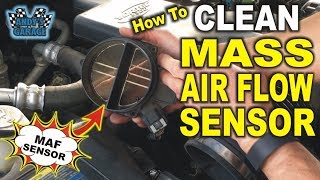
Typical fix: Clean the sensor using only dedicated MAF sensor cleaner spray; 🎬 See how to properly clean your MAF sensor to clear codes. do not use brake or carb cleaner as they can damage the sensor. Do not touch the wires. If cleaning does not resolve the issue, replace the sensor.
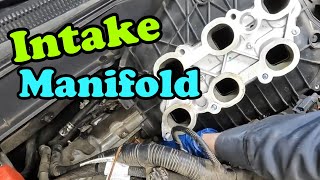
Est. part cost: $10 (cleaner) - $150 (new sensor) - Leaking Intake Manifold Gaskets 🟡 Medium Probability The gaskets that seal the intake manifold to the cylinder heads can become brittle and fail over time, allowing unmetered air to enter the engine. This is a known issue on many GM V6 engines.
How to confirm: A smoke test is the best method. A mechanic may also spray carb cleaner near the gasket mating surfaces while monitoring fuel trims on a scan tool; a change indicates a leak. TSB PIP5529B also suggests checking for loose intake manifold bolts.
Typical fix: Replace the intake manifold gaskets. This is a more labor-intensive job.
Est. part cost: $40-$100 - Loose Intake Manifold Bolts 🟡 Medium Probability TSB PIP5529B specifically calls out loose intake manifold bolts as a cause for P0171 and other codes on 2017+ models with LCV and LGX engines. The bolts can back out, creating a vacuum leak at the gasket surface.
How to confirm: Following the procedure in TSB PIP5529B, check the torque on the intake manifold bolts.
Typical fix: Per the TSB, remove one bolt at a time, apply medium strength threadlocker, and torque to the proper specification in sequence. The gasket often does not need to be replaced if it's not damaged.
Est. part cost: $5 (threadlocker) - Weak Fuel Pump or Clogged Fuel Filter ⚪ Low Probability
How to confirm: Test the fuel pressure at the fuel rail using a fuel pressure gauge. The pressure should meet the manufacturer's specifications. For the direct injection engines (LLT, LFX, LGX), this requires checking both low and high-side pressure. Low-side pressure from the in-tank pump should be between 87-130 PSI. High-side pressure at the rail will fluctuate significantly but can be monitored with a capable scan tool.
Typical fix: Replace the fuel pump module, which is located inside the fuel tank, or the high-pressure fuel pump on the engine.
Est. part cost: $200-$400
Rare But Worth Checking
- Faulty Upstream Oxygen (O2) Sensor: This is a common misdiagnosis. The O2 sensor is often correctly reporting the lean condition, not causing it. However, a slow or failing sensor can send incorrect lean signals. Only replace it after ruling out all other causes, especially vacuum leaks.
- Leaking or Stuck-Open Purge Valve: The EVAP purge valve can sometimes stick open, creating a constant vacuum leak. 🎬 Watch: How to replace a faulty EVAP purge valve. This is a known issue on many GM vehicles and can be tested by checking for vacuum at the valve with the engine at idle; there should be no vacuum when it is commanded closed.
- Clogged Fuel Injectors: If one or more injectors on Bank 1 are clogged, they won't deliver enough fuel, leading to a lean condition on that bank.
- Seized PCV Valve: On the 3.6L V6, the PCV valve itself can become so seized in the valve cover from heat and carbon buildup that it cannot be removed from the top. This requires removing the entire valve cover to knock it out from the inside, a significantly more involved repair.
Diagnosis Steps
- Check for additional codes. If P0174 is also present, focus on causes that affect both engine banks, like the MAF sensor, intake air tube, or fuel pump.
- Perform a thorough visual inspection of the engine bay. Look for any disconnected, cracked, or collapsed vacuum hoses, especially around the PCV system and the main air intake boot. Check for missing caps on intake manifold ports.
- With the engine running, listen for a distinct hissing or whistling sound that could indicate a vacuum leak.
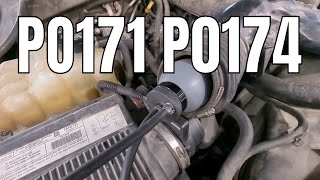
- If you have a scan tool, observe the short-term (STFT) and long-term (LTFT) fuel trim values at idle. High positive numbers (e.g., >10%, with the sum often exceeding 25%) confirm 🎬 Watch: A mechanic diagnoses and fixes random stalling and lean codes. the computer is adding fuel to correct a lean condition.
- Remove and clean the Mass Airflow (MAF) sensor using only a dedicated MAF sensor cleaner. Allow it to dry completely before reinstalling.
- To find a vacuum leak, use a smoke machine to introduce smoke into the intake system and watch for where it escapes. Alternatively, carefully spray short bursts of brake cleaner or carb cleaner around the intake manifold gaskets and vacuum lines. A change in engine RPM when you spray a specific area indicates the location of the leak.
- For 2017+ models, check the torque of the intake manifold bolts to rule out the issue described in TSB PIP5529B.
- Test fuel pressure using a fuel pressure gauge to rule out a weak fuel pump or faulty pressure regulator.
- If all else fails, consider testing the upstream O2 sensor's function or having the fuel injectors professionally tested and cleaned.
Parts You'll Likely Need
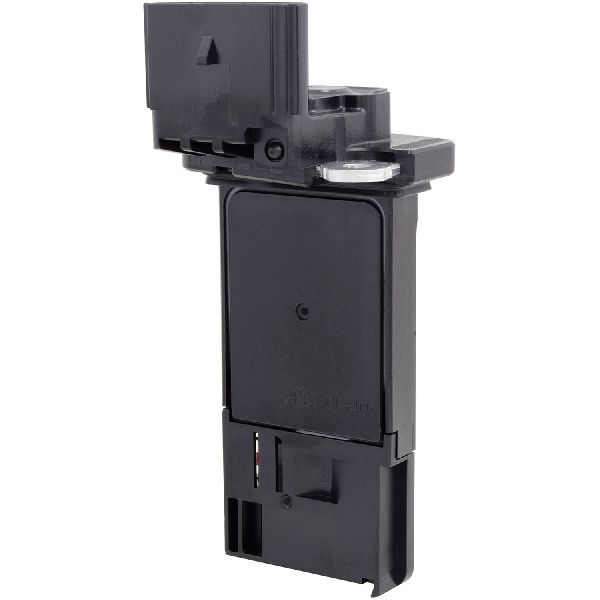
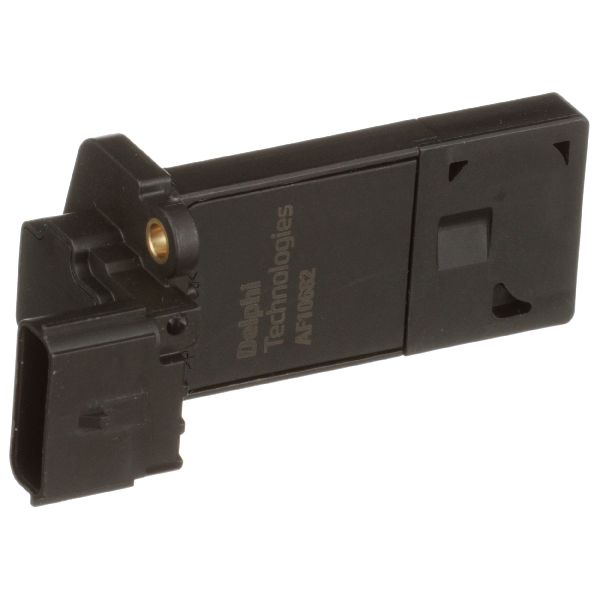
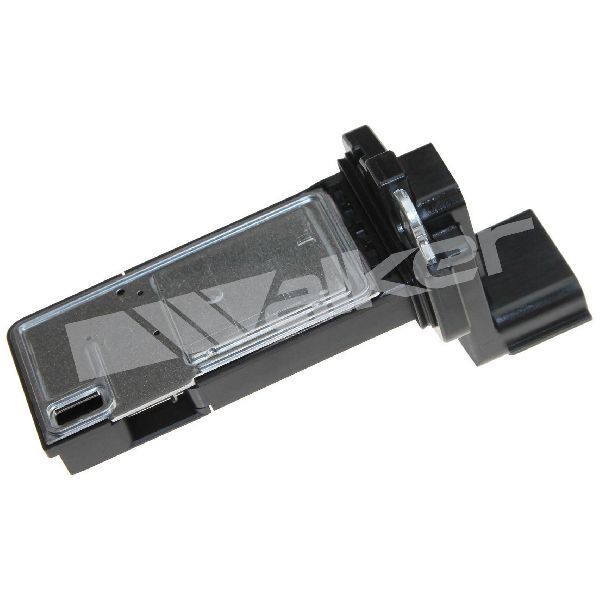
- Mass Airflow (MAF) Sensor
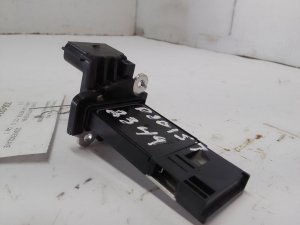
(OEM #ACDelco 213-4222 (Verify by VIN))— A dirty or failed MAF sensor is a very common cause for lean codes on these vehicles. It provides incorrect airflow data to the computer.
Trusted brands: ACDelco, Delphi, Hitachi
OEM price range: $120-$180
Related Codes That Often Appear With This One
- P0174 — This is the 'System Too Lean' code for Bank 2. When both P0171 and P0174 are present, it strongly suggests a problem affecting the entire engine, such as a faulty MAF sensor, a major vacuum leak (like intake gaskets or a disconnected hose), or a fuel delivery issue.
- P0300 — This code means 'Random/Multiple Cylinder Misfire'. A severe lean condition can prevent proper combustion, causing the engine to misfire across multiple cylinders.
Technical Service Bulletins (TSBs) & Recalls
- Advises technicians to check for loose intake manifold bolts on 2017+ models if P0171 is present with other codes and no other cause is found. Recommends applying threadlocker and re-torquing rather than replacing the gasket.
- An informational bulletin from GM requesting data from the field regarding P0171 and P0174 codes on 2014-2018 Acadia, Traverse, Enclave, and other models with the 3.6L V6, indicating it was a widespread issue under investigation.
- Notes that a torn PCV crankcase pressure control diaphragm can be a cause for P0171, allowing un-metered air into the crankcase.
- Suggests that on very low mileage vehicles, P0171 and P0174 codes could be caused by software anomalies and may require an ECM calibration update.
Platform-Specific Known Issues
- First-generation models (2014-2016) with the 3.6L V6 are specifically mentioned in GM Preliminary Information bulletin PIP5549 for setting P0171/P0174 due to vacuum leaks at the 'foul air tube' (PCV tube) connection to the intake manifold. The fix often involves replacing this tube.
- GM Engineering Information bulletin PIE-0433A was created specifically to gather data on 2014-2018 Acadias with P0171 and P0174 codes, indicating this was a widespread issue GM was actively investigating.
Mechanic-Grade Diagnostic Values
- Long-Term and Short-Term Fuel Trims (LTFT/STFT) — expected: Close to 0% at idle and under load. Normal range is typically -5% to +5%.. Failure: Sustained positive values, especially when STFT + LTFT exceeds +25%, indicates the computer is compensating for a lean condition and will set the code.
- Mass Airflow (MAF) Sensor Reading at Idle — expected: Approximately 4-7 grams/second (g/s) for a 3.6L V6 engine at normal operating temperature.. Failure: A significantly lower reading indicates the sensor is under-reporting airflow, causing a lean condition. A significantly higher reading could indicate a vacuum leak downstream of the sensor.
- Upstream Oxygen (O2) Sensor Voltage — expected: Fluctuating rapidly between approximately 0.1 and 0.9 volts (100-900 mV) on a healthy engine in closed loop.. Failure: A sensor that is stuck low (e.g., below 0.45V) is reading a lean condition. A slow-to-respond sensor may also be faulty, but this reading usually confirms the lean state rather than causing it.
- Low-Side Fuel Pressure (In-Tank Pump) — expected: For the 3.6L LLT/LFX engines, the fuel pump module operates between 87 PSI (minimum) and 130 PSI (maximum).. Failure: Pressure below the minimum specification indicates a weak in-tank fuel pump or clogged filter.
Scan Tool Commands That Help
- GDS2 or similar bidirectional scanner: Fuel Trim Diagnosis via RPM Test — To differentiate between a vacuum leak and a fuel delivery problem. Monitor STFT at idle. Then, raise engine RPM to ~2500 RPM and hold. If the high positive fuel trim drops back toward normal, a vacuum leak is the likely cause (as the leak becomes insignificant relative to total airflow). If the fuel trim stays high or gets worse, suspect a fuel delivery issue (weak pump, clogged filter) or a faulty MAF sensor.
- GDS2 or similar bidirectional scanner: EVAP Purge/Seal — To test the EVAP purge valve. With the engine at idle, the purge valve should be commanded closed and show 0% duty cycle. You can then command it to open and listen for a click and a change in idle quality to confirm it is functioning. This helps diagnose a stuck-open valve causing a vacuum leak.
- GDS2 or similar bidirectional scanner: Fuel Trim Reset — After replacing a component like a MAF sensor or fixing a major vacuum leak, the long-term fuel trim values should be reset. This forces the ECM to relearn the fuel strategy from a baseline of zero instead of trying to adjust from the previously learned incorrect values.
Wiring & Ground Locations
- G103 — Located at the left rear of the engine compartment on the cowl, often above the brake booster.. This is a critical ground point that serves the Engine Control Module (ECM), Body Control Module (BCM), and the Data Link Connector (DLC). A poor connection here can cause erratic ECM behavior and incorrect sensor readings, potentially leading to a false P0171 code.
- G101 — Located on the left side of the engine block.. This ground point serves the Mass Air Flow (MAF) sensor and the Intake Air Temperature (IAT) sensor. A corroded or loose G101 can cause incorrect MAF readings, directly leading to P0171.
- MAF Sensor Connector — On the MAF sensor, located in the intake tube between the air filter box and the throttle body.. The connector has pins for 12V power, power ground, signal ground, and the MAF signal to the ECM. Corrosion or damage to these pins or wires can corrupt the signal and cause lean codes.
Real Owner Repair Stories
- YouTube channel 'Rainman Ray's Repairs' (inferred from diagnostic video) (GMC Acadia with P0171 and P0174) — Check Engine Light, high positive fuel trims at idle that improved with RPM.
❌ Tried (didn't work) Initial diagnosis pointed towards a vacuum leak. A smoke test was performed on the intake system.
✅ What actually fixed it The smoke test revealed a massive leak from an open port on an intake tube where a cap was missing. After looking for a disconnected hose and finding none, a temporary plug was installed on the port, which immediately corrected the fuel trims. The final fix was to install a proper cap. - Reddit user in r/AskMechanics (Vehicle with a persistent P0171 code.) — Rough idle, engine shaking, Check Engine Light.
❌ Tried (didn't work) A smoke test was performed on the entire intake system and no leaks were found.
✅ What actually fixed it The owner had replaced the MAF sensor a year prior with an aftermarket part. After failing to find any other cause, they replaced the aftermarket MAF sensor with an OEM sensor, which resolved the code. The aftermarket sensor had failed prematurely.
"I Checked Everything" — The Actual Cause
- In one documented case, a vehicle passed a smoke test, leading the owner to chase other potential causes. The actual root cause was a faulty one-year-old aftermarket Mass Airflow (MAF) sensor. Replacing it with an OEM sensor fixed the P0171 code, highlighting that electronic components can fail without causing a physical leak.
- If a smoke test reveals no vacuum leaks, the cause is likely related to fuel delivery. A weak fuel pump or clogged fuel filter will not provide adequate fuel pressure to meet the engine's demand, causing a lean condition that a smoke test cannot detect.
- An exhaust leak located between the cylinder head and the upstream O2 sensor can also trigger P0171. The leak allows outside oxygen to be drawn into the exhaust stream, which makes the O2 sensor incorrectly report a lean mixture. This will not be found with a standard intake smoke test.
When the Usual Fixes Don't Work
- While vacuum leaks are the most common cause of P0171, it is a mistake to assume it is always the issue. There are multiple owner and technician accounts where extensive smoke testing revealed no leaks. In one such case, the ultimate fix was replacing a one-year-old aftermarket MAF sensor with a new OEM unit. This demonstrates that a faulty electronic sensor can be the root cause even when it appears clean and relatively new, and that OEM parts may offer better reliability than aftermarket alternatives for critical sensors.
OEM Part Supersession History
GM 15865791→ACDelco 213-4222— Part number branding change. GM Genuine Parts are the true OE parts, and some may have formerly appeared as ACDelco GM Original Equipment (OE). They are often the same part under a different SKU.
Heads up: These part numbers are generally interchangeable for the specified applications.GM 12610560, 55593172→GM 12690512— Part design update or manufacturer change for the EVAP Canister Purge Valve Solenoid.
Heads up: The newer part number 12690512 is listed as the replacement for the older numbers and should be compatible with the 3.6L engine.
Model Year Variations Within This Range
- 2017-2018: The second-generation Acadia introduced the 3.6L LGX and 2.5L LCV engines. TSB PIP5529B specifically points to loose intake manifold bolts as a potential cause for P0171 on these engines, a problem not commonly noted on the earlier LFX/LLT V6.
- 2014-2018 (All Direct Injection V6): All V6 engines in this range (LLT, LFX, LGX) use a high-pressure, cam-driven fuel pump mounted on the engine in addition to the standard in-tank fuel pump. This adds a second potential failure point for fuel delivery issues compared to traditional port-injection systems. A ticking noise from this pump is considered normal.
Helpful Videos
Used OEM Parts in Stock
New Aftermarket Parts Available



The information in this article is provided for general reference and educational purposes only. Vehicle specifications, procedures, and part compatibility can vary by production date, trim level, and region. Always consult your vehicle's factory service manual and verify part numbers before purchasing or performing repairs. Safety-critical components such as airbags, seat belts, and braking systems should be installed by a qualified professional.
- Gmc ACADIA:
- 🎬 Helpful Videos
- 🛍️ Shop This Part
- What's Unique About the 2014-2018 Gmc ACADIA
- Diagnostic Flowchart
- Symptoms You May Notice
- Most Likely Causes
- Rare But Worth Checking
- Diagnosis Steps
- Parts You'll Likely Need
- Related Codes That Often Appear With This One
- Technical Service Bulletins (TSBs) & Recalls
- Platform-Specific Known Issues
- Mechanic-Grade Diagnostic Values
- Scan Tool Commands That Help
- Wiring & Ground Locations
- Real Owner Repair Stories
- "I Checked Everything" — The Actual Cause
- When the Usual Fixes Don't Work
- OEM Part Supersession History
- Model Year Variations Within This Range
- 🎟️ Get 5% Off