

P0171 on 2022-2026 Ford Maverick: System Too Lean Causes and Fixes
On a 2022-2026 Ford Maverick with the 2.0L EcoBoost engine, code P0171 is frequently caused by a cracked air intake resonator, which creates a vacuum leak. For both the 2.0L and 2.5L Hybrid, other common causes include a dirty MAF sensor, a stuck-open canister purge valve, or other vacuum leaks. Visually inspecting the intake resonator on 2.0L models is the top diagnostic step.
- For a 2.0L EcoBoost Maverick, the first thing to inspect for a P0171 code is the plastic air intake resonator for cracks and listen for a hissing sound.
- For any Maverick, cleaning the Mass Airflow (MAF) sensor with a dedicated cleaner is a cheap and easy diagnostic step that often resolves the issue.
- Do not immediately replace the oxygen sensor; it is usually just reporting the problem correctly.
- A smoke test is the most effective method for finding a hard-to-see vacuum leak from a hose or gasket.
What's Unique About the 2022-2026 Ford Maverick
For the Ford Maverick equipped with the 2.0L EcoBoost engine, a known weak point is the plastic air intake resonator, which can crack and cause a vacuum leak that directly triggers the P0171 code. This failure is so common that it also affects platform-mates like the Ford Bronco Sport and Lincoln Corsair with the same engine. Owners often report a distinct hissing sound from the engine bay when this part fails. While other causes are possible, this specific component failure is a well-documented issue for this platform. The 2.5L Hybrid model does not share this part and its causes for P0171 are more general, such as a faulty MAF sensor or purge valve.
Symptoms You May Notice
- Check Engine Light is on
- Rough or erratic idle
- Hesitation or stumbling during acceleration
- Reduced fuel economy
- Hissing or whistling noise from the engine bay (especially on 2.0L models)
- Engine knocking or pinging under load
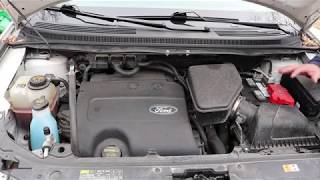
- Replacing the oxygen sensor first. The O2 sensor is usually accurately reporting the lean condition, which is caused by something else like a vacuum leak or MAF issue. Replacing it without diagnosing the root cause will not fix the problem. 🎬 Watch: 7 DIY methods to fix the P0171 engine code
Most Likely Causes
- Cracked Air Intake Resonator (2.0L EcoBoost Only) 🔴 High Probability This plastic component, a Helmholtz resonator designed to quiet intake noise, is a known failure point on the 2.0L EcoBoost engine used in the Maverick, Bronco Sport, and Escape. The plastic can develop cracks from heat and vibration, creating a significant vacuum leak of unmetered air.
How to confirm: Visually inspect the resonator (the plastic chamber on the main intake hose between the airbox and throttle body) for cracks. Listen for a distinct hissing or sucking sound from the engine bay, which gets louder with acceleration. A smoke test will definitively show a leak from this part.
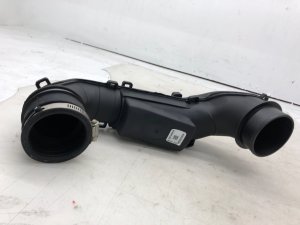
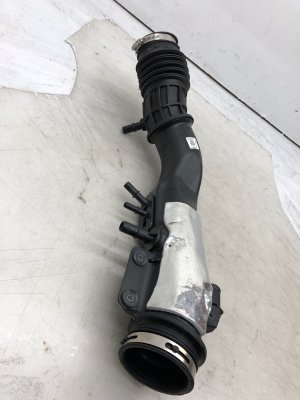
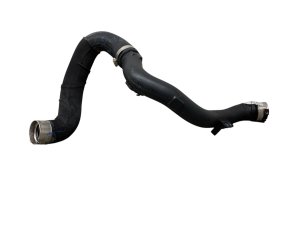
Typical fix: Replace the entire air intake hose assembly which includes the resonator. The OEM part number is LX6Z-9B659-Q.
Est. part cost: $50-$90 for a used OEM part, or $100-$150 for a new OEM part. - Dirty or Faulty Mass Airflow (MAF) Sensor 🟡 Medium Probability The MAF sensor measures the air entering the engine. If dirty, it can under-report airflow, causing the computer to command too little fuel. This is a common issue across many modern vehicles, including Fords.
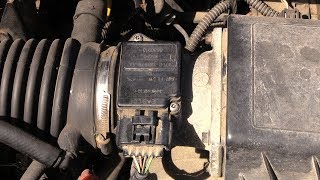
How to confirm: Unplug the MAF sensor with the engine running. If the idle smooths out, the sensor is likely faulty. The best method is to remove the sensor and inspect the delicate wires for contamination. You can also monitor MAF readings with an OBD-II scanner.
Typical fix: Clean the sensor using a dedicated MAF sensor cleaner spray. Do not touch the sensor wires. 🎬 See this easy walkthrough on cleaning Ford MAF sensors If cleaning doesn't work, replace the sensor.
Est. part cost: $10-$15 for cleaner spray, $70-$150 for a new sensor. - Stuck-Open Canister Purge Valve 🟡 Medium Probability The canister purge valve (or solenoid) can fail by sticking open, creating a constant vacuum leak as it pulls fuel vapors from the EVAP canister into the intake manifold at the wrong time. This is a common failure part on many Ford products.
How to confirm: With the engine idling, disconnect the vapor line leading from the purge valve to the intake manifold and feel for suction. There should be no vacuum present at idle when the valve is commanded closed. A scan tool can also command the valve open and closed to check for a change in engine idle and fuel trims.
Typical fix: Replace the canister purge valve. 🎬 Watch: How to replace a Ford canister purge valve
Est. part cost: $30-$80 for a new valve. - Vacuum Leak (Other) 🟡 Medium Probability
How to confirm: Visually inspect all vacuum hoses, the PCV valve and hoses, and the intake manifold gaskets for cracks, loose connections, or damage. A smoke test is the most effective way to find small, hard-to-see leaks.
Typical fix: Replace the cracked hose, leaking gasket, or faulty PCV valve.
Est. part cost: $10-$100 depending on the specific part. - Low Fuel Pressure / Delivery Issue ⚪ Low Probability
How to confirm: Connect a fuel pressure gauge to the fuel rail and check if the pressure is within the manufacturer's specifications. Listen for a healthy hum from the fuel pump when the key is turned to the 'on' position.
Typical fix: Replacing a weak fuel pump, clogged fuel filter, or dirty fuel injectors.
Est. part cost: $50-$400 depending on whether it's a filter, injectors, or a fuel pump.
Rare But Worth Checking
- Exhaust Leak (before O2 Sensor): A crack in the exhaust manifold or a leaking gasket can allow oxygen to be pulled into the exhaust stream, tricking the upstream O2 sensor into thinking the engine is running lean.
- Faulty Upstream Oxygen Sensor: While O2 sensors can fail, they are more often a reporter of the problem than the cause. A sensor that is old or contaminated may incorrectly signal a lean condition.
- PCM Software Calibration: On some Ford models, like the 2021-2023 F-150 with a 3.3L engine, Ford has issued a TSB (23-2195) to address a P0171 code by simply reprogramming the PCM. This could potentially be a cause on the Maverick as well.
- Flex Fuel Learning Issues: Manufacturer bulletin #SSM 49050 notes that on some Ford engines, P0171 can be triggered by incorrect flex fuel learning, often caused by customer refueling habits when adding only small amounts of fuel.
- Kinked Evaporative Lines: Manufacturer bulletin #TSB 21-2106 describes a condition where a kinked evaporator emissions fresh air vent line can cause a P0171 code along with slow fill conditions at the gas pump.
Diagnosis Steps
- Read the codes with an OBD-II scanner and check freeze frame data to see the conditions when the code was set.
- (2.0L EcoBoost) Visually inspect the engine bay for the most common failure: a cracked air intake tube/resonator. Listen for a hissing sound that could indicate a vacuum leak.
- (All Engines) With the engine off, remove and inspect the Mass Airflow (MAF) sensor. If it appears dirty, clean it with dedicated MAF cleaner and reinstall.
- Check for other vacuum leaks. Perform a smoke test to pinpoint the source of unmetered air. Pay close attention to the intake manifold gaskets, PCV hoses, and purge valve connections.
- Test the canister purge valve. With the engine at idle, disconnect the hose from the valve to the intake and check for suction; there should be none.
- Use a scan tool to monitor long-term fuel trim (LTFT) and short-term fuel trim (STFT). High positive numbers (e.g., >15%) confirm the computer is adding fuel to correct a lean condition.
- Check fuel pressure to ensure the fuel pump and filter are delivering adequate fuel to the engine.
- Inspect the exhaust system for leaks between the cylinder head and the upstream oxygen sensor.
Parts You'll Likely Need
- Air Intake Hose / Resonator (2.0L EcoBoost)
(OEM #LX6Z-9B659-Q)— This is the most common failure point on the 2.0L Maverick that causes a vacuum leak and triggers code P0171.
Trusted brands: Motorcraft (Ford OEM)
OEM price range: $100-$150
Aftermarket price range: $50-$90 - Mass Airflow (MAF) Sensor Cleaner — A dirty MAF sensor is a frequent cause of lean codes and cleaning it is an inexpensive first diagnostic step.
Trusted brands: CRC, WD-40
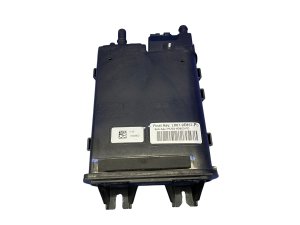
Aftermarket price range: $10-$15 - Canister Purge Valve — This valve can stick open, creating a vacuum leak. It's a common failure item on many Ford vehicles and a likely cause for P0171.
Trusted brands: Motorcraft
OEM price range: $50-$80
Aftermarket price range: $30-$60
Related Codes That Often Appear With This One
- P0174 — This code for 'System Too Lean (Bank 2)' would appear with P0171 on V6 or V8 engines. However, since the Maverick uses inline-4 engines, it only has one bank and P0174 will not be present.
- P0300-P0304 — A severe lean condition can cause a misfire. P0300 (Random Misfire) or P0301-P0304 (Cylinder-specific misfire) may accompany P0171 if the air-fuel mixture is too lean to ignite properly.
- P0191 — This code related to fuel rail pressure may appear alongside P0171 if there is a fuel delivery issue, as noted in NHTSA ODI #11440834.
Technical Service Bulletins (TSBs) & Recalls
- TSB 23-2195: While for the F-150 3.3L, this TSB shows that Ford has addressed P0171 on other vehicles with a PCM software update, making it a remote possibility for the Maverick.
- TSB 25-2342: A manufacturer bulletin for Ford vehicles noting that an illuminated MIL with DTC P0171 may be due to the software level of the powertrain control module (PCM).
- SSM 49050: This bulletin highlights that P0171 can be caused by incorrect flex fuel learning, which is often linked to refueling habits.
- TSB 21-2106: This bulletin notes that a kinked evaporator emissions fresh air vent line can lead to an illuminated MIL with code P0171.
Platform-Specific Known Issues
- On 2022-2026 Mavericks with the 2.0L EcoBoost engine, the air intake resonator is known to crack, creating a vacuum leak that is a primary cause of code P0171.
- The 2.5L Hybrid model does not have the problematic 2.0L intake resonator; its P0171 causes are more likely to be a dirty MAF sensor, a faulty purge valve, or other general vacuum leaks.
Mechanic-Grade Diagnostic Values
- Long Term Fuel Trim (LTFT) — expected: Between -8% and +8% on a healthy engine.. Failure: Sustained positive values above +15%, with the P0171 code typically setting when LTFT exceeds +25%.
- Fuel Trim Behavior (Vacuum Leak vs. Fuel Issue) — expected: If LTFT is high at idle but drops towards 0% at 2500 RPM, a vacuum leak is likely. If LTFT is high at idle and increases with RPM, a dirty MAF or fuel delivery issue is likely.. Failure: The pattern of fuel trim change with engine speed helps differentiate causes.
- Upstream Oxygen Sensor (O2S11) Voltage (Narrowband) — expected: Rapidly fluctuating between approximately 0.1V (lean) and 0.9V (rich) once the engine is in closed loop.. Failure: A voltage that is stuck low (e.g., < 0.2V) indicates the sensor is seeing a persistent lean condition.
- High-Pressure Fuel Rail Pressure (2.0L EcoBoost GDI) — expected: At idle, pressure can be 200+ PSI. Under load, it can rise to over 2,000 PSI.. Failure: Pressure that does not meet the commanded pressure from the PCM, especially under load, indicates a weak high-pressure fuel pump (HPFP) or other fuel system issue.
Scan Tool Commands That Help
- FORScan, Ford IDS, or other professional bidirectional scanner: Purge Valve Solenoid On/Off Test — To functionally test the canister purge valve. With the engine idling, command the valve open and closed to check for a corresponding change in engine idle and short-term fuel trims. This confirms if the valve is physically stuck or electrically sound.
- FORScan, Ford IDS: Fuel Trim Reset — After a repair (like fixing a vacuum leak or replacing a MAF sensor), resetting the fuel trims erases the learned long-term adjustments. This forces the PCM to create new fuel maps immediately, allowing for quick verification that the repair was successful.
- FORScan, Ford IDS: Power Balance Test — If a clogged fuel injector is suspected, this test deactivates one cylinder at a time and measures the RPM drop. A cylinder with a clogged injector will show a smaller RPM drop than healthy cylinders, helping to isolate the problem.
Real Owner Repair Stories
- MaverickTruckClub.com forum user reports (2022-2024 Ford Maverick with 2.0L EcoBoost) — Check Engine Light with code P0171, sometimes accompanied by a hissing noise from the engine bay.
❌ Tried (didn't work) Cleaning the MAF sensor., Searching for obvious vacuum hose leaks.
✅ What actually fixed it Replacement of the entire air intake hose assembly (part number LX6Z-9B659-Q) due to a crack in the integrated plastic resonator chamber. This is the most widely reported, confirmed fix for this specific code on this platform. - NHTSA ODI #10322944 — An owner reported that after a diagnostic test showed P0171 and P0174, air leaks were found in the air hose assembly, which required replacing the air tube assembly.
- NHTSA ODI #11440834 — A vehicle owner reported that the truck would shut down without warning, throwing codes P0171 and P0191 related to the fuel rail and pressure.
OEM Part Supersession History
LX6Z-9B659-Q→No known supersession.— As of early 2026, Ford has not released a redesigned version of the air intake hose/resonator assembly. Replacement parts are of the same design as the original.
Model Year Variations Within This Range
- 2022-2023 vs 2024-2026: For the 2024 model year, Ford made the 2.0L EcoBoost I-4 the standard engine. In 2022-2023 models, the 2.5L Hybrid I-4 was the standard powertrain. This changes the default likelihood of P0171 causes, as the 2.0L is prone to the cracked resonator issue while the 2.5L is not.
Diagnostic Flowchart
Other Known Issues on This Vehicle
Issues unrelated to this code that are worth knowing about as an owner of this generation:
- Hybrid Powertrain Wiring Harness Chafing 🔴 High — Common on 2022-2023 Hybrid models. Can lead to a no-start condition or powertrain malfunction warning. (Ref: Ford Recall 22S73. The fix involves inspecting the harness for damage, repairing it, and securing it to prevent further chafing.)
- Fuel Tank Punctured During Bedliner Installation 🔴 High — Affected a specific batch of 2022 models where the spray-in bedliner installation process could drill into the fuel tank. (Ref: NHTSA Campaign 21V979000. Required dealer inspection and, if necessary, replacement of the fuel tank.)
- Engine Failure and Fire Risk (2.5L Hybrid) 🔴 High — Affects 2022-2023 Hybrid models. An engine failure can cause oil and fuel vapor to leak, creating a fire risk. (Ref: Ford Recall 22S47. The remedy involves modifying the under-engine shield and active grille shutters.)
- Unexpected Shift to Neutral (Hybrid Models) 🟠 Medium — A software issue in the Hybrid Powertrain Control Module (HPCM) can cause the vehicle to unexpectedly shift to neutral. (Ref: Ford Recall 24S33. Dealers update the HPCM software to correct the issue.)
- Faulty Canister Purge Valve 🟡 Low — A stuck-open purge valve is a common issue on many Ford vehicles that can cause lean codes, rough idle, and difficulty starting after refueling.
Used vs. New Parts: Buying Guide for This Vehicle
When a used part is the smart pick: For the 2.0L EcoBoost's most common failure, the cracked air intake hose/resonator assembly, a used part from a salvage yard is a very practical and cost-effective repair. Since it is a large plastic component, its function is not degraded by mileage in the same way a mechanical part is.
Donor-vehicle mileage cap: roughly under 40000 miles for the part to have meaningful remaining life.
What to inspect on the donor part:
- Visually inspect the entire part for hairline cracks, especially around the seams of the resonator box.
- Gently squeeze the plastic to check for brittleness; avoid parts that feel overly hard or inflexible.
- Ensure all mounting tabs and hose connection points are intact and not broken.
- Prefer parts from newer model year donor vehicles to minimize heat cycle exposure.
OEM-only on this vehicle (don't cheap out):
- Mass Airflow (MAF) Sensor
- Oxygen (O2) Sensors
- High-Pressure Fuel Pump (HPFP)
- Fuel Injectors
Aftermarket brands forum-validated for this vehicle:
- Motorcraft (OEM for all parts)
- Bosch (For O2 sensors)
- Denso (For O2 sensors)
- NTK (For O2 sensors)
Brands owners have reported issues with on this vehicle:
- Unbranded, 'white-box' electronic sensors (MAF, O2) from online marketplaces are frequently reported as dead-on-arrival or failing shortly after installation across many vehicle platforms.
Real Owner Stories
Aggregated from forums and TSBs cited above. Mileages and costs reflect what owners reported in those sources.
2022 Ford Maverick 2.0L EcoBoost
Symptoms: Check engine light on; dealer diagnosed a cracked air intake resonator.
What fixed it: Replacement of the cracked air intake resonator.
Source hint: MaverickTruckClub.com
2022 Ford Maverick 2.0L EcoBoost
Symptoms: P0171 code present; confirmed a crack in the air intake tube.
What fixed it: Replaced the air intake tube.
Source hint: Reddit (r/FordMaverickTruck)
Related OBD-II Codes
Frequently Asked Questions
I have a 2.0L EcoBoost Maverick and hear a hissing sound when I accelerate. Is this related to P0171?
What is the specific part number for the intake repair on a 2.0L Maverick?
Does the 2.5L Hybrid Maverick have the same intake resonator failure as the 2.0L?
Is there a TSB for the P0171 code on the Maverick?
Can a faulty EVAP component cause P0171 on my Maverick?
How can I confirm if my MAF sensor is causing the P0171 code?
Helpful Videos
![How to Fix P0171 Engine Code in 5 Minutes [7 DIY Methods]](https://img.youtube.com/vi/g_qItasY91I/mqdefault.jpg)

We Have This Part in Stock


The information in this article is provided for general reference and educational purposes only. Vehicle specifications, procedures, and part compatibility can vary by production date, trim level, and region. Always consult your vehicle's factory service manual and verify part numbers before purchasing or performing repairs. Safety-critical components such as airbags, seat belts, and braking systems should be installed by a qualified professional.
- Ford Maverick:
- 🎬 Helpful Videos
- 🛍️ Shop This Part
- What's Unique About the 2022-2026 Ford Maverick
- Symptoms You May Notice
- Most Likely Causes
- Rare But Worth Checking
- Diagnosis Steps
- Parts You'll Likely Need
- Related Codes That Often Appear With This One
- Technical Service Bulletins (TSBs) & Recalls
- Platform-Specific Known Issues
- Mechanic-Grade Diagnostic Values
- Scan Tool Commands That Help
- Real Owner Repair Stories
- OEM Part Supersession History
- Model Year Variations Within This Range
- Diagnostic Flowchart
- Other Known Issues on This Vehicle
- Used vs. New Parts: Buying Guide for This Vehicle
- Real Owner Stories
- 2022 Ford Maverick 2.0L EcoBoost
- 2022 Ford Maverick 2.0L EcoBoost
- Related OBD-II Codes
- Frequently Asked Questions
- 🎟️ Get 5% Off