

P0171 on 2015-2018 Chevrolet Suburban: System Too Lean Causes and Fixes
P0171 on a 2015-2018 Suburban indicates the engine is running lean (too much air, not enough fuel). The most common causes are a dirty Mass Airflow (MAF) sensor, vacuum leaks from aged intake manifold gaskets, or issues with the PCV system, particularly the driver-side valve cover. Cleaning the MAF sensor and performing a smoke test are common first diagnostic steps.
- P0171 means your Suburban's engine is running with too much air on the passenger side bank (Bank 1).
- The most likely causes are a dirty MAF sensor, a vacuum leak (especially from the intake manifold gaskets), or a PCV system issue.
- Start your diagnosis by cleaning the MAF sensor with a dedicated cleaner; it's a cheap and easy first step.
- If P0174 (Bank 2 Lean) is also present, the problem is almost certainly something that affects the whole engine, like the MAF sensor or intake gaskets.
- Do not replace the oxygen sensor first; it is usually just reporting the problem correctly.
What's Unique About the 2015-2018 Chevrolet SUBURBAN
For the 2015-2018 Suburban with the direct-injected L83 (5.3L) and L86 (6.2L) engines, lean codes like P0171 are frequently tied to specific issues noted by GM. A critical, and often overlooked, cause on these Gen V V8s is the Positive Crankcase Ventilation (PCV) system. The driver-side valve cover contains a non-serviceable PCV orifice and diaphragm that can rupture or get clogged, creating a significant vacuum leak. Additionally, Technical Service Bulletins point towards problems like excess casting flash near the MAF sensor from the manufacturing process (TSB #PIP5446A) and issues with fuel composition, particularly high ethanol content (TSB #PIP5227). While intake manifold gaskets are a universal failure point, their failure on these trucks is common, especially in colder weather.
Diagnostic Flowchart
Tap your situation to follow the diagnostic path that matches what you're seeing on this vehicle.
Symptoms You May Notice
- Check Engine Light is on
- Rough or unstable idle, sometimes shaking the vehicle
- Hesitation or sputtering during acceleration, especially at low speeds (0-30%)
- Reduced engine power
- Poor fuel economy
- Harsh shifting between 1-2 and 2-3 gears
- Hissing, sucking, or whistling noise from the engine bay, especially at idle
- Replacing the oxygen sensor first. The O2 sensor is usually doing its job by reporting the lean condition. The problem is typically the source of the lean mixture (a vacuum leak or fuel delivery issue), not the sensor itself. Always diagnose for vacuum leaks and check fuel pressure before replacing sensors.
Most Likely Causes
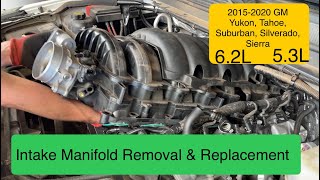
- Vacuum Leak (Intake Manifold Gasket, PCV System) 🔴 High Probability Vacuum leaks allow unmetered air to enter the engine after the MAF sensor, leading to a lean mixture. On these GM V8s, the intake manifold gaskets are a known failure point, often becoming brittle and failing to seal, especially when temperatures drop. A more specific and increasingly common issue is the failure of the integrated PCV system in the driver-side valve cover; a ruptured internal diaphragm creates a large, unmetered air source.
How to confirm: The most effective method is to use a smoke machine to introduce smoke into the intake system and watch for leaks around the intake manifold seals and PCV hoses. Spraying brake cleaner around suspected areas while monitoring Short Term Fuel Trims 🎬 Watch: A professional diagnostic walkthrough for P0171 and P0174 codes. (STFT) on a scan tool can also identify leaks; a jump in the STFT indicates the cleaner is being sucked in. A whistling noise at idle is a strong indicator of a failed PCV valve cover diaphragm.
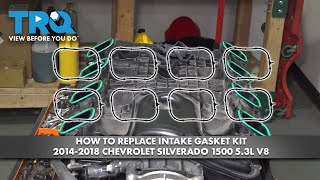
Typical fix: Replace the failed intake manifold gaskets. 🎬 See this step-by-step guide to replacing your intake gaskets. If the PCV system is the cause, the entire driver-side valve cover must be replaced as the diaphragm is not serviced separately. Replacing cracked PCV hoses is also a common repair.
Est. part cost: $15-$40 for hoses, $40-$90 for an intake manifold gasket set, $80-$150 for a new valve cover. - Dirty or Faulty Mass Airflow (MAF) Sensor 🔴 High Probability The MAF sensor measures the air entering the engine. If it's dirty from debris bypassing a poorly sealed or damaged air filter, it will under-report airflow, causing the PCM to deliver insufficient fuel. TSB #PIP5446A specifically mentions inspecting for casting flash (excess plastic material) in the air filter housing near the MAF sensor, which can disrupt airflow and trigger this code.
How to confirm: Inspect the MAF sensor wires for any visible debris like dust, oil, or even pieces of the air filter. A diagnostic scan tool can monitor MAF readings (g/s) to see if they are rational at idle and under load. Cleaning the sensor is a common first step.
Typical fix: Clean the sensor using a dedicated MAF sensor cleaner spray. Do not touch the sensor wires. If cleaning doesn't resolve the issue or if casting flash is found in the housing, the sensor or air filter housing lid may need to be replaced.
Est. part cost: $10-$20 for cleaner, $70-$150 for a new sensor. - Low Fuel Pressure or Delivery Issues 🟡 Medium Probability A weak in-tank fuel pump or a clogged fuel filter can prevent enough fuel from reaching the high-pressure fuel pump (HPFP) required for direct injection. While less common than vacuum leaks, fuel delivery problems can certainly cause a lean condition across both banks.
How to confirm: Connect a fuel pressure gauge to the low-pressure fuel system's Schrader valve (if equipped) to test pressure against the manufacturer's specification (typically 55-62 PSI for the low-pressure side). A scan tool can monitor fuel trims and the high-pressure fuel rail sensor data to see if pressure drops under load.
Typical fix: Replace the failing in-tank fuel pump or fuel filter. In some cases, clogged direct fuel injectors could be the cause, but this is less common.
Est. part cost: $50-$200 for a fuel filter, $300-$1000+ for a fuel pump assembly. - Incorrect Fuel Ethanol Content ⚪ Low Probability TSB #PIP5227 notes that if fuel with an ethanol content over 15% (E15) is used in a non-Flex Fuel vehicle, it can cause lean codes P0171 and P0174. The computer is not calibrated for the different oxygen content of high-ethanol fuel.
How to confirm: A technician can use a special tool (J44175) to test the ethanol percentage in the fuel. If you recently filled up at a different or unknown gas station, this could be a possibility.
Typical fix: If the ethanol content is too high, the fuel may need to be drained and replaced with standard E10 or E0 gasoline. Resetting the fuel alcohol composition with a scan tool may also be necessary.
Est. part cost: Cost of a full tank of gasoline plus potential labor for draining the tank.
Rare But Worth Checking
- Exhaust Leak: An exhaust leak before the upstream oxygen sensor (between the cylinder head and the sensor) can draw outside air into the exhaust stream. This makes the sensor incorrectly report a lean condition, causing the PCM to add unnecessary fuel.
- Faulty Oxygen (O2) Sensor: While the O2 sensor is often blamed, it's more common for it to be correctly reporting a problem than to be the cause itself. However, a slow, biased, or failing sensor can send incorrect data to the PCM, leading to improper fuel adjustments. An accompanying code like P0134 (O2 Sensor Circuit No Activity Detected) would point more directly to a bad sensor.
Diagnosis Steps
- Check for other DTCs. Codes like P0174 or P0101 provide valuable clues to the root cause.
- Using a scan tool, observe Long Term Fuel Trim (LTFT) and Short Term Fuel Trim (STFT) values at idle. A combined value significantly above +10% (e.g., LTFT at +25%) confirms the lean condition.
- Inspect the entire air intake system from the air filter box to the throttle body for any cracks, loose clamps, or disconnected hoses. Check for a dirty or damaged air filter.
- Carefully inspect all vacuum lines, especially the PCV hoses connected to the intake manifold and valve covers, for cracks or breaks.
- Remove and inspect the Mass Airflow (MAF) sensor. Clean it with dedicated MAF sensor cleaner if it appears dirty. Also inspect the air filter housing for 'casting flash' per TSB #PIP5446A. Reinstall and check if fuel trims improve.
- If a leak is suspected but not visible, perform a smoke test. This is the most reliable way to find leaks from intake manifold gaskets, the PCV valve cover diaphragm, or cracked hoses.
- If fuel trims are high at idle but improve with RPM, a vacuum leak is the most likely cause. If fuel trims are high across all RPM ranges, suspect a MAF or fuel delivery issue.
- If no vacuum leaks are found, test the low-side fuel pressure to ensure the fuel pump and filter are functioning correctly (should be ~55-62 PSI).
- Check for exhaust leaks between the cylinder head and the upstream O2 sensor.
- If all else fails, consider testing the Bank 1 upstream O2 sensor for proper operation by graphing its voltage on a scan tool.
Parts You'll Likely Need
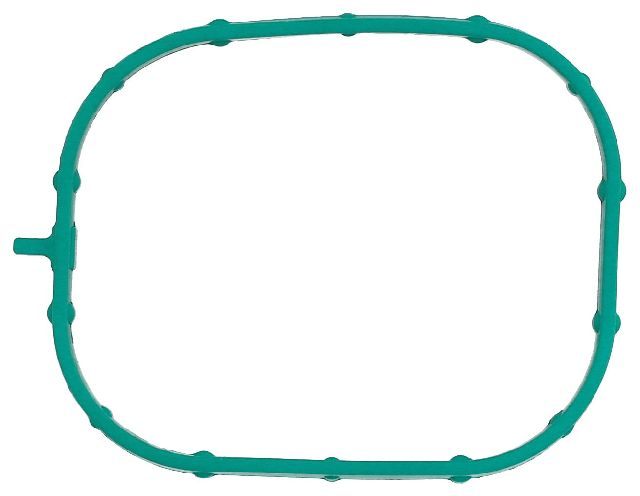
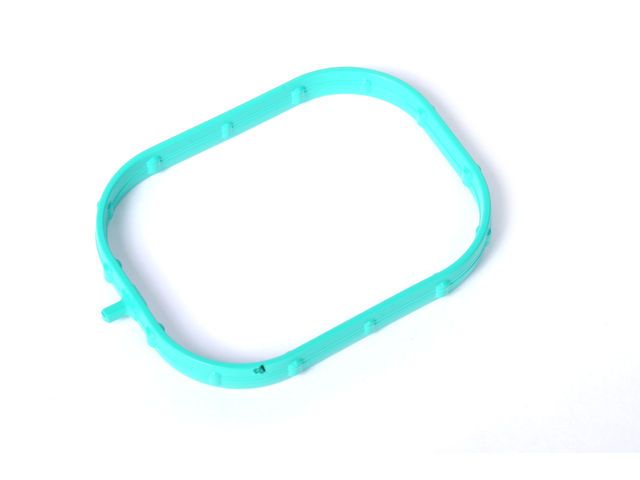
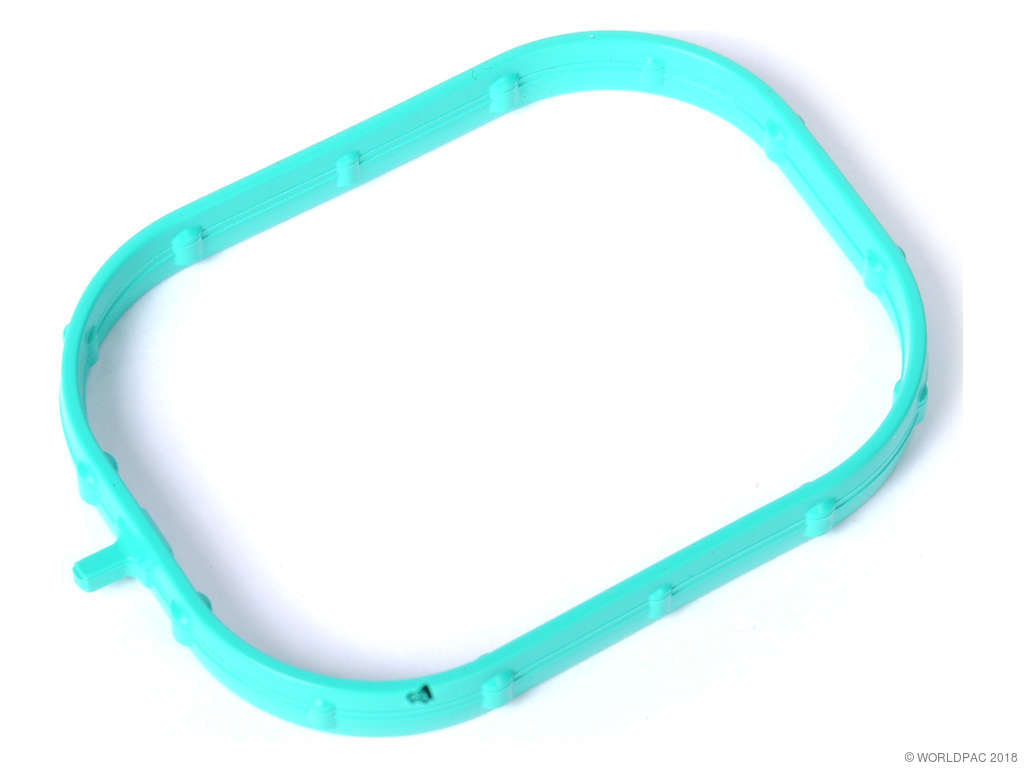
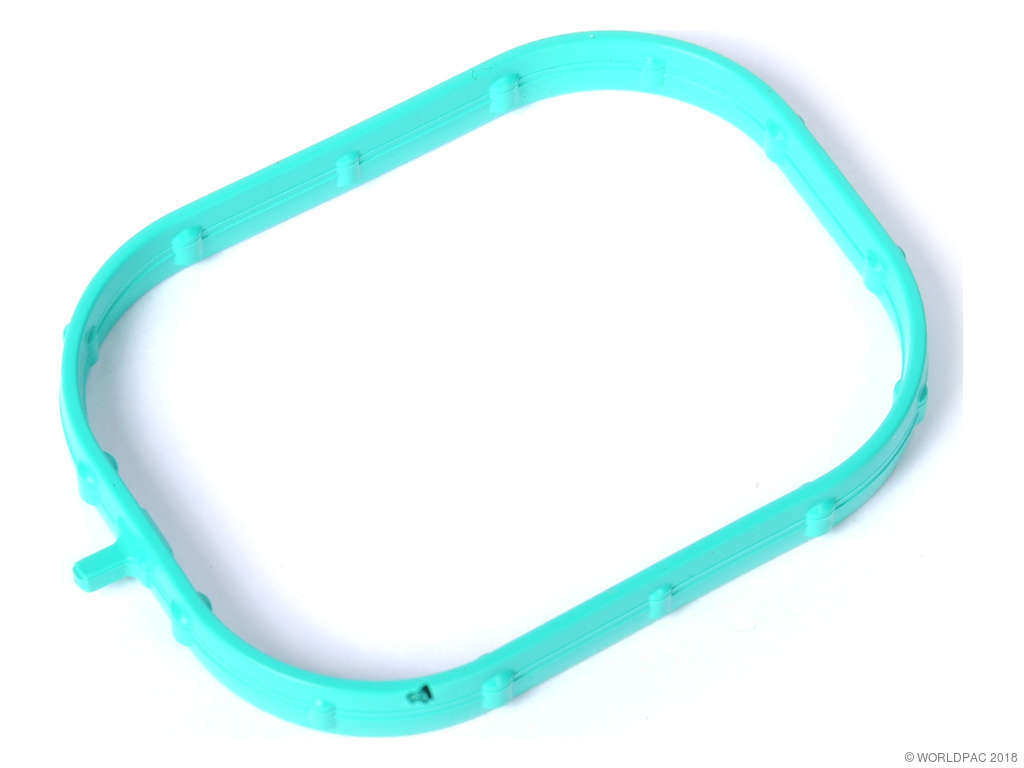
- Intake Manifold Gasket Set
(OEM #12679527)
Related Codes That Often Appear With This One
- P0174 — This is the same 'System Too Lean' code but for Bank 2 (driver's side). When P0171 and P0174 appear together, it strongly suggests a problem affecting the entire engine, such as a dirty MAF sensor, a large vacuum leak at the intake manifold, a failed PCV valve cover, or low fuel pressure.
- P0300 — This code indicates a 'Random/Multiple Cylinder Misfire'. A lean air-fuel mixture can fail to ignite properly, causing misfires, especially at idle or under light load.
- P0101 — This code relates to 'Mass Air Flow (MAF) Circuit Range/Performance'. It often appears with P0171 when the MAF sensor is dirty, failing, or when there is casting flash in the air intake tube, as noted in TSB #PIP5446A.
Technical Service Bulletins (TSBs) & Recalls
- PIP5446A: Addresses rough idle, harsh shifting, and sputter with codes P0101, P0171, P0172, P0174, P0175. Instructs technicians to inspect for 'casting flash' (excess plastic) in the air filter housing that can disrupt airflow over the MAF sensor.
- PIP5227: Discusses lean codes P0171 and P0174 caused by using fuel with an ethanol content higher than the vehicle is calibrated for (e.g., >E15 in a non-Flex Fuel vehicle). Recommends testing fuel composition.
Platform-Specific Known Issues
- Integrated PCV System Failure: The 2015+ Gen V V8 engines (L83/L86) feature a PCV system with a fixed orifice and diaphragm built into the driver-side valve cover. This diaphragm is known to tear or rupture, creating a significant internal vacuum leak that the PCM cannot compensate for, leading to high fuel trims and P0171/P0174 codes. A distinct whistling sound at idle is a key symptom. The fix requires replacing the entire valve cover.
- Intake Manifold Gasket Seal in Cold Weather: The intake manifold gaskets on this platform are prone to shrinking and hardening over time. This issue is often exacerbated by cold weather, where the material contracts and fails to create an adequate seal, allowing unmetered air to enter. Many owners report the P0171/P0174 codes appearing for the first time during the first cold snap of the season.
Mechanic-Grade Diagnostic Values
- Low-Pressure Fuel System — expected: 58-72 PSI (400-500 kPa). Failure: Pressure below 58 PSI indicates a weak in-tank fuel pump or failing Fuel Pump Control Module (FPCM).
- High-Pressure Fuel System (Direct Injection) — expected: ~290 PSI at idle, up to 2,175+ PSI under load.. Failure: On a scan tool, if the 'Actual' fuel rail pressure cannot keep up with the 'Desired' fuel rail pressure, especially under acceleration, the high-pressure fuel pump (HPFP) is a likely cause.
- Mass Airflow (MAF) Sensor Reading at Idle — expected: 4-6 grams/second (g/s) at a stable, warm idle.. Failure: A reading significantly below 4 g/s can indicate a dirty sensor or a vacuum leak occurring after the sensor.
- Upstream Oxygen Sensor Voltage — expected: Fluctuating rapidly between ~0.1V and ~0.9V.. Failure: A voltage that is consistently low (e.g., stuck below 0.3V) is reporting a lean condition. This confirms the lean state but doesn't mean the sensor is bad.
Scan Tool Commands That Help
- GDS2 / Professional Scan Tool: Fuel Composition Reset — Required after using fuel with high ethanol content (as per TSB #PIP5227) or if the inferred alcohol content is incorrectly high. Failure to reset will cause the ECM to use incorrect fuel calculations, leading to lean or rich codes.
- GDS2 / Professional Scan Tool: Fuel Trim Reset — After any repair for a P0171/P0174 code (like fixing a vacuum leak or replacing a sensor), the long-term fuel trim values should be reset. This forces the ECM to relearn the fuel strategy immediately with the new, correct parameters.
- GDS2 / Professional Scan Tool: Fuel Pump Relay / FPCM Command — To test the function of the low-pressure in-tank fuel pump and its control module (FPCM) without needing to physically access the pump. This can help differentiate between a failed pump and a failed control module.
Wiring & Ground Locations
- G103 / G110 — G103 is on the rear of the driver-side cylinder head. G110 is on the front of the passenger-side cylinder head.. These are primary engine-to-chassis grounds. A loose or corroded connection at these points can cause erratic readings from critical sensors like the MAF, O2 sensors, and coolant temperature sensor, leading to incorrect fuel calculations and lean codes.
- Engine Wiring Harness — The area where the main harness routes behind the intake manifold and near the firewall.. This area is a known chafe point on K2XX platform trucks. Abrasion can damage wiring for the MAF sensor, O2 sensors, or fuel injectors, causing intermittent signals that can trigger a P0171 code.
Real Owner Repair Stories
- Tahoe/Yukon Forum User (2015 Chevrolet Tahoe (K2XX Platform)) — P0171 and P0174 codes, engine stumbling on acceleration.
❌ Tried (didn't work) Cleaned MAF sensor, Cleaned throttle body, Checked for vacuum leaks
✅ What actually fixed it Replacement of the high-pressure fuel pump (HPFP). The pump was unable to provide the commanded pressure under load. - GM-Trucks.com Forum User (2016 Chevrolet Silverado (K2XX Platform, L83 Engine)) — Persistent P0171 code, faint whistling noise at idle.
❌ Tried (didn't work) Replaced MAF sensor, Replaced O2 sensors, Replaced intake manifold gaskets
✅ What actually fixed it Replacement of the driver-side valve cover. The integrated PCV diaphragm had ruptured, creating a hard-to-find vacuum leak. - CorvetteForum User (similar Gen V engine) (2015 Chevrolet Corvette Z06 (Gen V LT4 Engine)) — P0171 and P0174 codes after replacing the high-pressure fuel pump.
❌ Tried (didn't work) Smoke testing, Checking fuel injectors, Re-checking MAF sensor
✅ What actually fixed it Found a disconnected vacuum line under the supercharger bypass valve mechanism that was missed during initial diagnosis.
"I Checked Everything" — The Actual Cause
- A confirmed repair story showed that even with a clean smoke test and a clean MAF sensor, the root cause for P0171/P0174 was a failing high-pressure fuel pump (HPFP). The pump could maintain pressure at idle but failed to meet the commanded pressure under load, a condition a smoke test cannot identify.
- In another case, the Fuel Pump Control Module (FPCM), located above the spare tire, was failing. It wasn't providing consistent voltage to the in-tank fuel pump, causing intermittent low fuel pressure that was difficult to diagnose without monitoring FPCM data directly on a scan tool.
OEM Part Supersession History
12677899 (and others)→12689951— The driver-side valve cover, which contains the non-serviceable PCV system, has been updated by GM multiple times. This is likely to address the common issue of the internal diaphragm failing and causing a major vacuum leak.
Heads up: Using an older part number from old stock may lead to a repeat failure of the same component.12625817, 12694529→12711668 (LT4 Pump)— The high-pressure fuel pump for the L83/L86 has several revisions. The pump from the supercharged LT4 engine (12711668) is a common upgrade for higher horsepower applications but also serves as a robust replacement for the stock pump.
Helpful Videos
Used OEM Parts in Stock

New Aftermarket Parts Available


The information in this article is provided for general reference and educational purposes only. Vehicle specifications, procedures, and part compatibility can vary by production date, trim level, and region. Always consult your vehicle's factory service manual and verify part numbers before purchasing or performing repairs. Safety-critical components such as airbags, seat belts, and braking systems should be installed by a qualified professional.
- Chevrolet SUBURBAN:
- 🎬 Helpful Videos
- 🛍️ Shop This Part
- What's Unique About the 2015-2018 Chevrolet SUBURBAN
- Diagnostic Flowchart
- Symptoms You May Notice
- Most Likely Causes
- Rare But Worth Checking
- Diagnosis Steps
- Parts You'll Likely Need
- Related Codes That Often Appear With This One
- Technical Service Bulletins (TSBs) & Recalls
- Platform-Specific Known Issues
- Mechanic-Grade Diagnostic Values
- Scan Tool Commands That Help
- Wiring & Ground Locations
- Real Owner Repair Stories
- "I Checked Everything" — The Actual Cause
- OEM Part Supersession History
- 🎟️ Get 5% Off