

P0171 on 2012-2019 Chevrolet Sonic: Lean Code Causes and Fixes
On the 1.4L Turbo Sonic, code P0171 is most often caused by a failed PCV system inside the valve cover, requiring a new valve cover assembly (~$80-$200). On both the 1.4L and 1.8L engines, a torn air intake hose is also a very common cause. Diagnosis is straightforward and most repairs are DIY-friendly.
- On the 1.4L Turbo, P0171 is almost always a failed PCV system within the valve cover. Listen for a hiss and check for vacuum at the PCV breather port.
- When replacing the 1.4L valve cover, it is essential to also check the non-return valve in the intake manifold to prevent repeat failure.
- On the 1.8L, P0171 is most commonly caused by a cracked air intake hose. Remove the hose and bend it to find hidden cracks.
- GM has issued special coverage programs (extended warranties) for both of these common failures on certain model years.
- Do not replace O2 sensors for this code until all possible vacuum leaks have been definitively ruled out with a smoke test.
What's Unique About the 2012-2019 Chevrolet SONIC

The Chevrolet Sonic, particularly models with the 1.4L Turbo engine, has a well-documented weakness in its Positive Crankcase Ventilation (PCV) system. Unlike many cars with a simple, separate PCV valve, the Sonic's is integrated into the engine's valve cover (camshaft cover). A rubber diaphragm inside this cover is prone to tearing, causing a significant vacuum leak that is a primary trigger for the P0171 code. This issue is so common that General Motors issued multiple Technical Service Bulletins (TSBs) and a special coverage program (N202299080) extending the warranty for this specific failure on certain model years. A secondary, but related, failure is a check valve inside the intake manifold that can fall out, allowing boost pressure to rupture the new valve cover diaphragm, leading to repeat failures if not addressed.
Diagnostic Flowchart

Tap your situation to follow the diagnostic path that matches what you're seeing on this vehicle.
Symptoms You May Notice

- Check Engine Light is on
- Rough, surging, or erratic idle
- Engine hesitation or lack of power during acceleration
- Whistling, hissing, or sucking noise from the engine bay (especially on 1.4L)
- Reduced fuel economy
- Stalling when coming to a stop
- Traction control light may illuminate intermittently
- Replacing Oxygen (O2) Sensors. O2 sensors are often replaced first because they are what detect the lean condition. However, they are usually just reporting the problem, not causing it. An owner complaint (ODI #11243204) noted that replacing both O2 sensors did not fix their P0171 code.
- Replacing the Catalytic Converter. A lean code is not typically caused by a bad catalytic converter. In fact, a persistent lean condition can damage the converter over time. ODI #11243204 also mentioned an unnecessary catalytic converter replacement.
Most Likely Causes

- Failed PCV System / Cracked Camshaft Cover (1.4L Turbo Engine) 🔴 High Probability The PCV diaphragm inside the valve cover is made of rubber that tears or ruptures from age and heat cycles, creating a large, unmetered vacuum leak. This is a known design flaw across all GM vehicles with the 1.4L engine. TSB #19NA114 and Special Coverage #N202299080 directly address this failure, with GM extending warranty coverage for 10 years/120,000 miles on affected model years.
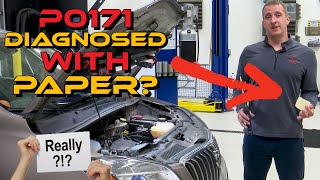
How to confirm: With the engine running, listen for a distinct sucking or whistling noise near the top of the engine. A definitive test is to check for vacuum at the small circular breather port on the PCV valve housing (on top of the valve cover); placing a finger or a small piece of paper over this hole will reveal suction if the diaphragm is torn. 🎬 Watch: How to perform this simple PCV suction test. Another common test is to remove the oil filler cap; very strong suction holding the cap down indicates a failed diaphragm.
Typical fix: The entire camshaft cover (valve cover) assembly must be replaced. The PCV components are not serviced separately. It is also critical to inspect the intake manifold's non-return check valve to ensure it is present and intact, as its failure can cause the new valve cover to fail again.
Est. part cost: $80-$200 - Torn or Cracked Air Intake Duct (Especially 1.8L Engine) 🔴 High Probability The flexible rubber/plastic duct between the air filter box and the throttle body becomes brittle and cracks, especially in the ribbed sections. This allows unmetered air to enter the engine after the Mass Airflow (MAF) sensor. This is the most common cause of P0171 on the 1.8L engine. GM issued TSB GCUS-9-3731 (also known as 16139) which created a special coverage program for this part on 2012-2014 Sonics.
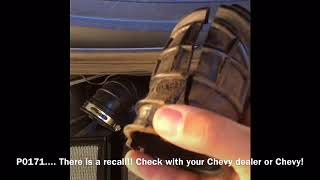
How to confirm: Visually inspect the entire length of the intake duct. It is crucial to remove the duct and bend/flex it to reveal hidden cracks in the accordion-like ribs that are not visible when installed. A smoke test will also quickly show leaks from this component.
Typical fix: Replace the torn air intake duct. The OEM part number for the 1.8L engine is 94537633 (supersedes 95489808). 🎬 See how to replace a cracked air intake hose.
Est. part cost: $40-$100 - Faulty EVAP Purge Solenoid 🟡 Medium Probability The evaporative emissions purge solenoid can fail and get stuck open, creating a constant vacuum leak as it pulls fuel vapors from the charcoal canister at the wrong time. This is a common failure on many GM vehicles. An owner complaint (ODI #11384224) linked P0171 with the EVAP code P0496, which points to this issue.
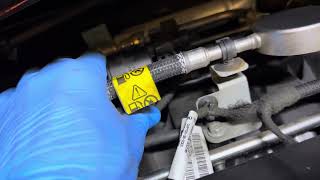
How to confirm: With the engine running, disconnect the electrical connector and the vapor line from the solenoid. If you can feel vacuum on the solenoid's intake port at idle, it is stuck open and needs to be replaced. This is often accompanied by code P0496. 🎬 Watch: Diagnosing a faulty EVAP purge valve on the 1.8L.
Typical fix: Replace the EVAP purge solenoid.
Est. part cost: $25-$60 - Dirty or Failing Mass Airflow (MAF) Sensor ⚪ Low Probability While less common than vacuum leaks, a MAF sensor contaminated with dirt, oil, or debris can under-report the amount of air entering the engine. This causes the ECM to command too little fuel, resulting in a lean condition.
How to confirm: Can be cleaned with a dedicated MAF sensor cleaner as a first step. A scan tool can be used to monitor MAF readings (g/s) to see if they are rational and respond correctly to changes in engine RPM. Do not touch the sensor elements.
Typical fix: Clean the MAF sensor. If cleaning does not resolve the issue, replace the sensor.
Est. part cost: $60-$150
Rare But Worth Checking
- Loose or Improperly Seated Oil Dipstick or Filler Cap: The crankcase is part of the sealed air system. If the oil dipstick is not fully seated or the oil filler cap is loose or has a bad seal, it will create a vacuum leak and can trigger a P0171 code. Always check these simple items first after an oil change.
- Weak Fuel Pump or Clogged Fuel Filter: If the engine is not receiving enough fuel pressure, it can cause a lean condition. This is less likely than a vacuum leak but should be considered if all air leaks have been ruled out. A fuel pressure test is required for diagnosis.
- Leaking Intake Manifold Gaskets: A leak in the gasket between the intake manifold and the cylinder head can also introduce unmetered air. This is usually diagnosed with a smoke machine and is less common than the other primary vacuum leaks on this platform.
Diagnosis Steps

- Read the code with an OBD-II scanner. Check live data for Long Term Fuel Trim (LTFT) and Short Term Fuel Trim (STFT). A high positive LTFT (e.g., +25% or more) confirms the lean condition.
- Check for simple mistakes: ensure the oil filler cap is tight and the oil dipstick is fully seated.
- Visually inspect the air intake duct between the air filter and the throttle body. For 1.8L engines, remove the duct and flex the ribbed sections to expose hidden cracks.
- For 1.4L Turbo engines: With the engine idling, listen for hissing/whistling from the valve cover. Place a finger over the small breather hole on the PCV housing; if you feel suction, the diaphragm is torn and the valve cover must be replaced.
- If no obvious leaks are found, perform a smoke test on the intake system. Smoke will escape from any leak points, including the valve cover, intake duct, EVAP lines, or manifold gaskets, making them easy to identify.
- Test the EVAP purge solenoid. With the engine running, disconnect the hoses and check for vacuum on the port at idle. There should be none.
- If no vacuum leaks are found, consider cleaning the Mass Airflow (MAF) sensor with a dedicated, non-residue cleaner.
- If all else fails, test fuel pressure to rule out a weak fuel pump or clogged filter.
Parts You'll Likely Need
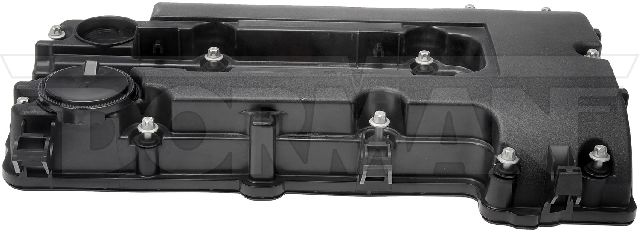
- Engine Camshaft Cover (Valve Cover) (1.4L)
(OEM #25203036 (supersedes 25198874, 55573746))— This is the most common fix for P0171 on the 1.4L Turbo engine due to the integrated PCV system failing. TSB #N202299080 recommends its replacement.
Trusted brands: ACDelco (GM Genuine), Dorman
OEM price range: $150-$200
Related Codes That Often Appear With This One
- P1101 — Intake Air Flow System Performance. This code is often set alongside P0171 because the MAF sensor reading does not match the expected airflow, which is a direct result of a vacuum leak from the PCV system or intake duct. Seen in owner complaint ODI #11384224 and TSB PIP5197.
- P0496 — EVAP Flow During a Non-Purge Condition. This indicates the EVAP purge valve is stuck open, which is a type of vacuum leak that can cause P0171. Seen in owner complaint ODI #11384224.
- P0101 — Mass Air Flow (MAF) Circuit Range/Performance. Similar to P1101, this code indicates a problem with the MAF sensor's readings, often caused by a vacuum leak downstream from the sensor. TSB GCUS-9-3731 for the 1.8L intake duct specifically calls out this code alongside P0171.
Technical Service Bulletins (TSBs) & Recalls
- N202299080 / N192210230: Special Coverage for 1.4L engine camshaft cover. Extends warranty to 10 years/120,000 miles for a cracked PCV diaphragm causing P0171 on specific model years of Sonic, Cruze, Trax, and Encore.
- 19-NA-114 (replaces PIP5197M): Informs technicians of the common P0171 code from a torn PCV diaphragm and provides a specific diagnostic procedure to confirm the failure (checking for vacuum at the PCV vent) before replacing the camshaft cover.
- GCUS-9-3731 / 16139: Special Coverage for 1.8L engine air cleaner outlet duct. Extends warranty to 10 years/120,000 miles for a cracked duct causing P0171 or P0101 on 2012-2014 Sonics.
Platform-Specific Known Issues
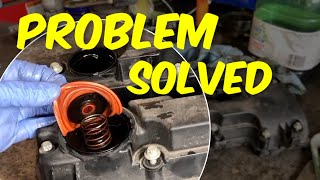
- 1.4L Intake Manifold Check Valve Failure: A critical but often overlooked issue on the 1.4L Turbo is a small, orange, rubber non-return valve inside the intake manifold. This valve can become dislodged or damaged. When this happens, engine boost pressure is forced into the crankcase, which can rupture the diaphragm in the PCV/valve cover. Replacing the valve cover without inspecting/fixing this check valve can lead to immediate failure of the new part.
- 1.8L Intake Duct Cracks are Hard to See: On the 1.8L engine, the cracks in the air intake duct are often in the bellows/accordion section and may not be visible with a simple visual inspection. The part must be removed from the vehicle and flexed by hand to reveal the splits that cause the P0171 code.
Mechanic-Grade Diagnostic Values
- Long Term Fuel Trim (LTFT) at Idle — expected: < +/- 10%. Failure: Sustained positive value of +25% or higher, often reaching +35% or more.
- Mass Airflow (MAF) Sensor Reading (1.4L/1.8L) — expected: Approximately 1.4-1.8 g/s at warm idle. Should rise linearly with RPM (e.g., ~9 g/s at 2000 RPM, ~13 g/s at 3000 RPM).. Failure: Significantly lower readings than expected for engine displacement, or readings that do not increase smoothly with RPM.
- Throttle Position at Idle (1.4L with PCV leak) — expected: Around 8% or more.. Failure: The ECM will try to compensate for the unmetered air from a PCV leak by closing the throttle plate. A reading around 2% at idle strongly suggests a large vacuum leak from the PCV diaphragm.
Scan Tool Commands That Help
- GDS2 / Tech2 (or capable aftermarket scanner): Fuel Trim Reset — After replacing a component that caused the lean condition (e.g., valve cover, intake duct), this command resets the learned long-term fuel trim values to zero, allowing for immediate confirmation that the repair was successful by observing the new fuel trim behavior.
- GDS2 / Tech2 (or capable aftermarket scanner): EVAP Purge/Seal — To test the EVAP purge solenoid. The command allows the technician to command the valve open and closed while monitoring for vacuum or pressure changes, confirming if it is stuck open or closed without having to physically access it.
Wiring & Ground Locations
- G105 — Left front of the engine compartment, behind the cooling fan relays.. This is a major ground point for multiple components in the engine bay. A corroded or loose G105 can cause erratic sensor readings, though it is not a primary cause for P0171.
- G106 — Left rear of the engine block.. Provides a ground path for the Engine Control Module (ECM). A poor connection here could potentially affect ECM operation and its ability to correctly interpret sensor data.
- MAF Sensor Connector (Pinout) — On the MAF sensor, located in the intake tube between the air filter box and throttle body.. Allows for testing of power, ground, and signal wires directly at the sensor to rule out wiring issues. A technician can check for 12V power, proper ground, and a 0-5V signal that changes with airflow.
Real Owner Repair Stories
- Reddit user on r/cruze (Chevy Cruze 1.4L (same engine/PCV system as Sonic)) — P0171 code returned a week after replacing the valve cover (Dorman brand) and installing a PCV fix kit.
❌ Tried (didn't work) Replaced valve cover, Installed aftermarket PCV fix kit for intake manifold, Confirmed PCV fix kit plug was still in place, Confirmed no vacuum leak at the new valve cover
✅ What actually fixed it The user identified a vacuum leak at the EVAP purge valve by spraying water around it and noticing a change in engine idle. The leak was upstream of the valve's check valve, so it did not show up during a boost leak test. - Sonic Owners Forum user (Chevy Sonic 1.4L Turbo) — P0171 code with long term fuel trims peaking in the mid +30s. Trims would spike when coming to a stop.
❌ Tried (didn't work) Checked purge system, Checked PCV system, Replaced MAF sensor, Performed a smoke test (no leaks found), Verified O2 sensors appeared to operate normally
✅ What actually fixed it The forum thread did not have a confirmed final fix from the original poster, highlighting the difficulty that can occur even after standard checks are performed. Another user suggested the high trims at low RPM strongly indicate a vacuum leak that the smoke test may have missed.
"I Checked Everything" — The Actual Cause
- In some cases with the 1.4L engine, a smoke test may not reveal a leak, but the issue is still vacuum-related. A common culprit is a faulty EVAP purge solenoid, which can have an internal leak that is difficult to detect with a smoke machine but can be found by commanding the valve shut with a scan tool or checking for vacuum at idle.
- Another possibility is a hairline crack in the plastic intake manifold itself, which may only open under specific temperature or vibration conditions, making it difficult to find with a static smoke test.
When the Usual Fixes Don't Work
- While the vast majority of P0171 codes on the 1.4L Sonic are caused by the PCV system (valve cover and/or intake manifold check valve), there are documented cases where these parts are replaced (sometimes multiple times) and the code persists. In one such case, the ultimate culprit was found to be a faulty EVAP purge solenoid that was creating a vacuum leak not easily found with a smoke or boost leak test. This underscores the importance of a comprehensive diagnosis rather than immediately replacing the most common-fail parts.
OEM Part Supersession History
55573746, 25198874→25203036— GM updated the part design over time to improve reliability of the integrated PCV system.
Heads up: Aftermarket versions, such as some from Dorman (p/n 264-968), have been reported by owners to have fitment issues, specifically with the gasket channel bowing and causing oil leaks or failing to seal properly, leading to a repeat P0171 code. Using a genuine GM/ACDelco part is often recommended for this specific component.N/A→Aftermarket 'PCV Fix Kits'— The non-serviceable check valve in the OEM intake manifold is a common failure point. Aftermarket kits (e.g., from CruzeKits) were developed to bypass the internal valve with an external, serviceable check valve, eliminating the need to replace the entire intake manifold.
Heads up: These kits require permanent modification to the stock intake manifold (plugging the original port) and routing external hoses. They are a popular DIY fix but deviate from the OEM design.
Model Year Variations Within This Range
- 2017-2019: The Chevrolet Sonic received a significant facelift for the 2017 model year, including new front and rear fascias, headlamps, and interior features. However, the core powertrain options (1.4L Turbo and 1.8L) and the fundamental designs of the PCV system and intake components related to code P0171 remained unchanged.
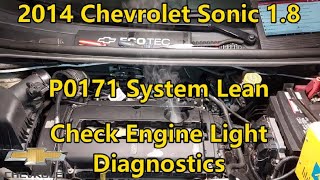
Helpful Videos

Used OEM Parts in Stock
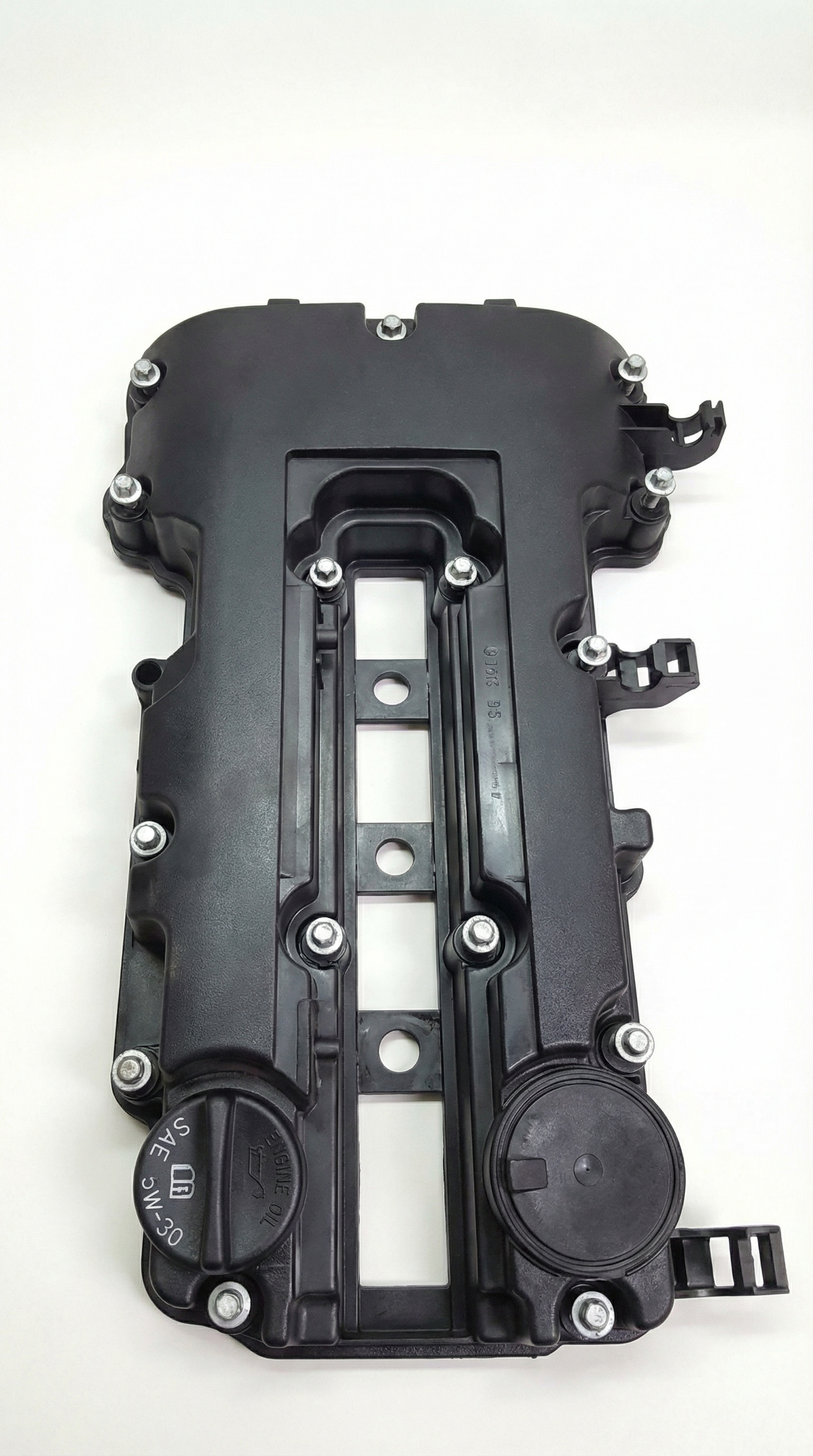
New Aftermarket Parts Available



The information in this article is provided for general reference and educational purposes only. Vehicle specifications, procedures, and part compatibility can vary by production date, trim level, and region. Always consult your vehicle's factory service manual and verify part numbers before purchasing or performing repairs. Safety-critical components such as airbags, seat belts, and braking systems should be installed by a qualified professional.
- Chevrolet SONIC:
- 🎬 Helpful Videos
- 🛍️ Shop This Part
- What's Unique About the 2012-2019 Chevrolet SONIC
- Diagnostic Flowchart
- Symptoms You May Notice
- Most Likely Causes
- Rare But Worth Checking
- Diagnosis Steps
- Parts You'll Likely Need
- Related Codes That Often Appear With This One
- Technical Service Bulletins (TSBs) & Recalls
- Platform-Specific Known Issues
- Mechanic-Grade Diagnostic Values
- Scan Tool Commands That Help
- Wiring & Ground Locations
- Real Owner Repair Stories
- "I Checked Everything" — The Actual Cause
- When the Usual Fixes Don't Work
- OEM Part Supersession History
- Model Year Variations Within This Range
- 🎟️ Get 5% Off