

P0171 on 1999-2007 Chevrolet Silverado 4.8L: Causes and Fixes for Lean Engine Code
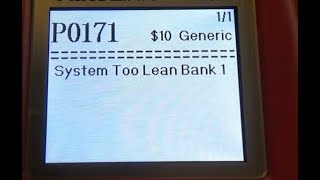
On a 1999-2007 Silverado with a 4.8L V8, code P0171 is most often caused by failed intake manifold gaskets creating a vacuum leak. An upgraded gasket set costs around $40-$80. Before replacing them, first try cleaning the Mass Airflow (MAF) sensor, a 10-minute job that often solves the problem.
- For a P0171 code on a 1999-2007 Silverado 4.8L, the most likely cause is a vacuum leak from failed intake manifold gaskets.
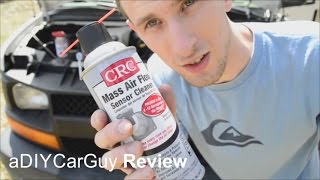
- Before performing expensive repairs, spend $15 on a can of MAF sensor cleaner and clean the sensor. This is a quick and common fix.
- If P0171 is paired with P0174 (lean on both banks), it strongly indicates a problem affecting the whole engine, reinforcing the likelihood of intake gaskets, the MAF sensor, or a fuel delivery issue.
- Do not replace the oxygen sensors as a first step. They are accurately reporting the lean condition, not causing it.
- A smoke test to find vacuum leaks and a fuel pressure test to check the fuel pump are the two most definitive diagnostic procedures for this code.
What's Unique About the 1999-2007 Chevrolet Silverado

For the GMT800 platform Silverado (1999-2007), the P0171 code is notoriously linked to the intake manifold gaskets. The original factory gaskets use a plastic frame that becomes brittle from heat cycles and exposure to fuel, leading to cracks and vacuum leaks. While other causes exist, this specific gasket failure is so common that it's the first suspect for many technicians when P0171 (often paired with P0174) appears on these trucks.
Generation note: This range primarily covers the first-generation Silverado (GMT800 platform) from 1999-2006 and the 2007 "Classic" models. The second-generation (GMT900) was also introduced in 2007. The most common causes, particularly failing intake manifold gaskets and MAF sensor issues, are prevalent across both generations in this year range.
Symptoms You May Notice
- Check Engine Light is on
- Rough or erratic idle, especially when cold
- Hesitation or stumbling during acceleration
- Reduced engine power
- Noticeable decrease in fuel economy
- A hissing or sucking sound from the engine bay, indicating a vacuum leak
- Engine misfires, which may trigger a P0300 code
- Sputtering when applying throttle between 0 and 30% or experiencing harsh shifts (1-2 and 2-3), as noted in manufacturer service documentation
- Replacing the Bank 1 Oxygen (O2) Sensor. The O2 sensor is almost always functioning correctly; it is the messenger reporting the lean condition. Replacing it will not fix the root cause, which is unmetered air or a lack of fuel.
Most Likely Causes

- Leaking Intake Manifold Gaskets 🔴 High Probability The original ACDelco gaskets used a plastic carrier that cracks and deteriorates with age and heat, causing a significant vacuum leak. This is the most well-documented cause for P0171/P0174 on this engine platform. Additionally, NHTSA ODI #11242893 notes that loose intake manifold bolts can also trigger an intermittent P0171 code.
How to confirm: Perform a smoke test to see smoke escaping from where the intake manifold meets the cylinder heads. Alternatively, with the engine running, carefully spray a flammable fluid like brake cleaner or propane around the gasket area; a change in engine RPM indicates a leak. Some owners have success pouring water near the intake ports and listening for the engine to stumble.
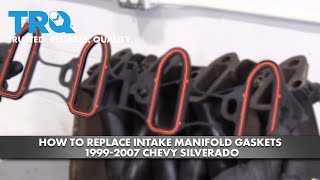
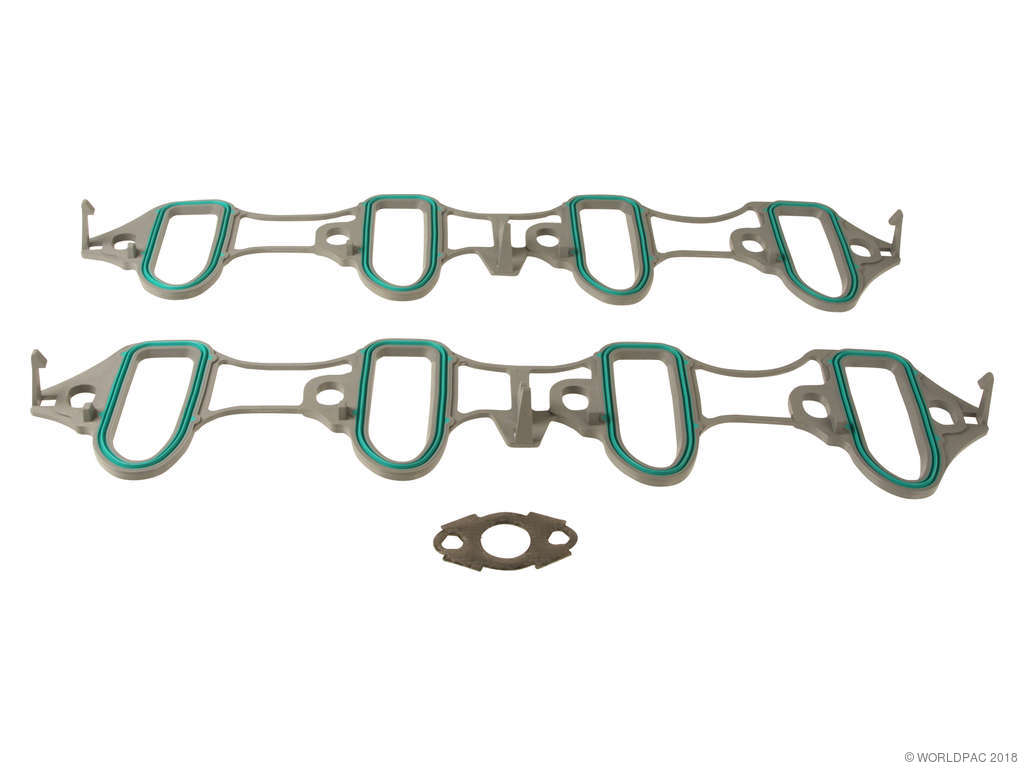
Typical fix: Replace the intake manifold gaskets. 🎬 Watch: Step-by-step guide to replacing your intake manifold gaskets. It is highly recommended to use an updated gasket set with a metal or improved polymer frame, such as the Fel-Pro MS 98016 T, which resists cracking and provides a better seal.
Est. part cost: $40-$80 - Dirty or Faulty Mass Air Flow (MAF) Sensor 🔴 High Probability Oil from aftermarket reusable air filters or fine dust bypassing the stock filter can contaminate the sensor's delicate wires, causing it to under-report airflow to the PCM. Manufacturer TSB Bulletin #PIP5446 also advises technicians to inspect for "cast flashing" near the MAF sensor, which can disrupt readings and trigger P0171.
How to confirm: Unplug the MAF sensor with the engine off, then start the engine. If the idle quality improves, the sensor is likely faulty. A more definitive test is to monitor MAF readings on a scan tool; they should increase smoothly with RPM.
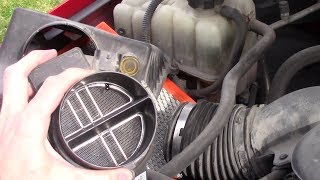
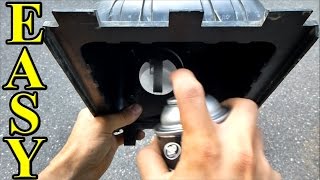
Typical fix: Remove the sensor and clean it thoroughly with a dedicated MAF sensor cleaner spray. 🎬 See how to properly clean your MAF sensor with CRC spray. Do not touch the sensor wires. If cleaning doesn't work, replace the sensor with a quality OEM or equivalent part.
Est. part cost: $10-$15 for cleaner, $60-$150 for a new sensor - Vacuum Leak (PCV System or Hoses) 🟡 Medium Probability Rubber hoses and plastic PCV components become brittle and crack over time. The PCV hose at the back of the intake manifold and the hose connecting the valve covers are common failure points.
How to confirm: Visually inspect all vacuum lines for cracks, especially at the elbows and connection points. A smoke test is the most effective way to find small leaks.
Typical fix: Replace the cracked hose or faulty PCV valve. These are typically inexpensive and easy to replace.
Est. part cost: $15-$50 - Low Fuel Pressure or Fuel Contamination 🟡 Medium Probability Fuel pumps can weaken with age, failing to supply the required pressure. Clogged fuel filters also restrict flow. Furthermore, TSB Bulletin #PIP5227 indicates that fuel containing over 10% alcohol/ethanol can cause P0171 and P0174 codes, requiring a check of the ethanol content.
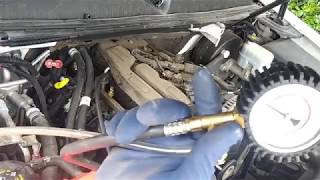
How to confirm: Connect a fuel pressure gauge to the Schrader valve on the fuel rail. With the key on and engine off, pressure should be 55-62 PSI. If it's low (e.g., 40 PSI), the fuel filter or fuel pump is the likely cause.
Typical fix: First, replace the fuel filter as it's inexpensive. If pressure is still low, the fuel pump module needs to be replaced.
Est. part cost: $15-$30 for filter, $200-$400 for a quality fuel pump assembly
Rare But Worth Checking
- Exhaust Leak Before Oxygen Sensor: A crack in the exhaust manifold or a leaking manifold gasket can pull in fresh air, causing the upstream O2 sensor to read a false lean condition. This is often caused by broken exhaust manifold bolts, which are extremely common on these engines. A temporary fix can be made using a Dorman exhaust manifold bolt repair bracket (e.g., part 917-107).
- Corroded ECM Ground (G103): A GM document notes that a corroded main engine wiring harness ground (G103), located on the cylinder head, can cause a variety of intermittent issues and trouble codes.
- Clogged Fuel Injectors: While less common than other fuel issues, injectors can become restricted, preventing them from delivering the commanded amount of fuel. This can sometimes be resolved with an on-vehicle professional fuel injector cleaning service.
- Electrical Shorts: In rare instances, electrical failures in other modules can interfere with engine diagnostics. NHTSA ODI #10447757 describes a case where a P0171 code was traced to a failed or shorted driver door module that showed obvious charring.
Diagnosis Steps

- Check for Additional Codes: Use an OBD-II scanner to see if P0174 or P0300 are also present. Both codes together strongly suggest a vacuum leak or fuel delivery problem affecting the whole engine. Note that NHTSA ODI #10542787 reports P0171 and P0174 appearing alongside P0121 (Throttle Position Sensor) following a mechanical event like wheel lockup.
- Visual Inspection: Carefully inspect the engine bay. Look for obviously disconnected or cracked vacuum hoses, particularly the PCV lines on the driver's side valve cover and the brake booster hose.
- Clean the MAF Sensor: Disconnect the battery. Remove the MAF sensor located in the air intake tube. Spray the internal wires generously with dedicated MAF sensor cleaner. Let it dry completely for 15-20 minutes before reinstalling.
- Check Fuel Trims: Use a scanner to view live data. At idle, note the Long Term Fuel Trim (LTFT) for Bank 1. If it's high (e.g., +20% or more) and drops significantly towards 0% when you raise the RPM to 2,500, you almost certainly have a vacuum leak. If trims stay high at RPM, it points more toward a fuel delivery issue.
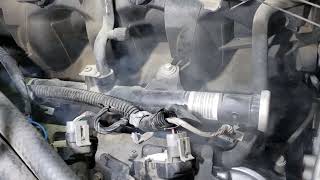
- Perform a Smoke Test: This is the most reliable way to find a vacuum leak. Inject smoke into the intake system (e.g., through the brake booster line) and look for smoke escaping from the intake manifold gaskets, vacuum hoses, or throttle body gasket.
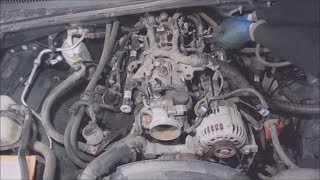
- Test Fuel Pressure: Connect a fuel pressure gauge to the test port on the fuel rail. 🎬 Watch: How to perform a fuel pressure test on your Chevy. With the key on, engine off, pressure should be 55-62 PSI. If it's low, suspect a clogged fuel filter or a weak fuel pump.
Parts You'll Likely Need

- Intake Manifold Gasket Set
(OEM #89017589)— This is the most frequent cause of P0171 on this platform due to the original design's tendency to crack and create vacuum leaks.
Trusted brands: Fel-Pro (MS 98016 T - highly recommended updated design with a metal carrier), ACDelco, Mahle
OEM price range: $60-$100
Aftermarket price range: $40-$80 - Mass Air Flow (MAF) Sensor
(OEM #25168491)— Often gets contaminated and under-reports airflow, leading to a lean condition. Cleaning is often sufficient, but replacement is the next step.
Trusted brands: ACDelco, Denso, Delphi
OEM price range: $120-$180
Aftermarket price range: $60-$100
Related Codes That Often Appear With This One
- P0174 — This is the 'System Too Lean' code for Bank 2 (passenger side). When P0171 and P0174 appear together, it strongly points to a single issue affecting the entire engine, such as intake manifold gaskets, the MAF sensor, or low fuel pressure.
- P0300 — This 'Random/Multiple Cylinder Misfire' code often appears because a lean air-fuel mixture can fail to ignite properly, causing misfires across several cylinders, especially at idle.
Technical Service Bulletins (TSBs) & Recalls
- 06-06-01-019B — Coolant in Engine Oil, Coolant Loss (Replace Left Cylinder Head) — While not directly for P0171, this TSB addresses a critical engine issue on 1999-2007 4.8L/5.3L engines: cracked cylinder heads from manufacturer Castech. This can cause coolant to leak into the engine, leading to misfires (P0300) and other performance issues that could be misdiagnosed. An owner should be aware of this possibility if other symptoms like coolant loss are present.
- Bulletin #PIP5227 — This bulletin informs technicians that P0171 and P0174 may be caused by fuel with an ethanol content exceeding 10%, recommending the use of the J44175 tool to test the alcohol level in the fuel.
- Bulletin #PIP5446 — This TSB notes that a rough idle, sputtering under light throttle, and harsh shifts may be accompanied by P0171 and P0174; it advises technicians to check for cast flashing near the Mass Air Flow sensor.
Mechanic-Grade Diagnostic Values
- Long-Term Fuel Trim (LTFT) at idle vs. 2,500 RPM — expected: Normal LTFT should be within +/- 10%.. Failure: If LTFT is high at idle (e.g., >+20%) but drops toward 0% at 2,500 RPM, it strongly indicates a vacuum leak. If it remains high at RPM, it points to a fuel delivery issue.
- Fuel Injector Resistance — expected: 11 to 14 Ohms at 50-90°F. Another source cites 12.5 Ohms.. Failure: An injector that is significantly different (e.g., by 2 Ohms or more) from the others is likely faulty.
- Mass Airflow (MAF) Sensor Reading at Idle — expected: Approximately 4-6 grams/second for a 4.8L V8 at normal idle speed.. Failure: A reading that is significantly lower than expected (e.g., 2-3 g/s) will cause the PCM to command less fuel, resulting in a lean condition.
- Fuel Pressure Drop during Injector Balance Test — expected: The pressure drop for each injector should be within 20 kPa (3 psi) of the average pressure drop across all injectors.. Failure: An injector with a pressure drop significantly less than others is likely restricted or clogged. An injector with a much larger drop may be leaking.
Scan Tool Commands That Help
- Tech 2 / GDS2: Fuel Injector Balance Test — This test should be used when a lean condition (P0171/P0174) or misfire (P0300) is suspected to be from a single faulty injector. The tool individually fires each injector with the engine off and measures the corresponding drop in fuel rail pressure. This identifies injectors that are clogged (small pressure drop) or leaking.
- Tech 2 / GDS2: Cylinder Power Balance — While the engine is running, this function allows the technician to disable one cylinder at a time. If disabling a cylinder causes no change in engine RPM or smoothness, that cylinder is not contributing power, pointing to a potential fuel, spark, or compression issue specific to that cylinder.
Wiring & Ground Locations
- G103 / G104 — On the back of the driver's side cylinder head and the front of the passenger side cylinder head, respectively. These are primary grounds for the engine wiring harness.. The pass-2 information cited a GM document about corroded G103 grounds causing various codes. Poor grounds for the PCM and its sensors can cause erratic readings, potentially leading to incorrect fuel calculations and lean codes.
- Engine Block to Firewall Straps — There are typically two braided ground straps connecting the back of the engine block to the vehicle's firewall.. These straps ensure the entire engine assembly has a solid ground path to the chassis. Corrosion or breakage can lead to a host of electrical issues, including problems with sensor readings that rely on a stable ground reference.
- Frame Ground (Fuel Pump) — Located on the driver's side frame rail, typically near the fuel filter area.. This is the primary ground for the fuel pump. A corroded or loose connection here can reduce voltage to the pump, causing low fuel pressure and a lean condition under load.
Real Owner Repair Stories
- Reddit user in r/GXOR (Lexus GX470 (similar V8 engine principles)) — P0171 and P0174 codes, poor fuel economy (10-11 MPG).
❌ Tried (didn't work) Initial diagnosis focused on vacuum leaks, which is the most common cause.
✅ What actually fixed it Replacing the fuel pump. After replacement, fuel economy improved to 15-16 MPG on the highway. - NHTSA ODI #10542787 — An owner reported that the Check Engine Light came on immediately following a left rear wheel lockup, displaying codes P0121 (Throttle Position Sensor), P0171, and P0174 simultaneously.
"I Checked Everything" — The Actual Cause
- In cases where a smoke test reveals no vacuum leaks, the next most likely cause is a fuel delivery issue. A weak fuel pump or clogged fuel filter may not provide enough pressure under load, but can seem fine at idle. This will cause fuel trims to be high at idle and stay high (or go higher) with increased RPM, unlike a vacuum leak.
- A leaking brake booster or its check valve can be a source of a significant vacuum leak that is sometimes missed during a standard smoke test if the booster itself isn't properly isolated and tested.
OEM Part Supersession History
GM plastic-carrier intake manifold gasket→Fel-Pro MS 98016 T (and similar aftermarket designs)— The original plastic carrier becomes brittle from heat and exposure to ethanol in fuel, leading to cracking and vacuum leaks. The updated Fel-Pro design uses an aluminized steel carrier that is impervious to these issues.
Model Year Variations Within This Range
- 1999-2002: These model years primarily used a cable-driven throttle body. The PCM used had red/blue connectors (P01 generation).
- 2003-2007: Switched to electronic Drive-by-Wire (DBW) throttle bodies. The PCM was updated to a new operating system with green/blue connectors (P59 generation). This change affects diagnostic procedures for the throttle body and related sensors.
- 1999-2003: Early models may have a return-style fuel system with the pressure regulator on the fuel rail. Later models switched to a returnless system with the regulator inside the fuel tank as part of the pump module. This changes the fuel pressure diagnosis procedure.
Diagnostic Flowchart
Other Known Issues on This Vehicle
Issues unrelated to this code that are worth knowing about as an owner of this generation:
- Instrument Cluster Stepper Motor Failure 🟠 Medium — Extremely common on 2003-2006 models. Gauges (speedometer, tachometer, etc.) will stick, read incorrectly, or fail completely. (Ref: No official recall, but a class-action lawsuit led to a special coverage period that is now expired. It is a well-documented DIY repair.)
- Rusted/Corroded Brake Lines 🔴 High — Very common in regions that use road salt. Lines corrode, particularly near the ABS module under the driver's side, leading to potential brake fluid leaks and loss of braking. (Ref: NHTSA investigated but did not issue a recall, concluding it was an environmental wear issue.)
- 4L60-E Transmission Weaknesses 🟠 Medium — Common after 100,000 miles, especially if used for towing. Failures often involve the 3-4 clutch pack (loss of 3rd/4th gear), or the reaction sun shell (loss of 2nd/4th/Reverse).
- Cracked Castech Cylinder Heads 🔴 High — Affects a subset of 4.8L/5.3L engines with cylinder heads manufactured by Castech. A casting flaw can lead to a crack causing unexplained coolant loss and mixing of oil and coolant. (Ref: TSB #06-06-01-019B)
- Broken Exhaust Manifold Bolts 🟠 Medium — Extremely common. The bolts, especially at the rearmost and frontmost positions, shear off due to heat cycles, causing an exhaust leak (ticking noise) that is most noticeable when the engine is cold.
- Rocker Panel and Cab Corner Rust 🟡 Low — Almost universal on trucks used in the salt belt. The rear fender arches, rocker panels below the doors, and the rear corners of the cab are highly susceptible to rust.
Used vs. New Parts: Buying Guide for This Vehicle
When a used part is the smart pick: For this repair, used parts are generally not recommended for the most common failure items. Gaskets, filters, and sensors are wear items and should be purchased new. A used intake manifold assembly from a low-mileage donor could be considered if the original is physically cracked, but the gaskets should still be replaced.
Donor-vehicle mileage cap: roughly under 80000 miles for the part to have meaningful remaining life.
What to inspect on the donor part:
- For a MAF sensor, ensure the donor vehicle was running well with no lean/rich codes.
- Visually inspect any used electronic part for corrosion on pins or cracks in the housing.
- For a fuel pump assembly, check the donor vehicle's mileage and look for signs of rust or damage to the unit.
OEM-only on this vehicle (don't cheap out):
- Mass Airflow (MAF) Sensor: Many aftermarket MAF sensors are poorly calibrated and can cause persistent lean or rich codes, even when new. Sticking with OEM brands like ACDelco or Delphi is highly recommended.
- Fuel Pump: While some aftermarket brands are reputable, cheap, unbranded fuel pumps have a very high failure rate. Using an OEM-equivalent like Delphi or ACDelco is a safer investment to avoid repeating the labor-intensive replacement.
Aftermarket brands forum-validated for this vehicle:
- Intake Manifold Gaskets: Fel-Pro (specifically the MS 98016 T) is widely regarded as a superior upgrade to the OEM design.
- Fuel Pumps: Delphi, ACDelco (often the original supplier), Denso.
- O2 Sensors (if needed): NTK (part of NGK), Denso, Delphi.
Brands owners have reported issues with on this vehicle:
- Unbranded or 'white-box' MAF sensors and fuel pumps from online marketplaces are frequently cited as causing more problems than they solve.
Real Owner Stories
Aggregated from forums and TSBs cited above. Mileages and costs reflect what owners reported in those sources.
2001 Chevrolet Silverado 4.8L
Symptoms: Owner found both P0171 and P0174 codes present. They performed a smoke test which showed no leaks.
What fixed it: A fuel pressure test revealed the system was only producing 40-42 PSI, which is below the 55 PSI specification. The issue was a fuel delivery problem (weak pump or clogged filter).
Source hint: Reddit r/MechanicAdvice: 01 Chevy Silverado 4.8L - Giving me P0174 P0171 and Fuel Pressure Low
1999-2007 Chevrolet Silverado 5.3L
Symptoms: Owner dealt with recurring P0171 and P0174 lean codes that specifically returned during cold weather. They had already replaced intake gaskets and injectors.
What fixed it: The root cause was a faulty aftermarket Delphi MAF sensor that was not reading correctly.
Source hint: YouTube: 99 - 07 Silverado / Sierra 5.3L, P0171, P0174 Lean Codes Finally Solved For Good! - Part 2
1999-2007 Chevrolet Silverado
Symptoms: Owners discussed issues with air leaks and false lean readings caused by hardware failure on the engine block.
What fixed it: Repairing broken exhaust manifold bolts, which sometimes requires welding a nut to the broken stud or removing the cylinder head for extraction.
Source hint: GM-Trucks.com: Broken Exhaust Manifold Bolt
Related OBD-II Codes
Frequently Asked Questions
My 4.8L Silverado has a rough idle when cold and a P0171 code. Is there a specific part known for this?
Does TSB 06-06-01-019B mean my P0171 is caused by a cracked cylinder head?
I've heard about broken exhaust manifold bolts on these trucks; can that cause a P0171?
Can I just clean my MAF sensor to fix the P0171 code on my 2003 Silverado?
What should the fuel pressure be on a 1999-2007 Silverado 4.8L to rule out a lean condition?
Is there a specific vacuum hose I should check on my 4.8L Vortec?
Helpful Videos

Used OEM Parts in Stock



New Aftermarket Parts Available


The information in this article is provided for general reference and educational purposes only. Vehicle specifications, procedures, and part compatibility can vary by production date, trim level, and region. Always consult your vehicle's factory service manual and verify part numbers before purchasing or performing repairs. Safety-critical components such as airbags, seat belts, and braking systems should be installed by a qualified professional.
- Chevrolet Silverado:
- 🎬 Helpful Videos
- 🛍️ Shop This Part
- What's Unique About the 1999-2007 Chevrolet Silverado
- Symptoms You May Notice
- Most Likely Causes
- Rare But Worth Checking
- Diagnosis Steps
- Parts You'll Likely Need
- Related Codes That Often Appear With This One
- Technical Service Bulletins (TSBs) & Recalls
- Mechanic-Grade Diagnostic Values
- Scan Tool Commands That Help
- Wiring & Ground Locations
- Real Owner Repair Stories
- "I Checked Everything" — The Actual Cause
- OEM Part Supersession History
- Model Year Variations Within This Range
- Diagnostic Flowchart
- Other Known Issues on This Vehicle
- Used vs. New Parts: Buying Guide for This Vehicle
- Real Owner Stories
- 2001 Chevrolet Silverado 4.8L
- 1999-2007 Chevrolet Silverado 5.3L
- 1999-2007 Chevrolet Silverado
- Related OBD-II Codes
- Frequently Asked Questions
- 🎟️ Get 5% Off