

P0171 on 2007-2014 Chevrolet Silverado 1500: Lean Code Causes and Fixes
P0171 on a 2007-2014 Silverado most often indicates a vacuum leak from a cracked PCV tube or failed intake manifold gaskets. Cleaning the MAF sensor is a common first step, but expect to inspect for leaks, which is the most probable cause. The intake gasket failure is particularly common in cold weather.
- P0171 on a 2007-2014 Silverado is most likely a vacuum leak.
- Before buying parts, inspect the PCV tube on the driver's side and the intake manifold gaskets for leaks.
- A smoke test is the most reliable way to confirm a vacuum leak.
- Cleaning the MAF sensor is an easy and inexpensive step that may solve the problem.
- If vacuum leaks are ruled out, test the fuel pressure to check for a weak fuel pump or clogged filter.
What's Unique About the 2007-2014 Chevrolet Silverado 1500

On this generation of Silverado and its GMT900/K2XX platform mates, the V8 engines are particularly prone to vacuum leaks from specific plastic and rubber components that degrade over time. Two issues are so common that GM issued Technical Service Bulletins (TSBs): a PCV tube that rubs against the engine cover and cracks, and intake manifold gaskets that harden and fail. The original plastic-carrier intake gaskets are known to become brittle and lose their seal, especially during cold weather when materials contract at different rates, causing the P0171/P0174 codes to appear suddenly. The 2007-2013 GMT900 models featured several versions of the 5.3L V8, including the iron-block LY5 and LMG, and the aluminum-block LC9, all of which are susceptible to these issues.
Diagnostic Flowchart
Tap your situation to follow the diagnostic path that matches what you're seeing on this vehicle.
Generation note: This range covers the end of the GMT900 generation (2007-2013) and the first year of the K2XX generation (2014). While many causes are similar, the intake manifold and PCV systems can have slight design differences. The TSB for the cracked PCV tube specifically applies to the 2007-2013 models but the issue is known to persist. The TSB for MAF sensor casting flash applies more to the 2014+ K2XX models.
Symptoms You May Notice
- Check Engine Light is on
- Rough idle, especially when cold.
- Hesitation, sputtering, or bogging when accelerating.
- Reduced engine power
- Decreased fuel economy.
- A hissing or whistling sound from the engine bay, indicating a vacuum leak.
- Long-term fuel trim values on a scan tool are high (typically >15%)
- Replacing the oxygen sensor first. The O2 sensor is usually just the messenger reporting the lean condition. The root cause is almost always unmetered air (vacuum leak) or insufficient fuel.
- Replacing the fuel pump without checking the Fuel Pump Driver Module (FPDM). A faulty FPDM can mimic the symptoms of a weak fuel pump.
Most Likely Causes

- Leaking Intake Manifold Gaskets 🔴 High Probability The original intake manifold gaskets use a plastic carrier design that becomes brittle, flattens, and cracks after repeated heat cycles. This allows unmetered air to leak into the intake ports. The problem is especially prevalent in colder climates. This is a very common failure on the 4.8L, 5.3L, and 6.0L V8 engines.
How to confirm: With the engine idling, spray short bursts of brake cleaner or unlit propane around the area where the intake manifold meets the cylinder heads. If the engine's idle speed changes or stumbles, a leak is present. A smoke test is the most reliable method, as smoke will be visibly escaping from the failed gasket seal.
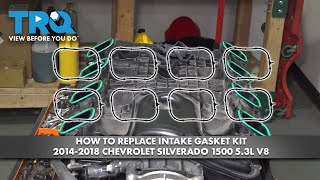
Typical fix: Replace the intake manifold gaskets. It is highly recommended to use the updated, improved-design gaskets with a metal carrier, such as Fel-Pro part number MS 96440. These are more durable than the OEM plastic design.
Est. part cost: $30-$80 - Cracked PCV Tube/Hose 🔴 High Probability A specific PCV tube at the left rear (driver's side) of the intake manifold is known to rub against the engine cover or other components, causing it to wear through and create a significant vacuum leak. This is documented in GM TSB #PIP5341.
How to confirm: Visually inspect the PCV tube located on the driver's side, near the back of the intake manifold. Look for cracks, holes, or signs of rubbing. A smoke test will definitively show a leak from this area. The leak is often on the underside of the hose, making it hard to see without a mirror or removing it.
Typical fix: Replace the damaged PCV tube. Common part numbers include ACDelco 12597774 and Dorman equivalents. It is recommended to protect the new tube with wire loom conduit or re-route it to prevent future rubbing.
Est. part cost: $20-$50 - Dirty or Faulty Mass Air Flow (MAF) Sensor 🟡 Medium Probability The MAF sensor measures the air entering the engine. If the sensing wire becomes contaminated with dirt, oil, or debris, it will under-report the amount of air, causing the computer to inject too little fuel. For 2014+ models, TSB #PIP5446A points to potential casting flash in the air filter housing near the sensor causing turbulent airflow and incorrect readings.
How to confirm: Remove the sensor and visually inspect the small wires for contamination. A scan tool can also show MAF readings that are illogically low for the given RPM. Unplugging the sensor while the engine is running; if the idle smooths out, the MAF is likely faulty.
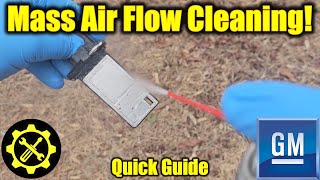
Typical fix: Clean the sensor using only dedicated MAF sensor cleaner spray. Do not touch the delicate wires. Allow it to dry completely before reinstalling. If cleaning doesn't resolve the issue, the sensor may need to be replaced.
Est. part cost: $10 (cleaner) - $150 (sensor) - Low Fuel Pressure ⚪ Low Probability A weak fuel pump or a clogged in-tank fuel filter sock can prevent enough fuel from reaching the engine. The fuel filter is part of the fuel pump module and is not separately serviceable.
How to confirm: Connect a fuel pressure gauge to the Schrader valve on the fuel rail. For these engines, the pressure should be between 55-62 PSI with the key on and engine running. If pressure is low, suspect the fuel pump module or the Fuel Pump Driver Module (FPDM).
Typical fix: If pressure is low, the fuel pump module likely needs to be replaced. This is an involved job as it requires dropping the fuel tank or lifting the truck bed.
Est. part cost: $250-$500+ (pump module)
Rare But Worth Checking
- Exhaust Leak Before Oxygen Sensor: A crack in the exhaust manifold or a leaking flange gasket before the upstream O2 sensor can allow outside air to be drawn into the exhaust stream. This tricks the O2 sensor into thinking the engine is running lean, even if it's not.
- Failing Upstream Oxygen Sensor: While O2 sensors can fail, they are more often correctly reporting a problem than being the problem itself. A lazy or biased sensor can send incorrect lean signals, but this should be considered only after ruling out vacuum leaks and fuel delivery issues.
- Failing Fuel Pump Driver Module (FPDM): This module controls the voltage to the fuel pump. If it begins to fail, it can provide insufficient power to the pump, leading to low fuel pressure and lean codes. This can be misdiagnosed as a bad fuel pump. Some owners have replaced the FPDM (GM part #20856290 or supersessions) to resolve persistent lean codes after other causes were ruled out.
Diagnosis Steps

- Read Codes & Live Data: Use an OBD-II scanner to confirm P0171 and check for other codes. View live data, paying close attention to Short-Term (STFT) and Long-Term Fuel Trim (LTFT) values for both banks at idle and at 2500 RPM. High positive numbers (e.g., LTFT > +15%) confirm the computer is adding fuel to correct a lean condition. If fuel trims decrease significantly at 2500 RPM, a vacuum leak is highly likely.
- Perform a Smoke Test: This is the most effective way to find vacuum leaks. Introduce smoke into the intake system via a vacuum line or the throttle body. Look for smoke escaping from the intake manifold gaskets (especially near the cylinder heads), the PCV hoses (especially the driver's side rear tube), the throttle body gasket, and any other vacuum connections.
- Inspect PCV System: Carefully inspect the PCV tube on the driver's side rear of the intake manifold for cracks or holes, as noted in TSB #PIP5341. Check all other PCV and vacuum hoses for brittleness and cracks.
- Clean and Test MAF Sensor: If no vacuum leaks are found, remove and clean the MAF sensor with dedicated MAF sensor cleaner. Allow it to dry completely before reinstalling. Inspect the air filter housing for debris or casting flash (per TSB #PIP5446A on 2014+ models).
- Test Fuel Pressure: Connect a fuel pressure gauge to the fuel rail's Schrader valve. Pressure should be stable at 55-62 PSI. If pressure is low, suspect the Fuel Pump Driver Module (FPDM) or the fuel pump itself.
- Inspect Exhaust: Check for any cracks or gasket leaks in the exhaust manifolds or pipes located before the upstream O2 sensors. A leak here can introduce oxygen and fool the sensors.
Parts You'll Likely Need

- Intake Manifold Gasket Set
(OEM #ACDelco 89060436 (verify by VIN))— This is one of the most common failure points on this platform leading to a vacuum leak and a P0171 code. The original plastic design fails; an updated metal design is preferred.
Trusted brands: Fel-Pro (P/N: MS 96440 - highly recommended updated design), ACDelco
OEM price range: $50-$90
Aftermarket price range: $30-$60 - PCV Tube/Hose (Dirty Air)
(OEM #ACDelco 12597774 (verify by VIN))— This specific hose on the driver's side of the intake manifold is prone to cracking from heat and rubbing, creating a vacuum leak as documented in a GM TSB.
Trusted brands: ACDelco, Dorman
OEM price range: $30-$50
Aftermarket price range: $20-$40
Related Codes That Often Appear With This One
- P0174 — This is the identical 'System Too Lean' code but for Bank 2 (passenger side). When both P0171 and P0174 appear together, it strongly suggests a problem common to both banks, such as a MAF sensor issue, a large vacuum leak at the intake manifold, or a fuel delivery problem.
- P0101 — This code indicates a problem with the Mass Air Flow (MAF) sensor circuit range or performance. A faulty MAF sensor can directly cause the lean conditions that trigger P0171 and P0174. TSB #PIP5446A specifically links P0101 with P0171/P0174 on 2014+ models.
Technical Service Bulletins (TSBs) & Recalls

- Addresses a rough idle with P0171/P0174 caused by the engine cover rubbing through the PCV tube on the left rear of the intake manifold. The fix is to replace the tube and protect the new one with conduit.
- For 2014+ models, this TSB addresses rough idle, sputter, and various codes including P0171/P0174 caused by excessive plastic casting flash inside the air filter housing near the MAF sensor, which disrupts airflow. The fix is to inspect and replace the air filter housing lid if flash is found.
Platform-Specific Known Issues

- Owner Experience: The Cold Weather Connection: Many owners in forums report that the P0171/P0174 codes first appear during the first cold snap of the year. This is because the aged, hardened plastic of the original intake manifold gaskets can no longer maintain a seal when the aluminum cylinder heads and plastic intake manifold contract at different rates in the cold, creating a vacuum leak that disappears once the engine warms up. This is a strong indicator that the intake gaskets are the root cause.
- Repair Story: Intake Gasket Replacement: An owner on a forum detailed their experience replacing the intake manifold gaskets on their 5.3L Silverado to fix a persistent P0171 code. They noted that upon removal, the old orange gaskets were extremely brittle and flattened, breaking into pieces. After replacing them with the updated green Fel-Pro (MS 96440) gaskets, the long-term fuel trims returned to near 0% and the code was resolved. They stressed the importance of thoroughly cleaning the mating surfaces on the cylinder heads.
Mechanic-Grade Diagnostic Values

- Mass Air Flow (MAF) Sensor Reading at Idle — expected: 4-6 grams/second for a 5.3L V8 at normal operating temperature.. Failure: A significantly lower reading (e.g., under 3 g/s) suggests a contaminated or failing sensor, causing the ECU to underestimate airflow.
- Total Fuel Trim (Long Term + Short Term) — expected: Within +/- 10% of zero.. Failure: A sustained positive value of 25% or higher on Long Term Fuel Trim (LTFT) will trigger the P0171 code.
- Long Term Fuel Trim (LTFT) behavior with RPM — expected: High positive values at idle (e.g., +15% to +25%) that decrease significantly when held at 2500 RPM.. Failure: This behavior strongly suggests a vacuum leak. If high positive trims persist at higher RPMs, it points towards a fuel delivery issue or a skewed MAF sensor.
- Upstream Oxygen Sensor (Bank 1, Sensor 1) Voltage — expected: Should rapidly fluctuate between approximately 0.1V (lean) and 0.9V (rich).. Failure: A sensor that is stuck low (e.g., consistently below 0.3V) is indicating a lean condition or has failed. A slow-to-respond sensor can also be faulty.
Scan Tool Commands That Help
- GM Tech2 / GDS2: Fuel Trim Reset — After replacing a component that affects the air/fuel mixture (e.g., intake gaskets, MAF sensor, fuel pump), this function should be used to clear the old learned fuel trim values. This allows the PCM to learn the new values faster and confirm the repair was successful.
- GM Tech2 / GDS2: Fuel Composition Reset — On Flex Fuel models (LC9, LMG engines), if the fuel alcohol content sensor is faulty or has been disconnected, it can report an incorrect ethanol percentage, causing the PCM to adjust fuel delivery improperly and potentially set lean or rich codes. Resetting the composition after a repair or if the reading is suspect is critical.
Wiring & Ground Locations
- G103 — On the front of the passenger-side cylinder head on GMT900 models.. This is a primary engine ground. A poor connection here can cause erratic sensor readings for multiple components, including those that influence fuel calculations, potentially leading to lean codes. Technicians often check and clean this ground when diagnosing persistent, hard-to-trace electronic issues.
- G104 / G108 — A braided ground strap running from the rear of the driver-side cylinder head (G104) to the firewall (G108) on GMT900 models.. This strap provides a critical ground path between the engine and the chassis/body. Corrosion or a loose connection can create electrical noise and intermittent issues with the PCM and its sensors, which can manifest as fuel trim problems.
Real Owner Repair Stories
- YouTube channel 'Flat Rate Mechanic' (Chevy/GM Truck with P0171 & P0174) — Check engine light with lean codes on both banks. Long term fuel trims were high.
❌ Tried (didn't work) Smoke test for vacuum leaks (none found)., Fuel pressure test (pressure was within spec)., PCV system inspection., Brake booster inspection.
✅ What actually fixed it Replacing the Mass Air Flow (MAF) sensor. After replacement, the short-term fuel trims went negative to compensate for the high positive long-term trims, and they began to balance out towards zero, confirming the fix. - YouTube channel 'How to Automotive' (2007 Chevy Silverado 2500 HD 6.0L with P0171 & P0174) — Long term fuel trims at +24% at idle, dropping to 12-15% while cruising, a classic sign of a vacuum leak.
❌ Tried (didn't work) Checked the EVAP purge valve by unplugging and capping it; fuel trims did not change.
✅ What actually fixed it A smoke test revealed a leak in the PCV hose at the back of the engine where it connects to the valve cover. Repairing the hose brought fuel trims back to normal.
"I Checked Everything" — The Actual Cause
- In some cases, a smoke test will not reveal any leaks, and fuel pressure will test normal. The cause can be a dirty or failing Mass Air Flow (MAF) sensor that is under-reporting airflow, causing the computer to command too little fuel. Even if it appears clean, cleaning it with dedicated MAF cleaner or replacing it can resolve the issue.
- A failing Fuel Pump Driver Module (FPDM) can cause intermittent low fuel pressure that might not be apparent during a static test. The module can overheat or fail under load, leading to lean conditions that are hard to diagnose in the shop.
- A stuck-open EVAP canister purge valve can create a vacuum leak that is sometimes missed. This is especially suspect if the code appears shortly after refueling. To test, with the engine idling, disconnect the EVAP hose from the purge valve; if suction is felt at the valve's port, it has failed internally.
When the Usual Fixes Don't Work
- While vacuum leaks from intake gaskets and PCV hoses are extremely common, a significant number of owners have resolved P0171/P0174 codes only after replacing the MAF sensor, even when no obvious vacuum leaks were present after a smoke test. In another documented case, after replacing intake gaskets, MAF, and O2 sensors without success, the final fix was a new Fuel Pump Driver Module (FPDM) that was likely failing intermittently under load.
OEM Part Supersession History
20856290→23184800, 23199128, 23382215, 23482843— Standard part evolution and updates by the manufacturer for the Fuel Pump Driver Module (FPDM).
Heads up: Some replacement modules require programming/setup procedures to ensure proper operation in the vehicle.
Model Year Variations Within This Range
- 2007-2013 (GMT900): These models used several versions of the 5.3L V8 (LY5, LMG, LC9) which all featured a more traditional, replaceable PCV valve system, though the problematic hose routing was common.
- 2014+ (K2XX): The 2014 model year introduced the new K2XX platform with the direct-injected L83 5.3L engine. This engine uses a fixed-orifice PCV system integrated into the valve cover rather than a separate, replaceable valve. While less prone to valve failure, the hoses can still crack and the system can still get clogged.
Helpful Videos
We Have This Part in Stock




The information in this article is provided for general reference and educational purposes only. Vehicle specifications, procedures, and part compatibility can vary by production date, trim level, and region. Always consult your vehicle's factory service manual and verify part numbers before purchasing or performing repairs. Safety-critical components such as airbags, seat belts, and braking systems should be installed by a qualified professional.
- Chevrolet SILVERADO 1500:
- 🎬 Helpful Videos
- 🛍️ Shop This Part
- What's Unique About the 2007-2014 Chevrolet Silverado 1500
- Diagnostic Flowchart
- Symptoms You May Notice
- Most Likely Causes
- Rare But Worth Checking
- Diagnosis Steps
- Parts You'll Likely Need
- Related Codes That Often Appear With This One
- Technical Service Bulletins (TSBs) & Recalls
- Platform-Specific Known Issues
- Mechanic-Grade Diagnostic Values
- Scan Tool Commands That Help
- Wiring & Ground Locations
- Real Owner Repair Stories
- "I Checked Everything" — The Actual Cause
- When the Usual Fixes Don't Work
- OEM Part Supersession History
- Model Year Variations Within This Range
- 🎟️ Get 5% Off