

P0171 on 2013-2018 Chevrolet Malibu: Lean Fuel Causes and Fixes
Code P0171 on a 2013-2018 Chevy Malibu means the engine is running too lean (too much air, not enough fuel). The most common causes are vacuum leaks from loose intake manifold bolts or a failed intake manifold gasket on the 2.5L engine, and a faulty PCV system on the 1.5T/2.0T engines. Expect to pay $50-$200 for PCV parts or $400-$700 for an intake gasket replacement at a shop. Simply tightening loose intake bolts can sometimes be a free fix.
- P0171 on a 2013-2018 Malibu is almost always caused by unmetered air entering the engine.
- For the 2.5L engine, suspect the intake manifold gasket first. For turbo engines (1.5T/2.0T), suspect the PCV system (valve cover or hoses).
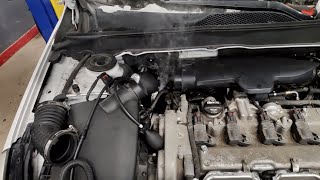
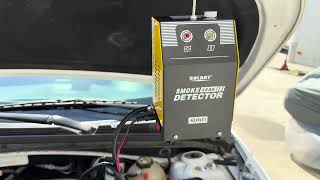
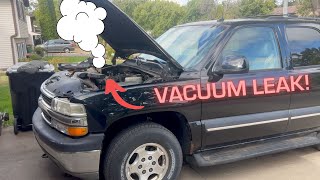
- A smoke test is the most effective way to diagnose the location of the vacuum leak.
- Before replacing expensive parts like O2 sensors, perform simple checks like cleaning the MAF sensor and inspecting all hoses for cracks.
- Be aware of TSB #18009, which points to a rare but possible ECM fault that only a dealer can verify.
What's Unique About the 2013-2018 Chevrolet MALIBU

The 2013-2018 Malibu spans two generations (8th and 9th) with different primary engines, including the 2.5L, 1.5T, and 2.0T. While many causes for P0171 are universal, this platform has specific documented issues. Notably, the 2.5L engine is prone to vacuum leaks from intake manifold bolts that loosen over time, a well-documented issue in owner forums and even covered by GM Technical Service Bulletin PIP5529B. The 1.5T and 2.0T engines frequently suffer from PCV system failures, where a ruptured diaphragm in the valve cover or a clogged PCV orifice creates a vacuum leak. Some model years also have TSBs pointing to an incorrect ECM bootloader version (TSB #18009) or software anomalies (TSB #21-NA-105) causing this code.
Diagnostic Flowchart

Tap your situation to follow the diagnostic path that matches what you're seeing on this vehicle.
Generation note: This range covers the end of the 8th generation (2013-2016 "Limited") and the start of the 9th generation (2016-2018). The 8th gen commonly used a 2.5L LCV engine, which is notorious for intake manifold bolts backing out, causing a vacuum leak and P0171. The 9th gen introduced 1.5L LFV and 2.0L LTG turbocharged engines, where PCV system issues are more frequent culprits. This includes a ruptured diaphragm in the valve cover or a clogged PCV orifice in the camshaft cover (TSB 20-NA-047), often presenting with code P1101 as well. A failed non-return valve inside the intake manifold on these turbo engines can also cause the PCV diaphragm to rupture.
Symptoms You May Notice
- Check Engine Light is on
- Rough or unstable idle
- Engine hesitation or stumbling during acceleration
- Reduced engine power
- Whistling or hissing noise from the engine bay
- Increased fuel consumption
- Engine stalling at low speeds or when coming to a stop
- Replacing the oxygen (O2) sensor. While a faulty O2 sensor can cause a lean code, it's more often correctly reporting a problem caused by a vacuum leak or fuel delivery issue. Diagnose other causes first before replacing the sensor.
Most Likely Causes

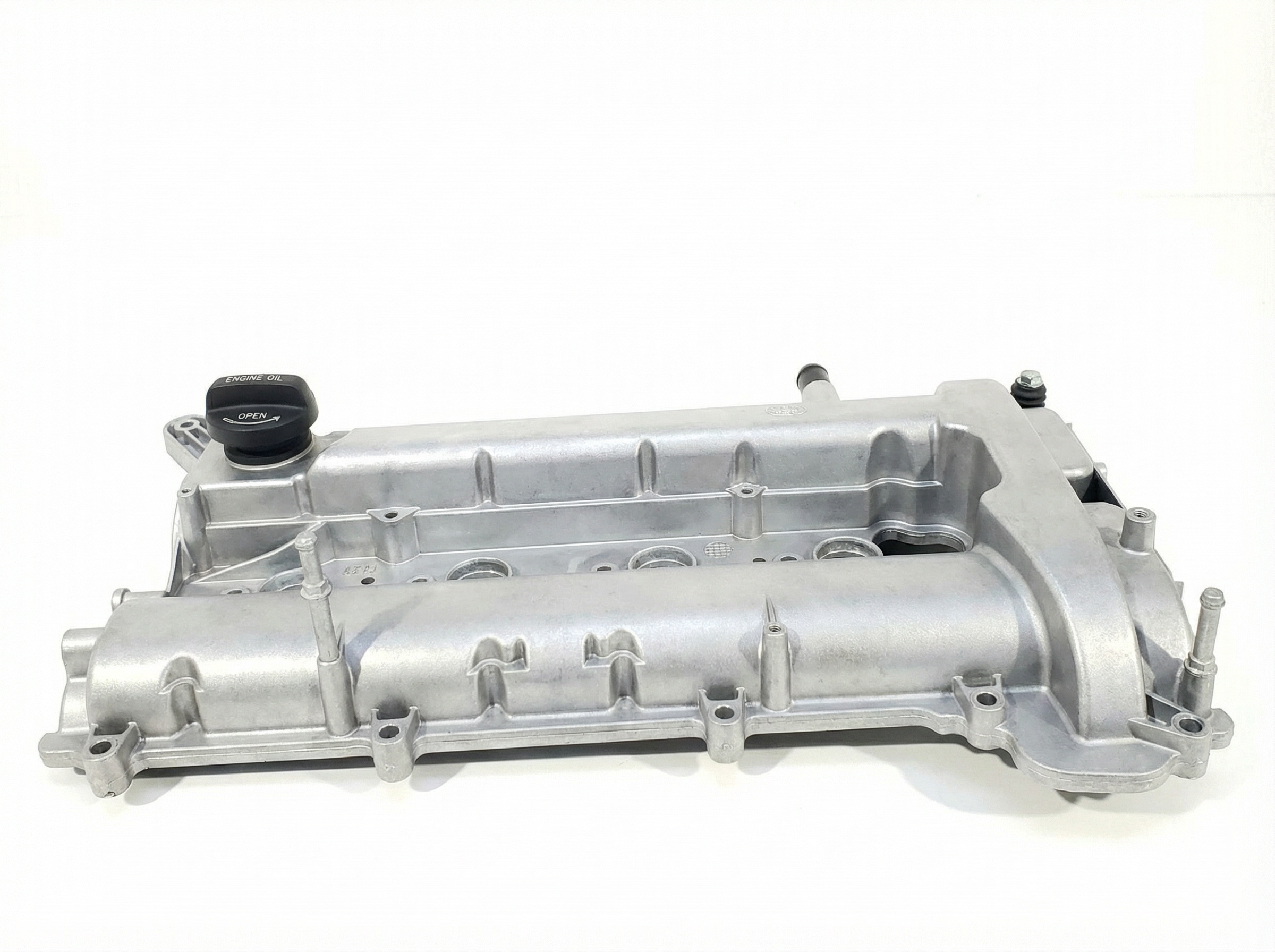
- Vacuum Leak (Loose Intake Manifold Bolts, Gasket, PCV System, Hoses) 🔴 High Probability The 2.5L engine is particularly known for intake manifold bolts loosening over time, creating a significant vacuum leak. This is a widely reported issue confirmed by numerous owner complaints and TSB PIP5529B. Turbocharged models (1.5T, 2.0T) often experience issues with the PCV system; a ruptured diaphragm in the valve cover or a failed check valve in the intake manifold creates a large vacuum leak.
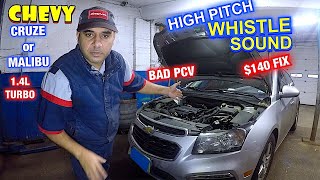
How to confirm: For the 2.5L, physically check the intake manifold bolts for looseness; they are often found to be less than finger-tight. For all engines, perform a smoke test to visually identify where unmetered air is entering. Alternatively, carefully spray brake cleaner or propane around the intake manifold gasket and vacuum hoses with the engine running; a change in engine idle indicates a leak. On turbo models, a hissing sound or suction at the oil cap 🎬 See how to replace the valve cover to fix PCV whistling. when the engine is running points to a failed PCV diaphragm in the valve cover.
Typical fix: On the 2.5L, remove, apply medium-strength threadlocker, and re-torque the intake manifold bolts to specification as per TSB PIP5529B. If the gasket is damaged, replace it. If the PCV valve diaphragm in the valve cover has failed on a turbo model, the entire valve cover assembly must be replaced. On turbo models, it is critical to also inspect the non-return valve inside the intake manifold, as its failure is often the root cause of the diaphragm rupture.
Est. part cost: $20-$150 - Dirty or Faulty Mass Airflow (MAF) Sensor 🟡 Medium Probability
How to confirm: First, try cleaning the sensor with a dedicated MAF sensor cleaner. If the problem persists, monitor the MAF sensor readings on a scan tool; they should be around 2-7 g/s at idle and increase with RPM. A user on a Chevrolet forum was advised to clean the MAF as a primary diagnostic step after a dealer could not find a leak.
Typical fix: Clean the MAF sensor. If cleaning doesn't resolve the issue, replace the sensor.
Est. part cost: $60-$150 - Faulty Engine Control Module (ECM) or Software ⚪ Low Probability TSB #18009 states that an incorrect bootloader version was released for some 2018 model ECMs, which can cause P0171. Additionally, TSB #21-NA-105 notes that software anomalies can cause P0171/P0174 on low-mileage vehicles, requiring an ECM reprogram.
How to confirm: This must be diagnosed by a Chevrolet dealer. They will check the part number on the ECM (for TSB #18009) or check for available software updates with the SPS system (for TSB #21-NA-105).
Typical fix: The dealer will replace the ECM if it is identified as a faulty unit per TSB #18009, or reprogram it with updated software per TSB #21-NA-105.
Est. part cost: $0-$800 (Reprogramming may be covered under emissions warranty) - Weak Fuel Pump or Clogged Fuel Filter ⚪ Low Probability
How to confirm: Connect a fuel pressure gauge to the fuel rail. Check if the fuel pressure is within the manufacturer's specified range. A user on a forum noted their fuel pressure was low (43 psi) with a P0171 code, though another user pointed out the spec is 50-94 psi. Low pressure indicates a problem with the fuel pump or a restriction in the line.
Typical fix: Replace the weak fuel pump or clogged fuel filter.
Est. part cost: $20-$300
Rare But Worth Checking
- Clogged PCV Orifice in Camshaft Cover: Specifically for the 1.5L (LFV) and other small turbo engines, TSB 20-NA-047 describes a condition where a plugged PCV orifice can cause high crankcase pressure, leading to oil leaks and setting a P1101 code, which is often seen with P0171. The fix is to remove the camshaft cover and replace the small orifice (Part No. 12641875).
- Exhaust Leak Before the Oxygen Sensor: A crack in the exhaust manifold or a bad gasket can allow outside air to be pulled into the exhaust stream. This tricks the upstream O2 sensor into thinking the engine is running lean, causing it to set a P0171 code.
Diagnosis Steps
- Read the freeze frame data with an OBD-II scanner to understand the engine conditions (RPM, load, temperature) when the code was set. A high positive Long Term Fuel Trim (LTFT), often near or above +25%, is a key indicator.
- Visually inspect the entire air intake system from the air filter to the throttle body for any cracks, loose clamps, or disconnected hoses.
- For 2.5L engines, remove the plastic engine cover and physically try to wiggle the intake manifold. If it moves, the bolts are loose.
- Perform a smoke test to check for vacuum leaks, paying close attention to the intake manifold gasket, 🎬 Watch this guide on finding vacuum leaks using a smoke machine. PCV hoses, and the valve cover.
- If no vacuum leaks are found, inspect and clean the Mass Airflow (MAF) sensor using a dedicated cleaner.
- Check fuel pressure using a fuel pressure gauge to rule out a weak fuel pump or clogged filter.
- Inspect the EVAP purge valve to ensure it is not stuck open, which would create a vacuum leak.
- If all else fails, consider having a dealer check for TSBs related to the ECM, such as #18009 and #21-NA-105.
Parts You'll Likely Need
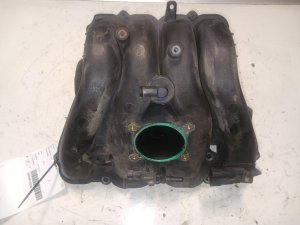
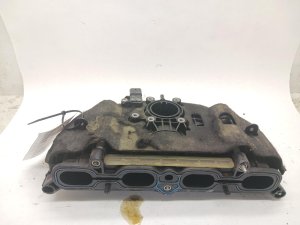
- Intake Manifold Gasket Set
(OEM #12655276 (for 2.5L))— A very common failure point on the 2.5L engine, causing a vacuum leak that directly leads to a P0171 code. Often the bolts are just loose, but the gasket should be replaced if it's damaged or if the manifold is removed.
Trusted brands: ACDelco, Fel-Pro
OEM price range: $40-$70
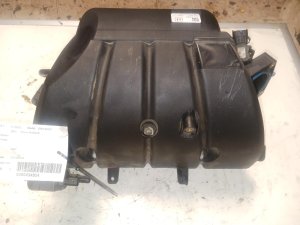
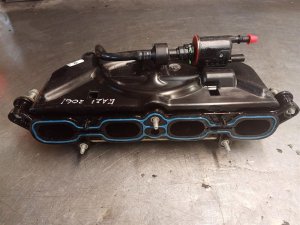
Aftermarket price range: $15-$40 - Valve Cover with PCV Valve
(OEM #12690468 (Intake Manifold for 1.5T, contains PCV check valve))— On many GM turbo engines of this era, the PCV check valve is integrated into the intake manifold and the diaphragm is in the valve cover. When the system fails, it creates a large vacuum leak, and often both components require replacement.
Trusted brands: ACDelco, Dorman
OEM price range: $120-$250
Aftermarket price range: $100-$180
Related Codes That Often Appear With This One
- P1101 — Intake Air Flow System Performance. This code is very common alongside P0171 on turbocharged models. It indicates a discrepancy between the MAF sensor and other sensors, typically due to a vacuum leak from a failed PCV system (valve cover/intake manifold) or a clogged PCV orifice.
- P0106 — Manifold Absolute Pressure (MAP) Sensor Performance. A vacuum leak that causes P0171 will also cause the MAP sensor readings to be out of range. TSB PIP5529B lists P0106 and P0171 together as potential codes caused by loose intake manifold bolts.
- P2097 — Post Catalyst Fuel Trim System Too Rich. The system may overcompensate for a lean condition (P0171) by adding too much fuel, causing a rich condition downstream. An owner complaint (ODI #11581909) and TSB PIP5529 list these codes appearing together, sometimes due to loose intake bolts.
- P0300 — Random/Multiple Cylinder Misfire. A lean air-fuel mixture can fail to ignite properly, leading to misfires across multiple cylinders. A faulty PCV valve is a known cause of both P0171 and P0300.
Technical Service Bulletins (TSBs) & Recalls
- TSB #18009: Notes that an incorrect ECM bootloader version on some 2018 models can cause P0171 and other codes, requiring ECM replacement.
- TSB #PIP5529B: Addresses multiple codes including P0171 on 2013-2017 models caused by loose intake manifold bolts. The fix is to add threadlocker and re-torque the bolts.
- TSB #20-NA-047: Pertains to 1.5L turbo engines (2016-2020 Malibu) where a clogged PCV orifice in the camshaft cover can cause high crankcase pressure and DTC P1101, a code often associated with P0171.
- TSB #21-NA-105: Replaces a previous TSB and states that software anomalies can cause P0171/P0174 on low-mileage vehicles, requiring an ECM reprogram.
Platform-Specific Known Issues
- Loose Intake Manifold Bolts on 2.5L Engine: A widely documented issue where the intake manifold bolts back out over time, causing a vacuum leak. TSB PIP5529B instructs technicians to re-torque the bolts with threadlocker. Many owners have fixed their P0171 code simply by tightening these bolts.
- PCV System Failure on 1.5T/2.0T Engines: The PCV system on the turbocharged engines is a common failure point. A ruptured diaphragm in the valve cover or a failed non-return valve in the intake manifold can cause P0171 and P1101 codes. Often, the entire valve cover and sometimes the intake manifold must be replaced.
- Clogged PCV Orifice on 1.5T Engine: TSB 20-NA-047 points to a clogged PCV orifice in the camshaft cover causing high crankcase pressure and setting DTC P1101, which is related to the P0171 lean condition. The fix involves replacing the small orifice (GM Part #12641875).
- Faulty ECM Software: TSB #18009 for 2018 models and TSB #21-NA-105 for other years indicate that either a faulty ECM or outdated software can erroneously trigger a P0171 code. A dealer visit is required for diagnosis and reprogramming or replacement.
Mechanic-Grade Diagnostic Values
- Mass Airflow (MAF) Sensor Reading at Idle — expected: Approximately 2-7 g/s. Failure: Readings are erratic, out of spec, or do not increase smoothly with RPM.
- Upstream Oxygen (O2) Sensor Voltage — expected: Fluctuating between 0.1V (lean) and 0.9V (rich) in closed loop.. Failure: Voltage is stuck, slow to respond, or does not fluctuate.
- Low-Side Fuel Pressure (2.5L Engine) — expected: 50-94 psi. Failure: Pressure is below 50 psi at idle or drops under load.
- High-Side Fuel Rail Pressure (2.5L Engine) — expected: Should clear 1500 PSI under load, closer to 2000 PSI at WOT.. Failure: Fails to reach target pressure under load.
- Long Term Fuel Trim (LTFT) — expected: Close to 0%, ideally within +/- 10%.. Failure: Sustained positive value of +25% or higher, indicating the ECM is maxed out adding fuel.
- Intake Manifold Bolt Torque (1.4L Turbo - similar to 1.5T) — expected: 15 ft-lbs. Failure: N/A
- Valve Cover Bolt Torque (1.4L Turbo - similar to 1.5T) — expected: 71 inch-lbs, in a specific sequence.. Failure: N/A
Scan Tool Commands That Help
- GDS2 / Tech2: Fuel Trim Reset — After replacing a component that affects the air-fuel ratio (like an intake gasket, MAF sensor, or fuel pump), resetting the learned fuel trim values will force the ECM to relearn immediately, which can confirm the fix faster than waiting for the long-term trims to adjust on their own.
- GDS2 / Tech2: EVAP Purge/Seal — To test if the EVAP purge solenoid is stuck open, which would create a vacuum leak. A technician can command the valve closed and watch fuel trims; if they return to normal, the valve is the source of the leak.
Wiring & Ground Locations
- G101 — Located at the left front of the engine, lower block.. This ground serves the Engine Control Module (ECM) and the Mass Air Flow (MAF) Sensor. A poor connection here can cause erratic signals from the MAF sensor and incorrect calculations by the ECM, leading to lean codes.
- G107 — Located on the lower left side of the engine or center rear of the engine, depending on the specific engine/year.. This is another critical engine ground. On some models, it provides a ground path for various sensors. Ensuring all engine grounds are clean and tight is a crucial step when diagnosing electronic-related codes like P0171.
- MAF Sensor Connector (X108 on some models) — On the air intake tube after the air filter box.. The MAF sensor signal wire (often a yellow wire on LE5 engines) is a critical input for the ECM's fuel calculations. A damaged wire or corroded pin in this connector can cause a false lean reading.
Real Owner Repair Stories
- NHTSA Owner Complaint ODI #11581909 (2014 Chevrolet Malibu) — Car started stuttering and lost all power while driving 60 MPH. Codes P0131, P2097, and P0171 were present.
❌ Tried (didn't work) Not specified, but owner spent over $1,000 on attempted repairs over a month.
✅ What actually fixed it The intake bolts were found to be loose. Tightening them resolved the issue. - NHTSA Owner Complaint ODI #11242893 (2014 Chevrolet Malibu) — Intermittent P0171 code.
❌ Tried (didn't work) Not specified.
✅ What actually fixed it A technician found and tightened loose intake manifold bolts. - YouTube video (2022 Chevrolet Malibu (demonstrates common issue)) — Lean condition codes P0171 and P1101.
❌ Tried (didn't work) Visual inspection alone might not find the leak.
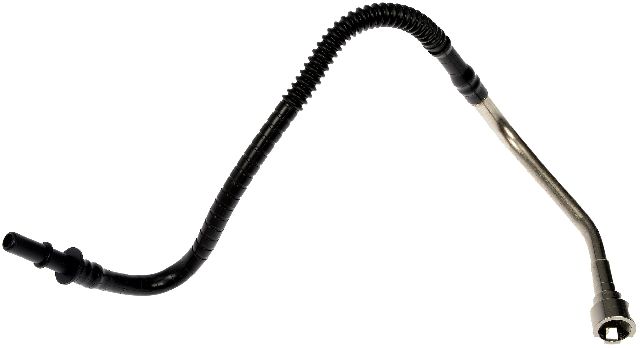
✅ What actually fixed it A smoke test revealed a cracked hard plastic PCV line that had slipped off its connection point.
"I Checked Everything" — The Actual Cause
- In a case reported on a Chevrolet forum for a 2015 Malibu, a technician performed a smoke test and visual inspection but could not find any vacuum leaks, yet the P0171 code persisted. The next recommended step, which is a common solution when a smoke test is negative, was to clean the Mass Air Flow (MAF) sensor, as a dirty sensor can under-report airflow and cause a lean condition without an actual leak.
OEM Part Supersession History
12634693→12655276— Updated design or material for the intake manifold gasket for the 2.5L and other GM engines.12668310, 12672815, 12675734, 12678245→12690468— Multiple revisions of the intake manifold for the 1.5T engine, which contains the integrated PCV non-return valve.23197633→23366103— Part number update for the MAF sensor used on some 1.5L engines.
Model Year Variations Within This Range
- 2013-2016 (8th Gen): The primary engine was the 2.5L LCV, which is highly prone to P0171 caused by loosening intake manifold bolts. The fix is often simply re-torquing the bolts with threadlocker.
- 2016-2018 (9th Gen): Introduced the 1.5L LFV and 2.0L LTG turbo engines. On these, P0171 is most commonly caused by a complex PCV system failure involving a ruptured diaphragm in the valve cover and a failed check valve inside the intake manifold, often requiring replacement of both parts.
- 2018: A specific Technical Service Bulletin (#18009) applies to some 2018 models where an incorrect ECM bootloader version was installed, which can set P0171. The fix is an ECM replacement performed by a dealer.
Helpful Videos
Used OEM Parts in Stock
New Aftermarket Parts Available


The information in this article is provided for general reference and educational purposes only. Vehicle specifications, procedures, and part compatibility can vary by production date, trim level, and region. Always consult your vehicle's factory service manual and verify part numbers before purchasing or performing repairs. Safety-critical components such as airbags, seat belts, and braking systems should be installed by a qualified professional.
- Chevrolet MALIBU:
- 🎬 Helpful Videos
- 🛍️ Shop This Part
- What's Unique About the 2013-2018 Chevrolet MALIBU
- Diagnostic Flowchart
- Symptoms You May Notice
- Most Likely Causes
- Rare But Worth Checking
- Diagnosis Steps
- Parts You'll Likely Need
- Related Codes That Often Appear With This One
- Technical Service Bulletins (TSBs) & Recalls
- Platform-Specific Known Issues
- Mechanic-Grade Diagnostic Values
- Scan Tool Commands That Help
- Wiring & Ground Locations
- Real Owner Repair Stories
- "I Checked Everything" — The Actual Cause
- OEM Part Supersession History
- Model Year Variations Within This Range
- 🎟️ Get 5% Off