

P0171 on 2014-2018 Chevrolet Corvette: Causes for System Too Lean (Bank 1)
On a C7 Corvette, P0171 is most often caused by unmetered air entering the engine. Check for a dirty Mass Airflow (MAF) sensor first. A known issue, documented in GM Technical Service Bulletin #PIP5446A, is casting flash in the air intake tube near the MAF sensor, which can disrupt airflow and requires inspection and removal. Vacuum leaks, such as a disconnected PCV hose or failed intake manifold gasket, are another common cause.
- Before replacing any parts for a P0171 code on a 2014-2018 Corvette, inspect the air intake tube for casting flash near the MAF sensor, as per TSB #PIP5446A.
- The next most likely causes are a simple dirty MAF sensor (which can be cleaned) or a vacuum leak from a cracked hose or gasket.
- If codes P0171 and P0174 appear together, the problem is almost certainly something that affects the whole engine, like the MAF sensor or a large vacuum leak.
- Do not immediately assume the oxygen sensor is bad; it is usually doing its job by reporting a lean condition caused by something else.
What's Unique About the 2014-2018 Chevrolet CORVETTE
While P0171 is a generic code, the 2014-2018 (C7) Corvette has a specific, documented manufacturing flaw that can cause it. General Motors issued a Technical Service Bulletin (TSB #PIP5446A) pointing to excess plastic casting flash inside the air intake housing near the Mass Airflow (MAF) sensor. This flash creates turbulence in the incoming air, causing the MAF sensor to read incorrectly and leading to a lean condition. This issue is not just theoretical; owners on forums have confirmed finding and removing this flash to solve the problem.
Diagnostic Flowchart
Tap your situation to follow the diagnostic path that matches what you're seeing on this vehicle.
Symptoms You May Notice
- Check Engine Light is on
- Rough idle
- Sputtering or hesitation when applying the throttle, especially at low speeds (0-30 mph). [TSB #PIP5446A]
- Harsh shifting in lower gears (1-2, 2-3). [TSB #PIP5446A]
- Lack of power or sluggish acceleration.
- Reduced fuel economy.
- Possible engine misfires, which may trigger a P0300 code.
- Revs hanging up or being slow to return to idle after throttle input.
- Replacing the oxygen sensor before checking for vacuum leaks or MAF sensor issues. The O2 sensor is often just accurately reporting a problem that exists elsewhere in the system.
- Assuming an aftermarket Cold Air Intake (CAI) is not the cause. Some CAIs can alter airflow characteristics enough to cause lean codes without a proper tune, or they can collapse under load creating a leak.
Most Likely Causes
- Casting Flash in Air Intake Housing 🔴 High Probability This is a documented manufacturing defect for this specific vehicle platform, as noted in GM TSB #PIP5446A. It affects not only the Corvette but also the Camaro, CTS-V, and GM trucks of the same era.
How to confirm: Visually inspect the inside of the air intake assembly (air filter housing lid) where the MAF sensor is mounted. Look for and feel for excess plastic flashing or rough surfaces that could disrupt airflow. The TSB shows a picture of the specific area to check.
Typical fix: Carefully remove the excess plastic flashing with a deburring tool or fine-grit 🎬 Watch: How to fix the airbox casting flash and MAF. sandpaper. Clean the housing thoroughly to remove any debris before reinstallation. The official GM fix is to replace the air filter housing lid, but many owners successfully perform the deburring themselves.
Est. part cost: $0 - $100 (DIY vs. new lid) - Dirty Mass Air Flow (MAF) Sensor 🟡 Medium Probability Oiled aftermarket air filters or fine dust bypassing a poorly sealed airbox can contaminate the sensor's delicate wires, causing it to under-report airflow to the ECM.
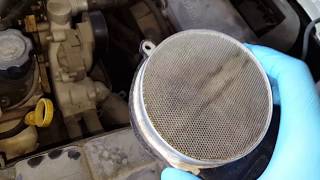
How to confirm: Remove the MAF sensor and visually inspect the small wires for dirt, oil residue, or debris. This is a common first step in diagnosis.
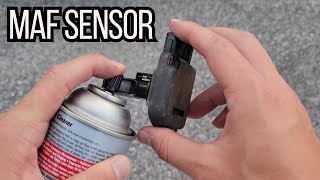
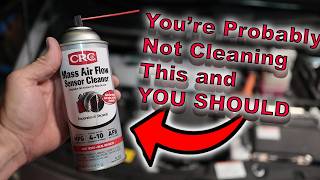
Typical fix: Clean the sensor wires carefully using only dedicated MAF sensor cleaner spray. Do not touch the wires. Allow it to dry completely before reinstalling.
Est. part cost: $10-$15 for cleaner - Vacuum Leak 🟡 Medium Probability Engine heat can cause plastic and rubber components to become brittle and crack over time. A common issue found by owners is a disconnected vacuum line, especially after other engine work has been performed.
How to confirm: Perform a smoke test to find the source of unmetered air. 🎬 See how to perform a smoke test on your C7. Common leak points include the intake manifold gaskets, PCV hoses and connections, the brake booster hose, and even a poorly seated oil dipstick or oil cap. A user on CorvetteForum found a leak with a smoke machine in 70 seconds that was a vacuum line that had slipped off the supercharger bypass valve mechanism.
Typical fix: Replace the cracked hose, leaking gasket, or faulty component. Intake manifold gaskets are a more involved repair.
Est. part cost: $10-$300 depending on the source - Failing Upstream Oxygen Sensor (Bank 1) ⚪ Low Probability O2 sensors are wear items and have a finite lifespan. A slow or biased sensor can incorrectly report a lean condition, 'lying' to the ECM.
How to confirm: Use a scan tool to monitor the live voltage data from the Bank 1 Sensor 1 O2 sensor. It should fluctuate rapidly between ~0.1V and ~0.9V. A sensor that is stuck low or responds slowly is suspect. This should be checked after confirming no vacuum leaks or MAF issues exist.
Typical fix: Replace the Bank 1, Sensor 1 (pre-catalytic converter) oxygen sensor.
Est. part cost: $50-$150
Rare But Worth Checking
- Low Fuel Pressure: Can be caused by a weak in-tank fuel pump or a failing high-pressure mechanical fuel pump. Requires a fuel pressure test to diagnose. This is less common than air leaks but should be considered if fuel trims are high under load.
- Clogged Fuel Injector(s) on Bank 1: If one or more injectors on the driver's side are restricted, they won't deliver enough fuel, causing a lean condition on that bank. This is more likely to be diagnosed after ruling out whole-engine issues.
- Exhaust Leak: A leak in the exhaust manifold or header flange before the O2 sensor can suck in outside air, causing a false lean reading. This is more common on vehicles with aftermarket headers.
- Cracked Air Intake Tube: A crack in the flexible intake ducting *after* the MAF sensor will allow unmetered air to enter the engine, causing a lean code. This can be hard to spot as the crack may only open under engine torque.
Diagnosis Steps
- Read Codes: Use an OBD-II scanner to confirm P0171 and check 🎬 Watch: A professional DIY diagnosis of this Corvette lean code. for any other codes, like P0174 or P0101, which can help narrow the diagnosis.
- Check Freeze Frame Data: Analyze the freeze frame data to see the engine conditions (RPM, load, speed) when the code was set. A code set at idle points towards a vacuum leak, while a code set at speed points more towards a MAF or fuel delivery issue.
- Inspect Air Intake System: Visually inspect the entire air intake tract from the air filter to the throttle body for any cracks, loose clamps, or disconnected hoses. Ensure the oil cap and dipstick are fully seated.
- Inspect for TSB Issue: Remove the air intake tube and carefully inspect the area around the MAF sensor for the casting flash mentioned in TSB #PIP5446A. Deburr if found.
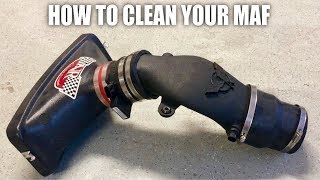
- Clean the MAF Sensor: Remove the MAF sensor and clean it with dedicated MAF sensor cleaner. Let it dry completely before reinstalling.
- Check Fuel Trims: Use a scan tool to monitor Short Term Fuel Trim (STFT) and Long Term Fuel Trim (LTFT). High positive numbers (e.g., LTFT >10-15%) at idle that decrease as RPMs increase strongly suggest a vacuum leak. If trims remain high at all RPMs, it points more to a MAF or fuel delivery issue.
- Perform a Smoke Test: If a vacuum leak is suspected, introduce smoke into the intake system (with the engine off) to pinpoint the exact location of the leak. Pay close attention to the intake manifold gaskets and all vacuum hose connections.
- Test Fuel Pressure: If no vacuum leaks are found, test the fuel pressure to rule out a weak fuel pump or clogged filter.
- Test Oxygen Sensor: As a final step, use a scan tool to graph the Bank 1 Sensor 1 O2 sensor's voltage to ensure it is switching correctly and not biased lean.
Parts You'll Likely Need
- Mass Air Flow (MAF) Sensor Cleaner — Often, the MAF sensor is just dirty and cleaning it is the cheapest and easiest first step.
Trusted brands: CRC, Liqui Moly
Aftermarket price range: $10-$15 - Mass Air Flow (MAF) Sensor
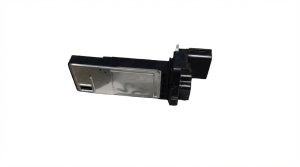
(OEM #23262343)— If cleaning doesn't work or the sensor has failed, it will need replacement. The original part number 12671624 has been superseded by 23262343. This sensor also contains the IAT and humidity sensor.
Trusted brands: ACDelco (OEM)
OEM price range: $70-$120
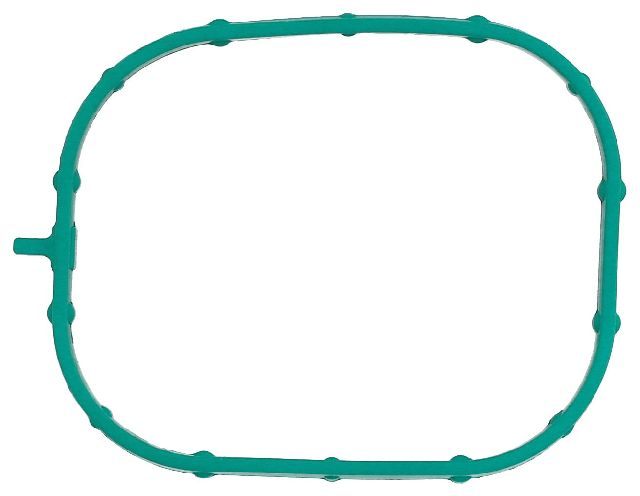
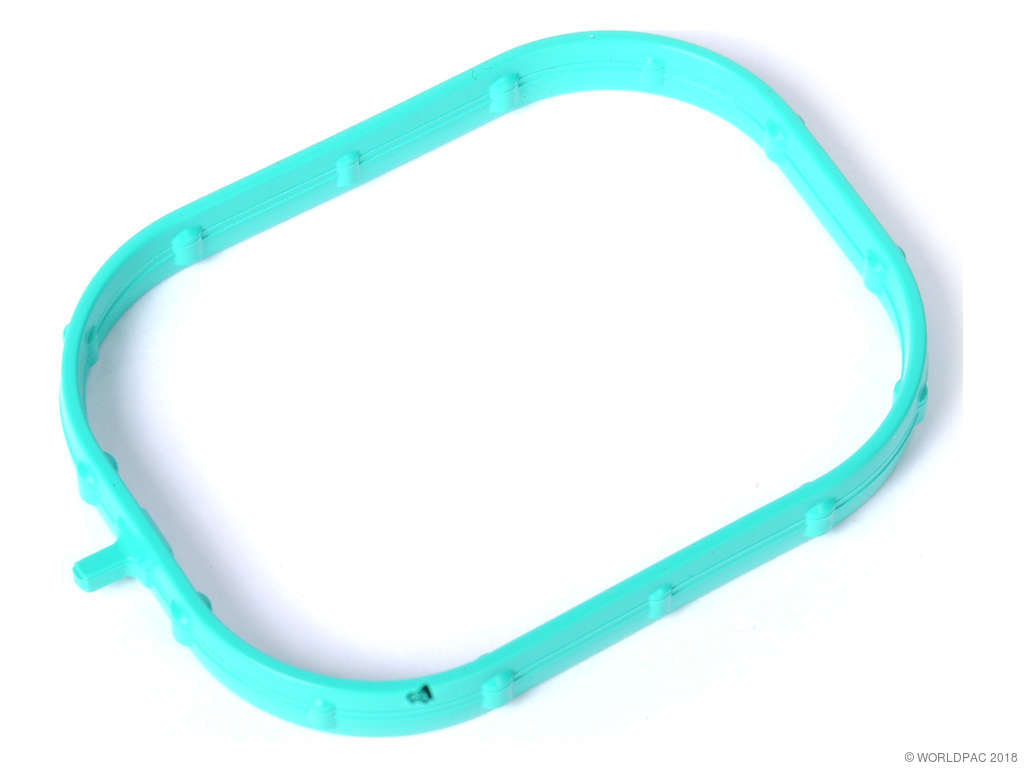
Aftermarket price range: $40-$80 - Intake Manifold Gaskets
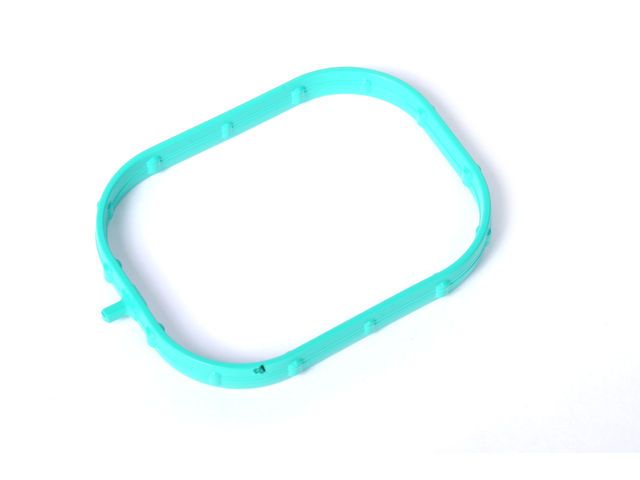
(OEM #12679529)— These gaskets can fail and are a common source of vacuum leaks on V8 engines, causing lean codes on both banks.
Trusted brands: ACDelco, Fel-Pro
OEM price range: $40-$60
Aftermarket price range: $30-$50
Related Codes That Often Appear With This One
- P0174 — System Too Lean (Bank 2). If both P0171 and P0174 are present, it strongly suggests a problem common to both engine banks, such as the MAF sensor, a major vacuum leak (like an intake manifold gasket), or a fuel delivery issue.
- P0101 — Mass Air Flow (MAF) Circuit Range/Performance. This code directly points to a problem with the MAF sensor's readings, which aligns with the issue described in TSB #PIP5446A.
- P0300 — Random/Multiple Cylinder Misfire Detected. A lean air-fuel mixture can fail to ignite properly, leading to misfires across one or more cylinders.
Technical Service Bulletins (TSBs) & Recalls
- PIP5446A: Addresses harsh shifting, rough idle, and various lean/rich codes (P0171, P0174, etc.) caused by casting flash in the air filter housing near the MAF sensor. Applies to 2014-2018 Corvettes and other GM vehicles.
Platform-Specific Known Issues
- P0171 and P0174 after High-Pressure Fuel Pump Replacement: A user on CorvetteForum reported getting P0171 and P0174 codes immediately after replacing the high-pressure fuel pump on their 2015 Z06. After extensive visual checks, a smoke test revealed the cause was a vacuum line under the supercharger bypass valve mechanism that had been knocked loose during the repair. This highlights the sensitivity of the vacuum system during major engine work.
- Revs Hanging Up with P0171: An owner on CorvetteForum experienced revs hanging around 1,500 RPM along with a P0171 code after reinstalling a ported throttle body and stock air filter. The community consensus pointed to a vacuum leak, possibly from a poorly seated throttle body O-ring or a loose hose clamp on the intake tube.
- Lean Codes on a Brand New C7: A CorvetteForum member reported P0171 and P0174 codes on a brand new C7 with only 900 miles. This points strongly to a manufacturing issue, such as the casting flash described in TSB #PIP5446A or a vacuum line not properly connected at the factory.
Mechanic-Grade Diagnostic Values
- Mass Air Flow (MAF) Sensor Reading at Hot Idle — expected: Should be approximately equal to the engine's displacement in liters, read in grams/second (g/s). For the 6.2L LT1, this is ~6.2 g/s.. Failure: A reading significantly lower than the engine's displacement (e.g., 4.3 g/s on a 6.2L engine) suggests an under-reporting MAF sensor or a vacuum leak downstream of the sensor.
- Long Term Fuel Trim (LTFT) at Idle vs. 3000 RPM — expected: Ideally close to 0%, but acceptable up to +/- 5%. When a P0171 is set, it will be high (e.g., +25% or more).. Failure: If LTFT is high at idle (e.g., +25%) but drops significantly as RPMs are raised to 3000, this strongly indicates a vacuum leak. If the LTFT remains high at 3000 RPM, the issue is more likely a MAF sensor or fuel delivery problem.
Scan Tool Commands That Help
- GDS2 / Tech2: Fuel Injector Balance Test — To isolate a single clogged or failing injector on Bank 1 after vacuum leaks and MAF issues have been ruled out. This test allows the technician to disable injectors one by one to see the effect on fuel trims and identify a cylinder that isn't getting enough fuel.
- GDS2 / Tech2: Fuel Trim Reset — After a repair (like fixing a vacuum leak or replacing a MAF sensor) has been completed. This command clears the learned long-term fuel trim values, forcing the ECM to relearn the fuel strategy immediately with the new, correct conditions. This provides instant feedback on whether the repair was successful.
Wiring & Ground Locations
- G103 — Located at the left rear of the engine compartment on the cowl, above the brake booster.. This is a critical ground point for the Body Control Module (BCM) and the Data Link Connector (DLC). A poor connection here can cause a variety of communication issues and potentially affect sensor readings processed by the BCM before being sent to the ECM.
- G104 — Located on the left side of the engine block, near the oil temperature sensor. It's a large lug with multiple ground wires attached.. This is a primary engine ground point. The ECM, MAF sensor, and ignition coils all rely on this ground path. Corrosion or a loose connection at G104 can introduce electrical noise or voltage offsets, causing sensors like the MAF to send inaccurate data to the ECM, potentially leading to a P0171 code.
Real Owner Repair Stories
- CorvetteForum user 'Kracka' (2014 Corvette Z51 M7, 43k miles) — Check engine light and rough idle.
❌ Tried (didn't work) Initially suspected mods (AFE intake), but all clamps and connections were tight.
✅ What actually fixed it The MAF sensor wires were visibly dirty. Cleaning the MAF sensor with dedicated cleaner resolved the rough idle and check engine light. The user noted that the inside of the intake pipe was spotless, indicating the dirt was fine enough to pass through the dry media filter over time. - CorvetteForum user 'Faketaxi' (C7 Corvette with Attack Blue air filter and AWE exhaust.) — P0171 & P0174 codes.
❌ Tried (didn't work) Diagnosis pointed to a lean condition caused by increased airflow from modifications.
✅ What actually fixed it Reverting to the OEM air filter (GM P/N 84032895 or A3191C) solved the lean codes without needing a custom tune, allowing the owner to keep the powertrain warranty intact.
"I Checked Everything" — The Actual Cause
- A 2015 C7 Z06 with a Corsa intake developed a P0171 with a 30% LTFT on Bank 1 after having all fuel injectors replaced to solve a P0300 misfire code. Multiple smoke tests revealed no vacuum leaks. The suspected cause, though unresolved in the thread, points towards an issue with the aftermarket intake's airflow characteristics confusing the ECM, or a potential problem with the new injectors on Bank 1.
- Aftermarket cold air intakes (CAI) can sometimes collapse under high vacuum/load, creating a temporary, unmetered air leak that is not present at idle or during a standard smoke test. One owner found that readjusting the clamps and rubber couplings on their CAI resolved both P0171 and P0174 codes that would appear intermittently.
Model Year Variations Within This Range
- 2014: The 2014 model year was the only year in this range to use the A6 (6L80) automatic transmission. All subsequent years used the A8 (8L90). This does not directly affect the P0171 cause but is a key vehicle identifier.
- 2015-2019: The supercharged 6.2L LT4 engine was introduced in the Z06 model. While it shares the same displacement and basic architecture as the LT1, its forced induction system adds complexity. A P0171 code on an LT4 could also be caused by leaks in the supercharger or intercooler plumbing post-MAF sensor.
- 2017-2019: The Grand Sport model was introduced, which used the naturally aspirated LT1 engine but shared the wide body and some chassis components of the Z06. Diagnostics for P0171 on a Grand Sport are identical to the standard Stingray.
- 2018-2019: The LT5 engine was introduced for the ZR1. It featured a larger supercharger and a dual-injection (port and direct) fuel system, making its P0171 diagnosis potentially more complex than LT1/LT4.
Helpful Videos
Used OEM Parts in Stock
New Aftermarket Parts Available


The information in this article is provided for general reference and educational purposes only. Vehicle specifications, procedures, and part compatibility can vary by production date, trim level, and region. Always consult your vehicle's factory service manual and verify part numbers before purchasing or performing repairs. Safety-critical components such as airbags, seat belts, and braking systems should be installed by a qualified professional.
- Chevrolet CORVETTE:
- 🎬 Helpful Videos
- 🛍️ Shop This Part
- What's Unique About the 2014-2018 Chevrolet CORVETTE
- Diagnostic Flowchart
- Symptoms You May Notice
- Most Likely Causes
- Rare But Worth Checking
- Diagnosis Steps
- Parts You'll Likely Need
- Related Codes That Often Appear With This One
- Technical Service Bulletins (TSBs) & Recalls
- Platform-Specific Known Issues
- Mechanic-Grade Diagnostic Values
- Scan Tool Commands That Help
- Wiring & Ground Locations
- Real Owner Repair Stories
- "I Checked Everything" — The Actual Cause
- Model Year Variations Within This Range
- 🎟️ Get 5% Off