

P0171 on 2004-2011 Chevrolet Colorado: System Too Lean Causes and Fixes
P0171 on a 2004-2011 Colorado most often means there is a vacuum leak, commonly from a failed intake manifold gasket due to loose bolts or gasket degradation. Other frequent causes include a dirty or faulty Mass Airflow (MAF) sensor, cracked PCV system hoses, or low fuel pressure from a weak fuel pump.
- P0171 means your Colorado's engine has too much air or not enough fuel.
- The most likely cause on this truck is a vacuum leak from a failed intake manifold gasket.
- Before replacing any parts, perform a smoke test to find vacuum leaks and a fuel pressure test to check the pump and filter.
- Cleaning the Mass Airflow (MAF) sensor is a simple, low-cost diagnostic step.
- Don't immediately replace the O2 sensors; they are usually just reporting the problem accurately.
What's Unique About the 2004-2011 Chevrolet COLORADO

On the first-generation Colorado (2004-2012) with the Atlas inline engines (4-cyl and 5-cyl), a failed intake manifold gasket is a very common cause for P0171. Unlike V-engines where this gasket might also seal coolant, on these trucks, the failure is almost always a vacuum leak from the manifold bolts loosening over time or the gasket becoming brittle. This is a well-documented issue in owner forums. Additionally, the PCV system's rubber hoses, particularly the one connecting the valve cover to the intake resonator, are known to crack and cause elusive vacuum leaks. A specific TSB (PIP4409F) also points to potential wiring issues at the MAP sensor, which can break inside the insulation and trigger this code among others.
Diagnostic Flowchart

Tap your situation to follow the diagnostic path that matches what you're seeing on this vehicle.
Symptoms You May Notice

- Check Engine Light is on
- Rough or vibrating idle, sometimes worse when in gear
- Hesitation or lack of power during acceleration
- Reduced fuel economy
- Hissing or whistling sound from the engine bay
- Hard starting or extended crank time
- Replacing the oxygen (O2) sensor. The P0171 code means the O2 sensor is correctly detecting a lean condition. Replacing the sensor without finding the source of the unmetered air or lack of fuel will not fix the problem.
Most Likely Causes

- Leaking Intake Manifold Gasket 🔴 High Probability The plastic intake manifold and gasket design on the Atlas inline engines is known to cause vacuum leaks. The bolts can loosen over time, or the gasket itself becomes hard and brittle, failing to seal properly. This is a widely discussed failure in owner communities.
How to confirm: Perform a smoke test on the intake system. Smoke will be seen escaping from the gasket area between the intake manifold and the cylinder head. Alternatively, with the engine running, carefully spray brake cleaner or a propane torch (unlit) around the gasket area and listen for a change in idle speed or a change in short-term fuel trim values on a scanner.
Typical fix: Replace the intake manifold gasket. It is critical to clean the mating surfaces thoroughly and tighten the manifold bolts to the manufacturer's specified torque in the correct sequence to ensure a lasting seal. This is also a good time to clean the throttle body.
Est. part cost: $20-$70 - Dirty or Faulty Mass Airflow (MAF) Sensor 🟡 Medium Probability The MAF sensor measures the air entering the engine. If the sensing wire is contaminated with dirt or oil, it will under-report airflow, causing the computer to inject too little fuel.
How to confirm: First, try cleaning the sensor with a dedicated MAF sensor cleaner spray; never touch the delicate wires. If the problem persists, monitor the MAF sensor readings with an OBD-II scanner. At idle, it should read between 2-6 g/s. A faulty sensor may provide erratic or out-of-spec readings that don't correspond with engine RPM changes.
Typical fix: Clean the MAF sensor. If cleaning provides only a temporary fix or no improvement, replace the sensor. Using an OEM or high-quality aftermarket sensor is recommended.
Est. part cost: $75-$155 - Cracked or Disconnected Vacuum/PCV Hoses 🟡 Medium Probability Rubber hoses become brittle and crack with age and heat exposure. The PCV system hoses are a common culprit, especially the hose running from the valve cover to the bottom of the intake resonator box. A crack here creates a significant unmetered air leak.
How to confirm: Visually inspect all vacuum lines and the PCV system hoses for obvious cracks, breaks, or loose connections. Pay close attention to the rubber elbows and connections. A smoke test is the most reliable method to find small or hidden leaks.
Typical fix: Replace the damaged hose(s). These are typically inexpensive and easy to replace.
Est. part cost: $10-$50 - Weak Fuel Pump or Clogged Fuel Filter ⚪ Low Probability A failing fuel pump or clogged filter restricts fuel flow, preventing the engine from getting enough fuel to match the air. Some owners report that fuel pressure even slightly below the factory specification of 58-62 PSI can trigger the code under load.
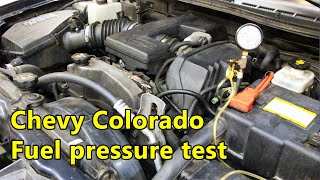
How to confirm: Connect a fuel pressure gauge to the fuel rail's test port (Schrader valve). With the key on, engine off, pressure should prime to around 50-60 PSI. With the engine running, it should hold steady between 56-62 PSI. If pressure is low or drops significantly under acceleration, the pump or filter is a likely cause.
Typical fix: The fuel filter is integrated into the fuel pump module on these trucks, so the entire fuel pump assembly must be replaced. This is done by either dropping the fuel tank or lifting the truck bed for access.
Est. part cost: $150-$350 for a fuel pump assembly.
Rare But Worth Checking
- Broken MAP Sensor Circuit Wiring: Technical Service Bulletin (TSB) PIP4409F specifically mentions that wires for the Manifold Absolute Pressure (MAP) sensor can break inside the insulation, usually near the connector. This can cause P0171 along with other MAP-related codes like P0106 and P0107.
- Leaking Power Brake Booster: The diaphragm inside the brake booster can fail, creating a large internal vacuum leak. This can be diagnosed by pressing the brake pedal with the engine off, then starting the engine; the pedal should drop slightly. A hissing sound near the pedal is also an indicator.
- Exhaust Leak Before the Oxygen Sensor: A crack in the cast iron exhaust manifold or a leaking manifold-to-head gasket can pull outside air into the exhaust stream. This extra oxygen causes the upstream O2 sensor to send a false lean signal to the computer.
- Clogged Fuel Injectors: Another TSB (03-06-04-030G) notes that restricted or clogged fuel injectors can cause a lean condition, often accompanied by misfires (P0300). This can be caused by fuel quality issues.
Diagnosis Steps
- Read Freeze Frame & Fuel Trims: Use an OBD-II scanner to check freeze frame data to see when the code set (idle, cruise, etc.). Observe Long Term Fuel Trim (LTFT) for Bank 1. A value consistently above +15% at idle that decreases with higher RPM suggests a vacuum leak. If LTFT is high at all RPMs, suspect a fuel delivery or MAF issue.
- Inspect for Vacuum Leaks: Perform a thorough visual inspection of all vacuum hoses, the air intake tube from the filter to the throttle body, and the PCV system for obvious cracks or disconnections. Pay special attention to the PCV hose under the intake resonator.
- Perform a Smoke Test: This is the most effective way to find vacuum leaks. Introduce smoke into the intake system post-MAF sensor and look for smoke escaping from gaskets (especially the intake manifold gasket), hoses, the throttle body shaft, or the brake booster.
- Clean and Test the MAF Sensor: Remove and clean the Mass Airflow sensor using only dedicated MAF sensor cleaner. Reinstall and check if fuel trims improve. If not, monitor MAF g/s readings on your scanner to ensure they are plausible (2-6 g/s at idle) and increase smoothly with engine RPM.
- Check Fuel Pressure: Connect a fuel pressure gauge to the test port on the fuel rail. Verify that the fuel pressure is within the factory specification of 58-62 PSI at idle. Briefly rev the engine to ensure pressure does not drop off, which would indicate a weak pump.
- Inspect MAP Sensor Wiring: If MAP-related codes (P0106/P0107) are present, carefully inspect the wiring and connector at the MAP sensor for chafing or broken wires inside the insulation near the connector, as per TSB PIP4409F.
- Check for Exhaust Leaks: With the engine cool, start it and feel/listen for leaks around the exhaust manifold and the gasket between the manifold and cylinder head. Black soot trails are a clear sign of a leak.
Parts You'll Likely Need
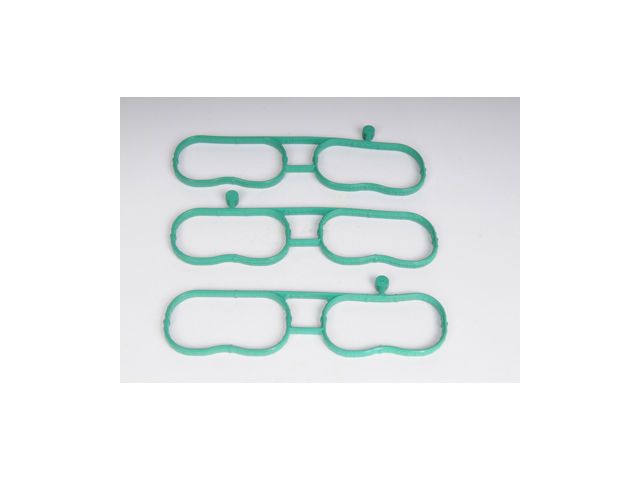
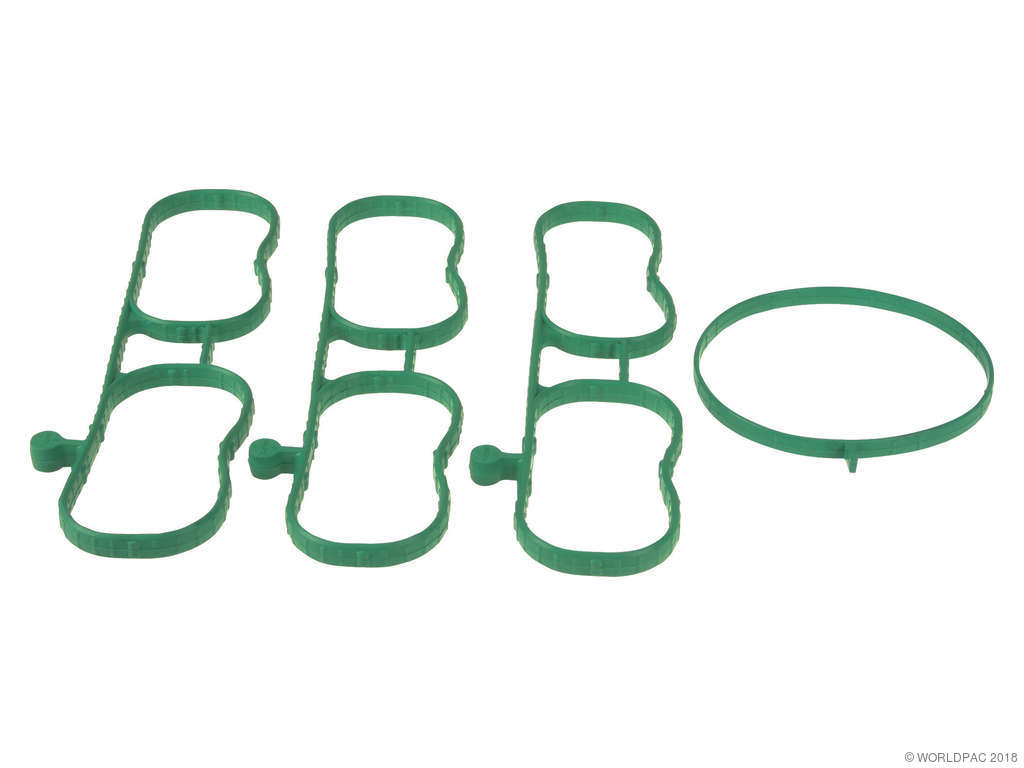
- Intake Manifold Gasket
(OEM #89060413)— This is a very common failure point on 2004-2011 Colorados, causing a vacuum leak that directly triggers the P0171 code.
Trusted brands: ACDelco, Fel-Pro (MS 96435), Victor Reinz
Related Codes That Often Appear With This One
- P0300 — A 'Random/Multiple Cylinder Misfire' code is common because a lean air-fuel mixture can fail to ignite properly, causing misfires across multiple cylinders.
- P0106 / P0107 — These codes relate to the Manifold Absolute Pressure (MAP) sensor. TSB PIP4409F notes that a wiring issue with the MAP sensor can trigger these codes alongside P0171.
- P0174 — While rare on these inline engines (as they only have one bank), if seen on a V6 or V8 platform mate like the Hummer H3 Alpha, it indicates a lean condition on Bank 2. When both P0171 and P0174 are present, it strongly suggests a central issue like the MAF sensor, fuel pump, or a large vacuum leak affecting both banks.
Technical Service Bulletins (TSBs) & Recalls
- PIP4409F: Mentions broken MAP sensor circuit wires near the connector causing P0171, P0106, P0300 and other codes.
- 03-06-04-030G: Discusses clogged/restricted fuel injectors leading to lean conditions (P0171/P0174) and misfires (P0300).
Platform-Specific Known Issues
- The intake manifold bolts on the Atlas I4 and I5 engines have a tendency to loosen over time, causing the gasket to leak.
- TSB PIP4409F points to a specific issue where the MAP sensor wiring can break internally near the connector, causing P0171 and other drivability codes.
Mechanic-Grade Diagnostic Values
- Fuel Pressure (Key On, Engine Off) — expected: 50-60 PSI. Failure: Pressure below 50 PSI or failure to hold pressure indicates a weak pump or leak.
- Fuel Pressure (Engine Idling) — expected: 56-62 PSI. Failure: Pressure below 56 PSI, or pressure that drops significantly under load, suggests a failing fuel pump. Some forum members suggest anything less than 62 PSI can cause issues.
- Mass Airflow (MAF) Sensor at Idle — expected: 2-6 g/s. Failure: Readings outside this range or readings that do not increase smoothly with RPM point to a faulty sensor.
- Manifold Absolute Pressure (MAP) Sensor at Idle — expected: 19-42 kPa. Failure: Readings outside this range suggest a sensor or wiring fault.
- Long Term Fuel Trim (LTFT) at Idle — expected: Ideally between -10% and +10%.. Failure: A sustained positive value over +15-20% strongly indicates the PCM is compensating for a vacuum leak or fuel delivery issue.
Wiring & Ground Locations
- SP106 (Splice Pack) — Passenger side of the engine bay, behind the engine air filter box.. This ground splice pack provides the ground path for numerous components, including the HVAC module and potentially affecting sensor readings if corroded. Poor grounds can cause erratic electrical behavior that mimics sensor failures.
- SP105 (Splice Pack) — Driver's side of the engine bay, near the battery and behind the ABS module.. This ground splice pack is critical for the fuel pump, fuel-level sender, and run/crank relay. Corrosion here can directly cause low fuel pressure and starting issues, leading to a P0171 code.
- Engine Harness Chafe Points — General areas to inspect include where the harness passes near the ECM/TCM bracket, the driver's side upper control arm, and the A/C compressor fittings.. Though more documented on newer models, harness chafing is a known GM issue. A shorted wire for a key sensor (MAP, MAF, O2) can cause incorrect readings and trigger a P0171 code, as noted in TSB PIP4409F.
Real Owner Repair Stories
- Reddit user in r/AskMechanics (2008 Chevrolet Colorado, 3.7L I5, 180k miles) — P0171 with P0300 (random misfire) and a high idle of 1100 RPM. Car would creep up to 25 mph on its own in Drive.
❌ Tried (didn't work) Spraying carb cleaner to find vacuum leaks (none found), New upstream and downstream O2 sensors, Cleaned MAF sensor, Fuel injector cleaner
✅ What actually fixed it The final fix was replacing a bad EVAP purge valve solenoid for $30. This was done after first replacing a cheap aftermarket cold air intake with the stock airbox, which resolved the P0171 but introduced other EVAP-related codes that pointed to the solenoid. - Reddit user in r/MechanicAdvice (Unknown year/model) — P0171, P0300, and a hard brake pedal.
❌ Tried (didn't work) Initial inspection of vacuum lines.
✅ What actually fixed it The power brake booster was leaking internally. The diagnostic test was: with the engine off, pump the brakes until the pedal is firm. Then, while holding the pedal down, start the engine. The pedal should drop as vacuum builds. If it doesn't, the booster is bad. Replacing the booster fixed the vacuum leak and cleared the codes.
"I Checked Everything" — The Actual Cause
- A cracked exhaust manifold before the upstream O2 sensor. This will not show up on an intake smoke test but will introduce unmetered oxygen directly into the exhaust stream, causing the O2 sensor to report a false lean condition. A visual inspection or using a smoke machine on the exhaust itself is needed.
- A failing power brake booster. The diaphragm can leak internally, creating a significant vacuum leak that is not part of the typical intake manifold or hose pathways checked during a smoke test. This is often accompanied by a hissing sound or a hard brake pedal.
- Low fuel pressure from a weak fuel pump. If the intake and vacuum systems are perfectly sealed, the engine can still run lean if the fuel pump cannot supply the correct volume and pressure of fuel to the injectors.
OEM Part Supersession History
17113557, 89017367, 89017589→89060413— Standard part evolution and consolidation by GM.
Heads up: The newer part number is the correct replacement for the entire generation.
Model Year Variations Within This Range
- 2004-2006 vs 2007-2011: The fuel pressure regulator location changed. On 2004-2006 models, there is an external regulator mounted on the fuel rail. On 2007 and newer models, the regulator is integrated into the fuel pump assembly inside the fuel tank. This is important for fuel pressure diagnosis.
Helpful Videos


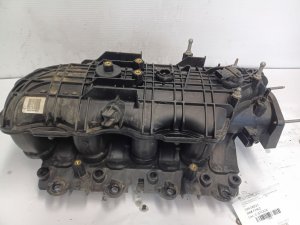
Used OEM Parts in Stock



New Aftermarket Parts Available





The information in this article is provided for general reference and educational purposes only. Vehicle specifications, procedures, and part compatibility can vary by production date, trim level, and region. Always consult your vehicle's factory service manual and verify part numbers before purchasing or performing repairs. Safety-critical components such as airbags, seat belts, and braking systems should be installed by a qualified professional.
- Chevrolet COLORADO:
- 🎬 Helpful Videos
- 🛍️ Shop This Part
- What's Unique About the 2004-2011 Chevrolet COLORADO
- Diagnostic Flowchart
- Symptoms You May Notice
- Most Likely Causes
- Rare But Worth Checking
- Diagnosis Steps
- Parts You'll Likely Need
- Related Codes That Often Appear With This One
- Technical Service Bulletins (TSBs) & Recalls
- Platform-Specific Known Issues
- Mechanic-Grade Diagnostic Values
- Wiring & Ground Locations
- Real Owner Repair Stories
- "I Checked Everything" — The Actual Cause
- OEM Part Supersession History
- Model Year Variations Within This Range
- 🎟️ Get 5% Off