

P0171 on 2011-2018 Chevrolet Camaro: System Too Lean Causes and Fixes
On 2011-2018 Camaros, P0171 is often caused by specific air intake issues. For 2011-2015 models, check for a dislodged hydrocarbon pad in the air filter lid (TSB #PIP4813C). For 2016-2018 models, inspect for plastic casting flash near the MAF sensor (TSB #PIP5446A). Otherwise, suspect a vacuum leak (especially PCV hoses or a stuck-open EVAP purge valve), or a dirty MAF sensor.
- For a 2011-2018 Camaro, check for vehicle-specific issues first: the air filter housing pad (2011-2015) and MAF sensor casting flash (2016-2018).
- The most common general cause is a vacuum leak from a cracked hose or failed intake manifold gasket. A smoke test is the best way to find it.
- Do not replace the oxygen sensor first. It is almost always reporting the lean condition correctly, and replacing it will not fix the underlying problem.
- Cleaning the MAF sensor with a dedicated cleaner is a cheap and easy diagnostic step that often resolves the issue.
- If P0171 appears with P0174 (Bank 2 Lean), the problem is very likely a vacuum leak or MAF issue affecting the entire engine.
What's Unique About the 2011-2018 Chevrolet CAMARO

The 2011-2018 Camaro is prone to P0171 due to specific, documented manufacturing and design issues that vary by generation. Fifth-generation models (2011-2015) can suffer from a dislodged hydrocarbon pad in the air cleaner assembly, which disrupts airflow and skews MAF sensor readings. [TSB #PIP4813C] Sixth-generation models (2016-2018) have a known issue with plastic casting flash near the Mass Airflow (MAF) sensor, creating turbulence and causing incorrect readings. [TSB #PIP5446A] These unique faults, confirmed by GM Technical Service Bulletins, should be the first items to inspect before moving to more generic causes like vacuum leaks from PCV hoses or a faulty EVAP purge valve.
Diagnostic Flowchart

Tap your situation to follow the diagnostic path that matches what you're seeing on this vehicle.
Generation note: This range covers the end of the 5th generation (2011-2015) and the beginning of the 6th generation (2016-2018). The most likely causes are different for each. 5th Gen: Check the air filter housing's hydrocarbon pad (TSB #PIP4813C). 6th Gen: Check for casting flash near the MAF sensor (TSB #PIP5446A). Both generations are also susceptible to vacuum leaks from cracked PCV hoses and faulty EVAP purge solenoid valves.
Symptoms You May Notice

- Check Engine Light illuminated
- Rough idle or stalling, especially when coming to a stop.
- Lack of power or hesitation during acceleration.
- Sputtering or misfiring.
- Harsh shifting between gears, particularly 1-2 and 2-3 shifts. [TSB #PIP5446A, 21 🎬 Watch a diagnostic walkthrough for these codes on a 2017 Camaro.]
- Reduced fuel economy
- Hissing or whistling sound from the engine bay, indicating a vacuum leak.
- Idle RPM hangs high (e.g., 1500-1800 rpm) when coasting to a stop.
- Replacing the upstream oxygen (O2) sensor. The O2 sensor is often just doing its job by reporting the lean condition. The P0171 code means the sensor is working, but it's seeing too much oxygen. Replacing it without fixing the root cause (like a vacuum leak) will not solve the problem.
Most Likely Causes
- Air Intake System Defects (TSB-Related) 🔴 High Probability GM has issued specific bulletins for this. On 2016-2018 models, excess plastic 'casting flash' near the MAF sensor can disrupt airflow (TSB #PIP5446A). On 2011-2015 models, the hydrocarbon absorber pad in the air cleaner lid can become dislodged, altering airflow and causing skewed MAF readings (TSB #PIP4813C).
How to confirm: Visually inspect the air intake tube near the MAF sensor for any excess plastic molding. Open the air filter box and inspect the inside of the lid to ensure the hydrocarbon pad is secure and intact.
Typical fix: Carefully remove the plastic flash with a file or deburring tool. If the hydrocarbon pad is damaged or loose, replace the air cleaner lid assembly.
Est. part cost: $0-$200 - Vacuum Leak 🔴 High Probability Hoses and gaskets become brittle over time. The most common cause of a lean code is unmetered air entering the engine after the MAF sensor. Common failure points on the Camaro include PCV hoses, intake manifold gaskets, and the EVAP purge solenoid valve.
How to confirm: Perform a visual inspection of all vacuum hoses and the PCV system, especially the hose between the throttle body and PCV. The most effective method is to use a smoke machine to introduce smoke into the intake system and watch for where it escapes. 🎬 See how to use a smoke machine to find vacuum leaks. A DIY method involves spraying brake cleaner or starter fluid near suspected leak points with the engine running and listening for a change in idle speed.
Typical fix: Replace the cracked hose or leaking gasket. The EVAP purge solenoid may need replacement if stuck open.
Est. part cost: $10-$150 - Dirty or Faulty Mass Airflow (MAF) Sensor 🟡 Medium Probability
How to confirm: Remove the MAF sensor and inspect it for dirt or debris. A scan tool can monitor MAF readings (g/s) to see if they are rational for the engine RPM. Cleaning the sensor is a good first step. A loose connection on an aftermarket intake is also a common culprit.
Typical fix: Clean the sensor using only dedicated MAF sensor cleaner. Do not touch the delicate wires. If cleaning doesn't resolve the issue, the sensor may need to be replaced. Ensure all intake tubing clamps are tight.
Est. part cost: $15 (cleaner) - $120 (sensor) - Faulty EVAP Purge Solenoid Valve 🟡 Medium Probability The EVAP purge solenoid can fail by sticking open, creating a constant vacuum leak as it pulls air from the charcoal canister. This is a common failure on many GM vehicles, including the Camaro.
How to confirm: With the engine running, disconnect the electrical connector and the vacuum line from the purge valve that leads to the intake manifold. Place your finger over the port on the valve; if you feel suction, the valve is stuck open and needs to be replaced. A clicking noise from the valve during operation is normal.
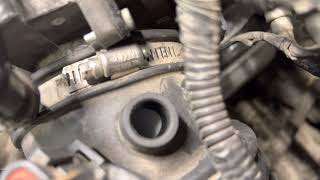
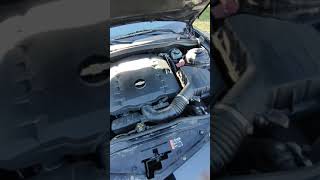
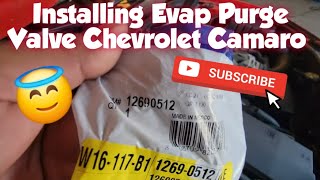
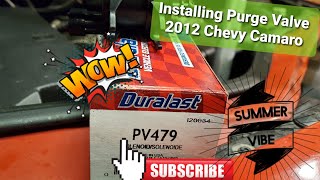
Typical fix: Replace the EVAP purge solenoid valve. It is typically an easy-to-access part in the engine bay. 🎬 Watch this step-by-step guide to replacing the EVAP purge valve.
Est. part cost: $25-$75 - Low Fuel Pressure ⚪ Low Probability
How to confirm: Connect a fuel pressure gauge to the fuel rail's service port (Schrader valve). Check that the pressure at idle and under load is within the manufacturer's specifications (typically around 58 PSI for V8 models).
Typical fix: If pressure is low, the issue is likely a weak fuel pump or a clogged fuel filter.
Est. part cost: $50-$400
Rare But Worth Checking
- Clogged Fuel Injectors: If the lean condition persists and is isolated to one cylinder (with a corresponding misfire code), a clogged injector could be the cause. This is less likely if you also have a P0174 code, which points to a whole-engine issue.
- Exhaust Leak: A leak in the exhaust manifold or pipe before the upstream O2 sensor can draw in outside air, causing the sensor to incorrectly report a lean condition. One owner on a forum resolved P0171/P0174 codes by replacing a leaking exhaust manifold gasket.
Diagnosis Steps
- Read all stored DTCs with a scan tool. Note any other codes that appear with P0171, especially P0174 or P0101.
- Analyze freeze frame data to see the engine conditions (RPM, load) when the code was set.
- Use a scan tool to monitor short-term (STFT) and long-term (LTFT) fuel trims at idle and at 2500 RPM. High positive numbers (e.g., LTFT > +15%) confirm the computer is adding fuel to compensate for a lean condition. If trims are high at idle but improve at higher RPM, a vacuum leak is highly likely.
- Inspect the air intake system thoroughly. For 2011-2015 models, check the hydrocarbon pad in the air filter lid (TSB #PIP4813C). For 2016-2018 models, check for casting flash near the MAF sensor (TSB #PIP5446A). Ensure intake boots are secure.
- Inspect all vacuum hoses, the PCV system, and the air intake boot for cracks, loose connections, or damage. Pay close attention to the PCV hose between the throttle body and valve cover.
- Test the EVAP Purge Solenoid to see if it's stuck open, creating a vacuum leak.
- If a vacuum leak is suspected but not visible, perform a smoke test to pinpoint the source.
- Remove and clean the MAF sensor with dedicated MAF sensor cleaner. Allow it to dry completely before reinstalling.
- Check fuel pressure using a fuel pressure gauge to rule out a weak fuel pump or clogged filter.
- If all else fails, inspect for exhaust leaks before the Bank 1 O2 sensor and test the O2 sensor itself for proper operation.
Parts You'll Likely Need
- Mass Air Flow (MAF) Sensor
(OEM #23262344)— A dirty or faulty MAF sensor is a common cause. On 6th-gen models, airflow can be disrupted by casting flash near the sensor, leading to misdiagnosis of the sensor itself. [TSB #PIP5446A, 21]
Trusted brands: ACDelco, Hitachi, Delphi
OEM price range: $85-$110
Aftermarket price range: $50-$90 - Intake Manifold Gasket Set
(OEM #12691199 (V6), 19256623 (V8))— These gaskets can fail over time, creating a significant vacuum leak that is a primary cause of lean codes.
Trusted brands: ACDelco, Fel-Pro, Mahle
OEM price range: $40-$70
Aftermarket price range: $20-$50 - EVAP Purge Solenoid Valve
(OEM #12690512)— A common failure item on GM vehicles that sticks open, creating a vacuum leak.
Trusted brands: ACDelco, Dorman, Standard Motor Products
OEM price range: $30-$50
Aftermarket price range: $15-$35 - PCV Hose/Tube — The rubber hoses in the PCV system become brittle and crack, creating vacuum leaks. The specific hose varies by engine and year.
Trusted brands: ACDelco, Gates
OEM price range: $20-$60
Aftermarket price range: $10-$40
Related Codes That Often Appear With This One
- P0174 — System Too Lean (Bank 2). This indicates the same lean condition is present on both sides of the engine, strongly suggesting a central issue like a MAF sensor, a major vacuum leak affecting the entire intake (e.g., intake boot, EVAP purge valve), or a fuel delivery problem.
- P0101 — Mass Air Flow (MAF) Circuit Range/Performance. This code often appears with P0171 because a faulty/dirty MAF sensor or disrupted airflow (from the TSB-related issues) is a primary cause of incorrect air measurement leading to a lean condition. [TSB #PIP5446A, TSB #PIP4813C, 8, 21]
- P0300 — Random/Multiple Cylinder Misfire Detected. A severe lean condition can prevent proper combustion, leading to misfires across multiple cylinders. The engine may feel like it's shaking or stumbling.
Technical Service Bulletins (TSBs) & Recalls
- PIP5446A: Notes that P0171 can be caused by casting flash near the MAF sensor on 2016 models.
- PIP4813C: Points to a damaged or dislodged hydrocarbon absorber pad in the air cleaner lid as a cause for P0171 on 2011 models.
- PIP5529B / PIP5529A: Lists P0171 as one of several codes that can illuminate the malfunction indicator lamp.
- PIE0413A: An informational bulletin acknowledging field reports of P0171 and P0174, indicating it is a known issue.
Platform-Specific Known Issues
- Dislodged Hydrocarbon Pad (2011-2015): Per TSB #PIP4813C, the hydrocarbon absorber pad inside the air cleaner lid can come loose. This obstructs and alters airflow across the MAF sensor, causing lean (P0171/P0174) or rich (P0172/P0175) codes along with a P0101. The fix is to replace the air cleaner lid assembly.
- Casting Flash in Airbox (2016-2018): Per TSB #PIP5446A, excess plastic 'casting flash' from the manufacturing process can be present in the air filter housing near the MAF sensor. This creates air turbulence, leading to an unstable MAF reading and codes like P0171/P0174 and P0101. The fix is to carefully remove the flash or replace the air filter housing lid.
- Loose Aftermarket Intake: Owners with aftermarket cold air intakes frequently report P0171/P0174 codes. A common cause is the intake tube coming loose from the throttle body, creating a massive unmetered air leak. Before diagnosing other parts, ensure all clamps are tight.
Mechanic-Grade Diagnostic Values
- Mass Airflow (MAF) Sensor Reading at Idle — expected: Approximately equal to engine displacement in liters (e.g., 3.6L engine ≈ 3.6 g/s, 6.2L engine ≈ 6.2 g/s). A common range is 2-7 g/s depending on engine size and conditions.. Failure: A reading that is significantly lower than the engine's displacement suggests the sensor is dirty or failing. A reading that is wildly high could also indicate a faulty sensor.
- Mass Airflow (MAF) Sensor Reading at 2500 RPM — expected: 15-25 g/s.. Failure: A slow or non-linear rise in g/s as RPMs increase can indicate a dirty sensor or an air leak downstream.
- Fuel Pressure (V8 Models) — expected: 55-62 PSI with key on, engine off. Pressure should hold steady. Some sources state a wider range of 41-47 PSI is acceptable.. Failure: Pressure below the minimum specification, or pressure that drops significantly under load (snap throttle), indicates a weak fuel pump or clogged filter.
- Upstream Oxygen Sensor Voltage — expected: Fluctuating rapidly between 0.1 and 0.9 volts on a healthy engine.. Failure: A sensor that is stuck low (e.g., < 0.2V) is reporting a lean condition. While this triggers the code, it usually means the sensor is working correctly and the problem is elsewhere. A lazy or slow-to-respond sensor may be faulty.
Scan Tool Commands That Help
- Professional Scan Tool (e.g., GDS2, Autel, Snap-on): Fuel Trim Reset — After performing a repair such as cleaning the MAF sensor, replacing an injector, or fixing a vacuum leak. Resetting the long-term fuel trim values forces the ECM to relearn the fuel strategy immediately, which can confirm if the fix was successful.
- Professional Scan Tool (e.g., GDS2, Autel, Snap-on): EVAP Purge/Seal — To test the EVAP purge solenoid. This bidirectional command allows the technician to command the valve open and closed to check for proper mechanical function and to see its effect on fuel trims, helping to confirm if it's stuck open and causing a vacuum leak.
Wiring & Ground Locations
- Engine Block Grounds (V8) — There are multiple grounds on the back of both the driver's side and passenger's side cylinder heads. Another important ground is located on the passenger side of the block, near the starter, which can become loose from the factory.. Poor grounds for the engine block and Engine Control Module (ECM) can cause erratic sensor readings, including from the MAF and O2 sensors, leading to incorrect fuel calculations and lean codes.
- G103 — Located at the left rear of the engine compartment on the cowl, above the brake booster.. This is a major ground point for the Body Control Module (BCM), Instrument Panel Cluster (IPC), and Data Link Connector (DLC), which can affect communication and diagnostics if faulty.
- G101 / G106 — G101 is on the left side of the engine cradle. It jumpers to G106 at the center of the frame cross rail under the crank pulley.. This ground serves the ECM, TCM, MAF sensor, and IAT sensor. A fault here can directly cause MAF sensor reading issues and trigger P0171.
Real Owner Repair Stories
- Camaro6 Forums user 'RikNMort23' (2016 Camaro 1SS with aftermarket cam and headers) — Intermittent P0171 and P0174 codes, trouble passing emissions. Long Term Fuel Trims would climb to 16-25% after coming to a stop.
❌ Tried (didn't work) Repeatedly tightening a loose aftermarket intake (Roto-Fab)., Cleaning the oiled-filter MAF sensor., Performing a smoke test from the intake and an EVAP tube, which only revealed a small leak at the intake boot which was then fixed.
✅ What actually fixed it The user was advised by another forum member to check for exhaust leaks at the header bolts. An exhaust leak before the O2 sensors can introduce unmetered air, causing the sensors to read lean. The final resolution was not posted, but this was the next logical step after common intake-side checks failed. - Reddit user 'GSPC' (Unknown Chevy model) — P0171 code.
❌ Tried (didn't work) A shop quoted $70 to replace the entire fuel line based on the smoke test.
✅ What actually fixed it A smoke test appeared to show smoke coming from a silver high-pressure fuel line. The user doubted this, as a high-pressure fuel line would leak fuel, not suck air. The user applied high-temperature sealant to the fuel line connection as a temporary measure, but the true cause was likely a nearby vacuum line or gasket that was leaking in a way that made the smoke appear to come from the fuel line. This highlights a common pitfall in interpreting smoke test results.
"I Checked Everything" — The Actual Cause
- An exhaust leak before the upstream O2 sensor can cause a P0171/P0174 code. A standard intake smoke test will come back clean because the leak is on the exhaust side. However, the leak allows oxygen to be pulled into the exhaust stream, making the O2 sensor report a false lean condition to the ECM. This is common on cars with aftermarket headers where a gasket has failed.
OEM Part Supersession History
22895480, 23144941→23262344— Standard part revision and consolidation by GM.
Model Year Variations Within This Range
- 2011-2015 (V6): These 5th Gen models use the 3.6L LFX engine. This engine has a front-mounted timing chain and integrated exhaust manifolds. While generally reliable, they can be prone to oil consumption and timing chain issues at higher mileage, which could potentially affect PCV system performance and contribute to lean conditions.
- 2016-2018 (V6): These 6th Gen models use the redesigned 3.6L LGX engine. It is a substantially different engine with a larger bore, rear-mounted timing chain for improved rigidity, a variable displacement oil pump, and Active Fuel Management (cylinder deactivation). The PCV and cooling systems were also revised. These changes mean that vacuum hose routing and potential leak points may differ from the earlier LFX.
Helpful Videos
Used OEM Parts in Stock


New Aftermarket Parts Available

The information in this article is provided for general reference and educational purposes only. Vehicle specifications, procedures, and part compatibility can vary by production date, trim level, and region. Always consult your vehicle's factory service manual and verify part numbers before purchasing or performing repairs. Safety-critical components such as airbags, seat belts, and braking systems should be installed by a qualified professional.
- Chevrolet CAMARO:
- 🎬 Helpful Videos
- 🛍️ Shop This Part
- What's Unique About the 2011-2018 Chevrolet CAMARO
- Diagnostic Flowchart
- Symptoms You May Notice
- Most Likely Causes
- Rare But Worth Checking
- Diagnosis Steps
- Parts You'll Likely Need
- Related Codes That Often Appear With This One
- Technical Service Bulletins (TSBs) & Recalls
- Platform-Specific Known Issues
- Mechanic-Grade Diagnostic Values
- Scan Tool Commands That Help
- Wiring & Ground Locations
- Real Owner Repair Stories
- "I Checked Everything" — The Actual Cause
- OEM Part Supersession History
- Model Year Variations Within This Range
- 🎟️ Get 5% Off