

P0171 on 2014-2016 Cadillac ELR: Lean Code Causes and Fixes
On a 2014-2016 Cadillac ELR, code P0171 is almost always caused by a failed PCV diaphragm inside the valve cover, creating a large vacuum leak. The fix is to replace the entire valve cover assembly. Before replacing the cover, it is critical to inspect the intake manifold for a missing check valve, which is the likely root cause of the PCV failure. Expect to pay $50-$150 for an aftermarket part and around $250 for an OEM part.
- For the 2014-2016 Cadillac ELR, P0171 is almost certainly caused by a vacuum leak within the PCV system.
- The primary culprit is a torn rubber diaphragm inside the valve cover, which is a known weak point on the 1.4L engine.
- Listen for a whistling or hissing noise from the engine cover at idle—this is a tell-tale sign of the failure.
- The correct repair is to replace the entire valve cover assembly. Before doing so, check for a missing check valve in the intake manifold, as this may be the root cause.
- Do not replace oxygen sensors or fuel injectors before thoroughly inspecting the PCV system, as they are unlikely to be the cause.
What's Unique About the 2014-2016 Cadillac ELR
The Cadillac ELR is a range-extended electric vehicle, using its 1.4L gasoline engine primarily as a generator. While the root cause of P0171 is tied to this common GM engine (also found in the Chevy Volt and Cruze), the symptoms may be less about drivability and more about the gas engine running rough when it engages. The most prevalent issue for this engine is a design flaw in the Positive Crankcase Ventilation (PCV) system, where a rubber diaphragm integrated into the valve cover fails, causing a significant unmetered vacuum leak. This problem is so common that GM has issued technical service bulletins and even a special coverage adjustment (extended warranty) for this exact issue on sibling vehicles.
Diagnostic Flowchart
Tap your situation to follow the diagnostic path that matches what you're seeing on this vehicle.
Symptoms You May Notice
- Check Engine Light is on
- Gasoline engine runs rough or idles poorly when it kicks on
- Loud whistling or hissing sound from the top of the engine 🎬 Hear the distinct hissing sound caused by a failed PCV. at idle
- Reduced power when the gasoline engine is operating
- Noticeable oil consumption or blue smoke from exhaust
- Difficulty removing the oil filler cap with the engine running due to strong vacuum
- Replacing the oxygen (O2) sensors first. The O2 sensor is usually doing its job correctly by reporting the lean condition, which is most often caused by a vacuum leak from the PCV system.
- Replacing fuel injectors. While clogged injectors can cause a lean condition, it is far less common than the PCV system failure on this specific engine.
- Replacing only the valve cover without checking the intake manifold check valve. If the check valve is missing, boost pressure will quickly destroy the diaphragm in the new valve cover, leading to a repeat failure.
Most Likely Causes
- Failed PCV Diaphragm in Valve Cover 🔴 High Probability The 1.4L engine family has a well-documented design flaw where the PCV diaphragm, which is integrated into the valve cover, tears. This creates a large, unmetered vacuum leak inside the engine. GM TSB 19-NA-114 directly addresses this condition as the primary cause for P0171.
How to confirm: With the engine running, listen for a distinct whistling or hissing noise from the PCV port on the valve cover. The definitive test, as outlined in TSB 19-NA-114, 🎬 Watch this simple diagnosis to confirm your P0171 cause. is to place a piece of tissue or your finger over the small vent hole on the round PCV valve assembly. If the tissue is sucked firmly against the hole or you feel continuous, strong suction, the diaphragm is torn. Another test is to try removing the oil filler cap while the engine is idling; excessive vacuum will make it very difficult to remove.
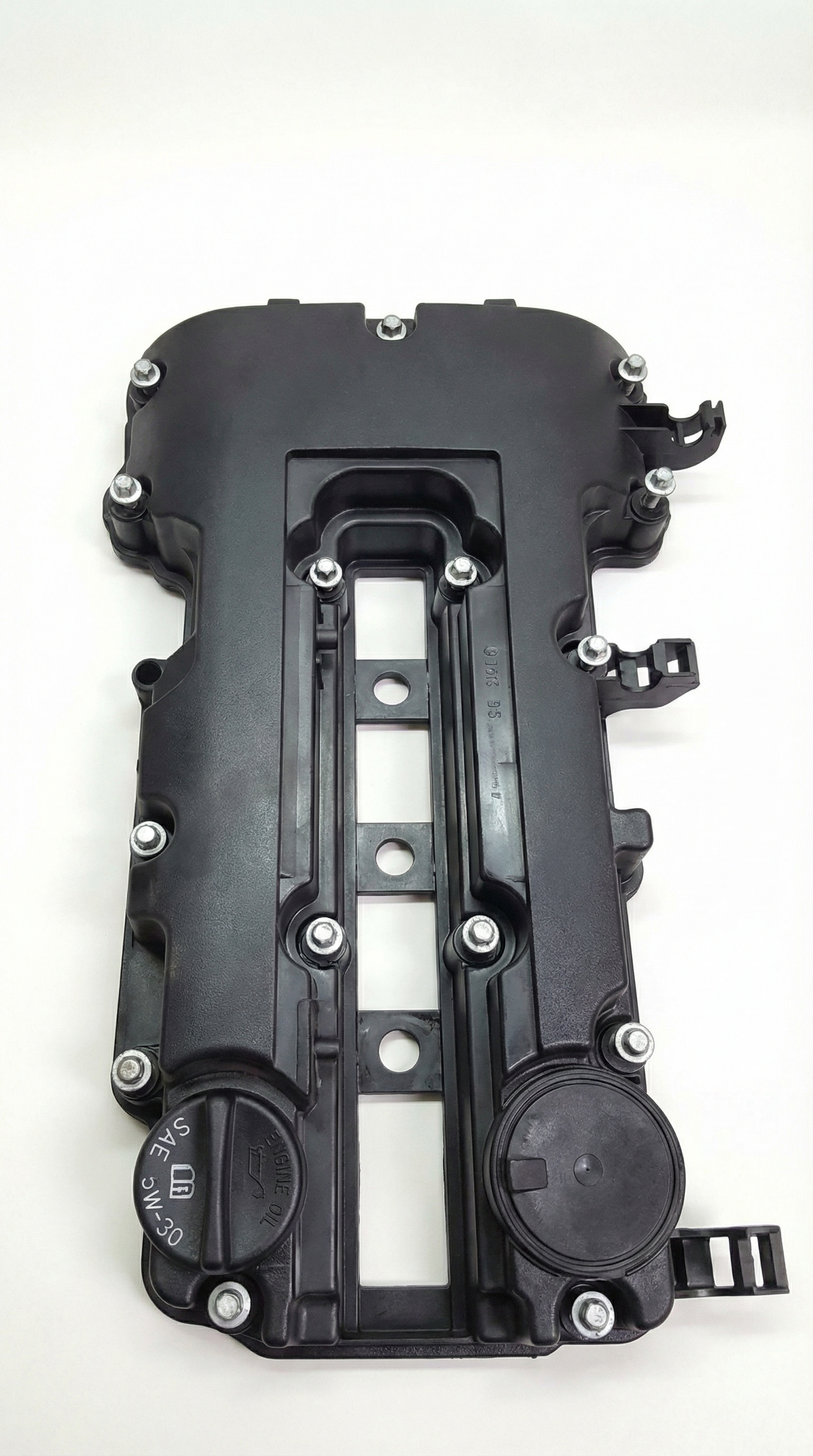
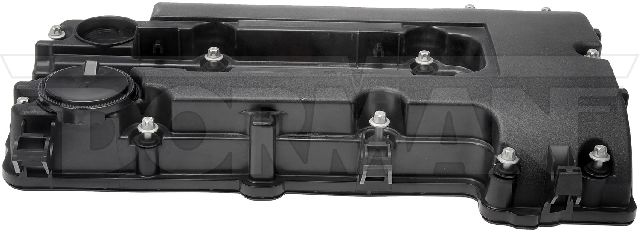
Typical fix: Replace the entire camshaft cover 🎬 See this walkthrough on replacing the valve cover assembly. (valve cover) assembly. The PCV diaphragm is not sold separately by GM. It is critical to also inspect the intake manifold check valve, as its failure is often the root cause.
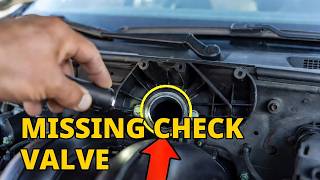
Est. part cost: $50-$280 - Missing or Failed Intake Manifold Check Valve 🟡 Medium Probability On this turbocharged engine, a small, orange, non-return check valve in the intake manifold is designed to prevent boost pressure from entering the crankcase. This valve can break apart or become dislodged, allowing boost pressure to rupture the PCV diaphragm in the valve cover. This is often the root cause of the recurring valve cover failure.
How to confirm: Visually inspect the PCV inlet port on the intake manifold after removing the PCV tube. An orange, nipple-like valve should be visible inside the port. If it is missing or damaged, the intake manifold has failed and is the reason the valve cover failed.
Typical fix: The official GM procedure is to replace the entire intake manifold. However, several aftermarket kits (e.g., from CruzeKits.com) are available to install a new, often more durable, external check valve without replacing the whole manifold, which is a popular and cost-effective DIY repair.
Est. part cost: $150-$300 for a new manifold, or $75-$90 for an aftermarket fix kit. - Cracked PCV Tube/Hose ⚪ Low Probability The corrugated plastic tube running from the intake manifold to the valve cover can become brittle from heat and age, leading to cracks that cause a vacuum leak. This often happens concurrently with or is discovered during a valve cover replacement.
How to confirm: Visually inspect the PCV tube for any visible cracks or damage. A smoke test will quickly reveal a leak from this hose.
Typical fix: Replace the PCV tube. Some aftermarket intake manifold fix kits include a replacement for this hose.
Est. part cost: $20-$50 - Dirty or Faulty Mass Airflow (MAF) Sensor ⚪ Low Probability
How to confirm: A faulty MAF sensor may under-report the amount of air entering the engine, causing the ECM to inject too little fuel. You can try cleaning the sensor with a dedicated MAF sensor cleaner. If cleaning doesn't resolve the issue, monitoring the sensor's readings with a scan tool can confirm if it's performing correctly.
Typical fix: Clean the MAF sensor with a specialized cleaner. If the problem persists, replace the MAF sensor.
Est. part cost: $60-$150
Rare But Worth Checking
- Weak Fuel Pump or Clogged Fuel Filter: While less common on this platform for this specific code, low fuel pressure can cause a lean condition. This should be investigated if all vacuum and PCV-related issues have been ruled out.
- Faulty Upstream Oxygen Sensor: An O2 sensor can fail and incorrectly report a lean condition. However, it's more common for the sensor to be correctly reporting a problem caused by something else. This is usually not the first part to replace.
- Cracked or leaking PCV tube: The plastic PCV tube that connects the intake manifold to the valve cover can become brittle and crack, causing a vacuum leak. This is often discovered when replacing the valve cover.
Diagnosis Steps
- Scan the ECM for any other stored trouble codes. Note codes like P1101, P0106, or P0300, as they strongly point towards the common PCV system failure.
- With the engine running, listen for a distinct whistling or hissing sound coming from the top of the engine, specifically around the valve cover.
- Perform the PCV diaphragm test outlined in GM TSB 19-NA-114. Place a finger or a piece of paper over the small breather port on the round PCV valve assembly on the valve cover. If you feel strong, continuous suction, the diaphragm is torn and the valve cover must be replaced.
- CRITICAL STEP: Before ordering or replacing the valve cover, inspect the intake manifold check valve. Remove the PCV hose from the intake manifold and look inside the port for a small, orange, nipple-shaped valve. If it is missing, the intake manifold must be replaced or an aftermarket fix kit must be installed to prevent repeat failure of the new valve cover.
- If the PCV system appears to be functioning correctly (no suction at the port), perform a smoke test to check for other vacuum leaks from hoses (especially the PCV tube), the intake manifold gasket, or the throttle body.
- If no vacuum leaks are found, inspect and clean the Mass Airflow (MAF) sensor using a dedicated cleaner.
- As a final step if all else fails, check fuel pressure to rule out a weak fuel pump or clogged filter.
Parts You'll Likely Need
- Camshaft Cover (Valve Cover)
(OEM #25209141 (supersedes 25203036, 55573746, 25198877, 25198874, 25198498))— This is the most common fix. The PCV diaphragm fails and is integrated into the cover, requiring the replacement of the entire assembly.
Trusted brands: ACDelco (GM Genuine), Dorman (P/N: 264-968)
OEM price range: $115-$280
Aftermarket price range: $50-$150 - Intake Manifold
(OEM #25200449)— Replaced if the internal check valve is found to be missing, which is often the root cause of the PCV diaphragm failure.
Related Codes That Often Appear With This One
- P1101 — This code relates to MAF sensor performance and is often triggered by the large unmetered air leak from the failed PCV system, as the airflow readings don't match the engine's operating conditions. This code is specifically mentioned in TSBs related to the PCV failure.
- P0106 — This code for Manifold Absolute Pressure (MAP) Sensor Performance can also be triggered by the erratic vacuum levels caused by a ruptured PCV diaphragm. This is another code listed in related TSBs.
- P0300 — A random misfire code can occur because the lean air-fuel mixture fails to ignite properly in the cylinders. A Volt owner on a forum fixed both P0171 and P0300 by replacing the valve cover.
- P2096 — Post Catalyst Fuel Trim System Too Lean Bank 1. This code can appear alongside P0171 as the lean condition is detected by both the upstream and downstream oxygen sensors. It is also listed in TSB PIP5197E.
Technical Service Bulletins (TSBs) & Recalls
- GM TSB #19-NA-114: Released May 2019, this bulletin supersedes PIP5197M. It provides specific diagnostic steps for technicians to confirm a torn PCV diaphragm (the cause of P0171) using a tissue or smoke before replacing the camshaft cover. It applies to the ELR, Volt, Cruze, Sonic, Trax, and Encore.
- GM Special Coverage #N202299080: While not explicitly for the ELR, this program provided an extended warranty (10 years / 120,000 miles) for the PCV valve cover failure on many platform mates (Cruze, Sonic, Trax, Encore), acknowledging the widespread nature of the defect.
- GM TSB #PIP5197 (A-M): This is an older series of bulletins that was eventually replaced by 19-NA-114. It documented the investigation into P0171 and other codes related to the PCV system, including the intake manifold check valve issue.
Platform-Specific Known Issues
- GM Technical Service Bulletin #19-NA-114 directly addresses DTC P0171 on this engine. It instructs technicians to test the PCV system for a torn diaphragm before replacing the camshaft cover, confirming this is the primary expected failure.
- The root cause of the valve cover failure is often the disintegration of a small check valve inside the intake manifold. When this valve fails, engine boost pressure is forced into the crankcase, which then ruptures the PCV diaphragm in the valve cover. Simply replacing the cover without addressing the manifold will lead to a repeat failure.
Mechanic-Grade Diagnostic Values
- Long and Short Term Fuel Trims (LTFT & STFT) — expected: Within +/- 10% at warm idle.. Failure: Consistently high positive values (e.g., +25% or higher) show the ECM is adding fuel to compensate for a major vacuum leak.
- Mass Airflow (MAF) Sensor Reading — expected: Approximately 1.4 g/s at warm idle (grams/second should roughly equal engine displacement in liters).. Failure: A significantly lower reading (e.g., under 1.0 g/s) suggests the sensor is under-reporting airflow, or there is a large vacuum leak downstream of the sensor.
- Fuel Pressure (Low Side) — expected: Approximately 45-60 PSI.. Failure: Pressure significantly below 45 PSI indicates a potential weak fuel pump or clogged filter, which can cause a lean condition.
- Camshaft Cover (Valve Cover) Bolt Torque — expected: 71 inch-pounds.. Failure: Improper torque can lead to oil leaks or vacuum leaks from a poorly seated gasket.
- Intake Manifold Bolt Torque — expected: 15 foot-pounds.. Failure: Improper torque can cause the intake manifold gasket to leak, creating a vacuum leak.
Wiring & Ground Locations
- G101 / G106 — Located on the lower front of the engine block, with a jumper to the frame rail under the crank pulley.. This is a primary ground for the Engine Control Module (ECM). A poor connection here can cause erratic sensor readings and various fault codes, including a false P0171.
- K20 ECM Connector X3 — The third multi-pin connector on the Engine Control Module.. Contains pins for critical sensors. For example, Pin 10 controls the EVAP Canister Purge Solenoid, and Pins 27, 29, and 30 provide low-reference (ground) signals to various sensors. A fault at this connector could mimic a sensor or solenoid failure.
Real Owner Repair Stories
- gm-volt.com owner forum (2012 Chevrolet Volt (1.4L LUU)) — Rough running gas engine, Check Engine Light with codes P0300 (Random Misfire) and P0171 (System Too Lean).
❌ Tried (didn't work) Replacing spark plugs, Replacing ignition coil cassette
✅ What actually fixed it The PCV diaphragm inside the valve cover had failed, creating a large internal vacuum leak. Replacing the entire valve cover assembly resolved both codes. - YouTube repair video (Holden/Chevy Cruze) (Holden Cruze (1.4L Turbo)) — Check Engine Light with P0171, code returned multiple times after repairs.
❌ Tried (didn't work) Replaced fuel pump module due to very low fuel pressure (10 PSI). Code returned., Replaced leaking brake booster. Code returned.
✅ What actually fixed it The EVAP fuel purge solenoid was found to be stuck open, allowing unmetered fuel vapor into the intake and causing a lean condition. Replacing the solenoid finally resolved the code. - Reddit user on r/cruze (Chevrolet Cruze (1.4L Turbo)) — P0171 code returned after 15 miles, even after replacing multiple parts.
❌ Tried (didn't work) Replacing the intake manifold, Replacing the PCV hose, Replacing the valve cover (PCV valve)
✅ What actually fixed it The user's story highlights the complexity, as they had already replaced the most common culprits. The final resolution was not posted, but the discussion serves as a real-world example of the diagnostic process where the obvious fixes do not work, pointing towards less common causes like a faulty MAF sensor, O2 sensor, or an issue with the fuel system that was not the pump.
"I Checked Everything" — The Actual Cause
- A standard intake smoke test may show no leaks, yet the P0171 code persists. This is a classic symptom of a failed internal PCV diaphragm in the valve cover. The leak is 'internal'—the engine is sucking unmetered air from the crankcase through the torn diaphragm, not from an external crack in a hose or gasket. The definitive diagnosis in this case is not a smoke test, but checking for strong, continuous suction at the PCV breather port on the valve cover with the engine running.
When the Usual Fixes Don't Work
- While the vast majority of P0171 codes on this engine are due to the PCV system (valve cover and intake check valve), there are documented cases where the code persisted after these components were replaced. In one detailed account of a sibling vehicle, the code returned twice. The first recurrence was caused by a leaking brake booster, and the second was caused by a stuck-open EVAP purge solenoid. This demonstrates that while the PCV system should be the primary suspect, technicians must not rule out other fundamental causes of a vacuum leak or improper fuel mixture if the initial, common repair does not resolve the issue.
OEM Part Supersession History
55573746, 25198498, 25198874, 25198877, 25203036→25209141— GM updated the part to improve reliability of the integrated PCV system.
Model Year Variations Within This Range
- 2016: The 2016 model year ELR (after a hiatus for 2015) received an updated engine management software calibration along with increased power and torque. While the physical PCV system flaw remained, this software update could potentially alter the threshold or conditions under which a P0171 code is triggered compared to the 2014 model.
Helpful Videos

Used OEM Parts in Stock

New Aftermarket Parts Available



The information in this article is provided for general reference and educational purposes only. Vehicle specifications, procedures, and part compatibility can vary by production date, trim level, and region. Always consult your vehicle's factory service manual and verify part numbers before purchasing or performing repairs. Safety-critical components such as airbags, seat belts, and braking systems should be installed by a qualified professional.
- Cadillac ELR:
- 🎬 Helpful Videos
- 🛍️ Shop This Part
- What's Unique About the 2014-2016 Cadillac ELR
- Diagnostic Flowchart
- Symptoms You May Notice
- Most Likely Causes
- Rare But Worth Checking
- Diagnosis Steps
- Parts You'll Likely Need
- Related Codes That Often Appear With This One
- Technical Service Bulletins (TSBs) & Recalls
- Platform-Specific Known Issues
- Mechanic-Grade Diagnostic Values
- Wiring & Ground Locations
- Real Owner Repair Stories
- "I Checked Everything" — The Actual Cause
- When the Usual Fixes Don't Work
- OEM Part Supersession History
- Model Year Variations Within This Range
- 🎟️ Get 5% Off