

P0171 on 2010-2017 Buick LaCrosse: System Too Lean Causes and Fixes
Code P0171 on a 2010-2017 Buick LaCrosse most often means there is a vacuum leak. On 3.6L V6 engines, this is typically a cracked PCV hose. On 2.4L I4 engines, it's often a clogged PCV orifice inside the intake manifold. Cleaning the Mass Airflow (MAF) sensor is another common, low-cost first step. A PCV hose can cost $20-$50, while an intake manifold repair is more involved, costing several hundred dollars.
- P0171 on a LaCrosse is most commonly caused by unmetered air entering the engine after the MAF sensor.
- Always start by inspecting for vacuum leaks, especially the PCV hoses and intake manifold gaskets, before replacing any parts.
- Cleaning the Mass Airflow (MAF) sensor with a dedicated cleaner is a cheap and easy diagnostic step that often solves the problem.
- If both P0171 and P0174 codes are present on a V6, the cause is almost certainly something that affects both engine banks, like the MAF sensor or a major intake leak.
- Be aware of manufacturer TSBs, as the cause can occasionally be more complex, such as needing an ECM update or having incorrect internal engine parts.
What's Unique About the 2010-2017 Buick LACROSSE

On the 2010-2017 LaCrosse, P0171 has very distinct common causes based on the engine. For the 3.6L V6, it's frequently linked to a cracked PCV foul air tube or a ruptured PCV diaphragm in the valve cover. For the 2.4L I4 Ecotec engine, the code is notoriously caused by a small, non-serviceable PCV orifice inside the intake manifold that clogs with carbon and sludge. This clogging can increase crankcase pressure and even lead to main seal failure. GM has also issued TSBs like #PIP5203C, which note that incorrect internal engine parts (camshafts, injectors) from a previous repair can also trigger the code.
Diagnostic Flowchart

Tap your situation to follow the diagnostic path that matches what you're seeing on this vehicle.
Generation note: This range covers the end of the second generation (2010-2016) and the first year of the third generation (2017). The 2nd gen offered 2.4L I4 and 3.6L V6 engines, while the 2017 model primarily used an updated 3.6L V6. Common causes like vacuum leaks and MAF sensor issues apply to both, but specific parts will differ. A key issue is TSB 14882 (and Special Coverage #14882) for a clogged PCV orifice specific to 2011-2013 2.4L models, which requires intake manifold service.
🎬 Watch: A clever trick to clear the 2.4L PCV orifice.Symptoms You May Notice
- Check Engine Light is on
- Rough or unstable idle, sometimes stalling at stops
- Hesitation or lack of power during acceleration
- Reduced fuel economy
- Hissing or whistling sound from the engine bay
- Engine may be hard to start
- Stiff brake pedal (if brake booster is leaking)
- Replacing the upstream oxygen (O2) sensor without performing other diagnostics. The O2 sensor is often correctly reporting the lean condition, which is caused by another component like a vacuum leak. While the sensor can fail, it's less common than a vacuum leak or MAF issue.
Most Likely Causes

- Vacuum Leak (PCV System, Intake Gaskets, Hoses) 🔴 High Probability The plastic and rubber components in the PCV system and intake manifold gaskets become brittle from engine heat and age. On the 3.6L V6, the PCV foul air tube is a primary failure point. On the 2.4L I4, a clogged internal PCV orifice in the intake manifold is a well-documented design flaw that causes high crankcase pressure, leading to seal failure and a vacuum leak.
How to confirm: Visually inspect all vacuum hoses for cracks, especially the PCV tube connecting to the intake. For the 2.4L, a simple test is to remove the oil cap with the engine running; a strong vacuum or suction indicates a clogged PCV orifice. A professional smoke test is the most reliable way to pinpoint the exact location of any leak.
Typical fix: Replace the cracked hose or failed gasket. For the 2.4L engine, the fix often requires replacing the entire intake manifold to correct the clogged orifice, and potentially the rear main seal if it has failed.
Est. part cost: $20 - $400 - Dirty or Faulty Mass Airflow (MAF) Sensor 🟡 Medium Probability The MAF sensor's delicate wire measures incoming air. If contaminated with dirt or oil, it will under-report the amount of air entering the engine, causing the PCM to command too little fuel.
How to confirm: Unplug and remove the sensor from the air intake tube. Visually inspect the small wires inside for any grime or debris. Often, cleaning is the first and cheapest diagnostic step. A scan tool showing MAF readings below the expected 2.4-3.0 g/s at warm idle can also point to a dirty sensor.
Typical fix: Clean the sensor using only dedicated MAF sensor cleaner spray. Do not touch the sensor wires. Allow it to air dry completely before reinstalling. If cleaning doesn't resolve the issue, the sensor must be replaced.
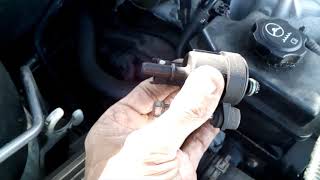
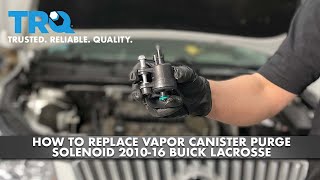
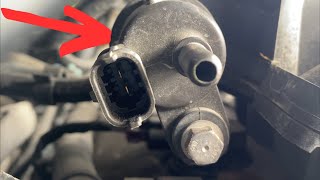
Est. part cost: $10 (cleaner) - $150 (new sensor) - Stuck-Open EVAP Purge Solenoid 🟡 Medium Probability The EVAP purge solenoid controls the flow of fuel vapors from the charcoal canister to the intake manifold. It's a common failure item on many GM vehicles. If it gets stuck open, it creates a constant vacuum leak that the MAF sensor doesn't see.
How to confirm: With the engine idling, disconnect the vapor line from the solenoid and use your finger or a vacuum gauge to check for suction. There should be no vacuum at idle. If suction is present, the valve is stuck open.
Typical fix: Replace the faulty EVAP purge solenoid. It is typically an easy and inexpensive part to replace. 🎬 See how to quickly replace the 3.6L purge solenoid.
Est. part cost: $25 - $75 - Low Fuel Pressure (Weak Pump, Clogged Filter) ⚪ Low Probability While not specific to this platform, a failing in-tank fuel pump or a clogged fuel filter can restrict fuel flow, preventing the engine from getting the fuel it needs to match the air volume. The direct-injection engines (2.4L and 3.6L) also have a high-pressure fuel pump, which adds another potential failure point.
How to confirm: Connect a fuel pressure gauge to the fuel rail's service port (if available). Check if the low-side pressure is within the manufacturer's specified range (approx. 55 PSI). Pressure should hold steady and not drop off under load.
Typical fix: Replace the weak fuel pump or clogged fuel filter.
Est. part cost: $50 - $400
Rare But Worth Checking
- Incorrect Camshaft or Camshaft Actuator Sprocket: A manufacturer TSB (#PIP5203C) for the 2.4L engine specifically mentions that incorrect internal engine parts, possibly installed during a previous repair, can cause a P0171 code.
- Incorrect or Clogged Fuel Injectors: TSB #PIP5203C also points to incorrect injectors as a possible cause. Dirty or clogged injectors can also restrict fuel flow on an individual cylinder, leading to a lean condition.
- Leaking Brake Booster: A ruptured diaphragm in the brake booster creates a large, unmetered vacuum leak. This is often accompanied by a stiff brake pedal and a hissing sound when the brakes are applied. 🎬 Watch: Diagnosing a lean condition caused by the brake booster.
- Exhaust Leak Before the O2 Sensor: A crack in the exhaust manifold or a bad flange gasket before the upstream O2 sensor can allow outside air to be pulled into the exhaust stream. This makes the sensor falsely report a lean condition to the PCM.
Diagnosis Steps
- Read the code with an OBD-II scanner and check for any other stored codes. Note the freeze frame data.
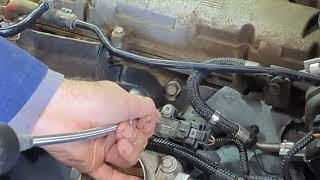
- Inspect the engine bay for obvious signs of a vacuum leak, such as cracked, disconnected, or collapsed rubber hoses. Pay close attention to the PCV tube on the 3.6L V6 and the small vacuum lines on the 2.4L.
- Listen for a hissing or whistling sound at idle, which can indicate a vacuum leak.
- With the engine running, use a scan tool to monitor short-term (STFT) and long-term (LTFT) fuel trims. High positive numbers (e.g., LTFT > 15%) confirm the computer is adding fuel to correct a lean condition.
- Perform a smoke test to find hard-to-see leaks in the intake system. This is the most reliable method for finding the source of unmetered air.
- Remove and clean the Mass Airflow (MAF) sensor with dedicated cleaner. Reinstall and see if fuel trims improve.
- Test fuel pressure using a gauge to rule out a weak fuel pump or clogged filter. Expected pressure is around 55 PSI.
- Test the EVAP purge solenoid for leakage at idle by checking for vacuum on the canister side.
- If no vacuum leaks or fuel delivery issues are found, investigate the oxygen sensors' performance using a scan tool to ensure they are responding correctly.
Parts You'll Likely Need

- PCV Foul Air Tube / Hose (3.6L V6)
(OEM #12633396)— This specific hose is a very common failure point on the 3.6L V6 engine, becoming brittle and cracking, which leads directly to a vacuum leak and a P0171/P0174 code.
Trusted brands: ACDelco, Dorman
OEM price range: $30-$50
Aftermarket price range: $15-$30 - Intake Manifold Gasket Set
(OEM #ACDelco 12673301 (3.6L V6))— The intake manifold gaskets can fail, creating a vacuum leak that causes lean codes. This is a known issue on both the 2.4L and 3.6L engines. On the 3.6L, this failure can also cause coolant leaks.
Trusted brands: Fel-Pro (MS 97222-1 for V6), ACDelco, Victor Reinz
OEM price range: $50-$90
Aftermarket price range: $25-$60 - Intake Manifold (2.4L I4) — On the 2.4L Ecotec, the PCV orifice is integrated into the manifold and clogs over time. Since the orifice is not serviced separately, the entire manifold is often replaced. GM issued Special Coverage 14882 for this issue on 2010-2013 models.
Related Codes That Often Appear With This One
- P0174 — If your LaCrosse has a V6 engine, you may also see P0174 (System Too Lean, Bank 2). When both codes appear together, it strongly suggests a problem affecting the entire engine, such as a faulty MAF sensor, a stuck EVAP purge valve, or a large vacuum leak at the intake manifold.
- P0300 — A severe lean condition can cause misfires. P0300 indicates random/multiple cylinder misfires, which can happen when the air-fuel mixture is too unstable to ignite properly. A forum user on ScannerDanner detailed their experience with P0171 leading to P0300.
Technical Service Bulletins (TSBs) & Recalls
- PIE0413A: Informational bulletin on Malfunction Indicator Lamp with DTC P0171 and/or P0174.
- PIP5203C: Diagnostic trouble code P0171 could set from installing incorrect injectors, intake camshaft, or camshaft actuator sprocket.
- PIE0413: Informational bulletin requesting field information on vehicles with DTC P0171 and/or P0174.
- PIP5028D: Recommends updating the Engine Control Module after diagnostics for P0171.
Platform-Specific Known Issues
- Clogged PCV Orifice in Intake Manifold (2.4L Ecotec): The most prevalent cause of P0171 on the 2.4L engine is a small, fixed PCV orifice inside the plastic intake manifold that becomes clogged with carbon and oil sludge. This blockage causes excessive pressure in the crankcase, which can blow out engine seals (most commonly the rear main seal), creating a massive vacuum leak. The official fix is to replace the entire intake manifold. GM issued Special Coverage #14882 related to this issue.
- Ruptured PCV Diaphragm in Valve Cover (3.6L V6): On the 3.6L V6 (LFX/LLT), a common failure involves the PCV system integrated into the valve covers. An orifice in one cover can clog, leading to pressure that ruptures a diaphragm in the opposite valve cover. This creates a large vacuum leak often heard as a whistling or sucking noise near the oil cap. The fix requires replacing the affected valve cover.
Mechanic-Grade Diagnostic Values
- Mass Airflow (MAF) Sensor Reading at Idle (3.6L V6) — expected: ~3.6 to 4.0 g/s. Failure: A significantly lower reading (e.g., <3.0 g/s) suggests a dirty sensor or a vacuum leak after the sensor. A significantly higher reading (e.g., >5.0 g/s) can indicate other sensor issues or exhaust restrictions.
- Long Term Fuel Trim (LTFT) — expected: -5% to +5%. Failure: Sustained positive values above +10% confirm a lean condition; the check engine light for P0171 often triggers when LTFT exceeds +12.5% or higher.
- High-Pressure Fuel Rail Pressure at Idle (3.6L V6) — expected: 1.9-5.0 MPa (276-725 psi). Failure: Pressure significantly below this range at idle, or failure to reach 14-17 MPa (2031-2466 psi) during wide-open throttle, can indicate a failing high-pressure fuel pump.
- Low-Side Fuel Pressure — expected: > 275-300 kPa (40-44 psi). Failure: Pressure below this threshold indicates a problem with the in-tank fuel pump or filter, preventing the high-pressure pump from functioning correctly.
Scan Tool Commands That Help

- GDS2 / Tech2: Fuel Trim Reset — After a repair that affects the air/fuel mixture (like fixing a vacuum leak or replacing a MAF sensor), this command forces the ECM to erase the learned long-term fuel trim values and start relearning immediately. This helps confirm if the fix was successful without waiting for multiple drive cycles.
- GDS2 / Tech2: Fuel Trim Enable/Disable — For advanced diagnostics, a technician can disable fuel trims to force the engine into open loop. This allows them to see how the engine runs on its base fuel map, which can help isolate whether the fault is with a sensor providing bad data or a mechanical issue.
- GDS2 / Tech2: EVAP Purge/Seal — This bidirectional command allows the technician to manually command the EVAP purge solenoid open and closed to test its function, rather than relying on passive checks. This is a definitive way to confirm if the solenoid is sticking open and causing a vacuum leak.
Wiring & Ground Locations
- G101 — On the lower front of the engine block, sometimes jumpered to G106 on the frame cross rail under the crank pulley.. This is a primary ground for the Engine Control Module (ECM) and the Mass Air Flow (MAF) Sensor. A poor connection here can cause erratic sensor readings and incorrect fuel calculations, leading to lean codes.
- G103 — Located at the left rear of the engine compartment on the cowl, above the brake booster.. This ground serves the Body Control Module (BCM) and the Data Link Connector (DLC). While not a direct cause, a poor connection can interfere with proper diagnosis and communication with scan tools.
- MAF Sensor Connector — In the air intake tube between the air filter box and the throttle body.. The 5-wire connector provides power, ground, and signal lines for the MAF and IAT sensors. Corrosion or a bad connection here (sometimes due to water intrusion per TSB 24-NA-158) will directly cause incorrect air metering and lean codes.
Real Owner Repair Stories
- YouTube video by Irfan Chaudhry (2008 Buick LaCrosse (similar system)) — Check Engine Light with code P0171, stiff brake pedal.
❌ Tried (didn't work) The video directly diagnoses the issue without mentioning prior failed attempts.
✅ What actually fixed it The brake booster was identified as the cause. Pinching off the vacuum hose to the booster caused the short-term fuel trims to drop from +25% to negative values, confirming a large vacuum leak from a ruptured booster diaphragm. Replacing the brake booster resolved both the lean code and the stiff pedal. - YouTube video by Lakes Automotive Diagnostics (GM vehicle with 2.4L Ecotec engine) — Rear main seal oil leak, likely accompanied by high crankcase pressure which can cause unmetered air entry and lean codes.
❌ Tried (didn't work) The video focuses on the correct procedure, implying that just replacing the seal without addressing the root cause would lead to repeat failure.
✅ What actually fixed it The root cause was a clogged PCV orifice inside the intake manifold. The repair involved removing the intake manifold to physically clean out the small orifice with a drill bit and compressed air. In addition to replacing the failed rear main seal, an updated, vented oil cap (Part #12703334) was installed to provide pressure relief if the orifice clogs again.
"I Checked Everything" — The Actual Cause
- A smoke test may show no leaks, but the P0171 code persists. In some cases on the 3.6L V6, the cause was a faulty power brake booster check valve. The valve can fail internally or the grommet it sits in can crack, creating a vacuum leak only when the brakes are applied or under specific vacuum conditions that a static smoke test might not reveal.
When the Usual Fixes Don't Work
- While Pass 2 correctly identifies a dirty MAF sensor as a common cause, a low MAF reading on a scan tool does not automatically mean the sensor is bad. As demonstrated in one diagnostic case, a large vacuum leak downstream (from a stuck-open EVAP purge solenoid) can cause the engine computer to close the throttle plate. This reduces airflow across the MAF sensor, resulting in a low g/s reading. The low MAF reading was a symptom of the vacuum leak, not the root cause. Blocking the leak caused the MAF reading to return to normal.
OEM Part Supersession History
Multiple older numbers→12677329 (and others)— Updates to the design of the high-pressure fuel pump for 3.6L V6 engines to improve reliability.
Heads up: It is critical to use the correct part number for the specific year and engine (LLT vs LFX) as mounting and connections can differ.
Model Year Variations Within This Range
- 2010-2013 (2.4L Engine): These model years are specifically mentioned in GM's Special Coverage 14882 for the clogged PCV orifice inside the intake manifold. The coverage extends the warranty for this specific repair to 10 years or 120,000 miles.
- 2012-2016 (3.6L V6 - LFX Engine): The 2012 model year introduced the LFX V6, replacing the previous LLT V6. While both are 3.6L, they have different components, including intake manifolds, fuel systems, and some sensor part numbers. The PCV foul air tube (PN 12633396) is a common failure on the LFX engine.
Helpful Videos


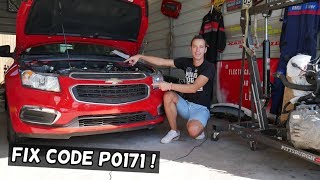
![How to Fix P0171 Engine Code in 5 Minutes [7 DIY Methods]](https://img.youtube.com/vi/g_qItasY91I/mqdefault.jpg)

We Have This Part in Stock



The information in this article is provided for general reference and educational purposes only. Vehicle specifications, procedures, and part compatibility can vary by production date, trim level, and region. Always consult your vehicle's factory service manual and verify part numbers before purchasing or performing repairs. Safety-critical components such as airbags, seat belts, and braking systems should be installed by a qualified professional.
- Buick LACROSSE:
- 🎬 Helpful Videos
- 🛍️ Shop This Part
- What's Unique About the 2010-2017 Buick LACROSSE
- Diagnostic Flowchart
- Symptoms You May Notice
- Most Likely Causes
- Rare But Worth Checking
- Diagnosis Steps
- Parts You'll Likely Need
- Related Codes That Often Appear With This One
- Technical Service Bulletins (TSBs) & Recalls
- Platform-Specific Known Issues
- Mechanic-Grade Diagnostic Values
- Scan Tool Commands That Help
- Wiring & Ground Locations
- Real Owner Repair Stories
- "I Checked Everything" — The Actual Cause
- When the Usual Fixes Don't Work
- OEM Part Supersession History
- Model Year Variations Within This Range
- 🎟️ Get 5% Off