

P0171 on 2013-2019 Buick Encore: Lean Code Causes and Fixes
On a 2013-2019 Buick Encore, code P0171 is most often caused by a failed PCV system inside the valve cover. This requires replacing the entire valve cover assembly, which costs between $70 for an aftermarket part and $150 for an OEM part. It is a common and well-documented issue for this engine. A secondary, and often root, cause is a missing check valve in the intake manifold which must be inspected to prevent repeat failure of the new valve cover.
- P0171 on a Buick Encore is almost always caused by a vacuum leak within the PCV system.
- The most likely culprit is a torn diaphragm inside the valve cover, which requires replacing the entire cover.
- Before installing a new valve cover, it is absolutely essential to check for a small check valve inside the intake manifold. If it's missing, the intake manifold must also be replaced.
- Symptoms like a hissing noise, rough idle, and difficulty removing the oil cap are classic signs of this specific failure.
What's Unique About the 2013-2019 Buick ENCORE

The 1.4L Turbo engine in the Buick Encore has a unique and widespread issue that causes the P0171 code. The Positive Crankcase Ventilation (PCV) system's diaphragm is integrated directly into the plastic valve cover and is not sold as a separate part. This rubber diaphragm is prone to tearing, creating a significant vacuum leak that the engine's sensors cannot account for, leading directly to a lean condition. This design flaw is so common that it's the first thing to check on an Encore with a P0171 code. Furthermore, this failure is often caused by another common issue: a small check valve inside the intake manifold breaking or falling out, allowing turbo boost pressure into the crankcase and rupturing the diaphragm.
Diagnostic Flowchart

Tap your situation to follow the diagnostic path that matches what you're seeing on this vehicle.
Symptoms You May Notice
- Check Engine Light is on.
- Rough, unstable, or surging idle.
- Loud hissing or whistling sound from the engine bay, especially at idle, coming from the top of the valve cover. 🎬 See a demonstration of the rough idle and whistling sound.
- Lack of power and poor acceleration.
- Difficulty removing the oil filler cap while the engine is running due to strong vacuum.
- Service StabiliTrak light may illuminate.
- Noticeable oil consumption.
- Engine may stall or have difficulty restarting, especially when warm.
- Replacing oxygen (O2) sensors. While a faulty O2 sensor can cause fuel trim issues, it is rarely the root cause of P0171 on this specific vehicle. The lean condition is almost always real, not a sensor reporting error.
- Replacing only the valve cover without checking the intake manifold. If the small check valve in the intake manifold is missing, the new valve cover's PCV diaphragm will rupture again very quickly, leading to a repeat failure. This is a very common mistake for first-time DIYers and some shops.
- Attributing the issue solely to the MAF sensor. While cleaning it is good practice, it's rarely the primary cause on the 1.4L Turbo when compared to the PCV system failures.
Most Likely Causes

- Failed PCV System in Camshaft/Valve Cover 🔴 High Probability The PCV regulator diaphragm is made of rubber and integrated into the valve cover; it is known to tear or rupture over time, creating a large, unmetered vacuum leak. This is a well-documented, common failure on the 1.4L Ecotec engine, covered by GM Special Coverage N202299080 for some model years.
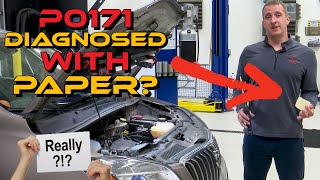
How to confirm: With the engine running, listen for a distinct hissing or whistling sound near the top of the engine. Another definitive test is to try removing the oil filler cap; if it's held on by strong vacuum, the diaphragm has failed. You can also place a small piece of paper or your finger over the small vent hole on the circular PCV assembly on the valve cover; 🎬 Watch: How to perform this simple PCV suction test. if the paper is sucked against the hole or you feel suction, it confirms the failure.
Typical fix: Replace the entire camshaft cover assembly. The diaphragm is not serviced separately.
Est. part cost: $70-$180 - Missing/Damaged Check Valve in Intake Manifold 🟡 Medium Probability A small, orange non-return check valve inside the intake manifold can become dislodged, break, or get sucked into the engine. When this happens, the turbo's boost pressure can enter the crankcase and rupture the PCV diaphragm in the valve cover, causing a rapid repeat failure of a new valve cover.
How to confirm: After removing the PCV tube that connects to the intake manifold, shine a flashlight into the port. A small orange (or sometimes different colored) check valve nipple should be visible inside. If the port is just an empty black hole, the valve is missing.
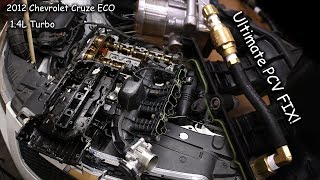
Typical fix: The official GM repair is to replace the entire intake manifold. However, several popular aftermarket kits, such as those from CruzeKits.com, exist to install a new, more durable external check valve without removing the manifold. This is a very common modification by owners to prevent future issues.
Est. part cost: $75 (aftermarket kit) - $300 (new manifold) - Cracked or Leaking PCV Tube/Hose ⚪ Low Probability The corrugated plastic tube running from the intake manifold to the turbo inlet can become brittle from heat and crack, creating a vacuum leak.
How to confirm: Visually inspect the hose for cracks, especially around the fittings. With the engine running, you may hear a hissing sound from the hose. A smoke test is the most effective way to find a small crack.
Typical fix: Replace the PCV hose. Aftermarket upgrade kits often include a more durable replacement for this hose.
Est. part cost: $20-$40 - Leaking EVAP Purge Valve Solenoid ⚪ Low Probability The purge valve can get stuck open, creating a constant vacuum leak as it pulls fuel vapors from the gas tank at the wrong time.
How to confirm: With the engine running, disconnect the vapor line from the purge valve. If you can feel vacuum on the valve's port (it should be closed at idle), the valve has failed and is stuck open. This may also be accompanied by code P0496.
Typical fix: Replace the EVAP purge valve solenoid. It is an inexpensive and easily accessible part.
Est. part cost: $18-$50 - Improperly Seated or Incorrect Air Filter/Housing ⚪ Low Probability As noted in TSB #PIP5240F, an incorrect or poorly fitting air cleaner assembly can allow unmetered air to enter the engine past the MAF sensor, causing a lean condition.
How to confirm: Inspect the air cleaner housing to ensure it is fully seated, all clips are secure, and that the correct part is installed for the vehicle's engine. Check that the intake snorkel is properly connected to the airbox.
Typical fix: Reseat the air filter and housing correctly or replace the air cleaner housing with the correct OEM part if it's wrong for the application.
Est. part cost: $0-$100
Rare But Worth Checking
- Dirty or Faulty Mass Air Flow (MAF) Sensor: A MAF sensor contaminated with dirt or oil can under-report the amount of air entering the engine, leading the PCM to inject too little fuel. Cleaning the sensor with dedicated MAF cleaner is a valid diagnostic step.
- Low Fuel Pressure: A weak fuel pump or clogged fuel filter can cause insufficient fuel delivery, but this is much less common than the PCV-related vacuum leaks on this engine.
- Leaking Oil Filler Cap or Dipstick Seal: A missing or improperly seated oil cap or a bad dipstick O-ring can create a small, unmetered vacuum leak, contributing to a lean condition.
Diagnosis Steps
- Scan for codes. Confirm P0171 and note any other codes like P1101, P0106, or P0300, which strongly point to the common PCV failure.
- Start the engine and listen for a loud hissing or whistling sound from the top of the engine.
- Perform the definitive PCV diaphragm test: With the engine at idle, place a finger or a small piece of paper over the vent hole on the round part of the valve cover. If you feel suction or the paper sticks, the diaphragm is torn. The valve cover must be replaced.
- As a secondary confirmation, carefully try to remove the oil filler cap with the engine running. If it is held on by a strong vacuum, the PCV diaphragm has failed.
- If replacing the valve cover, YOU MUST inspect the intake manifold's PCV port for the presence of the small, orange check valve. To do this, remove the PCV hose and look inside the port with a flashlight. If it is an empty black hole, the intake manifold must be replaced or an aftermarket check valve kit must be installed to prevent immediate failure of the new valve cover.
- If the PCV system checks out, inspect the EVAP purge solenoid. Disconnect its hose and check for vacuum at idle. There should be none.
- Inspect all PCV hoses and the main intake air hose for cracks or loose connections.
Parts You'll Likely Need
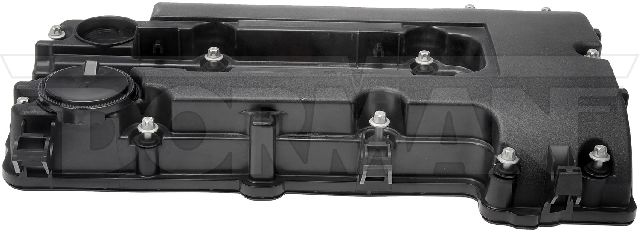
- Camshaft Cover (Valve Cover)
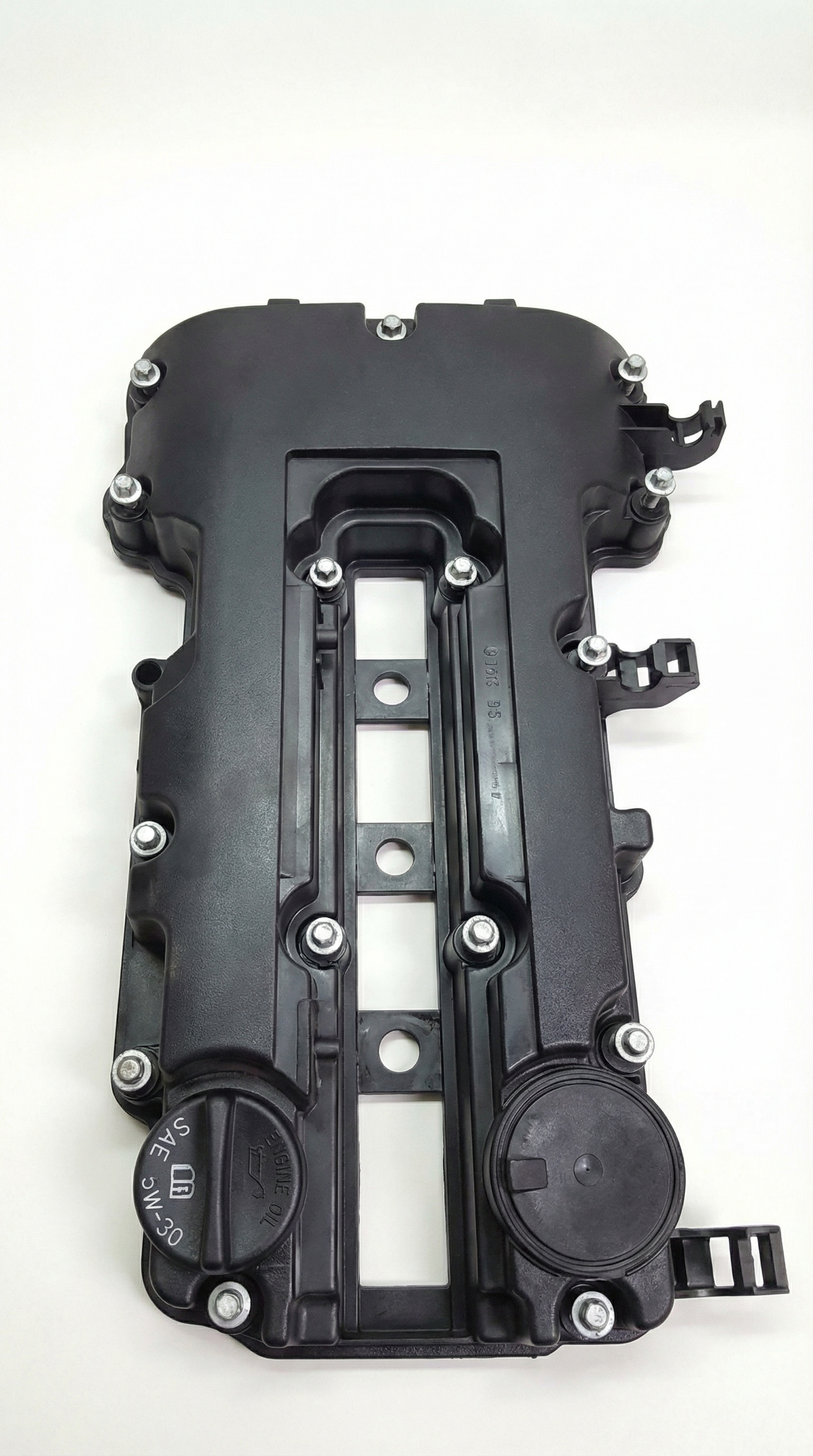
(OEM #25198874, 25201710, 25209141 (verify by VIN))— This is the most common failure. The integrated PCV diaphragm ruptures, requiring replacement of the entire assembly. TSBs #19NA114 and #N202299080 point to this component. The part number has been superseded several times.
Trusted brands: ACDelco, GM Genuine, Dorman
OEM price range: $120-$180
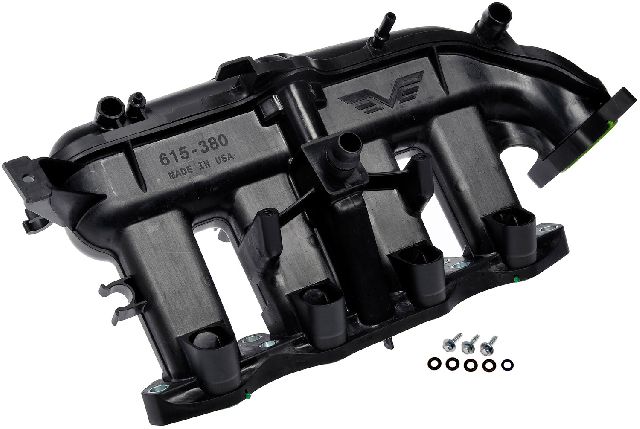
Aftermarket price range: $70-$110 - Intake Manifold
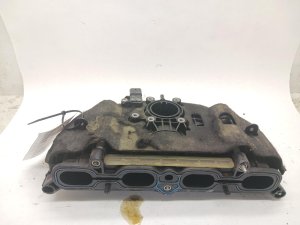
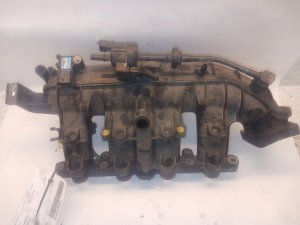
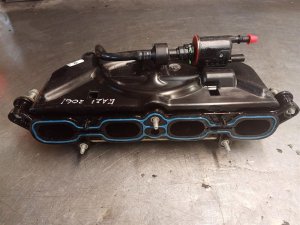
(OEM #55577371, 25200449 (verify by VIN))— Required if the internal non-return check valve is missing or damaged, which is a frequent root cause of the valve cover failure. Many owners opt for an aftermarket external check valve kit instead of replacing the entire manifold.
Trusted brands: ACDelco, GM Genuine, Dorman (615-380)
OEM price range: $250-$350
Aftermarket price range: $150-$220 - Intake Manifold Check Valve Repair Kit — A popular and cost-effective alternative to replacing the entire intake manifold when the internal check valve fails. These kits allow you to install a new, often more robust, external check valve.
Trusted brands: CruzeKits.com, ZZPerformance, BNR
OEM price range: N/A
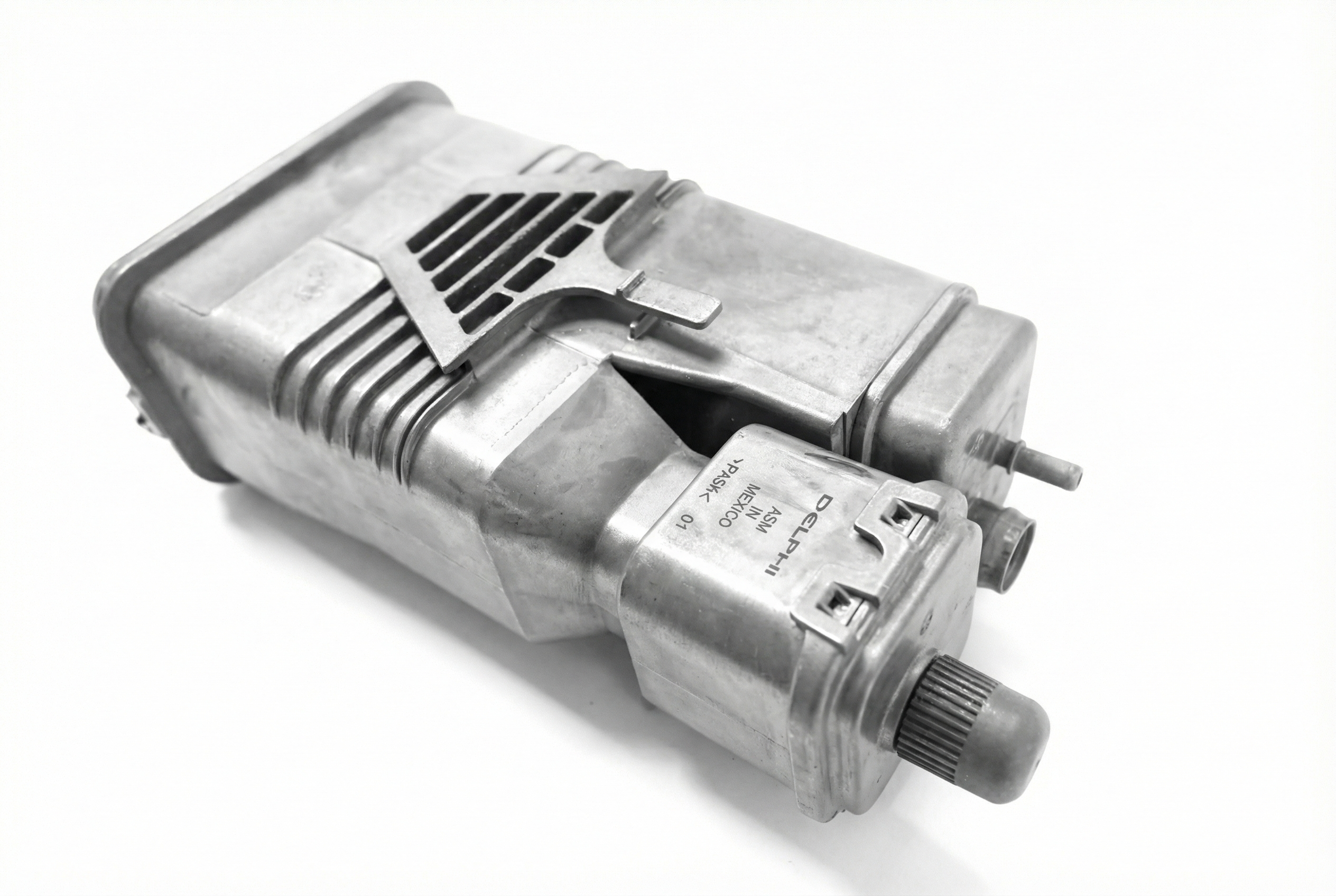
Aftermarket price range: $75-$90 - EVAP Canister Purge Valve
(OEM #55573017)— A less common but possible cause. Can fail by sticking open, creating a vacuum leak.
Trusted brands: ACDelco, Bosch, Dorman
OEM price range: $35-$50
Aftermarket price range: $18-$30
Related Codes That Often Appear With This One
- P1101 — This code for 'Intake Air Flow System Performance' is frequently set with P0171 because the large vacuum leak from the PCV system causes a mismatch between the air measured by the MAF sensor and what the engine actually ingests. This is mentioned in TSB #PIP5240F and is a classic sign of the PCV failure.
- P0300 — 'Random/Multiple Cylinder Misfire' code can occur because the extremely lean air-fuel mixture fails to ignite properly in the cylinders.
- P0106 — 'Manifold Absolute Pressure (MAP) Sensor Performance' can be triggered because the vacuum leak causes MAP sensor readings that are out of the expected range compared to throttle position and MAF readings.
- P0496 — 'EVAP Flow During a Non-Purge Condition' often points to a stuck-open EVAP purge valve, which is another potential source of a vacuum leak causing P0171.
Technical Service Bulletins (TSBs) & Recalls
- N202299080: Special Coverage for failed PCV diaphragm in the camshaft cover for certain 2014 models, extending warranty to 10 years/120k miles.
- PIP5240F: Addresses P0171/P1101 caused by an incorrect or improperly installed air cleaner housing.
- 19NA114: Provides technicians with specific tests for the PCV system before replacing the camshaft cover for a P0171 code.
- PIP5197M: Predecessor to PIP5240F, also discussing P0171 lean codes.
Platform-Specific Known Issues
- GM Special Coverage N202299080: For certain model years (e.g., 2014 Encore, 2011-2014 Cruze), GM issued a special coverage that extended the warranty for the camshaft cover (due to the PCV diaphragm failure) to 10 years or 120,000 miles. Owners experiencing P0171 should check with a GM dealer to see if their VIN is covered, even if out of the standard warranty.
- The 'Fix-It-Again' Loop: A very common owner experience is replacing the valve cover to fix P0171, only for the code to return weeks or months later. This is almost always because the underlying cause—the missing intake manifold check valve—was not diagnosed and addressed, causing the new valve cover's diaphragm to rupture from boost pressure.
Mechanic-Grade Diagnostic Values
- Long-Term Fuel Trim (LTFT) — expected: Close to 0%, ideally between -10% and +10%.. Failure: Sustained positive values of +20% or higher indicate the computer is adding significant fuel to compensate for a lean condition.
- Mass Air Flow (MAF) Sensor at idle — expected: Approximately 1.4 g/s for the 1.4L engine. General spec for many engines is 2-7 g/s.. Failure: A reading significantly less than 1.4 g/s at hot idle, combined with a near-zero throttle opening percentage, strongly suggests a large vacuum leak downstream of the MAF sensor (like the PCV failure).
- Crankcase Vacuum at idle (measured at dipstick tube) — expected: Around 1 inch of mercury (inHg).. Failure: High vacuum, such as 5 inHg or more, confirms a ruptured PCV diaphragm in the valve cover is pulling excessive vacuum on the crankcase.
- Valve Cover Bolt Torque — expected: 71 inch-pounds (approx. 8 Nm).. Failure: N/A
- Intake Manifold Bolt Torque — expected: 15 foot-pounds (approx. 20 Nm).. Failure: N/A
Scan Tool Commands That Help
- GDS2 / Professional Scan Tool: Fuel Trim Reset — After replacing a component that caused the lean condition (e.g., valve cover, intake manifold, purge valve), resetting the fuel trims will clear the old learned compensation values and allow the ECU to adapt to the new, correct conditions more quickly.
Wiring & Ground Locations
- G101 — Located at the front of the engine, on the lower block.. This ground is for the Engine Control Module (ECM) and the Mass Air Flow (MAF) sensor. A poor connection here can cause incorrect MAF readings, leading to fuel mixture problems.
- G103 — Located at the left rear of the engine compartment on the cowl, above the brake booster.. This is a primary ground for the Body Control Module (BCM) and Data Link Connector (DLC). While not a direct cause of P0171, a bad ground here can cause communication issues with scan tools.
Real Owner Repair Stories
- Reddit user in r/MechanicAdvice (2019 Buick Encore Preferred 2WD 1.4L Turbo (LUV)) — Engine misfires during acceleration, blinking check engine light, then a solid P0171 code after initial repairs.
❌ Tried (didn't work) The owner first replaced the valve cover, ignition coil pack, and spark plugs to address misfires. The P0171 code appeared immediately after these repairs.
✅ What actually fixed it The owner then heard an air suction noise and replaced the PCV Valve Tubing Hose. After replacing the hose, the P0171 code did not return, though a rough idle and StabiliTrak light appeared, suggesting a possible fitment issue with the new hose. - YouTube video by 'Phillip Bailey' (2014 Buick Encore 1.4L with over 200,000 km) — Rough running, squealing/whistling noise, and P0171 code.
❌ Tried (didn't work) Diagnosis immediately pointed to the PCV system. The mechanic noted that simply replacing the valve cover without checking the intake would be a mistake.
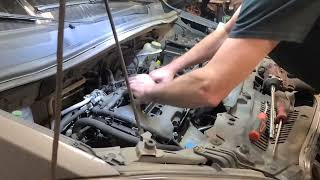
✅ What actually fixed it The mechanic confirmed extreme crankcase vacuum (5 inHg). He found the valve cover PCV diaphragm was ruptured AND the check valve in the intake manifold was missing. The final fix was replacing both the valve cover and the entire intake manifold. After replacement, crankcase vacuum returned to a normal 1 inHg.
OEM Part Supersession History
55573746→25198874, 25198877, 25203036— Standard part evolution and design updates by GM.
Heads up: These part numbers generally refer to the valve cover for the LUV engine. The LE2 engine, introduced later, uses a different valve cover (e.g., 25204723). Always verify the part with the vehicle's VIN.
Model Year Variations Within This Range
- 2013-2016: Primarily used the 138-hp port-injected 1.4L LUV engine. The interior featured a smaller infotainment screen and more physical buttons.
- 2016-2019: Starting in 2016 on the Sport Touring trim and expanding in 2017, a higher-output 153-hp direct-injected 1.4L engine (RPO code LE2) became available. The LUV engine remained standard on lower trims.
- 2017-2019: Received a significant facelift with new front-end styling, revised taillights, and a redesigned dashboard. The infotainment system was upgraded to a larger 8-inch touchscreen with Apple CarPlay/Android Auto and fewer physical buttons.
Helpful Videos
Used OEM Parts in Stock
New Aftermarket Parts Available


The information in this article is provided for general reference and educational purposes only. Vehicle specifications, procedures, and part compatibility can vary by production date, trim level, and region. Always consult your vehicle's factory service manual and verify part numbers before purchasing or performing repairs. Safety-critical components such as airbags, seat belts, and braking systems should be installed by a qualified professional.
- Buick ENCORE:
- 🎬 Helpful Videos
- 🛍️ Shop This Part
- What's Unique About the 2013-2019 Buick ENCORE
- Diagnostic Flowchart
- Symptoms You May Notice
- Most Likely Causes
- Rare But Worth Checking
- Diagnosis Steps
- Parts You'll Likely Need
- Related Codes That Often Appear With This One
- Technical Service Bulletins (TSBs) & Recalls
- Platform-Specific Known Issues
- Mechanic-Grade Diagnostic Values
- Scan Tool Commands That Help
- Wiring & Ground Locations
- Real Owner Repair Stories
- OEM Part Supersession History
- Model Year Variations Within This Range
- 🎟️ Get 5% Off