

P0171 on 2016-2018 Acura RDX: Causes for Lean Code and How to Fix It
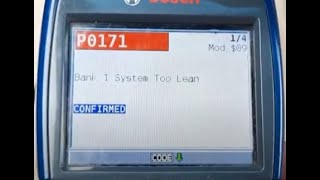
Code P0171 on a 2016-2018 Acura RDX means the engine is running too lean. The most common causes are vacuum leaks from a cracked air intake hose (Part No. 17228-R5A-A00), a dirty Mass Airflow (MAF) sensor, or faulty fuel injectors. Crucially, Acura has extended the warranty on the fuel injectors to 10 years/150,000 miles under Service Bulletin 22-013, which should be investigated if misfires are also present. Start by inspecting the intake hose for cracks.
- Always inspect the rubber air intake hose for cracks first; it's the most likely and cheapest fix for a P0171 code on this RDX.
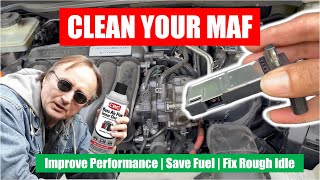
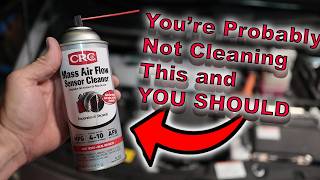
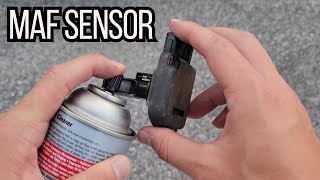
- Before replacing any parts, spend $10 on a can of MAF cleaner and clean the sensor.
- If misfire codes (P0300-P0306) are also present, the problem is more likely to be related to the fuel injectors, as noted in an Acura TSB.
- Do not immediately assume the O2 sensor is bad. It is often doing its job correctly by reporting the lean condition caused by another component.
What's Unique About the 2016-2018 Acura RDX
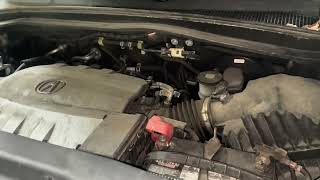
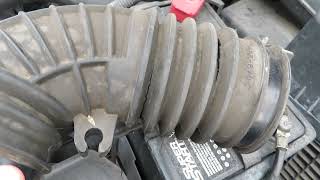
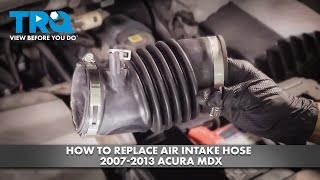
The 2016-2018 RDX uses a reliable 3.5L J-series V6 engine (J35Z2 variant). While this engine is generally robust, it is highly susceptible to vacuum leaks from a cracked rubber air intake hose 🎬 Watch: How to identify a cracked intake tube on your Acura., a very common failure on Honda/Acura vehicles. More specifically for this platform, Acura issued Service Bulletin 22-013, which led to a warranty extension for the fuel injectors (10 years or 150,000 miles). This TSB acknowledges a known issue where sticking injectors can cause P0171, often accompanied by misfire codes (P030x), making it a critical diagnostic path for owners.
Diagnostic Flowchart
Tap your situation to follow the diagnostic path that matches what you're seeing on this vehicle.
Symptoms You May Notice
- Check Engine Light is on
- Message on dash like "Check Emission System".
- Hesitation or stumbling during acceleration.
- Rough idle.
- Reduced engine power.
- Potential for engine misfires.
- Decreased fuel economy
- Hissing sound from the engine bay at idle
- Replacing the oxygen (A/F) sensor immediately without first checking for vacuum leaks or cleaning the MAF sensor. The sensor is often correctly reporting a problem that exists elsewhere, most commonly a cracked intake hose.
Most Likely Causes
- Cracked Air Intake Hose 🔴 High Probability The rubber intake hose (part # 17228-R5A-A00) between the air filter housing and the throttle body becomes brittle and cracks, especially in the ribbed, flexible sections. This allows unmetered air to enter the engine, which is the most frequent cause of P0171 on this and similar Honda/Acura models.
How to confirm: Visually inspect the entire length of the flexible rubber intake hose, bending it to reveal hidden cracks in the accordion-like ribs. A hissing sound may be audible with the engine running. Spraying short bursts of brake cleaner near the hose may cause a momentary change in engine RPM, confirming a leak.
Typical fix: Replace the cracked air intake hose. This is a straightforward DIY job requiring only basic tools.
Est. part cost: $40-$80 - Failing Fuel Injectors 🟡 Medium Probability Acura has acknowledged an issue with sticking fuel injectors, prompting the release of Service Bulletin 22-013 and a warranty extension to 10 years/150,000 miles for affected vehicles. A clogged or sticking injector (part # 16010-5J6-305) fails to deliver the proper amount of fuel, leading to lean conditions and misfires.
How to confirm: This is often accompanied by misfire codes (P0300-P0306) and/or air-fuel imbalance codes (P219A/B). A dealership can confirm eligibility for the warranty extension via a VIN status check. Advanced diagnosis involves checking fuel trims per cylinder with a capable scan tool.
Typical fix: Replace the faulty fuel injector(s). If the vehicle is covered under the warranty extension, this repair should be performed by an Acura dealer at no cost. It is recommended to replace all injectors on the affected bank as a set.
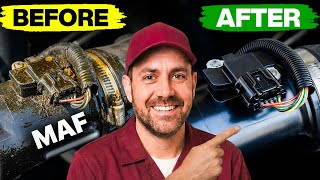
Est. part cost: $50-$150 per injector (aftermarket), potentially $0 if covered by warranty. - Dirty or Faulty Mass Airflow (MAF) Sensor 🟡 Medium Probability The MAF sensor measures the amount of air entering the engine. If the sensing wire gets dirty, often from a poorly-fitted or cheap air filter, it can under-report airflow, causing the PCM to inject too little fuel.
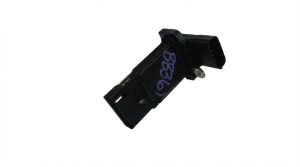
How to confirm: Remove the sensor (OEM Part # 37980-R40-A01) and inspect the small wires inside. If they appear dirty, cleaning is a good first step. A scan tool showing low g/s airflow readings at idle or wide open throttle can also indicate a problem.
Typical fix: Clean the sensor with a dedicated MAF sensor cleaner spray. Do not touch the delicate wires. If cleaning doesn't resolve the issue, the sensor must be replaced.
Est. part cost: $10 for cleaner, $100-$200 for a new sensor - Failing Front Air/Fuel Ratio Sensor (O2 Sensor) ⚪ Low Probability
How to confirm: A lazy or failing A/F sensor can send an incorrect lean signal to the PCM. A scan tool can be used to graph the sensor's voltage; it should switch rapidly. A slow or stuck reading indicates a problem. This is often misdiagnosed; the sensor is usually correctly reporting a lean condition caused by something else.
Typical fix: Replace the Bank 1, Sensor 1 Air/Fuel Ratio sensor.
Est. part cost: $80-$200 - Low Fuel Pressure ⚪ Low Probability While a recall for failing fuel pumps exists for 2019-2020 RDX models, it's less common for the 2016-2018 range but still possible. A weak fuel pump or clogged fuel filter can starve the engine of fuel, causing a lean condition across both banks (P0171 & P0174).
How to confirm: Connect a fuel pressure gauge to the fuel rail and check if the pressure is within the manufacturer's specifications at idle and under load.
Typical fix: Replace the weak fuel pump or clogged fuel filter.
Est. part cost: $200-$500 for a fuel pump assembly
Rare But Worth Checking
- PCV System Leak: A stuck-open PCV valve or a cracked PCV hose can create a vacuum leak, leading to a lean condition. The PCV valve is a low-cost item that is simple to replace.
- Exhaust Leak: A leak in the exhaust manifold or pipe before the first O2 sensor can draw in outside air, making the sensor falsely report a lean condition. This is less common but can happen, especially on higher mileage vehicles.
Diagnosis Steps
- Read all fault codes with an OBD-II scanner. Note any other codes present, especially P0174 or misfire codes (P030x), as they provide important clues.
- Thoroughly inspect the air intake hose (Part # 17228-R5A-A00) between the air filter and the engine. Carefully bend the ribbed sections to expose any hidden cracks or tears. This is the most common failure.
- With the engine running, listen for hissing sounds that could indicate a vacuum leak. You can carefully spray short bursts of brake cleaner or a propane torch (unlit) around intake manifold gaskets and vacuum lines; a change in engine idle indicates you've found the leak.
- Use a scan tool to monitor short-term (STFT) and long-term (LTFT) fuel trims. High positive numbers (e.g., >15-20% combined) at idle that decrease with higher RPMs strongly suggest a vacuum leak. High trims at all RPMs may point to a fuel delivery or MAF issue.
- Remove and clean the Mass Airflow (MAF) sensor using a dedicated MAF sensor cleaner. Let it dry completely before reinstalling.
- If misfire codes (P030x) or fuel imbalance codes (P219A/B) are present, contact an Acura dealer with your VIN to check for eligibility under the fuel injector warranty extension (Service Bulletin 22-013).
- Check fuel pressure using a fuel pressure gauge to rule out a weak fuel pump or clogged filter.
- If all else fails, investigate the front A/F sensor for lazy or incorrect readings using a scan tool's graphing function.
Parts You'll Likely Need
- Air Intake Hose
(OEM #17228-R5A-A00)— This rubber part is a frequent failure point, causing a significant unmetered air leak. It is the most common cause of P0171 on this vehicle.
Trusted brands: Acura OE, Dorman (696-011)
OEM price range: $60-$80
Aftermarket price range: $30-$50 - Fuel Injector
(OEM #16010-5J6-305)— Identified in Acura Service Bulletin 22-013 as a potential cause for this code, especially when paired with misfires. Covered under a warranty extension for many vehicles.
Trusted brands: Acura OE, Bosch, Denso
OEM price range: $120-$200
Aftermarket price range: $50-$150 - Mass Airflow Sensor
(OEM #37980-R40-A01)— A common cause for lean codes if it becomes dirty or fails, leading to incorrect air measurement. Cleaning is often effective, but replacement may be necessary.
Trusted brands: Denso, Bosch, Hitachi
OEM price range: $200-$300
Aftermarket price range: $80-$180
Related Codes That Often Appear With This One
- P0174 — System Too Lean (Bank 2). If the cause (like a cracked intake hose, bad MAF sensor, or low fuel pressure) affects the entire engine, both banks will run lean and trigger both codes.
- P0300, P0301-P0306 — Cylinder Misfire. A severe lean condition prevents proper combustion, causing misfires. Acura Service Bulletin 22-013 specifically links P0171 with these codes due to sticking fuel injectors.
- P219A, P219B — Air-Fuel Ratio Variation of Cylinder. These codes indicate an imbalance between cylinders and are also mentioned in Acura TSB 22-013 alongside P0171, pointing strongly towards a fuel injector issue.
Technical Service Bulletins (TSBs) & Recalls
- Acura Service Bulletin 22-013 (Supersedes BTI&04132022901): Officially titled 'Warranty Extension: MIL Comes On With DTC P0300, P0301, P0302, P0303, P0304, P0171, P0172, P219A, P0420...'. This bulletin addresses an issue with sticking fuel injectors and extends the warranty coverage for this specific failure.
Platform-Specific Known Issues
- Acura Service Bulletin 22-013: Fuel Injector Warranty Extension: Acura extended the warranty on fuel injectors to 10 years or 150,000 miles for certain 2016-2020 RDX, MDX, and TLX models. Sticking injectors are a known cause of P0171, often accompanied by misfire codes (P030x) and air-fuel imbalance codes (P219A/B). Owners experiencing these codes together should contact a dealer to verify VIN eligibility for a no-cost repair.
Mechanic-Grade Diagnostic Values
- Mass Airflow (MAF) Sensor Reading at Idle — expected: Approximately 5.5-6.5 g/s. A common technician's rule of thumb is to multiply the engine displacement in liters (3.5L) by 1.7 to 1.9.. Failure: A significantly lower reading (e.g., below 4.0 g/s) at stable idle suggests a vacuum leak (unmetered air is entering after the MAF sensor). A significantly higher reading could indicate a contaminated sensor.
- Mass Airflow (MAF) Sensor Reading at 2500 RPM — expected: 15 to 25 g/s.. Failure: Failure to increase proportionally with RPM suggests a faulty sensor.
- Short-Term Fuel Trim (STFT) at Idle — expected: Within +/- 10%. Failure: Sustained high positive values (e.g., +20% or higher) indicate the PCM is adding fuel to compensate for a lean condition. Readings of +30-40% have been observed in cases of significant vacuum leaks or incorrect fuel injectors.
Wiring & Ground Locations
- Under-Hood Fuse/Relay Box — In the engine compartment on the driver's side, near the battery and behind the air intake assembly.. Contains primary fuses and relays for the PGM-FI (Programmed Fuel Injection) system, fuel pump, and other essential engine controls. A bad relay or fuse here can cause fuel delivery issues.
- Under-Dash Fuse Box — Under the dashboard on the driver's side, above the footrest area.. Contains secondary fuses related to ignition and various electronic modules that communicate with the PCM.
Real Owner Repair Stories
- Reddit user on r/AcuraTSX (2008 Acura TSX (2.4L I4), 200k miles. While not a V6 RDX, the diagnostic logic for this persistent P0171 is highly relevant.) — Existing P0171 code, poor MPG, very high STFT (30-40%). Vehicle ran fine otherwise.
❌ Tried (didn't work) Replaced both upstream and downstream O2 sensors (Denso), Replaced PCV valve and hose (OEM), Replaced fuel pump (Delphi), Performed multiple smoke tests (vacuum, exhaust, EVAP) with no leaks found, Used carb cleaner and propane to search for leaks with no results
✅ What actually fixed it The final suspected cause was incorrectly-sized aftermarket fuel injectors that had been installed by the previous owner. The user was sourcing factory injectors to confirm and fix the issue. This highlights a fuel delivery issue that standard vacuum leak tests will not find.
"I Checked Everything" — The Actual Cause
- In a documented case, a vehicle passed multiple smoke tests for the intake, exhaust, and EVAP systems, yet still had a persistent P0171 code with extremely high fuel trims (+30-40%). The root cause was suspected to be incorrectly sized aftermarket fuel injectors that were delivering less fuel than the PCM expected, creating a lean condition that a smoke test for air leaks could not identify.
- Another owner reported that after extensive diagnostics by a dealer for a P0171 code, the final fix was a valve adjustment. This corrected the lean condition and improved engine performance, indicating a mechanical sealing issue within the engine rather than a vacuum leak or faulty sensor.
OEM Part Supersession History
37820-5ME-A11→37820-5ME-A12— This part number is for the Engine Control Module (ECM/PCM) for an AWD model without the AcuraWatch system. Part updates are common for firmware improvements or minor hardware revisions.
Heads up: While not a direct cause of P0171, it's critical to know that if the PCM is replaced, it must be the correct part number for the vehicle's specific configuration (AWD/FWD, with/without AcuraWatch) and requires professional programming to the car's immobilizer system.
Model Year Variations Within This Range
- 2016-2018: Within the 2016-2018 model years (after the mid-cycle refresh), there are no significant documented variations in the 3.5L V6 engine, fuel system, or emissions components that would alter the common causes or diagnostic procedures for a P0171 code.
Helpful Videos
![Engine Fault Code P0171 - System Too Lean Bank 1! [Symptoms, Causes, and Fixes]](https://img.youtube.com/vi/U3JVc3VLahA/mqdefault.jpg)

Used OEM Parts in Stock
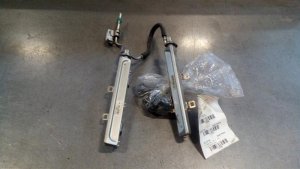
New Aftermarket Parts Available

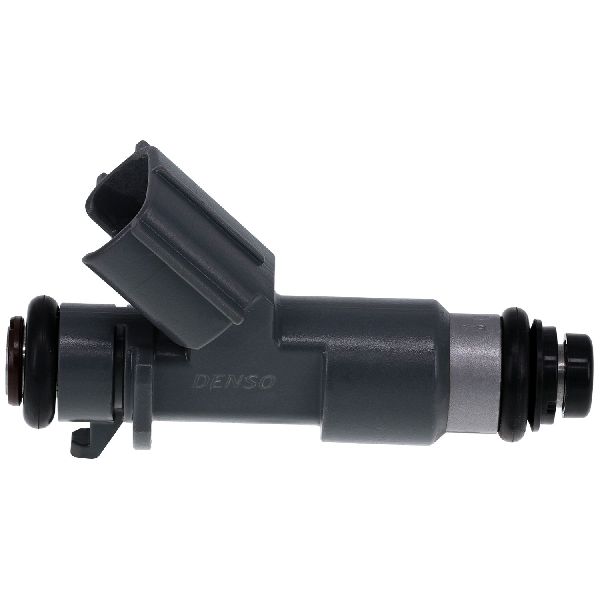
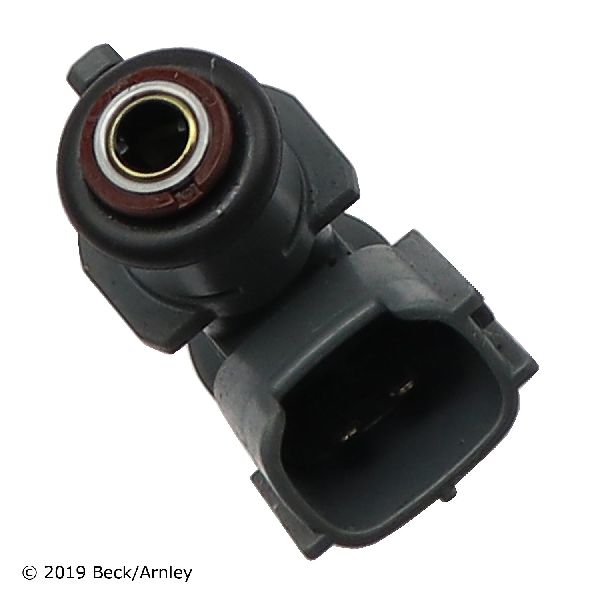

The information in this article is provided for general reference and educational purposes only. Vehicle specifications, procedures, and part compatibility can vary by production date, trim level, and region. Always consult your vehicle's factory service manual and verify part numbers before purchasing or performing repairs. Safety-critical components such as airbags, seat belts, and braking systems should be installed by a qualified professional.
- Acura RDX:
- 🎬 Helpful Videos
- 🛍️ Shop This Part
- What's Unique About the 2016-2018 Acura RDX
- Diagnostic Flowchart
- Symptoms You May Notice
- Most Likely Causes
- Rare But Worth Checking
- Diagnosis Steps
- Parts You'll Likely Need
- Related Codes That Often Appear With This One
- Technical Service Bulletins (TSBs) & Recalls
- Platform-Specific Known Issues
- Mechanic-Grade Diagnostic Values
- Wiring & Ground Locations
- Real Owner Repair Stories
- "I Checked Everything" — The Actual Cause
- OEM Part Supersession History
- Model Year Variations Within This Range
- 🎟️ Get 5% Off