

P0171 on 2016-2020 Acura MDX: Lean Fuel Causes and Fixes
Code P0171 on a 2016-2020 Acura MDX most often points to faulty fuel injectors, a known issue covered by Acura's warranty extension (TSB 23-011) to 10 years/150,000 miles. Other common causes include a cracked air intake tube or a dirty MAF sensor. Always check for vacuum leaks first, but be aware of the injector warranty if other codes like P0174 or misfires are present.
- For a 2016-2020 Acura MDX, P0171 is very often caused by faulty fuel injectors, a known issue acknowledged by Acura.
- Before assuming expensive injector failure, always perform a thorough visual inspection of the air intake tube for cracks, as this is a common and much cheaper fix.
- Cleaning the Mass Airflow (MAF) sensor is a simple, low-cost diagnostic step that can sometimes resolve the issue.
- If other codes like P0174 (Bank 2 lean) and P030x (misfires) are present, the likelihood of faulty fuel injectors increases significantly.
What's Unique About the 2016-2020 Acura MDX

For the 2016-2020 MDX with the 3.5L direct-injection engine, a P0171 code, especially when paired with misfire codes (P030x) or the Bank 2 lean code (P0174), is strongly linked to faulty fuel injectors. Acura has acknowledged this problem by issuing Service Bulletin 23-011 🎬 Watch: Step-by-step fuel injector replacement for this MDX model., which extends the warranty on the fuel injectors to 10 years or 150,000 miles. This makes injector failure the most critical item to check with a dealer if your vehicle is eligible. While common vacuum leaks can still occur, the fuel injectors are a well-documented primary failure point on this platform and its Honda siblings like the Pilot and Odyssey.
Diagnostic Flowchart
Tap your situation to follow the diagnostic path that matches what you're seeing on this vehicle.
Symptoms You May Notice
- Check Engine Light is on
- "Check Emission System" message on the dashboard
- Rough or unstable idle
- Engine hesitation or surging during acceleration.
- Reduced engine power.
- Possible engine misfires, sometimes felt as a shudder
- AWD system may be disabled as a precaution
- Noticeably worse fuel economy.
- Replacing the Air/Fuel Ratio (O2) sensor first. The sensor is usually doing its job by detecting the lean condition, which is caused by something else.
Most Likely Causes

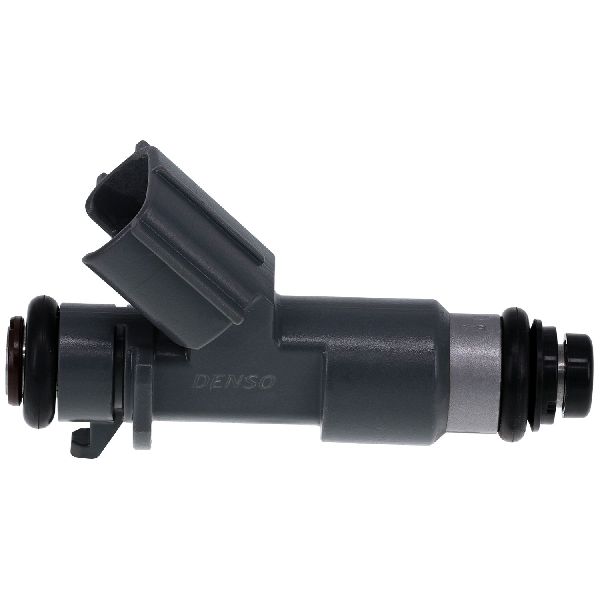
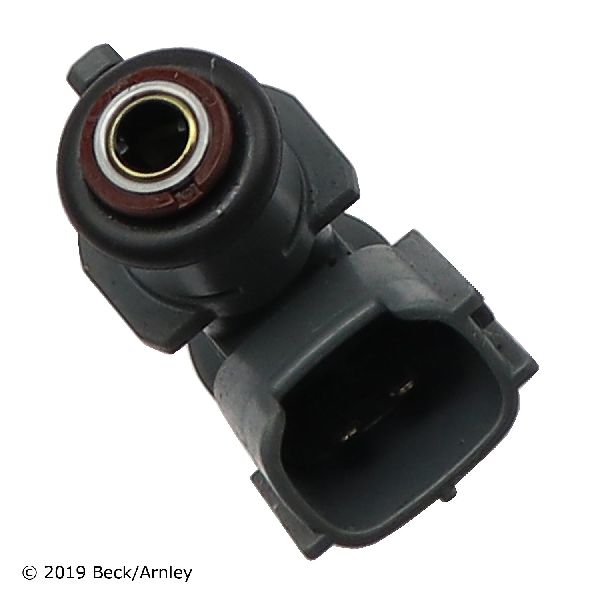
- Faulty Fuel Injectors 🔴 High Probability This is a widespread, documented issue. Acura issued Service Bulletin 23-011 extending the fuel injector warranty to 10 years/150,000 miles for 2016-2020 MDX models due to injectors causing lean codes (P0171/P0174), misfire codes (P030x), and air-fuel ratio imbalance codes (P219A/P219B). This should be the primary suspicion if multiple codes are present.
How to confirm: Check with an Acura dealer to see if your vehicle's VIN is covered under the warranty extension (TSB 23-011). A technician can perform a fuel injector balance test. High long-term fuel trim values (often exceeding +25%) that do not resolve after fixing vacuum leaks are a strong indicator.
Typical fix: Replace the full set of six fuel injectors. Under TSB 23-011, this repair should be covered free of charge at an Acura dealership if the vehicle is eligible.
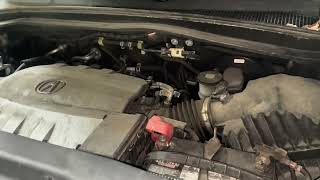
Est. part cost: $500-$800 for a set of 6 OEM injectors (Part No. 06160-5J6-A00 or 06160-RLV-306). - Vacuum Leak (Cracked Air Intake Tube) 🟡 Medium Probability The flexible rubber air intake tube between the air filter box and the throttle body is a common failure point on many Honda and Acura vehicles. It can develop cracks in the ribbed sections from age and heat, allowing unmetered air to enter the engine past the MAF sensor.
How to confirm: Visually inspect the entire intake tube, especially in the accordion-like flexible sections, for any cracks or tears. A hissing sound may be audible at idle. A smoke test is the most definitive way to find the source of a vacuum leak if it's not visually apparent.
Typical fix: Replace the cracked air intake tube. This is a straightforward DIY repair.
Est. part cost: $45-$80 for an OEM part (Part No. 17228-5J6-A10 for 2016+ models). - Dirty or Faulty Mass Airflow (MAF) Sensor 🟡 Medium Probability
How to confirm: The MAF sensor can be carefully removed and inspected. If the delicate wires inside are dirty, they can be cleaned with a dedicated MAF sensor cleaner spray. Do not use other cleaners like brake or carb cleaner. If cleaning doesn't resolve high fuel trims, the sensor may be faulty.
Typical fix: Clean the MAF sensor with a specialized cleaner. If the problem persists, replace the MAF sensor. One owner reported fixing P0171/P0174 codes by replacing the MAF sensor.
Est. part cost: $50-$150 for an aftermarket sensor, $200-$400 for OEM - Dirty Throttle Body ⚪ Low Probability
How to confirm: A technician noted that a dirty throttle body caused a high throttle position reading at idle and led to lean codes on a 2016 MDX. Inspecting the throttle plate for carbon buildup can confirm this. The issue is often more pronounced at idle.
Typical fix: Clean the throttle body thoroughly with throttle body cleaner and perform a throttle body relearn procedure using a compatible scan tool.
Est. part cost: $10-$20 for cleaner
Rare But Worth Checking
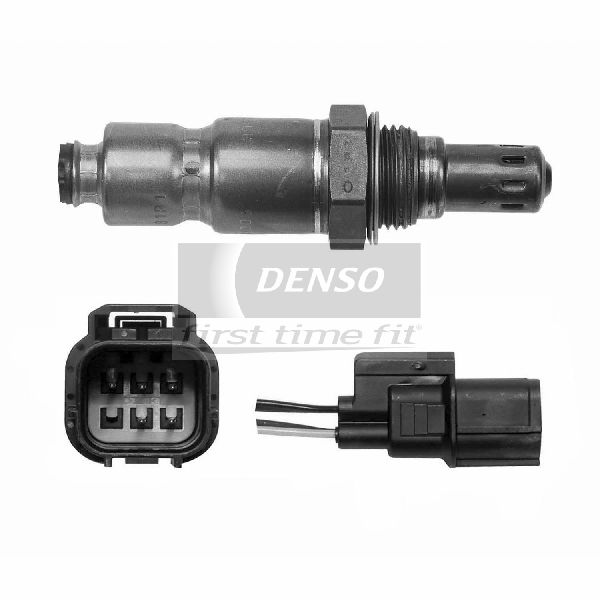
- Faulty Air/Fuel Ratio Sensor (Upstream O2 Sensor): While a possible cause, the sensor itself is often working correctly by reporting the lean condition. It's more common for other issues like vacuum leaks or injector problems to be the root cause. Replace this only after ruling out other possibilities, as it is an expensive part.
- Low Fuel Pressure: A weak in-tank fuel pump can cause a lean condition, typically across both banks (P0171 and P0174). A recall was issued for the fuel pump motor on 2014-2020 MDX models (TSB 24-006) for a no-start or stall condition, which could potentially present as a fuel delivery issue. This is less likely to cause a single-bank lean code.
Diagnosis Steps
- Read the codes: Use an OBD-II scanner to confirm P0171 and check for any other accompanying codes like P0174, P030x, or P219A/B. The presence of these other codes strongly points towards the known fuel injector issue.
- Check for Warranty Coverage: If you have multiple codes (P0171/P0174 and misfires), contact an Acura dealer with your VIN to check for eligibility under the fuel injector warranty extension (Service Bulletin 23-011).
- Inspect for Vacuum Leaks: Carefully inspect the air intake tube between the air filter housing and the throttle body for any cracks or loose connections. This is a very common and simple-to-fix issue.
- Check Live Data: Use a scanner to monitor short-term (STFT) and long-term fuel trims (LTFT). At idle, LTFT values above +15% confirm a lean condition. If the trims are high at idle but improve with RPM, suspect a vacuum leak. If they worsen with RPM, suspect a fuel delivery or MAF issue.
- Clean the MAF Sensor: Remove the Mass Airflow sensor and clean it using only dedicated MAF sensor cleaner. Reinstall and check if fuel trims improve.
- Perform a Smoke Test: If a vacuum leak is suspected but not visible, a smoke test is the most effective way to find the source of unmetered air.
- Investigate Fuel Injectors: If all other causes are ruled out, especially if misfire and A/F variation codes are present, the fuel injectors are the most likely cause. This repair should be performed by a dealer to leverage the warranty extension.
Parts You'll Likely Need

- Fuel Injector Set
(OEM #06160-5J6-A00)— This is a documented primary cause of P0171 on this specific vehicle, as noted in manufacturer TSBs and covered by a warranty extension.
Trusted brands: Acura OE
OEM price range: $600-$800 (set of 6)
Aftermarket price range: $400-$600 (set of 6) - Air Intake Hose/Tube
(OEM #17228-5J6-A10)— The flexible rubber cracks over time, causing a common vacuum leak that triggers lean codes.
Trusted brands: Acura OE, Dorman
OEM price range: $60-$80
Aftermarket price range: $40-$60 - Mass Airflow (MAF) Sensor — A dirty or failing MAF sensor can under-report airflow, causing the computer to command too little fuel.
Trusted brands: Denso, Bosch
OEM price range: $200-$400
Aftermarket price range: $50-$150
Related Codes That Often Appear With This One
- P0174 — System Too Lean (Bank 2). This code often appears with P0171 when the cause is a system-wide issue affecting both cylinder banks, such as faulty fuel injectors, a large vacuum leak post-MAF, or a faulty MAF sensor.
- P0300-P0306 — Cylinder Misfire Detected. A severe lean condition can prevent proper combustion, leading to misfires. The Acura warranty extension (TSB 23-011) specifically links lean codes with misfire codes as symptoms of faulty fuel injectors.
- P219A / P219B — Air-Fuel Ratio Variation of Cylinder. These codes indicate an air-fuel imbalance between cylinders on the same bank, which is also a key symptom pointed out in the Acura TSBs related to the fuel injector issue.
Technical Service Bulletins (TSBs) & Recalls
- Acura Service Bulletin 23-011: Warranty Ext
Platform-Specific Known Issues
- Acura Service Bulletin 23-011: This is the most critical document for this issue. It extends the warranty on fuel injectors to 10 years or 150,000 miles for 2016-20 MDX and other models. It was issued because faulty injectors can cause P0171, P0174, misfires (P030x), and air-fuel ratio imbalance codes (P219A/B).
- Acura BTI Bulletins (e.g., BTI&05102022901): These are internal requests for dealers to collect parts from vehicles exhibiting these specific codes to help Acura investigate the root cause of the injector failures. They serve as early evidence of the widespread problem.
Mechanic-Grade Diagnostic Values
- High-Pressure Fuel Rail Pressure — expected: Approximately 2,000-3,000 PSI, but can range from 30 to 150 MPa (4,352 to 21,755 PSI) depending on engine load.. Failure: Significantly lower pressure than commanded by the PCM, especially under load. May trigger a P0087 code.
- Low-Pressure Fuel Pump Pressure — expected: 57-64 PSI feeding the high-pressure pump.. Failure: Pressure below this range indicates a weak in-tank fuel pump or clogged filter, starving the high-pressure pump.
- Mass Airflow (MAF) Sensor Reading at Idle — expected: Approximately 3.5 grams/second (g/s), as it should roughly match engine displacement in liters. A general range is 2-7 g/s.. Failure: Readings significantly lower than engine displacement (e.g., under 2.0 g/s) at a stable idle suggest the sensor is dirty or failing, or there is a large vacuum leak.
- Long-Term Fuel Trim (LTFT) at Idle — expected: Within +/- 10% of zero.. Failure: Sustained positive values of +15% or higher indicate the PCM is compensating for a lean condition. Values over +25% are a strong indicator of a significant vacuum leak or fuel delivery issue.
- Throttle Position at Idle — expected: Close to 0%.. Failure: A reading of 1% or higher with the throttle closed can indicate excessive carbon buildup on the throttle plate, preventing it from closing completely and causing a lean condition at idle.
Hidden / Shadow Codes Worth Checking
- Mode $06 Data: Mode $06 provides access to the results of non-continuous monitor tests before a full-blown DTC is set. For P0171, a technician can check Monitor ID $01 (A/F Sensor Bank 1) and Test ID $86, which checks if the sensor is 'out of range'. Additionally, since lean codes are linked to misfires, checking the misfire counts for each cylinder (e.g., MID A2 for Cylinder #1) can reveal if a specific cylinder is struggling due to a failing injector, even without a P030x code. (see via A professional scan tool with Mode $06 capability is required. The data is presented in hexadecimal and may need to be converted by the scan tool for easy interpretation.)
Scan Tool Commands That Help

- Acura i-HDS (or advanced bidirectional scanner): Injector Balance Test — This is a definitive test when a faulty injector is suspected. The tool commands one injector to fire for a set duration while monitoring the fuel pressure drop with a gauge. Comparing the pressure drop across all cylinders can isolate a clogged or weak injector. A difference greater than 2 psi between cylinders suggests a problem.
- Acura i-HDS (or advanced bidirectional scanner): Throttle Relearn / TP Position Check — This must be performed after cleaning or replacing the throttle body. The function resets the learned closed-throttle position. Failure to do this can cause an unstable idle and incorrect fuel trims. The command may be listed as 'TP Position Reset' or 'Reset ECP1'.
- Acura i-HDS (or advanced bidirectional scanner): EVAP System Function Test — This test should be run after replacing the EVAP canister purge solenoid valve. It verifies the repair and ensures the EVAP system is sealed and functioning correctly, which is crucial as a faulty purge valve can cause lean conditions.
Wiring & Ground Locations
- Engine Hanger (Ground Point) — Under the main plastic engine cover. This is the official, manufacturer-specified attachment point for the negative (-) jumper cable.. Using an improper ground can cause voltage spikes or damage sensitive electronics, including the ECM which controls fuel trim. Always use this designated point for jump-starting or battery charging to protect the vehicle's modules.
- ECM/PCM Ground (G101 equivalent) — Typically located on the lower front of the engine block. On similar platforms, this ground point is critical for the Engine Control Module (ECM) and Mass Airflow Sensor.. A corroded or loose main engine ground can cause erratic sensor readings and incorrect fuel calculations, leading to persistent and hard-to-diagnose lean or rich codes.
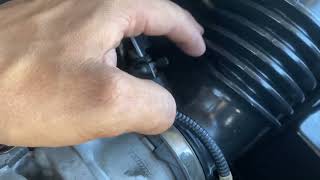
- MAF Sensor Connector — On the air intake tube, between the air filter box and the throttle body.. The 2016-2020 MDX uses a 5-wire MAF sensor. The pins are for: 12V Power, Power Ground, Signal Ground, MAF Signal, and IAT (Intake Air Temp) Signal. A damaged connector or wire at this location will directly cause incorrect airflow readings and trigger P0171.
- ECM/PCM Connectors — Located in the engine bay, typically on the passenger side.. Honda/Acura uses geometric shapes (square, triangle, etc.) embossed on the ECM connectors (e.g., Connector A, B, C) to help technicians distinguish them during service, preventing costly mix-ups.
Real Owner Repair Stories
- Reddit user Priority_Bright (2016 Acura MDX) — Check engine light with codes P0171 and P0174, which would eventually disable the AWD system.
❌ Tried (didn't work) Initially suspected O2 sensors.
✅ What actually fixed it Replacing the Mass Airflow (MAF) sensor resolved the codes. The owner noted the dealer price was over $400, but they sourced an aftermarket part for $48. - YouTube channel 'Best Car Fixes' (2016 Acura MDX) — Codes P0171/P0172 (likely P0171/P0174), engine hesitation and stalling, especially when moving from a stop.
✅ What actually fixed it A large tear was found in the flexible, ribbed section of the air intake boot. Replacing the boot (OEM part was ~$70) fixed the unmetered air leak and resolved the symptoms. - YouTube channel 'vertexaisearch' (2016 Acura MDX) — Codes P0171 and P0174, high fuel trims (1.43, which is ~43% positive).
❌ Tried (didn't work) Initial diagnosis checked for vacuum leaks and MAF sensor issues.
✅ What actually fixed it The technician found the throttle body was dirty, causing the throttle plate position to read high at idle (1.4%). Cleaning the throttle body and performing a throttle body relearn procedure brought short-term fuel trims back to normal (1.08, or +8%).
"I Checked Everything" — The Actual Cause
- In a case reported by a vehicle owner, a smoke test was performed at a shop for $220 to diagnose a P0171 code, and no vacuum leaks were found. The next diagnostic step recommended by the shop was to replace the PCV valve, indicating that a faulty PCV system can be a root cause even when a smoke test comes back negative. A stuck PCV valve can allow unmetered air from the crankcase into the intake manifold, but the leak may not always be detectable with a smoke test depending on where the valve is stuck.
OEM Part Supersession History
06160-5J6-A00→06160-RLV-306— The original fuel injectors were prone to failure, leading to the warranty extension (TSB 23-011). The new part number is the updated replacement. The part number 16010-R9P-305 is a kit that includes a full set of 6 injectors for the 2014-2020 MDX.36162-5G0-A01→36162-5G0-A02— The original EVAP Purge Control Solenoid Valve had variations in its internal spring that could cause it to wear unevenly and stick, leading to a P0441 code. The new part number is the corrected component.
Heads up: Per TSB 23-035.
Model Year Variations Within This Range
- 2016-2020: Acura issued Service Bulletin 23-001 to update the PGM-FI (engine control) software for the Idle Stop feature. This update changes the parameters for when the engine will shut off at a stop. While intended to fix a no-restart issue, any change to the core engine management software can potentially influence idle stability and fuel control logic. It is advisable to ensure the vehicle has the latest software before diagnosing complex fuel trim issues.
Helpful Videos
![Engine Fault Code P0171 - System Too Lean Bank 1! [Symptoms, Causes, and Fixes]](https://img.youtube.com/vi/U3JVc3VLahA/mqdefault.jpg)

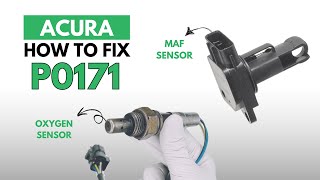

![How to Fix P0171 Engine Code in 5 Minutes [7 DIY Methods]](https://img.youtube.com/vi/g_qItasY91I/mqdefault.jpg)

Used OEM Parts in Stock


New Aftermarket Parts Available


The information in this article is provided for general reference and educational purposes only. Vehicle specifications, procedures, and part compatibility can vary by production date, trim level, and region. Always consult your vehicle's factory service manual and verify part numbers before purchasing or performing repairs. Safety-critical components such as airbags, seat belts, and braking systems should be installed by a qualified professional.
- Acura MDX:
- 🎬 Helpful Videos
- 🛍️ Shop This Part
- What's Unique About the 2016-2020 Acura MDX
- Diagnostic Flowchart
- Symptoms You May Notice
- Most Likely Causes
- Rare But Worth Checking
- Diagnosis Steps
- Parts You'll Likely Need
- Related Codes That Often Appear With This One
- Technical Service Bulletins (TSBs) & Recalls
- Platform-Specific Known Issues
- Mechanic-Grade Diagnostic Values
- Hidden / Shadow Codes Worth Checking
- Scan Tool Commands That Help
- Wiring & Ground Locations
- Real Owner Repair Stories
- "I Checked Everything" — The Actual Cause
- OEM Part Supersession History
- Model Year Variations Within This Range
- 🎟️ Get 5% Off