

P0170 on 2015-2019 Ford F-350 SD 6.7L: Fuel Trim Causes and Fixes
Code P0170 on a 6.7L Power Stroke most often points to outdated Powertrain Control Module (PCM) software, which requires a dealer reflash to fix, as documented in multiple Ford TSBs like TSB 16-0134 and TSB 19-2344. Before visiting a dealer, it's wise to perform basic maintenance by replacing the engine and frame-mounted fuel filters and checking for intake air leaks, as these are also common triggers.
- This code is very often a software issue, not a hardware failure. Check for applicable TSBs before replacing parts.
- Start with the basics: ensure your fuel filters have been replaced within the recommended service interval.
- Cleaning the Mass Air Flow (MAF) sensor is a low-cost diagnostic step that can sometimes resolve the issue.
- If the code persists after basic maintenance, a PCM reflash at a Ford dealership is the most likely solution.
- The problem is located on Bank 1, which is the passenger-side cylinder bank on the 6.7L Power Stroke V8.
What's Unique About the 2015-2019 Ford F-350 SD

For this specific generation of the 6.7L Power Stroke, Ford has issued multiple Technical Service Bulletins (TSBs) acknowledging that the P0170 code is frequently triggered by the PCM's own software logic rather than a physical part failure. This makes a PCM software update, or "reflash," a very common and officially recommended first step in the diagnostic process, especially if no other codes are present. Many owners on forums like Ford Truck Enthusiasts and the Diesel Technician Society report that a dealer reflash permanently solved the issue after they had chased other potential causes.
Diagnostic Flowchart

Tap your situation to follow the diagnostic path that matches what you're seeing on this vehicle.
Generation note: The 2015-2019 F-350 Super Duty covers a single generation (P558), but the 2017 model year introduced a major redesign with a new frame and aluminum body. The 6.7L Power Stroke powertrain is largely a carryover, so the causes and fixes for P0170 are generally the same across these years, as confirmed by TSBs covering the entire range. However, the 2017 model year did receive updates that increased torque from 860 lb-ft to 925 lb-ft, which involved some tuning and injector differences.
Symptoms You May Notice
- Check Engine Light (Malfunction Indicator Lamp) is on
- Rough or unstable idle
- Reduced fuel economy
- Hesitation during acceleration
- Remote start may be disabled
- Black smoke from tailpipe in some cases
- Engine stalling
- Replacing oxygen (O2) sensors. While critical for fuel trim on gasoline engines, their role is different on this diesel. Forum discussions and TSBs point away from O2 sensors being a primary cause for this specific code on the 6.7L Power Stroke.
Most Likely Causes

- Outdated Powertrain Control Module (PCM) Software 🔴 High Probability Ford has explicitly stated in multiple TSBs (like TSB 19-2344, TSB 19-2343, and TSB 16-0134) that internal software strategies are a common cause for this code on the 6.7L engine, particularly on vehicles built before late 2019.
How to confirm: A Ford dealer or a qualified shop with access to Ford's diagnostic tools (like IDS) can check your vehicle's current software calibration level against the latest available version. An owner cannot confirm this without specialized tools.
Typical fix: Reprogramming (reflashing) the PCM to the latest software version. This service must be performed by a dealer or a shop with a J2534 pass-thru device and a subscription to Ford's diagnostic software. Several TSBs also require a MAF parameter reset using a scan tool after the reflash.
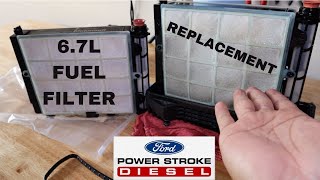
Est. part cost: $0 - Clogged or Dirty Fuel Filters 🟡 Medium Probability Diesel engines are highly sensitive to fuel pressure and flow. The 6.7L Power Stroke has two fuel filters (one under the frame, one in the engine bay) that must be changed regularly. A restriction can starve the engine of fuel, forcing the PCM to make drastic trim adjustments. Using non-OEM filters has also been linked to issues.
How to confirm: Check maintenance records for the last fuel filter change. If it's been over 15,000-20,000 miles or the history is unknown, they are due for replacement. Visual inspection of the filter media after removal can also confirm contamination.
Typical fix: Replace both the engine-mounted and frame-mounted fuel filters with a quality OEM kit like Motorcraft FD4624. This is a standard maintenance item that owners can often perform themselves.
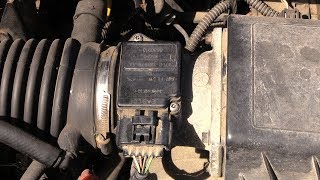
Est. part cost: $60-$120 - Dirty or Faulty Mass Air Flow (MAF) Sensor 🟡 Medium Probability The MAF sensor measures the amount of air entering the engine, which is a critical input for fuel calculations. Oil vapors from the crankcase ventilation (CCV) system can contaminate the sensor over time, causing inaccurate readings and triggering a P0170 code.
How to confirm: Remove the sensor and visually inspect the sensing elements for dirt, oil, or debris. A scan tool can also monitor MAF readings (PID values) to see if they are erratic or out of specification at idle and under load. A technician in a video noted a faulty sensor was reading incorrectly at 6.8-6.9 kHz when it should have been lower.
Typical fix: First, try cleaning the sensor with a dedicated MAF sensor cleaner. Do not touch the delicate wires. If cleaning doesn't resolve the issue, the sensor must be replaced. In some cases, a PCM reset after cleaning/replacement is needed for the system to relearn. A MAF parameter reset via a scan tool is often required.
Est. part cost: $5-$15 (cleaner), $70-$180 (sensor) - Leaking or Failing Fuel Injector ⚪ Low Probability While robust, injectors can fail over time. A single injector that is leaking fuel or not spraying correctly can throw off the fuel balance for the entire bank, triggering the code.
How to confirm: This requires an advanced scan tool to perform an injector balance test (often called Cylinder Fuel Balancing Quantity). A technician on the Diesel Technician Society forum noted that values deviating by more than 6.4 mg from each other could indicate a problem.
Typical fix: Replacement of the faulty fuel injector. This is a more involved and expensive repair, often requiring specialized tools.
Est. part cost: $300-$500 per injector
Rare But Worth Checking
- Faulty Fuel Rail Pressure (FRP) Sensor: One owner on a forum reported that replacing a faulty FRP sensor resolved their P0170 code after a dealer diagnosis. This sensor provides direct feedback on fuel pressure to the PCM, and incorrect readings can lead to improper fueling adjustments.
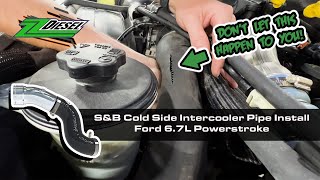
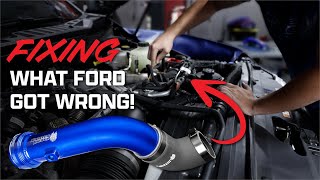
- Intake Air Leaks: A leak in the air intake system after the MAF sensor (e.g., a cracked cold-side intercooler pipe, a common failure point, or a loose clamp) allows unmetered air into the engine. This disrupts the fuel trim calculations and can trigger P0170, sometimes along with code P00BD (Mass Air Flow 'A' Circuit Range/Performance - Air Flow Too High).
- Faulty NOx Sensor: While less common for an isolated P0170, a contaminated or damaged NOx sensor can provide incorrect data to the PCM, which can influence fuel trim calculations as part of the overall emissions strategy. One forum user mentioned this as a possible, though unconfirmed, cause.
Diagnosis Steps
- Check for TSBs: Given the high probability of a software issue, the first step is to check if your vehicle's VIN and build date fall under TSBs 19-2344, 19-2343, or 16-0134. You can call a Ford dealer with your VIN to verify.
- Replace Fuel Filters: If maintenance history is unknown or due (over 15,000 miles), replace both the upper and lower fuel filters with a quality OEM kit (Motorcraft FD4624). This is a crucial and relatively inexpensive step.
- Inspect for Intake Leaks: Thoroughly check all air intake ducting between the MAF sensor and the engine for cracks, loose clamps, or damage. Pay special attention to the plastic cold-side intercooler pipe, which is a known failure point.
- Inspect and Clean MAF Sensor: Carefully remove the MAF sensor. Inspect for contamination and clean it using a dedicated MAF sensor cleaner. Allow it to dry completely before reinstalling. Clear codes and test drive.
- PCM Reprogram: If the above steps do not resolve the code, the next logical step is to have a Ford dealer or qualified shop reprogram the PCM to the latest calibration. This is the official fix in many cases.
- Advanced Diagnostics: If the code persists after a reflash, more advanced diagnostics are needed. This includes using a scan tool to monitor fuel rail pressure, check for biased sensor readings (FRP, MAF), and perform a fuel injector balance test.
Parts You'll Likely Need

- PCM Reprogramming Service — This is the most common fix documented by Ford's own Technical Service Bulletins for an isolated P0170 code.
Trusted brands: Ford Dealer Service
OEM price range: $150-$250
Aftermarket price range: $150-$250 - Fuel Filter Kit
(OEM #Motorcraft FD4624 (replaces FD4615, FD4625))— Clogged fuel filters are a common maintenance issue that can restrict fuel flow and cause fuel trim faults. Using genuine Motorcraft filters is highly recommended.
Trusted brands: Motorcraft, Racor
OEM price range: $80-$120
Aftermarket price range: $50-$90 - Mass Air Flow (MAF) Sensor
(OEM #BC3Z-12B579-A (Verify by VIN))— A contaminated or failed MAF sensor provides incorrect airflow data to the PCM, directly impacting fuel calculations and potentially causing a P0170 code.
Trusted brands: Motorcraft, Bosch
OEM price range: $70-$180
Aftermarket price range: $50-$120
Related Codes That Often Appear With This One
- P2074 — This code relates to the intake manifold air control system. Ford TSB 19-2343 and TSB 19-2029 list P2074 and P0170 together as being potentially caused by PCM software issues that require a reflash.
- P0401 — EGR "A" Flow Insufficient Detected. TSB 19-2343 groups this with P0170 as a potential software-related issue that can be fixed with a PCM reflash.
- P0402 — EGR "A" Flow Excessive Detected. Also listed in TSB 19-2343 as a code that can appear with P0170 due to PCM software logic.
- P00BD — Mass or Volume Air Flow 'A' Circuit Range/Performance - Air Flow Too High. This code often appears with P0170 when there is a significant intake leak, such as a cracked cold-side intercooler pipe.
Technical Service Bulletins (TSBs) & Recalls
- TSB 19-2344
- TSB 19-2343
- SSM 45946
- TSB 16-0134
- TSB 19-2029
- TSB 19-2112
Platform-Specific Known Issues
- TSB 19-2344: For 2015-2019 F-Super Duty with 6.7L engine built on or before 31-Oct-2019, an isolated P0170 code may be due to PCM software strategies. The fix is to reprogram the PCM.
- TSB 19-2343: For 2017-2019 F-Super Duty with 6.7L engine built on or before 9-Jan-2019, this TSB addresses P0170 appearing with P2074, P0401, and/or P0402. The fix is to reprogram the PCM and perform a MAF parameter reset. It notes this update will increase DEF consumption.
- TSB 16-0134: For 2015-2016 F-Super Duty with 6.7L engine, this TSB specifically targets an illuminated MIL with only DTC P0170. The fix is to reprogram the PCM to the latest calibration.
- Cracked Cold Side Intercooler Pipe: A common failure on the 2017+ models is a crack in the plastic cold side charge air cooler (CAC) pipe, which causes an intake leak and can trigger P0170 and P00BD.
Mechanic-Grade Diagnostic Values
- Low-Pressure Fuel System Pressure — expected: 53-73 PSI, with 58 PSI at idle and 68 PSI at cruise/WOT being typical.. Failure: Pressure below 52 PSI will engage the fuel delivery switch to 'low'.
- High-Pressure Fuel Rail Pressure (FRP) — expected: Approximately 4,400 PSI at idle, 18,000 PSI at cruise, and 28,000-30,000 PSI at WOT. The system requires a minimum of 5,000 PSI to start.. Failure: Actual pressure deviating more than +/- 300 PSI from desired pressure can indicate a faulty regulator. A P0087 code may trigger if pressure is low under hard acceleration.
- Mass Air Flow (MAF) Sensor Reading (PID) — expected: General spec for many engines is 2-7 grams/second (g/s) at idle, rising to 15-25 g/s at 2500 RPM. A Ford digital MAF can range from 1.83 g/s up to 514 g/s.. Failure: A non-linear or slow response when graphing RPM vs. MAF reading. A technician identified a faulty sensor reading 6.8-6.9 kHz when it should have been lower.
Scan Tool Commands That Help
- Ford IDS (or equivalent like FORScan): Reset/Clear Functions > MAF Sensor — This is a required step after reprogramming the PCM per multiple TSBs (like TSB 19-2344 and TSB 19-2343) to clear adaptive values and allow the PCM to relearn with the new software or a new sensor.
- Ford IDS (or equivalent): Clear Transmission Adaptive Tables — This is recommended after a PCM reflash, as the process can reset shift strategies. The driver should be advised that shifts may feel firmer for several days as the transmission relearns.
- Ford IDS (or equivalent): Injector Balance Test / Cylinder Contribution Test — If a mechanical fault is suspected after a PCM reflash, this test can help identify a single faulty injector that is causing the fuel trim imbalance for the entire bank.
Wiring & Ground Locations
- Engine Harness Chafe Points — General engine bay, particularly near the alternator and where the harness makes sharp bends or is not properly secured.. While not specific to P0170, general harness chafing is a known issue on Super Duty trucks and can cause erratic sensor signals to the PCM, including from the MAF, FRP, or injector circuits, leading to various and sometimes intermittent codes.
- Alternator Sense Wires — In the engine harness near the front of the engine on 2017-2019 models.. A known chafe point that causes charging system warnings but highlights the vulnerability of the engine harness. A short or open in a nearby sensor wire could theoretically cause fueling issues.
Real Owner Repair Stories
- YouTube channel 'Flying Wrenches' (2017 Ford Super Duty with 50k miles) — Check Engine Light with code P0170, no drivability issues.
❌ Tried (didn't work) Performing the TSB to reprogram the PCM. The code returned.
✅ What actually fixed it The technician diagnosed a biased MAF sensor using the Ford IDS scan tool's pinpoint test. The sensor was reading incorrectly (6.8-6.9 kHz). Replacing the MAF sensor and performing the MAF parameter reset resolved the code. - YouTube channel 'Powerstroke Maintenance' (2019 Ford F-350 with 200k miles) — Initially a P2459 (Regen Frequency) code, then after disconnecting the battery for other work, received P0170, EGR flow codes, and crankshaft timing codes. Truck would not auto-regen.
❌ Tried (didn't work) Resetting the PCM would temporarily clear the issue before codes returned.
✅ What actually fixed it Replacing the Mass Air Flow (MAF) sensor. The owner theorizes the sensor was failing for a while (causing the regen frequency issue) and the PCM reset forced the system to recognize the complete failure, triggering the P0170 and other codes. - Ford Truck Enthusiasts Forum user 'Donk2017' (2017 F-250 6.7L with 102k miles) — Intermittent P0170 code since February, sometimes clears on its own.
❌ Tried (didn't work) TSB for PCM re-mapping., MAF sensor replacement., EGR valve replacement (this kept the code away for several months before it returned).
✅ What actually fixed it The thread is unresolved. The Ford hotline recommended replacing all 8 injectors at a cost of $6,000, but the owner was skeptical and seeking more data before proceeding. This highlights how the code can lead to very expensive and potentially unnecessary repairs if the root cause isn't found.
When the Usual Fixes Don't Work
- While the official TSBs heavily point to a PCM reflash as the primary solution, multiple owner and technician accounts show that the code can persist or return after the reflash. In these cases, the next most common culprit was a biased or failing MAF sensor, which was not physically broken but was providing incorrect data that the new software could no longer compensate for. One technician documented a case where the TSB reflash did not work, and the ultimate fix was a new MAF sensor confirmed bad via scan tool pinpoint tests. Another owner found that replacing the MAF sensor resolved a P0170 that appeared only after a battery disconnect, suggesting the old sensor was failing but had been adapted to by the PCM.
OEM Part Supersession History
Motorcraft FD4624 (HC3Z-9N184-B)→FD4625, FD4625AA, FD4641, and eventually FD4647 (PC3Z-9N184-C) have all been part of the supersession chain. Verify the latest number with the dealer.— Standard part number updates and revisions by the manufacturer.
Model Year Variations Within This Range
- 2017-2019: The major redesign for the 2017 model year brought a stiffer frame and aluminum body, but the 6.7L engine was largely a carry-over from the 'Gen 2' update in 2015. However, Ford did increase torque from 860 to 925 lb-ft for 2017, which involved tuning and possible injector changes.
- 2017-2019 (built on or before 9-Jan-2019): A specific PCM software update detailed in TSB 19-2343, which addresses P0170, also notes that it will increase Diesel Exhaust Fluid (DEF) consumption during high-load operation as part of a regulatory update. Customers should be advised of this change.
Helpful Videos





We Have This Part in Stock


The information in this article is provided for general reference and educational purposes only. Vehicle specifications, procedures, and part compatibility can vary by production date, trim level, and region. Always consult your vehicle's factory service manual and verify part numbers before purchasing or performing repairs. Safety-critical components such as airbags, seat belts, and braking systems should be installed by a qualified professional.
- Ford F-350 SD:
- 🎬 Helpful Videos
- 🛍️ Shop This Part
- What's Unique About the 2015-2019 Ford F-350 SD
- Diagnostic Flowchart
- Symptoms You May Notice
- Most Likely Causes
- Rare But Worth Checking
- Diagnosis Steps
- Parts You'll Likely Need
- Related Codes That Often Appear With This One
- Technical Service Bulletins (TSBs) & Recalls
- Platform-Specific Known Issues
- Mechanic-Grade Diagnostic Values
- Scan Tool Commands That Help
- Wiring & Ground Locations
- Real Owner Repair Stories
- When the Usual Fixes Don't Work
- OEM Part Supersession History
- Model Year Variations Within This Range
- 🎟️ Get 5% Off