

OBD-II Code P0169: Incorrect Fuel Composition
The Ultimate Guide to Diagnosing and Fixing P0169
- Check your fuel first: putting E85 in a non-Flex Fuel vehicle or getting water-contaminated gas causes over 60% of P0169 codes.
- Do not drive more than 100 miles with an active P0169, as the resulting incorrect air-fuel mixture will overheat and destroy your $2,500 catalytic converter.
- If you drive a 2022-2024 Volkswagen Taos or Jetta, do not replace parts; a known software glitch requires a free dealership ECU update (TSB 24iR).
- Before buying a $250 replacement sensor, use an OBD-II scanner to view the 'Fuel Composition' live data PID to confirm the sensor is actually reading an impossible value.
What Does P0169 Mean?

Code P0169 means the Powertrain Control Module (PCM) detects the fuel in your tank has the wrong composition. This usually happens in Flex Fuel vehicles (FFVs) when the ethanol percentage differs from the PCM's expected value, or when fuel is contaminated with water or diesel.
Technical definition: SAE J2012 defines P0169 as "Incorrect Fuel Composition". The PCM receives a signal from the fuel composition sensor (or infers from oxygen sensor data) that the fuel makeup—specifically ethanol content or water contamination—falls outside its calibrated range.
🎬 Watch: A quick overview of the P0169 trouble code.Can I Drive With P0169?
Yes, But With Caution. Yes, but do not exceed 100 miles. Driving with an incorrect air-fuel mixture causes poor fuel economy and reduced engine performance. Continuing past 100 miles overheats and destroys the catalytic converter, turning a simple fuel drain into a $2,500 repair.
Common Causes

- Contaminated or incorrect fuel (Very Common) — The most frequent cause. Occurs when pumping E85 into a non-Flex Fuel vehicle, diesel into a gas car, or receiving water-contaminated fuel from a gas station.
- Faulty fuel composition sensor (Common) — The physical sensor measuring ethanol content fails internally, gets stuck, or sends erratic frequencies to the PCM due to age or fuel contamination.
- PCM software or calibration issues (Common) — Overly sensitive factory software misinterprets normal fuel variations as a fault. Manufacturers issue TSBs to update the PCM software to fix this.
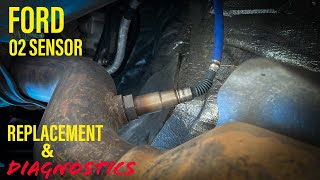
- Faulty or failing oxygen (O2) sensor (Common) — On vehicles without a dedicated fuel sensor (like Ford), the PCM calculates ethanol content using O2 sensor data. A lazy O2 sensor directly triggers P0169. 🎬 Watch: How to diagnose and replace a faulty O2 sensor.
- Sudden change in fuel type without relearn (Less Common) — Switching from E85 to regular gasoline requires a specific driving cycle for the PCM to adjust. Failing to complete this cycle confuses the system.
- Wiring or connector issues (Less Common) — Corroded ground wires, melted insulation, or loose pins at the sensor connector interrupt the 5V reference signal, causing impossible readings.
- Failing fuel pump or clogged fuel filter (Rare) — Restricted fuel flow alters fuel pressure. The PCM misinterprets this pressure drop as an incorrect fuel composition, usually triggering lean codes alongside P0169.
Symptoms

- Check Engine Light is on — The Malfunction Indicator Lamp (MIL) illuminates immediately upon detecting the fault.
- Reduced fuel economy — Fuel consumption increases noticeably, resulting in a 5-15% drop in MPG.
- Poor engine performance — The engine hesitates, stumbles during acceleration, lacks power, and idles roughly.
- Hard starting — The engine requires long cranking times or fails to start entirely, especially in cold weather.
- Rotten egg smell from exhaust — Inefficient combustion creates a sulfur-like smell, indicating the catalytic converter is overheating.
Diagnostic Flowchart
Tap your situation to follow the diagnostic path that matches what you're seeing on this code.
Common Fixes & Costs
- Drain and replace contaminated fuel — Parts: $50-$100, Labor: $250-$450, ~2.5 hr book time (Professional)
- Update Powertrain Control Module (PCM) software — Parts: $0, Labor: $125-$250, ~1 hr book time (Professional)
- Replace fuel composition sensor — Parts: $150-$450, Labor: $100-$200, ~1.5 hr book time (Intermediate)
- Perform Fuel Composition Reset/Relearn Procedure — Parts: $0, Labor: $0-$100, ~0.5 hr book time (Beginner)
- Replace Oxygen (O2) Sensor — Parts: $50-$150, Labor: $75-$150, ~1 hr book time (Intermediate)
- Repair damaged wiring or connectors — Parts: $10-$50, Labor: $150-$300, ~2 hr book time (Intermediate)
Used vs. New Parts: Buying Guide
When a used part is worth it: A used fuel composition sensor is acceptable for older, high-mileage vehicles on a strict budget, provided the donor vehicle had no fuel system codes.
Donor-vehicle mileage cap: roughly under 80000 miles for the part to have meaningful remaining life.
Donor quality checklist:
- Verify the donor vehicle lacked fuel-related trouble codes.
- Inspect the sensor pins for corrosion or bent terminals.
- Match the OEM part number exactly to ensure correct calibration.
Decision logic:
- If Vehicle is under 8 years old or has under 80,000 miles → Buy a new OEM part for reliability and warranty coverage.
- If Vehicle is over 10 years old and budget is tight → Purchase a used sensor from a reputable salvage yard.
- If The sensor is integrated into the fuel pump module → Buy a completely new assembly. The labor is too high to risk a used part failing.
Warranty tradeoff: Used sensors carry 30-day warranties. New aftermarket sensors offer 1-year warranties. New OEM parts provide 12-month/12,000-mile guarantees.
Worst-case if a used part fails: $400-$750 if a used sensor fails, requiring repeat labor and a second part purchase.
What Happens If You Wait — Timeline
- 0-1 month: Check Engine Light illuminates. Fuel economy drops by 5-15%. Slight hesitation occurs during acceleration. (MPG impact: 5-15%% · Added cost: $20-$60 in wasted fuel)
- 1-3 months: Engine performance degrades. Hesitation becomes pronounced, rough idle develops, and cold starts require extended cranking. (MPG impact: 10-20%% · Added cost: $60-$150 in wasted fuel)
- 3-6 months: The incorrect air-fuel ratio overheats the catalytic converter. A rotten egg smell emits from the exhaust as the internal substrate melts. (MPG impact: 15-25%% · Added cost: $800-$2,500 (catalytic converter replacement required))
- 6+ months: Severe drivability issues. The melted catalytic converter blocks exhaust flow, causing massive power loss. Spark plugs foul and O2 sensors fail. (MPG impact: >25%% · Added cost: $2,500+ (catalytic converter, O2 sensors, spark plugs))
Cost of Not Fixing It
- 0-1 month: Fuel economy drops by 5-15%, increasing trips to the gas station. (Added cost: $20-$60 per month in extra fuel)
- 1-6 months: The incorrect air-fuel mixture overheats and melts the catalytic converter substrate. (Added cost: $1200-$2800)
- 6+ months: Sustained poor combustion destroys oxygen sensors, fouls spark plugs, and causes engine knock. (Added cost: $3000+)
Diagnosis Steps

- Check Recent Fuel History
Verify if the light illuminated immediately after refueling. Confirm you did not accidentally pump E85 or diesel. This is the most common cause and requires zero tools to diagnose.
Tools: None (Beginner) - Scan for Codes and Review Live Data
Connect an OBD-II scanner and view the 'Fuel Composition' or 'Ethanol %' PID. Gasoline should read under 15%; E85 should read 70-85%. An illogical reading (e.g., 55% on a tank of regular gas) points to a sensor or software fault.
Tools: OBD-II Scanner with Live Data (Beginner) - Check for Technical Service Bulletins (TSBs)
Search your VIN online or call a dealership to check for P0169 TSBs. A known PCM software update often resolves this code without replacing any parts.
Tools: Internet access or phone (Beginner) - Inspect Fuel for Contamination
Extract a fuel sample from the fuel rail's Schrader valve into a clean glass jar. Let it sit for 15 minutes. A distinct layer at the bottom indicates water contamination; an oily smell indicates diesel.
Tools: Fuel pressure gauge with drain hose, clean glass jar, safety glasses (Intermediate) - Inspect Sensor Wiring and Connectors
Visually inspect the wiring harness at the fuel composition sensor. Look for corrosion, rodent damage, or loose pins. Verify the ground wire is securely attached to the chassis.
Tools: Flashlight (Intermediate) - Perform a 'Wiggle Test'
With the engine running and the scanner monitoring the Fuel Composition PID, gently wiggle the wiring harness near the sensor. If the live data fluctuates wildly, repair the intermittent short or open in the harness.
Tools: OBD-II Scanner (Intermediate) - Test Sensor Output (Frequency or Voltage)
For GM/Chrysler frequency sensors: Set a multimeter to Hz. Backprobe the signal wire. Regular gas reads 50-60 Hz; E85 reads 135-150 Hz. A stuck frequency indicates a dead sensor. For analog sensors: Check for a variable voltage between 0.2V and 4.8V.
Tools: Multimeter, backprobe kit, wiring diagram (Advanced) - Check Fuel Pressure
Connect a fuel pressure gauge to the rail. Verify pressure meets manufacturer specs (typically 45-60 PSI). Low pressure forces the PCM to miscalculate fuel composition, requiring fuel pump or filter diagnosis.
Tools: Fuel pressure gauge, service manual (Advanced)
When This Code Triggers (Freeze-Frame Conditions)
- Engine Coolant Temp: 180-200°F (The engine was fully warmed up and operating in closed-loop fuel control.)
- RPM: 1500-2500 (The engine operated at a steady cruise RPM, allowing the PCM to run stable fuel diagnostics.)
- Engine Load: 30-60% (The engine was under moderate, steady load consistent with highway driving.)
- Vehicle Speed: 35-55 mph (The vehicle maintained a constant speed, preventing fuel slosh from interfering with sensor readings.)
Related Codes
- P0171 / P0174 — System Too Lean. Often caused by P0169. If the PCM underestimates ethanol content, it injects insufficient fuel, creating a lean condition. Fix the fuel composition issue first.
- P0178 / P0179 — Fuel Composition Sensor Circuit Low/High. Indicates a direct electrical short or open. P0169 means the reading is plausible but wrong; P0178/P0179 means the reading is electrically impossible.
- P2269 — Water in Fuel Condition. Confirms water contamination. On Ram diesels, P0169 triggers when P2269 is ignored for too long.
- P0087 — Fuel Rail Pressure Too Low. A failing fuel pump causes low pressure, which the PCM misinterprets as incorrect fuel composition, triggering both codes simultaneously.
Climate & Environmental Factors
- Cold Weather: E85 fuel resists vaporization below 40°F (4°C), causing long crank times. If the PCM expects a winter blend (higher gasoline content) but detects a summer blend, it triggers P0169.
- High Humidity: Ethanol is hygroscopic and absorbs atmospheric moisture. In humid climates, stored fuel accumulates enough water to trigger P0169 and rust internal fuel components.
- Altitude: High altitude alters air-fuel calculations. On inferential systems (Ford), operating at high altitude with a slightly degraded O2 sensor forces an incorrect fuel composition calculation.
How to Talk to a Mechanic About This Code
Say this: "I have a P0169 code for 'Incorrect Fuel Composition'. Please check for software update TSBs and verify fuel quality before testing sensors. I also need to know the sensor's live ethanol percentage reading."
Directs the mechanic to check the cheapest causes first (bad fuel, software) before replacing expensive parts. Prevents immediate jumps to sensor replacement.
Avoid saying:
- 'Just fix whatever's wrong'
- 'My check engine light is on, can you look at it?'
- 'My car is running weird, I think it's the gas'
Questions to ask before authorizing the repair:
- What ethanol percentage is the fuel composition sensor reporting?
- Did you check for available software updates for the engine control module?
- If you suspect fuel contamination, can you show me the fuel sample?
- What is the warranty on this repair, including parts and labor?
Where to Take It: Dealer vs Independent vs Chain
- Dealer:
Mandatory for newer VWs due to TSBs. Otherwise, an expensive option best reserved for warranty work.
Best for: Vehicles under emissions warranty., Known manufacturer software issues (e.g., 2022+ VW Taos/Jetta).
Downsides: Highest labor rates., Tendency to replace entire assemblies rather than individual components. (Typical cost: +50% vs. baseline) - Independent Shop:
The best overall choice for diagnosing and fixing P0169 on out-of-warranty vehicles.
Best for: Out-of-warranty vehicles requiring sensor replacement or fuel draining., Cost-conscious owners.
Downsides: May lack immediate access to the newest manufacturer software flashing tools. (Typical cost: +0% vs. baseline) - Chain Shop:
Avoid for repairs. Use only to pull the initial code, then take the vehicle to an independent shop.
Best for: Getting a free initial code scan.
Downsides: High risk of misdiagnosis for non-standard codes., Aggressive upselling tactics. (Typical cost: -10% vs. baseline)
When to Walk Away From the Repair
If the repair cost exceeds 40-50% of the car's Kelley Blue Book (KBB) private-party value, sell the vehicle as-is.
- Car worth $5000, fix is $650: Fix it. The repair is 13% of the vehicle's value.
- Car worth $20000, fix is $200: Fix it. Minor cost, likely covered under emissions warranty.
- Car worth $3500, fix is $2800: Walk away. The repair is 80% of the value, indicating catastrophic catalytic converter damage.
What Scan Tool You Need for This Code

Minimum: A scanner capable of reading live data, specifically the 'Fuel Composition' or 'Ethanol %' PID. Basic code readers are useless for diagnosing P0169.
A $20 reader only shows the code number. It cannot display the incorrect ethanol reading causing the problem, forcing you to guess the root cause.
Budget: BlueDriver Pro or XTOOL AD20PRO (~$99) — Connects to a smartphone to graph live data, including fuel composition percentage. Confirms if the sensor reading is illogical before paying for shop diagnostics.
Mid-range: Autel MaxiCOM MK808 or Foxwell NT510 Elite (~$350) — Offers robust live data and bidirectional controls. Essential for performing the 'Fuel Composition Reset' required on FFVs after repairs or fuel changes.
Professional: Autel MK906BT or Launch X431 Series (~$600-1200) — Provides OEM-level bidirectional functions, advanced coding, and access to all manufacturer PIDs. Required for professional shops diagnosing complex wiring faults.
Rent vs buy: Rent a scanner from AutoZone to check the live data reading. Buy a mid-range bidirectional scanner if you own a Flex-Fuel vehicle that requires periodic fuel composition resets.
How to Clear the Code After You Fix It
- Use an OBD-II scan tool to clear the P0169 code.
- Disconnect the negative battery terminal for 30 minutes to reset learned fuel composition values.
- Perform a complete OBD-II drive cycle to reset readiness monitors.
Drive cycle (~30 minutes): Start cold. Idle for 3 minutes. Drive at a steady 55 mph for 5 minutes. Perform 10 minutes of stop-and-go city driving. Let the vehicle cool down completely.
Readiness monitors affected: Catalyst (CAT) monitor, Oxygen (O2) sensor monitor, Evaporative (EVAP) System monitor
Before emissions retest: drive at least 100 miles to fully set monitors.
Watch out for:
- Clearing the code resets all monitors to 'Not Ready', guaranteeing an immediate emissions test failure.
- The code returns within 50 miles if the contaminated fuel was not completely drained.
Will This Fail Emissions / State Inspection?
Yes — this code typically fails an OBD-II emissions inspection.
- California: An active P0169 is an automatic failure. All readiness monitors must be 'Ready' before retesting.
- New York: Any illuminated Check Engine Light results in an immediate OBD-II inspection failure.
- Texas: Active codes cause automatic failure in the 17 emissions-testing counties. Too many 'Not Ready' monitors also trigger a failure.
Most Commonly Affected Vehicles
- Chevrolet / GMC Silverado, Sierra, Tahoe, Suburban (Flex Fuel models) (2007-2014) — Utilize a physical frame-rail sensor prone to failure from age and fuel contamination.
- Ford F-150 (Flex Fuel models) (2015-2020) — Lack a dedicated sensor. The PCM infers ethanol content from O2 sensors, making diagnosis reliant on fixing vacuum leaks or O2 faults.
- Volkswagen Taos, Jetta (2022-2024) — Suffer from overly sensitive software triggering false P0169 codes. TSB 24iR dictates an ECM software update as the sole fix.
- Dodge / Ram Ram 1500, Durango (Flex Fuel models) (2013-2018) — On diesel models, P0169 specifically means 'Water In Fuel Detected For Too Long', requiring immediate water separator draining.
- Chrysler / Dodge Town & Country, Grand Caravan (2011-2016) — The Pentastar V6 sensor is integrated with the fuel line, increasing replacement part costs.
- Hummer H2, H3 (Flex Fuel models) (2006-2010) — Susceptible to poor ground connections at the sensor due to chassis corrosion.
- Nissan / Infiniti Titan, Armada, QX56 (Flex Fuel models) (2008-2015) — Frequently triggered by failing fuel pumps that the PCM misinterprets as a composition problem.
- Jaguar F-Type (2014-2021) — Almost exclusively tied to water-contaminated fuel rather than sensor failure.
Manufacturer-Specific Notes
- General Motors (GM): GM trucks use a three-wire sensor outputting a digital frequency (50-150 Hz). These fail predictably around 100k miles. Check emissions warranties, as some replacements are federally covered.
- Ford: Modern Fords use an 'inferential' system without a physical sensor. The PCM calculates ethanol via O2 sensor feedback. Vacuum leaks or lazy O2 sensors trigger false P0169 codes.
- Volkswagen: 2022+ Taos and Jetta models trigger this code due to software bugs, not bad fuel. Dealerships resolve this via TSB 24iR with a free software flash.
- Dodge / Ram / Chrysler: On EcoDiesel models, P0169 translates to 'Water In Fuel Detected For Too Long'. It mandates immediately draining the fuel filter separator to prevent catastrophic injector failure.
Real Owner Stories
2013 Chevy Silverado 1500 (FFV) at 115K miles
Check Engine Light illuminated with P0169. The truck ran rough, hesitated on acceleration, and got poor gas mileage.
What they tried:
- Filled the tank with premium fuel and added injector cleaner. The code returned immediately.
- Scanned live data and found the fuel composition sensor reading 55% ethanol, despite having regular 87-octane gasoline in the tank.
Outcome: Replaced the fuel composition sensor on the driver's side frame rail. The part cost $250 and took 1 hour to install. Performance and fuel economy returned to normal.
Lesson: On GM trucks, a faulty fuel composition sensor is the primary cause for P0169. Always check the sensor's live data reading before assuming you have bad fuel.
2022 Volkswagen Taos at 29K miles
Check Engine and EPC lights illuminated with code P0169. The owner exclusively used regular 87-octane fuel.
What they tried:
- Auto parts store employee incorrectly suggested switching to premium fuel.
- Took the vehicle to the VW dealership for diagnosis.
Outcome: The dealership performed a software update specified in TSB 24iR. The repair was covered under warranty and permanently solved the false code.
Lesson: Always check for Technical Service Bulletins (TSBs) on newer vehicles. Software glitches frequently mimic hardware failures and require a free dealership update.
2017 Ford F-150 (FFV) at 80K miles
P0169 appeared alongside lean codes P0171 and P0174. The truck hesitated and lost 3 MPG.
What they tried:
- Attempted a fuel composition reset by disconnecting the battery. Codes returned after 50 miles.
Outcome: Replaced the upstream O2 sensor on Bank 1. Ford uses an inferential system relying on O2 data rather than a physical fuel sensor. The new O2 sensor resolved all three codes.
Lesson: On vehicles without a dedicated fuel composition sensor (like Fords), P0169 is a secondary code. Investigate O2 sensors or vacuum leaks if lean codes are present.
2015 Dodge Grand Caravan (FFV) at 95K miles
Vehicle cranked but ran poorly after sitting for a week. P0169 triggered immediately.
What they tried:
- Owner noted filling up at an unfamiliar, low-volume gas station prior to parking the van.
- Mechanic pulled a fuel sample from the test port.
Outcome: The fuel sample revealed severe water contamination settled at the bottom. The shop drained the tank, replaced the fuel filter, and refilled with fresh gas for $550.
Lesson: A sudden P0169 after refueling at a new station strongly points to water contamination. A visual inspection of a fuel sample saves hours of diagnostic time.
How to Prevent This Code From Triggering
- Refuel at high-volume, Top Tier gas stations (Every fill-up) — High-volume stations have fresh fuel and less underground tank condensation. Top Tier gas prevents injector deposits, ensuring accurate combustion that keeps PCM fuel calculations precise.
- Alternate between E85 and gasoline (FFVs only) (Every 3-4 months) — Varying fuel types forces the fuel composition sensor to operate through its full range, preventing it from getting stuck at a specific frequency.
- Keep the fuel tank above one-quarter full (Daily habit) — Debris and water settle at the bottom of the tank. Running low forces the pump to suck up contaminants, altering fuel pressure and triggering false composition codes.
- Use a fuel stabilizer before storage (Before storing longer than 1 month) — Ethanol blends absorb water and degrade quickly. Stabilizer prevents oxidation and moisture buildup, preserving fuel composition.
Frequently Asked Questions
Can I fix P0169 by just adding good gas or a higher octane fuel?
If the problem was a single tank of bad fuel, filling up with high-quality gasoline and driving 50-100 miles often solves the issue. You must clear the code with a scanner or by disconnecting the battery afterward. Using higher octane fuel (like 93 instead of 87) will not fix this code, as it relates to ethanol content, not octane.
What are the most common misdiagnosis mistakes for P0169?
The most common mistake is replacing the fuel composition sensor or PCM without checking the fuel quality first. Always rule out water contamination, incorrect fuel types, and manufacturer software updates (TSBs) before buying parts. Checking the live ethanol percentage on a scanner prevents unnecessary sensor replacements.
What happens if I ignore code P0169?
Ignoring P0169 causes a permanent 5-15% drop in fuel economy and sluggish acceleration. Within a few months, the incorrect air-fuel mixture overheats and destroys the catalytic converter. This turns a simple fuel drain into a repair costing upwards of $2,500.
How do I perform a fuel composition reset?
The procedure varies by vehicle, but disconnecting the negative battery terminal for 30 minutes works for many older models. Newer vehicles require a specific 'Fuel Composition Reset' function using a bi-directional OBD-II scan tool. Check your owner's manual or repair guide for the exact steps.
How do I know if my car is a Flex Fuel vehicle (FFV)?
Look for a yellow gas cap or a 'Flex Fuel' / 'E85' badge on the trunk or tailgate. You can also check your owner's manual or decode your VIN online. Putting E85 in a standard gasoline vehicle immediately triggers this code.
Can a bad oxygen (O2) sensor cause a P0169 code?
Yes, especially in Ford vehicles that lack a dedicated fuel composition sensor. The engine computer uses O2 sensor data to calculate the fuel's ethanol content after a fill-up. A faulty O2 sensor provides bad data, leading to an incorrect calculation and a false P0169 code.
Will a fuel additive or injector cleaner fix a P0169 code?
No, fuel additives and injector cleaners cannot fix incorrect ethanol content or a faulty sensor. If the code stems from minor water condensation, a water-absorbing additive might help temporarily. However, significant water or diesel contamination requires completely draining the fuel tank.
Key Takeaways
- Check your fuel first: putting E85 in a non-Flex Fuel vehicle or getting water-contaminated gas causes over 60% of P0169 codes.
- Do not drive more than 100 miles with an active P0169, as the resulting incorrect air-fuel mixture will overheat and destroy your $2,500 catalytic converter.
- If you drive a 2022-2024 Volkswagen Taos or Jetta, do not replace parts; a known software glitch requires a free dealership ECU update (TSB 24iR).
- Before buying a $250 replacement sensor, use an OBD-II scanner to view the 'Fuel Composition' live data PID to confirm the sensor is actually reading an impossible value.
Helpful Videos

The information in this article is provided for general reference and educational purposes only. Vehicle specifications, procedures, and part compatibility can vary by production date, trim level, and region. Always consult your vehicle's factory service manual and verify part numbers before purchasing or performing repairs. Safety-critical components such as airbags, seat belts, and braking systems should be installed by a qualified professional.
- 🎬 Helpful Videos
- What Does P0169 Mean?
- Can I Drive With P0169?
- Common Causes
- Symptoms
- Diagnostic Flowchart
- Common Fixes & Costs
- Used vs. New Parts: Buying Guide
- What Happens If You Wait — Timeline
- Cost of Not Fixing It
- Diagnosis Steps
- When This Code Triggers (Freeze-Frame Conditions)
- Related Codes
- Climate & Environmental Factors
- How to Talk to a Mechanic About This Code
- Where to Take It: Dealer vs Independent vs Chain
- When to Walk Away From the Repair
- What Scan Tool You Need for This Code
- How to Clear the Code After You Fix It
- Will This Fail Emissions / State Inspection?
- Most Commonly Affected Vehicles
- Manufacturer-Specific Notes
- Real Owner Stories
- 2013 Chevy Silverado 1500 (FFV) at 115K miles
- 2022 Volkswagen Taos at 29K miles
- 2017 Ford F-150 (FFV) at 80K miles
- 2015 Dodge Grand Caravan (FFV) at 95K miles
- How to Prevent This Code From Triggering
- Frequently Asked Questions
- Can I fix P0169 by just adding good gas or a higher octane fuel?
- What are the most common misdiagnosis mistakes for P0169?
- What happens if I ignore code P0169?
- How do I perform a fuel composition reset?
- How do I know if my car is a Flex Fuel vehicle (FFV)?
- Can a bad oxygen (O2) sensor cause a P0169 code?
- Will a fuel additive or injector cleaner fix a P0169 code?
- Key Takeaways
- 🎟️ Get 5% Off