

OBD-II Code P0164: O2 Sensor Circuit High Voltage (Bank 2, Sensor 3)
What P0164 means, why it triggers, and how to fix it
- A faulty Bank 2, Sensor 3 oxygen sensor causes over 80% of P0164 codes, typically failing from age or an internal short.
- Always test the wiring harness for a short-to-power (voltage >0.9V with sensor unplugged) before spending $150+ on a replacement sensor.
- Owners of 2013-2017 Jaguar and Land Rover vehicles must check for PCM software updates (TSB JTB00392NAS1) before replacing parts, as this often fixes the code for free.
- Driving with an active P0164 code drops fuel economy by 2-4 MPG and guarantees an automatic failure during state emissions testing.
What Does P0164 Mean?
Trouble code P0164 indicates your car's Powertrain Control Module (PCM) detects the third oxygen sensor on engine Bank 2 sending a voltage signal that is too high (typically over 0.9V) for too long. This sensor checks catalytic converter efficiency. A constant high voltage signal indicates a failed sensor, damaged wiring, or an engine running with too much fuel (a 'rich' condition).
Technical definition: The SAE/OBD-II definition for P0164 is "O2 Sensor Circuit High Voltage (Bank 2, Sensor 3) 🎬 Watch: A quick overview of P0164 symptoms and causes.". This indicates the Powertrain Control Module (PCM) registers a voltage from the Bank 2, Sensor 3 oxygen sensor above the normal specified range (typically over 0.9V) for an extended period.
Can I Drive With P0164?
Yes, But With Caution. You can drive your vehicle, but do not exceed a few weeks. Your car will fail an emissions test and get worse gas mileage. Driving for hundreds of miles with a rich fuel mixture damages the catalytic converter, a repair costing between $800 and $2500.
Common Causes
- Faulty Bank 2, Sensor 3 Oxygen (O2) Sensor (Very Common) — The O2 sensor is a high-wear item living in the hot exhaust stream. Internal shorts, contamination, or old age cause it to fail and send a constant high voltage signal. This is the most frequent cause of a P0164 code on vehicles over 60,000 miles.
- Damaged Wiring or Corroded Connector (Common) — The sensor's wiring sits under the vehicle, exposed to heat, moisture, and road debris. Melted, chafed, or broken wires, along with corroded connector pins, cause a short to power or high resistance resulting in a high voltage reading.
- Use of Incorrect or Low-Quality Aftermarket Sensors (Common) — European makes like BMW are highly sensitive to O2 sensor brands. Non-OEM or universal sensors provide incorrect voltage readings and trigger P0164 immediately. Issues persist until an OEM-spec sensor (like Bosch or Denso) is installed.
- Engine Running Rich (Less Common) — A leaking fuel injector or faulty fuel pressure regulator forces too much fuel into the engine. Unburned fuel exits into the exhaust, which the O2 sensor correctly reads as a high-voltage (rich) condition. This scenario triggers codes like P0172 or P0175 alongside P0164.
- Exhaust Leak Before the Sensor (Less Common) — A crack or leaking gasket before the O2 sensor lets outside air into the exhaust stream. The resulting turbulence and change in gas composition causes erratic or incorrect high voltage readings.
- Faulty Powertrain Control Module (PCM) or Software (Rare) — A software glitch causes the PCM to misinterpret a normal voltage signal as high, a known issue on 2013-2017 Jaguar and Land Rover models. Less frequently, the internal driver circuit in the PCM fails.
- Improper Grounding or Manufacturing Defect (Rare) — An improperly grounded O2 sensor circuit causes the sensor's voltage signal to float high, triggering the code without any part failure. This is a known manufacturing defect on some 2020 Chevrolet Silverado fleets.
- Blown Fuse for O2 Sensor Heater Circuit (Rare) — If the oxygen sensor's heater circuit fuse blows, the sensor fails to reach operating temperature. This leads to incorrect voltage readings, including a high voltage condition.
Symptoms
- Check Engine Light is On — The light illuminates as soon as the PCM logs the P0164 fault. This is often the only noticeable symptom.
- Reduced Fuel Economy — A faulty sensor provides incorrect data, forcing the engine to operate less efficiently and dropping fuel economy by 2-4 MPG.
- Rough Idle or Engine Hesitation — You will feel a slight stumble at idle or a brief hesitation during acceleration as the engine's computer struggles to adjust for the faulty sensor reading.
- Smell of Fuel or Black Smoke — If an engine running rich causes the code, you will smell raw gasoline from the exhaust or see black smoke exiting the tailpipe.
- Failed Emissions Test (scan-tool only — no driver-felt sign) — P0164 indicates an emissions control system failure, causing an automatic failure of state-mandated emissions inspections.
Diagnostic Flowchart
Tap your situation to follow the diagnostic path that matches what you're seeing on this code.
Common Fixes & Costs
- Replace Bank 2, Sensor 3 Oxygen Sensor — Parts: $70-$200, Labor: $80-$150, ~1 hr book time (DIY)
- Repair Damaged Wiring or Connector — Parts: $15-$50, Labor: $150-$250, ~1.5 hr book time (Intermediate)
- Replace Blown Fuse — Parts: $1-$5, Labor: $20-$40, ~0.2 hr book time (Beginner)
- Repair Exhaust Leak — Parts: $30-$100, Labor: $100-$400, ~2 hr book time (Professional)
- Update or Reprogram Powertrain Control Module (PCM) — Parts: $0, Labor: $100-$200, ~1 hr book time (Professional)
DIY vs Professional
- Replace Bank 2, Sensor 3 Oxygen Sensor — Beginner:
Tools: ['Jack and jack stands', '22mm (or 7/8") oxygen sensor socket', 'Ratchet and extensions', 'Penetrating oil', 'Torque wrench', 'Anti-seize compound'] - Repair Damaged Wiring or Connector — Beginner:
Tools: ['Multimeter', 'Wire cutters/strippers', 'Heat shrink crimp connectors', 'Heat gun'] - Update or Reprogram Powertrain Control Module (PCM) — Beginner:
Tools: ['J-2534 Pass-Thru device', 'Laptop with stable internet', 'Manufacturer-specific software subscription', 'Stable automotive battery charger']
Used vs. New Parts: Buying Guide
When a used part is worth it: Buying a used oxygen sensor is never recommended. It is a high-wear electronic component with a finite lifespan. The labor cost to install it outweighs any upfront savings.
Donor-vehicle mileage cap: roughly under 20000 miles for the part to have meaningful remaining life.
Donor quality checklist:
- Only consider a used sensor from a very low-mileage vehicle that was wrecked.
- Avoid parts from vehicles scrapped for engine or emissions problems.
- Ensure the part number is an exact match for your vehicle's OEM sensor.
Decision logic:
- If The part is an oxygen sensor. → Buy a new, high-quality aftermarket (e.g., Bosch, Denso, NTK) or OEM sensor. The risk of premature failure with a used sensor is too high.
- If Budget is extremely tight and the vehicle is old. → A used sensor is a last resort, but understand it may fail quickly, requiring you to pay for labor a second time.
Warranty tradeoff: Used sensors typically have a 30-day warranty at best. New aftermarket sensors usually offer a 1-year or longer warranty. OEM parts also carry a warranty.
Worst-case if a used part fails: $200-$400. If the used sensor fails after the short warranty period, you pay for a new sensor plus the full labor cost a second time.
What Happens If You Wait — Timeline
- 0-2 weeks: Code P0164 is stored and the Check Engine Light is on. No other symptoms are perceived by the driver. (MPG impact: 0-5%% · Added cost: $0)
- 2 weeks - 3 months: Fuel economy loss becomes noticeable. The PCM adds too much fuel based on false readings, leading to minor carbon buildup on spark plugs. (MPG impact: 5-10%% · Added cost: $40-$100 in wasted fuel.)
- 3-8 months: Prolonged exposure to a rich exhaust mixture overheats the catalytic converter. The precious metal substrate gets coated and stops catalyzing exhaust gases. (MPG impact: 10-15%% · Added cost: $500-$1500 (Catalytic converter requires replacement soon, triggering code P0430).)
- 8+ months: The catalytic converter substrate melts or fractures from extreme heat. Exhaust flow becomes restricted, causing significant power loss. (MPG impact: 15-25%% · Added cost: $1500-$3000 (Full catalytic converter replacement is required).)
Cost of Not Fixing It
- 0-1 month: Reduced fuel economy by 5-15% and guaranteed emissions test failure. (Added cost: $20-$60 per month in wasted fuel.)
- 1-6 months: A persistent rich fuel mixture overheats the catalytic converter, causing internal damage. (Added cost: $0 if addressed, but high risk of future cost.)
- 6+ months: Complete failure of the catalytic converter due to prolonged overheating and unburned fuel contamination. (Added cost: $1200-$2800 for catalytic converter replacement.)
Diagnosis Steps
- Read the Code and Freeze Frame Data
Use an OBD-II scanner to confirm P0164 is active. Review the freeze frame data for a snapshot of sensor values when the code set. Note any other codes present.
Tools: OBD-II Scanner (Beginner) - Visually Inspect the Sensor and Wiring
Locate the Bank 2, Sensor 3 O2 sensor under the vehicle (driver's side, after the catalytic converter on V-engines). Inspect for melted wires, connector corrosion, or a harness touching the hot exhaust pipe.
Tools: Flashlight, Safety Glasses (Beginner) - Analyze Live Sensor Data
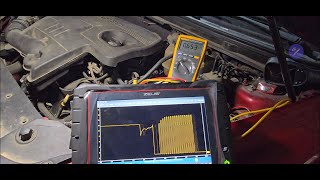
Use a graphing scanner to watch the B2S3 O2 sensor voltage. A healthy downstream sensor shows a stable voltage between 0.4V and 0.6V at idle. A voltage stuck above 0.9V confirms a sensor or circuit fault.
Tools: Graphing OBD-II Scanner (Intermediate) - Test the Sensor Circuit (Pro Tip)
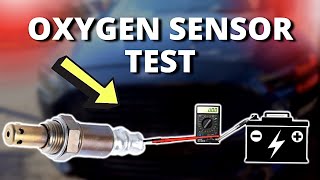
Unplug the O2 sensor. Turn the key on (engine off) and use a multimeter to check the signal wire voltage in the harness connector. If high voltage (>0.9V) remains, the wiring has a short to power. If voltage drops below 0.1V, the sensor is internally shorted.
Tools: Multimeter (Intermediate) - Check for Manufacturer TSBs
Search online for Technical Service Bulletins (TSBs) for your specific vehicle. Jaguar and Land Rover have known software issues causing P0164 that require a dealer PCM update.
Tools: Internet Access (Beginner) - Check Sensor Heater Resistance
With the sensor unplugged, measure resistance between the two heater circuit pins on the sensor using a multimeter. A healthy cold sensor reads 3-20 ohms. Infinite resistance means an open circuit and a dead sensor.
Tools: Multimeter (Intermediate) - Check for Exhaust Leaks
Start the cold engine and listen for hissing or ticking near the sensor. Feel for leaks by hand before pipes get hot, or use a smoke machine for pinpoint accuracy.
Tools: Mechanic's Stethoscope or Smoke Machine (Beginner) - Verify Fuel Pressure
If rich condition codes (P0172/P0175) are present, connect a fuel pressure gauge to the fuel rail. High fuel pressure causes a rich condition that the O2 sensor correctly reports.
Tools: Fuel Pressure Gauge (Advanced) - Check Circuit Integrity
Disconnect the O2 sensor and PCM. Use a multimeter to check continuity on signal and ground wires (must be <1 ohm). Check for a short to ground by measuring resistance to the chassis (>10,000 ohms). This isolates wiring faults.
Tools: Multimeter (Advanced) - Analyze with an Oscilloscope
Use an oscilloscope to view the O2 sensor's waveform. A sensor stuck high shows a flat line at the top of the voltage range, definitively distinguishing a dead sensor from an intermittent wiring issue.
Tools: Oscilloscope (Professional)
When This Code Triggers (Freeze-Frame Conditions)
- Engine Coolant Temp: 180-210°F (The monitor only runs on a fully warmed-up engine.)
- RPM: 1200-3000 RPM (Steady cruise or light acceleration.)
- Engine Load: 20-70% (Vehicle is under moderate load during highway cruising.)
- Vehicle Speed: 45-65 mph (Sustained highway driving is required for the PCM to test the sensor.)
Related Codes
- P0163 — Low Voltage (B2S3). P0164 means the signal is stuck high (>0.9V); P0163 means it is stuck low (<0.1V). High indicates a rich condition or short to power; low indicates a lean condition or open circuit.
- P0165 — Slow Response (B2S3). The sensor is not switching voltages quickly enough. This is a precursor to the sensor failing completely and getting stuck high (P0164).
- P0167 — Heater Circuit Malfunction (B2S3). Points to the sensor's internal heater. A bad heater causes P0164, but P0167 tells you exactly where to test first.
- P0430 — Catalyst Efficiency Below Threshold (Bank 2). Triggered when the downstream sensor fluctuates rapidly instead of holding steady. P0164 triggers when the signal is electrically stuck high. Never replace the converter for a P0164 code alone.
Climate & Environmental Factors
- Road Salt and Humidity: In the 'Salt Belt' or high-humidity regions, under-vehicle wiring corrodes rapidly. This creates shorts or high resistance in the circuit, directly causing a P0164 code.
- Thermal Shock: Driving through deep water splashes cold water onto the hot oxygen sensor. This rapid temperature change cracks the internal ceramic element, causing immediate failure (common on Land Rovers).
How to Talk to a Mechanic About This Code
Say this: "I have a P0164 code for the Bank 2 Sensor 3 O2 sensor circuit. Please check the live data for the sensor voltage and test the harness for a short to power before recommending a part replacement."
This directs the mechanic to perform a specific electrical diagnosis rather than just replacing the sensor, saving you money if the problem is in the wiring.
Avoid saying:
- My check engine light is on, can you just fix it?
- I think I need a new oxygen sensor.
- Just do whatever you think is necessary.
Questions to ask before authorizing the repair:
- Did you confirm the sensor is the failure by testing the wiring? What was the voltage on the harness with the sensor disconnected?
- Can you provide me with the freeze-frame data from the original code?
- What is the warranty on the replacement sensor and the labor?
- Are you using an OEM or a quality aftermarket brand like Bosch or Denso for the sensor?
Where to Take It: Dealer vs Independent vs Chain
- Dealer:
Recommended for specific makes with known TSBs (Jaguar, Land Rover) or if the vehicle is under warranty. Otherwise, an independent shop is more cost-effective.
Best for: Vehicles under warranty (powertrain or emissions)., Jaguar and Land Rover vehicles known for software-related P0164 issues., Complex electrical issues where manufacturer-specific diagnostic tools are essential.
Downsides: Higher labor rates, often 1.5x to 2x that of independent shops., May recommend replacing an entire assembly when a smaller component repair is possible. (Typical cost: +50% vs. baseline) - Independent Shop:
Best fit for most vehicles with a P0164 code. A reputable independent shop easily diagnoses a faulty sensor versus a wiring short at a reasonable cost.
Best for: Out-of-warranty vehicles where cost is a primary concern., Standard diagnosis and replacement of O2 sensors and wiring repairs.
Downsides: Quality and diagnostic skill vary widely; check for ASE certifications and online reviews., May lack access to the latest manufacturer-specific software updates. (Typical cost: +0% vs. baseline) - Chain Shop:
Acceptable for a straightforward O2 sensor replacement if you diagnosed the problem yourself. AVOID for initial diagnosis, as they misdiagnose wiring issues or upsell unrelated services.
Best for: Simple, routine maintenance like oil changes or tire rotations.
Downsides: Technician skill varies greatly, and they lack the experience for nuanced electrical diagnostics., Business models create pressure for upselling, leading to unnecessary repairs. (Typical cost: -10% vs. baseline)
When to Walk Away From the Repair
If the total estimated repair cost exceeds 40-50% of your car's private-party value (check Kelley Blue Book), it is time to seriously consider selling or trading it in.
- Car worth $4000, fix is $2000: Walk away. A $2,000 repair is 50% of the car's value and rarely makes financial sense.
- Car worth $12000, fix is $450: Fix it. The repair cost is well below the threshold and is a routine part of maintaining a vehicle of this value.
- Car worth $2500, fix is $1500: Walk away. The repair cost is 60% of the car's value. Investing that much into an old car is a poor financial decision.
What Scan Tool You Need for This Code
Minimum: A scanner that reads and graphs live O2 sensor voltage data. A basic code reader that only provides the P-code is not sufficient for proper diagnosis.
A simple code reader tells you the P0164 code exists, but it cannot show you if the voltage is truly stuck high. Graphing live data is the only way to confirm if the sensor is dead or if the wiring is shorted.
Budget: BlueDriver Pro (~$100) — Connects to your smartphone via Bluetooth and displays live O2 sensor data. It provides freeze-frame data and checks Mode 06 monitor status, which is perfect for a confident DIY diagnosis of P0164.
Mid-range: Foxwell NT510 Elite (~$180) — A powerful handheld scanner providing live data graphing for O2 sensors and access to manufacturer-specific codes. It offers bidirectional controls to help diagnose related systems if P0164 is accompanied by other codes.
Professional: Autel MaxiCOM MK808Z (~$500) — A professional-level tablet scanner offering full bidirectional control, comprehensive live data, and advanced diagnostic functions. It is overkill for just a P0164 code but a worthwhile investment for serious DIYers.
Rent vs buy: For a one-time diagnosis, use the free 'Loan-A-Tool' program from stores like AutoZone. You pay a deposit for the tool, fully refunded when returned within 90 days. Buy a scanner only if you anticipate doing regular car diagnostics.
How to Clear the Code After You Fix It
- Use an OBD-II scan tool to clear the diagnostic trouble code.
- Perform a complete drive cycle to allow the vehicle's readiness monitors to run.
- Check readiness monitor status with a scan tool to confirm the O2 sensor and Catalyst monitors have completed.
Drive cycle (~30 minutes): Start with a cold engine. Idle for 3 minutes. Drive steadily at 55-60 mph for 10 minutes. Decelerate without braking to 20 mph, then accelerate back to 55-60 mph. Repeat 3 times.
Readiness monitors affected: Catalyst monitor, O2 sensor monitor
Before emissions retest: drive at least 100 miles to fully set monitors.
Watch out for:
- Disconnecting the battery clears the code but resets all readiness monitors to 'incomplete', guaranteeing an emissions failure.
- The code returns within two drive cycles if the fault remains.
- Skipping the specific drive cycle for your vehicle's make prevents monitors from setting.
Will This Fail Emissions / State Inspection?
Yes — this code typically fails an OBD-II emissions inspection.
- California: An illuminated Check Engine Light is an automatic failure. A permanent DTC stored in the ECU also causes a failure even if the light is off.
- New York: A P0164 code results in an automatic OBD-II test failure. The issue must be repaired and cleared.
- Texas: An active P0164 code causes an OBD inspection failure. O2 Sensor and Catalyst monitors must show 'Ready'.
Most Commonly Affected Vehicles
- Jaguar F-TYPE, XF, XJ (2013-2017) — Highly prone to P0164 due to PCM software errors (TSB JTB00392NAS1). An extended warranty (NAS20.11.007) covers the sensors.
- Land Rover Range Rover, Range Rover Sport, LR4 (2013-2016) — Subject to TSBs (LTB00671NAS5) pointing to high sensor failure rates from thermal shock when water splashes the hot sensor.
- Nissan Titan (2004-2015) — After replacing an O2 sensor, a 'self-learn' procedure (TSB #NTB04-126) must be performed to prevent the code from returning.
- BMW X5, 3-Series, 5-Series (2007-2015) — Highly sensitive to aftermarket sensors. Owners find that only an OEM-branded sensor (often Bosch) resolves the P0164 code permanently.
- Hyundai Santa Fe (V6) (2007-2012) — Utilizes a Bank 2 downstream sensor that frequently fails due to age and wiring exposure.
- Honda Odyssey (V6) (2005-2017) — Advanced emissions systems utilize a third O2 sensor prone to standard wear and occasional PCM issues.
- Ford F-150, Explorer (V6/V8) (2009-2019) — Exposed downstream O2 sensors are susceptible to wiring damage. Some 2018 models require a PCM reprogram to resolve related issues.
- Chevrolet Silverado (V6/V8) (2007-2013) — Downstream O2 sensors fail due to age. A rare cause is an improper factory ground connection for the O2 sensor circuit.
Manufacturer-Specific Notes
- Jaguar / Land Rover: On 2013-2017 V6/V8 models, P0164 stems from software errors or thermal shock. Dealers must check for PCM updates (TSB JTB00392NAS1) and extended O2 sensor warranties (NAS20.11.007).
- Nissan: On the Titan and Armada, replacing the sensor is not enough. You must reset the PCM's self-learned fuel trim values using the 'Air Fuel Ratio Learning' procedure (TSB NTB04-126) or a bidirectional scan tool.
- Ford: On F-150 EcoBoost models, TSBs for harsh shifting or damp-condition misfires involve a PCM reflash. If your truck has multiple symptoms, a PCM update often resolves P0164 simultaneously.
- BMW: BMWs reject non-OEM oxygen sensors. Using 'universal' sensors fails to resolve P0164, or the code returns within days. You must use an OEM-spec sensor (like Bosch) for a lasting repair.
Real Owner Stories
2015 Jaguar XF at 75,000 miles
Check Engine Light came on with code P0164. No noticeable driving issues. Owner was concerned about the dealer performing an unwanted software update.
What they tried:
- Took the car to the dealership.
Outcome: The dealer replaced the faulty Bank 2, Sensor 3 oxygen sensor under an extended warranty (10 years/120,000 miles). The owner requested no PCM software update, and the dealer complied. The code was resolved.
Lesson: Check for extended warranties related to O2 sensors on specific makes like Jaguar. You secure a free repair without unwanted software changes.
2014 Ford F-150 with 110,000 miles
P0164 code appeared. Owner decided to replace the O2 sensor themselves.
What they tried:
- Replaced the Bank 2, Sensor 3 O2 sensor with a new part.
Outcome: The code returned after a few days. The owner inspected the wiring harness and found melted insulation shorting against the exhaust pipe. Repairing the wire with a heat-shrink butt connector permanently fixed the issue.
Lesson: A visual inspection of the wiring harness prevents the cost and effort of replacing a perfectly good sensor.
2013 Land Rover Range Rover Sport at 95,000 miles
The Check Engine Light for P0164 appeared after driving through a heavy rainstorm.
What they tried:
- Cleared the code, but it returned immediately.
Outcome: Based on Land Rover's TSB regarding 'thermal shock', the owner replaced the Bank 2, Sensor 3 O2 sensor. The new sensor resolved the code permanently.
Lesson: If the code appears after driving through deep water, it strongly points to the sensor failing from thermal shock.
How to Prevent This Code From Triggering
- Use Top-Tier Certified Gasoline. (Every fill-up.) — Higher detergent levels prevent carbon deposits on fuel injectors. This prevents rich-running conditions that overwhelm the oxygen sensor.
- Replace engine air filter at recommended intervals. (Every 15,000-30,000 miles (or as per manual).) — A clogged filter restricts airflow, causing the engine to run rich and contaminate the O2 sensor.
- Perform regular 'Italian Tune-ups'. (Once a month.) — Sustained highway driving (15 minutes at 3,500 RPM) increases exhaust temperatures to burn off light carbon deposits on the sensor tip.
- Address engine oil and coolant leaks promptly. (As needed.) — Burning oil or coolant contaminates the exhaust with phosphorus and silicone, permanently poisoning the oxygen sensor.
- Consider replacing upstream O2 sensors proactively. (Every 100,000 miles.) — Upstream sensors control the air-fuel mixture. Replacing them prevents inefficient combustion that damages the downstream Sensor 3.
Frequently Asked Questions
Where is the Bank 2, Sensor 3 oxygen sensor located?
Bank 2 is the side of the engine that does NOT contain cylinder #1. On most US V-style engines, this is the driver's side. Sensor 3 is the third sensor in the exhaust stream, located after the final catalytic converter.
What is the most common misdiagnosis for P0164?
The most common mistake is replacing the oxygen sensor without testing the circuit. High voltage often stems from a short in the wiring harness. Unplug the sensor and test the harness-side connector for voltage to avoid wasting money on a good sensor.
Does my car need a 'relearn' procedure after replacing the O2 sensor?
It depends on the vehicle. Manufacturers like Nissan require a specific procedure to reset the engine computer's learned air-fuel values after an O2 sensor replacement. If skipped, the P0164 code returns immediately.
Can I replace the O2 sensor myself?
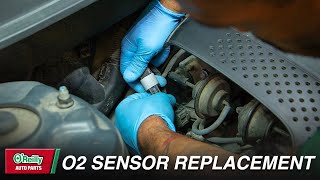
Yes, this is a manageable DIY job. You need to safely raise the vehicle, use a 7/8-inch oxygen sensor socket for leverage, and ensure the exhaust is cool. Applying penetrating oil to the old sensor's threads makes removal much easier.
Will cleaning the oxygen sensor fix a P0164 code?
No, cleaning does not fix a P0164 code. This code indicates an electrical circuit fault (high voltage) caused by an internal short or wiring problem, not surface contamination.
Does P0164 mean I need a new catalytic converter?
No, P0164 points to a problem with the sensor or its circuit, not the catalytic converter. A bad converter triggers a P0430 efficiency code. Never replace a catalytic converter based solely on a P0164 code.
Will P0164 clear itself?
No, P0164 will not clear itself. The engine computer detected a persistent electrical fault. You must diagnose and repair the underlying issue, then clear the code with an OBD-II scanner.
Key Takeaways
- A faulty Bank 2, Sensor 3 oxygen sensor causes over 80% of P0164 codes, typically failing from age or an internal short.
- Always test the wiring harness for a short-to-power (voltage >0.9V with sensor unplugged) before spending $150+ on a replacement sensor.
- Owners of 2013-2017 Jaguar and Land Rover vehicles must check for PCM software updates (TSB JTB00392NAS1) before replacing parts, as this often fixes the code for free.
- Driving with an active P0164 code drops fuel economy by 2-4 MPG and guarantees an automatic failure during state emissions testing.
Helpful Videos

The information in this article is provided for general reference and educational purposes only. Vehicle specifications, procedures, and part compatibility can vary by production date, trim level, and region. Always consult your vehicle's factory service manual and verify part numbers before purchasing or performing repairs. Safety-critical components such as airbags, seat belts, and braking systems should be installed by a qualified professional.
- 🎬 Helpful Videos
- What Does P0164 Mean?
- Can I Drive With P0164?
- Common Causes
- Symptoms
- Diagnostic Flowchart
- Common Fixes & Costs
- DIY vs Professional
- Used vs. New Parts: Buying Guide
- What Happens If You Wait — Timeline
- Cost of Not Fixing It
- Diagnosis Steps
- When This Code Triggers (Freeze-Frame Conditions)
- Related Codes
- Climate & Environmental Factors
- How to Talk to a Mechanic About This Code
- Where to Take It: Dealer vs Independent vs Chain
- When to Walk Away From the Repair
- What Scan Tool You Need for This Code
- How to Clear the Code After You Fix It
- Will This Fail Emissions / State Inspection?
- Most Commonly Affected Vehicles
- Manufacturer-Specific Notes
- Real Owner Stories
- 2015 Jaguar XF at 75,000 miles
- 2014 Ford F-150 with 110,000 miles
- 2013 Land Rover Range Rover Sport at 95,000 miles
- How to Prevent This Code From Triggering
- Frequently Asked Questions
- Where is the Bank 2, Sensor 3 oxygen sensor located?
- What is the most common misdiagnosis for P0164?
- Does my car need a 'relearn' procedure after replacing the O2 sensor?
- Can I replace the O2 sensor myself?
- Will cleaning the oxygen sensor fix a P0164 code?
- Does P0164 mean I need a new catalytic converter?
- Will P0164 clear itself?
- Key Takeaways
- 🎟️ Get 5% Off