

OBD-II Code P0162: O2 Sensor Circuit Malfunction (Bank 2, Sensor 3)
The Ultimate Guide to Diagnosing and Fixing P0162
- P0162 indicates a dead signal from the Bank 2, Sensor 3 oxygen sensor, located downstream of the final catalytic converter.
- Inspect the sensor's wiring harness and the 12V heater fuse before spending $50-$200 on a replacement sensor.
- Driving with P0162 drops fuel economy by 5-10% and guarantees an automatic failure on state emissions tests.
- Confirm the failure by checking live OBD-II data; a healthy sensor fluctuates between 0.5V and 0.8V, while a failed sensor flatlines near 0V or 0.45V.
- Verify your warranty status before paying for repairs, as the Federal Emissions Warranty covers oxygen sensors for 8 years or 80,000 miles.
What Does P0162 Mean?
P0162 indicates the Powertrain Control Module (PCM) detects no activity from the oxygen sensor circuit for Bank 2, Sensor 3. This sensor sits in the exhaust system after the final catalytic converter on the side of the engine opposite cylinder #1. Its primary role is monitoring catalytic converter efficiency. When the PCM receives no changing voltage signal for a set period, it logs a circuit malfunction and illuminates the Check Engine Light.
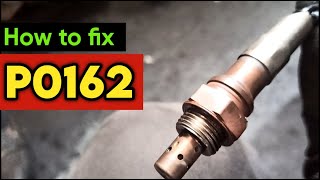
Technical definition: O2 Sensor Circuit Malfunction (Bank 2 Sensor 3). 🎬 Watch: A quick overview of the P0162 code and sensor location. The Powertrain Control Module (PCM) sets this DTC when it detects an unchanging or absent voltage signal from the downstream oxygen sensor circuit. A healthy downstream sensor produces a steady voltage, while a flatlined signal confirms a fault.
Can I Drive With P0162?
Yes, But With Caution. Yes, but fix it promptly. Immediate drivability issues are uncommon, but ignoring the code guarantees a failed emissions test. Prolonged driving forces the engine control module (ECM) to run an inefficient fuel mixture, which eventually damages the catalytic converter and turns a $150 sensor swap into a $2,000 repair.
Common Causes
- Defective Bank 2, Sensor 3 Oxygen Sensor (Very Common) — The sensor is the most frequent culprit. The internal heating element fails, or the sensing element wears out, becomes contaminated by oil or coolant, or cracks from thermal shock.
- Damaged Wiring or Corroded Connector (Common) — Positioned under the vehicle, the wiring harness suffers from exhaust heat, moisture, and road debris. Melted wires or corroded connector pins cause open or shorted circuits. This is highly prevalent in regions using road salt.
- Exhaust Leak (Common) — A leak upstream of the sensor allows outside oxygen into the exhaust stream. This skews readings, tricking the PCM into flagging the sensor as inactive.
- Blown Fuse for O2 Sensor Heater Circuit (Less Common) — Oxygen sensors use an internal heater on a fused circuit to reach 600°F (316°C). A blown fuse prevents heating, stopping the sensor from sending a proper signal.
- Contamination from Fuel or Oil (Less Common) — Internal engine leaks (coolant, oil) or excessive fuel additives foul the sensor's tip, creating a barrier that blocks accurate exhaust gas readings.
- Damaged Catalytic Converter (Rare) — A physically damaged or clogged catalytic converter alters exhaust flow enough to damage the downstream O2 sensor or skew its readings.
- ECU Software or Calibration Glitch (Rare) — On specific makes like Land Rover, overly sensitive PCM software incorrectly flags a P0162 code. A factory software update resolves this.
- Faulty Powertrain Control Module (PCM) (Very Rare) — The internal driver circuit processing the O2 sensor signal fails. Consider this only after exhaustively ruling out all other possibilities.
Symptoms
- Check Engine Light is On — The PCM triggers the light as soon as it confirms the fault.
- Failed Emissions Test — P0162 is an automatic failure for OBD-II emissions inspections.
- Reduced Fuel Economy — The PCM defaults to a richer fuel map as a protective measure, reducing MPG by 5-10%.
- Rough Idle or Engine Hesitation — The engine runs unevenly or stumbles during acceleration as the PCM operates in a 'limp' mode.
- Black Smoke or Rotten Egg Smell from Exhaust — A significantly rich condition produces black smoke (unburnt fuel) or a rotten egg smell, indicating catalytic converter damage.
Diagnostic Flowchart
Tap your situation to follow the diagnostic path that matches what you're seeing on this code.
Common Fixes & Costs
- Replace the Bank 2, Sensor 3 Oxygen Sensor — Parts: $50-$200, Labor: $100-$200, ~0.8 hr book time (DIY)
- Repair Damaged Wiring or Connector — Parts: $10-$50, Labor: $100-$300, ~1.5 hr book time (Intermediate)
- Repair Exhaust Leak — Parts: $20-$150, Labor: $150-$350, ~2 hr book time (Intermediate)
- Replace Blown Fuse — Parts: $1-$10, Labor: $0-$50, ~0.1 hr book time (DIY)
- Update or Reprogram Powertrain Control Module (PCM) — Parts: $0, Labor: $100-$250, ~1.2 hr book time (Professional)
Used vs. New Parts: Buying Guide
When a used part is worth it: Never buy a used oxygen sensor. They are wear-and-tear items with a finite lifespan. A used sensor is likely near the end of its life, contaminated, or already faulty.
Donor-vehicle mileage cap: roughly under 20000 miles for the part to have meaningful remaining life.
Donor quality checklist:
- If forced to consider used, only take one from a very low-mileage wrecked vehicle.
- Never buy a 'used' sensor from an online marketplace, as they are often cheap, unreliable knock-offs.
- A used OEM sensor is sometimes preferable to a new, cheap, no-name aftermarket part.
Decision logic:
- If The part is an oxygen sensor. → Buy a new, quality aftermarket (Denso, NTK, Bosch) or OEM sensor. The cost savings of a used sensor are not worth the risk of premature failure.
- If The required part is a catalytic converter. → A used converter from a low-mileage, non-emissions-related wreck is a viable, cost-effective option.
Warranty tradeoff: Used parts typically have a 30-day warranty. New aftermarket sensors offer a 1-year to limited lifetime warranty. OEM parts carry a 1-year/12,000-mile warranty.
Worst-case if a used part fails: $200-$400 if a used sensor fails after the return window closes, requiring you to pay for another part and repeat the installation labor.
What Happens If You Wait — Timeline
- 0-2 weeks: Check Engine Light is on. The code is stored in the PCM. No noticeable driving symptoms are present. (MPG impact: 0-2%% · Added cost: $0)
- 2 weeks - 3 months: Vehicle automatically fails any emissions test. A subtle drop in fuel economy occurs as the PCM runs in a default 'safe' fuel map. (MPG impact: 5-10%% · Added cost: $25-$75 in wasted fuel)
- 3-9 months: Prolonged operation on a rich default fuel map overheats the catalytic converter. The internal ceramic substrate cracks or becomes coated with soot. (MPG impact: 7-15%% · Added cost: $200-$500 in wasted fuel plus early-stage catalyst damage.)
- 9+ months: The catalytic converter becomes severely damaged or clogged. This creates significant exhaust backpressure, leading to major power loss and potential engine damage. (MPG impact: 15-25%% · Added cost: $1500-$3000 (for new catalytic converter and sensor))
Cost of Not Fixing It
- 0-3 months: Automatic failure of state emissions inspection and a drop in fuel economy of 5-10% as the PCM defaults to a less efficient fuel map. (Added cost: $50-$150 in wasted fuel and failed test fees.)
- 3-12 months: Prolonged operation with an incorrect air/fuel mixture overheats the catalytic converter, causing internal damage and reduced efficiency. (Added cost: $1200-$2800 for catalytic converter replacement.)
- 12+ months: Severe catalytic converter damage causes significant exhaust blockage, leading to major engine performance issues and potential engine failure. (Added cost: $2800+ for catalytic converter and potential additional engine repairs.)
Diagnosis Steps
- Visually Inspect the Sensor, Wiring, and Exhaust
Safely raise the vehicle and locate the Bank 2, Sensor 3 O2 sensor after the rearmost catalytic converter. Inspect the wiring harness for melting, chafing, or breaks. Check the connector for corrosion or pushed-out pins. Inspect the exhaust pipe for cracks or rust holes near the sensor.
Tools: Jack and Jack Stands, Flashlight, Safety Glasses (Beginner) - Check for Blown Fuses
Locate the fuse box and identify the 'O2 Sensor' or 'Heater Circuit' fuse. Replace it if blown. If the new fuse blows immediately, you have a short circuit in the wiring.
Tools: Owner's Manual, Fuse Puller or Pliers (Beginner) - Analyze Live Data with a Scan Tool
Connect an OBD-II scanner and view the live data stream for 'B2S3' voltage. With a warm engine, a healthy downstream sensor reads between 0.5V and 0.8V. A flat line at 0V, 0.45V, or above 0.9V confirms a P0162 fault.
Tools: OBD-II Scanner with Live Data (Intermediate) - Test the Sensor's Heater Circuit Resistance
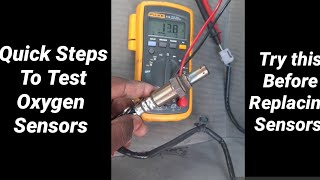
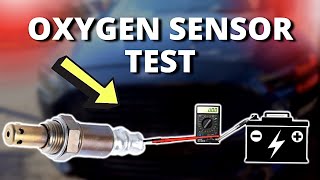
Disconnect the O2 sensor. Using a multimeter set to Ohms (Ω), measure the resistance between the two heater circuit pins on the sensor. A healthy sensor reads 5-14 ohms. Infinite resistance (OL) means the internal heater is broken, requiring sensor replacement.
Tools: Multimeter, Service Manual (Intermediate) - Check for Power and Ground at the Harness Connector
With the sensor unplugged and the key 'On' (engine off), test the vehicle-side connector. Verify 12V at the heater power wire and a solid ground on the heater ground wire. Missing power or ground indicates a wiring issue.
Tools: Multimeter, Vehicle-specific Wiring Diagram (Advanced) - Perform a Voltage Drop Test
Perform a voltage drop test on the loaded circuit (key on, engine off). A reading above 0.2V on the power side or 0.1V on the ground side indicates excessive resistance requiring wiring repair.
Tools: Multimeter (Advanced) - Analyze Freeze Frame Data
Examine the freeze frame data to see engine conditions (RPM, temp) when the fault triggered. Faults during warm-up point to a heater circuit issue, while highway speed faults suggest wiring or sensor degradation.
Tools: OBD-II Scanner with Freeze Frame Data (Advanced) - Waveform Analysis with an Oscilloscope
Connect a lab scope to the sensor's signal wire and ground. A complete flat line at 0V, 0.45V, or stuck high definitively confirms a dead sensor or critical wiring fault.
Tools: Oscilloscope (Lab Scope) (Professional)
When This Code Triggers (Freeze-Frame Conditions)
- Engine Coolant Temp: 170-230°F (Fully warmed up, in closed-loop operation.)
- RPM: 1500-2500 (Steady cruise / light throttle.)
- Engine Load: 15-35% (Maintaining speed, not accelerating hard.)
- Vehicle Speed: 40-60 mph (Steady highway driving.)
Related Codes
- P0062 — Indicates a problem with the sensor's internal heater, while P0162 points to the signal circuit. Test heater resistance to confirm.
- P0163 — Indicates a signal is present but stuck at a very low voltage (under 0.2V), whereas P0162 is a complete lack of activity.
- P0164 — Indicates a signal stuck at a very high voltage (above 0.8V), pointing to a short to voltage in the signal wire.
- P0142 — The identical 'no activity' code for the opposite side of the engine (Bank 1, Sensor 3).
Climate & Environmental Factors
- Cold Climates / Winter: Freezing temperatures delay the sensor's internal heater from reaching its 600°F (316°C) operating temperature, stressing the element and causing premature failure.
- Road Salt Usage (Snow Belt Regions): Salt and moisture accelerate corrosion on connector pins and degrade wiring insulation, causing the intermittent shorts that trigger this code.
How to Talk to a Mechanic About This Code
Say this: "I have a P0162 code for the Bank 2 Sensor 3 oxygen sensor and I'd like to schedule a diagnostic. Please check the sensor's live data, inspect the wiring for damage, and check for any exhaust leaks before recommending a part replacement."
This signals to the shop that you expect a proper diagnostic process rather than just 'parts swapping'. It directs them to check the most common and often overlooked causes (wiring/leaks) before defaulting to a new sensor.
Avoid saying:
- 'My Check Engine Light is on, can you just fix it?' (This is too vague and invites unnecessary charges).
- 'I think I need a new oxygen sensor.' (This leads a shop to replace the sensor without diagnosing the true cause).
- 'Just do whatever you think is best.' (This gives the shop a blank check).
Questions to ask before authorizing the repair:
- What were the results of the live data test for the B2S3 sensor? Was the voltage stuck high, low, or flat?
- Did you find any issues with the wiring harness or connector, like melting, corrosion, or breaks?
- Can you show me the old part and explain why it failed?
- What is the warranty on the parts and labor for this specific repair?
Where to Take It: Dealer vs Independent vs Chain
- Dealer:
Best for: Vehicles still under the 8-year/80,000-mile federal emissions warranty., Specific makes with known TSBs or software updates for P0162, like Land Rover., Complex electrical issues that an independent shop has failed to diagnose.
Downsides: Typically the highest labor rate., Quick to replace parts rather than perform detailed wiring repairs. (Typical cost: +50% vs. baseline) - Independent Shop:
Best fit for most situations. A reputable independent shop with good electrical diagnostic skills effectively diagnoses and repairs P0162 without the high cost of a dealership.
Best for: Most out-of-warranty vehicles., Diagnosing and repairing common causes like a failed sensor, exhaust leak, or damaged wiring., Building a long-term relationship with a trusted mechanic.
Downsides: Quality and diagnostic skill vary widely; vetting through reviews is crucial., Lacks access to manufacturer-specific software for rare PCM-related fixes. (Typical cost: +0% vs. baseline) - Chain Shop:
Use with caution. Acceptable for a simple sensor swap if you've already diagnosed the issue yourself. Avoid for initial diagnosis.
Best for: A straightforward, confirmed O2 sensor replacement if you are unable to do it yourself.
Downsides: Technician skill varies dramatically., Lacks advanced diagnostic training for complex wiring or intermittent electrical faults., Business model incentivizes upselling unnecessary services. (Typical cost: -10% vs. baseline)
When to Walk Away From the Repair
If the total estimated repair cost exceeds 40-50% of your car's private-party market value, sell or trade it in instead of repairing it.
- Car worth $4000, fix is $2000: Walk away. The repair cost is 50% of the car's value. It's not financially sound to invest this much into an older vehicle.
- Car worth $12000, fix is $350: Fix it. The repair cost is less than 3% of the car's value. This is a routine repair that is well worth performing.
- Car worth $2500, fix is $1500: Walk away. At 60% of the vehicle's value, this repair is a poor investment.
What Scan Tool You Need for This Code
Minimum: A scanner that reads and graphs live O2 sensor voltage data and displays freeze-frame data.
A basic $20 code reader only gives you the P0162 code. To properly diagnose this fault, you must see the sensor's voltage signal in real-time to confirm it is 'flatlined'.
Budget: BlueDriver Pro (~$99) — Connects to your smartphone and provides live data graphing for the B2S3 sensor, reads freeze-frame data, and accesses Mode 06 test results.
Mid-range: Foxwell NT510 Elite (~$180) — A dedicated handheld unit providing full-system diagnostics, including live O2 sensor data and graphing. Offers manufacturer-specific codes crucial for brands with electrical quirks.
Professional: Autel MaxiCOM MK808S (~$369) — Offers extensive bidirectional controls, full-system access, and a professional interface for data logging and analysis.
Rent vs buy: For a one-time diagnosis, auto parts stores like AutoZone offer free code reading services or loaner tool programs. If you perform regular maintenance, buying a tool like the BlueDriver Pro is a worthwhile investment.
How to Clear the Code After You Fix It
- Use an OBD-II scan tool to clear the diagnostic trouble codes.
- Perform a complete drive cycle to allow readiness monitors to run.
- Verify the O2 sensor and Catalyst monitors show a 'Ready' status.
Drive cycle (~20 minutes): Cold start (coolant temp below 122°F). Idle in Drive for 2-3 minutes. Drive at a steady 55 mph for 3-5 minutes. Decelerate to 20 mph without braking. Repeat steady-state driving and deceleration. Allow vehicle to cool down completely and repeat if necessary.
Readiness monitors affected: Oxygen Sensor Monitor, Catalyst Monitor, Heated O2 Sensor Monitor
Before emissions retest: drive at least 100 miles to fully set monitors.
Watch out for:
- Clearing codes with a scan tool resets all readiness monitors to 'Not Ready', causing an automatic emissions test failure.
- The code returns immediately if the underlying wiring short or exhaust leak was not repaired.
Will This Fail Emissions / State Inspection?
Yes — this code typically fails an OBD-II emissions inspection.
- California: An illuminated Check Engine Light is an automatic failure. All required OBD readiness monitors must be set to 'Ready'.
- New York: A Check Engine Light on for any reason is an automatic failure of the emissions inspection portion of the NYS inspection.
- Texas: In counties requiring emissions testing, an illuminated Check Engine Light is an automatic fail. For model year 2001 and newer vehicles, only one non-continuous readiness monitor can be 'Not Ready' to pass.
Most Commonly Affected Vehicles
- Land Rover Range Rover, Range Rover Sport, LR4 (2013-2016) — Extremely common. Land Rover issued TSBs for O2 sensor failure due to manufacturing defects and thermal shock. An extended warranty (15 years/150,000 miles) covers many models.
- Ford F-150, Explorer (2004-2010) — The wiring harness becomes brittle from heat and chafes against the frame. Use OEM (Motorcraft) or high-quality NTK/Denso sensors, as these engines reject cheap aftermarket parts.
- Chevrolet / GMC Silverado, Sierra, Tahoe, Suburban (2007-2013) — Commonly caused by sensor failure or corrosion within the main harness connector in regions using road salt. Check ground connections to the frame.
- Dodge / Ram Ram 1500, Durango, Grand Cherokee (2009-2014) — Frequently reported as the O2 sensor reaching the end of its service life. Wiring harness connectors fill with dirt and moisture, leading to poor contact.
- Mercedes-Benz Various Models with V6/V8 (2005-2015) — Often seen on M272 (V6) and M273 (V8) engines. Exhaust leaks at the flex pipe or manifold are known culprits that require investigation before replacing the sensor.
- Nissan Altima, Maxima, Murano, Titan (2005-2015) — Exhaust leaks are a very common cause on these vehicles and require careful checking before replacing the sensor.
- Subaru Outback, Forester, Impreza (2005-2016) — Triggered by exhaust leaks developing at the flange gaskets or welded seams of the exhaust pipes. A thorough leak check is critical.
- Toyota Tundra, Sequoia, 4Runner (2005-2015) — Appears at higher mileage due to the original sensor wearing out. Use a Denso-branded replacement for a lasting repair.
- Volkswagen / Audi Various Models with V6/V8 (2006-2016) — These vehicles are highly sensitive to exhaust leaks from flex pipes, which throw off sensor readings and trigger the code.
Manufacturer-Specific Notes
- Land Rover / Jaguar: TSB LTB00662 addresses PCM software falsely triggering P0162 on 3.0L V6 models. An extended warranty covers O2 sensors for 15 years/150,000 miles on many 2013+ models.
- General Motors (GM): The main wiring harness frequently rubs against heat shields or the transmission crossmember, causing intermittent shorts.
- Ford: PCMs are highly sensitive to aftermarket sensors. Use genuine Motorcraft, NTK, or Denso sensors to prevent the code from returning.
- Mercedes-Benz: Small cracks in the exhaust flex pipes introduce oxygen and trick the PCM into flagging a failed sensor. Always check for leaks before replacing parts.
Real Owner Stories
2014 Land Rover Range Rover 5.0L Supercharged
Check Engine Light came on, accompanied by black soot on the exhaust tips and a noticeable decrease in MPG.
What they tried:
- Initially cleared the codes, suspecting a loose gas cap, but the light returned.
- Owner discovered an active extended warranty for O2 sensors (Program Code 'O2S').
Outcome: The dealer replaced the faulty Bank 2, Sensor 3 oxygen sensor under the extended warranty at no charge, resolving the P0162 code.
Lesson: For makes with known issues like Land Rover, always check for active TSBs and extended warranties before paying for a repair.
2014 Ford F-150 with high mileage
P0162 code appeared with no other symptoms. Owner is a DIYer.
What they tried:
- The owner first suspected an exhaust leak and performed a visual inspection.
- Finding no leak, they used a scan tool to watch live data for B2S3, which showed a dead (flatline) signal.
Outcome: Replaced the Bank 2, Sensor 3 oxygen sensor. The new sensor fixed the code.
Lesson: Confirming a dead sensor with a scan tool prevents replacing a good sensor. Having the right tools like an O2 sensor socket and penetrating oil is essential to avoid damaging the exhaust pipe.
2008 GMC Sierra at 150K miles
Intermittent P0162 code that appeared mostly during wet or cold weather.
What they tried:
- Replaced the Bank 2 Sensor 3 O2 sensor, but the code returned a few weeks later.
- A shop diagnosed it as a faulty catalytic converter, which the owner declined to replace.
Outcome: The owner traced the entire wiring harness and found a section rubbed against the transmission crossmember, causing an intermittent short to ground. Repairing the damaged wires with heat shrink butt connectors for $10 permanently fixed the issue.
Lesson: Intermittent codes often point to a wiring or connector issue, not a hard part failure. Exhaustively check the entire circuit before accepting a costly diagnosis like a catalytic converter.
How to Prevent This Code From Triggering
- Use TOP TIER™ certified gasoline (Every fill-up) — TOP TIER™ fuels contain detergents that prevent carbon buildup, ensuring complete combustion and preventing a rich fuel mixture that fouls the O2 sensor.
- Perform regular engine maintenance (spark plugs, air filter) (Per vehicle's service schedule) — Worn spark plugs and clogged air filters lead to incomplete combustion and misfires, sending unburnt fuel into the exhaust that damages the O2 sensor.
- Address engine oil and coolant leaks promptly (As needed) — Oil or coolant burning in the combustion chamber contaminates the oxygen sensor's delicate sensing element, causing premature failure.
- Avoid using non-sensor-safe silicone sealants on the engine (During any engine repairs) — Improper RTV sealants release silicone vapors that permanently foul the oxygen sensor. Always use products specifically labeled 'sensor-safe'.
- Periodically drive on the highway for 20-30 minutes (At least once a month) — Sustained highway driving allows the exhaust system to reach optimal operating temperature, burning off carbon deposits from the catalytic converter and oxygen sensors.
Frequently Asked Questions
What does 'Bank 2, Sensor 3' mean?
Bank 2 is the side of the engine that does not contain cylinder #1. Sensor 3 is the third sensor in the exhaust stream on that bank, located downstream of the final catalytic converter.
How much does it cost to fix P0162?
A DIY sensor replacement costs $50-$200 for the part. Professional replacement ranges from $150 to $400, including labor. Wiring repairs or exhaust leak fixes vary widely but typically cost $150-$400 depending on severity.
What is the most common misdiagnosis for P0162?
The most frequent mistake is replacing the oxygen sensor without performing any diagnosis. Technicians and DIYers waste money on a new sensor when the actual problem is a simple exhaust leak, a blown fuse, or a melted wire.
Can a bad catalytic converter cause P0162?
It is rarely the direct cause, as a failing converter usually triggers a P0430 efficiency code. However, a physically disintegrating converter can send debris downstream and destroy the O2 sensor. Always diagnose the sensor and its electrical circuit first.
What is the difference between O2 Sensor 2 and Sensor 3?
Sensor 2 is the first sensor located after a catalytic converter. On vehicles with multiple catalytic converters on a single bank, Sensor 3 is located after the second catalytic converter to monitor the final stage of exhaust treatment.
Can I replace just one oxygen sensor?
Yes, you only need to replace the specific sensor that failed. However, if your vehicle has over 100,000 miles, the other original sensors are nearing the end of their service life and will likely fail soon.
Is a P0162 fix covered by the emissions warranty?
Yes, the Federal Emissions Performance Warranty mandates coverage for major emissions components, including oxygen sensors, for 8 years or 80,000 miles. Some manufacturers, like Land Rover, offer extended warranties specifically for this part. Always check with your dealer before paying out of pocket.
Key Takeaways
- P0162 indicates a dead signal from the Bank 2, Sensor 3 oxygen sensor, located downstream of the final catalytic converter.
- Inspect the sensor's wiring harness and the 12V heater fuse before spending $50-$200 on a replacement sensor.
- Driving with P0162 drops fuel economy by 5-10% and guarantees an automatic failure on state emissions tests.
- Confirm the failure by checking live OBD-II data; a healthy sensor fluctuates between 0.5V and 0.8V, while a failed sensor flatlines near 0V or 0.45V.
- Verify your warranty status before paying for repairs, as the Federal Emissions Warranty covers oxygen sensors for 8 years or 80,000 miles.
Helpful Videos
![How to Fix FORD P0162 Engine Code in 4 Minutes [3 DIY Methods / Only $9.23]](https://img.youtube.com/vi/1Jo-s4XAvV0/mqdefault.jpg)

The information in this article is provided for general reference and educational purposes only. Vehicle specifications, procedures, and part compatibility can vary by production date, trim level, and region. Always consult your vehicle's factory service manual and verify part numbers before purchasing or performing repairs. Safety-critical components such as airbags, seat belts, and braking systems should be installed by a qualified professional.
- 🎬 Helpful Videos
- What Does P0162 Mean?
- Can I Drive With P0162?
- Common Causes
- Symptoms
- Diagnostic Flowchart
- Common Fixes & Costs
- Used vs. New Parts: Buying Guide
- What Happens If You Wait — Timeline
- Cost of Not Fixing It
- Diagnosis Steps
- When This Code Triggers (Freeze-Frame Conditions)
- Related Codes
- Climate & Environmental Factors
- How to Talk to a Mechanic About This Code
- Where to Take It: Dealer vs Independent vs Chain
- When to Walk Away From the Repair
- What Scan Tool You Need for This Code
- How to Clear the Code After You Fix It
- Will This Fail Emissions / State Inspection?
- Most Commonly Affected Vehicles
- Manufacturer-Specific Notes
- Real Owner Stories
- 2014 Land Rover Range Rover 5.0L Supercharged
- 2014 Ford F-150 with high mileage
- 2008 GMC Sierra at 150K miles
- How to Prevent This Code From Triggering
- Frequently Asked Questions
- What does 'Bank 2, Sensor 3' mean?
- How much does it cost to fix P0162?
- What is the most common misdiagnosis for P0162?
- Can a bad catalytic converter cause P0162?
- What is the difference between O2 Sensor 2 and Sensor 3?
- Can I replace just one oxygen sensor?
- Is a P0162 fix covered by the emissions warranty?
- Key Takeaways
- 🎟️ Get 5% Off