

P0158 on 2014 Acura MDX: Bank 2 Sensor 2 High Voltage Causes and Fixes
This code indicates a high voltage reading from the Bank 2, Sensor 2 (downstream, front) oxygen sensor. The most common fix is replacing the faulty sensor itself, a known issue for this model year confirmed by Acura TSBs. Expect to pay around $60-$120 for a quality aftermarket sensor (Denso or NTK) and $140-$200 for an OEM part. It's a straightforward DIY repair for many owners, accessible from under the front of the vehicle.
- P0158 on a 2014 Acura MDX almost always points to a failed Bank 2, Sensor 2 oxygen sensor.
- This was a known issue acknowledged by Acura via TSBs shortly after the model's release, making sensor failure more likely than other causes.
- Bank 2 is the cylinder bank near the radiator (front of the vehicle); Sensor 2 is the downstream sensor located after the catalytic converter.
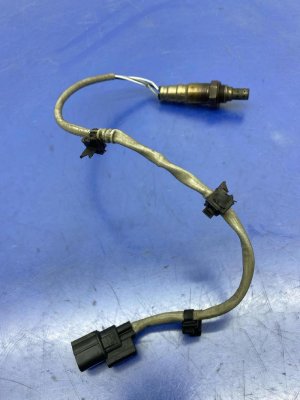
- The correct OEM part is 36542-5G0-A01. High-quality aftermarket replacements from Denso or NTK are recommended.
- Always inspect the wiring harness for damage before replacing the sensor, as this is another possible cause.
What's Unique About the 2014-2014 Acura MDX
For the 2014 Acura MDX specifically, this code is highly significant because Honda issued Technical Service Bulletins (TSBs) DLR MSG - RFP and ENG REQ - BER140 shortly after the vehicle's launch. These bulletins show the manufacturer was actively investigating P0158 and its Bank 1 equivalent, P0138, by requesting dealers to collect failed parts for engineering analysis. This factory-level attention strongly suggests a batch of faulty downstream oxygen sensors was used during production, making a P0158 code on a 2014 MDX very likely due to a failed sensor, as documented by the manufacturer's own investigation.
Diagnostic Flowchart
Tap your situation to follow the diagnostic path that matches what you're seeing on this vehicle.
Symptoms You May Notice
- Check Engine Light (Malfunction Indicator Lamp) is on
- Poor fuel economy
- Failing an emissions test
- Engine may run rough or idle unevenly
- Smell of fuel from the exhaust
- In some cases, no noticeable symptoms other than the Check Engine Light
- Replacing the wrong oxygen sensor (e.g., Bank 1 instead of Bank 2, or the upstream Sensor 1 instead of the downstream Sensor 2).
- Replacing the oxygen sensor without first checking the wiring harness for damage, which can lead to the new sensor not fixing the problem.
- Assuming a catalytic converter is bad. A P0158 code points to a sensor circuit issue, not converter efficiency (like a P0420 or P0430 code). 🎬 Learn more about the common causes of the P0158 code.
Most Likely Causes
- Faulty Bank 2, Sensor 2 Oxygen Sensor 🔴 High Probability As documented in Honda's TSBs for the 2014 MDX, there was a known issue with downstream O2 sensors triggering high voltage codes (P0158/P0138), making sensor failure the most probable cause. Denso and NTK are the original equipment manufacturers (OEM), and using these brands is highly recommended for compatibility.
How to confirm: Use a scan tool to monitor live data from the B2S2 O2 sensor. If the voltage is stuck high (e.g., above 0.8V) and does not fluctuate, the sensor has likely failed. A healthy downstream sensor should show a relatively stable voltage, not a fixed high reading. 🎬 See how to diagnose high voltage sensor readings.
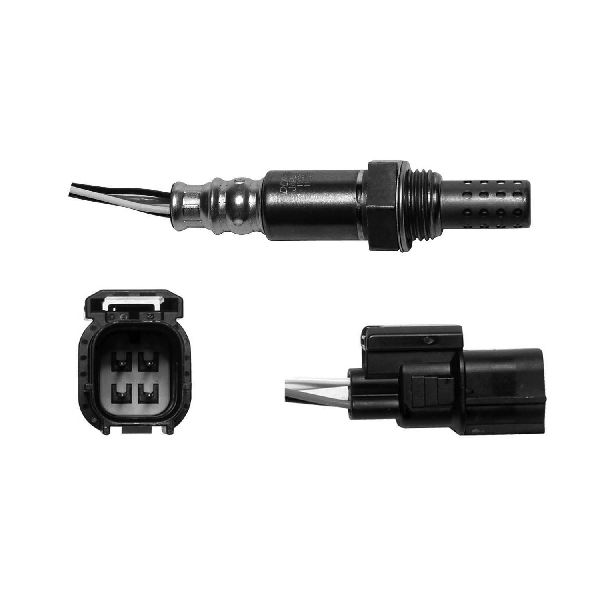
Typical fix: Replace the Bank 2, Sensor 2 (downstream, front) oxygen sensor. The OEM part number is 36542-5G0-A01. Recommended aftermarket equivalents are Denso 234-4601 or NTK 24435.
Est. part cost: $60 - $200 - Wiring or Connector Issue 🟡 Medium Probability The oxygen sensor wiring is routed under the vehicle near hot exhaust components, making it susceptible to damage from heat, road debris, or improper service. One owner in a repair video found the harness was damaged after a transmission repair job. Corrosion or oil contamination in the connector can also cause a short to voltage.
How to confirm: Visually inspect the wiring harness and connector leading to the sensor for any signs of melting, corrosion, chafing, or loose pins. Test for a short to voltage in the signal wire using a multimeter. With the sensor unplugged and key on, the signal wire should not have voltage present.
Typical fix: Repair the damaged section of the wiring harness or clean/replace the connector. Apply dielectric grease to the new connector to prevent future moisture intrusion.
Est. part cost: $5 - $50 - Rich Fuel Condition ⚪ Low Probability While possible, this is less common on the MDX without other accompanying codes. The J35Y5 engine can have issues with failing fuel injectors, but this would typically trigger other codes like misfires or fuel trim codes alongside P0158.
How to confirm: Check for other trouble codes related to the fuel system (e.g., leaking fuel injectors, faulty fuel pressure regulator). A high voltage reading can be a symptom of too much fuel in the exhaust, but P0158 is rarely the only code in this scenario.
Typical fix: Diagnose and repair the root cause of the rich condition, such as replacing a leaking fuel injector.
Est. part cost: $100 - $500+
Rare But Worth Checking
- Exhaust Leak: An exhaust leak before the sensor can sometimes cause erratic readings, though it's less common for it to cause a sustained high voltage code. It's more likely to cause a low voltage or switching code.
- Powertrain Control Module (PCM) Failure: This is extremely rare. All other possibilities, especially the sensor and wiring, should be exhaustively ruled out before considering a faulty PCM. A technician on the ScannerDanner forum notes that P0158 is unusual for Acura products, making wiring damage a higher suspicion than a bad PCM.
Diagnosis Steps
- Confirm the code P0158 is present using an OBD-II scanner.
- Use the scanner's live data feature to observe the voltage from 'B2S2' (Bank 2, Sensor 2). A healthy downstream sensor should show a relatively steady voltage. If it is stuck high (e.g., >0.9V), this confirms the fault.
- Locate the Bank 2, Sensor 2. On the 3.5L V6, Bank 2 is the cylinder bank closer to the front of the vehicle (radiator side). Sensor 2 is the downstream sensor, located in the exhaust pipe after the catalytic converter, easily visible from under the front bumper.
- Perform a thorough visual inspection of the sensor's wiring harness and connector. Look for any signs of melting, corrosion, cuts, or damaged pins. Pay close attention to the area around the transmission, as damage has been reported there after service.
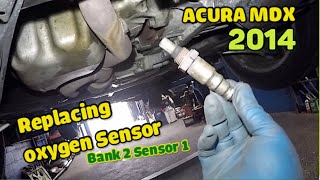
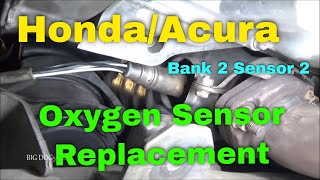
- If the wiring appears intact, the most likely culprit is the sensor itself. Replace the Bank 2, Sensor 2 oxygen sensor. An O2 sensor socket (22mm) is required. 🎬 Watch this step-by-step 2014 MDX sensor replacement guide.
- If replacing the sensor does not resolve the code, perform advanced electrical testing. Unplug the sensor and check the signal wire in the harness for any voltage with the key on; it should be near 0V. If voltage is present, there is a short to power in the harness that must be traced and repaired.
- After the repair, clear the trouble code with the scanner and perform a drive cycle to ensure the fix was successful.
Parts You'll Likely Need
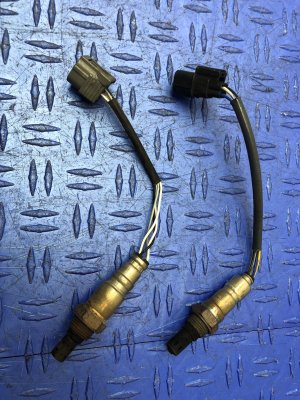
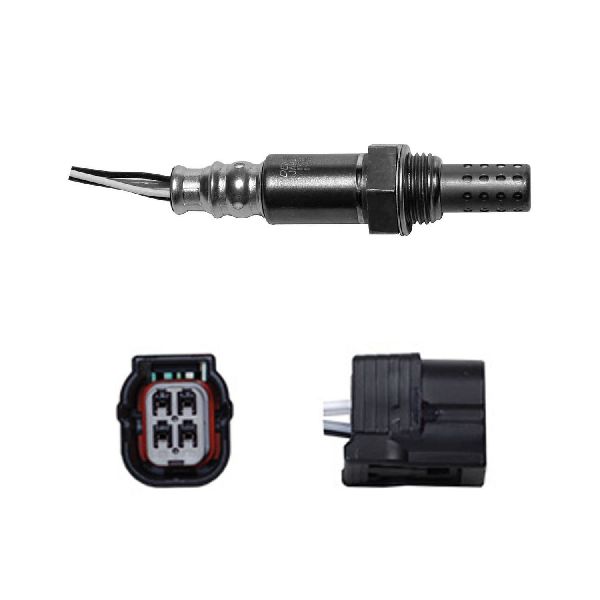
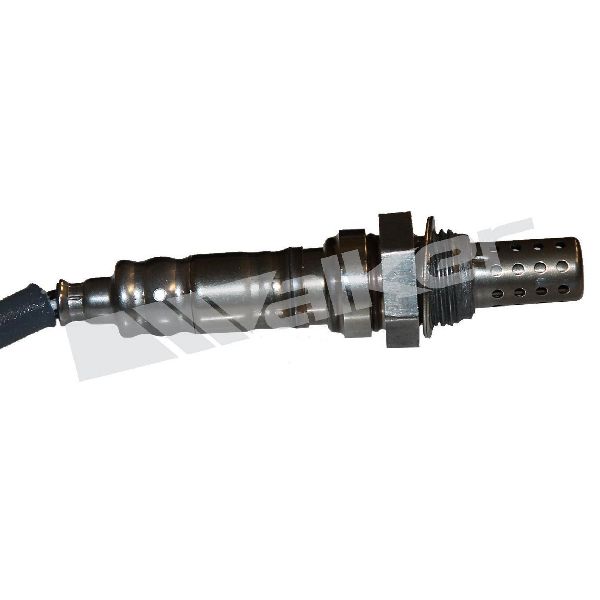
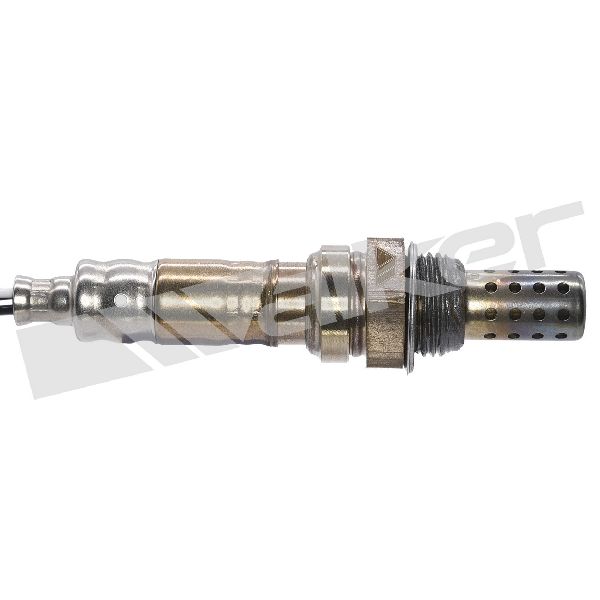
- Bank 2 Sensor 2 Oxygen Sensor (Downstream, Front)
(OEM #36542-5G0-A01)— This is the component that directly reports the high voltage reading. Given the TSBs for the 2014 MDX, this sensor is the most probable point of failure.
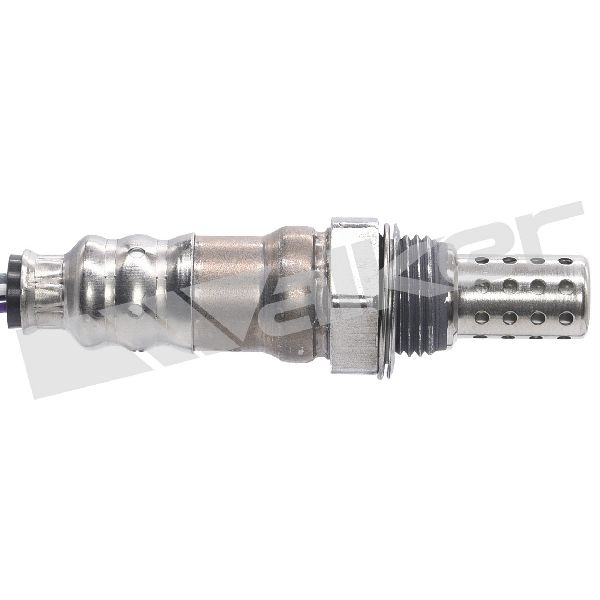
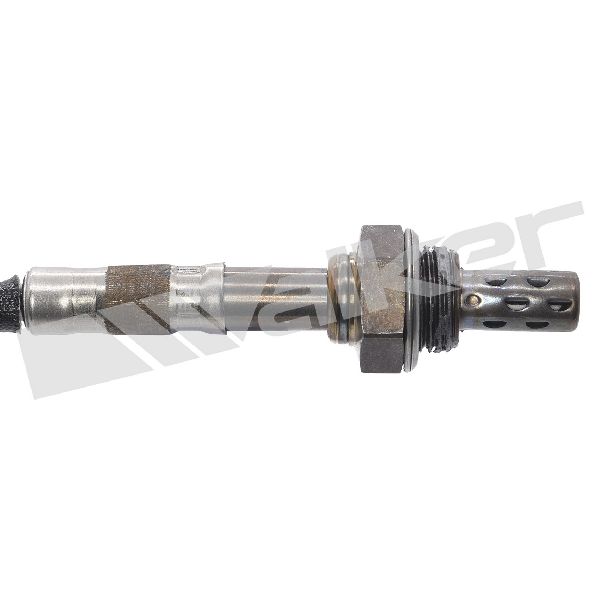
Trusted brands: Acura (OEM), Denso (OEM supplier, P/N: 234-4601), NTK (OEM supplier, P/N: 24435)
OEM price range: $140-$200
Aftermarket price range: $60-$120
Related Codes That Often Appear With This One
- P0138 — This is the code for 'O2 Sensor Circuit High Voltage (Bank 1, Sensor 2)'. The official Acura TSBs list both P0158 and P0138 together, indicating a common failure pattern for both downstream sensors on the 2014 MDX.
Technical Service Bulletins (TSBs) & Recalls
- DLR MSG - RFP: Dealer message from March 2014 regarding an active investigation into P0158/P0138 on 2014 MDX models, asking dealers to collect parts.
- ENG REQ - BER140: Engineering request from March 2014 for investigation into P0158/P0138 on 2014 MDX, asking dealers to call Technical Research & Support before attempting repairs on affected vehicles.
Platform-Specific Known Issues
- Acura/Honda issued Technical Service Bulletins DLR MSG - RFP and ENG REQ - BER140 in March 2014 specifically to investigate the cause of DTC P0158 and P0138 on 2014 MDX models. This indicates a known issue recognized by the manufacturer shortly after the vehicle's release, pointing towards a potential bad batch of sensors from the factory.
- A YouTube repair video for a 2015 MDX with P0158 showed the sensor wiring harness had been damaged during a previous transmission service, causing the fault. This highlights the vulnerability of the harness routing.
Mechanic-Grade Diagnostic Values
- Downstream O2 Sensor (B2S2) Live Data Voltage — expected: Relatively steady voltage, typically around 0.45V to 0.8V on a warm engine with a healthy catalytic converter.. Failure: Voltage is stuck consistently high, above 0.9V, and does not fluctuate. One real-world failure on an MDX showed a reading of 1.43V.
- O2 Sensor Heater Circuit Resistance — expected: Between 10 and 40 ohms for typical Honda sensors when measured across the two heater wires (usually same color).. Failure: Reading is outside the 10-40 ohm range, or shows an open circuit (OL).
- Harness Signal Wire Voltage (Sensor Unplugged) — expected: Near 0.45V (PCM reference voltage) with key on, engine off.. Failure: Voltage is significantly higher (e.g., 1.0V or more) or reads 0V, indicating a short to power or a break in the wire.
Scan Tool Commands That Help
- OBD-II Scanner with Live Data: Harness Integrity Test (Manual) — To definitively rule out a faulty sensor vs. a short in the wiring harness. After unplugging the sensor, use a jumper wire to connect the signal wire pin to the ground wire pin on the vehicle's harness connector. If the scan tool voltage reading drops to 0V, the harness is good and the sensor is bad. If the voltage stays high, there is a short to power in the harness itself that must be located.
Wiring & Ground Locations
- G101 — Right rear of the engine compartment.. A primary ground for the engine management system. A corroded or loose G101 can cause various sensor reading errors.
- G402 — Left kick panel area, inside the cabin.. This is a major chassis ground. While less likely to be the direct cause, poor grounding here can introduce electrical noise that affects sensitive sensor circuits.
- Engine Hanger Ground Point — A metal hook/prong on the engine block, under the plastic engine cover, designated by Acura as the official negative jump-start point.. This is a primary, robust engine-to-chassis ground connection. Verifying it is clean and secure is a crucial step when diagnosing any electrical issue, as it ensures the engine block (where sensors are grounded) has a solid path to the battery negative.
- PCM Location — Right front of the engine compartment.. Knowing the PCM's location is essential for tracing the O2 sensor harness if a short is suspected and requires end-to-end continuity testing.
Real Owner Repair Stories
- AcuraZine Forum user 'HVAC34' (Acura TL (similar V6 platform)) — Check Engine Light with code P0158.
❌ Tried (didn't work) Replaced the Bank 2, Sensor 2 with an OEM sensor.
✅ What actually fixed it The code returned one day after replacing the sensor. The owner then began investigating a faulty wire at the harness and rusted ground connections as the next logical steps, indicating the sensor itself was not the ultimate cause. The final fix was not posted, but the story serves as a strong example of the sensor replacement failing to fix the issue.
When the Usual Fixes Don't Work
- While the TSBs strongly point to a high rate of sensor failure from the factory, it should not be assumed as the only cause. A real-world owner report on an Acura forum showed that replacing the B2S2 sensor with a new OEM part did not resolve the P0158 code, which returned the next day. This reinforces that a thorough diagnosis of the wiring and grounds is critical before or after replacing the sensor, as a short to power in the harness will cause the exact same symptom and code.
OEM Part Supersession History
36542-5G0-A01→No supersession found.— This appears to be the current and correct part number for the 2014 MDX.
Helpful Videos

Used OEM Parts in Stock
New Aftermarket Parts Available

The information in this article is provided for general reference and educational purposes only. Vehicle specifications, procedures, and part compatibility can vary by production date, trim level, and region. Always consult your vehicle's factory service manual and verify part numbers before purchasing or performing repairs. Safety-critical components such as airbags, seat belts, and braking systems should be installed by a qualified professional.
- Acura MDX:
- 🎬 Helpful Videos
- 🛍️ Shop This Part
- What's Unique About the 2014-2014 Acura MDX
- Diagnostic Flowchart
- Symptoms You May Notice
- Most Likely Causes
- Rare But Worth Checking
- Diagnosis Steps
- Parts You'll Likely Need
- Related Codes That Often Appear With This One
- Technical Service Bulletins (TSBs) & Recalls
- Platform-Specific Known Issues
- Mechanic-Grade Diagnostic Values
- Scan Tool Commands That Help
- Wiring & Ground Locations
- Real Owner Repair Stories
- When the Usual Fixes Don't Work
- OEM Part Supersession History
- 🎟️ Get 5% Off